Regional Economic Indicators (Southeast Focus)
AI First: How Fura Grew 800% During Freight Slump | Logistics (Freightwaves)
Summary: Fura, an AI-first freight brokerage, achieved 800% revenue growth to $90 million during a freight recession by acquiring six small to mid-sized brokerages ($10M-$30M) and applying a standardized, automated operating model. Its playbook cuts SG&A to 39% (versus an industry norm of 60-80%) through offshore staffing, process automation, and a ‘Chick-fil-A’ model of uniform customer interactions. The Pinwheel acquisition exemplifies the strategy: headcount dropped from 26 to 8, turning a $150K loss into a $1M profit while gross merchandise value increased from $12M to $30M.
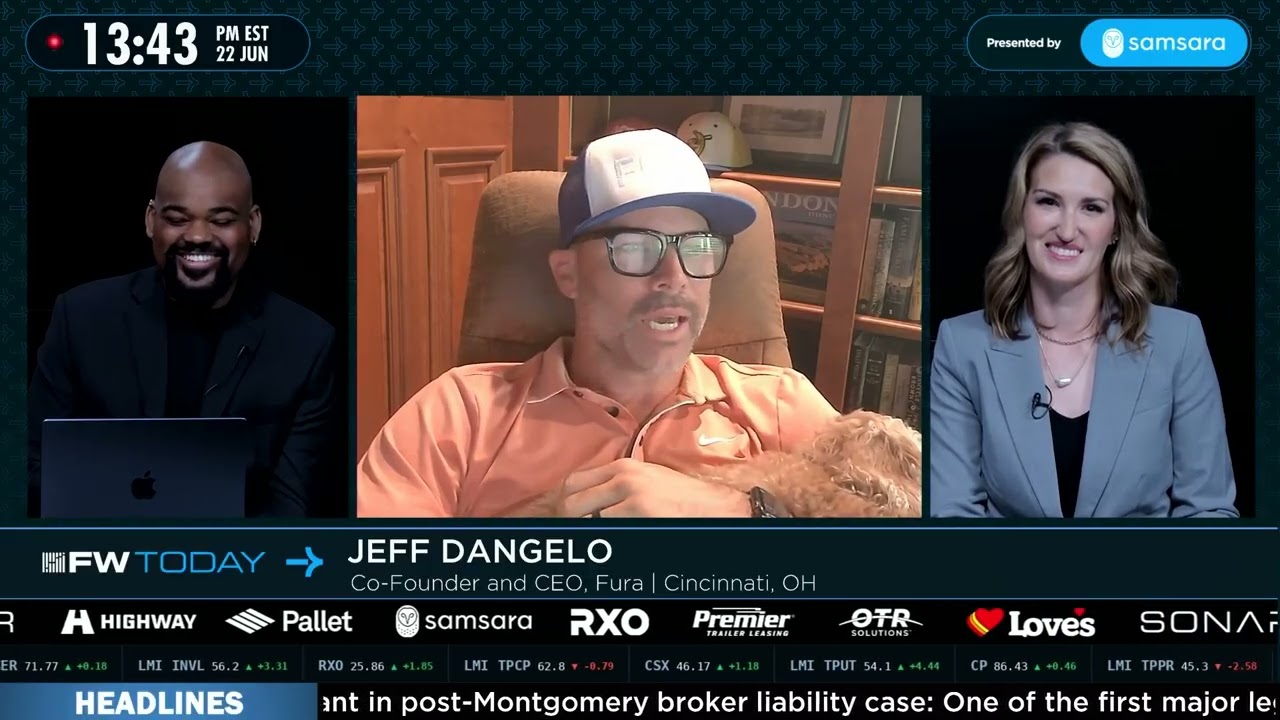
Why it matters: Fura’s model demonstrates how AI and operational discipline can consolidate a fragmented, people-intensive industry, pressuring mid-market brokers without compliance tech and forcing shippers to reconsider liability structures.
Context: The freight brokerage sector is historically relationship-driven and fragmented, with many firms plateauing around $20M-$30M due to operational scaling limits. The recent Montgomery ruling intensifies carrier vetting liability, favoring brokers with automated compliance infrastructure.
"The Pinwheel acquisition illustrates the playbook: headcount dropped from 26 to 8 while the business swung from a $150,000 loss to $1 million in profit and GMV jumped from $12 million to $30 million." — FREIGHTWAVES
Commentary: Fura’s roll-up strategy isn’t just financial engineering; it’s a systems integration play that extracts value by imposing a high-automation, low-SG&A template on acquired operations. This creates a scalable advantage that smaller brokers cannot replicate organically, likely accelerating industry consolidation. The explicit call for shippers to share liability risk through collaborative SOPs signals a coming shift in contract power dynamics, where brokers with robust compliance tech can dictate terms. D’Angelo’s prediction of single-digit transaction costs and AI-to-AI booking points to a future where the human-centric brokerage model becomes a cost-center relic.
Date: June 23, 2026 01:42 PM ET
URL: https://www.freightwaves.com/news/ai-first-how-fura-grew-800-during-freight-slump-logistics
AI Sentiment Score: Positive (57%)
AI Credibility Score: 10.0/10 — High
Scores and text generated by AI analysis of the source article indicated.
Samsara Ride Along pushes fleet safety AI beyond incident flagging (Freightwaves)
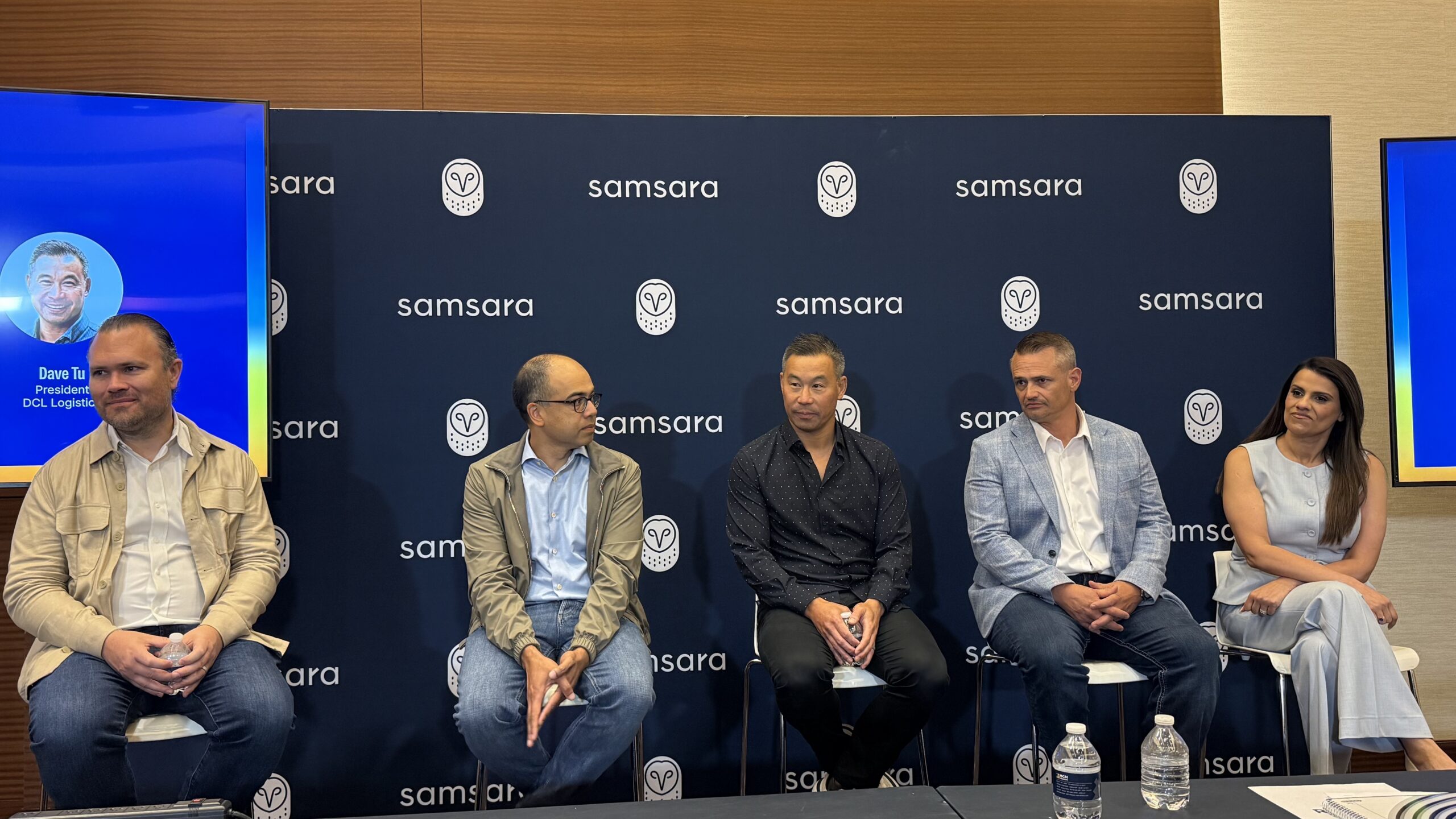
Summary: Samsara’s new Ride Along feature shifts fleet safety AI from flagging discrete incidents to conducting continuous, AI-powered virtual ride-alongs of 10-30 minutes, creating a full behavioral profile. This is paired with a real-time, conversational AI driver companion agent, currently in beta, aimed at reducing driver isolation. The rollout emphasizes change management, with early adopter UNFI highlighting the importance of driver trust and offering training format choices. The approach seeks to create a positive feedback loop, moving beyond punitive event logging.
Why it matters: This represents a fundamental shift in workforce monitoring and productivity AI, moving from punitive surveillance to holistic behavioral coaching, with direct implications for labor relations, operational efficiency, and the competitive dynamics of the logistics-heavy Southeast economy.
Context: Fleet telematics and AI-driven safety scoring are mature markets, but adoption has been hampered by driver pushback against ‘big brother’ surveillance and the limited utility of rare-event data.
"LAS VEGAS — Fleet safety cameras have spent years catching drivers on their worst behavior. Samsara is betting that watching for the good moments will be more powerful. At its Beyond 2026." — FREIGHTWAVES
Commentary: Samsara is attempting to solve the adoption problem by reframing AI oversight as a coaching tool, betting that positive reinforcement could drive compliance more effectively than punishment. If successful, this model could pressure competitors to follow suit and could accelerate the normalization of continuous behavioral analytics in other transport-reliant sectors across the Southeast, from ports to distribution centers. The driver companion agent, if it reduces turnover, could marginally improve labor retention in tight markets, affecting regional cost structures. The key risk remains the thin line between supportive ‘companion’ and inescapable surveillance.
Date: June 26, 2026 12:35 PM ET
URL: https://www.freightwaves.com/news/samsara-ride-along-ai-driver-safety
AI Sentiment Score: Negative (66%)
AI Credibility Score: 10.0/10 — High
Scores and text generated by AI analysis of the source article indicated.
Trust in Data: the Key to Unlocking AI’s Potential in Maritime (Globaltrademag)
Summary: At Geneva Dry 2026, Veson Nautical highlighted a core impediment to maritime AI adoption: a trust deficit in underlying data, despite AI’s proven high-90s percentile accuracy in structuring unstructured inputs like emails. The industry’s operational reliance on unstructured data (up to 90%) and human confidence in personal skill over algorithmic processing creates resistance. Veson argues competitive advantage will come from purpose-built AI platforms deeply embedded in workflows, not generic LLMs bolted on top.

Why it matters: Southeast Asia’s maritime hubs face competitive pressure to modernize; failure to solve the data-trust problem will slow AI integration, ceding efficiency and strategic advantage to rivals who build reliable, industry-specific data foundations.
Context: Maritime digitalization lags behind other logistics sectors due to fragmented data standards and legacy workflows, making AI integration a high-stakes, regionally competitive play for port efficiency and supply chain resilience.
"A particularly difficult aspect of adopting AI in maritime, according to Veson, is that up to 90% of operationally critical data arrives in unstructured formats, such as broker emails, agent updates, and port notifications." — GLOBALTRADEMAG
Commentary: Veson’s framing shifts the AI debate from pure capability to institutional psychology and data governance. The implication is that maritime AI vendors must now sell trust and auditability, not just automation, forcing a consolidation around platforms that can certify data lineage. This creates a moat for incumbents with deep domain data, potentially locking out generic AI providers from core operational decisions.
Date: June 28, 2026 04:00 AM ET
URL: https://www.globaltrademag.com/trust-in-data-the-key-to-unlocking-ais-potential-in-maritime/
AI Sentiment Score: Positive (44%)
AI Credibility Score: 10.0/10 — High
Scores and text generated by AI analysis of the source article indicated.
The New Competitive Advantage: Faster-Learning Operators (Globaltrademag)
Summary: A CEO of a PE-backed mid-market company argues that building a learning organization is a structural, not motivational, challenge. The prevailing model—hiring a Chief Learning Officer housed in HR and investing in external AI-powered training platforms—fails because it operates outside the daily rhythm of field operators. The correct approach is to embed a trained educator directly under the COO, tasked with making general managers faster learners without pulling them from their posts, measured by operational metrics like asset utilization. This shift is critical as longer PE hold periods and a looming manager shortage force reliance on internal talent development over performance theater.

Why it matters: For PE firms and operating CEOs in the asset-heavy mid-market, this redefines the ROI on human capital investments from vanity metrics to tangible operational gains, directly impacting hold-period returns and competitive resilience.
Context: The corporate training market grew 29% year-over-year to ~$16B, heavily skewed toward outsourced ‘AI-powered learning’ solutions that often fail to change field behavior. Concurrently, PE hold periods have stretched to a median of 6.0 years, intensifying pressure for real operating improvements.
"A learning organization is not a course catalog. Not a binder. It is a habit, formed inside the operating rhythm of the people closest to the customer. If learning lives outside that rhythm, the rhythm wins. Every time." — GLOBALTRADEMAG
Commentary: This is a direct challenge to the burgeoning AI-training industrial complex, positing that organizational structure—specifically reporting lines—determines efficacy more than technology does. It signals a coming divergence: firms that successfully embed learning within operations will compound talent advantages, while others will see escalating costs for diminishing returns in a tightening manager market. The emphasis on ROA as a learning metric could reshape how PE boards assess portfolio company leadership, moving beyond EBITDA to granular operational health.
Date: June 24, 2026 04:00 AM ET
URL: https://www.globaltrademag.com/the-new-competitive-advantage-faster-learning-operators/
AI Sentiment Score: Negative (75%)
AI Credibility Score: 10.0/10 — High
Scores and text generated by AI analysis of the source article indicated.
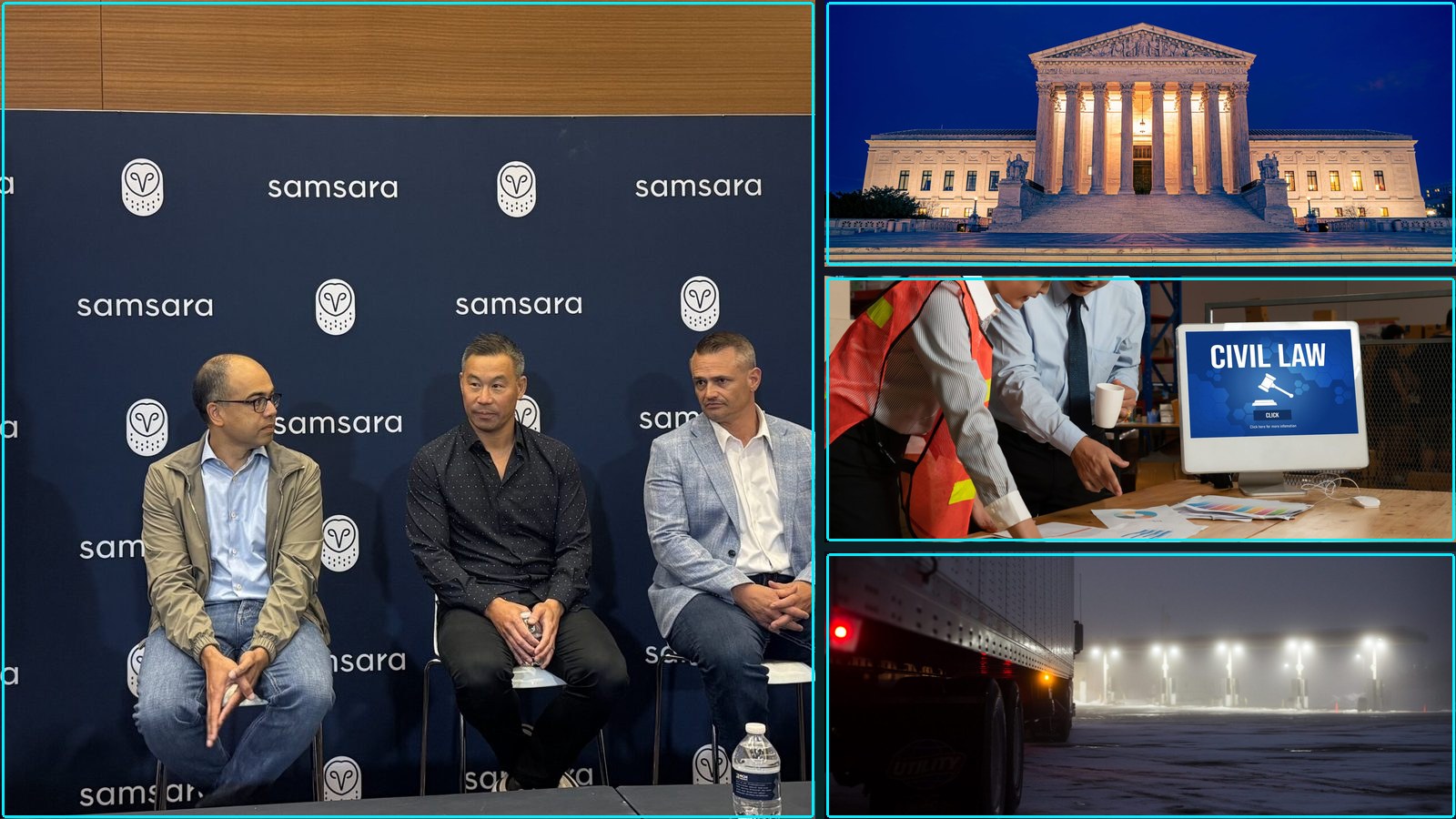
The Supreme Court and the White House Just Changed Everything for Freight Brokers, NVOCCs, Customs Brokers, Freight Forwarders, and Warehouse Operators (Freightwaves)
Summary: A Supreme Court ruling in Montgomery v. Caribe Transport II has eliminated the federal preemption shield for freight brokers, exposing them to direct state-level negligent hiring claims. An Executive Order from June 3, 2026, has simultaneously intensified enforcement against forced labor, misclassification, undervaluation, and illegal transshipment across the entire logistics chain. The combined effect shifts the legal standard from intent to a forensic, real-time ability to suggest compliance at every handoff.

Why it matters: This fundamentally alters the liability and operational risk profile for the entire North American logistics sector, mandating a shift from periodic checks to cryptographically sealed, live compliance verification.
Context: The logistics industry has long relied on periodic audits and good-faith compliance programs, a model now rendered insufficient by judicial and executive action focusing on real-time accountability.
"The question every logistics operator should be asking right now is not whether they are compliant. It is whether they can prove it — cryptographically, at every handoff, in real time, in a format that holds up in federal court." — FREIGHTWAVES
Commentary: The ruling and EO create a de facto technology mandate, privileging firms with integrated, ledger-based systems over those reliant on manual processes. This will accelerate consolidation, as the cost of forensic-grade compliance will be prohibitive for smaller operators. The Southeast’s dense logistics hubs will see immediate pressure, as ports, brokers, and warehouses become primary enforcement targets.
Date: June 23, 2026 12:05 PM ET
URL: https://www.freightwaves.com/news/the-supreme-court-and-the-white-house-just-changed-everything-for-freight-brokers-nvoccs-customs-brokers-freight-forwarders-and-warehouse-operators
AI Sentiment Score: Negative (66%)
AI Credibility Score: 10.0/10 — High
Scores and text generated by AI analysis of the source article indicated.
Geopolitical Tensions Remain Shipping Industry’s Biggest Threat, New Survey Finds (Globaltrademag)
Summary: The International Chamber of Shipping’s 2026 Maritime Barometer survey of 185 executives finds geopolitical instability remains the top business threat for the fourth consecutive year, ranking above cybersecurity, regulatory complexity, and administrative burdens. Industry leaders now view geopolitical risk not as a discrete issue but as a catalyst amplifying all other operational and commercial challenges. Notably, most survey responses preceded the major Middle East conflict of early 2026, indicating baseline anxiety was already high. In response, the industry is adopting a pragmatic, resilience-focused posture, prioritizing scalable near-term decarbonization fuels like LNG and biofuels over experimental alternatives while navigating an increasingly fragmented regulatory landscape.

Why it matters: For Southeast Asia’s export-dependent economies and major transshipment hubs, persistent maritime risk directly threatens supply chain reliability, port throughput, and the cost structures underpinning regional trade competitiveness.
Context: This annual survey consistently flags geopolitics as the primary concern, but the 2026 data reveals a qualitative shift: it is now seen as a systemic amplifier, not just a standalone hazard, occurring alongside accelerated regulatory divergence.
"“Political tensions are influencing everything from business planning to market conditions,” the report noted, highlighting how conflicts, trade disputes, sanctions, and regional rivalries are creating ripple effects throughout the maritime sector." — GLOBALTRADEMAG
Commentary: The survey’s timing, largely pre-dating the 2026 Middle East conflict, suggests the shipping industry’s risk calculus has permanently internalized volatility, moving beyond crisis response to a default state of managed uncertainty. This institutionalizes higher operational buffers and cost structures, which will be borne by end consumers and trade-reliant nations. The pragmatic fuel choice—LNG and biofuels over green ammonia or hydrogen—signals a capital preservation strategy that may slow the sector’s absolute emissions reductions, prioritizing near-term commercial viability over regulatory ambition. Consequently, ports and logistics corridors in Southeast Asia must now compete on resilience and regulatory agility as much as on traditional metrics like efficiency or cost.
Date: June 24, 2026 05:00 AM ET
URL: https://www.globaltrademag.com/geopolitical-tensions-remain-shipping-industrys-biggest-threat-new-survey-finds/
AI Sentiment Score: Negative (86%)
AI Credibility Score: 10.0/10 — High
Scores and text generated by AI analysis of the source article indicated.
The End of Blind Broker Hiring: Why Carrier Verification Is Becoming a Legal Necessity (Globaltrademag)
Summary: A recent Supreme Court ruling in Montgomery v. Caribe Transport II, LLC has eroded federal preemption defenses for freight brokers, exposing them to state-law negligence claims over carrier selection. This legal shift coincides with escalating cargo theft, sophisticated fraud schemes, and insurer pressure, forcing the industry to move beyond static compliance checks. Carrier verification is evolving from a one-time onboarding task into a continuous, embedded operational function directly tied to liability and reputational risk.

Why it matters: The ruling recalibrates the legal and financial risk profile for freight brokers across the Southeast, a major logistics corridor, and will accelerate investment in real-time verification technology while reshaping insurance and shipper contracts.
Context: Freight brokerage has long prioritized speed and capacity access over deep carrier vetting, relying on fragmented manual checks against FMCSA data that is authoritative but not real-time.
"Efficiency in freight matching has outpaced confidence in freight risk." — GLOBALTRADEMAG
Commentary: The legal environment is now forcing the industry’s economic incentives to align with its risk profile. This could drive consolidation around brokers with integrated verification platforms and pressure smaller, manual operations, potentially concentrating market share. Insurers and large shippers will use this ruling as leverage to mandate higher due diligence standards, embedding continuous monitoring into contract terms.
Date: June 27, 2026 04:00 AM ET
URL: https://www.globaltrademag.com/the-end-of-blind-broker-hiring-why-carrier-verification-is-becoming-a-legal-necessity/
AI Sentiment Score: Negative (66%)
AI Credibility Score: 10.0/10 — High
Scores and text generated by AI analysis of the source article indicated.
Federal case reveals how a cargo theft ring operated in plain sight (Freightwaves)
Summary: The sentencing of Salahudin Reddy to 94 months for a Philadelphia-based cargo theft conspiracy reveals the persistent threat of low-tech, organized physical theft alongside more sophisticated fraud schemes. The ring stole over $1.5 million in goods, including high-value seafood, electronics, and newly minted dimes, by targeting unattended trailers and sleeping drivers. Federal prosecutors dismantled the operation using digital evidence like cell-site data and group chats, highlighting a modern investigative approach to an old crime. The case underscores that despite industry focus on identity fraud, physical vulnerability in freight corridors remains a critical operational risk.

Why it matters: Physical cargo theft concentrated in logistics hubs directly impacts regional insurance costs, security spending, and the reliability of Southeast supply chains, influencing where shippers and carriers choose to stage and route freight.
Context: Cargo theft advisories increasingly warn of hybrid threats combining digital fraud with traditional theft, but this case demonstrates that straightforward, opportunistic burglary by organized crews remains a high-volume, high-reward enterprise.
"Court records show the group waited until trailers were unattended or drivers were asleep before using bolt cutters and other tools to break into the trailers and remove the freight inside." — FREIGHTWAVES
Commentary: The operational simplicity—bolt cutters and trash cans—contrasts with the sophisticated digital footprint left behind, forcing a dual-track security response. This could pressure warehouse and truck stop operators in the I-95 corridor to harden physical sites while carriers face rising costs for both cybersecurity and on-ground monitoring. The case serves as a corrective to narratives focusing solely on digital fraud; the physical supply chain remains a soft target.
Date: June 25, 2026 01:59 PM ET
URL: https://www.freightwaves.com/news/federal-case-reveals-how-a-cargo-theft-ring-operated-in-plain-sight
AI Sentiment Score: Negative (50%)
AI Credibility Score: 10.0/10 — High
Scores and text generated by AI analysis of the source article indicated.
Post ID: 580a489a