Virtual Production and LED Volume Stages
Das szenische Portal RT: When the Stage Starts Listening to the Music (Digitalproduction)
Summary: Andreas Resch has developed ‘Das szenische Portal RT,’ a prototype real-time hybrid stage system built in Unreal Engine. It integrates live musical performance—specifically improvisation—with a virtual environment, using audio signals to trigger dynamic visual events. The system is modular, designed for live events, and currently operates as an art project, though Resch is open to project-based integration or partnership for productization.

Why it matters: This signals a potential shift in live event production economics, moving beyond static LED backdrops to interactive, performer-driven visuals, which could alter vendor offerings, crew skill requirements, and the creative pipeline for hybrid performances.
Context: The development follows a broader industry trend of integrating game engines like Unreal into live production, but focuses uniquely on real-time audiovisual reactivity for improvised music, a niche currently underserved by standard media servers or pre-rendered graphics packages.
"The effect is based on a geometrically structured overall concept that closely interlinks physical and virtual image elements. Resch describes this as a form of hybrid stage, in which objects from the virtual projection appear to extend into the physical stage space." — DIGITALPRODUCTION
Commentary: The prototype demonstrates a path toward more dynamic and less labor-intensive live visuals, where the performer directly drives the VFX. If productized, this could pressure traditional media server and content creation vendors to offer similar interactive modules, while creating a new niche for technicians fluent in Unreal Blueprints and real-time audio integration. The reliance on affordable webcams and consumer-grade GPUs suggests a potential for lower-cost deployments, though scalability and robustness for large venues remain unproven.
Date: Mon, 18 May 2026 06:00:00 +0000
URL: https://digitalproduction.com/2026/05/18/das-szenische-portal-rt-when-the-stage-starts-listening-to-the-music/
AI Sentiment Score: Negative (75%)
AI Credibility Score: 10.0/10 — High
Scores and text generated by AI analysis of the source article indicated.
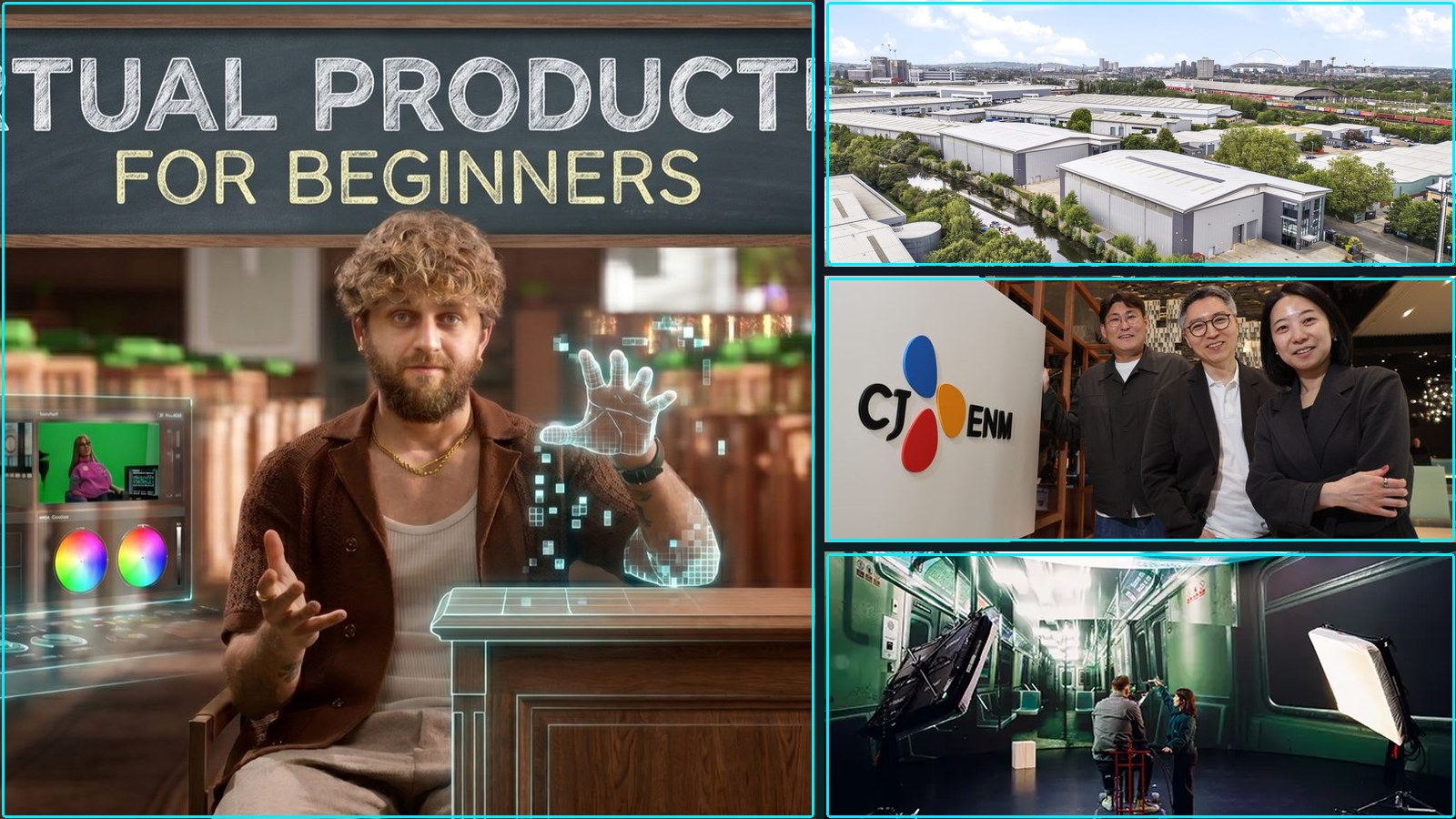
Virtual Production for Beginners – New MZed Course on Green Screen Stages, Unreal Engine, and Real-Time Compositing | CineD (Cined)
Summary: MZed’s new course ‘Virtual Production for Beginners,’ taught by studio operator Biro Florin, explicitly rejects the LED-volume-centric narrative to focus on green screen workflows. It targets commercial producers, indie filmmakers, and brand teams priced out of LED stages, offering a systems-engineering approach based on Florin’s operational studio, Masterwork Films. The curriculum covers physical stage build, lighting, Unreal Engine compositing, camera tracking, and business strategy, emphasizing multi-camera flexibility and contingency recording.

Why it matters: It validates and provides a scalable blueprint for a cost-effective, operationally flexible virtual production model, shifting leverage from high-end VFX vendors to smaller studios and freelancers.
Context: Virtual production discourse has been dominated by high-cost LED volumes since ‘The Mandalorian,’ creating a perceived barrier to entry for mainstream commercial and indie production.
"Florin argues that the LED route has priced out the very filmmakers most likely to put virtual production to work in everyday output: commercial producers, podcast operators, brand teams, indie filmmakers, and YouTube studios that want to drop real talent into Unreal Engine, AI-generated, or video-plate environments without renting a volume." — CINED
Commentary: The course’s operational focus on green screen directly challenges the vendor-driven LED volume economy, offering a path to in-house capability that reduces dependency on specialized facilities. Its emphasis on multi-camera workflows and contingency layers addresses real-world production failures, shifting the quality ceiling from capital expenditure to operational discipline. This systematization lowers the skill floor for real-time compositing, potentially expanding the pool of viable vendors for broadcast and commercial work while compressing margins for generic green screen services.
Date: May 22, 2026 12:00 AM ET
URL: https://www.cined.com/virtual-production-for-beginners-new-mzed-course-on-green-screen-stages-unreal-engine-and-real-time-compositing/
AI Sentiment Score: Negative (63%)
AI Credibility Score: 10.0/10 — High
Scores and text generated by AI analysis of the source article indicated.
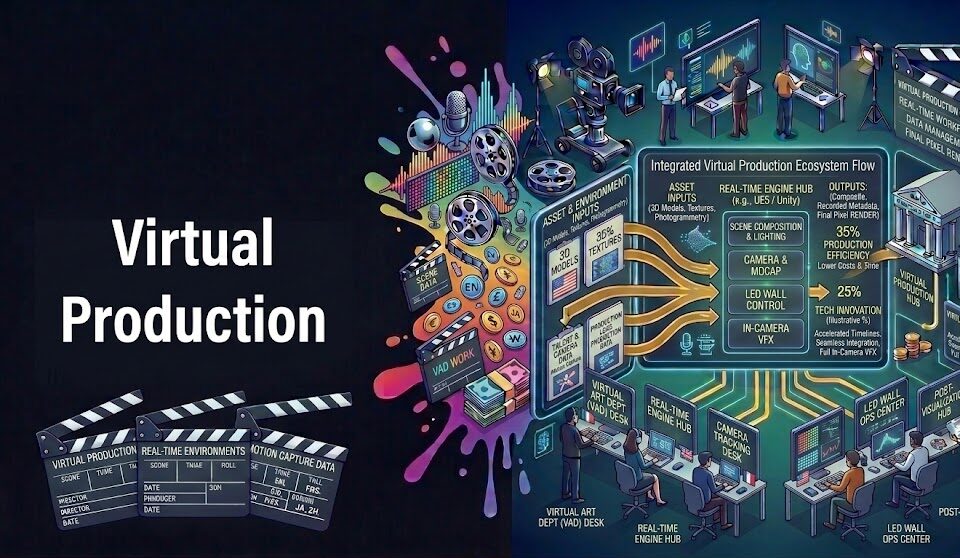
Virtual Production & LED Volumes In 2026 Guide (Vitrina.Ai)
Summary: The virtual production market, specifically LED volume stages enabling in-camera VFX (ICVFX), has matured into a $3.7B industry growing at 16% annually. It is no longer a bespoke tool for top-tier studios but is seeing aggressive adoption in episodic streaming, advertising, and corporate video. The operational shift is moving from a post-production cost center to a pre-production capital and planning question, with significant implications for scheduling, budgeting, and facility location.
Why it matters: For line producers and studio executives, this redefines the economics and logistics of high-budget shoots, turning virtual production from a technical novelty into a core competitive lever for cost control and creative output.
Context: The initial wave of virtual production was defined by marquee projects from VFX-first studios like ILM, but the current phase is characterized by commoditization of hardware, proliferation of regional facilities, and integration into mainstream production pipelines beyond feature film.
"Virtual production powered by LED volume stages is no longer the exclusive territory of Disney and ILM. It’s a $3.7 billion market in 2026 growing at 16% annually, and it’s reshaping not." — VITRINA.AI
Commentary: The critical path for virtual production has shifted decisively to pre-production, demanding a parallelized workflow model that reallocates risk and capital earlier in the pipeline. Studios that fail to internalize this front-loaded discipline will cede advantage to competitors who can compress total timelines and lock visual scope before principal photography. This favors producers with robust digital art department management and penalizes those clinging to traditional physical prep schedules.
Date: May 21, 2026 12:00 AM ET
URL: https://vitrina.ai/blog/virtual-production-led-volume-stages-2026/
AI Sentiment Score: Negative (50%)
AI Credibility Score: 10.0/10 — High
Scores and text generated by AI analysis of the source article indicated.
Virtual Production is Production – Part 2 – Producing, Budgeting, Scheduling & Crewing (Youtube)
Summary: A joint VES/PGA panel examines the operational integration of virtual production, focusing on budgeting, scheduling, and crewing. The discussion positions VP not as a VFX add-on but as a core production methodology that demands early, integrated financial and creative planning. It argues for a shift where VP ‘uplifts’ the VFX process, promising downstream cost savings by resolving more complex imagery in-camera.
Why it matters: This formalizes VP’s transition from a novel tool to a standard line item, directly impacting producer workflows, studio greenlight calculus, and VFX vendor economics.
Context: The industry is moving past the ‘wow factor’ of LED walls to systematize their use, requiring new budget templates, earlier VFX involvement, and redefined departmental responsibilities.
"##### May 21, 2026 (1:30:28) The Visual Effects Society (VES) and Producers Guild of America (PGA) join together for a second event to analyze scheduling and budgeting for virtual production. In this." — YOUTUBE
Commentary: The framing of VP ‘uplifting’ VFX is a strategic rebranding; it signals a shift from cost-center post-production to a value-adding production core. This could pressure VFX houses to move further upstream into pre-vis and asset creation, while line producers must absorb new capital expenditure and specialized crew costs earlier. The promised savings are contingent on perfecting this front-loaded integration, creating winner-take-all advantages for producers who master the new scheduling.
Date: May 21, 2026 12:00 AM ET
URL: https://www.youtube.com/watch?v=BRF-hczWh1Y
AI Sentiment Score: Negative (66%)
AI Credibility Score: 10.0/10 — High
Scores and text generated by AI analysis of the source article indicated.
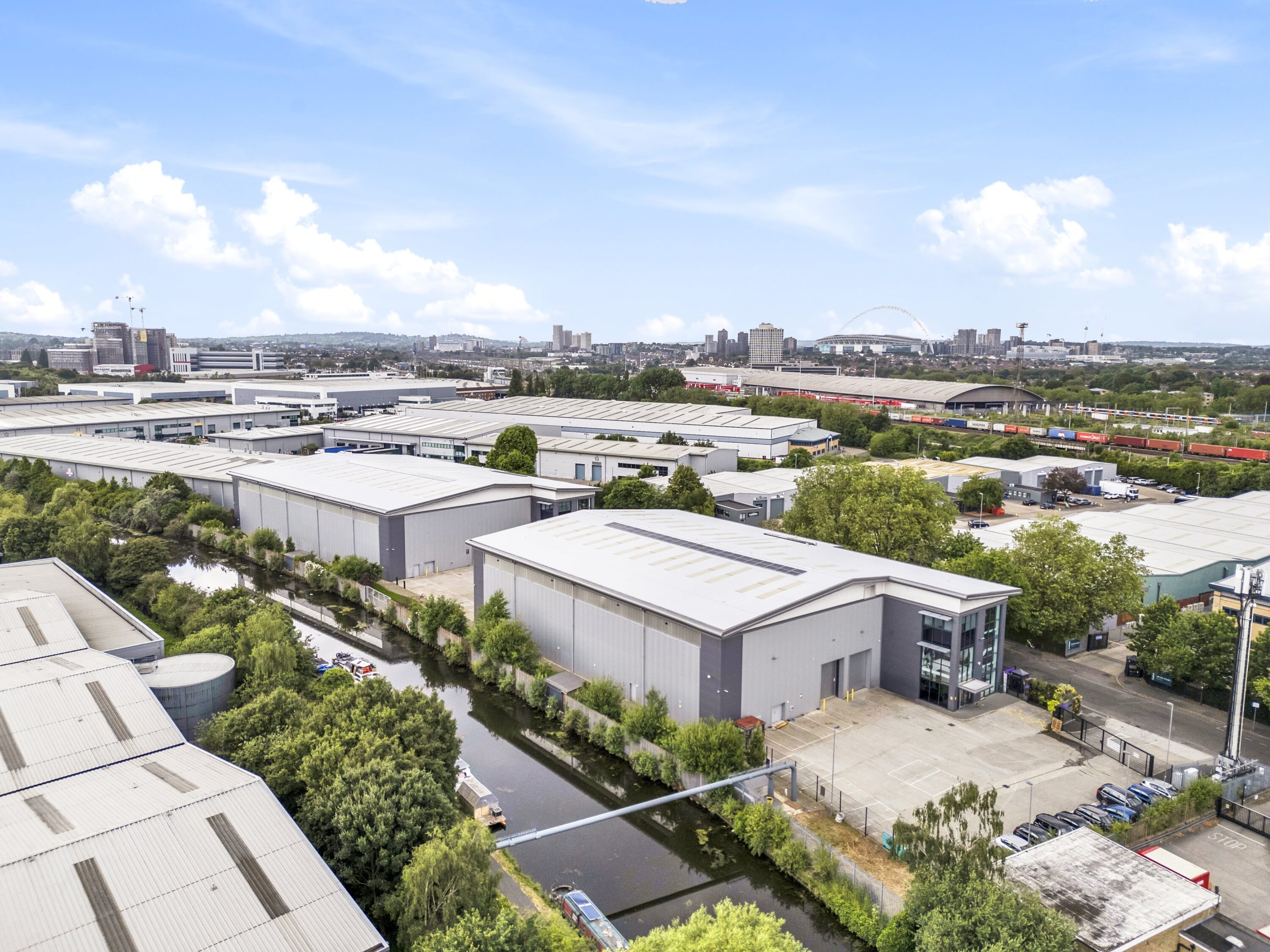
Virtual production in 2026: Did the industry predictions come true? (Gardenstudios.Io)
Summary: A 2026 retrospective finds the virtual production (VP) market normalizing, but not fully. While high-end TV and features now routinely use LED volumes for specific applications like driving scenes, the broader industry shift to pre-production-centric pipelines and cross-departmental collaboration remains incomplete. Market forecasts project robust growth from $3.3 billion in 2026 to $18.5 billion by 2035, indicating sustained investment despite persistent bottlenecks like skills shortages.
Why it matters: For VFX supervisors, line producers, and stage operators, this signals a maturing but still segmented toolset, where VP’s economic advantage is proven for specific shot types, reshaping vendor selection and crew planning.
Context: VP adoption was initially driven by tentpole films building custom LED stages; the current phase is defined by accessible, permanent volume stages enabling broader, if targeted, use.
"Virtual production (VP) is a filmmaking technology that combines digital environments with physical sets, allowing actors and filmmakers to see the end result in real-time, also known as in-camera visual effects. Early." — GARDENSTUDIOS.IO
Commentary: The normalization of VP is application-specific, not universal. This creates a two-tier market: high-volume, repeatable shots (like driving) become commoditized workflows, while complex, bespoke environments remain a skills-constrained premium. The forecast growth is less about new paradigm adoption and more about the operational scaling of these now-standardized shot types, pressuring traditional location and transportation vendors.
Date: May 21, 2026 12:00 AM ET
URL: https://gardenstudios.io/news/virtual-production-in-2026-did-the-industry-predictions-come-true/
AI Sentiment Score: Positive (50%)
AI Credibility Score: 7.0/10 — Medium
Scores and text generated by AI analysis of the source article indicated.
Navigating the Changing Landscape of Virtual Production (Youtube)
Summary: A VES and Netflix-led panel argues virtual production is evolving from a specific set of technologies (LED walls, VR) into a fundamental methodology that redefines the entire production timeline. The core shift is moving creative and technical decision-making earlier, into pre-visualization, which is framed as the true start of production. This reframes the virtual environment as a ‘stage’ to be prepared, analogous to a physical set.
Why it matters: This redefinition directly impacts budgeting, crew hiring, vendor selection, and intellectual property ownership by collapsing traditional pre-pro, production, and post-pro silos.
Context: The industry has been grappling with the high capital costs and operational complexity of LED volume stages, seeking a clearer ROI beyond visual novelty.
"##### May 21, 2026 (1:34:55) Join the VES Technology Committee and the Virtual Production Committee as we collaborate with Netflix to lead a series of conversations around Virtual Production. This first online." — YOUTUBE
Commentary: The push to define VP as a methodology, not a tech stack, is a strategic move to broaden adoption and justify sunk costs. It signals a coming consolidation of pre-vis, VFX, and on-set roles, favoring generalist technical artists over specialized department silos. Procurement could shift from renting LED days to licensing unified software platforms and virtual asset libraries, transferring leverage from hardware vendors to software/IP holders.
Date: May 21, 2026 12:00 AM ET
URL: https://www.youtube.com/watch?v=-p9bjvx7Oqo
AI Sentiment Score: Neutral (33%)
AI Credibility Score: 10.0/10 — High
Scores and text generated by AI analysis of the source article indicated.
The virtual production stage (VP Stage) of the CJ ENM Studio Center in Paju, Gyeonggi-do. It may be .. (Mk.Co.Kr)
Summary: CJ ENM’s Studio Center in Paju has completed production on ‘The Apartment,’ an occult thriller shot using an AI-hybrid virtual production pipeline. The four-day shoot, costing approximately 500 million won (roughly $360,000), utilized live-action performance against an LED wall displaying AI-generated backgrounds and visual effects. The studio claims this method reduced costs by more than five times compared to conventional production techniques.

Why it matters: This case demonstrates a concrete, deployed model for radically compressing VFX-heavy production schedules and budgets, directly challenging the economic assumptions underpinning vendor bids and crew scaling for mid-tier genre content.
Context: Virtual production stages have proliferated, but their cost-benefit analysis has often been marginal for projects below tentpole scale. The integration of generative AI for real-time background and VFX generation represents a next-phase evolution aimed at making the technology viable for a broader range of productions.
"When I went to the ‘CJ ENM Studio Center’ virtual production stage, I saw that only the actors did their live action and background were all AI … The film was produced." — MK.CO.KR
Commentary: The reported 5x cost reduction, if replicable, shifts the break-even point for VFX-heavy shoots, potentially moving them from post-production vendor work to a pre-visualized, on-set asset. This pressures traditional VFX houses to adapt their service models for lower-budget tiers and could accelerate the commoditization of certain environment and effects work. The four-day principal photography window suggests a fundamental reordering of the production pipeline, concentrating creative decision-making and reducing iterative post work.
Date: May 23, 2026 12:00 AM ET
URL: https://www.mk.co.kr/en/it/12056376
AI Sentiment Score: Negative (71%)
AI Credibility Score: 10.0/10 — High
Scores and text generated by AI analysis of the source article indicated.
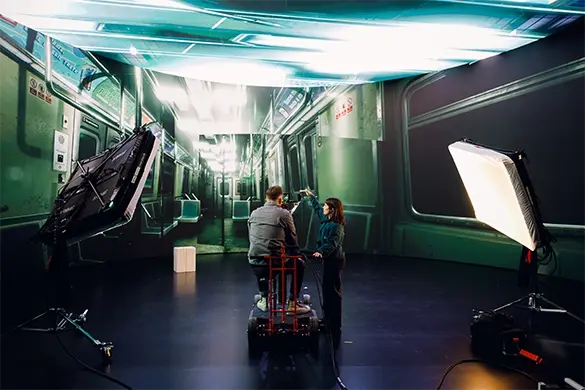
How ICVFX Works: Real-Time VFX Tools for LED Volume Studios (Forgevirtualstudios)
Summary: The article details the core technical components enabling In-Camera Visual Effects (ICVFX), specifically the integration of high-resolution LED volumes with real-time game engines like Unreal Engine. This setup allows digital environments to be displayed and lit on set, interacting physically with live-action elements.
Why it matters: This directly impacts VFX vendor economics by shifting post-production complexity and cost into pre-production and on-set execution, altering staffing models and vendor leverage.
Context: ICVFX represents a shift from a post-centric VFX pipeline to a pre-visualized, on-set capture model, driven by the convergence of virtual production tools.
"Because the LED panels emit actual light, they introduce realistic reflections, accurate color interplay, and lighting that blends with real world elements." — FORGEVIRTUALSTUDIOS
Commentary: The operational consequence is a reallocation of labor and capital: upfront investment in previs and asset creation spikes, while downstream compositing and rotoscoping hours collapse. This pressures traditional VFX houses to pivot toward real-time asset creation and on-set supervision or risk being sidelined by integrated virtual production vendors.
Date: May 22, 2026 12:00 AM ET
URL: https://forgevirtualstudios.com/blog/real-time-vfx-in-led-volume-studios-tools-and-techniques
AI Sentiment Score: Negative (75%)
AI Credibility Score: 10.0/10 — High
Scores and text generated by AI analysis of the source article indicated.
What Do You Need to Know When Running a Volume | Virtual Production 201 (Youtube)
Summary: A virtual production stage operator details the typical production schedule for a mid-range commercial project, breaking down the required days for art prep, pre-lighting, shooting, and wrap. The emphasis is on the non-negotiable importance of pre-light days for technical and creative calibration. This provides a concrete, operational benchmark for budgeting and planning.
Why it matters: For producers and VFX supervisors, this quantifies the time investment required for a volume shoot, directly impacting cost models and scheduling assumptions for commercials and similar-scale work.
Context: As virtual production scales beyond blockbuster features into commercials and episodic TV, the industry lacks standardized data on realistic timelines and resource allocation for mid-tier projects.
"{ts:554} I think you know, it’s it starts with the creative. It starts with the budget, the demand for the project. … {ts:2268} Yeah, and the art prep day, I think I." — YOUTUBE
Commentary: This timeline anchors the ‘virtual production is faster’ hype in a practical, repeatable workflow. The explicit callout of pre-light days underscores that volume work shifts labor and cost forward in the pipeline, requiring more vendor-stage time before the shoot. For facilities, this validates a service model built on multi-day stage rentals, not hourly rates. For clients, it clarifies that savings are in reduced location and post costs, not necessarily in reduced principal photography days.
Date: May 21, 2026 12:00 AM ET
URL: https://www.youtube.com/watch?v=oOtDT8qKUoM
AI Sentiment Score: Negative (80%)
AI Credibility Score: 10.0/10 — High
Scores and text generated by AI analysis of the source article indicated.
Virtual Production Insights & Resources | Forge Virtual Studios (Forgevirtualstudios)
Summary: Forge Virtual Studios positions virtual production as the emerging standard for high-end branded content, arguing that its controlled environments and real-time rendering capabilities are necessary to meet escalating market demands for volume, quality, and speed. The piece suggests this shift is moving significant production budgets away from traditional location shoots and into specialized LED volume facilities.
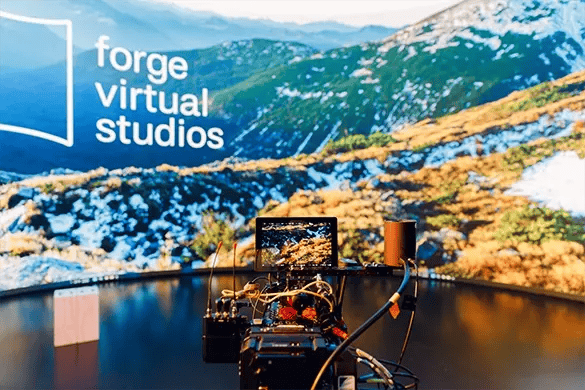
Why it matters: This signals a potential reallocation of vendor spend and a shift in required crew skills, impacting the economics and workflow of commercial production pipelines.
Context: Virtual production, accelerated by pandemic-era remote work and the success of ‘The Mandalorian,’ is now migrating from high-budget episodic television into the commercial and branded content sector.
"Modern branded content production frequently uses film content to engage viewers and expand brands’ reach through social media, product pages, and other media. However, the market is continuously demanding more from brands, making it challenging to." — FORGEVIRTUALSTUDIOS
Commentary: The push into branded content represents a new, volume-driven revenue stream for VP studios, potentially altering their client mix and financial stability. For agencies and brands, it promises faster iteration and asset reuse, but locks them into a smaller pool of technically specialized vendors, potentially increasing costs for premium slots while standardizing aesthetic outputs.
Date: May 22, 2026 12:00 AM ET
URL: https://forgevirtualstudios.com/blog
AI Sentiment Score: Positive (40%)
AI Credibility Score: 10.0/10 — High
Scores and text generated by AI analysis of the source article indicated.
Post ID: 0e3eb64a