Science and technology breakthroughs
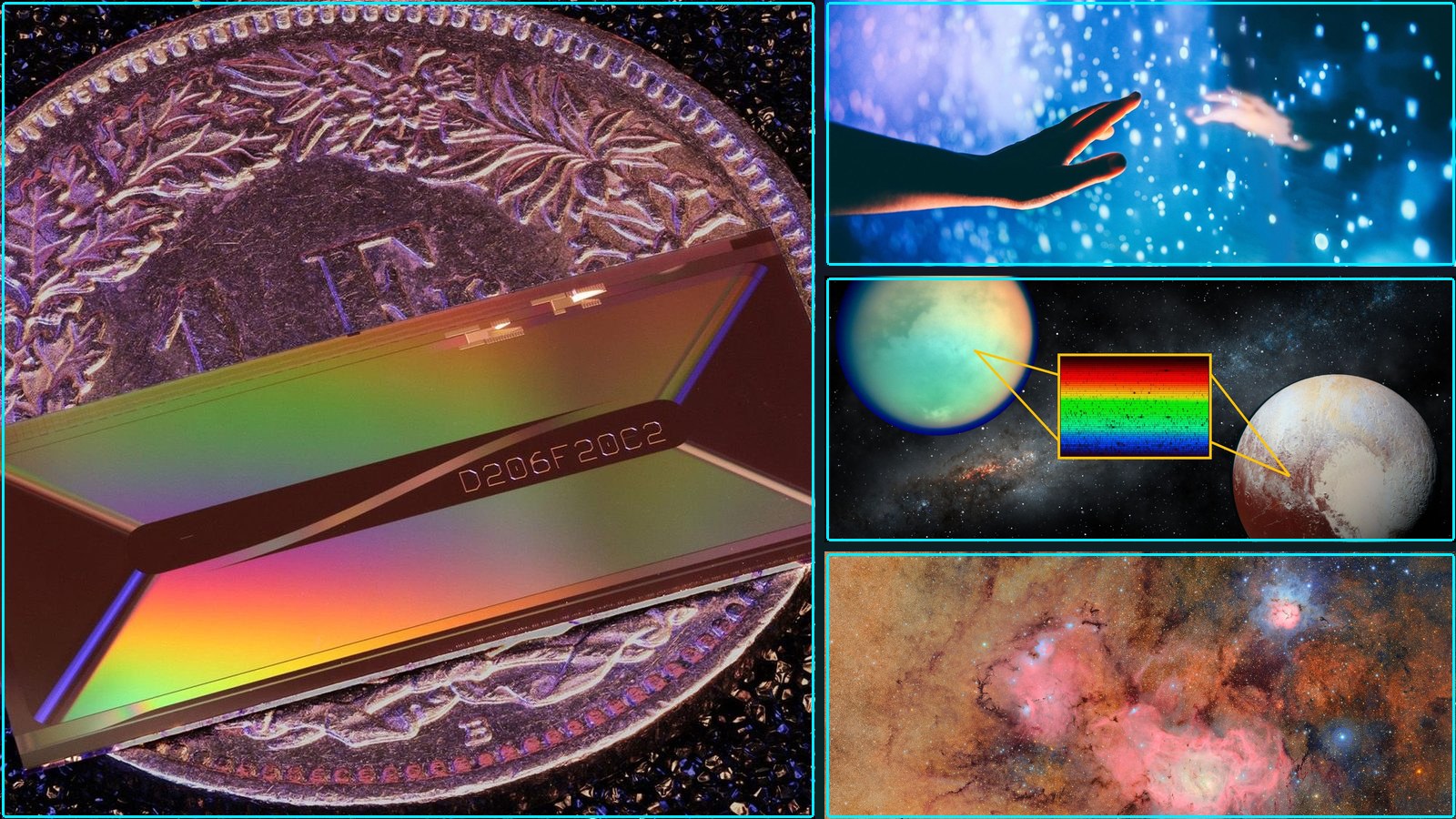
Scientists figured out how to shrink huge ultrafast lasers so they fit on a tiny chip — the ‘holy grail’ of the field (Livescience)
Summary: Researchers at EPFL have demonstrated a high-pulse-energy femtosecond laser on a photonic chip, achieving 1.05 nanojoules in 147-femtosecond pulses by reviving the Mamyshev oscillator architecture from 1998. This breakthrough solves the long-standing problem of miniaturizing ultrafast lasers, which previously required tabletop setups. The chip-based laser can be fabricated at scale using standard silicon wafer processes, potentially reducing costs and enabling portable applications in environmental sensing, medical diagnostics, and atomic clocks.

Why it matters: This development collapses the size and cost barriers that have confined ultrafast lasers to specialized labs, opening the door to field-deployable precision tools for diagnostics, navigation, and manufacturing.
Context: Ultrafast lasers are critical for applications from eye surgery to atomic clocks, but their reliance on bulky, expensive tabletop systems has limited adoption. The Mamyshev oscillator, overlooked for decades, uses a nonlinear waveguide between two filters to stabilize high-intensity pulses without extra components.
"Scientists figured out how to shrink huge ultrafast lasers so they fit on a tiny chip — the ‘holy grail’ of the field Scientists have managed to get ultrafast lasers running on." — LIVESCIENCE
Commentary: The elegance here is in the overlooked architecture: the Mamyshev oscillator’s nonlinear filtering naturally suppresses destabilizing low-intensity light, making it ideal for chip-scale integration. That the laser cavity can be folded to match-head size while maintaining lab-class output suggests a manufacturing path that could commoditize ultrafast lasers the way silicon did for computing. The real signal is not just the miniaturization but the shift from bespoke optical systems to scalable photonic fabrication—a move that could reshape industries reliant on precise timing and high-energy pulses.
Date: June 30, 2026 08:17 AM ET
URL: https://www.livescience.com/technology/electronics/scientists-figured-out-how-to-shrink-huge-ultrafast-lasers-so-they-fit-on-a-tiny-chip-the-holy-grail-of-the-field
AI Sentiment Score: Negative (50%)
AI Credibility Score: 10.0/10 — High
Scores and text generated by AI analysis of the source article indicated.
Superintelligent AI in space could explain the Fermi Paradox (Livescience)
Summary: A new paper by Sergey Ivliev proposes that the Fermi Paradox may be resolved by the emergence of superintelligent AI that conducts space expansion in a ‘quiet’ mode, sending low-mass, hard-to-detect seed probes rather than building visible megastructures. This ‘Quiet Expansion filter’ suggests that once a civilization reaches the Autonomous AI-Cosmoindustry (AICI) threshold, rational AI-driven expansion prioritizes risk management over prestige or conquest, making loud technosignatures unlikely. The implication is that our failure to detect alien civilizations may not mean the galaxy is empty, but that successful civilizations are hiding in a quiet state—or that we are among the first to reach this threshold, facing an unknown filter.

Why it matters: This reframes the Fermi Paradox from a question of absence to one of detection strategy, suggesting that the search for extraterrestrial intelligence may need to look for subtle, AI-driven signals rather than grandiose engineering projects.
Context: The Fermi Paradox, formalized by Michael Hart in 1975, questions why no evidence of extraterrestrial civilizations has been found despite high probability estimates. Ivliev’s paper builds on work by astrophysicist Sergey Popov on rational AI motivations for space expansion.
"Superintelligent AI in space could explain the Fermi Paradox Why haven’t we found evidence of advanced aliens? It could be that they’ve outsourced cosmic exploration to superintelligent AI, a new paper suggests." — LIVESCIENCE
Commentary: Ivliev’s Quiet Expansion filter offers a parsimonious resolution to the Fermi Paradox that aligns with current trends in AI and space logistics, but it also introduces a sobering corollary: if cheap interstellar backups are absent in our solar system, we may be approaching a critical filter that has silenced other civilizations. This shifts the burden from SETI’s detection methods to a deeper question about the stability of technological civilizations. The paper’s reliance on rational AI behavior assumes a narrow optimization function, which may underestimate the diversity of possible alien motivations or emergent AI goals.
Date: July 05, 2026 08:00 AM ET
URL: https://www.livescience.com/space/cosmology/superintelligent-ai-in-space-could-explain-the-fermi-paradox
AI Sentiment Score: Negative (83%)
AI Credibility Score: 10.0/10 — High
Scores and text generated by AI analysis of the source article indicated.
James Webb telescope may have discovered a mysterious, never-before-seen substance on Pluto and Titan (Livescience)
Summary: JWST has detected an unexplained absorption line at 5.11 micrometers in the spectra of both Pluto and Titan, indicating a molecule not previously observed anywhere in the solar system or on exoplanets. The signal appears on the surfaces of both worlds, not in their atmospheres, and is three times stronger on Pluto than on Titan, where it is unevenly distributed. Researchers have ruled out known compounds and propose candidates like benzene mixtures or acetylene/ketene ice, but no match has been found. The finding challenges assumptions about surface chemistry on cold, methane-rich bodies and may reshape models of organic molecule distribution across the outer solar system.
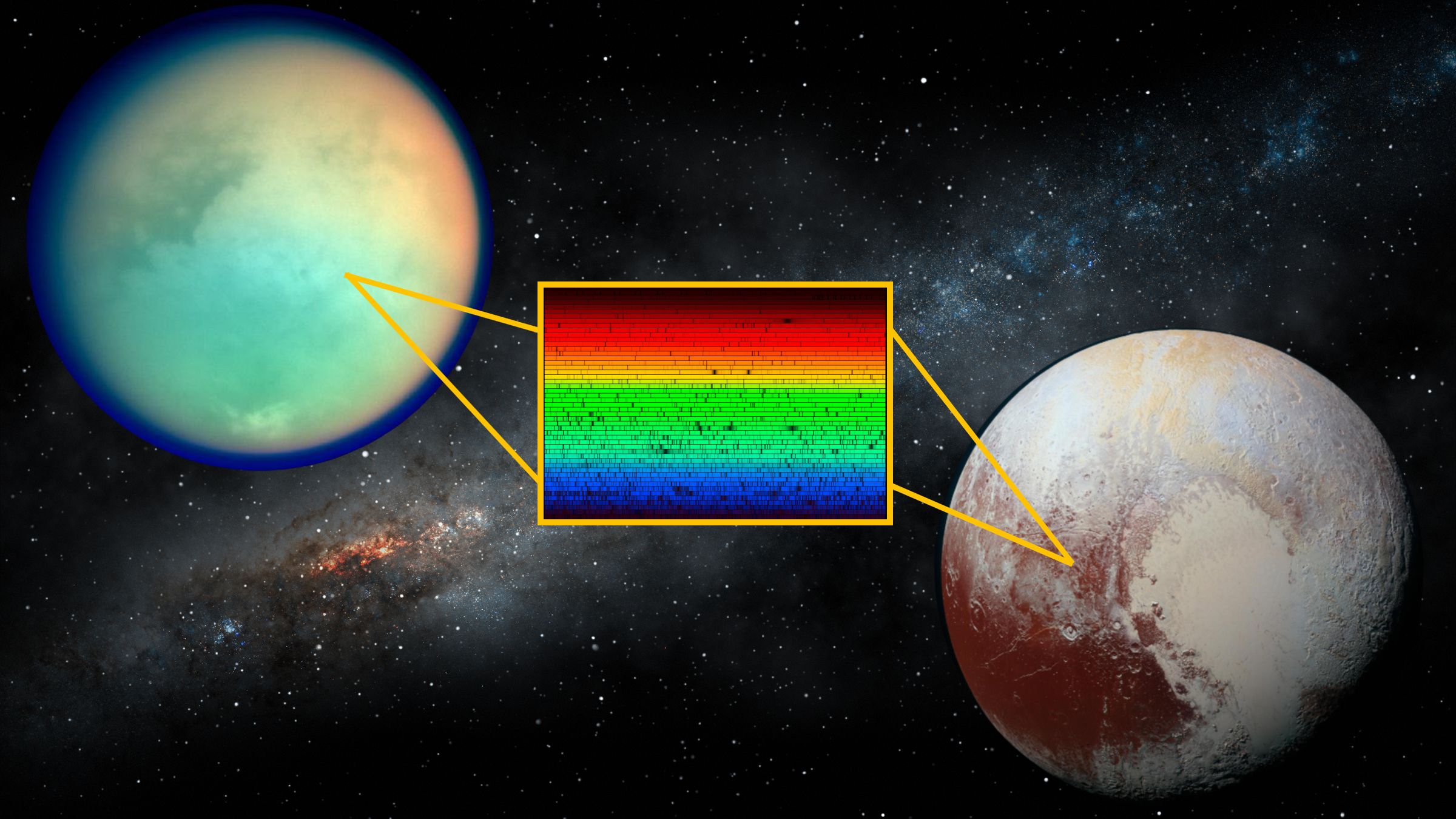
Why it matters: This discovery introduces a new chemical variable into models of surface composition on icy bodies, potentially altering our understanding of prebiotic chemistry and the diversity of organic compounds in the outer solar system.
Context: JWST’s sensitivity at small wavelengths has opened a previously unexplored spectral region, enabling detection of absorption features that older instruments missed. Titan and Pluto share methane-nitrogen atmospheres but differ dramatically in size, temperature, and solar distance, making a common unknown molecule on their surfaces anomalous.
"James Webb telescope may have discovered a mysterious, never-before-seen substance on Pluto and Titan A new study has identified a very specific wavelength of light missing from both Pluto and Saturn’s largest." — LIVESCIENCE
Commentary: The absence of a spectral match across known planetary and exoplanet data suggests either a genuinely novel compound or an exotic phase of a familiar molecule under these worlds’ unique surface conditions. The uneven distribution on Titan’s trailing side hints at formation or transport processes tied to orbital dynamics, possibly magnetospheric interactions or cryovolcanic activity. NASA’s Dragonfly mission, with its onboard spectrograph, is the best near-term chance to resolve the molecule’s identity, but until 2034, this could remain a compelling loose end in comparative planetology.
Date: July 02, 2026 11:13 AM ET
URL: https://www.livescience.com/space/astronomy/james-webb-telescope-may-have-discovered-a-mysterious-never-before-seen-substance-on-pluto-and-titan
AI Sentiment Score: Negative (50%)
AI Credibility Score: 10.0/10 — High
Scores and text generated by AI analysis of the source article indicated.
Are CAPTCHAs obsolete in the age of AI? (Livescience)
Summary: CAPTCHAs, designed to distinguish humans from bots, are increasingly being defeated by AI models that can solve image-based puzzles with 100% accuracy and mimic human browsing behavior. Researchers have demonstrated that both the visual challenge and behavioral detection layers of reCAPTCHA v2 can be bypassed using commodity tools. Modern CAPTCHA systems like reCAPTCHA v3 have shifted to passive, puzzle-free analysis of device attestation, IP history, and user interaction patterns. The fundamental premise that machines cannot perform certain tasks no longer holds, though CAPTCHAs persist due to inertia, cost, and ease of deployment.

Why it matters: The erosion of CAPTCHA as a reliable human verification mechanism forces a re-evaluation of web security, user experience, and accessibility, with implications for bot mitigation strategies across the internet.
Context: CAPTCHAs emerged in the late 1990s as a practical solution to the Turing test problem for web interactions, evolving from distorted text to image recognition and behavioral analysis as AI capabilities advanced.
""When both the challenge and the behavioral layer are defeated by commodity tools running on a single laptop, the fundamental premise of CAPTCHA, that there are tasks humans can do but machines can’t, stops holding," Chong wrote." — LIVESCIENCE
Commentary: The shift to passive, puzzle-free verification systems represents a pragmatic retreat from the Turing test framing, but these systems introduce new attack surfaces around device fingerprinting and behavioral profiling. The arms race has moved from solving puzzles to mimicking human interaction patterns, which raises the bar for bot detection but also increases privacy concerns. The persistence of legacy CAPTCHAs despite their obsolescence highlights the gap between security research and real-world deployment inertia. The satirical game ‘I’m Not a Robot’ underscores a growing public recognition that the verification burden has shifted from machines to humans, inverting the original purpose.
Date: July 04, 2026 05:00 AM ET
URL: https://www.livescience.com/technology/are-captchas-obsolete-in-the-age-of-ai
AI Sentiment Score: Negative (90%)
AI Credibility Score: 10.0/10 — High
Scores and text generated by AI analysis of the source article indicated.
The US is hooked on unregulated peptides. But are they effective, or even safe? (Livescience)
Summary: The US is experiencing a surge in unregulated peptide use, driven by influencers, bodybuilders, and the ‘Make America Healthy Again’ movement, despite limited clinical evidence and significant safety risks. The FDA banned several peptides from compounding pharmacies in 2023, but HHS Secretary Robert F. Kennedy Jr. has proposed legalizing their compounding, with the FDA planning a July review. Most evidence for peptides like BPC-157 and GHK-Cu comes from rodent studies, and users source them from gray markets, often from China. If the ban is lifted, widespread use could outpace scientific understanding of risks and benefits.

Why it matters: This signals a potential regulatory shift that could normalize self-experimentation with poorly understood molecules, challenging the boundary between wellness culture and evidence-based medicine.
Context: Peptide use has roots in bodybuilding and biohacking communities, but the GLP-1 drug boom (e.g., Ozempic) normalized self-injection for non-medical goals, expanding the market.
"The US is hooked on unregulated peptides. But are they effective, or even safe? The world of peptides has exploded in wellness circles, but the benefits of injecting these gray-market molecules rest." — LIVESCIENCE
Commentary: The push to legalize compounding reflects a broader cultural tension between health autonomy and regulatory oversight, but the FDA’s review process for compounded drugs does not include efficacy or safety review—only ingredient monitoring. This creates a scenario where market access expands faster than clinical data, echoing the supplement industry’s long-standing regulatory gaps. The ‘Wolverine stack’ and similar regimens are essentially unstudied polypharmacy experiments, and the absence of adverse event reporting systems for gray-market peptides means harms will likely be detected anecdotally, if at all.
Date: July 04, 2026 10:00 AM ET
URL: https://www.livescience.com/health/medicine-drugs/the-us-is-hooked-on-unregulated-peptides-but-are-they-effective-or-even-safe
AI Sentiment Score: Negative (60%)
AI Credibility Score: 10.0/10 — High
Scores and text generated by AI analysis of the source article indicated.
‘It’s more than a hope, it’s a guarantee’: The Vera C. Rubin Observatory’s 10-year movie of the universe is about to ‘blow our minds,’ chief scientist Tony Tyson says (Livescience)
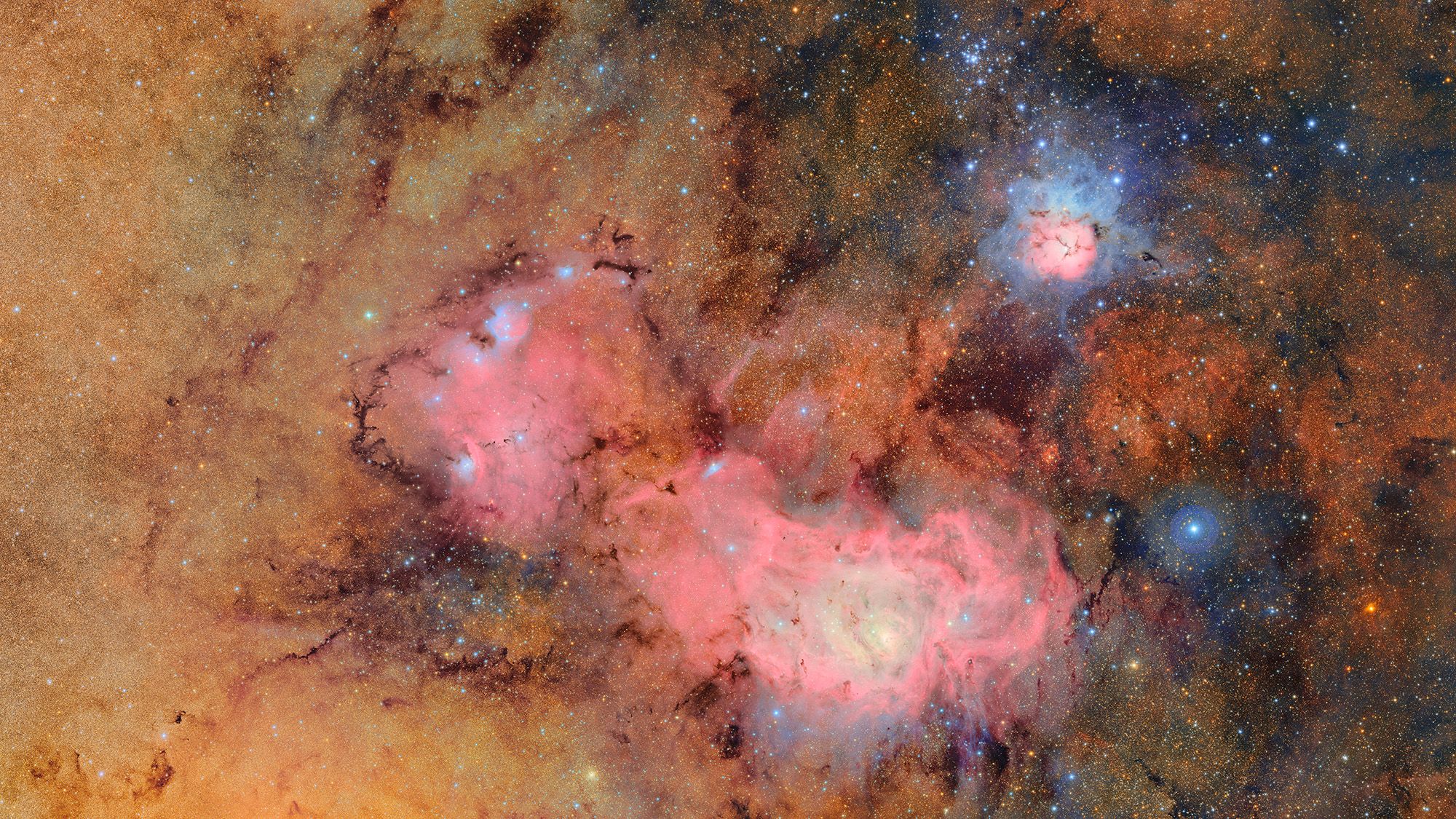
Summary: The Vera C. Rubin Observatory has officially begun its 10-year Legacy Survey of Space and Time (LSST), using the world’s largest digital camera to capture a continuous, high-cadence movie of the southern sky. Chief scientist Tony Tyson expects the survey to detect millions of transient events per night, generate trillions of observations, and potentially reveal unknown phenomena that could revolutionize astronomy. However, the project faces a serious threat from ultra-bright corporate satellites, such as those proposed by Reflect Orbital, which could render the sky too bright for the survey’s sensitive optics. Tyson is working with Congress, the FCC, and the UN to mitigate this interference, but acknowledges the business models pushing these satellites forward.
Why it matters: This survey represents the most systematic, high-cadence optical census of the southern sky ever attempted, with the potential to fundamentally alter our understanding of dark matter, dark energy, and transient astrophysical phenomena—if artificial satellite constellations do not first degrade the observational environment beyond recovery.
Context: The LSST is the culmination of over two decades of planning and construction, designed to map the entire visible southern sky every few nights for a decade. Its data will be publicly available in near real-time, enabling a global community of researchers to study everything from near-Earth asteroids to the large-scale structure of the universe.
"My hope at this time is that we will discover something unexpected that will revolutionize astronomy. I think it’s more than a hope, I think it’s a guarantee." — LIVESCIENCE
Commentary: Tyson’s confidence in guaranteed discovery is not hubris but a statistical inevitability given the survey’s unprecedented depth and cadence—the real unknown is whether the signal will survive the noise of corporate megaconstellations. The tension between commercial space ambitions and fundamental science is now a concrete operational crisis, not a theoretical future problem. If the LSST’s data quality is compromised, the loss is not just to astronomy but to the public good of an open, shared sky.
Date: July 03, 2026 06:00 AM ET
URL: https://www.livescience.com/space/astronomy/its-more-than-a-hope-its-a-guarantee-the-vera-c-rubin-observatorys-10-year-movie-of-the-universe-is-about-to-blow-our-minds-chief-scientist-tony-tyson-says
AI Sentiment Score: Negative (69%)
AI Credibility Score: 10.0/10 — High
Scores and text generated by AI analysis of the source article indicated.
CERN shuts down Large Hadron Collider until 2030, upgrading the atom smasher to its most powerful form yet (Livescience)
Summary: CERN has shut down the Large Hadron Collider for a four-year upgrade, with the machine scheduled to return in 2030 as the High-Luminosity LHC. The upgrade will increase collision rates by a factor of ten, enabling the production of roughly 380 million Higgs bosons over its lifetime versus 55 million to date. The shutdown involves replacing 1.2 km of magnets and components across the 27 km ring. The collider will then run until the 2040s, after which a new, higher-energy accelerator is planned.

Why it matters: For readers tracking fundamental physics and large-scale scientific infrastructure, this shutdown marks the transition to the LHC’s final, most sensitive operational phase—one that may either confirm or break the Standard Model’s limits on dark matter and dark energy.
Context: The LHC has undergone two previous long shutdowns: LS1 (2013–2015) consolidated magnet connections and boosted beam energy; LS2 (2018–2022) involved upgrades and preventive maintenance. LS3 is the most ambitious, aiming for a tenfold luminosity increase.
"The data could help scientists solve problems with the Standard Model, which currently doesn’t incorporate dark matter or dark energy, the primary forms of mass and energy in the universe." — LIVESCIENCE
Commentary: The HiLumi upgrade is a bet on statistics over energy: rather than building a larger ring, CERN is maximizing collision density in the existing tunnel. This strategy prioritizes rare-event detection over discovery of new particles at higher masses. If no new physics emerges from this data-rich run, the case for a next-generation collider will face intense scrutiny from funding bodies and competing scientific priorities.
Date: June 30, 2026 01:50 PM ET
URL: https://www.livescience.com/physics-mathematics/particle-physics/cern-shuts-down-large-hadron-collider-until-2030-upgrading-the-atom-smasher-to-its-most-powerful-form-yet
AI Sentiment Score: Positive (66%)
AI Credibility Score: 10.0/10 — High
Scores and text generated by AI analysis of the source article indicated.
Post ID: f332994a