

Health, environment, and society
Has there ever been a period in human history without war? (Livescience)
Summary: A new review of archaeological and historical evidence challenges the assumption that war is a permanent feature of human existence. While interpersonal violence has always occurred, organized warfare between governments is a relatively recent phenomenon, emerging only with the rise of agriculture and state structures. The article identifies several historical periods—such as the Long Fifth Century between Rome and Persia, and the East Asian peace from 1600 to 1850—when rival powers maintained peace through mutual recognition, treaties, or economic incentives. These exceptions suggest that war, though common, is not inevitable.

Why it matters: This reframes the debate about human nature and conflict, offering historical evidence that peace between large polities is achievable under specific structural conditions, with direct implications for contemporary conflict resolution and international relations theory.
Context: The piece synthesizes work by historians Ian Morris, Peter Stearns, and Jared Morgan McKinney, who distinguish between interpersonal violence and state-organized war, and who document rare but real periods of sustained peace between major powers.
"Wars are expensive and risky," said Peter Frankopan, a professor of global history at the University of Oxford. "So in many periods in history, stability and peace have been achieved by rivals, adversaries and neighbors being able to match each other’s capabilities." — LIVESCIENCE
Commentary: The key insight is that peace is not a default state but a strategic equilibrium, often maintained through costly signaling or mutual deterrence. The East Asian ‘long peace’ (1600–1850) is particularly instructive: it was not a product of pacifism but of a stable power balance and economic interdependence, a pattern that resonates with modern debates about the ‘long peace’ after 1945. The article implicitly challenges the realist assumption that war is a constant, suggesting instead that it is a contingent outcome of specific institutional and geopolitical arrangements.
Date: July 05, 2026 05:00 AM ET
URL: https://www.livescience.com/archaeology/has-there-ever-been-a-period-in-human-history-without-war
AI Sentiment Score: Negative (66%)
AI Credibility Score: 10.0/10 — High
Scores and text generated by AI analysis of the source article indicated.
During World War I, This Woman Asked Americans to Welcome Immigrants—and Urged New Arrivals to Assimilate (Smithsonianmag)
Summary: Frances Kellor, a progressive reformer and lesbian activist, spearheaded Americanization Day between 1915 and 1918, urging immigrants to assimilate into U.S. culture while also calling on native-born Americans to welcome them. Her efforts, rooted in a desire to protect immigrants from exploitation, culminated in the New York Bureau of Industries and Immigration, the first state agency led by a woman. After World War I, Kellor grew disillusioned as the movement turned coercive and Congress passed restrictive quota acts in 1921. She later shifted her focus to arbitration and women’s suffrage, leaving a complex legacy of assimilation advocacy that blended empathy with the era’s melting-pot ideology.
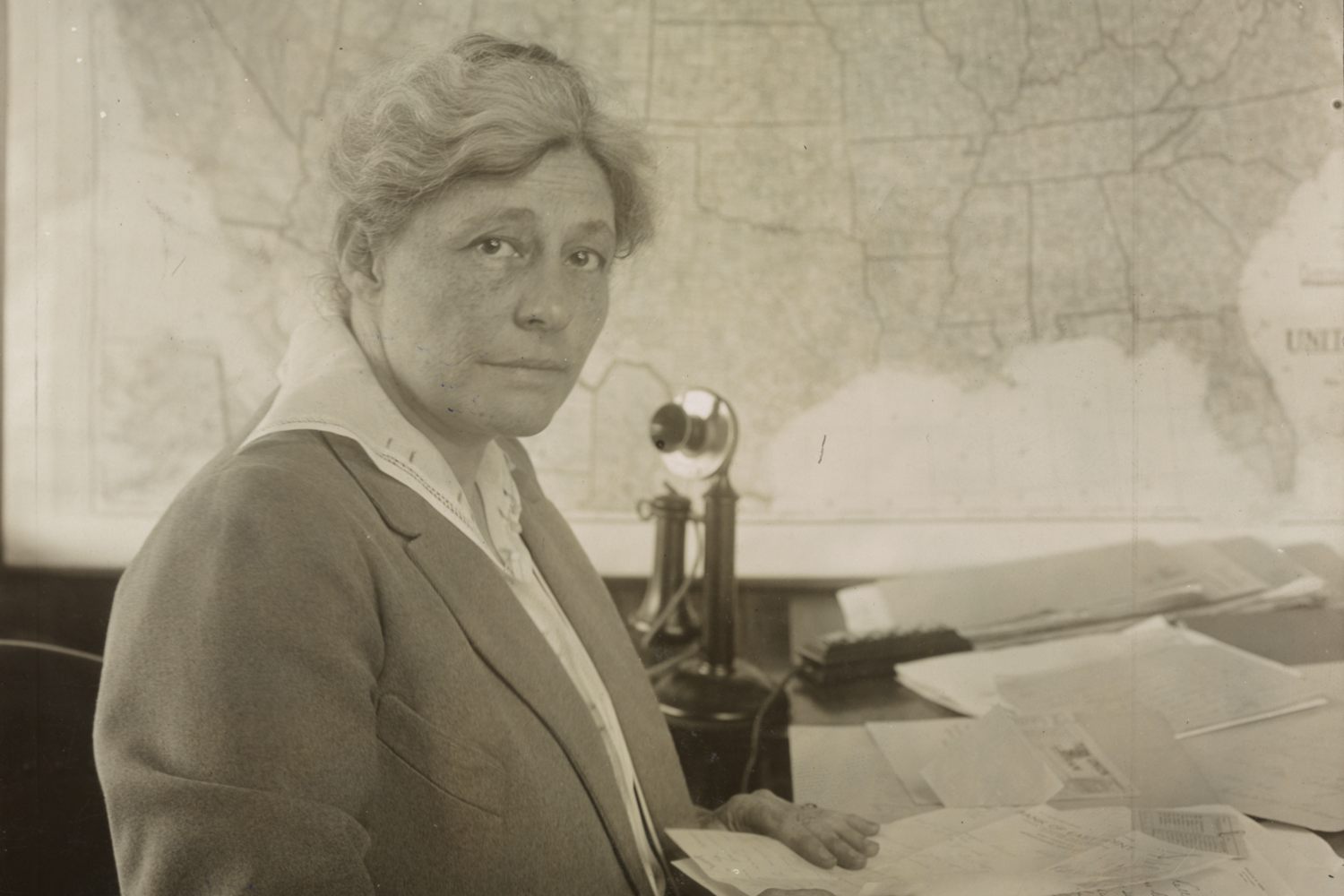
Why it matters: Kellor’s story complicates the modern binary between nativism and multiculturalism, revealing how early 20th-century progressives framed assimilation as a protective, not punitive, project—a tension that still shapes immigration debates today.
Context: The Americanization movement emerged during a peak immigration period (one million arrivals annually) and World War I xenophobia, particularly against German Americans, before collapsing under the 1920s quota system that Kellor herself opposed.
"During World War I, This Woman Asked Americans to Welcome Immigrants—and Urged New Arrivals to Assimilate Progressive reformer Frances Kellor spearheaded efforts to celebrate Americanization Day, arguing that immigrants should fully embrace." — SMITHSONIANMAG
Commentary: Kellor’s trajectory—from championing assimilation to rejecting its coercive turn—mirrors the arc of many progressive movements that began as protective interventions and ended as instruments of social control. Her buried legacy, recovered here through Press’s biography, underscores how historical memory flattens the internal contradictions of reform. The real signal is not Kellor’s assimilationism per se, but the institutional machinery she built: state bureaus, language programs, and arbitration bodies that outlasted her original vision. Contemporary readers should ask which current ‘welcoming’ initiatives might similarly evolve into systems their founders would disown.
Date: June 30, 2026 07:45 AM ET
URL: https://www.smithsonianmag.com/history/during-world-war-i-this-woman-asked-americans-to-welcome-immigrants-and-urged-new-arrivals-to-assimilate-180989035/
AI Sentiment Score: Negative (50%)
AI Credibility Score: 10.0/10 — High
Scores and text generated by AI analysis of the source article indicated.
The hantavirus outbreak is over, WHO declares (Livescience)
Summary: The WHO has declared the hantavirus outbreak that began on the cruise ship MV Hondius in April officially over. The outbreak, caused by the Andes virus, sickened 13 people and killed three. An international contact-tracing operation tracked over 650 contacts across 33 countries, with the final contact completing quarantine on July 2. No further cases have been reported since May 25.

Why it matters: This outbreak tested international public health coordination for a pathogen with documented human-to-human transmission, and its containment provides a benchmark for managing future zoonotic spillover events in mobile populations.
Context: The Andes virus is the only hantavirus known to spread between people, though transmission chains have historically been short. The outbreak’s origin on a cruise ship amplified the risk of rapid geographic dispersal before authorities were notified.
"The initial unchecked travel of some contacts, alongside the virus’s long incubation period, prompted concern from the public that the cluster of cases could explode into an enormous outbreak, or even a global pandemic." — LIVESCIENCE
Commentary: The successful containment of this outbreak is a significant operational achievement, but it also highlights a structural vulnerability: the delay between disembarkation and notification created a window for undetected spread. As climate change expands rodent ranges, the frequency of hantavirus spillover events is likely to increase, making the protocols tested here a template for future response.
Date: July 02, 2026 02:15 PM ET
URL: https://www.livescience.com/health/viruses-infections-disease/the-hantavirus-outbreak-is-over-who-declares
AI Sentiment Score: Negative (60%)
AI Credibility Score: 10.0/10 — High
Scores and text generated by AI analysis of the source article indicated.
‘Uncharted territory’: Record high ocean temperatures confirmed for June as El Niño strengthens its grip (Livescience)
Summary: Global sea surface temperatures hit a record high of 20.86°C on June 21, 2026, surpassing the previous record set in June 2024, according to the Copernicus Climate Change Service. The newly declared El Niño in the Pacific is expected to intensify, pushing temperatures into ‘uncharted territory’ and likely breaking more records in coming months. Regional anomalies were extreme: the Mediterranean saw temperatures up to 8°C above the 1990-2020 average. The warming amplifies storm energy, evaporation, and precipitation extremes, while stressing marine ecosystems and accelerating ice melt and sea level rise.

Why it matters: This is not a single hot month but a structural shift: the combination of a strengthening El Niño atop a long-term warming trend means the climate system is entering a phase with no historical analogue, with direct consequences for global food security, insurance markets, and coastal infrastructure planning.
Context: The previous record for June was set in 2024, itself a year of extreme ocean heat. El Niño events typically release stored Pacific heat into the atmosphere, and this one is forecast to reach levels not seen in decades, compounding the background warming from greenhouse gas accumulation.
"Current conditions could indicate the beginning of a new phase, leading, once more, to uncharted territory," Carlo Buontempo, director of the Copernicus Climate Change Service at the European Centre for Medium-Range Weather Forecasts (ECMWF), said in a statement. "With ocean temperatures at these levels and El Niño on the horizon, we are likely to see more temperature records fall in the coming months." — LIVESCIENCE
Commentary: The phrase ‘uncharted territory’ is not rhetorical flourish but a technical admission: these conditions exceed the bounds of the models’ calibration period. For readers tracking systemic risk, the key signal is the Mediterranean anomaly—8°C above baseline in a region already prone to drought and wildfire. The Copernicus Marine Service’s independent reading of 21.0°C adds confidence that the record is not a data artifact. Expect this to sharpen the debate over whether current climate adaptation timelines are adequate for a world that is warming faster than projected.
Date: July 02, 2026 01:06 PM ET
URL: https://www.livescience.com/planet-earth/climate-change/uncharted-territory-record-high-ocean-temperatures-confirmed-for-june-as-el-nino-strengthens-its-grip
AI Sentiment Score: Positive (60%)
AI Credibility Score: 10.0/10 — High
Scores and text generated by AI analysis of the source article indicated.
Unrefined: How Capitalism Reinvented Sugar (Worldhistory)
Summary: David Singerman’s "Unrefined: How Capitalism Reinvented Sugar" (University of Chicago Press, 2025) argues that sugar was not merely a commodity but the central mechanism through which modern capitalism was forged—a system he terms "sugar capitalism." The book traces how plantation industrialization, enslaved labor expertise, federal tariffs, and the false standardization of sugar’s whiteness created monopolies, corruption, and a hierarchy of purity that persists in contemporary capitalism. Singerman, a historian of science, technology, and capitalism at the University of Virginia, organizes the work into three parts covering the Caribbean and Atlantic plantation system, the legal and political machinery of the U.S. sugar trust, and the deceptive science of sugar grading. The review notes that the book is dense and aimed at specialists, but it connects sugar to broader patterns in the history of capitalism, bureaucracy, and racialized categorization.

Why it matters: This book reframes the history of capitalism not as an abstract system but as a material process driven by a single crop, revealing how standardization, corruption, and racial hierarchy were built into the very structure of modern markets.
Context: Singerman’s PhD dissertation on sugar directly informed this book, and the review positions it within a growing scholarly literature that treats commodities as active agents in shaping political economy, law, and social order.
"Through sugar, readers understand that the obsession with categorization and standardization that is at the core of capitalism allows for conspiracies and corruption, as whoever has the power can change the rules." — WORLDHISTORY
Commentary: The review’s emphasis on the "false nature" of sugar standardization is the book’s most potent analytical move: it suggests that capitalism’s claim to objective measurement is itself a power play, not a neutral technology. For scholars of ancient and early modern economies, this raises questions about how earlier commodity standards—like grain measures or coinage purity—similarly encoded social hierarchies and enabled elite capture. The implication is that the "sugar revolution" was not just an industrial or agricultural event but a legal and epistemological one, with echoes in today’s algorithmic grading and supply chain certification regimes.
Date: July 03, 2026 04:00 AM ET
URL: https://www.worldhistory.org/review/557/unrefined-how-capitalism-reinvented-sugar/
AI Sentiment Score: Negative (66%)
AI Credibility Score: 10.0/10 — High
Scores and text generated by AI analysis of the source article indicated.
11-year-old boy in Canada dies from rabies after waking up with a bat on his face (Livescience)
Summary: An 11-year-old boy in Ontario died from rabies after a bat landed on his face while he slept. No visible bite or scratch was found, and symptoms appeared 19 days later. Despite intensive care, he lost brain stem function and was taken off life support. The case underscores that any direct bat contact, even without obvious injury, requires immediate postexposure prophylaxis.
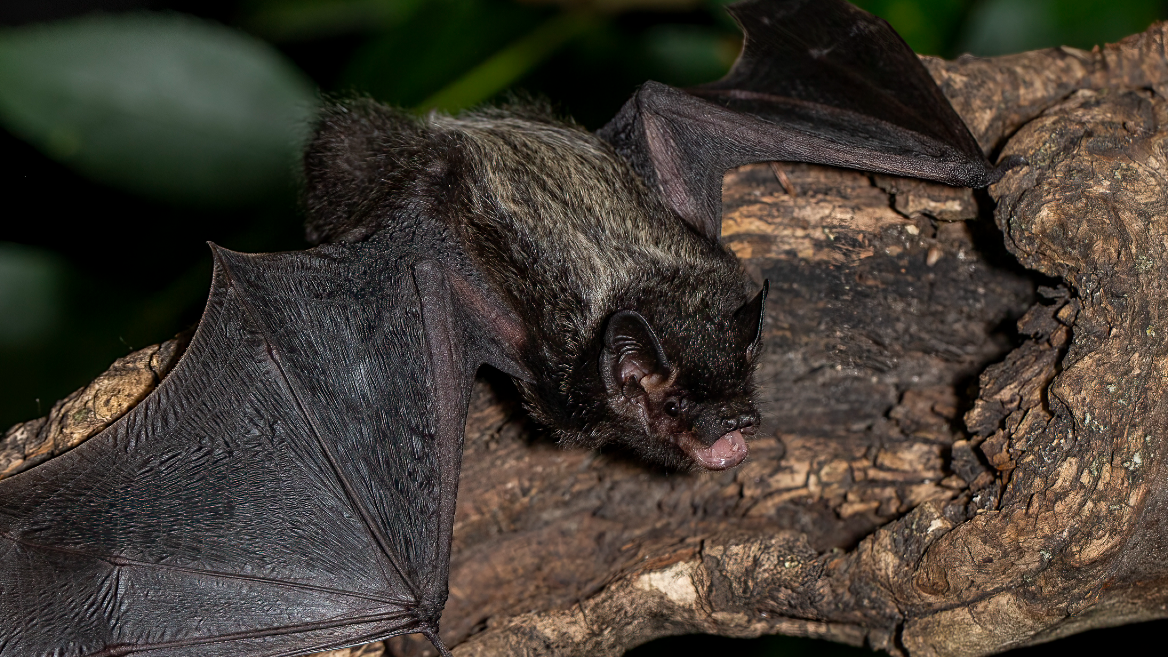
Why it matters: This case challenges the common assumption that rabies risk is negligible without visible wounds, and reinforces the need for public health messaging to treat all bat contact as high-risk.
Context: Rabies in humans is extremely rare in North America—fewer than 10 U.S. deaths per year and only 28 Canadian fatalities since 1924—but the disease is nearly 100% fatal once symptoms develop.
"11-year-old boy in Canada dies from rabies after waking up with a bat on his face After an 11-year-old boy died of rabies, doctors are urging the public to seek medical attention." — LIVESCIENCE
Commentary: The parents’ decision not to seek care, based on the bat’s non-aggressive behavior and lack of visible injury, reflects a dangerous gap in public understanding. Medical authorities must shift from advising vigilance only when bites are apparent to mandating prophylaxis for any direct bat contact. This case also highlights the vulnerability of children, who may not report or recognize minor exposures. The rarity of rabies fatalities should not lull the public into complacency—prophylaxis is nearly 100% effective if administered promptly.
Date: July 02, 2026 10:32 AM ET
URL: https://www.livescience.com/health/viruses-infections-disease/11-year-old-boy-in-canada-dies-from-rabies-after-waking-up-with-a-bat-on-his-face
AI Sentiment Score: Negative (66%)
AI Credibility Score: 10.0/10 — High
Scores and text generated by AI analysis of the source article indicated.
66 billion trees have been planted in China’s Great Green Wall — and they appear to be growing faster than natural forests (Livescience)
Summary: A new study in Geophysical Research Letters finds that China’s planted forests—66 billion trees and counting—are increasing leaf area 66% faster than natural forests, driven largely by younger age and active management. Even when controlling for age, planted forests grew 4.6% faster, with the effect peaking at 30–40 years before declining. The lead author warns that most global climate models fail to distinguish between forest types or account for age-related dynamics, potentially overstating long-term carbon storage from reforestation. The finding sharpens the debate over whether planted forests are a durable climate solution or a short-term carbon spike.
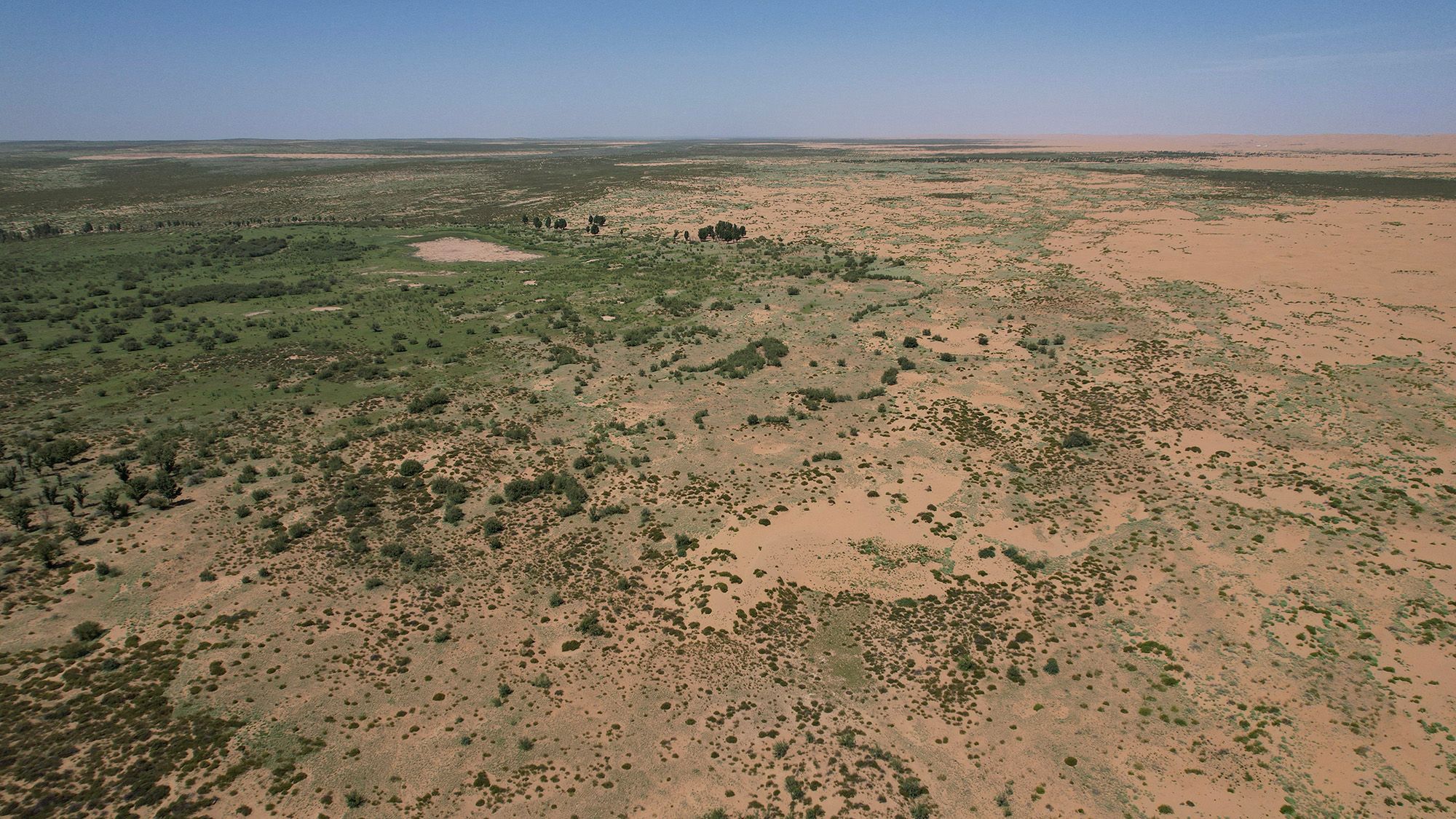
Why it matters: For readers tracking climate mitigation and land-use policy, this study reveals that the carbon accounting assumptions baked into global models may be systematically wrong—overestimating the long-term sequestration value of massive tree-planting campaigns like China’s Great Green Wall.
Context: China has planted 66 billion trees since 1978 as part of its Great Green Wall project, with plans for 34 billion more by mid-century. The study directly challenges the common modeling practice of treating all forests as functionally equivalent.
"Planted forests are widely used in climate mitigation strategies, but most global ecosystem models do not distinguish between forest types or represent age-related dynamics adequately," Luo said. "So we felt it was important to clarify how these factors interact — not just for scientific understanding, but also for improving the models and assumptions that underpin real-world forest policy and carbon accounting."
Commentary: The 4.6% age-controlled growth advantage is real but modest, and the sharp drop-off after age 40 suggests planted forests are a tactical carbon pulse, not a strategic sink. The real signal here is the modeling failure: if global carbon budgets rely on undifferentiated forest growth curves, they are building on sand. Policymakers should treat tree-planting as a bridge, not a destination, and invest in natural forest preservation for the long haul.
Date: June 30, 2026 12:08 PM ET
URL: https://www.livescience.com/planet-earth/plants/trees-in-chinas-great-green-wall-appear-to-grow-faster-than-natural-forests-study-finds
AI Sentiment Score: Negative (50%)
AI Credibility Score: 10.0/10 — High
Scores and text generated by AI analysis of the source article indicated.
Odysseus & His Epic Odyssey: The Ultimate Homecoming Voyage of Greek Mythology (Worldhistory)
Summary: This article provides a general overview of Homer’s Odyssey, summarizing the hero’s journey from Troy to Ithaca, the obstacles he faces, and the poem’s enduring cultural significance. It describes the narrative as a ‘road trip’ and ‘journey of redemption,’ highlighting encounters with gods, monsters, and temptations. The piece serves as a basic introduction rather than offering new analysis or breaking developments.

Why it matters: For readers tracking ancient world narratives in modern media, this piece signals that the Odyssey remains a foundational reference point for adaptation and cultural commentary. Its continued presence in film and literature development suggests ongoing market interest in epic storytelling frameworks.
Context: The Odyssey has been adapted countless times, from the 1954 film ‘Ulysses’ to the Coen brothers’ ‘O Brother, Where Art Thou?’ (2000) and recent projects like Christopher Nolan’s upcoming adaptation. This article appears to be a primer rather than news about a specific new project.
"Homer’s epic poem, the Odyssey, is Greek mythology’s greatest road trip, journey of redemption, and homecoming voyage all rolled into one." — WORLDHISTORY
Commentary: The article’s framing as a ‘road trip’ reflects a modern, accessible lens that studios often use to pitch ancient epics to contemporary audiences. However, the piece lacks any reporting on actual development deals, casting, or production timelines, making it more of a cultural refresher than industry intelligence. For serious observers, the key takeaway is the persistent market appetite for Odyssey adaptations, not the content of this particular summary.
Date: July 03, 2026 05:00 AM ET
URL: https://www.worldhistory.org/collection/318/odysseus--his-epic-odyssey/
AI Sentiment Score: Neutral (50%)
AI Credibility Score: 10.0/10 — High
Scores and text generated by AI analysis of the source article indicated.
Japan’s bold experiment to curb antibiotic misuse has been a huge success. Could it work in the US? (Livescience)
Summary: Japan’s 2018 incentive program pays pediatricians roughly $5 per claim for withholding antibiotics in likely viral cases, achieving a 20% reduction in overall antibiotic use and a 24% drop in broad-spectrum prescriptions among eligible clinics over four years, with no increase in hospitalizations. The policy has been expanded to cover children under 6, ear/nose/throat specialists, and additional conditions. The program’s success raises the question of whether a similar financial incentive could work in the U.S., where outpatient antibiotic overprescription patterns mirror Japan’s pre-reform baseline.

Why it matters: This is a rare, rigorously measured example of a behavioral incentive reducing antimicrobial resistance drivers at scale, offering a potential policy template for the U.S. healthcare system, which faces similar overprescription dynamics but lacks equivalent financial levers.
Context: Antimicrobial resistance directly caused 1.14 million deaths globally in 2021, and Japan’s 2015 cross-country comparison ranked it last among 35 high-income nations in appropriate antibiotic choices for children under 5.
"These eligible clinics saw a 17.8% reduction in their total antibiotic use over a year without any negative effects for patients, such as higher hospitalization rates." — LIVESCIENCE
Commentary: The program’s design—small, additive rewards rather than penalties—sidesteps the political resistance that punitive measures typically provoke from physician lobbies, a lesson U.S. policymakers should note. The spillover effect to older children not covered by the incentive suggests that changing prescribing norms can propagate through professional networks, not just financial signals. However, the U.S. fee-for-service reimbursement structure, which Japan excluded from the incentive, would require either a parallel payment reform or a more complex targeting mechanism to replicate the results.
Date: June 29, 2026 02:10 PM ET
URL: https://www.livescience.com/health/medicine-drugs/japans-bold-experiment-to-curb-antibiotic-misuse-has-been-a-huge-success-could-it-work-in-the-us
AI Sentiment Score: Negative (60%)
AI Credibility Score: 10.0/10 — High
Scores and text generated by AI analysis of the source article indicated.
Shadowy tendrils of ancient lava have scarred a dark volcano next to a ‘skull’ in the Sahara — Earth from space (Livescience)
Summary: A 2019 astronaut photo reveals the Toussidé volcano in Chad, a ‘potentially active’ stratovolcano with ancient lava flows forming a dark massif. Nearby, the Trou au Natron caldera resembles a giant skull, formed by an explosive eruption over 120,000 years ago. The volcano’s name translates to ‘which killed the local people with fire,’ though no Holocene eruptions are recorded. The massif may eventually erode to blend with the surrounding plateau within 100,000 years.
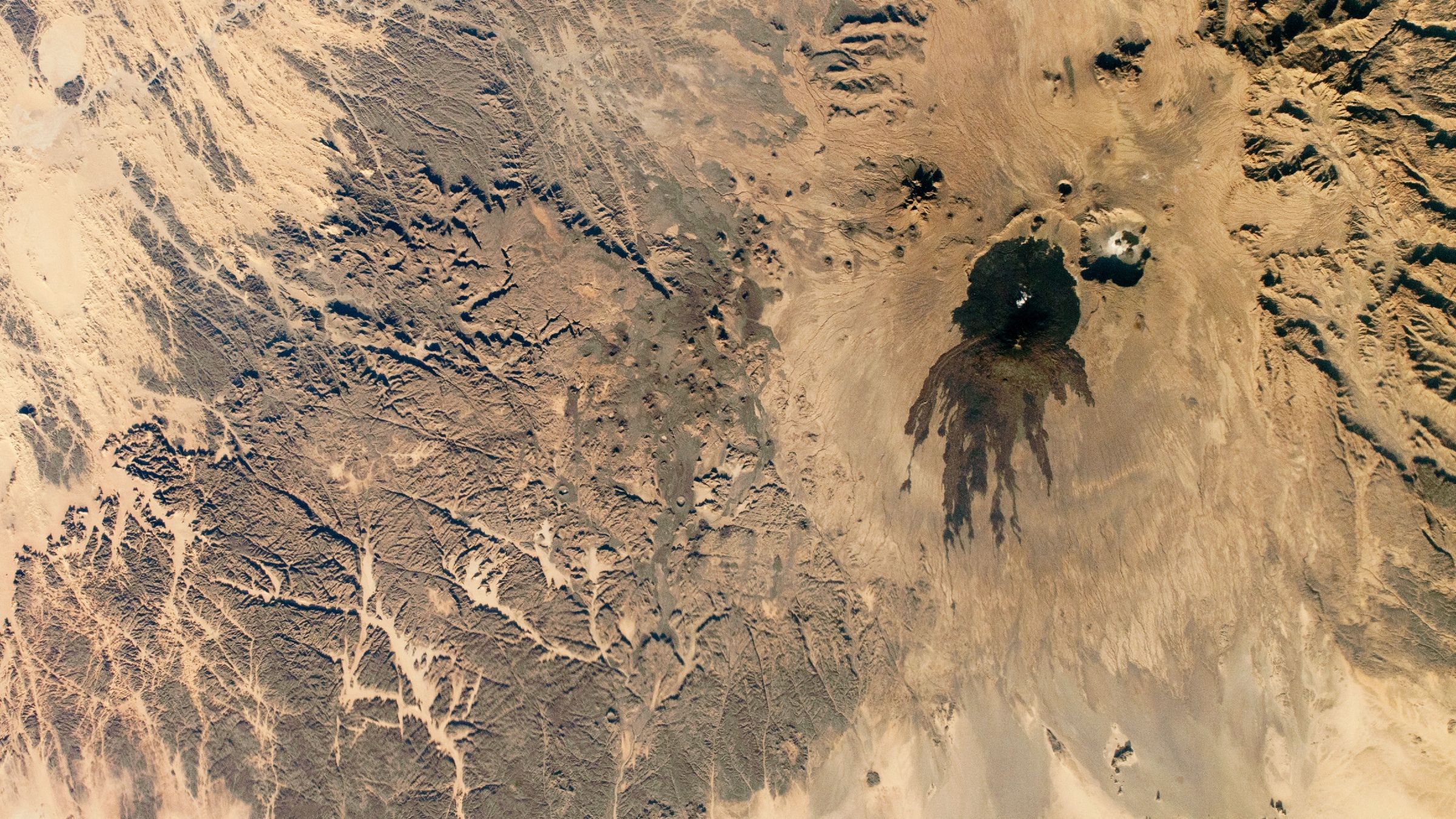
Why it matters: This image underscores the tension between geological time scales and human cultural memory, as the volcano’s name hints at past catastrophes not yet confirmed by science.
Context: The Tibesti Mountains span 40,000 square miles across Chad and Libya, with Toussidé as the second-tallest peak. The region’s volcanic history is poorly monitored, leaving eruptive potential unassessed.
"Shadowy tendrils of ancient lava have scarred a dark volcano next to a ‘skull’ in the Sahara — Earth from space A 2019 astronaut photo shows off ancient lava flows that once." — LIVESCIENCE
Commentary: The disconnect between indigenous oral tradition and the lack of Holocene eruption evidence raises questions about the reliability of geological records in remote regions. The skull-like caldera, formed over 120,000 years ago, serves as a stark reminder that volcanic hazards can persist long after apparent dormancy. Without proper geophysical assessment, Toussidé remains a blind spot in global volcanic risk monitoring.
Date: June 30, 2026 03:00 AM ET
URL: https://www.livescience.com/planet-earth/volcanoes/shadowy-tendrils-of-ancient-lava-have-scarred-a-dark-volcano-next-to-a-skull-in-the-sahara-earth-from-space
AI Sentiment Score: Negative (50%)
AI Credibility Score: 10.0/10 — High
Scores and text generated by AI analysis of the source article indicated.
Post ID: 2ef1c882