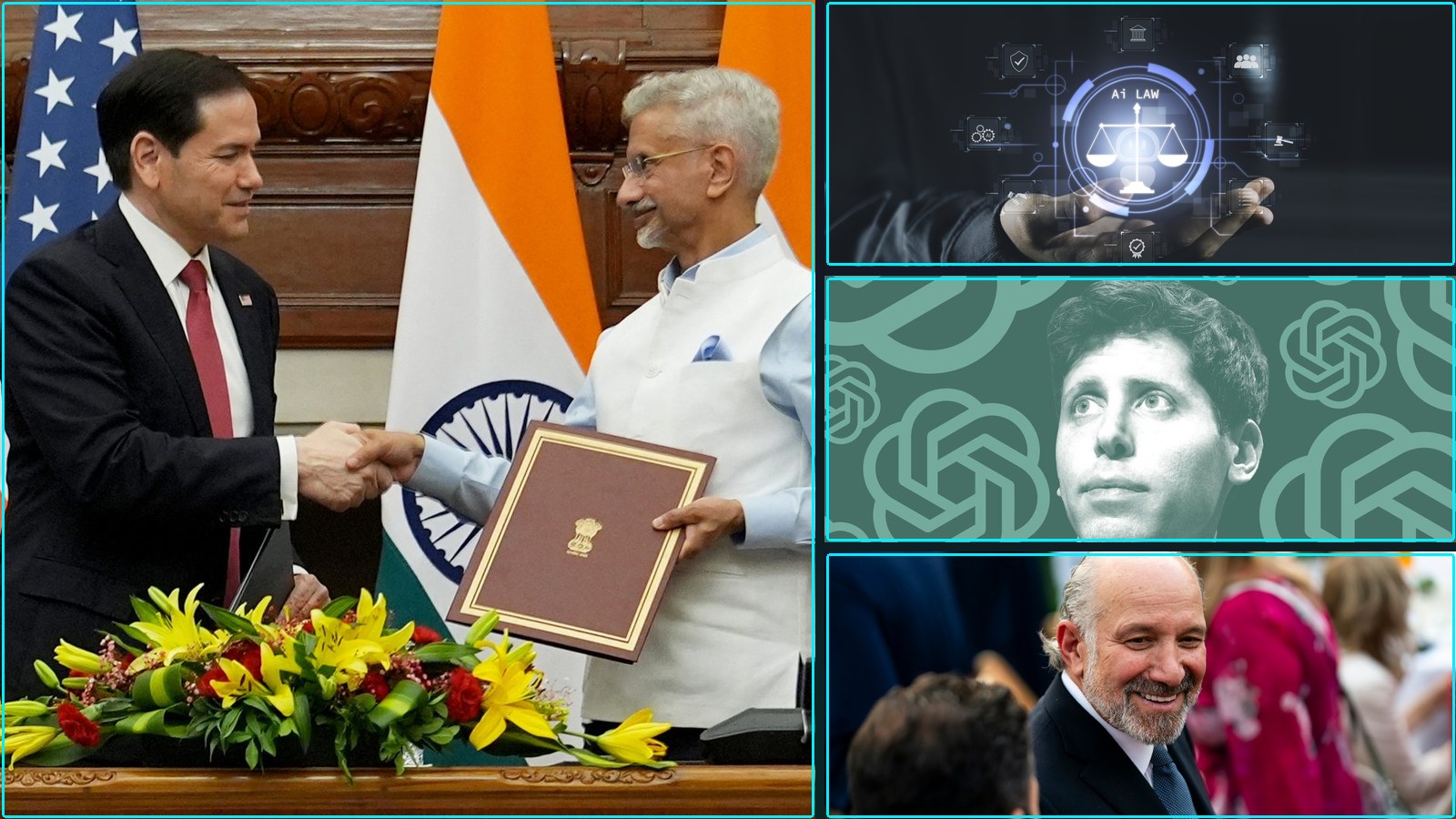
AI Regulation and Export Control Debates
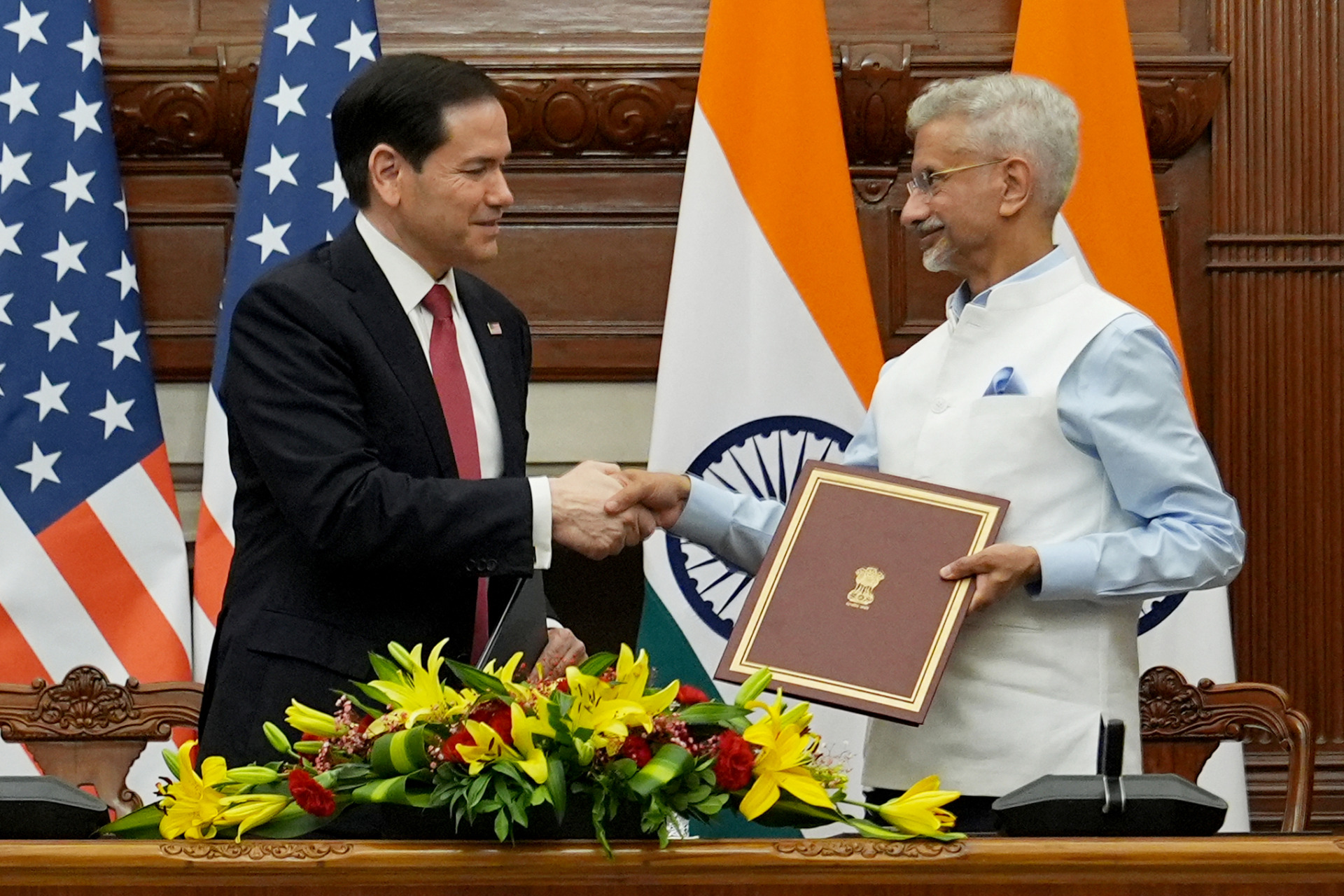
U.S. Export Control Unpredictability Is Testing the Limits of U.S.-India Tech Cooperation (Justsecurity)
Summary: Despite ambitious defense cooperation agreements signed during Secretary Rubio’s recent visit to New Delhi, U.S. export control unpredictability is pushing Indian deep-tech firms to decouple their software from American hardware. The Trump administration’s ad-hoc licensing regime, staff attrition at the Commerce Department’s Bureau of Industry and Security, and the lack of a replacement for the Biden-era AI Diffusion Rule have created bottlenecks and uncertainty. Indian firms are now building chip-agnostic AI models and software pipelines to reduce dependency on U.S.-controlled semiconductors, a pivot that threatens the interoperability of joint systems like maritime drone swarms and cyber defense platforms. The regulatory grey area of India’s ‘Major Defense Partner’ status, which offers less access than formal allies, is becoming untenable as co-development ambitions expand.
Why it matters: The divergence in tech stacks between the U.S. and India could cripple the real-time interoperability required for joint ISR, submarine tracking, and autonomous systems—undermining the strategic rationale for the entire defense partnership.
Context: India was placed on a restricted access tier under the Biden AI Diffusion Rule, and the Trump administration discarded that rule without a replacement, leaving license approvals to ad-hoc review by a single official with no published criteria. BIS has lost 20% of its staff in the past year.
"If Indian firms continue investing in chip-agnostic software as a hedge against U.S. export unpredictability, this presents several challenges for the United States in executing the ambitious defense cooperation with New Delhi. The potentially growing divergence between U.S. and Indian advanced computing hardware and software has the potential to cripple the interoperability required for complex joint ISR and maritime drone operations." — JUSTSECURITY
Commentary: The U.S. is simultaneously asking India to co-develop sensitive military systems while treating semiconductor access as a bargaining chip—a contradiction that incentivizes the very decoupling it fears. The BIS Licensing Efficiency Act of 2026 could help, but it addresses process speed, not the fundamental trust gap. Without a clear definition of what ‘Major Defense Partner’ actually suggests, India will continue hedging, and the Quad’s operational effectiveness will erode from the software layer up.
Date: July 01, 2026 09:05 AM ET
URL: https://www.justsecurity.org/143257/us-india-export-control-unpredictability/
AI Sentiment Score: Negative (60%)
AI Credibility Score: 10.0/10 — High
Scores and text generated by AI analysis of the source article indicated.
The Handover of AI Standard-Setting (Justsecurity)
Summary: The public bodies that are supposed to set the standards for AI regulation have, for the most part, not done it yet. AI regulations on both sides of the Atlantic require providers to certify or document that their systems meet general requirements (such as accuracy, fairness, robustness, human oversight). But they leave much of the specification over what those requirements mean to bodies that have not yet produced requirements that match the systems being regulated.

Why it matters: This matters for Policy, Legal & Regulatory because it gives a concrete current signal to track: The public bodies that are supposed to set the standards for AI regulation have, for the most part, not done it yet.
Context: The public bodies that are supposed to set the standards for AI regulation have, for the most part, not done it yet. AI regulations on both sides of the Atlantic require providers to certify or document that their systems meet general requirements (such as accuracy, fairness, robustness, human oversight). But they leave much of the specification over what those requirements mean to bodies that have not yet produced requirements that match the systems being regulated.
"The public bodies that are supposed to set the standards for AI regulation have, for the most part, not done it yet. AI regulations on both sides of the Atlantic require providers." — JUSTSECURITY
Commentary: The real consequence will depend on whether this changes enforcement, liability, or the operating room for major platforms and institutions.
Date: June 30, 2026 09:15 AM ET
URL: https://www.justsecurity.org/140955/handover-ai-standard-setting/
AI Sentiment Score: Neutral (50%)
AI Credibility Score: 10.0/10 — High
Scores and text generated by AI analysis of the source article indicated.
OpenAI floats giving Trump administration 5 percent cut of AI boom (Theverge)
Summary: OpenAI has proposed giving the US government a 5 percent ownership stake to ease tensions with the Trump administration and address public backlash against AI. CEO Sam Altman reportedly pitched the idea to Trump early last year, suggesting the 5 percent figure. Based on OpenAI’s latest valuation of $852 billion, that stake would be worth roughly $42.6 billion. The proposal is still in early stages and would involve other AI companies offering similar stakes.

Why it matters: This signals a potential shift in how AI companies negotiate regulatory risk, trading equity for policy favor and avoiding onerous rules. It also tests whether the government will accept direct ownership in private AI firms, setting a precedent for industry-wide wealth redistribution.
Context: The Trump administration has already taken a 10% stake in Intel and demanded a 15% cut from Nvidia and AMD on AI chip sales to China. Meanwhile, Anthropic has faced repeated regulatory setbacks, highlighting the administration’s hands-on approach to AI.
"CEO Sam Altman argued that giving the public a financial interest in the company would be the best way to share the upside of AI, the FT reported, citing two unnamed people familiar with the talks." — THEVERGE
Commentary: Altman’s proposal is a calculated hedge: a 5% stake is a small price for regulatory cover, especially given the administration’s demonstrated willingness to intervene. The real question is whether other AI firms will follow, and whether the government will use such stakes to steer AI development or simply extract revenue. If this becomes a pattern, it could reshape the balance between private innovation and public control in a critical industry.
Date: July 02, 2026 06:23 AM ET
URL: https://www.theverge.com/ai-artificial-intelligence/960588/openai-government-5-percent-stake-trump
AI Sentiment Score: Negative (60%)
AI Credibility Score: 10.0/10 — High
Scores and text generated by AI analysis of the source article indicated.
Trump administration lifts limits on Anthropic’s new AI models (Thehill)
Summary: The Trump administration lifted export controls on Anthropic’s Fable and Mythos AI models, reversing restrictions imposed two weeks earlier. Commerce Secretary Howard Lutnick announced the decision on X, stating the agency had worked with Anthropic to approve the models. The move signals a shift in the administration’s approach to AI export policy, prioritizing industry access over national security concerns.

Why it matters: This reversal directly affects the competitive landscape for frontier AI models, reducing compliance costs for Anthropic and potentially accelerating deployment timelines for its enterprise and government clients.
Context: The original export controls were part of a broader regulatory push to limit the spread of advanced AI capabilities to strategic rivals, but the rapid reversal suggests internal policy friction or industry lobbying success.
"The Trump administration lifted Tuesday the restrictions placed on Anthropic’s new Fable and Mythos models, restoring access just over two weeks since the export controls on the artificial intelligence models were put." — THEHILL
Commentary: The speed of the reversal—just over two weeks—indicates either a flawed initial assessment or a successful industry pushback that exploited administrative gaps. For Anthropic, the immediate benefit is operational: no need to restructure model access or supply chains. For the broader AI sector, this sets a precedent that export controls may be negotiable, potentially encouraging other firms to lobby for similar exemptions.
Date: June 30, 2026 08:15 PM ET
URL: https://thehill.com/homenews/5948719-anthropic-fable-mythos-models-restored/
AI Sentiment Score: Positive (60%)
AI Credibility Score: 10.0/10 — High
Scores and text generated by AI analysis of the source article indicated.
Post ID: c0c94934