
Hardware and chip manufacturing innovations
Jim Keller’s startup is building a factory to mass-produce small chip fabs (Tomshardware)
Summary: Jim Keller and Sam Zeloof’s Atomic Semi has rebranded as Fab2, relocating to Texas to build a ‘fab fab’ that mass-produces small, software-defined chip fabs. The company designs all tools in-house, from pumps to lithography, and targets rapid prototyping with electron-beam lithography on chips smaller than a wafer. The key tradeoff is throughput: e-beam writes patterns directly, making it far slower than EUV scanners for high-volume production. Fab2 now operates three sites, including a 120,000 sq ft Austin HQ and a 30,000 sq ft Lockhart factory, with about 84 employees and a $15 million seed round led by the OpenAI Startup Fund.
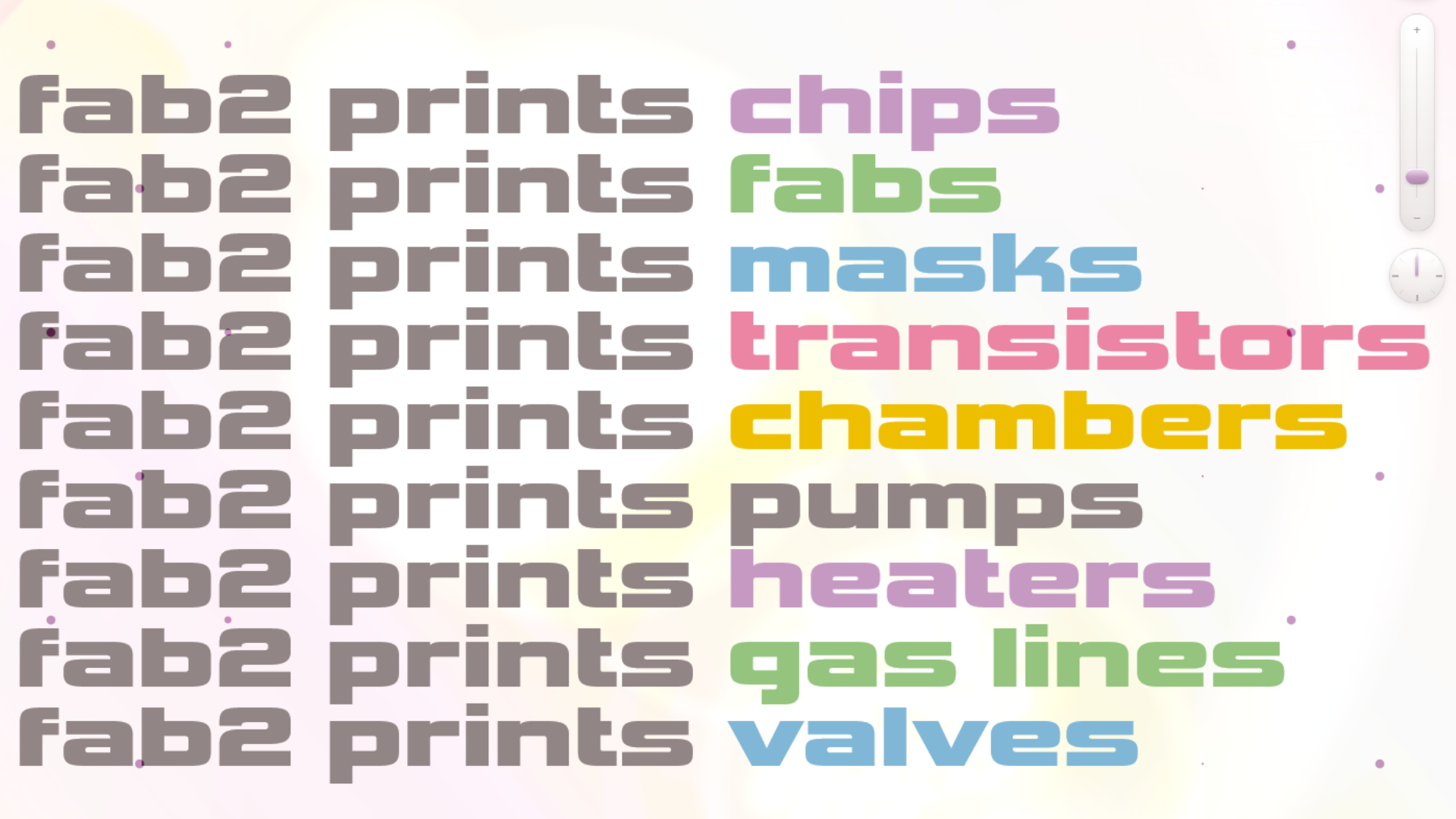
Why it matters: Fab2’s model of distributed, replicable fabs offers a direct counterpoint to megafabs like Tesla’s Terafab, framing a strategic fork in U.S. chipmaking capacity: consolidate in massive campuses or scale via many small, printable factories.
Context: The company’s proof of concept came from Zeloof’s garage fabrication of chips at ~300nm features, and the rebrand to Fab2 emphasizes its role as a factory for fabs rather than a chipmaker itself.
"The method’s main constraint, however, is throughput. Electron-beam lithography writes patterns directly rather than projecting them through a mask, which makes it slow: a single patterning step on a small chip can take far longer than an EUV scanner needs to expose an entire 300mm wafer." — TOMSHARDWARE
Commentary: Fab2’s value proposition hinges on speed and flexibility for prototyping, not volume—a niche that could serve defense, aerospace, or custom ASIC markets where turnaround trumps cost-per-chip. The Texas move places it alongside Tesla’s Terafab, but the real tension is between centralized and distributed manufacturing strategies, with Fab2 betting that many small, replicable fabs can out-innovate a single monolithic facility. The e-beam throughput constraint is structural, not fixable by process tweaks, so Fab2’s growth depends on finding customers who value iteration speed over wafer output.
Date: July 05, 2026 02:45 PM ET
URL: https://www.tomshardware.com/tech-industry/atomic-semi-rebrands-as-fab2-and-shifts-operations-to-texas
Discussion: https://news.ycombinator.com/item?id=48796784
AI Sentiment Score: Negative (57%)
AI Credibility Score: 10.0/10 — High
Scores and text generated by AI analysis of the source article indicated.
Performance per dollar is getting faster and cheaper (Wafer.Ai)
Summary: Wafer.ai demonstrates that AMD’s MI355X can serve GLM5.2 at 2626 tok/s/node aggregate and 213 tok/s single stream, achieving over 2x lower cost than NVIDIA’s Blackwell. The performance gap is closing due to agent-driven kernel optimization, not just hardware parity. Two trivial software fixes—a module prefix mismatch and a missing ROCm guard—unblocked speculative decode, yielding a 3x throughput gain. The CUDA moat is eroding as support catches up to silicon capability.
Why it matters: This signals a structural shift in inference economics: AMD is becoming a viable alternative for cost-sensitive deployments, and the software gap is narrowing faster than expected, which could reshape GPU procurement strategies for AI infrastructure.
Context: NVIDIA’s software ecosystem and day-0 support have long been the primary moat, but Wafer’s work shows that with targeted engineering, AMD’s hardware can deliver competitive performance at significantly lower cost.
"SOTA on AMD is becoming more a matter of support, not software. The CUDA moat is eroding in real time." — WAFER.AI
Commentary: The two-line fix for speculative decode is emblematic: the barriers are now trivial configuration issues, not fundamental architecture gaps. As agent-driven optimization matures, the cost advantage of AMD will compound, forcing NVIDIA to compete on price or risk losing the inference market to a cheaper, increasingly capable alternative.
Date: July 03, 2026 05:49 PM ET
URL: https://www.wafer.ai/blog/glm52-amd
Discussion: https://news.ycombinator.com/item?id=48780417
AI Sentiment Score: Negative (62%)
AI Credibility Score: 7.0/10 — Medium
Scores and text generated by AI analysis of the source article indicated.
Steam Controller Auto-Charge – pilot to magnetic charging puck using CV (Github)
Summary: Steam Controller Auto-Charge is an open-source web application designed to automatically pilot a Steam Controller into its magnetic charging puck using optical flow computer vision and WebHID telemetry. – Optical Flow Tracking: Utilizes OpenCV.js to track user-selected points on the controller and the charging puck via an overhead camera. – WebHID Telemetry & Haptic Navigation: Connects to the Triton Controller natively via WebHID, streaming input and telemetry (Report 67).
Why it matters: This matters for Emerging Tech Signals (Pre-Mainstream) because it gives a concrete current signal to track: Steam Controller Auto-Charge is an open-source web application designed to automatically pilot a Steam Controller into its magnetic charging puck using optical flow computer vision and WebHID telemetry.
Context: Steam Controller Auto-Charge is an open-source web application designed to automatically pilot a Steam Controller into its magnetic charging puck using optical flow computer vision and WebHID telemetry. – Optical Flow Tracking: Utilizes OpenCV.js to track user-selected points on the controller and the charging puck via an overhead camera. – WebHID Telemetry & Haptic Navigation: Connects to the Triton Controller natively via WebHID, streaming input and telemetry (Report 67).
"Steam Controller Auto-Charge is an open-source web application designed to automatically pilot a Steam Controller into its magnetic charging puck using optical flow computer vision and WebHID telemetry. – Optical Flow Tracking:." — GITHUB
Commentary: The immediate implication is operational rather than speculative: watch how this changes budgets, workflows, or risk assumptions over the next cycle.
Date: July 03, 2026 06:39 PM ET
URL: https://github.com/FossPrime/Steam-Controller-Auto-Charge
Discussion: https://news.ycombinator.com/item?id=48780865
AI Sentiment Score: Neutral (50%)
AI Credibility Score: 10.0/10 — High
Scores and text generated by AI analysis of the source article indicated.
Post ID: 54915bb4