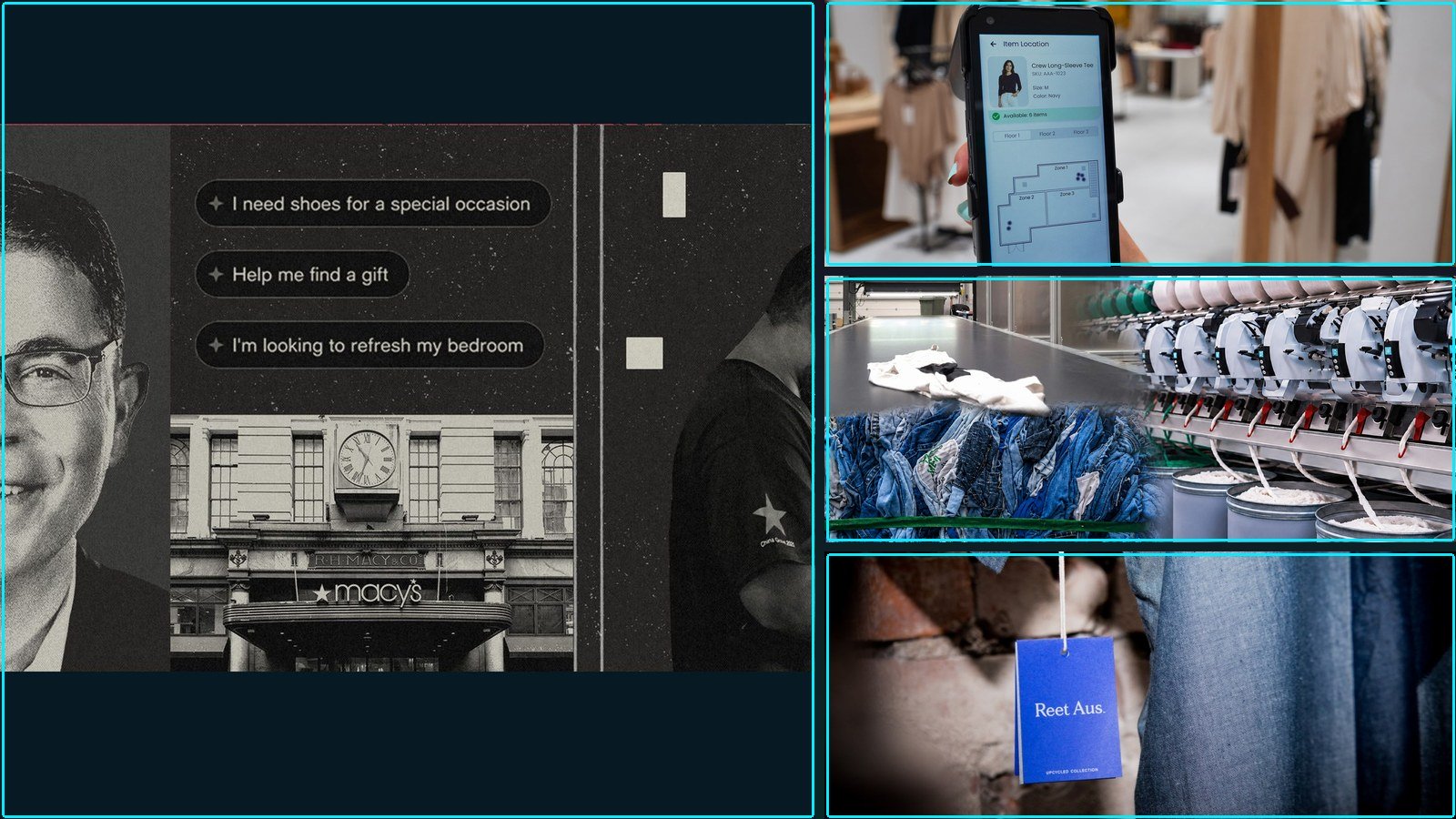
FashionTech
An AI overhaul at Macy’s is fueling the 168-year-old retailer’s turnaround | Fortune (Fortune)
Summary: Macy’s AI-powered ‘Ask Macy’s’ shopping assistant, launched in March 2026, is driving a measurable turnaround: shoppers using its ‘Complete the Look’ virtual try-on feature spend nearly five times more per session. The retailer has cut 50 smaller innovation projects under CEO Tony Spring and Chief Customer Officer Max Magni, focusing instead on operational improvements like a new automated distribution center in North Carolina and AI-driven demand forecasting. This disciplined approach marks a shift from the 2010s era of retail tech gimmicks (beacons, smart mirrors, AR goggles) toward solving specific customer and operational problems. Macy’s now positions itself as a faster adopter of proven tech rather than a pioneer, with a culture overhaul that includes executive coaching and AI training for 6,000 managers.

Why it matters: For fashion and retail tech practitioners, this signals a move away from flashy, high-cost experiments toward measurable ROI on AI tools that directly impact conversion rates and supply chain efficiency, with implications for vendor selection and internal project prioritization.
Context: U.S. retailers are projected to increase tech budgets to $113 billion in 2026, but the post-Amazon panic era of indiscriminate innovation spending is giving way to cost-of-capital discipline. Macy’s 168-year history includes pioneering fixed prices and omnichannel fulfillment, but recent turnaround efforts required breaking siloed culture.
"Shoppers who use the feature spend almost five times more per session on Macy’s web site than those who don’t." — FORTUNE
Commentary: The 5x session spend delta is the kind of concrete metric that justifies killing 50 side projects and refocusing on AI that solves a customer problem. For teams evaluating fashion tech vendors, the lesson is to demand similar session-level attribution data before committing to pilots. The shift from ‘innovation theater’ to operational AI (demand forecasting, inventory control) also suggests that distribution center automation and supply chain software may offer more durable competitive advantage than customer-facing gimmicks. Macy’s cultural overhaul—executive coaching, AI training at scale, admitting mistakes quickly—is the less visible but equally critical enabler of this turnaround.
Date: June 01, 2026 08:00 PM ET
URL: https://fortune.com/2026/06/02/macys-ai-overhaul-ai-chatbot-retail
AI Sentiment Score: Positive (55%)
AI Credibility Score: 10.0/10 — High
Scores and text generated by AI analysis of the source article indicated.
Startup helps retailers track their products in real-time (News.Mit.Edu)
Summary: Cartesian, an MIT spinout, uses machine learning on existing RFID reader data to map inventory locations in retail stores, cutting the 50% of working hours spent on inventory management. Already deployed in over 700 stores across 15 countries, including Inditex brands like Zara, the system requires no new hardware and can be activated remotely in about a minute. The company plans to scale to tens of thousands of stores and expand into manufacturing, warehousing, and robotics. This shifts inventory tracking from a labor-intensive, barcode-based process to a real-time, cloud-driven spatial intelligence layer.
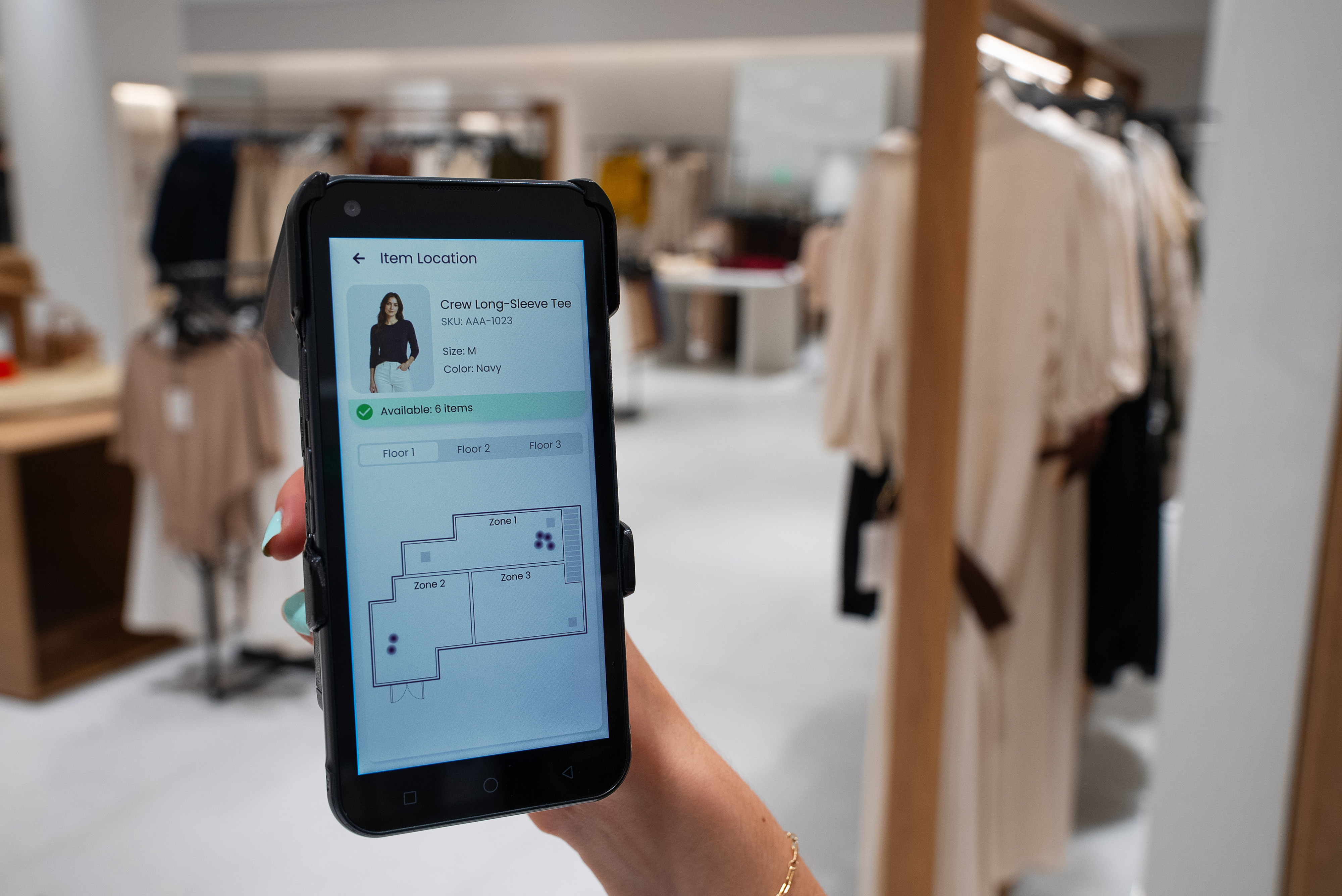
Why it matters: For fashion retailers, this directly attacks the $15 billion annual cost of inventory labor in the US alone, reducing time-to-answer for customer inquiries and fulfillment, and enabling real-time stock visibility without capital expenditure on new hardware.
Context: Retailers currently rely on periodic barcode scans and manual shelf checks, which become outdated quickly; RFID tags have been used for stock counts but not for precise location mapping until now.
"When you picture a worker at a retail store, you probably think of someone at a cash register or helping a customer. But employees also spend a lot of their time combing." — NEWS.MIT.EDU
Commentary: The key operational shift is that Cartesian turns existing RFID scans—already part of the workflow—into a live location map, eliminating the need for dedicated infrastructure or store visits. For brands scaling omnichannel fulfillment, this means store associates can locate items for click-and-collect or ship-from-store orders in seconds rather than minutes. The one-minute store activation and cloud-based processing also lower the barrier for chain-wide rollouts, though the real test will be accuracy in dense, cluttered stockrooms and during peak traffic.
Date: June 04, 2026 08:00 PM ET
URL: https://news.mit.edu/2026/cartesian-helps-retailers-track-their-products-in-real-time-0605
AI Sentiment Score: Negative (50%)
AI Credibility Score: 10.0/10 — High
Scores and text generated by AI analysis of the source article indicated.
How Data-Driven Precision Is Changing Modern Manufacturing (Wwd)
Summary: Aptean and Lectra are pushing apparel manufacturing toward a unified digital architecture that eliminates the 24-hour data lag of paper-based tracking. By natively integrating shop floor control with ERP and connecting cutting rooms via cloud workflows, manufacturers can now line-balance in real time, reduce fabric waste, and support EU Digital Product Passport compliance. The shift is from reactive firefighting to anticipatory planning, with AI surfacing anomalies before they become bottlenecks. For brands like Mechanix Wear, the result is a 10% drop in cutting defects and immediate fabric savings.

Why it matters: For sourcing and production teams, this means the end of the paper traveler and the beginning of a single source of truth that ties operator performance, WIP, and material efficiency directly to payroll and compliance reporting.
Context: The EU’s Digital Product Passport will soon require 100-120 data points per product, making granular factory-floor data collection a regulatory necessity rather than a competitive differentiator.
"The global apparel and textile industry is currently traversing a technological divide. On one side lies the traditional model, which is defined by paper-based tracking, siloed departments and significant material waste. On." — WWD
Commentary: The real operational change here is the collapse of the 24-hour feedback loop that has defined apparel production for decades. When supervisors can redeploy operators before a bottleneck forms, and when piece-rate pay is tied to verified time-stamped work, the factory floor becomes a real-time decision surface rather than a post-mortem data source. The AI layer that surfaces anomalies three weeks out is the practical payoff, but the harder shift is cultural: operators now see their performance instantly, which changes the social contract of the shop floor.
Date: June 04, 2026 08:00 PM ET
URL: https://wwd.com/sourcing-journal/industry-news/lectra-data-driven-precision-changing-apparel-manufacturing-1238995356
AI Sentiment Score: Negative (66%)
AI Credibility Score: 10.0/10 — High
Scores and text generated by AI analysis of the source article indicated.
Textile Recycling Enters Its Next Industrial Phase (Textilefocus)
Summary: Textile-to-textile recycling is transitioning from pilot projects to industrial-scale operations, driven by investments in sorting, fiber regeneration, and automation across Europe and Asia. Key developments include Andritz’s new plant in France processing post-consumer waste, RE&UP’s expansion to 200,000 tons annual capacity in Turkey, and the release of AI-based sorting units like teXscan. Spinning systems from Rieter and Saurer are now integrating recycled fiber processing into mainstream production, with high-volume lines operational in Turkey and China. However, scaling remains constrained by fragmented collection infrastructure, inconsistent feedstock quality, and economic barriers despite technological readiness.

Why it matters: For textile manufacturers and recyclers, these developments signal that recycling technology is no longer experimental but is being embedded into standard production lines, altering feedstock sourcing, quality control workflows, and capital investment decisions.
Context: At ITMA 2023, textile-to-textile recycling emerged as a major theme, with engineering challenges around sorting, shredding, and re-spinning fibers being actively addressed; three years later, many of those solutions are now in commercial deployment.
"Textile-to-textile recycling is rapidly moving from pilot-scale experimentation to industrial-scale implementation. Across Europe and Asia, investments in sorting, fibre regeneration, automation and recycling infrastructure are accelerating as the textile industry works to." — TEXTILEFOCUS
Commentary: The teXscan’s non-destructive quality scoring directly addresses the sorting bottleneck that has historically made recycled fiber output unpredictable for spinners. By automating material-to-process matching, it reduces the trial-and-error that currently inflates costs and limits recycled content in yarns. For mills, this means recycled fiber can be treated as a known input rather than a variable risk, potentially lowering the premium for certified recycled yarns. The real constraint now shifts from technology to logistics: without harmonized collection and consistent feedstock volumes, even the best sorting AI will idle below capacity.
Date: June 01, 2026 08:00 PM ET
URL: https://textilefocus.com/textile-recycling-enters-its-next-industrial-phase
AI Sentiment Score: Negative (75%)
AI Credibility Score: 10.0/10 — High
Scores and text generated by AI analysis of the source article indicated.
India’s textile waste challenge finds a circular path to a $9 billion opportunity (Indiantelevision)
Summary: On World Environment Day, ReFiber, backed by OterRi and partners including UNIDO and CMAI, launched a large-scale post-consumer textile waste collection and upcycling initiative in Mumbai. A panel discussion quantified the opportunity: textile circularity could unlock $9 billion annually for India. However, panelists stressed that without robust sorting infrastructure for blended materials, scalable chemical recycling, and affordable financing for MSMEs, the value could remain theoretical. The initiative signals a shift from waste management to industrial competitiveness, as global markets tighten sustainability requirements.

Why it matters: For fashion brands and manufacturers, this initiative and the $9 billion figure indicate that sorting infrastructure and MSME financing are now the binding constraints on circularity, not technology. Companies sourcing from India will need to verify traceability systems and prepare for compliance demands tied to recycled content.
Context: India generates millions of tonnes of textile waste annually, most of which ends up in landfills or low-value applications. Global buyers increasingly require supply chain transparency and recycled inputs, making circularity a trade-readiness issue.
"Studies and industry assessments suggest that textile waste circularity could unlock nearly $9 billion in economic value annually for India if the right ecosystem is put in place." — INDIANTELEVISION
Commentary: The $9 billion figure is contingent on solving the sorting bottleneck for blended fabrics, which remains a mechanical and chemical challenge. MSMEs, which form the backbone of India’s textile manufacturing, lack access to capital for new recycling tech, so blended finance and outcome-based funding models will determine whether pilots scale. Brands should watch for decentralized recovery hubs near waste generation centers, as these will lower transport costs and improve recovery rates, directly affecting supply chain economics.
Date: June 04, 2026 08:00 PM ET
URL: https://indiantelevision.com/mam/indias-textile-waste-challenge-finds-a-circular-path-to-a-9-billion-opportunity
AI Sentiment Score: Negative (63%)
AI Credibility Score: 10.0/10 — High
Scores and text generated by AI analysis of the source article indicated.
Fashion’s Waste Problem Starts in Manufacturing—Upmade Wants to Fix It (Wwd)
Summary: Upmade, a certification system developed by Estonian designer Reet Aus, targets the 25-42% of fabric wasted during garment manufacturing by integrating industrial upcycling directly into factory operations. The system captures production leftovers—including fabric roll ends, overproduction, and defective materials—and redirects them into new garments, with up to 80% of a factory’s waste potentially reusable. Upmade’s digital platform connects to existing ERP systems for real-time traceability and lifecycle assessments, feeding data into Digital Product Passports ahead of EU regulations. The model offers factories a commercial incentive: they sell more sewing services and build stable client relationships while reducing waste.

Why it matters: For brands facing EU Digital Product Passport requirements, Upmade exposes the gap between current supply chain visibility and the detailed, validated data needed for compliance, forcing a shift in how product development and factory partnerships are structured.
Context: Most sustainability efforts focus on new materials or downstream recycling; Upmade intervenes at the manufacturing stage, treating waste as a design flaw rather than an inevitable byproduct, and integrates with existing factory systems rather than requiring new infrastructure.
"“For many brand partners, it has been surprising to see how much waste is generated during the production process, as this is information brands usually do not have access to,” Aus said." — WWD
Commentary: Upmade’s real operational consequence is forcing brands to confront the opacity of their own supply chains—a prerequisite for any circularity claim. The system’s integration with factory ERP systems means adoption shifts the cost of waste tracking from brands to manufacturers, who then monetize it through additional sewing revenue. This inverts the typical sustainability burden: factories become data gatekeepers, and brands must negotiate for visibility they previously ignored. The EU’s Digital Product Passport timeline will accelerate this dynamic, making Upmade’s model a template for compliance rather than a niche experiment.
Date: June 04, 2026 08:00 PM ET
URL: https://wwd.com/sourcing-journal/sustainability/reet-aus-industrial-upcycling-fashion-waste-1238949477
AI Sentiment Score: Negative (83%)
AI Credibility Score: 10.0/10 — High
Scores and text generated by AI analysis of the source article indicated.
Post ID: d8e9914d