Made In USA manufacturing and logistics
NJEDA Approves First Award Under Next New Jersey Manufacturing Program – NJEDA (Njeda.Gov)
Summary: The New Jersey Economic Development Authority (NJEDA) has approved the first tax credit award under the Next New Jersey Manufacturing Program, granting Starman New Photonics (SNP) $37.5 million over ten years. SNP will invest $150 million to renovate a 100,000-square-foot facility in Warren, NJ, to manufacture high-speed optical transceivers for AI data centers, creating 250 jobs. The award is tied to a Department of Defense prohibition on procuring optical transceivers from certain foreign producers, making domestic supply chain resilience a direct driver. The tax credit is $7.5 million annually for the first five years, far exceeding the program’s minimum requirements.
Why it matters: This marks a concrete shift in AI infrastructure supply chains, moving optical transceiver production onshore under defense-driven procurement rules, with implications for cost, lead times, and vendor qualification for data center operators and AI hardware integrators.
Context: Optical transceivers are critical for connecting GPUs in AI data centers, overcoming bandwidth and energy limits; the DoD’s prohibition on foreign-sourced transceivers creates a regulatory mandate for domestic capacity, which this award directly addresses.
"With the Department of Defense moving to prohibit the procurement of optical transceivers from certain foreign producers, domestic manufacturing has become increasingly imperative." — NJEDA.GOV
Commentary: For operators and procurement teams, this signals a tightening of eligible vendor lists for AI infrastructure components, likely increasing per-unit costs and extending lead times as domestic capacity ramps. The $150M investment and 250 jobs are modest relative to total AI transceiver demand, so expect follow-on awards and capacity constraints to persist. The NJEDA’s use of tax credits as a lever suggests other states may replicate this model, creating a patchwork of incentives that complicates national supply chain planning.
Date: June 18, 2026 10:54 AM ET
URL: https://njeda.gov/njeda-approves-first-award-under-next-new-jersey-manufacturing-program
AI Sentiment Score: Negative (87%)
AI Credibility Score: 10.0/10 — High
Scores and text generated by AI analysis of the source article indicated.
Burlington Launches State-of-the-art Distribution Center to Support Heady Growth (Wwd)
Summary: Burlington Stores opened a 2-million-square-foot distribution center in Ellabell, Georgia, its largest and most automated facility to date. The center features 25 miles of conveyor, smarter sortation systems, and custom software designed to cut delivery times to the Southeast by two to three days. The off-price retailer plans to add 115 net new stores this year, reaching roughly 1,320 units, as it captures market share from department stores and specialty retailers during the inflationary cycle. The facility also includes enhanced workstations informed by associate feedback, a 40,000-square-foot office with amenities, and 10–15% more receiving and shipping capacity than previous centers.

Why it matters: For logistics and supply chain operators, this signals how off-price retailers are scaling infrastructure to compress delivery windows and support aggressive store expansion, while using automation to manage throughput without proportional labor increases.
Context: Burlington operates seven distribution centers total; this is its first in Georgia and its largest. The company does not sell online, so store replenishment speed is a direct competitive lever against TJX and Ross.
"We anticipate that merchandise will be able to reach the Southeast region of the country from our Ellabell distribution center two to three days faster." — WWD
Commentary: The two-to-three-day speed gain is the operational headline: it compresses the Southeast replenishment cycle, letting Burlington turn inventory faster in a region where it’s adding stores. The 10–15% increase in dock doors and shipping lanes suggests the facility was sized for future store count, not just current volume. The use of proprietary real-time decision systems for merchandise routing points to a shift from batch processing to continuous flow, which could pressure legacy DCs to modernize or become bottlenecks. For vendors, faster store arrival means tighter windows for in-season markdowns and allocation decisions.
Date: June 17, 2026 08:00 PM ET
URL: https://wwd.com/business-news/retail/burlington-distribution-center-georgia-heady-growth-1239014827
AI Sentiment Score: Positive (50%)
AI Credibility Score: 10.0/10 — High
Scores and text generated by AI analysis of the source article indicated.
Digital Product Passport for Apparel Beyond Compliance (Desl.Net)
Summary: The Digital Product Passport (DPP) is emerging as a major regulatory requirement for apparel, but its real value lies in the data governance and supplier transparency systems behind the QR code. The EU’s Ecodesign for Sustainable Products Regulation (ESPR) will require structured, verified product data covering materials, origins, and environmental impact. Brands that treat DPP as a standalone compliance project risk missing the larger shift toward product-level data as the foundation for regulatory compliance and commercial trust. Early movers can reduce supplier risk, support resale and recycling, and strengthen sustainability claims.

Why it matters: For apparel brands and their supply chain partners, DPP readiness requires reworking product data management, supplier collaboration, and certification tracking now, not waiting for enforcement deadlines.
Context: The EU’s ESPR prioritizes textiles, and DPP is part of a broader regulatory wave including CSRD, CSDDD, forced labor rules, and greenwashing regulations, all demanding auditable product-level data.
"The biggest DPP risk is not the absence of a QR code. The biggest risk is being unable to trust, govern, or retrieve the data behind it." — DESL.NET
Commentary: The operational burden falls on sourcing and compliance teams to build structured data pipelines from suppliers into PLM and PIM systems, replacing spreadsheets and email attachments. Certifications like GOTS and OEKO-TEX must be linked to specific products and batches, not just filed away. AI-assisted data validation can help, but governance workflows and audit trails are the real bottleneck. Brands that pilot one product category now will have a significant advantage when regulations tighten.
Date: June 17, 2026 03:01 PM ET
URL: https://www.desl.net/news/digital-product-passport-for-apparel-beyond-compliance/
AI Sentiment Score: Positive (40%)
AI Credibility Score: 7.0/10 — Medium
Scores and text generated by AI analysis of the source article indicated.
DOT to launch supply chain initiative, visibility dashboard (Supplychaindive)
Summary: The Department of Transportation announced the American Supply Chain Sovereignty Initiative, a new program that will create a high-visibility dashboard connecting ocean carriers, trucking companies, railroads, and major retailers like Walmart to key hubs including the Port of Los Angeles. The initiative builds on the existing FLOW data-sharing platform and the National Freight Strategic Plan, aiming to reduce bottlenecks and lower logistics costs. Transportation Secretary Sean Duffy is requesting Congress to include enabling legislation in the 2026 National Defense Authorization Act, which would authorize role-based data access to streamline national logistics. This represents a federal push to institutionalize supply chain visibility as a permanent operational capability rather than a pandemic-era stopgap.
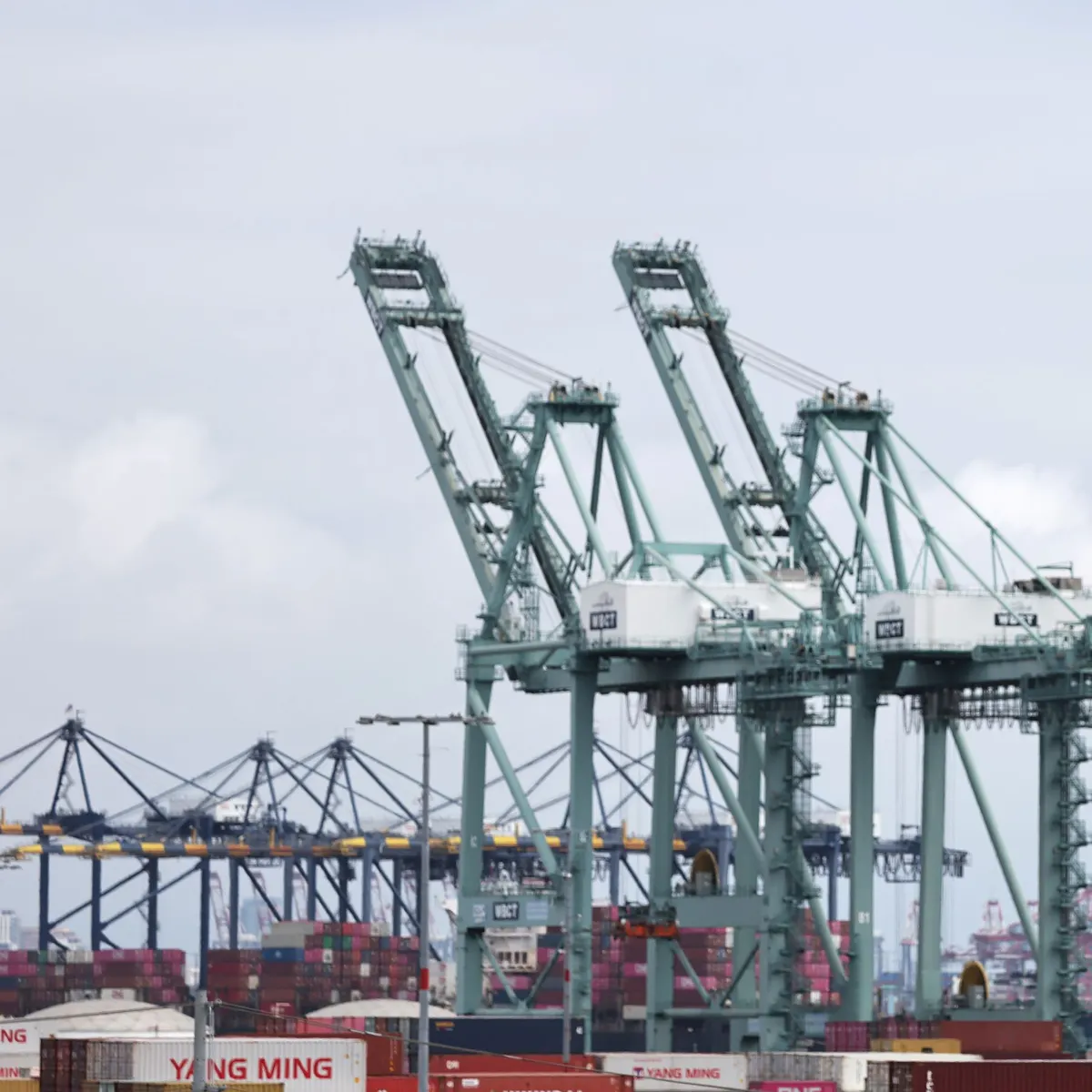
Why it matters: For logistics operators and supply chain planners, this dashboard could become a mandatory or default data-sharing layer, altering how capacity is allocated, how delays are anticipated, and how competitive intelligence flows between private carriers and public infrastructure.
Context: The FLOW program launched in 2022 after COVID-19 disruptions exposed the lack of real-time cargo visibility; as of April 2026 it had 86 members including PetSmart, CMA CGM, The Home Depot, and GE Appliances. The new initiative seeks to expand that model with legislative backing and a unified dashboard.
"Dive Brief: – The Department of Transportation plans to launch the American Supply Chain Sovereignty Initiative to drive faster cargo processing, lower logistics costs and bolster the U.S. workforce, per a June." — SUPPLYCHAINDIVE
Commentary: The shift from voluntary FLOW participation to a congressionally authorized, role-based access framework signals that the DOT intends to make supply chain data sharing a structural feature of U.S. freight operations, not a pilot. For shippers and carriers, this means new compliance obligations and potential competitive pressure to share data that was previously proprietary. The inclusion in NDAA suggests the administration is framing supply chain resilience as a national security issue, which could accelerate adoption but also raise concerns about data security and operational flexibility.
Date: June 15, 2026 11:40 AM ET
URL: https://supplychaindive.com/news/dot-to-launch-supply-chain-initiative-visibility-dashboard/822917
AI Sentiment Score: Negative (75%)
AI Credibility Score: 10.0/10 — High
Scores and text generated by AI analysis of the source article indicated.
Tractor Supply taps AI to help scale last-mile delivery network (Retaildive)
Summary: Tractor Supply is scaling its private last-mile fleet with AI-driven routing and delivery time estimation, shifting route-building from drivers to territory managers. The company saw double-digit delivery volume growth in Q1 2026 and is now using AI to improve predictability for large, bulky items delivered to rural properties. Rather than automating customer calls, it chose to arm store staff with better tracking data. The next step is AI-powered estimates of stop duration to balance customer service with operational efficiency.
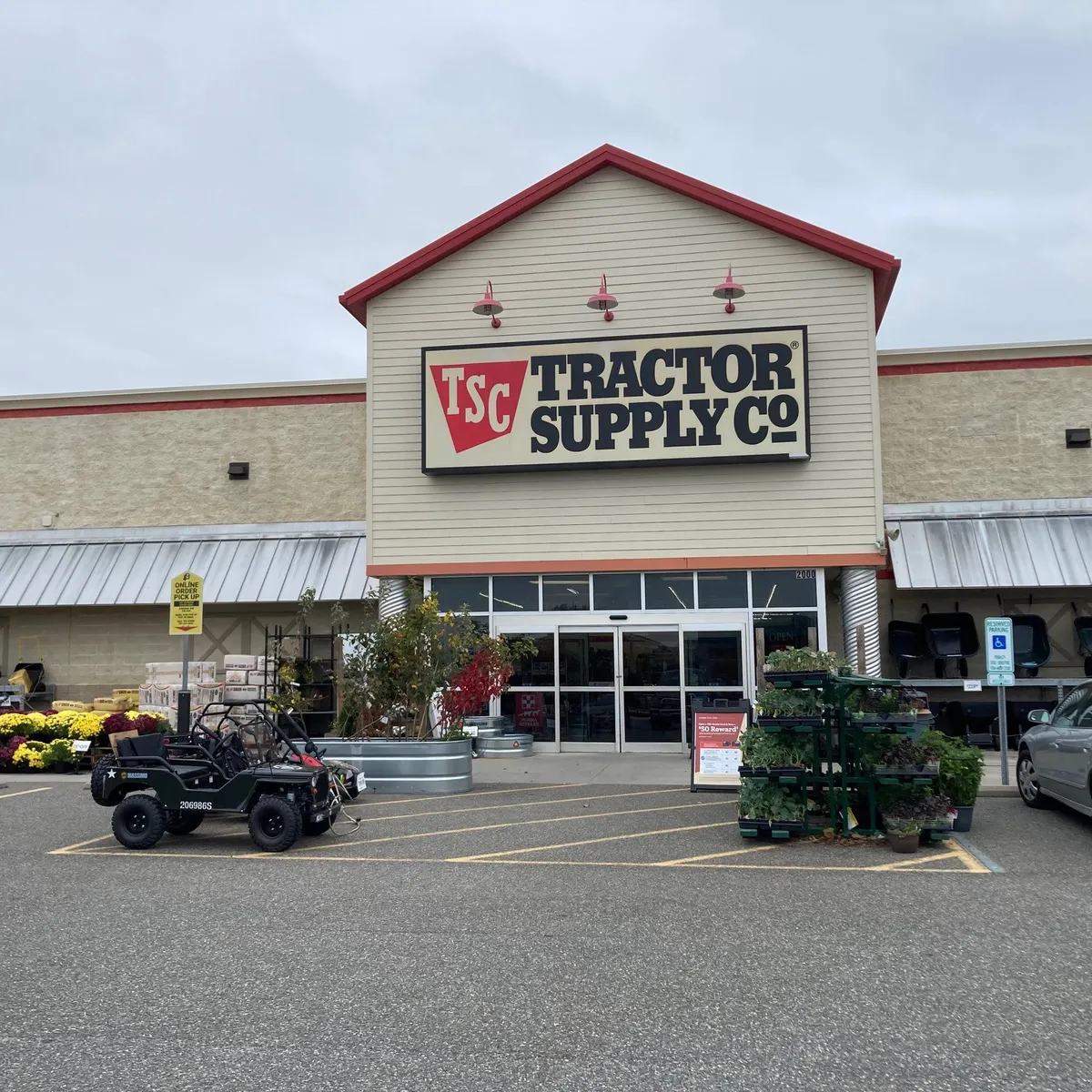
Why it matters: For logistics operators and retailers building in-house delivery, this shows how AI can be applied to the messy reality of rural, bulky-item delivery without sacrificing the personal service that differentiates local stores from national carriers.
Context: Tractor Supply began scaling its private fleet in early 2025, establishing hub locations and using employees for most large deliveries. The shift from manual routing to AI-assisted dispatch reflects a common scaling pain point: what works for a few deliveries per day breaks as volume grows.
"Growing Tractor Supply’s in-house delivery operations has required adjustments and improvements aided by artificial intelligence, Kyle Langley, the retailer’s vice president of final mile, said at Home Delivery World 2026 in Nashville." — RETAILDIVE
Commentary: The key operational insight is that Tractor Supply chose to keep store staff in the loop rather than automate them away. For other retailers, this reinforces that AI in last-mile logistics works best when it augments human judgment—especially in contexts where customer relationships and unpredictable site conditions (farm gates, barn stacking) make pure automation brittle. The next frontier—AI-powered stop-time estimation—will be critical for route optimization in non-uniform delivery environments.
Date: June 14, 2026 08:00 PM ET
URL: https://retaildive.com/news/tractor-supply-taps-ai-to-help-scale-last-mile-delivery-network/822654
AI Sentiment Score: Negative (66%)
AI Credibility Score: 10.0/10 — High
Scores and text generated by AI analysis of the source article indicated.
The Complete List of American Made Clothing Brands (Toddshelton)
Summary: Todd Shelton has published a comprehensive, curated list of American-made clothing, footwear, and accessory brands that cut and sew domestically and sell direct to consumer. The registry covers men’s and women’s apparel, shoes, socks, bags, hats, belts, wallets, jewelry, and watches, with each brand’s production origin verified on its own website. The list explicitly excludes fabric and raw material origin from its criteria due to domestic sourcing limitations, focusing instead on where final assembly occurs. This resource functions as a practical reference for buyers and industry observers tracking domestic manufacturing capacity and direct-to-consumer distribution models.
Why it matters: For brands, studios, and makers evaluating domestic production options, this list provides a verified baseline of who is actually cutting and sewing in the USA, revealing the geographic and category-specific constraints of the current manufacturing ecosystem.
Context: American apparel manufacturing has declined steadily since the mid-20th century, leaving a fragmented landscape of small-scale producers concentrated in a few regions. This list surfaces the operational reality of domestic production: most brands are small, vertically integrated, and rely on imported materials.
"Due to domestic sourcing limitations, fabric and raw material origin are not weighted in these parameters. Production origin must be verified directly on each brand’s website." — TODDSHELTON
Commentary: The list’s deliberate exclusion of material origin is a telling constraint: domestic fabric mills and raw material supply chains remain thin, forcing even committed USA manufacturers to import inputs. For practitioners, this means the real bottleneck isn’t cut-and-sew labor but upstream material availability, a factor that will shape any serious reshoring strategy. The geographic clustering—New York, Los Angeles, the Pacific Northwest, and a handful of Appalachian towns—also signals where infrastructure and skilled labor pools actually exist.
Date: June 20, 2026 10:54 AM ET
URL: https://toddshelton.com/blog/about-todd-shelton/made-in-america/american-made-clothing-brands
AI Sentiment Score: Negative (50%)
AI Credibility Score: 10.0/10 — High
Scores and text generated by AI analysis of the source article indicated.
Why Traceability Is Becoming a Business Requirement for Fashion Brands (Businessoffashion)
Summary: Agenda-setting intelligence, analysis and advice for the global fashion community. Subscribe to The Frayed Edge Please sign in to ensure you can read our agenda-setting intelligence, analysis and advice. Or get in touch at support@businessoffashion.com if you experience difficulties.

Why it matters: Traceability shifts from compliance checkbox to core operational risk mitigation for brand continuity.
Context: Focus on verifiable supply chain nodes; expect increased tooling requirements for provenance tracking.
"Agenda-setting intelligence, analysis and advice for the global fashion community. Subscribe to The Frayed Edge Please sign in to ensure you can read our agenda-setting intelligence, analysis and advice. Or get in." — BUSINESSOFFASHION
Commentary: The signal is still worth tracking, but the current extraction path did not yield enough body text for a fuller analytical read. The immediate implication is operational rather than speculative: watch how this changes budgets, workflows, or risk assumptions over the next cycle.
Date: June 19, 2026 11:30 AM ET
URL: https://www.businessoffashion.com/briefings/sustainability/traceability-is-becoming-a-business-requirement-for-fashion-brands-next-gen-materials-seesaw-success-keellabs-bankruptcy-bangladesh-labour-reforms/
AI Sentiment Score: Negative (50%)
AI Credibility Score: 10.0/10 — High
Scores and text generated by AI analysis of the source article indicated.
How America’s last denim mill survived the collapse of the US clothing industry (Businessinsider)
Summary: Mount Vernon Mills, one of the last denim mills in the US, survives by focusing on specialty fabrics and niche markets that Asian megafactories cannot easily replicate. The article contrasts its operations with Crescent Bahuman in Pakistan, a high-tech facility that produces denim for American brands at lower cost. This comparison highlights the structural challenges of domestic textile manufacturing: labor costs, scale, and supply chain integration.
Why it matters: For brands and manufacturers considering reshoring, the piece underscores that survival depends on product differentiation and process flexibility, not on matching Asian price points.
Context: The US denim industry has collapsed from hundreds of mills to a handful, driven by the same offshoring dynamics that reshaped apparel, electronics, and other labor-intensive sectors over the past four decades.
"The US was once the biggest denim manufacturer in the world. But after decades of competition from cheaper foreign factories, the country that popularized jeans has lost almost every denim mill." — BUSINESSINSIDER
Commentary: Mount Vernon’s strategy—specialty runs, quick turnaround, and vertical integration—offers a template for other domestic manufacturers, but it requires capital investment and a workforce willing to accept lower margins. The real bottleneck isn’t technology; it’s the ecosystem of suppliers, finishers, and sewers that has atrophied. Brands that want to source domestically must either pay a premium or accept longer lead times for custom fabrics.
Date: June 20, 2026 09:00 AM ET
URL: https://businessinsider.com/denim-jeans-manufacturing-made-america-factories-usa-pakistan-garment-2026-6
AI Sentiment Score: Negative (80%)
AI Credibility Score: 10.0/10 — High
Scores and text generated by AI analysis of the source article indicated.
Post ID: e89f18ab