

The Global Shift Away from Fossil Fuels
Extreme weather and green energy on the rise in Europe (Dw)
Summary: The European State of the Climate 2025 report documents a continent under acute stress: 95% of Europe experienced above-average temperatures, heat-related deaths reached ~63,000 in 2024, and wildfires burned over a million hectares. Concurrently, renewables supplied nearly half of Europe’s electricity for the first time, with solar power growing by over 20% for the fourth consecutive year. The data presents a dual narrative of accelerating climate impacts and a rapid, if reactive, energy transition.

Why it matters: The report quantifies the immediate, costly operational realities of climate change for European governments, industries, and citizens, while also signaling a decisive market and policy shift in energy infrastructure with global supply chain implications.
Context: This follows years of escalating climate indicators and EU policy pushes like the Green Deal, but the 2025 data shows impacts outpacing projections and clean energy adoption accelerating partly in response to geopolitical fuel volatility.
"Extreme weather and green energy on the rise in Europe April 29, 2026Virtually no part of Europe was left untouched by extreme weather and hotter temperatures in 2025. The continent endured unprecedented." — DW
Commentary: The energy transition is no longer a future policy goal but a present-day market fact, driven as much by security imperatives as environmental ones. However, the parallel data on heat mortality and ecological collapse frames this progress as a reactive, not preventative, measure. The divergence creates a policy trap: celebrating clean energy milestones while managing the escalating adaptation costs they were meant to avert.
URL: https://www.dw.com/en/extreme-weather-and-green-energy-on-the-rise-in-europe/a-76962870?maca=en-rss-en-all-1573-rdf
AI Sentiment Score: Neutral (33%)
AI Credibility Score: 10.0/10 — High
Scores and text generated by AI analysis of the source article indicated.
A new climate club, minus the fossil fuel lobby (Dw)
Summary: A coalition of over 50 countries, led by Colombia and the Netherlands, convened in Santa Marta to forge a path beyond fossil fuels, explicitly excluding fossil fuel lobbyists. The meeting, framed as a ‘coalition of the willing,’ produced no binding treaty but established a forum for continued cooperation, with France presenting a detailed national phase-out plan and delegates highlighting financing and legal challenges. The gathering signals a strategic shift toward smaller, more focused multilateral efforts outside the formal UN COP process, which is seen as increasingly gridlocked.

Why it matters: It demonstrates a tactical pivot in global climate diplomacy, creating a parallel track for action that could accelerate real-world transitions by circumventing entrenched opposition within broader UN forums.
Context: This follows the blockage of a fossil fuel phase-out roadmap at COP30 in Brazil, revealing fractures in multilateral climate governance and spurring action-oriented states to seek alternative venues for cooperation.
"The real impact of this emerging coalition and envisioned efforts remain to be seen in the coming months and couple of years." — DW
Commentary: The Santa Marta meeting operationalizes the ‘coalition of the willing’ model for climate action, creating a de facto policy laboratory for national transition plans like France’s. Its success hinges on whether it can mobilize capital and create replicable legal frameworks, particularly for fossil fuel-exporting economies like Colombia, before political momentum dissipates. The choice of Tuvalu for the 2027 meeting is a stark, calculated reminder of the stakes.
URL: https://www.dw.com/en/a-new-climate-club-minus-the-fossil-fuel-lobby/a-76992981?maca=en-rss-en-all-1573-rdf
AI Sentiment Score: Negative (50%)
AI Credibility Score: 10.0/10 — High
Scores and text generated by AI analysis of the source article indicated.
First dots on the road map to exiting fossil fuels (Dw)
Summary: The inaugural ‘coalition of the willing’ conference in Santa Marta, Colombia, convened by over 50 nations, marks a tactical shift in climate diplomacy away from the UN COP process. The meeting produced no binding treaty but established a forum for countries committed to a fossil fuel phase-out to coordinate, with France presenting a detailed national roadmap and the Netherlands highlighting the $920 billion global subsidy problem. The gathering exposed the structural challenges for exporters like Colombia and internal divisions within major economies like Germany, while framing the transition as an energy security imperative in light of geopolitical conflicts and price volatility.
Why it matters: This signals a potential fragmentation of global climate governance into smaller, more ideologically aligned blocs, which could accelerate action among members but risks deepening geopolitical fissures on energy.
Context: The conference follows the blockage of a fossil fuel phase-out roadmap at COP30, demonstrating a growing impatience with the consensus-based UNFCCC process among a subset of nations.
"Economies built on fossil fuels are unraveling in real time. Fossil fuels are not just dirty. They are unreliable. They are dangerous. And they must end." — DW
Commentary: The operational significance lies not in the Santa Marta meeting’s immediate outputs, but in its creation of a parallel diplomatic track that could draft model treaty language and coordinate financial pressure, effectively building a prototype for a future binding agreement outside the veto points of petrostates.
URL: https://www.dw.com/en/first-dots-on-the-road-map-to-exiting-fossil-fuels/a-76992981?maca=en-rss-en-all-1573-rdf
AI Sentiment Score: Negative (50%)
AI Credibility Score: 10.0/10 — High
Scores and text generated by AI analysis of the source article indicated.
States gather in a new push to ditch coal, oil and gas (Dw)
Summary: Representatives from over 50 countries, including major producers like Canada, Australia, and Norway, are convening in Santa Marta, Colombia, for a first-of-its-kind conference aimed at crafting a practical, equitable plan to transition away from fossil fuels. The meeting, co-hosted by Colombia and the Netherlands, emerges from frustration with the UN COP process, where a binding phase-out mandate was vetoed by petrostates. While the US, China, Saudi Arabia, and Russia are absent, participants aim to move from ambition to implementation, focusing on concrete steps like phasing out fossil fuel subsidies and managing legal and trade disputes.
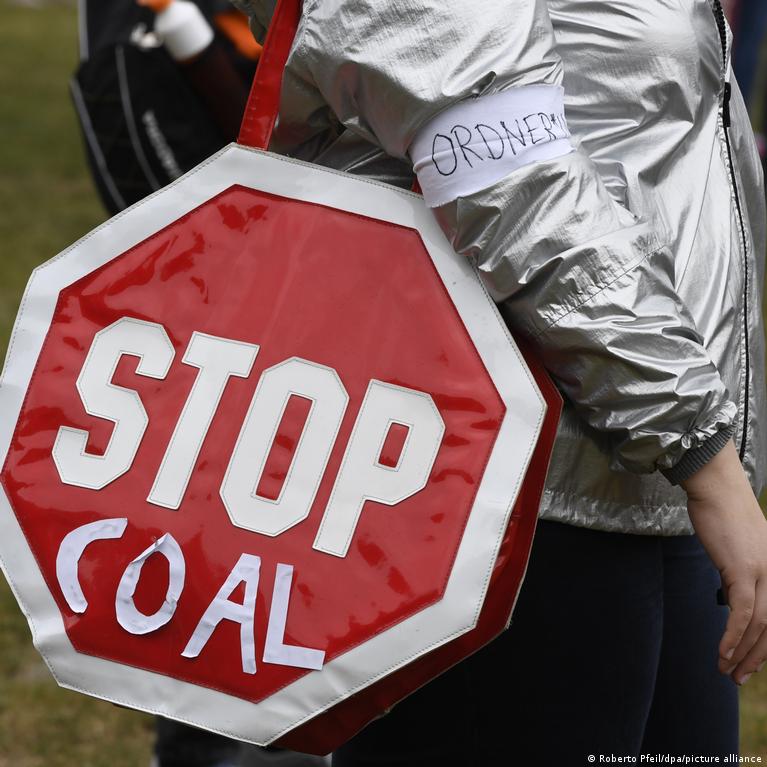
Why it matters: This initiative signals a potential shift in global climate governance, moving action outside the UNFCCC’s consensus model and creating a new ‘coalition of the willing’ that could accelerate real-world policy and investment shifts.
Context: The conference follows a year of record renewable energy growth and an energy crisis exacerbated by the Iran war, highlighting both the momentum for clean energy and the systemic vulnerabilities of fossil fuel dependence.
"We will start concrete work with a group of countries with shared views on what a transition away from fossil fuels looks like and what is required: decrease supply and demand," he added. Part of that shift would include a plan to "phase out fossil fuel subsidies." — DW
Commentary: The Santa Marta process is less about a new treaty and more about operationalizing a de facto bloc, creating a parallel track for climate action that could marginalize obstructive petrostates in practical forums. Its success will be measured not in declarations but in whether it triggers coordinated subsidy removal, shapes trade and investment rules to protect transition policies, and redirects capital flows at a pace the UN process cannot match.
URL: https://www.dw.com/en/states-gather-in-a-new-push-to-ditch-coal-oil-and-gas/a-76891719?maca=en-rss-en-all-1573-rdf
AI Sentiment Score: Positive (50%)
AI Credibility Score: 10.0/10 — High
Scores and text generated by AI analysis of the source article indicated.
Here’s why Amsterdam banned fossil fuel and meat advertising (Dw)
Summary: Amsterdam has implemented a ban on advertising for fossil fuel products and meat, a policy now extending to over 50 cities globally including Stockholm, Sydney, and Florence. The rationale, articulated by local academics, is that promoting high-carbon lifestyles directly contradicts municipal climate goals. The ban applies to city-controlled ad spaces like bus shelters and metro screens, though it excludes digital ads and private property. Legal challenges from industry groups have been dismissed by Dutch courts, which ruled commercial interests do not outweigh public health and climate objectives.

Why it matters: This represents a significant shift in urban governance, using municipal authority over public space to directly shape consumption norms and challenge the economic models of major industries.
Context: The policy follows the precedent of tobacco advertising bans and is framed by climate scientists who argue demand-side behavioral changes are critical for deep emissions cuts.
"Here’s why Amsterdam banned fossil fuel and meat ads May 5, 2026Each day, Reint Jan Renes commutes from Amsterdam’s regal main station to his office, weaving through the city’s tree-lined canals on." — DW
Commentary: The ban is less a direct emissions-reduction tool than a normative lever, attempting to decouple public space from the promotion of carbon-intensive lifestyles. Its real impact lies in creating a domino effect among municipalities and forcing a legal reckoning over whether commercial speech protections extend to products with documented societal harms. The exclusion of digital advertising, however, reveals the policy’s primary limitation as a physical-space intervention in an increasingly virtual marketplace.
URL: https://www.dw.com/en/here-s-why-amsterdam-banned-fossil-fuel-and-meat-advertising/a-77054187?maca=en-rss-en-all-1573-rdf
AI Sentiment Score: Negative (66%)
AI Credibility Score: 10.0/10 — High
Scores and text generated by AI analysis of the source article indicated.
Can data centers be green? (Dw)
Summary: The explosive growth of data centers, particularly for AI, is colliding with US climate goals and grid stability. Major grid operators like PJM are delaying fossil fuel plant retirements to meet demand, while utilities in Virginia, Nevada, and North Carolina are revising or abandoning zero-carbon targets. The low price of natural gas and a shifting federal policy landscape are accelerating a return to gas and coal, even as renewable capacity expands elsewhere globally. Local opposition is mounting over electricity costs and environmental strain.

Why it matters: The AI boom’s energy demands are forcing a real-time, politically charged renegotiation of US decarbonization timelines, with direct consequences for electricity markets, corporate ESG pledges, and community-level infrastructure.
Context: This follows a pattern where rapid technological adoption, from cryptocurrency mining to cloud computing, outpaces grid planning and renewable integration, creating a recurring tension between growth and sustainability mandates.
"Can data centers be green? April 21, 2026Data centers need vast amounts of energy to fuel servers and process the information that keeps our websites, applications and generative AI models running. The." — DW
Commentary: The 60% fossil fuel plant retention figure is a concrete metric of policy failure, revealing that data center growth is not just adding load but actively reversing planned decarbonization. The geographic concentration in PJM territory suggests regional grids are becoming single-points-of-failure for national climate targets. This creates a perverse incentive: the ‘data center capital’ label, once a badge of economic progress, now signals a carbon lock-in risk. The shift could force tech firms to either invest directly in grid-scale storage and transmission—becoming de facto utilities—or accept that their clean energy pledges are untenable under current infrastructure.
URL: https://www.dw.com/en/can-data-centers-be-green/a-76873187?maca=en-rss-en-all-1573-rdf
AI Sentiment Score: Negative (50%)
AI Credibility Score: 10.0/10 — High
Scores and text generated by AI analysis of the source article indicated.
Solar power in Morocco’s desert: Bold vision, mixed results (Dw)
Summary: Morocco’s Noor concentrated solar power plant near Ouarzazate is a flagship megaproject and technical achievement, generating enough electricity for over a million homes. Yet its local impact is limited: household electricity remains expensive and reliant on imported butane gas, the national grid struggles to integrate its full output, and the project has drawn criticism for water use and land appropriation. This highlights a persistent gap between ambitious renewable energy capacity targets and on-the-ground energy transition realities.
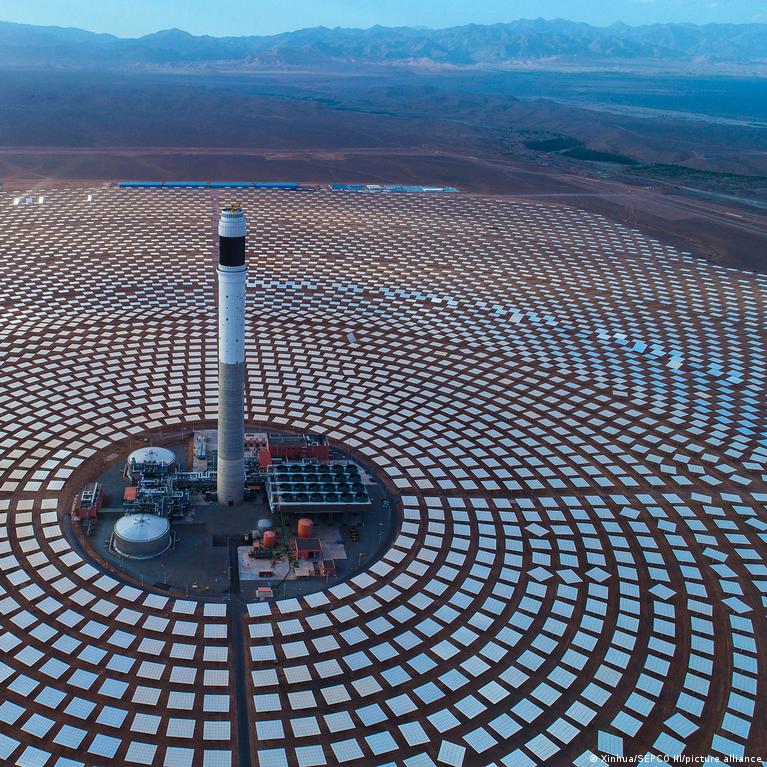
Why it matters: The Moroccan case demonstrates the complex, often contradictory, on-the-ground realities of a global energy transition, where technical capability, grid infrastructure, economic models, and local impacts frequently diverge.
Context: Morocco has positioned itself as a regional leader in renewable energy with aggressive targets, aiming for 52% renewable electricity by 2030, but its grid remains heavily reliant on imported fossil fuels.
""Even as solar panels and wind turbines get cheaper, building large-scale, clean energy systems like Noor still takes serious upfront investment for low income countries," she explained." — DW
Commentary: Noor exemplifies a central tension in the global energy transition: the political and branding appeal of megaprojects versus the often more resilient, decentralized alternatives. The project’s limited local integration and high costs underscore that technical capacity alone is insufficient; the harder tasks remain building adaptive grids, managing economic spillovers, and aligning national ambitions with community-level energy access.
URL: https://www.dw.com/en/solar-power-in-morocco-s-desert-bold-vision-mixed-results/a-75387618?maca=en-rss-en-all-1573-rdf
AI Sentiment Score: Negative (50%)
AI Credibility Score: 10.0/10 — High
Scores and text generated by AI analysis of the source article indicated.
The country that’s turning to solar during war (Dw)
Summary: Ukraine’s energy grid, targeted by Russian strikes, has seen over half its generation capacity damaged or destroyed. In response, decentralized renewables—particularly rooftop solar—are being deployed at scale for resilience, with installations in 2025 powering over a million homes. This shift is driven by operational necessity: solar arrays are harder to destroy en masse and faster to repair than centralized thermal or nuclear plants. The adaptation provides critical power to hospitals, water utilities, and communities under fire, redefining energy security in a conflict zone.
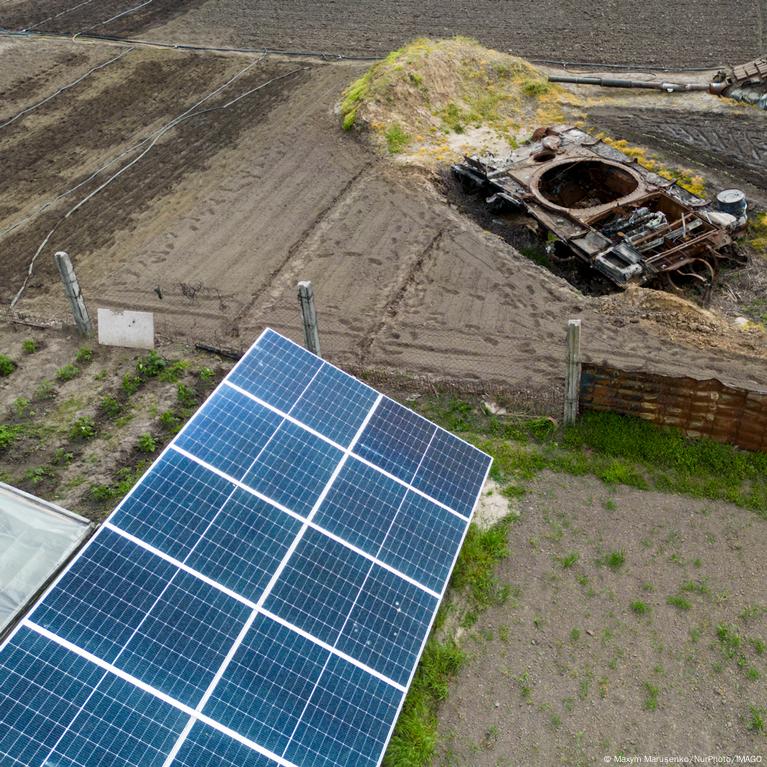
Why it matters: The Ukrainian experience provides a live-fire stress test for energy resilience, offering concrete lessons on grid architecture, component stockpiling, and the strategic value of decentralization for other states facing systemic threats.
Context: This follows years of Russian targeting of Ukrainian energy infrastructure, intensifying in autumn 2024, which has forced a pragmatic, wartime pivot in energy policy despite Ukraine’s historical reliance on nuclear power.
"Renewable energy in Ukraine is not about the climate and sustainability; it’s about surviving now," said Kondratiuk. "It’s about the access to basic needs." — DW
Commentary: Ukraine’s forced adoption of distributed solar rewrites the playbook for critical infrastructure under attack, demonstrating that resilience can drive decarbonization faster than policy. It validates a hybrid future: nuclear for baseload, renewables for survivability, with standardization and geographic spread as key design principles for any national grid in an unstable world.
URL: https://www.dw.com/en/the-country-that-s-turning-to-solar-during-war/a-76907346?maca=en-rss-en-all-1573-rdf
AI Sentiment Score: Negative (80%)
AI Credibility Score: 10.0/10 — High
Scores and text generated by AI analysis of the source article indicated.
Will EU bring in a windfall tax on oil companies? (Dw)
Summary: Five EU member states are pressing the European Commission to enact a windfall tax on oil and gas companies, citing precedent from 2022 and arguing that excess profits from the Iran war price spike should fund consumer relief. The proposal faces significant legal hurdles, including challenges to retroactivity and definitions of ‘excess’ profit, as evidenced by ongoing lawsuits from the previous levy. Proponents see it as a necessary redistributive tool, while critics argue it undermines investment and energy security.
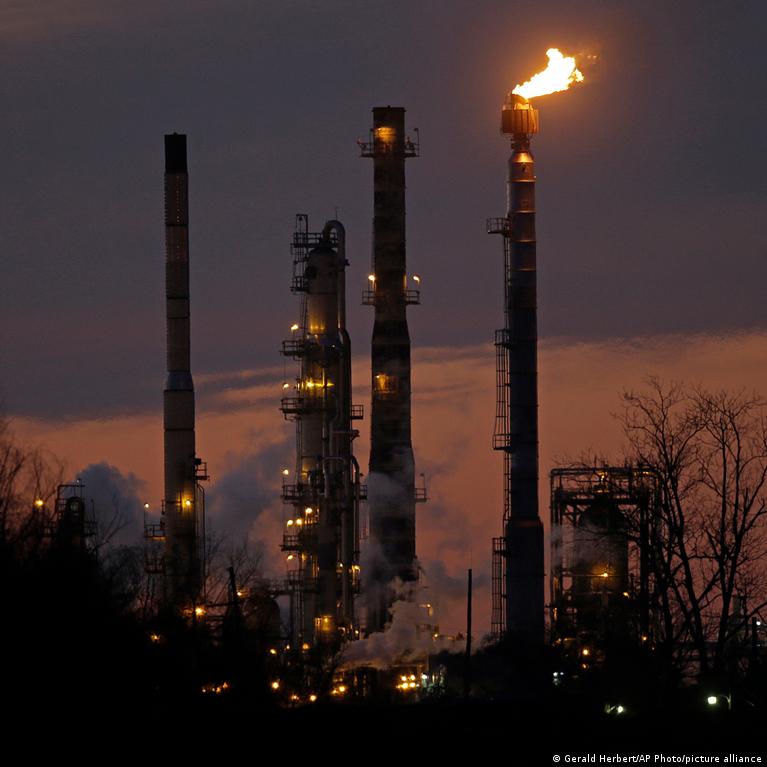
Why it matters: The outcome will shape fiscal policy in a crisis, test the EU’s legal architecture for emergency measures, and influence capital allocation in the energy sector during a volatile transition.
Context: This revives a contentious 2022 policy tool, highlighting the persistent tension between market intervention for social stability and the legal principles underpinning the single market.
"An analysis by the UK’s Guardian newspaper, using data from Rystad Energy, found that leading oil and gas companies will make an extra $234 billion (€200 billion) by the end of the year, if the oil price continues to average around $100." — DW
Commentary: The debate is less about the revenue potential—€26 billion in 2022 was noted as relatively small—and more about the political signal and the precedent it sets for future crises. A successful levy would further institutionalize the EU’s capacity for rapid, centralized fiscal intervention, while a failure or legal defeat would reinforce the primacy of national tax sovereignty and market-led responses.
URL: https://www.dw.com/en/will-eu-bring-in-a-windfall-tax-on-oil-companies/a-76920556?maca=en-rss-en-all-1573-rdf
AI Sentiment Score: Negative (88%)
AI Credibility Score: 10.0/10 — High
Scores and text generated by AI analysis of the source article indicated.
Post ID: d3c58d2c