VFX Tools, Studios, and Industry News
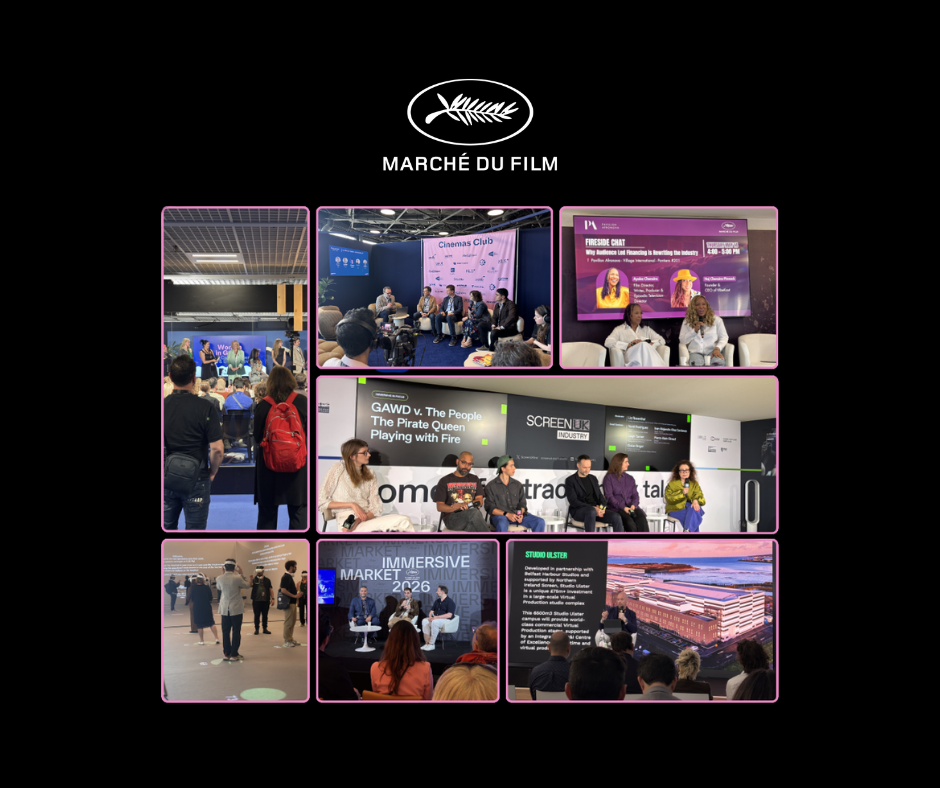
Cannes Film Festival Review – World VFX Day (Worldvfxday)
Summary: Cannes 2026 served as a live audit of power shifts in film production and distribution, with AI-driven greenlighting, audience-led financing, and creator-led distribution platforms challenging studio gatekeeping. The VFX and post-production sector is responding with territorial co-productions and partnership models to counter a ‘race-to-the-bottom’ on margins. Notably, immersive IP development is moving from passive licensing to active co-production deals with rights holders.
Why it matters: The operational and financial models underpinning film development, VFX vendor relationships, and distribution are being rewritten by new tools and bypass strategies, directly impacting project viability, crew workflows, and studio leverage.
Context: Cannes’ Marché du Film has increasingly become a forum for challenger business models and technologies, reflecting broader industry anxiety over studio consolidation and streaming economics.
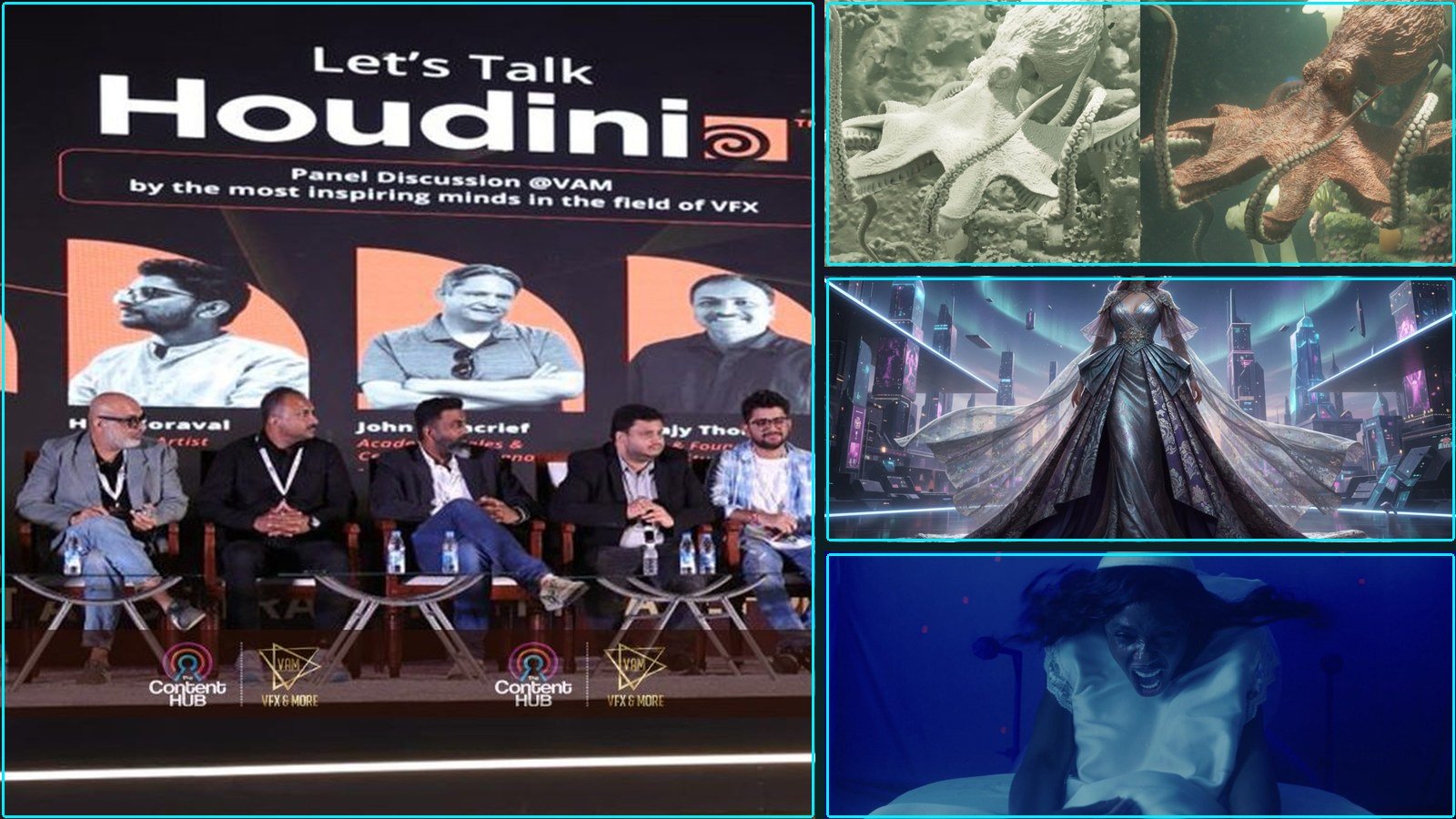
"the rise of the independents and disruptors Written by Hayley Miller, Founder at World VFX Day My third Cannes Film Festival is over and my focus was on connecting with the VFX." — WORLDVFXDAY
Commentary: This budget stratification forces producers into either micro-budget agility or tentpole-scale financing, squeezing out the traditional indie drama. It could push VFX houses to specialize in either high-volume, tool-driven efficiency for the low end or bespoke, partnership-based work for the high end, further segmenting the vendor landscape.
Date: May 20, 2026 12:00 AM ET
URL: https://worldvfxday.com/2026/05/20/cannes-film-festival-review/
AI Sentiment Score: Negative (57%)
AI Credibility Score: 9.6/10 — High
Scores and text generated by AI analysis of the source article indicated.
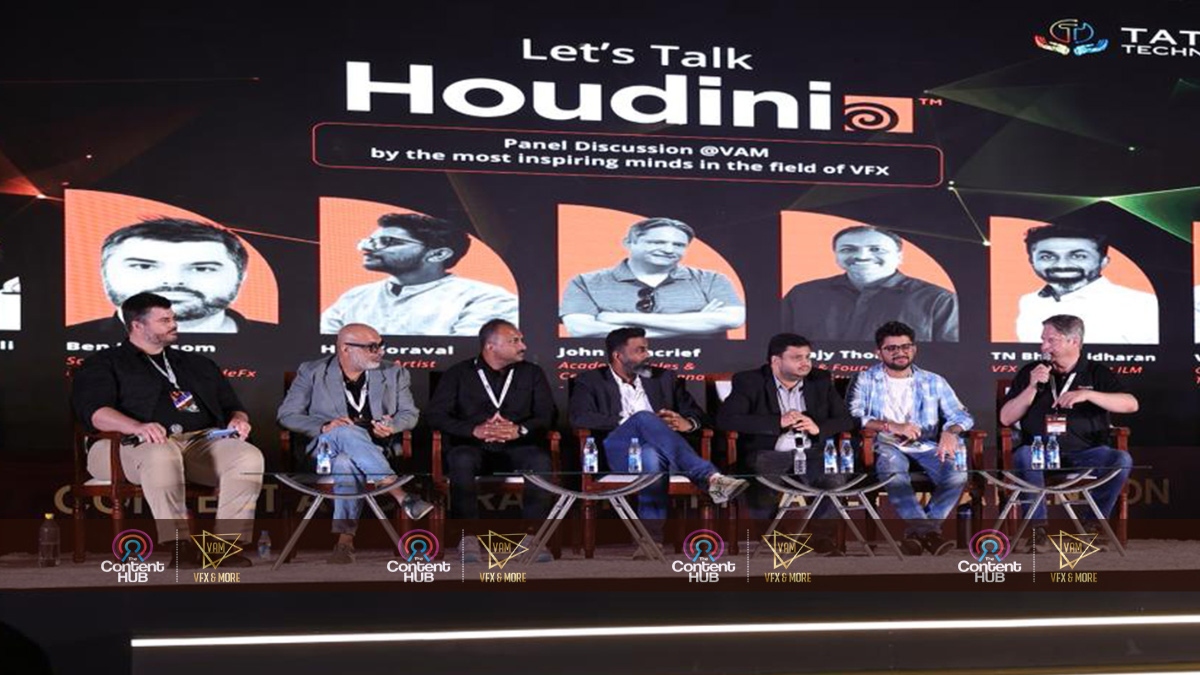
Tathastu Techno Solution & SideFX bring procedural VFX innovation to centre stage at VAM Summit x Content Hub 2026 (Animationxpress)
Summary: Tathastu Techno Solution, a regional training and services vendor, leveraged its partnership with SideFX to anchor procedural VFX discourse at the VAM Summit x Content Hub 2026. The event featured a panel on Houdini workflows and AI integration, plus a VFX breakdown for the film ‘Bhooth Bangla’ with WRC Studios. The sessions attracted strong engagement from students and professionals, indicating a maturation of India’s VFX talent pipeline focused on high-end, procedural techniques.
Why it matters: For studios and vendors, the event signals a shift in regional labor markets toward procedural competency, potentially altering vendor leverage and project economics for complex shots.
Context: India’s VFX sector has historically been a hub for labor-intensive, manual roto and compositing work; procedural and simulation-driven workflows represent a move up the value chain.
"The response across our sessions reflects the growing interest in advanced workflows and industry-driven learning within India’s VFX community." — ANIMATIONXPRESS
Commentary: The event is less about new tooling and more about the institutionalization of Houdini-centric training, which could systematically raise the quality ceiling and throughput for Indian VFX vendors on global projects. This shifts the competitive landscape from pure cost arbitrage to technical capability, potentially pressuring Western studios to re-evaluate vendor tiering and pricing models for simulation-heavy sequences.
Date: May 19, 2026 12:00 AM ET
URL: https://animationxpress.com/latest-news/tathastu-techno-solution-sidefx-bring-procedural-vfx-innovation-to-centre-stage-at-vam-summit-x-content-hub-2026/
AI Sentiment Score: Neutral (33%)
AI Credibility Score: 10.0/10 — High
Scores and text generated by AI analysis of the source article indicated.
DreamWorks Animation’s MoonRay joins the Academy Software Foundation (Postmagazine)
Summary: DreamWorks Animation’s proprietary production renderer, MoonRay, has been contributed to the Academy Software Foundation as an open-source project. The renderer, which has been the backbone of DreamWorks’ feature pipeline since 2019, is now available under an Apache 2.0 license and will be maintained collaboratively within the ASWF. This move transfers a major studio’s core rendering technology into a shared industry commons.

Why it matters: The open-sourcing of a major studio’s production-proven renderer reshapes vendor and in-house tooling economics, potentially lowering barriers to high-quality rendering for smaller shops and altering the competitive landscape for commercial renderer vendors.
Context: The ASWF has become the central repository for critical open-source VFX and animation infrastructure, with projects like OpenVDB, OpenColorIO, and OpenEXR. Studio contributions of proprietary tools, like Sony’s OpenImageIO and now MoonRay, signal a strategic shift towards shared, non-differentiating pipeline technology.
"LOS ANGELES – The Academy Software Foundation (www.aswf.io), the open-source foundation for advancing open-source software in motion pictures, visual effects and animation, has announced that MoonRay, the open source production path-tracing renderer." — POSTMAGAZINE
Commentary: DreamWorks is externalizing a significant capital expense—renderer R&D—while gaining influence over a broader ecosystem. For vendors like Chaos Group (V-Ray) and Pixar’s RenderMan, this introduces a new, freely available competitor with a proven feature-film pedigree, pressuring premium pricing models. For mid-tier and boutique studios, it offers a path to scalable, high-end rendering without licensing fees, though it requires in-house technical integration capacity. The move accelerates the industry-wide consolidation on USD Hydra and OpenUSD as the central pipeline interchange, further marginalizing proprietary scene graphs.
Date: Tue, 19 May 2026 07:00:00 GMT
URL: https://www.postmagazine.com/Press-Center/Daily-News/2026/DreamWorks-Animations-MoonRay-joins-the-Academy-.aspx
AI Sentiment Score: Positive (42%)
AI Credibility Score: 10.0/10 — High
Scores and text generated by AI analysis of the source article indicated.
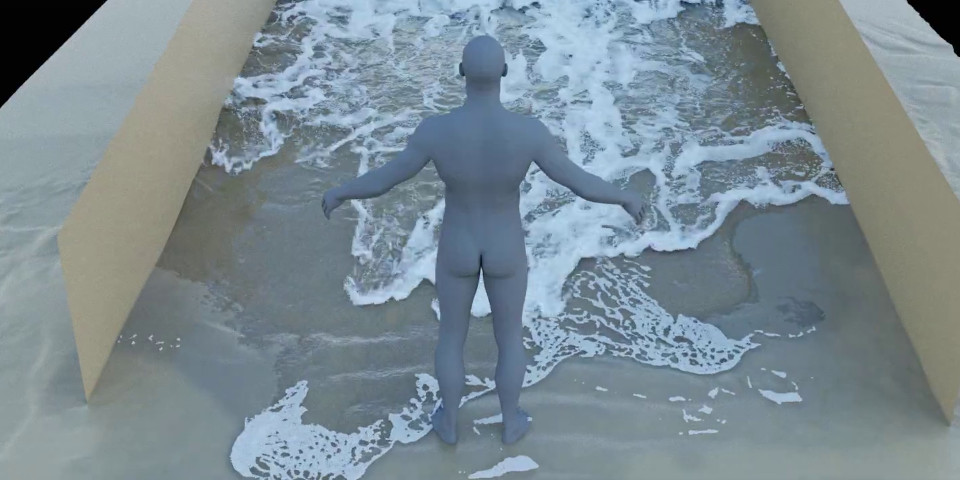
See amazing demo videos of Wētā FX’s in-house simulation tools (Cgchannel)
Summary: Wētā FX has published demonstration videos showcasing its proprietary simulation tools, including the multiphysics framework Loki and the water simulation pipeline Pahi. This move provides an unprecedented public look at the core technology behind recent high-profile projects like the Avatar sequels. The studio is shifting from sharing only research papers to offering visual proof of its tools’ capabilities.
Why it matters: For VFX professionals and vendors, this transparency reveals the technical benchmarks and proprietary advantages that define the high-end market, influencing competitive strategy, talent recruitment, and client expectations.
Context: Leading VFX studios have historically guarded their proprietary toolchains as a key competitive moat; public demos of this scale from a market leader like Wētā are rare and signal a shift in how technical prestige is marketed.
"Although Wētā FX has won eight Academy Awards for its VFX work, it has won even more for the technology used to create those effects." — CGCHANNEL
Commentary: This public showcase recalibrates the perceived value of in-house R&D from a cost center to a direct revenue and branding asset. It pressures other major vendors to either invest more heavily in proprietary development or risk being perceived as mere service shops. For mid-tier studios and freelancers, it sets a daunting quality ceiling, potentially widening the gap between the top-tier ‘technology studios’ and the rest of the market. The move also functions as a high-fidelity recruitment tool, attracting specialized talent by demonstrating the problems Wētā is solving.
Date: Mon, 18 May 2026 11:38:44 +0000
URL: https://www.cgchannel.com/2026/05/see-amazing-demo-videos-of-weta-fxs-in-house-simulation-tools/
AI Sentiment Score: Negative (50%)
AI Credibility Score: 10.0/10 — High
Scores and text generated by AI analysis of the source article indicated.
Digital Fashion in Unreal Engine Five: the Textile Realism … (Foro3D)
Summary: Infinity Nikki, an open-world game developed in Unreal Engine 5, is being highlighted for its advancements in digital fashion realism. Its production pipeline integrates specialized tools like Marvelous Designer for pattern-based cloth simulation, Houdini for dynamic effects, and UE5’s Lumen for real-time global illumination. This represents a codified, high-fidelity workflow for creating and rendering complex garments in a real-time environment.

Why it matters: This signals a maturation of real-time cloth and material pipelines, raising the quality ceiling for in-game assets and potentially altering the economics and staffing models for high-end character and costume work across games, VFX, and virtual production.
Context: The pursuit of photorealistic digital clothing has long been a technical frontier, often bottlenecked by compute-intensive simulation and rendering. Real-time engines have historically traded fidelity for performance.
"Infinity Nikki redefines the open-world genre by merging exploration with a deep focus on digital fashion. The title, developed in Unreal Engine 5, not only presents a vibrant world but also sets." — FORO3D
Commentary: The explicit toolchain—Marvelous Designer to Houdini to UE5/Lumen—validates a vendor-specific pipeline that will influence asset commissioning and vendor selection. It pressures studios to deepen artist specialization in textile simulation software while leveraging real-time engines to compress iteration cycles, potentially shifting more high-fidelity costume work earlier into pre-production and real-time capture stages.
Date: May 21, 2026 12:00 AM ET
URL: https://foro3d.com/en/2026/mayo/moda-digital-en-unreal-engine-5-el-realismo-textil-de-infinity-nikki.html
AI Sentiment Score: Positive (50%)
AI Credibility Score: 10.0/10 — High
Scores and text generated by AI analysis of the source article indicated.
How to make a photoreal CG octopus: the VFX of ‘Remarkably Bright Creatures’ (Beforesandafters)
Summary: Untold Studios’ work on the Netflix film ‘Remarkably Bright Creatures’ demonstrates a high-fidelity, character-driven CG creature pipeline. The photorealistic octopus, Marcellous, required complex integration with live-action plates, emphasizing animation, CFX, and the specific challenges of tentacle articulation.

Why it matters: This case study signals the continued elevation of quality ceilings for mid-tier character work, directly impacting vendor selection, shot budgeting, and the types of creature performances studios can commission.
Context: The demand for emotionally resonant, hero-level CG creatures in non-tentpole features is increasing, pushing boutique vendors to develop specialized, cost-effective pipelines for complex organic animation.
"He breaks down how all the octopus scenes were created, including with some fun stand-ins, and then via some incredible animation and CFX work by Untold." — BEFORESANDAFTERS
Commentary: Untold’s public breakdown reinforces its competitive positioning in a crowded vendor market for high-end creature work. The focus on CFX and integration, not just modeling, highlights where labor intensity and cost remain concentrated, affecting staffing models and bid strategies for similar projects. This raises the bar for what is considered achievable outside major studio VFX houses, potentially shifting leverage in negotiations for character-driven sequences.
Date: Mon, 18 May 2026 23:26:29 +0000
URL: https://beforesandafters.com/2026/05/19/how-to-make-a-photoreal-cg-octopus-the-vfx-of-remarkably-bright-creatures/
AI Sentiment Score: Negative (62%)
AI Credibility Score: 10.0/10 — High
Scores and text generated by AI analysis of the source article indicated.
What’s coming soon to befores & afters (Beforesandafters)
Summary: Befores & Afters, a trade publication for visual effects and animation professionals, has announced its upcoming editorial slate for 2024-2025. The planned coverage includes deep-dive magazines on high-profile projects like ‘Alien: Earth,’ ‘The Electric State,’ and ‘Project Hail Mary,’ alongside podcasts and feature stories on technical and historical topics. This roadmap signals the key productions entering or advancing through post-production, requiring significant VFX vendor engagement.

Why it matters: For VFX supervisors, producers, and studio executives, this slate acts as a forward-looking indicator of workload, required vendor capacity, and emerging technical challenges for the next 12-18 months.
Context: Trade publications often secure early access to projects in post-production; their editorial calendars can serve as a proxy for the industry’s production pipeline and highlight where major VFX budgets are being allocated.
"New magazines, podcasts and other fun coverage in VFX and animation. There’s a ton of new content coming to befores & afters. Take a look at the upcoming features, magazines, and podcasts." — BEFORESANDAFTERS
Commentary: The list reveals a heavy concentration on franchise sci-fi, horror, and superhero content, suggesting sustained demand for complex creature, environment, and destruction simulations. The inclusion of ‘Screen UI’ as a dedicated magazine topic indicates a growing recognition of that niche as a critical, billable VFX discipline. This pipeline implies continued pressure on high-end vendor bandwidth and potential for schedule crunches, particularly for studios like ILM, DNEG, and Weta FX.
Date: Mon, 18 May 2026 11:35:13 +0000
URL: https://beforesandafters.com/2026/05/18/whats-coming-soon-to-befores-afters/
AI Sentiment Score: Negative (66%)
AI Credibility Score: 10.0/10 — High
Scores and text generated by AI analysis of the source article indicated.
EP.05 – This Week In CG, VFX, and Games (Youtube)
Summary: Unreal Engine 5.8’s Megalights renderer has reached production-ready status, marking a significant milestone for real-time cinematic quality. Concurrently, the integration of Claude via the Model Context Protocol into Blender introduces AI-driven procedural operation execution directly within a core DCC tool. These developments, alongside the shift of Cavalry to a free model and updates to Substance Painter and Marvelous Designer, signal a concentrated week of pipeline evolution.
Why it matters: These shifts directly impact production throughput, tooling budgets, and the technical skill sets required on VFX and CG teams, altering vendor economics and in-house capability thresholds.
Context: This cluster of announcements arrives during the annual SIGGRAPH season, a traditional period for major toolset updates, and reflects the ongoing industry pressure to accelerate iteration and reduce manual labor costs.
"##### May 21, 2026 (0:04:50) UE5.8 Megalights went production-ready, Substance Painter shipped the Ribbon Tool, Claude now drives Blender via MCP, and Cavalry went free. Five parts of the CG pipeline shifted." — YOUTUBE
Commentary: The production-readiness of UE5.8 Megalights lowers the cost ceiling for high-fidelity real-time sequences, potentially shifting more previs and final pixel work into game engines. Claude’s direct integration into Blender represents a more profound change: it begins the automation of mid-skill technical artist tasks, threatening a tier of vendor and staff roles centered on repetitive procedural setup and optimization. The combination pressures studios to re-evaluate pipeline investments and staffing models around a more AI-assisted, engine-centric workflow.
Date: May 21, 2026 12:00 AM ET
URL: https://www.youtube.com/watch?v=sPCU12Kd3Ac
AI Sentiment Score: Negative (50%)
AI Credibility Score: 10.0/10 — High
Scores and text generated by AI analysis of the source article indicated.
Best Cloud Render Farm for After Effects 2026 (Superrendersfarm)
Summary: A 2026 vendor comparison of cloud render farms for After Effects reveals a narrowing field of dedicated AE support, with GarageFarm deprecating its service and Drop & Render not supporting the application. This creates a supply pinch for studios reliant on AE for compositing within hybrid VFX pipelines. The analysis suggests a bifurcation where studios must either consolidate on farms with robust AE support or segment their render pipeline, sending AE work to specialist providers.

Why it matters: The deprecation of major AE render services directly impacts pipeline architecture, vendor lock-in risk, and the cost/complexity of managing hybrid 2D/3D workflows for VFX studios.
Context: Cloud rendering has been a critical outsourcing lever for studios to manage compute peaks, but application-specific support, particularly for AE with its complex plugin ecosystems, has been a persistent bottleneck.
"For studios running mixed pipelines, the AE compositing pass needs an AE-supporting farm — and among the six, the AE-native options narrow quickly given GarageFarm’s deprecation (garagefarm.md:135) and Drop & Render’s non-support (drop-and-render.md:117)." — SUPERRENDERSFARM
Commentary: The contraction of the AE render farm market shifts leverage to the remaining providers, potentially increasing costs. It forces a strategic decision on studios: either redesign pipelines to minimize AE rendering (e.g., pushing more comp into Nuke) or accept the operational overhead of a multi-vendor render strategy. This will disproportionately pressure mid-sized studios without the in-house engineering to easily re-architect their workflows.
Date: May 22, 2026 12:00 AM ET
URL: https://superrendersfarm.com/article/best-cloud-render-farm-after-effects-comparison-2026
AI Sentiment Score: Negative (66%)
AI Credibility Score: 10.0/10 — High
Scores and text generated by AI analysis of the source article indicated.
[RELEASE] Camera Render Studio – Pipeline & Plugins (Forums.Unrealengine)
Summary: Camera Render Studio consolidates a developer’s previous Camera 360 plugin series into a single Unreal Engine plugin for professional projection rendering. It targets immersive media production, supporting workflows for 360°, VR180, FullDome, and custom projections, with integration into Unreal’s Movie Render Queue and support for advanced engine features like Path Tracing and Lumen.
![[RELEASE] Camera Render Studio – Pipeline & Plugins](https://d3kjluh73b9h9o.cloudfront.net/original/4X/7/4/1/741d36664d9b0aadf2f20b018fb9d8b1d78f5322.jpeg "Image via Forums.Unrealengine")
Why it matters: It lowers the technical barrier and vendor lock-in for studios producing immersive content, directly impacting the cost and throughput of complex projection and dome-based VFX shots.
Context: The market for immersive and projection-mapped content is growing, but production tooling has often required custom pipeline engineering or expensive third-party software. This plugin represents the maturation of indie-developed tools into a consolidated, production-ready offering.
"Camera Render Studio is built for artists, studios, VR creators, immersive installation designers, dome content creators, archviz specialists, and virtual production workflows that require advanced projection rendering directly inside Unreal Engine." — FORUMS.UNREALENGINE
Commentary: The consolidation of multiple projection tools into one supported plugin reduces pipeline fragmentation and maintenance overhead for small to mid-sized studios. By baking custom projection logic directly into Unreal’s rendering queue, it shifts labor from R&D and scripting to artist-driven configuration, potentially flattening the cost curve for immersive shot complexity. This could pressure specialty vendors who offer standalone projection rendering software, as the core capability moves closer to the dominant game engine.
Date: May 18, 2026 12:00 AM ET
URL: https://forums.unrealengine.com/t/release-camera-render-studio/2722784
AI Sentiment Score: Negative (80%)
AI Credibility Score: 7.0/10 — Medium
Scores and text generated by AI analysis of the source article indicated.
How Chinese tech is shaping the future of filmmaking – CGTN (News.Cgtn)
Summary: At the 2022 China (Shenzhen) ICIF, Versatile Media demonstrated an industrialized, AI-driven virtual production stage. The system, powered by proprietary AI agent ‘Moke’ and the MoboCon motion control platform, integrates filming, rendering, and final-pixel delivery in real-time. This represents a push toward compressing the entire post-production pipeline into a single, on-set, interactive workflow.
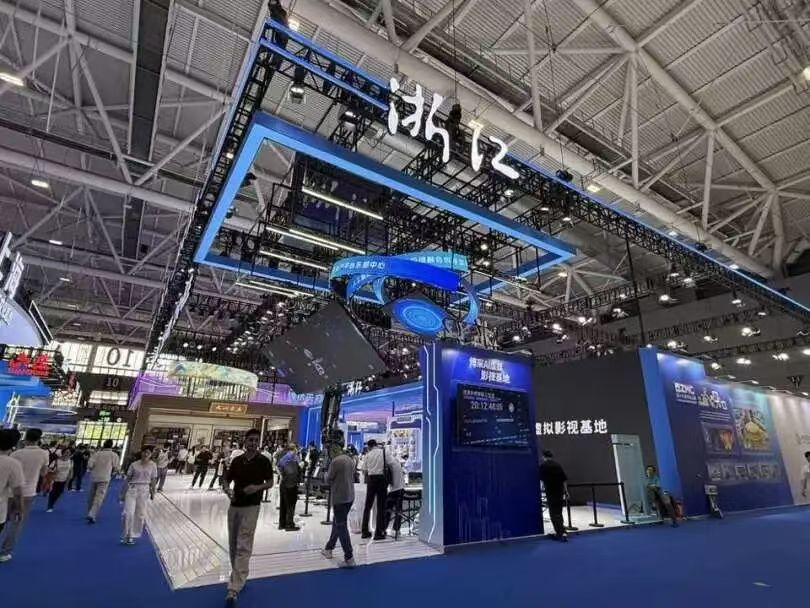
Why it matters: This signals a shift in the global VFX vendor landscape, where integrated hardware/software/AI stacks from China could challenge the traditional, fragmented Hollywood model on cost and speed for mid-tier productions.
Context: Virtual production is maturing beyond LED walls into full AI-assisted pipeline integration, with China’s tech giants investing heavily to create turnkey, exportable solutions.
""This is like compressing a Hollywood post-production facility into a magic box you can literally reach out and touch," one visitor remarked after the demo." — NEWS.CGTN
Commentary: The ‘magic box’ framing is a direct challenge to the labor-intensive, geographically dispersed VFX vendor ecosystem. If such systems achieve reliable final-pixel output, they threaten to commoditize complex shot creation, reducing reliance on specialist houses and compressing margins for traditional post-production services globally. The operational focus on safety and efficiency targets the high-cost pain points of location shooting and lengthy post schedules, appealing directly to producers managing budgets and timelines.
Date: May 24, 2026 12:00 AM ET
URL: https://news.cgtn.com/news/2026-05-24/How-Chinese-tech-is-shaping-the-future-of-filmmaking-1NpmDogRanK/p.html
AI Sentiment Score: Negative (71%)
AI Credibility Score: 10.0/10 — High
Scores and text generated by AI analysis of the source article indicated.
May | 2026 | CINERAMBLE (Cineramble)
Summary: A personal account of the 2026 TCM Classic Film Festival details a four-day schedule of classic film screenings, Q&As with surviving cast/crew, and venue logistics. The narrative highlights the operational realities of festival attendance for a non-passholder, including standby line strategies, sell-out risks in smaller auditoriums, and the trade-offs between film choices. It serves as a granular case study in festival programming, audience engagement, and physical venue utilization.
Why it matters: For industry professionals, this on-the-ground account reveals the enduring audience demand for curated, theatrical repertory experiences and the specific programming elements—star power, thematic curation, venue prestige—that drive ticket sales and community engagement in a niche but resilient market segment.
Context: The festival model, particularly for classic cinema, operates as a high-touch, experience-driven counterpoint to streaming, reliant on exclusive access, physical venues, and legacy talent appearances to justify premium attendance.
"For me, I focus on the movies themselves, and I have yet to feel like I am missing out too much. Hopefully one day I can afford a Festival pass and get more of the experience, but even still this is a full weekend event that still left me little time to waste." — CINERAMBLE
Commentary: The attendee’s focus on core film content over ancillary events underscores the primary product value: the films themselves, presented correctly. The explicit tiering between passholder and standby access delineates a clear revenue and experience stratification common to festival economics. The note on Warner Bros.’ uncertain future hints at the institutional fragility of such curated, legacy-focused operations within consolidated media conglomerates, where they are often seen as cost centers rather than brand assets.
Date: May 23, 2026 12:00 AM ET
URL: https://cineramble.com/2026/05/
AI Sentiment Score: Negative (66%)
AI Credibility Score: 7.0/10 — Medium
Scores and text generated by AI analysis of the source article indicated.
Post ID: 02ac863a