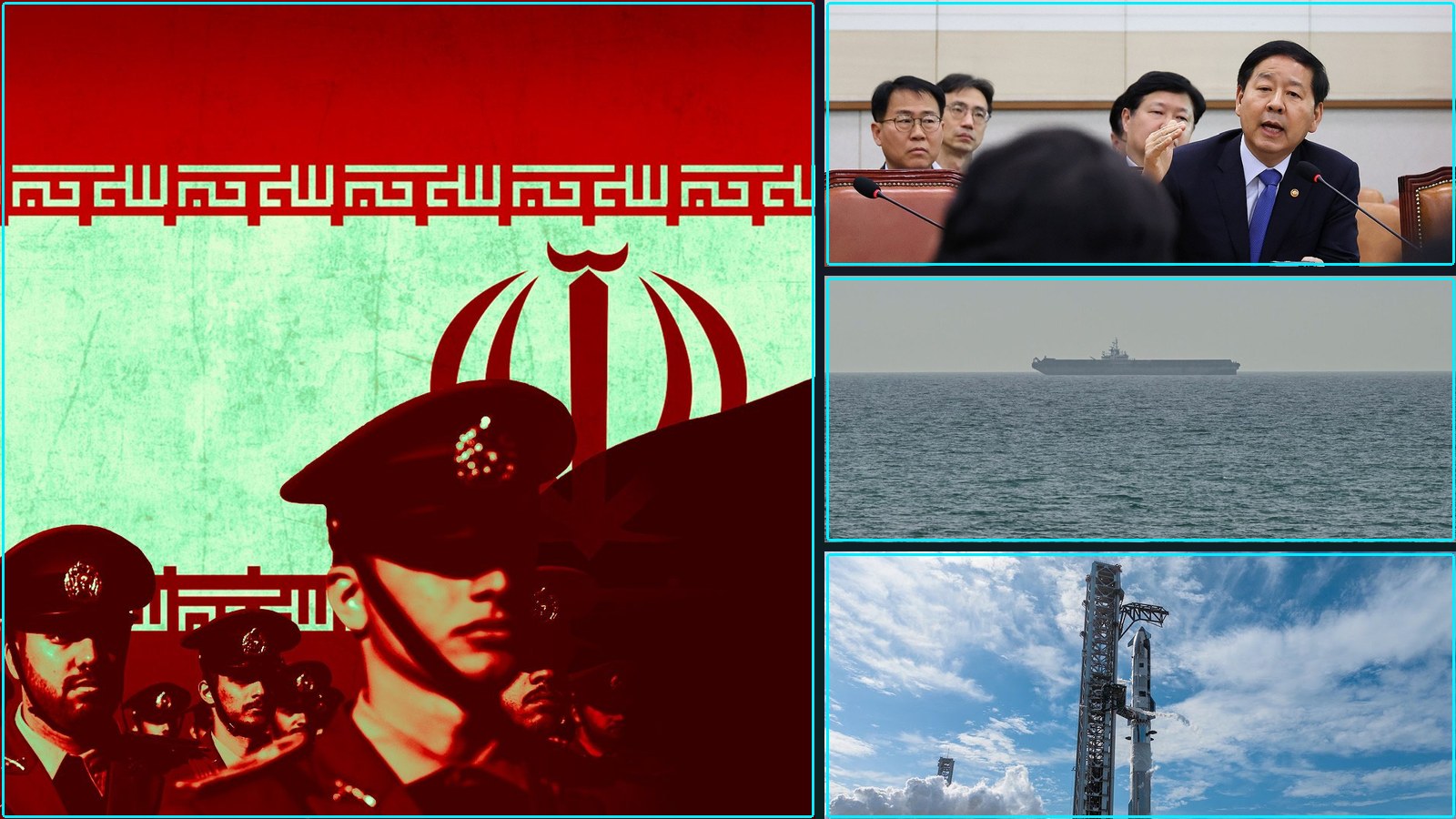
Geopolitical & Regulatory AI Developments
Korea’s Finance Ministry Deploys AI Agent to Handle Parliamentary Audit Requests (En.Sedaily)
Summary: South Korea’s Ministry of Economy and Finance is preparing to deploy an AI agent to handle parliamentary audit requests, automating the classification and routing of document submission demands from lawmakers. This initiative, championed by AI-focused Deputy Prime Minister Koo Yun-cheol, aims to alleviate a severe administrative burden on staff, as audit requests have nearly doubled since 2012. The move represents a shift from using generative AI for simple queries to implementing agentic workflows for core bureaucratic processes.

Why it matters: This signals a concrete, high-stakes operationalization of AI in public administration, moving beyond pilot projects to address a critical pain point with direct implications for government efficiency and civil service work models.
Context: The deployment follows a global trend of applying automation to bureaucratic workflows, but stands out for its focus on a politically sensitive, high-volume legislative oversight function. It tests AI’s capacity to navigate complex, context-dependent government processes.
"Led by the Planning and Coordination Office, which handles National Assembly affairs, the ministry is pushing to introduce a system that uses AI agent technology to automatically analyze parliamentary audit materials and distribute them to relevant departments." — EN.SEDAILY
Commentary: The experiment’s success hinges on the AI’s ability to accurately interpret legislative intent and jurisdictional boundaries—a non-trivial task. If effective, it could recalibrate power dynamics between the executive and legislature by reducing the administrative friction of oversight, while also setting a precedent for automating other high-volume government interfaces. Watch for adoption rates, error reports, and whether this reduces the ‘labor-intensive audit’ culture or merely accelerates request cycles.
Date: May 05, 2026 12:00 AM ET
URL: https://en.sedaily.com/news/2026/05/05/koreas-finance-ministry-deploys-ai-agent-to-handle
AI Sentiment Score: Positive (50%)
AI Credibility Score: 10.0/10 — High
Scores and text generated by AI analysis of the source article indicated.
Scoop: Trump convenes Iran situation room meeting amid renewed Hormuz crisis (Axios)
Summary: The situation with Iran is at a critical point, with the ceasefire expected to expire in three days. Imminent ceasefire expiry heightens flashpoint risk in the Strait of Hormuz.

Why it matters: Imminent ceasefire expiry heightens flashpoint risk in the Strait of Hormuz.
Context: Trump convening a dedicated meeting suggests elevated, immediate strategic concern regarding regional stability.
"The situation with Iran is at a critical point, with the ceasefire expected to expire in three days." — AXIOS
Commentary: The signal is still worth tracking, but the current extraction path did not yield enough body text for a fuller analytical read. The immediate implication is operational rather than speculative: watch how this changes budgets, workflows, or risk assumptions over the next cycle.
Date: April 18, 2026
URL: https://www.axios.com/2026/04/18/iran-trump-white-house-hormuz
AI Sentiment Score: Negative (66%)
AI Credibility Score: 10.0/10 — High
Scores and text generated by AI analysis of the source article indicated.
US and Iran Mull Second Meeting in Bid to Revive Ceasefire Talks – Bloomberg (Bloomberg)
Summary: The US and Iran are in discussions about holding another round of face-to-face negotiations for a longer-term ceasefire, people familiar with the matter said, after talks in Islamabad led by Vice President JD Vance failed to produce a breakthrough. Potential US-Iran dialogue signals sustained, high-level diplomatic interest despite recent procedural failures.

Why it matters: Potential US-Iran dialogue signals sustained, high-level diplomatic interest despite recent procedural failures.
Context: Focus remains on the mechanics of a ‘longer-term’ ceasefire, suggesting underlying structural disagreements persist.
"The US and Iran are in discussions about holding another round of face-to-face negotiations for a longer-term ceasefire, people familiar with the matter said, after talks in Islamabad led by Vice President." — BLOOMBERG
Commentary: The signal is still worth tracking, but the current extraction path did not yield enough body text for a fuller analytical read. The immediate implication is operational rather than speculative: watch how this changes budgets, workflows, or risk assumptions over the next cycle.
Date: April 13, 2026
URL: https://bloomberg.com/news/articles/2026-04-13/us-and-iran-mull-second-meeting-in-bid-to-revive-ceasefire-talks
AI Sentiment Score: Positive (50%)
AI Credibility Score: 10.0/10 — High
Scores and text generated by AI analysis of the source article indicated.
Exclusive: U.S. and Iran closing in on one-page memo to end war, officials say (Axios)
Summary: Nothing has been agreed, but sources say this is the closest the parties have come to an agreement. Any tangible progress suggests a potential de-escalation vector, warranting monitoring for immediate market reaction.

Why it matters: Any tangible progress suggests a potential de-escalation vector, warranting monitoring for immediate market reaction.
Context: Source attribution remains thin; treat any ‘near agreement’ as preliminary signaling, not settled policy.
"Nothing has been agreed, but sources say this is the closest the parties have come to an agreement." — AXIOS
Commentary: The signal is still worth tracking, but the current extraction path did not yield enough body text for a fuller analytical read. The immediate implication is operational rather than speculative: watch how this changes budgets, workflows, or risk assumptions over the next cycle.
Date: 2 weeks ago
URL: https://www.axios.com/2026/05/06/iran-us-deal-one-page-memo
AI Sentiment Score: Positive (50%)
AI Credibility Score: 10.0/10 — High
Scores and text generated by AI analysis of the source article indicated.
May 14, 2026 Quick space links (Behindtheblack)
Summary: A roundup of space industry developments shows incremental but critical progress across multiple private and public programs. Stoke Space is nearing launch readiness for its Nova rocket’s first stage, Rocket Lab is moving hardware for its Neutron rocket to Wallops, Firefly is planning a fourth lunar mission, and NASA has detailed Artemis-3’s use of a dummy upper stage. These updates collectively signal a maturation phase where hardware moves from development to operational deployment.

Why it matters: These granular updates reveal the operational tempo and technical readiness of key new launch systems and lunar missions, directly impacting competitive positioning and schedule confidence for 2026-2027.
Context: The private launch sector is in a period of generational transition, with multiple medium- and heavy-lift vehicles (Neutron, Nova) approaching first flight to challenge incumbent providers, while NASA’s Artemis program relies on these and other commercial partners for its lunar architecture.
"The key revelation is that SLS will launch with a dummy upper stage. As this mission will stay in low Earth orbit, there is no need for that stage." — BEHINDTHEBLACK
Commentary: NASA’s decision to fly Artemis-3 with a non-functional upper stage is a pragmatic, cost-saving move but also a tacit admission of the program’s constrained budget and schedule. It optimizes for the immediate mission profile but may complicate public and congressional perceptions of SLS’s full capability. For Stoke and Rocket Lab, the movement of flight hardware and major components indicates that factory gates are opening, shifting risk from development to integration and test. Watch for FAA launch licenses and static fire tests as the next confirmatory signals for Nova and Neutron.
Date: May 14, 2026 12:00 AM ET
URL: https://behindtheblack.com/behind-the-black/points-of-information/may-14-2026-quick-space-links/
AI Sentiment Score: Negative (80%)
AI Credibility Score: 10.0/10 — High
Scores and text generated by AI analysis of the source article indicated.
Starship test flight 12 slips out (Thesilicongraybeard.Blogspot)
Summary: SpaceX’s Starship V3 launch, now targeting May 19 following a wet dress rehearsal, marks a transition from pure flight testing to operational capability. The vehicle, now the tallest rocket ever built at 408 feet, incorporates uprated Raptor 3 engines and is intended to begin in-orbit refueling experiments critical for lunar missions. The launch will also be the first from a new pad at Starbase, Pad 2.

Why it matters: This test flight signals a shift from proving basic flightworthiness to validating the systems required for Starship’s core mission architecture, namely orbital refueling.
Context: Starship development has followed an aggressive, iterative test campaign; V3 represents a consolidated set of performance upgrades aimed at enabling sustained orbital operations.
"If all goes according to plan, this is the version of Starship that SpaceX will use to begin experimenting with in-orbit refueling, a capability engineers must master before sending ships anywhere farther than low-Earth orbit." — THESILICONGRAYBEARD.BLOGSPOT
Commentary: The slip is minor, but the transition to V3 is not. The focus on refueling moves the program’s risk profile from atmospheric flight dynamics to the complex, untested choreography of cryogenic fluid transfer in microgravity—a prerequisite for any meaningful deep-space architecture. Success here would validate SpaceX’s path to the Moon and beyond, while failure would expose a fundamental bottleneck in its entire strategic roadmap.
Date: May 12, 2026 12:00 AM ET
URL: https://thesilicongraybeard.blogspot.com/2026/05/starship-test-flight-12-slips-out.html
AI Sentiment Score: Negative (71%)
AI Credibility Score: 7.0/10 — Medium
Scores and text generated by AI analysis of the source article indicated.
Post ID: 2c1551ea