Mars Missions and Planetary Exploration
Mars to Titan: the next rallying call? (Spacenews)
Summary: An opinion piece argues for formalizing Saturn’s moon Titan as the next human destination after Mars, citing its thick atmosphere for radiation protection, Earth-like pressure, and in-situ resources. The author, William O’Hara of Explore Titan, acknowledges the severe challenges of distance, extreme cold, and travel time but frames Titan as a necessary long-term goal to galvanize current lunar and Martian programs. He contends that declaring this target now would shape precursor robotic missions and invigorate planetary science.

Why it matters: Establishing a post-Mars destination now could influence mission architecture, technology development, and funding priorities for decades, locking in a strategic direction for NASA and international partners.
Context: The debate over NASA’s long-term vision beyond the Moon and Mars has been largely dormant, with most agency planning focused on the ‘Moon to Mars’ framework. This call for Titan as a formal goal represents a rare attempt to shift the strategic horizon.
"Titan has a thick atmosphere that provides radiation protection and a surface pressure only 45% greater than Earth’s. Humans can adapt to this pressure. With an atmosphere of 95% nitrogen, compared to Earth’s 78%, the similarity is uncanny. Titan’s surface also provides water ice and hydrocarbons – ideal targets for in-situ resource utilization." — SPACENEWS
Commentary: The argument hinges on Titan’s comparative habitability, but it strategically sidesteps the profound propulsion, life support, and political sustainability challenges of missions measured in decades. Framing Titan as a ‘steppingstone’ goal is less a technical roadmap and more a political maneuver to secure funding for Saturn-system science and deep-space nuclear power by attaching them to human exploration’s narrative arc.
Date: Wed, 27 May 2026 17:11:27 +0000
URL: https://spacenews.com/mars-to-titan-the-next-rallying-call/
AI Sentiment Score: Neutral (33%)
AI Credibility Score: 10.0/10 — High
Scores and text generated by AI analysis of the source article indicated.
NASA releases final RFP for Mars communications orbiter (Spacenews)
Summary: NASA has issued the final Request for Proposals for the Mars Telecommunications Network, a dedicated communications orbiter funded by a $700 million congressional appropriation aimed at readiness by late 2028. The final RFP confirms statutory eligibility requirements, restricting bidding to companies that previously conducted commercial Mars sample return studies and proposed a telecom orbiter as part of those concepts. This resolves ambiguity from a draft RFP that suggested a more open competition, aligning the procurement with Congressional intent.

Why it matters: The procurement structure directly shapes the competitive landscape for major deep-space infrastructure, determining which firms can bid on a cornerstone asset for future Mars exploration.
Context: Existing Mars orbiters, which double as science platforms and data relays, are aging; a dedicated telecom network is seen as critical for sustaining and scaling surface operations, particularly for Mars Sample Return.
"WASHINGTON — NASA has released the final request for proposals for a Mars telecommunications system, confirming requirements that limit the companies that can bid on it. NASA issued the final RFP for." — SPACENEWS
Commentary: The final RFP represents a procedural win for Congressional appropriators, enforcing a narrow field—likely Blue Origin and Rocket Lab as the most vocal proponents—while allowing NASA to maintain the formalities of open competition. This constrains supply-side innovation but accelerates a known solution, trading broader vendor participation for schedule certainty on a system critical to the 2030s Mars architecture.
Date: Sat, 16 May 2026 22:33:24 +0000
URL: https://spacenews.com/nasa-releases-final-rfp-for-mars-communications-orbiter/
AI Sentiment Score: Positive (66%)
AI Credibility Score: 10.0/10 — High
Scores and text generated by AI analysis of the source article indicated.
Waterworn chaos on Mars (Esa.Int)
Summary: ESA’s Mars Express orbiter has released a new HRSC image of Shalbatana Vallis, a 1,300-km outflow channel on Mars, showing water-carved terrain, chaotic terrain, and volcanic deposits. The image reinforces the established geological narrative of catastrophic flooding around 3.5 billion years ago. The analysis highlights how the valley has been subsequently filled and modified, offering a detailed case study in Martian hydrological history.

Why it matters: This is a routine data release from a long-running mission, but it provides a high-fidelity visual reference for the planet’s ancient water processes, which are foundational for astrobiological and climate models.
Context: Mars Express has been mapping the planet in 3D since 2003; its HRSC instrument continues to refine our understanding of surface features, contributing to a cumulative dataset against which newer missions like Perseverance and Tianwen-1 are interpreted.
"Shalbatana Vallis formed around 3.5 billion years ago, when huge quantities of groundwater rose up to Mars’s surface. These catastrophic floodwaters cut into the rock and surged downhill, rapidly creating the winding, waterworn valleys we see here." — ESA.INT
Commentary: The value here is not in new discovery but in sustained, high-resolution documentation. Each such image sharpens the timeline and mechanics of Mars’s wet past, directly informing landing site selection and in-situ investigation priorities for current rovers. The mention of chaotic terrain and potential ocean deposits in Chryse Planitia keeps these regions on the list for future sample return or human exploration scenarios.
Date: Wed, 13 May 2026 11:00:00 +0200
URL: https://www.esa.int/Science_Exploration/Space_Science/Mars_Express/Waterworn_chaos_on_Mars
AI Sentiment Score: Positive (66%)
AI Credibility Score: 10.0/10 — High
Scores and text generated by AI analysis of the source article indicated.
Push Back On NASA Mars Mission Cuts (Nasawatch)
Summary: Four U.S. Senators have formally requested at least $400 million for NASA’s Mars Future Missions program in FY 2027, warning that continued underfunding will cause ‘severe and irreversible harm’ to U.S. Mars exploration capabilities. The letter, addressed to the Senate Appropriations subcommittee, frames the Mars Sample Return mission as a critical linchpin for preserving the specialized workforce and technological edge needed for both robotic and eventual human missions. It explicitly cites competition with China’s robotic Mars program as a strategic concern.
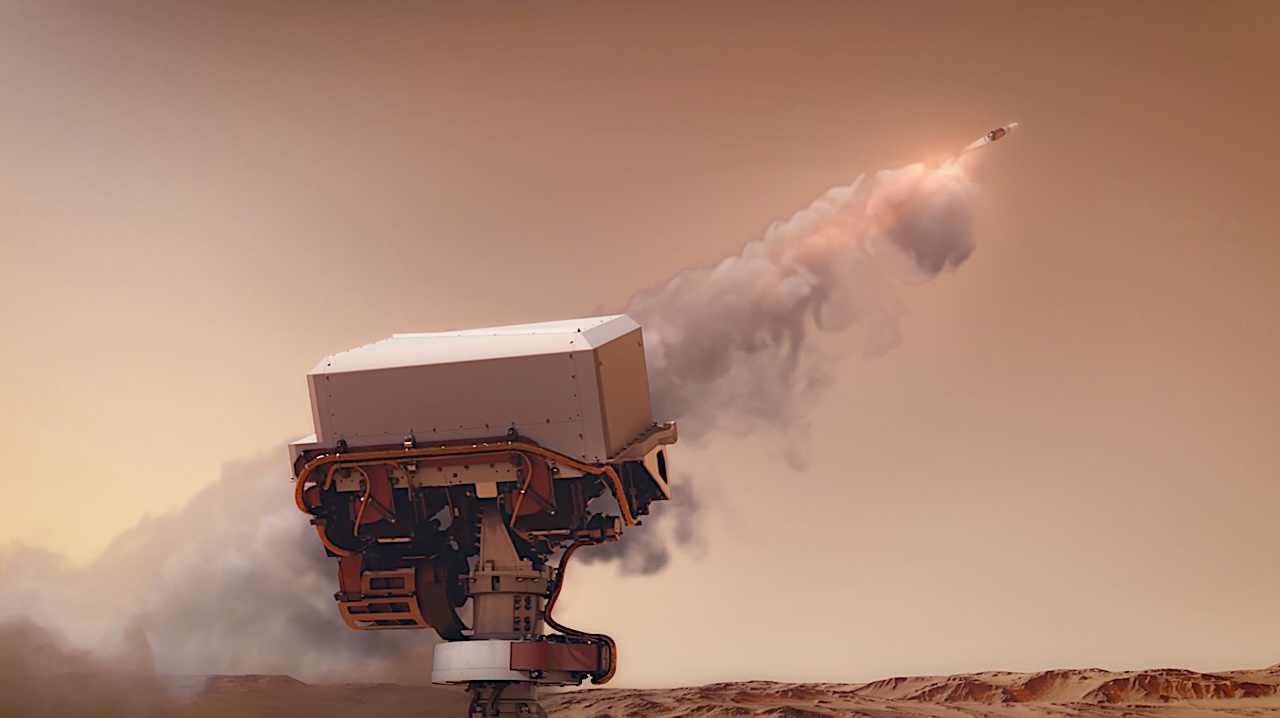
Why it matters: This is a direct political intervention to prevent a perceived collapse of the U.S. Mars exploration industrial base, with implications for the decade-long pipeline of missions, international competition, and the feasibility of human Mars missions.
Context: NASA’s Mars Sample Return program has faced significant cost overruns and schedule delays, leading to budget scrutiny and proposed cuts in recent White House requests, creating a persistent funding gap between congressional authorization and actual appropriations.
"If this funding trajectory continues and is not reversed, NASA’s Mars programs will face severe and irreversible harm, jeopardizing the United States’ ability to land spacecraft on the surface of Mars, not just in the near future, but for decades to come." — NASAWATCH
Commentary: The senators’ letter elevates the debate from annual budget wrangling to a strategic warning about industrial base decay. By tying Mars Sample Return’s specific technologies (precision EDL, Mars ascent) directly to human exploration and Chinese competition, they are attempting to re-frame the mission as a national capability sustainment program, not just a science project. The requested $400 million is a marker for minimum viable continuity, not full funding, signaling a defensive posture.
Date: April 21, 2026 12:00 AM ET
URL: https://nasawatch.com/congress/push-back-on-nasa-mars-mission-cuts/
AI Sentiment Score: Negative (71%)
AI Credibility Score: 10.0/10 — High
Scores and text generated by AI analysis of the source article indicated.
NASA’s Recent Advances in Planetary Defense and Space … (Orbysa)
Summary: NASA’s operational tempo from March to April 2026 shows a portfolio balancing near-term logistics, planetary defense, and deep-space preparation. Key developments include refined asteroid tracking using JWST data for 2024 YR4, Artemis 2 rollout for pad testing, and a scheduled September 2026 launch for the Nancy Grace Roman Space Telescope. The agency also conducted a thermal protection system test via a commercial launch, while the Progress 95 resupply mission maintains ISS operations.

Why it matters: This snapshot reveals NASA’s concurrent execution across threat mitigation, human spaceflight continuity, and next-generation observatory deployment, signaling a mature, multi-front operational cadence.
Context: This follows a period of increased focus on planetary defense post-DART, sustained pressure on Artemis schedule adherence, and the integration of new astronomical assets like JWST into operational roles beyond their primary science missions.
"The Center for Near-Earth Object Studies (CNEOS) at the Jet Propulsion Laboratory has utilized refined data from the James Webb Space Telescope (JWST) to improve the orbital predictions of near-Earth asteroid 2024 YR4, which poses a potential hazard within 30 million miles of Earth." — ORBYSA
Commentary: The repurposing of JWST for precise NEO tracking is a significant, cost-effective force multiplier for CNEOS, reducing dependency on dedicated survey missions like NEO Surveyor before its launch. The Artemis 2 rollout is a tangible, non-reversible step that converts programmatic pressure into hardware risk, while the Roman Space Telescope’s firm launch date on a Falcon Heavy indicates confidence in both the observatory’s readiness and the commercial heavy-lift manifest. The thermal protection test via a commercial launch underscores a shift towards more agile, lower-cost validation pathways for critical systems.
Date: April 25, 2026 12:00 AM ET
URL: https://orbysa.com/news/misc/2026-04-25-nasas-recent-advances-in-planetary-defense-and-space-technology-march-april-2026-highlights
AI Sentiment Score: Negative (75%)
AI Credibility Score: 7.0/10 — Medium
Scores and text generated by AI analysis of the source article indicated.
Rover Finds Evidence of Past Life on Mars. Are We Asking the Right Questions About Life in the Universe? (Pjmedia)
Summary: NASA’s Curiosity rover has identified a diverse mix of organic molecules, including a nitrogen-containing compound resembling proto-DNA, in the shallow subsurface of Gale Crater. The findings, published in Nature Communications, represent the most complex organic chemistry yet confirmed on Mars. While not definitive evidence of past life, the compounds confirm that the chemical building blocks for life were present and preserved. The discovery shifts the mission focus from detection to interpretation, as the origin—biological, meteoritic, or geological—remains unresolved without in-situ human analysis.
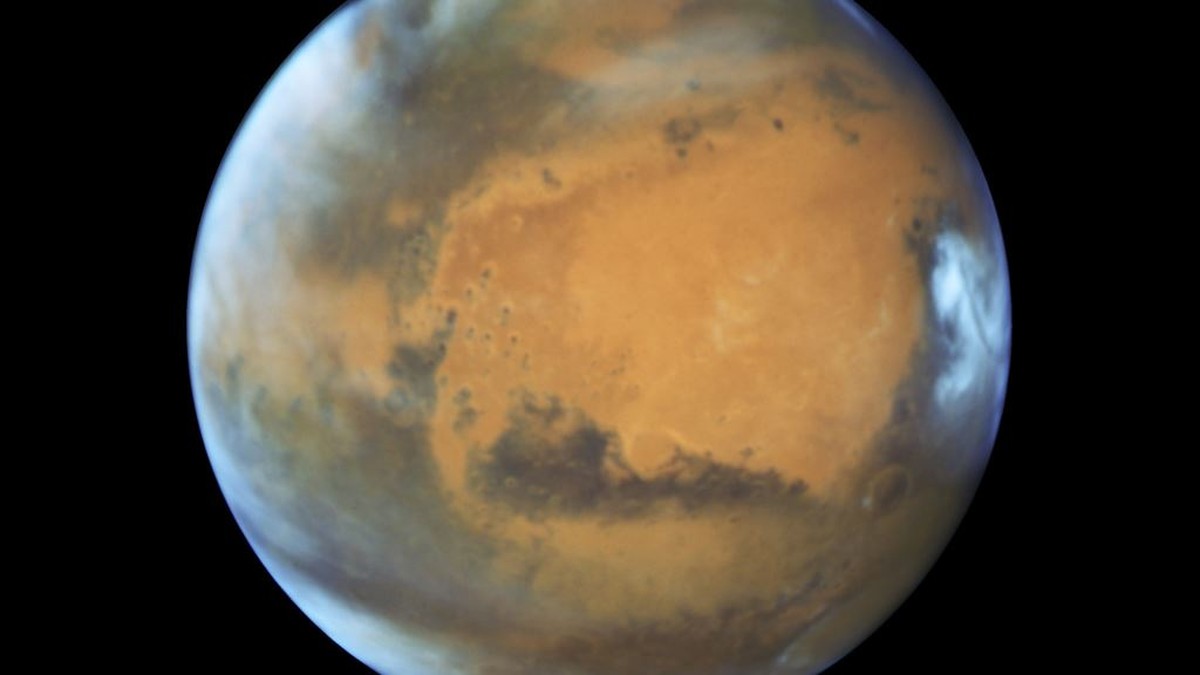
Why it matters: This moves Mars exploration from a search for habitability to a forensic investigation of prebiotic chemistry, directly informing sample-return priorities and the design of future life-detection instruments.
Context: Curiosity has been operating in Gale Crater since 2012, systematically analyzing Martian geology and chemistry to assess past environmental conditions. The detection of complex organics has been a long-standing goal, with each incremental find refining the strategy for subsequent rovers like Perseverance.
"The Curiosity Rover has been scouring Gale Crater since it arrived on the Red Planet in 2012. Gale Crater almost certainly contained liquid water at one time in its history, and NASA." — PJMEDIA
Commentary: The discovery validates the Martian subsurface as a viable archive for complex organics, but it also highlights a fundamental constraint: remote robotic analysis cannot distinguish between biotic and abiotic origins. This strengthens the case for Mars Sample Return as the next necessary step, while simultaneously suggesting that SETI and exoplanet surveys may need to broaden their biosignature definitions beyond Earth-analog chemistry.
Date: April 22, 2026 12:00 AM ET
URL: https://pjmedia.com/rick-moran/2026/04/22/rover-finds-evidence-of-past-life-on-mars-are-we-asking-the-right-questions-about-life-in-the-universe-n4952051
AI Sentiment Score: Negative (75%)
AI Credibility Score: 7.0/10 — Medium
Scores and text generated by AI analysis of the source article indicated.
For the first time in history, a mission will land on Mars’ moon … (En.Clickpetroleoegas.Br)
Summary: JAXA’s Martian Moons eXploration (MMX) mission, scheduled for launch in late 2026, aims to perform the first landing on Mars’ moon Phobos and return samples to Earth by 2031. The mission involves an unprecedented level of international cooperation, with instruments contributed by JAXA, NASA, ESA, and CNES. Its primary scientific goal is to determine the origin of Phobos and Deimos, with the potential to recover material ejected from Mars itself, offering a novel window into the planet’s aqueous history and potential for past life.
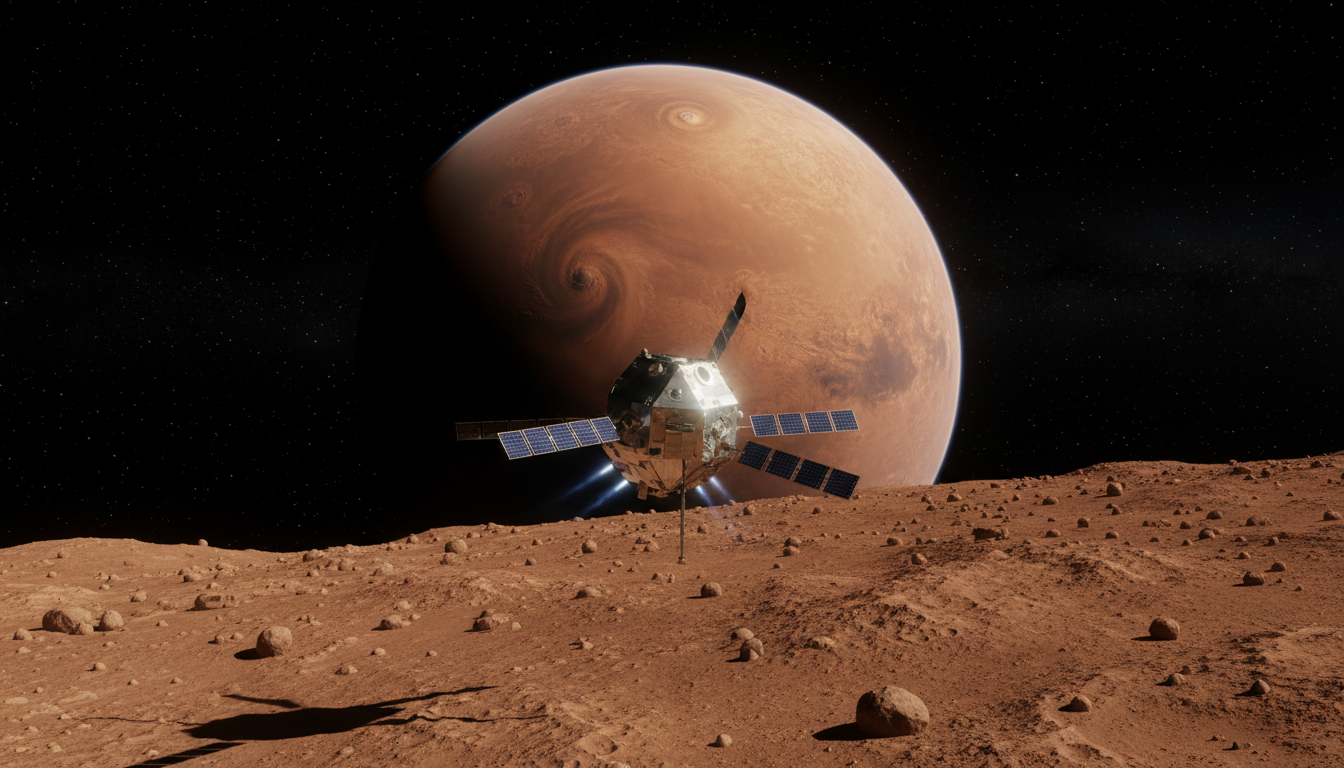
Why it matters: This mission represents a critical step-change in planetary science, offering a potentially more accessible source of Martian material than a direct Mars sample return, while simultaneously advancing the deep-space exploration capabilities required for future human and robotic missions beyond the Earth-Moon system.
Context: MMX follows a series of successful sample-return missions by JAXA (Hayabusa, Hayabusa2) but targets a more complex deep-space object. Its development occurs amid a crowded global Mars exploration agenda and depends on the successful maturation of Japan’s H3 launch vehicle, which has already caused a two-year schedule slip.
"This means that samples from Phobos could literally contain pieces of Mars — including material from times when the planet had liquid water on its surface.." — EN.CLICKPETROLEOEGAS.BR
Commentary: The mission’s value proposition hinges on this geological probability: Phobos as a Martian regolith archive. If confirmed, it provides a strategic, potentially lower-risk pathway to studying pristine Martian material. The four-agency instrument suite underscores a shift towards distributed-risk, high-cost planetary science, though the schedule remains tightly coupled to the H3’s reliability and infrequent launch windows.
Date: April 20, 2026 12:00 AM ET
URL: https://en.clickpetroleoegas.com.br/for-the-first-time-in-history-a-mission-will-land-on-mars-moon-that-orbits-just-6000-kilometers-from-the-planet-and-japan-intends-to-bring-a-davila/
AI Sentiment Score: Negative (75%)
AI Credibility Score: 10.0/10 — High
Scores and text generated by AI analysis of the source article indicated.
New Mars Discovery Is BIGGER News Than Artemis — But It’s Being Ignored (Youtube)
Summary: A YouTube video from April 2026 claims a Mars discovery is more significant than Artemis, citing NASA data showing anomalous patterns and evidence of water and organic molecules. It specifically highlights the detection of opal gemstones in a dried-up lake bed, suggesting recent subsurface water-rock interaction, and references a March 2025 Perseverance rover observation of ‘spider egg’-like objects.

Why it matters: For space exploration specialists, distinguishing between verified mission data and speculative claims is critical for assessing actual progress and resource allocation.
Context: Mars science routinely processes data from active rovers and orbiters; extraordinary claims require extraordinary evidence and peer-reviewed publication, not just video commentary.
"##### Apr 21, 2026 (1:29:17) A recent discovery on Mars may be far more important than the Artemis mission, yet it’s receiving surprisingly little attention. Scientists analyzing NASA data, Mars surface observations,." — YOUTUBE
Commentary: The video’s framing as ‘ignored’ big news versus Artemis is a classic attention-grabbing trope that obscures the normal, incremental pace of planetary science. The mention of opal is a real scientific finding related to hydrated silica, but its implications for ‘recent’ water are a matter of geological timescales, not necessarily a paradigm shift. The ‘spider eggs’ reference is likely to features formed by seasonal CO2 ice, already a known phenomenon, indicating the source is repackaging established observations as mysterious discoveries.
Date: April 21, 2026 12:00 AM ET
URL: https://www.youtube.com/watch?v=YEd54yvVEoE
AI Sentiment Score: Positive (50%)
AI Credibility Score: 10.0/10 — High
Scores and text generated by AI analysis of the source article indicated.
Psyche Spacecraft Completes Mars Flyby (Nasa.Gov)
Summary: NASA’s Psyche spacecraft executed a Mars gravity assist on May 15, passing within 2,864 miles of the planet. The maneuver conserved propellant and adjusted the spacecraft’s trajectory toward its primary target, the metal-rich asteroid Psyche. The spacecraft’s multispectral imager captured images of the Martian surface, including the Huygens crater, during the flyby.
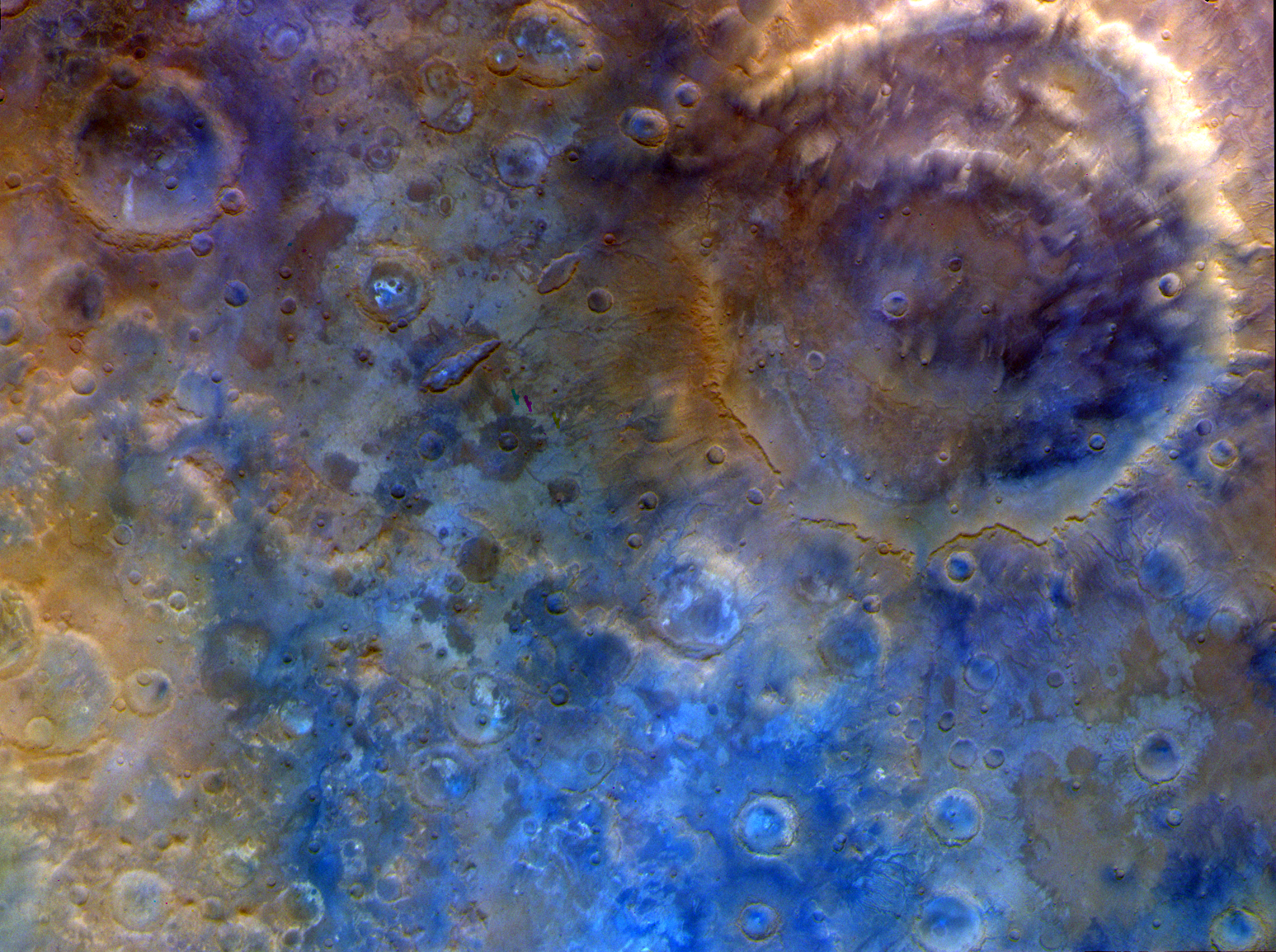
Why it matters: The successful gravity assist validates the mission’s complex navigation plan and keeps the spacecraft on schedule for its 2029 asteroid rendezvous, a critical milestone for deep-space exploration.
Context: Gravity assists are a standard, fuel-efficient technique for interplanetary missions, but each execution carries risk and requires precise navigation. Psyche’s primary mission is to study a unique metallic asteroid, potentially the exposed core of a protoplanet.
"This flyby used a gravity assist from Mars to provide a critical boost in speed and to adjust the spacecraft’s orbital plane without using any onboard propellant, sending it on its way toward the metal-rich asteroid Psyche." — NASA.GOV
Commentary: The routine nature of the announcement belies the operational precision required; a successful flyby confirms trajectory models and preserves onboard resources for the extended science phase. The imaging serves as a functional instrument check but offers no new planetary science. The mission’s schedule adherence through 2029 remains the key indicator of health, with the gravity assist being a necessary, procedural box checked.
Date: Wed, 20 May 2026 17:51:10 +0000
URL: https://www.nasa.gov/image-article/psyche-spacecraft-completes-mars-flyby/
AI Sentiment Score: Positive (40%)
AI Credibility Score: 10.0/10 — High
Scores and text generated by AI analysis of the source article indicated.
India Japan Mission Chandrayaan 5 Progress (En.Channeliam)
Summary: ISRO personnel conducted site inspections at JAXA’s Tanegashima Space Centre, advancing joint preparations for the Lunar Polar Exploration (LUPEX) mission, designated Chandrayaan-5. The mission, targeting a no-earlier-than-2028 launch on Japan’s H3 rocket, will deploy an Indian lander carrying a 350 kg Japanese rover to the lunar south pole. The rover is designed to drill up to five feet to sample water ice. The effort includes instrument contributions from NASA and ESA.

Why it matters: The mission’s progress signals a concrete, hardware-focused step in international lunar resource prospecting, with implications for the viability of sustained lunar presence and the geopolitical alignment of major space agencies.
Context: This follows India’s successful Chandrayaan-3 landing and occurs amid a global rush to characterize lunar polar volatiles, with competing missions planned by the US, China, and commercial entities.
"Chandrayaan-5 aims to study the Moon’s permanently shadowed regions near the South Pole, which are believed to contain water ice. Scientists hope to understand how much ice exists, its composition, and its potential usability for future space missions." — EN.CHANNELIAM
Commentary: The site visit and ongoing engine/rover development move LUPEX from a memorandum to an integration challenge, testing the H3’s reliability and the partners’ operational cohesion. A 2028 timeline, while distant, reflects the complexity of sample-drilling rover technology and a deliberate, risk-averse schedule. Success would provide the first in-situ ground-truth data for south pole ice models, directly informing Artemis-era planning and establishing India-Japan as a core provider of critical exploration infrastructure.
Date: April 28, 2026
URL: https://en.channeliam.com/2026/04/28/chandrayaan-lupex-india-japan-moon-mission/
AI Sentiment Score: Positive (40%)
AI Credibility Score: 9.2/10 — High
Scores and text generated by AI analysis of the source article indicated.
Post ID: f9cd2a36