Made In USA manufacturing and logistics
JCPenney Parent Catalyst Brands Deploys Humanoid Robots in Nevada Warehouse (Wwd)
Summary: Catalyst Brands, the parent company of JCPenney, Brooks Brothers, and other apparel labels, has entered a commercial agreement with Figure AI to deploy Figure 03 humanoid robots in its Reno, Nevada distribution center. The partnership, a rarity in retail supply chains, will initially focus on automating repetitive sorting and packing tasks within the facility’s ‘Joey Pouch’ system. The deal is structured for quick scalability across Catalyst’s multi-brand portfolio and represents Figure’s first agreement with a Brookfield portfolio company.

Why it matters: This deployment tests a standardized, scalable automation solution for the physical constraints of apparel logistics, directly affecting warehouse labor allocation, capital expenditure priorities, and operational resilience for multi-brand holding companies.
Context: While Amazon has tested humanoids, commercial deployment in apparel warehousing remains novel; this follows a reported 200-hour livestream test by Figure where robots processed nearly 250,000 packages, highlighting a focus on handling soft, deformable goods with adaptive sensors.
"As we invest in and scale our portfolio, this collaboration with Figure shows how emerging technologies can modernize our operations while strengthening our workforce,” said Marc Rosen, CEO of Catalyst Brands in a statement. “When we automate routine tasks, our associates can focus on higher-value work and better serve our customers across all our brands." — WWD
Commentary: The operational consequence is a potential shift in warehouse staffing models from generalized labor to specialized oversight and exception handling, contingent on the robots’ reliability with irregular soft goods. For domestic logistics, this addresses persistent labor availability and physical strain issues but introduces new vendor lock-in and maintenance pipeline risks. The Brookfield connection signals institutional capital aligning behind humanoids as a standardized ‘labor solution’ for portfolio companies, suggesting a future where automation capex is dictated by shared investors rather than individual brand ops teams.
Date: Mon, 01 Jun 2026 22:03:23 +0000
URL: https://wwd.com/sourcing-journal/logistics/jcpenney-catalyst-brands-humanoid-robotics-nevada-warehouse-figure-ai-1238989119/
AI Sentiment Score: Negative (66%)
AI Credibility Score: 10.0/10 — High
Scores and text generated by AI analysis of the source article indicated.
UPS Targets Manufacturers With $50M Mexico Air Freight Investment (Wwd)
Summary: UPS is investing $50 million to launch time-definite heavy air freight services between the U.S. and Mexico, targeting industrial and automotive manufacturers. The service, beginning in August, offers one- to three-day options to move high-value parts, aiming to reduce border delays and improve supply chain visibility. This expansion capitalizes on a 54% year-over-year increase in U.S.-Mexico air freight value, driven by nearshoring trends and tariff shifts.

Why it matters: For manufacturers and logistics managers, this creates a new, integrated air freight option for critical parts, directly impacting production line reliability and inventory planning.
Context: Nearshoring and USMCA trade benefits are accelerating cross-border manufacturing logistics, with air freight seeing disproportionate growth as companies prioritize speed and predictability over pure cost.
"Air represented $33.2 billion of freight moved between the U.S. and Mexico in 2025, up 54 percent from the $21.5 billion transported via that mode in 2024." — WWD
Commentary: UPS is building a dedicated, high-margin corridor instead of acquiring Estafeta, betting that integrated control over freight, brokerage, and warehousing for time-sensitive industrial goods outweighs the benefits of a broader last-mile network. For procurement and supply chain teams, this offers a single-point solution but also signals a shift where air freight becomes a standard component of nearshored production planning, not just an emergency lever. The real test will be whether UPS’s promised reliability and visibility can consistently outperform the fragmented, multi-carrier model it aims to displace.
Date: Mon, 01 Jun 2026 13:00:00 +0000
URL: https://wwd.com/sourcing-journal/logistics/ups-mexico-air-cargo-freight-network-manufacturers-50-million-nearshoring-1238986984/
AI Sentiment Score: Positive (50%)
AI Credibility Score: 10.0/10 — High
Scores and text generated by AI analysis of the source article indicated.
Port of Charleston to increase automotive cargo capacity (Supplychaindive)
Summary: The South Carolina Ports Authority is expanding roll-on/roll-off cargo infrastructure at the Port of Charleston’s North Charleston Terminal, with work slated for completion in 2028. The move is a direct response to the state’s established automotive manufacturing base, which exported over 250,000 vehicles from the port’s Columbus Street Terminal last year. The investment aims to bolster capacity for importing and exporting parts and finished vehicles for manufacturers like BMW, Mercedes-Benz Vans, and Volvo Cars.
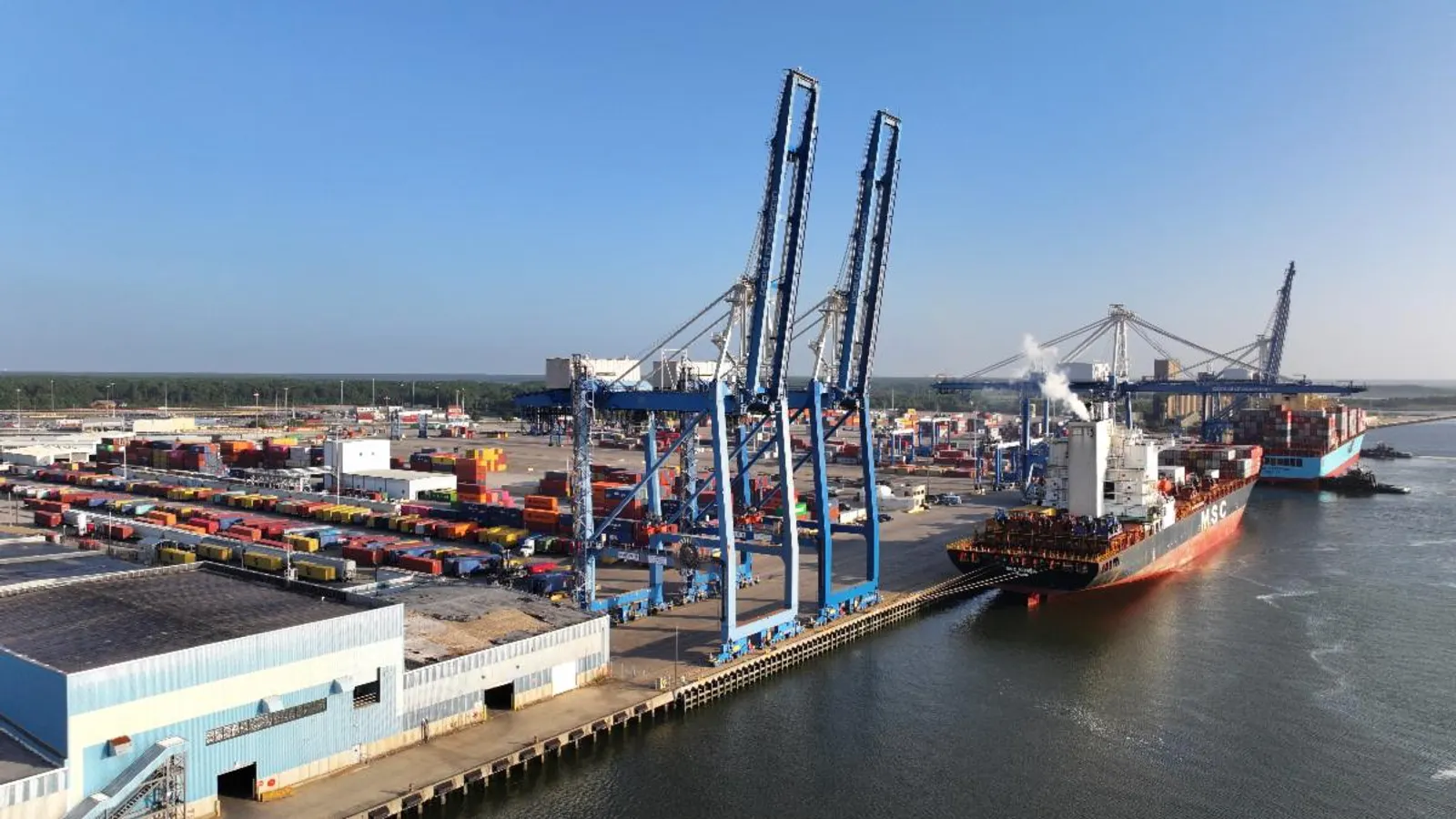
Why it matters: For logistics managers and automotive supply chain planners, this signals a tangible, multi-year expansion of dedicated Ro/Ro capacity in a key Southeast manufacturing hub, affecting vessel scheduling, rail connectivity, and inventory strategies.
Context: This is part of a broader regional port arms race; the Georgia Ports Authority, which handled 779,000 auto units in 2025, is also making significant Ro/Ro investments, intensifying competition for automotive cargo in the Southeast.
"In 2025, motor vehicles and parts were South Carolina’s most exported commodities, according to data from the state’s commerce department. South Carolina also held a market share of 18% of completed passenger vehicle sales, which the department said was the largest share when compared to all 50 states." — SUPPLYCHAINDIVE
Commentary: The expansion is less about greenfield opportunity and more about hardening existing just-in-time pipelines against congestion. The 2028 timeline imposes a near-term constraint, forcing shippers to navigate current capacity while the Georgia alternative gains ground. For domestic producers, this represents a critical, if delayed, vote of confidence in the resilience of Southeastern manufacturing clusters, but it also locks in a multi-year dependency on the port’s construction schedule.
Date: Mon, 01 Jun 2026 09:35:00 -0400
URL: https://www.supplychaindive.com/news/port-of-charleston-to-increase-automotive-cargo-capacity/821332/
AI Sentiment Score: Negative (50%)
AI Credibility Score: 10.0/10 — High
Scores and text generated by AI analysis of the source article indicated.
unspun: Focused On Creating A New Category Of Apparel Production (Textileworld)
Summary: San Francisco-based startup unspun, backed by over $50 million, is commercializing an AI-enabled 3D weaving platform designed to manufacture shaped garment components directly from yarn. This approach aims to collapse traditional cut-and-sew steps, reducing lead times from months to days or weeks and cutting material waste. The company, now led by former brand executive Arne Arens, is shifting from R&D to industrial deployment, targeting a production system that enables automation by moving complexity upstream.
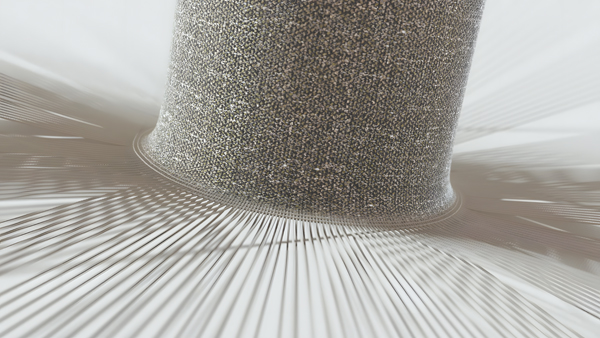
Why it matters: For domestic apparel manufacturers and brands, this represents a potential pathway to viable regional production by addressing the core economic and operational bottlenecks—labor intensity and long lead times—that have historically made automation and reshoring impractical.
Context: Apparel assembly has resisted automation due to the complexity of handling soft goods and sewing; most automation efforts have focused downstream, whereas unspun’s method attacks the problem at the textile formation stage.
"unspun’s approach introduces shape at the point of textile formation. Using a proprietary 3D weaving method, the system is designed to create semi-finished garment components directly from yarn, rather than weaving yardage that must later be cut into pattern pieces." — TEXTILEWORLD
Commentary: The practical implication is a re-architecting of the factory floor: if successful, this reduces the number of manual handling and sewing stations, shifting capital expenditure and skilled labor requirements to upstream machine operation and software control. For brands, the operational shift is from forecasting-driven batch procurement to a platform enabling smaller, demand-aligned production runs, directly impacting inventory carrying costs and markdown risk. The real test is whether the platform achieves the necessary uptime and consistency to meet industrial reliability standards outside a pilot environment.
Date: Mon, 01 Jun 2026 00:27:52 +0000
URL: https://www.textileworld.com/textile-world/knitting-apparel/2026/05/unspun-focused-on-creating-a-new-category-of-apparel-production/
AI Sentiment Score: Negative (80%)
AI Credibility Score: 10.0/10 — High
Scores and text generated by AI analysis of the source article indicated.
UPS invests $50M in automotive, industrial logistics push (Supplychaindive)
Summary: UPS is investing $50 million to expand its North American Air Freight network to include Mexico, offering one- to three-day service for high-value, time-sensitive automotive and industrial parts. The investment funds a dedicated team of over 300 industry experts and integrates air, ground, brokerage, and warehousing into a single service. This strategic pivot targets more profitable B2B industrial volume, moving away from lower-margin e-commerce deliveries.
Why it matters: For manufacturers and logistics managers, this creates a new, integrated North American air freight option that promises to reduce handoffs and increase speed for production-critical shipments, directly impacting inventory and production line resilience.
Context: This is part of UPS’s broader strategic shift to prioritize higher-yielding industrial and automotive shipping over volatile e-commerce, a move evidenced by its recent volume trends where B2B grew while overall volume declined.
""The UPS North American Air Freight network already covers the U.S. and Canada, so it makes sense to add Mexico to cover all of North America with a seamless, end-to-end air and ground freight solution," UPS spokesperson Jim Mayer said in an email." — SUPPLYCHAINDIVE
Commentary: The operational consequence is a tangible shift in capacity and vendor strategy for nearshoring supply chains. By embedding subject-matter experts, UPS is selling consultancy alongside logistics, which could lock in customers but also raises the service expectation beyond mere transportation. For competing carriers and forwarders, this integrated, single-provider model presents a direct challenge to multi-carrier strategies that rely on best-price routing.
Date: Fri, 29 May 2026 11:49:26 -0400
URL: https://www.supplychaindive.com/news/ups-invests-50m-in-automotive-industrial-logistics-push/821497/
AI Sentiment Score: Negative (55%)
AI Credibility Score: 10.0/10 — High
Scores and text generated by AI analysis of the source article indicated.
Apparel Brands Back unspun’s U.S. Automated Manufacturing Push (Textileworld)
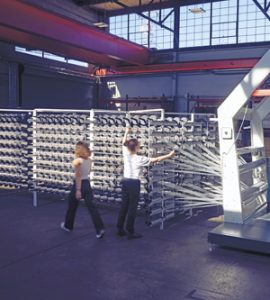
Summary: Apparel tech startup unspun has secured letters of support from Walmart and REI to build automated U.S. manufacturing hubs using its AI-enabled 3D weaving system. The technology produces semi-finished garments directly from yarn in minutes, bypassing traditional cut-and-sew. The company, backed by over $50 million, is now evaluating U.S. sites and workforce training programs for deployment, with initial production expected soon.
Why it matters: This signals a concrete, capital-backed move to automate and relocate apparel production, directly affecting sourcing strategies, labor needs, and inventory models for major retailers and their suppliers.
Context: The push for onshore, automated apparel manufacturing has been a long-term industry goal, often hampered by high costs and technological immaturity. This represents a significant step with committed retail partners.
"San Francisco-based unspun, backed by more than $50 million in venture funding, has secured letters of support from Walmart and REI to build U.S.-based automated apparel manufacturing hubs using AI-enabled 3D weaving." — TEXTILEWORLD
Commentary: The operational shift is from speculative pilot to committed build-out, with Walmart and REI’s support providing crucial demand signaling. The claimed 400–500 basis point margin improvement hinges on eliminating multi-step labor and reducing inventory carrying costs, but success depends on scaling the proprietary technology and establishing a viable domestic supply chain for yarn and finishing. This creates immediate pressure for traditional cut-and-sew contractors and logistics providers serving offshore production.
Date: Sun, 31 May 2026 22:19:46 +0000
URL: https://www.textileworld.com/textile-world/textile-news/2026/05/apparel-brands-back-unspuns-u-s-automated-manufacturing-push/
AI Sentiment Score: Positive (62%)
AI Credibility Score: 10.0/10 — High
Scores and text generated by AI analysis of the source article indicated.
Walmart: Store-fulfilled deliveries getting faster (Retaildive)
Summary: Walmart is accelerating its store-fulfilled delivery network, with over 36% of deliveries arriving in three hours or less in Q1 and sub-hour options growing fastest. The retailer now reaches approximately 60% of the U.S. population in 30 minutes or less, leveraging stores as fulfillment nodes. This speed is driving customer engagement, with sales in fast delivery categories growing over 50% year-over-year, and Walmart Fulfillment Services units shipped same or next day up nearly 150%. The drone program, having completed its 1 millionth delivery, is a scaling component, with plans to expand to over 270 store locations by 2027.
Why it matters: For domestic logistics operators and manufacturers, Walmart’s scaling of hyper-local fulfillment redefines the capacity and speed requirements for last-mile networks, directly impacting inventory placement, labor models, and vendor delivery windows.
Context: This intensifies the competitive pressure on retail logistics, moving the baseline for acceptable delivery speed from days to hours and forcing a reevaluation of centralized fulfillment versus distributed, store-based models.
"Dive Brief: – Walmart’s U.S. sales using store-fulfilled delivery have more than doubled over the past two years as the retailer continues to prioritize faster shipping, President and CEO John Furner told." — RETAILDIVE
Commentary: The operational shift here is from a hub-and-spoke distribution model to a mesh network where stores become micro-fulfillment centers, compressing the supply chain’s final leg. This creates a new constraint for domestic suppliers and brands: production and packaging must now support a faster, more fragmented outbound flow, with smaller, more frequent dispatches to retail nodes rather than bulk shipments to regional DCs. The scaling of drone delivery, while still nascent, signals a long-term bet on automating the most expensive and labor-intensive segment, which could alter last-mile labor demand in targeted markets. For competitors, the benchmark is no longer Amazon’s one-day promise but Walmart’s sub-hour capability, forcing investment in similar localized infrastructure or conceding the convenience economy.
Date: Mon, 01 Jun 2026 10:53:00 -0400
URL: https://www.retaildive.com/news/walmart-store-fulfilled-deliveries-getting-faster/821466/
AI Sentiment Score: Negative (60%)
AI Credibility Score: 10.0/10 — High
Scores and text generated by AI analysis of the source article indicated.
AGY, SAERTEX Develop Advanced S-2 Glass Non-Crimp Fabrics (Textileworld)
Summary: AGY, a U.S. specialty glass fiber producer, and Germany’s SAERTEX, a non-crimp fabric (NCF) manufacturer, are jointly developing advanced composite materials using AGY’s high-strength S-2 Glass fiber. The partnership aims to create lightweight, high-strength multiaxial NCFs for aerospace, defense, and mobility applications. The core proposition is a material that offers performance competitive with higher-cost alternatives while retaining the processing advantages of NCFs. The companies are currently qualifying multiple fabric constructions for structural use.

Why it matters: This development directly impacts material selection and supply chain resilience for U.S. manufacturers in defense and aerospace, offering a potential domestic-sourced high-performance alternative that could alter cost and sourcing calculations.
Context: The advanced composites market is driven by demands for lightweighting and performance, often relying on carbon fiber or expensive specialty materials. Non-crimp fabrics are valued for their ease of processing and consistent performance, but often trade off ultimate strength.
"Aiken, S.C.-based AGY, a global supplier of specialty glass fiber reinforcements, and Saerbeck, Germany-based SAERTEX, manufacturer of multiaxial non-crimp fabrics, announced a joint development focused on using AGY’s high-strength S-2 Glass fiber." — TEXTILEWORLD
Commentary: The operational consequence is a potential shift in the vendor shortlist for structural composites. For U.S. defense primes and their tier suppliers, this collaboration introduces a qualified, high-strength glass-fiber option that may provide a cost-effective alternative to carbon fiber in certain load cases, while potentially simplifying layup processes compared to traditional woven fabrics. The qualification of multiple constructions suggests a move beyond a niche product toward a scalable, application-specific material system. This could pressure incumbent material suppliers on price-performance in segments where absolute maximum stiffness is not the sole driver.
Date: Sun, 31 May 2026 22:28:15 +0000
URL: https://www.textileworld.com/textile-world/textile-news/2026/05/agy-saertex-develop-advanced-s-2-glass-non-crimp-fabrics/
AI Sentiment Score: Positive (42%)
AI Credibility Score: 10.0/10 — High
Scores and text generated by AI analysis of the source article indicated.
Post ID: 4b84458d