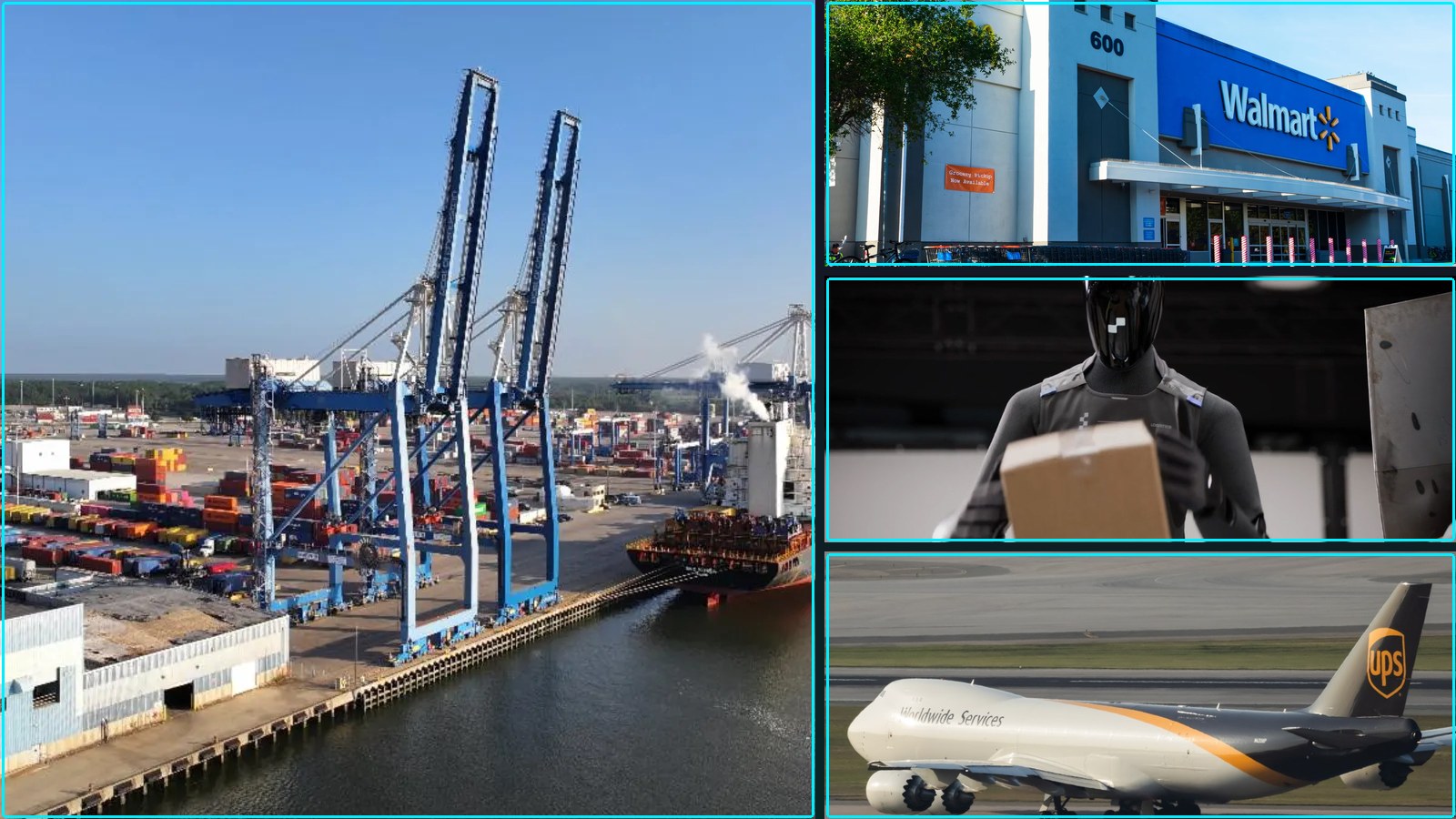
Made In USA manufacturing and logistics
JCPenney Parent Catalyst Brands Deploys Humanoid Robots in Nevada Warehouse (Wwd)
Summary: Catalyst Brands, parent of JCPenney, Brooks Brothers, and others, has partnered with Figure AI to deploy humanoid robots in its Reno, Nevada distribution center. The initial deployment uses Figure 03 models to automate sorting and packing tasks within the facility’s ‘Joey Pouch’ system. The companies have not disclosed the number of units or financial terms, but the agreement allows for rapid scalability across Catalyst’s multi-brand portfolio. This marks one of the first commercial humanoid robotics agreements in apparel supply chains, following Figure’s 200-hour livestream where three robots processed nearly 250,000 packages without mechanical breakdown.

Why it matters: For logistics operators and supply chain managers, this signals a concrete shift from pilot-stage humanoid robotics to commercial deployment in soft goods warehousing, with implications for labor allocation, facility design, and vendor selection.
Context: Apparel supply chains have largely avoided humanoid robotics, while Amazon has experimented with them in select warehouses. Figure AI’s Figure 03 robots feature adaptive fingertip sensors capable of detecting forces as light as three grams, enabling handling of soft, deformable items like poly bags and folded garments.
"JCPenney parent Catalyst Brands wants to test out humanoid robotics in its supply chain network. The entity, which operates a staple of apparel brands including Brooks Brothers, Aéropostale, Lucky Brand and Nautica,." — WWD
Commentary: The adaptive fingertip sensor capability is the operational differentiator here—previous automation struggled with soft goods, which is why apparel lagged in robotics adoption. The standardized labor solution pitch from Figure suggests Catalyst is treating humanoids as a fungible workforce layer that can be deployed across brands without retooling, which could reshape how multi-brand holding companies approach distribution center design. Watch for whether the Reno facility’s $40M 2024 infrastructure update becomes a template for retrofitting existing DCs rather than building greenfield automated facilities.
Date: Mon, 01 Jun 2026 22:03:23 +0000
URL: https://wwd.com/sourcing-journal/logistics/jcpenney-catalyst-brands-humanoid-robotics-nevada-warehouse-figure-ai-1238989119/
AI Sentiment Score: Neutral (50%)
AI Credibility Score: 10.0/10 — High
Scores and text generated by AI analysis of the source article indicated.
UPS Targets Manufacturers With $50M Mexico Air Freight Investment (Wwd)
Summary: UPS is investing nearly $50 million in its Mexico air freight network to launch time-definite heavy air cargo services for industrial and automotive manufacturers starting in August. The move capitalizes on a 58% year-over-year surge in air freight value between the U.S. and Mexico, driven by tariff disruptions and the elimination of de minimis duty-free entry. UPS aims to reduce border delays and simplify cross-border logistics by integrating transportation, brokerage, and warehousing into a single solution. The investment includes a dedicated team of over 300 subject matter experts and builds on prior modernization efforts like warehouse automation and RFID tracking.

Why it matters: For manufacturers and logistics operators, this shifts the cost-reliability calculus of nearshoring: dedicated air freight capacity with time-definite service reduces inventory buffers and production line risk, but raises the bar for cross-border coordination and carrier dependency.
Context: Air freight between the U.S. and Mexico grew from $21.5 billion in 2024 to $33.2 billion in 2025, with its share of total freight rising from 2.6% to 3.8%. This spike follows April 2025 tariff impositions and the end of de minimis duty-free entry, accelerating nearshoring interest under USMCA duty-free provisions.
"Air represented $33.2 billion of freight moved between the U.S. and Mexico in 2025, up 54 percent from the $21.5 billion transported via that mode in 2024. In the year’s span, the mode’s representation of total freight transported between the countries escalated from 2.6 percent of all goods moved to 3.8 percent." — WWD
Commentary: The 54% air freight surge is a leading indicator that tariff-driven supply chain reconfiguration is now operational, not just strategic. UPS’s single-vendor integration model reduces handoffs but concentrates risk: if the carrier stumbles on customs or capacity, production lines stall. Manufacturers should audit their own cross-border lead time assumptions against UPS’s published service windows, and consider whether dedicated air capacity justifies renegotiating inventory targets with suppliers.
Date: Mon, 01 Jun 2026 13:00:00 +0000
URL: https://wwd.com/sourcing-journal/logistics/ups-mexico-air-cargo-freight-network-manufacturers-50-million-nearshoring-1238986984/
AI Sentiment Score: Negative (81%)
AI Credibility Score: 10.0/10 — High
Scores and text generated by AI analysis of the source article indicated.
Port of Charleston to increase automotive cargo capacity (Supplychaindive)
Summary: The South Carolina Ports Authority is expanding roll-on/roll-off cargo operations at the Port of Charleston to support the state’s growing automotive industry. Improvements at the North Charleston Terminal include enhanced rail infrastructure and vessel parking areas, with completion expected in 2028. The adjacent paper mill site will be demolished this summer. Final capacity numbers are not yet available, but the Columbus Street Terminal currently handles over 250,000 vehicles annually.
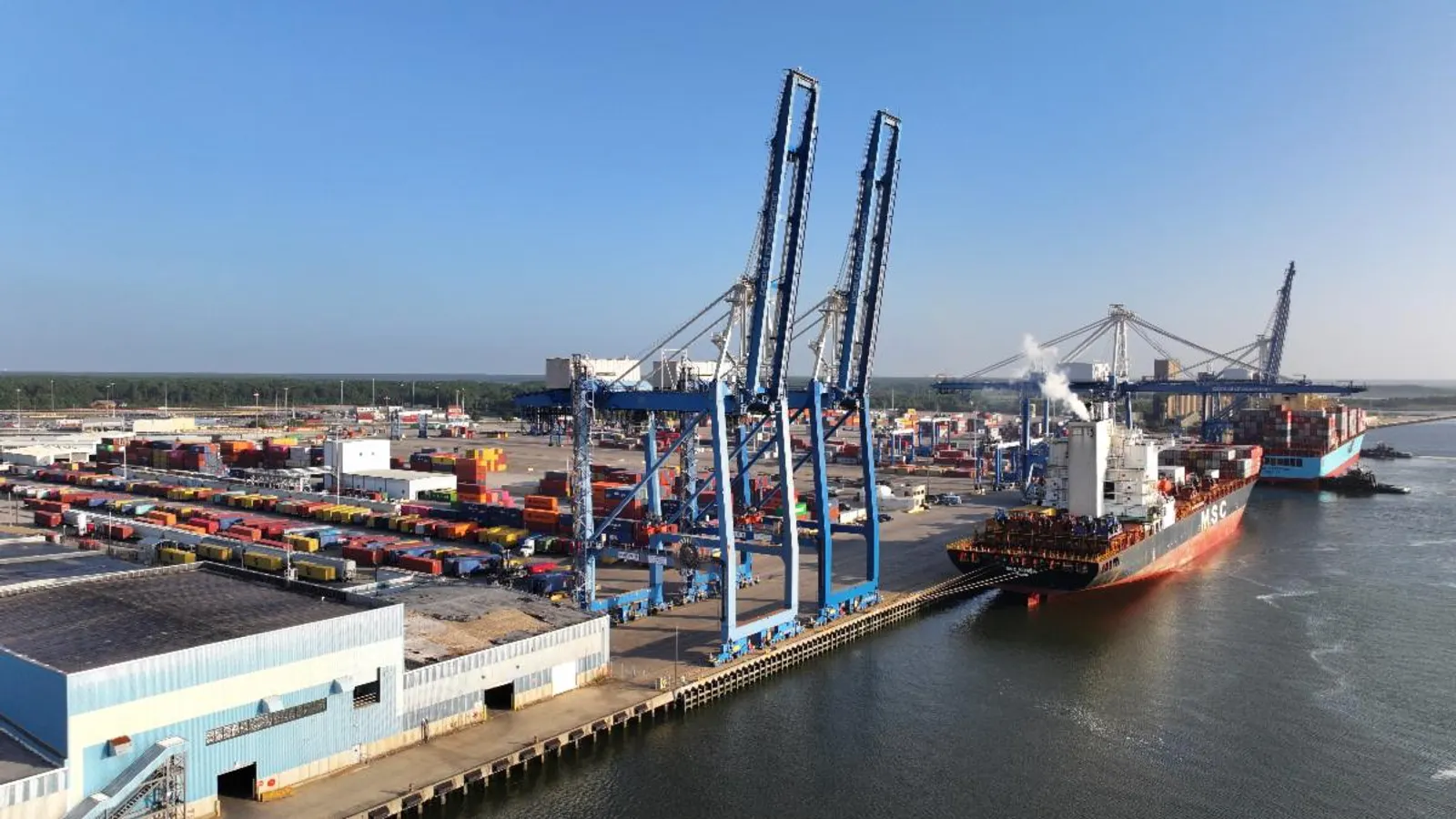
Why it matters: This expansion signals a strategic bet on domestic automotive production and export capacity, directly affecting logistics planners, supply chain managers, and manufacturers who rely on just-in-time parts movement through Southeast ports.
Context: South Carolina is a major automotive hub, home to BMW, Mercedes-Benz Vans, and Volvo Cars, and motor vehicles/parts were the state’s top export in 2025. The Georgia Ports Authority is also investing heavily in roll-on/roll-off capacity, reflecting a regional race to capture growing automotive cargo volumes.
"In 2025, motor vehicles and parts were South Carolina’s most exported commodities, according to data from the state’s commerce department. South Carolina also held a market share of 18% of completed passenger vehicle sales, which the department said was the largest share when compared to all 50 states." — SUPPLYCHAINDIVE
Commentary: The 2028 completion date means near-term capacity constraints will persist, forcing shippers to either queue longer or divert to Georgia’s expanding facilities. The demolition of the paper mill site suggests a deliberate land-use shift from legacy industry to automotive logistics, which may tighten industrial real estate in the region. For supply chain operators, the key variable is whether rail improvements at North Charleston will actually reduce truck dependency or merely shift bottlenecks inland.
Date: Mon, 01 Jun 2026 09:35:00 -0400
URL: https://www.supplychaindive.com/news/port-of-charleston-to-increase-automotive-cargo-capacity/821332/
AI Sentiment Score: Negative (75%)
AI Credibility Score: 10.0/10 — High
Scores and text generated by AI analysis of the source article indicated.
unspun: Focused On Creating A New Category Of Apparel Production (Textileworld)
Summary: Unspun, a San Francisco startup with over $50 million in venture funding, is transitioning from R&D to industrial deployment of an AI-enabled 3D weaving platform that forms shaped garment components directly from yarn, bypassing traditional cut-and-sew. The company has appointed former North Face and Boardriders executive Arne Arens as CEO, signaling a shift toward scaling and customer adoption. By moving complexity upstream, unspun aims to compress lead times from months to days or weeks, reduce inventory waste, and make automation practical in apparel manufacturing—a sector long resistant to automation due to the difficulty of handling soft goods and complex sewing operations. The platform targets three operational levers: lead time compression, inventory and waste reduction, and margin resilience, offering brands a way to compete on responsiveness rather than just unit cost.

Why it matters: For brands and manufacturers facing demand volatility, labor shortages, and tariff uncertainty, unspun’s approach offers a path to regional, demand-aligned production that reduces supply-chain risk and overproduction—shifting the competitive basis from cost efficiency to speed and resilience.
Context: Apparel manufacturing has remained stubbornly labor-intensive downstream, with automation limited to upstream textile processes. Unspun’s 3D weaving method attacks the bottleneck by changing what needs to be sewn, rather than trying to automate sewing itself.
“The playbook has been familiar for decades: forecast months in advance, place large minimum-order buys, ship across oceans, then markdown what doesn’t sell,” — a model unspun is set on disrupting, asserting this approach is optimized for unit cost but has built-in fragility.
Commentary: The appointment of Arne Arens, a brand-side veteran, is the clearest signal that unspun is moving from proving the technology to selling it into real supply chains. The real test will be uptime and repeatability in a production environment—can the platform run day after day without the handoffs that introduce variability? If it can, the implications extend beyond reshoring: it redefines the minimum efficient batch size, making on-demand, localized production economically viable for the first time at scale.
Date: Mon, 01 Jun 2026 00:27:52 +0000
URL: https://www.textileworld.com/textile-world/knitting-apparel/2026/05/unspun-focused-on-creating-a-new-category-of-apparel-production/
AI Sentiment Score: Negative (75%)
AI Credibility Score: 10.0/10 — High
Scores and text generated by AI analysis of the source article indicated.
Walmart: Store-fulfilled deliveries getting faster (Retaildive)
Summary: Walmart reports that store-fulfilled deliveries now account for over 36% of orders arriving in three hours or less, with sub-hour options growing fastest. The retailer can reach roughly 60% of the U.S. population within 30 minutes, and drone deliveries have surpassed 1 million units. These speed gains are driving higher customer engagement and a 50% year-over-year increase in fast-delivery category sales. Walmart Fulfillment Services saw same-day or next-day units shipped jump nearly 150% in Q1.

Why it matters: For logistics operators and supply chain planners, this signals a structural shift in last-mile expectations: store-as-warehouse models are now scaling at a pace that pressures both labor scheduling and inventory allocation at the store level.
Context: Walmart is leveraging its physical store network as distributed fulfillment nodes to compete with Amazon’s delivery speed, using a mix of in-store picking, last-mile vans, and drone partners like Wing.
"We can now reach approximately 60% of the U.S. population in 30 minutes or less,” Rainey told analysts. “And customer satisfaction with our delivery offering reached record highs." — RETAILDIVE
Commentary: The 30-minute coverage figure is the real headline: it redefines the competitive baseline for same-day delivery, forcing rivals to either match store-based density or invest heavily in urban micro-fulfillment. The 150% jump in WFS same-day/next-day units suggests Walmart is successfully converting third-party sellers into speed-dependent inventory partners, which will tighten slot availability and raise the cost of slower fulfillment tiers. Drone delivery, while still a small fraction of total volume, is being treated as a scalable option rather than a pilot, with a planned expansion to 270 stores by 2027—meaning drone logistics, airspace management, and local regulatory compliance are becoming operational realities for store-level teams.
Date: Mon, 01 Jun 2026 10:53:00 -0400
URL: https://www.retaildive.com/news/walmart-store-fulfilled-deliveries-getting-faster/821466/
AI Sentiment Score: Negative (60%)
AI Credibility Score: 10.0/10 — High
Scores and text generated by AI analysis of the source article indicated.
Post ID: 714f9e53