Space Exploration
NASA’s Webb Catches Exoplanet Getting Roasted (Science.Nasa.Gov)
Summary: NASA’s James Webb Space Telescope observed HD 80606 b, a gas giant four times Jupiter’s mass on a highly elliptical 111-day orbit, as it made its closest pass to its star. Webb’s MIRI instrument recorded a temperature spike of 1,100°F during periastron, exceeding predictions from the retired Spitzer telescope. The extreme, rapid heating allows researchers to study real-time changes in chemistry and cloud formation, with initial spectroscopy already distinguishing methane and carbon dioxide signatures. The observation required years of planning due to the planet’s orbit and Webb’s pointing constraints.
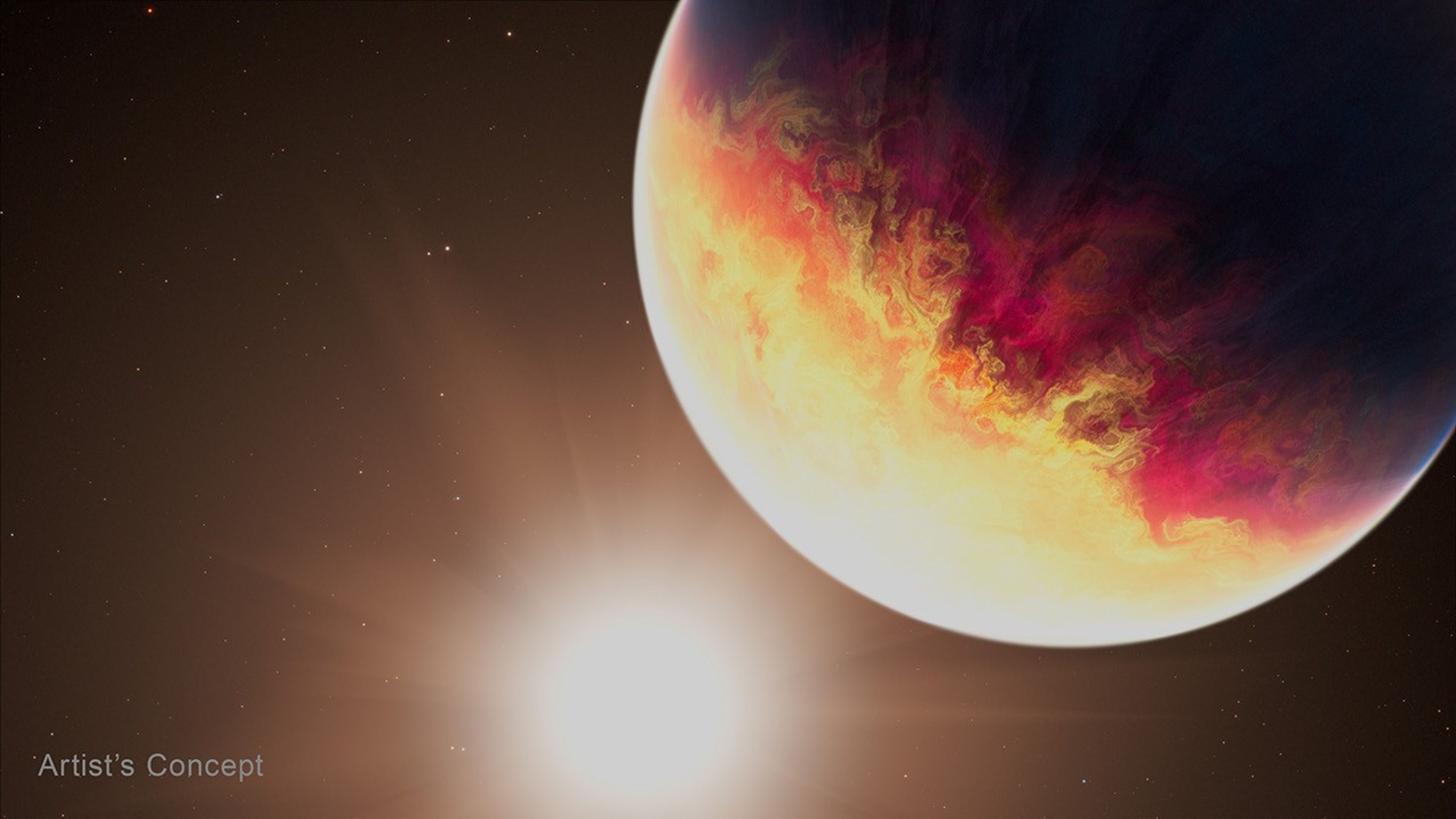
Why it matters: This demonstrates Webb’s ability to capture dynamic atmospheric processes on exoplanets in hours, not years, offering a template for understanding hot Jupiter evolution and atmospheric chemistry under extreme irradiation.
Context: HD 80606 b was previously studied by Spitzer, which established its extreme temperature swings but lacked the spectral resolution to identify specific molecules. Webb’s MIRI instrument now provides that capability.
"One well-done gas giant, coming right up! That’s the latest from researchers analyzing NASA’s James Webb Space Telescope’s observations of HD 80606 b, an exoplanet four times the mass of Jupiter with." — SCIENCE.NASA.GOV
Commentary: The 1,100°F swing in hours is a direct stress test for atmospheric models, and the ability to resolve methane and carbon dioxide in such a short observation window signals a step change in exoplanet characterization. The scheduling complexity—coordinating a 111-day orbit with Webb’s seasonal pointing limits—highlights the operational cost of these measurements, but the payoff is a compressed dataset that can be generalized to less extreme hot Jupiters. Expect follow-up papers to focus on cloud disruption and chemical disequilibrium as the planet cools post-periastron.
Date: June 16, 2026 05:15 PM ET
URL: https://science.nasa.gov/missions/webb/nasas-webb-catches-exoplanet-getting-roasted/
AI Sentiment Score: Negative (66%)
AI Credibility Score: 10.0/10 — High
Scores and text generated by AI analysis of the source article indicated.
Webb & Hubble reveal relic of our galaxy’s formation (Esa.Int)
Summary: Combined observations from the James Webb Space Telescope and Hubble have confirmed that Terzan 5 is not a globular cluster but a ‘bulge fossil fragment’—a surviving primordial clump from the Milky Way’s formation. The system contains four distinct generations of stars, with the oldest forming 12.5 billion years ago and the youngest just 2.5 billion years ago. This rules out external enrichment scenarios and establishes Terzan 5 as a prototype for a new class of objects that may reshape models of galactic bulge assembly.

Why it matters: Terzan 5 provides a direct, preserved laboratory for studying how the Milky Way’s bulge formed, offering empirical constraints on galaxy formation models that have relied heavily on simulations and distant observations.
Context: Terzan 5 was discovered in 1968 and initially classified as a globular cluster; hints of complexity emerged in 2009 and 2016, but Webb’s infrared capability was needed to penetrate dust and Hubble’s 12-year proper motion baseline to separate cluster stars from bulge stars.
"Webb & Hubble reveal relic of our galaxy’s formation Researchers have confirmed a new class of objects within our Milky Way galaxy: survivors called ‘bulge fossil fragments.’ Terzan 5 is the prototype." — ESA.INT
Commentary: The four-generation star formation history is the key signal: it requires the progenitor to have retained supernova ejecta across billions of years, a feat impossible for a typical globular cluster. This shifts Terzan 5 from an oddball outlier to a diagnostic tool for bulge formation, and the team’s plan to survey 40–50 other bulge globulars will test whether such fragments are rare or common. If common, the standard picture of bulge assembly via rapid, complete mixing will need revision.
Date: June 16, 2026 01:15 PM ET
URL: https://www.esa.int/Science_Exploration/Space_Science/Webb/Webb_Hubble_reveal_relic_of_our_galaxy_s_formation
AI Sentiment Score: Negative (66%)
AI Credibility Score: 10.0/10 — High
Scores and text generated by AI analysis of the source article indicated.
NASA Webb, Hubble Reveal History of Relic of Milky Way’s Formation (Science.Nasa.Gov)
Summary: Combined observations from NASA’s Webb and Hubble Space Telescopes have reclassified Terzan 5 from a globular cluster to a “bulge fossil fragment,” revealing four distinct generations of stars formed between 12.5 billion and 2.5 billion years ago. This confirms the system retained enough mass to recycle supernova ejecta into new stars, unlike lighter clusters. The finding provides a direct observational analog for how galactic bulges may have formed from fragmented gas disks in the early universe. Only one other similar object, Liller 1, is known, but surveys of 40–50 more bulge clusters are underway.

Why it matters: This reclassification transforms a local stellar system into a preserved laboratory for bulge formation, offering empirical constraints on galaxy assembly models that Webb is now observing at high redshift.
Context: Terzan 5 was first identified as unusual in 2009 with two stellar populations; the new Webb+Hubble proper-motion data resolves four distinct epochs, ruling out external enrichment scenarios.
"“Webb’s new near-infrared observations, cross-referenced with Hubble’s archival observations, have given us a much clearer picture of the history of Terzan 5,” said Giorgia Zullo, who led the research and is a PhD student at the University of Bologna in Italy." — SCIENCE.NASA.GOV
Commentary: The four-generation age sequence—12.5, 4.7, 3.8, and 2.5 billion years—is a clean timeline of self-sustained star formation in a single bound system, which no globular cluster model supports. That Terzan 5 survived bulge mixing while lighter fragments dispersed implies a minimum mass threshold for fossil preservation, a parameter now testable with the upcoming cluster survey. For galaxy evolution modelers, this is a rare local calibration point for the clump-coalescence bulge formation scenario seen in Webb’s early-universe fields.
Date: June 16, 2026 01:15 PM ET
URL: https://science.nasa.gov/missions/webb/nasa-webb-hubble-reveal-history-of-relic-of-milky-ways-formation/
AI Sentiment Score: Negative (50%)
AI Credibility Score: 10.0/10 — High
Scores and text generated by AI analysis of the source article indicated.
NASA’s Quantum Lab Aboard Space Station Gets Chilly Upgrade (Nasa.Gov)
Summary: NASA has activated the fourth upgrade of its Cold Atom Lab aboard the ISS, which creates Bose-Einstein condensates in microgravity. The new science module, launched in April, includes a redesigned magnetic trap and improved atom sources, enabling longer-duration studies of quantum gases at lower temperatures than possible on Earth. The lab supports five international teams investigating fundamental physics and tests quantum instruments for future navigation, timing, and gravity-sensing missions on the Moon and beyond.
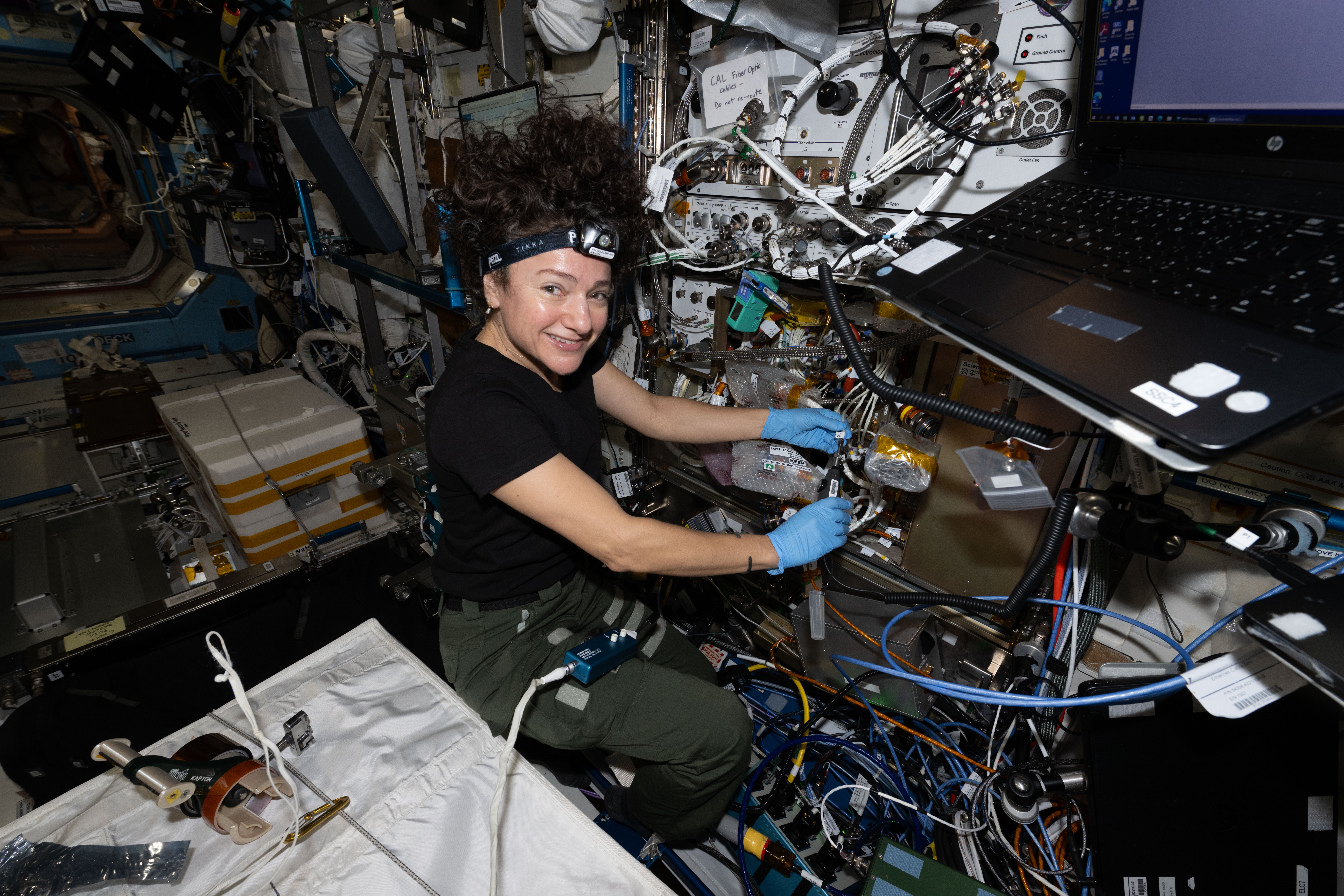
Why it matters: This upgrade moves space-based quantum research from proof-of-concept to a reliable platform for matter-wave interferometry, which could transform precision measurement for Earth science and deep-space navigation.
Context: The Cold Atom Lab has been operating since 2018, and this is its fourth hardware refresh, reflecting NASA’s sustained investment in orbital quantum science as a precursor to operational quantum sensors.
"Astronauts aboard the International Space Station have switched on NASA’s newly upgraded Cold Atom Lab, a one-of-a-kind facility designed to improve how scientists explore the fundamental workings of matter and develop new." — NASA.GOV
Commentary: The shift from one-off demonstrations to a regularly upgraded orbital facility signals that NASA views quantum sensing as an operational capability, not just a science experiment. The redesigned magnetic trap and atom sources directly address the engineering constraints that limited earlier BEC experiments in microgravity. If matter-wave interferometers mature from this platform, they could replace atomic clocks for gravitational mapping and provide autonomous navigation without GPS. The real test will be whether the lab’s five international teams can produce peer-reviewed results that justify a dedicated free-flying quantum sensor mission.
Date: June 16, 2026 12:50 PM ET
URL: https://www.nasa.gov/missions/station/iss-research/cold-atom-laboratory/nasas-quantum-lab-aboard-space-station-gets-chilly-upgrade/
AI Sentiment Score: Negative (80%)
AI Credibility Score: 10.0/10 — High
Scores and text generated by AI analysis of the source article indicated.
Terran R second stage heads to Stennis as Relativity advances toward 2026 debut (Nasaspaceflight)
Summary: Relativity Space has shipped the Terran R second stage to NASA’s Stennis Space Center for testing, completed structural work on the first-stage qualification article, and is nearing final configuration of Launch Complex 16. The Aeon V vacuum engine has finished its qualification campaign, and the company has a $3 billion launch backlog. These milestones keep Relativity on track for a potential maiden flight by the end of 2026, introducing a heavy-lift vehicle with payload capacity exceeding Falcon 9.

Why it matters: Terran R represents a credible non-SpaceX heavy-lift option, with a 2026 debut that could reshape commercial launch competition and Mars mission planning.
Context: Relativity retired its small-lift Terran 1 after a single flight in 2023 to focus entirely on Terran R, a methane-fueled reusable rocket targeting the medium-to-heavy launch market.
"With the second stage on its way to Stennis for testing, the first-stage qualification article preparing for structural load testing, and LC-16 rapidly approaching its final configuration, Relativity Space is entering the pivotal final phase of Terran R development." — NASASPACEFLIGHT
Commentary: The shift from Terran 1 to Terran R was a high-risk bet on scale; passing engine qualification and shipping hardware to Stennis suggests the engineering is maturing. The $3 billion backlog, anchored by OneWeb’s second-generation constellation, provides revenue visibility but also ties schedule performance to a customer with its own orbital ambitions. If Terran R flies on time, it will be the first new heavy-lift methane vehicle to reach orbit, leapfrogging Blue Origin’s New Glenn in the race to operational status.
Date: June 17, 2026 06:12 PM ET
URL: https://www.nasaspaceflight.com/2026/06/relativity-update-0626/
AI Sentiment Score: Negative (60%)
AI Credibility Score: 10.0/10 — High
Scores and text generated by AI analysis of the source article indicated.
Canadarm2 repairs planned as CRS-34 departs ISS (Nasaspaceflight)
Summary: The Canadarm2 robotic arm on the ISS is non-operational due to a wrist joint issue, with a repair EVA scheduled for June 30. CRS-34 undocked and splashed down successfully, returning critical stem cell and bioprinted tissue samples. Roscosmos paused repair work on the Zvezda module’s leaking PrK tunnel after NASA ordered a safe haven precaution. A private Czech astronaut mission to the ISS is planned for 2027.

Why it matters: The Canadarm2 failure directly impacts cargo capture capability for Cygnus and HTV-X, and the PrK leak represents the highest near-term risk to continued ISS occupancy.
Context: Canadarm2 has been operational since April 2001; the wrist joint was designed for on-orbit replacement with a spare stored externally. The PrK tunnel leaks have been a persistent issue, with rates recently worsening to two pounds per day.
"The Expedition 74 crew aboard the International Space Station have seen yet another busy month of spacewalks, science experiments, and maintenance tasks. The CRS-34 mission undocked from ISS on Tuesday, June 16,." — NASASPACEFLIGHT
Commentary: The Canadarm2 repair is a rare on-orbit joint replacement, testing the arm’s serviceability design under real failure conditions. The PrK leak escalation forced a rare safe-haven order, underscoring how structural degradation is now the pacing threat to station life extension. The stem cell expansion experiment could shift clinical practice if microgravity yields higher-potency HSCs, but results remain pending analysis. The Czech private mission signals growing ESA member-state interest in commercial crew access, though crew composition and funding details are still sparse.
Date: June 18, 2026 06:34 PM ET
URL: https://www.nasaspaceflight.com/2026/06/iss-roundup-061826/
AI Sentiment Score: Negative (77%)
AI Credibility Score: 10.0/10 — High
Scores and text generated by AI analysis of the source article indicated.
NASA’s SpaceX CRS-34 Dragon Returns Packed with Space Station Science (Nasa.Gov)
Summary: SpaceX’s CRS-34 Dragon has returned from the ISS carrying a dense payload of biological and materials science samples. Key experiments include stem cell expansion in microgravity, cardiac tissue infection studies, and semiconductor crystal growth. The returning hardware also includes data on cryogenic fuel storage and 3D-printed bone marrow and cartilage tissues. These results aim to advance deep-space medical countermeasures and improve terrestrial therapies for blood diseases, bone disorders, and joint injuries.
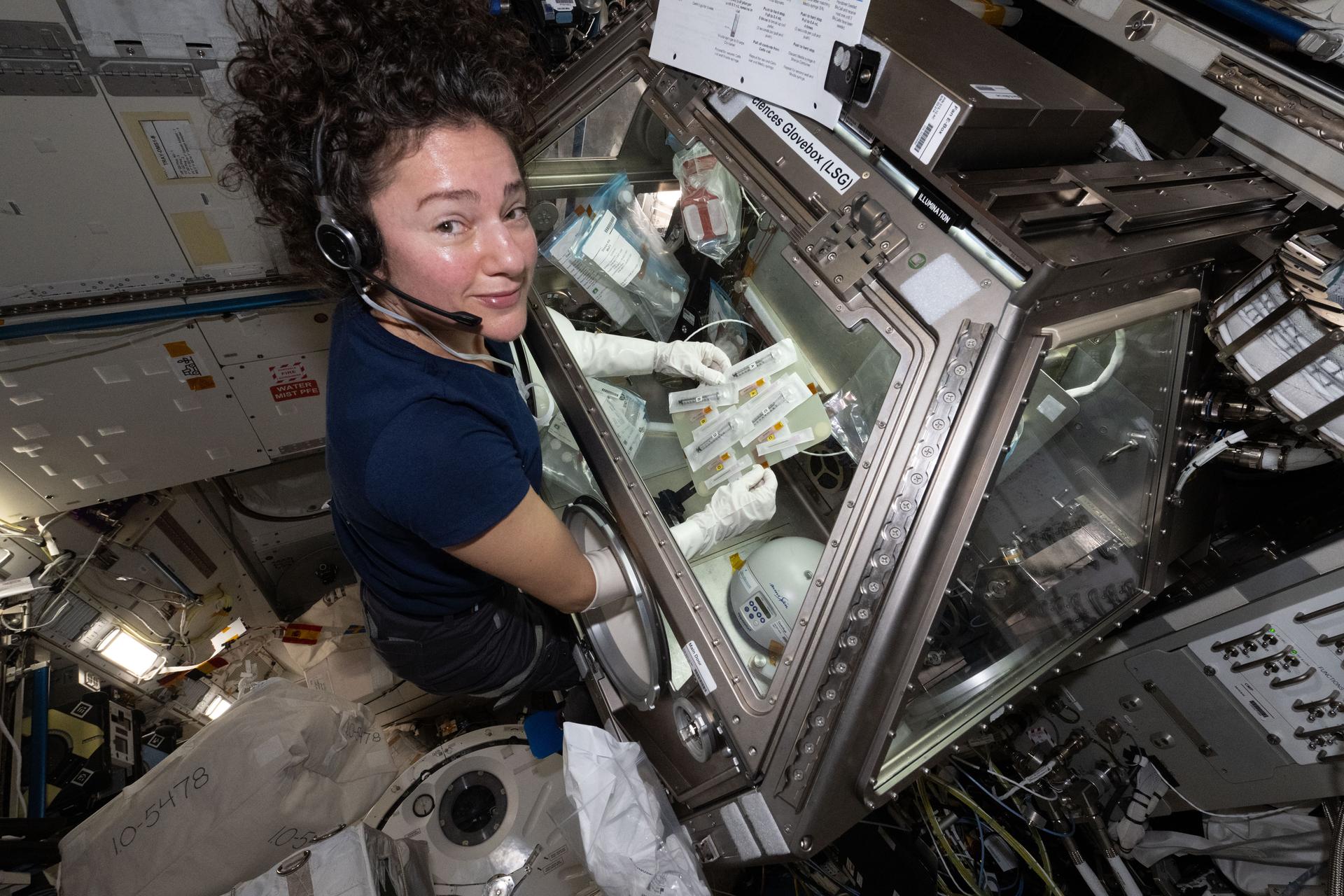
Why it matters: The breadth of returning samples—from stem cells to semiconductor crystals—signals that the ISS is maturing as a translational research platform, with direct implications for both astronaut health on long-duration missions and commercial biomedical products on Earth.
Context: This is the 34th commercial resupply mission under NASA’s CRS contract, and the payload mix reflects a deliberate shift toward investigations that can produce clinically relevant or industrially scalable outcomes, not just basic microgravity science.
"In microgravity, researchers believe this ability will be better preserved while also growing these stem cells in greater numbers. The returning samples will undergo further analysis to determine if space-based efforts produce larger quantities of enhanced stem cells suitable for clinical use." — NASA.GOV
Commentary: The stem cell and cardiac tissue experiments are particularly notable because they leverage microgravity’s ability to amplify biological effects that are too subtle to study on Earth. If the InSPA-StemCellEX-H2 samples confirm enhanced stem cell expansion, it could open a path to space-based biomanufacturing for blood disease therapies. The cryogenic fuel data from ZBOT-NC is equally critical: solving zero boil-off storage is a prerequisite for any serious deep-space architecture, and this flight returns the first fluid-physics validation data from orbit.
Date: June 15, 2026 01:30 PM ET
URL: https://www.nasa.gov/missions/station/iss-research/nasas-spacex-crs-34-dragon-returns-packed-with-space-station-science/
AI Sentiment Score: Negative (80%)
AI Credibility Score: 10.0/10 — High
Scores and text generated by AI analysis of the source article indicated.
Post ID: 2eed99e5