
Other Space Missions and Infrastructure
NASA Begins Moon Mission Plume-Surface Interaction Tests (Nasa.Gov)
Summary: NASA Langley has begun a series of plume-surface interaction tests inside a 60-foot spherical vacuum chamber to study how lander engine plumes disturb lunar regolith. The campaign uses an ethane plume simulation system generating about 100 pounds of thrust, firing into a bin of simulated lunar regolith with jagged, cohesive properties similar to actual lunar material. Instruments, including a version of the Stereo Cameras for Lunar Plume Surface Studies system that imaged Firefly’s Blue Ghost Mission-1 landing in 2025, are capturing data on crater formation, ejecta sheet angle and height, and particle speeds. A second round later this year will test a 14-inch 3D-printed hybrid rocket motor producing around 35 pounds of thrust. The modular setup can be adapted for Mars by swapping regolith simulants and adjusting chamber pressure.
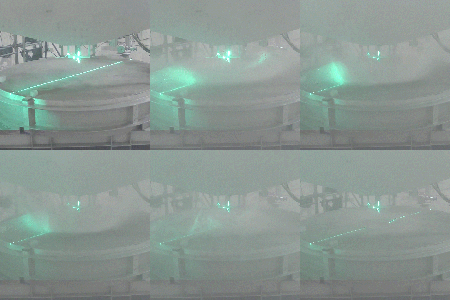
Why it matters: The data from these tests will be critical in developing and validating models to predict the effects of plume-surface interaction for landing on the Moon and even Mars, ensuring mission success for the human landing systems and the safety of astronauts.
Context: The tests support NASA’s Artemis program, which aims to return humans to the Moon starting with Artemis IV in 2028 and develop a Moon Base.
“This plume-surface interaction ground test is the most complex test of its kind to be undertaken in a vacuum chamber,” said Ashley Korzun, testing lead at NASA Langley. “If I’m in a spacecraft and I’m going to move all that regolith while landing, some of that’s going to hit my lander. Some of it’s going to go out toward other things — payloads, science experiments, eventually rovers and other assets. Understanding those physics is pivotal to ensuring crew safety and mission success.”
Date: August 26, 2026 09:58 AM ET
URL: https://www.nasa.gov/missions/artemis/nasa-begins-moon-mission-plume-surface-interaction-tests/
Generated Analysis Tone: Positive (50%)
Source Registry Score: 10.0/10 — High
Generated text and tone describe the analysis; the source registry score is not a factual truth rating.
New Next-Gen Dish Adds Muscle to NASA’s Deep Space Network (Nasa.Gov)
Summary: NASA has commissioned Deep Space Station 23 (DSS-23), a new 34-meter antenna at the Goldstone Deep Space Communications Complex in California, as part of the Deep Space Network’s Aperture Enhancement Project. The antenna began operations on Aug. 3, tracking NASA’s Chandra X-ray Observatory, and has since communicated with missions including Mars Reconnaissance Orbiter, Psyche, Juno, and Voyager 1. Construction began in February 2020, with the reflector framework installed in December 2024. The enhancement project will conclude when a sixth antenna, Deep Space Station 33, comes online at the Canberra facility in 2029, bringing the total number of 34-meter antennas across the network to 13.
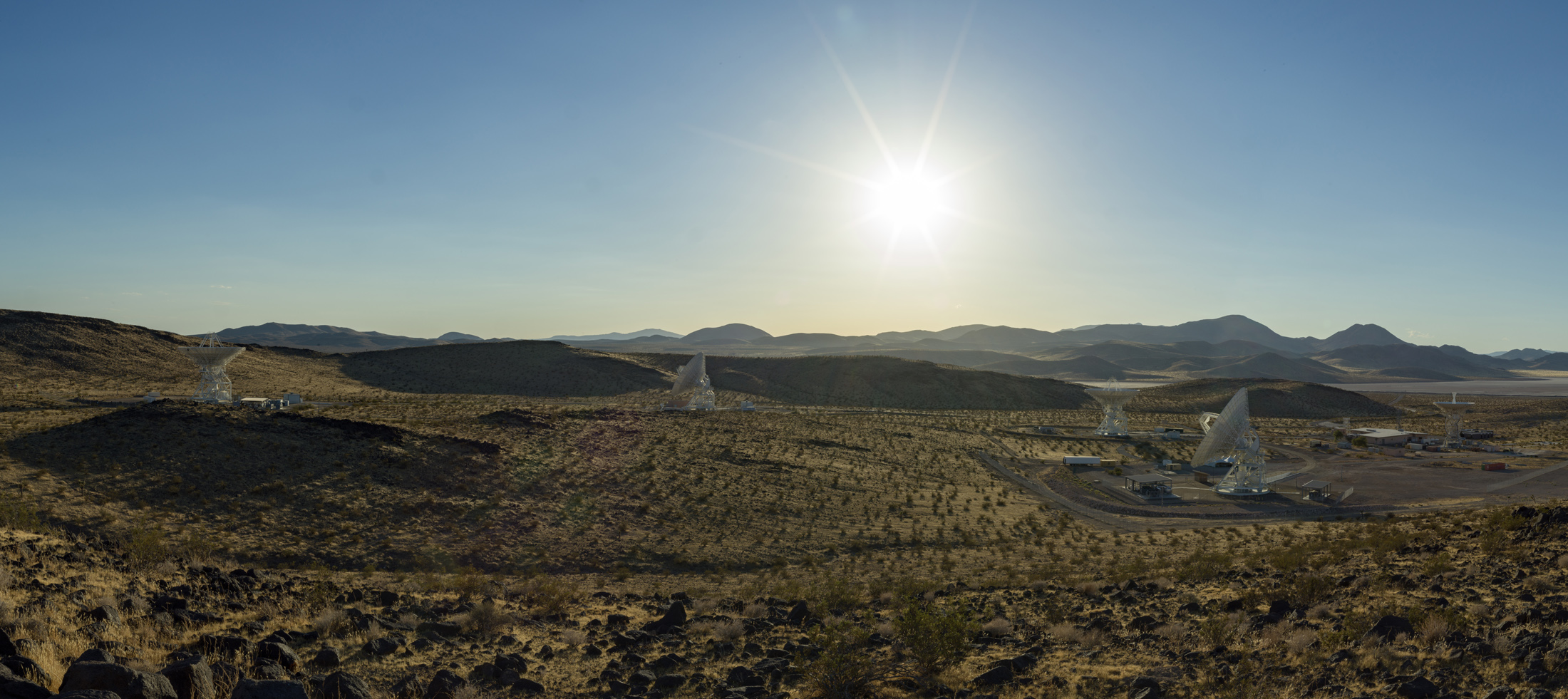
Why it matters: This new antenna strengthens the communications foundation NASA needs for missions from exploring more of the Moon to peering deeper into the solar system, helping deliver on national goals for space exploration.
Context: The Deep Space Network uses giant dish antennas at three global facilities to support more than 40 spacecraft exploring the solar system and interstellar space.
“By expanding the Deep Space Network, we are strengthening the communications foundation NASA needs for the bold missions ahead — from exploring more of the Moon than ever before to peering deeper into the solar system,” said James Kenyon, associate administrator of the Research and Technology Mission Directorate at NASA Headquarters in Washington.
Date: August 25, 2026 06:28 PM ET
URL: https://www.nasa.gov/technology/space-comms/deep-space-network/new-next-gen-dish-adds-muscle-to-nasas-deep-space-network/
Generated Analysis Tone: Positive (50%)
Source Registry Score: 10.0/10 — High
Generated text and tone describe the analysis; the source registry score is not a factual truth rating.
NASA Selects Caltech to Operate the Orbiting Carbon Observatories (Caltech.Edu)
Summary: NASA has selected Caltech to operate the Orbiting Carbon Observatory missions (OCO-2 and OCO-3) beginning this fall. OCO-2 is a satellite, and OCO-3 is an instrument on the International Space Station; both identify where carbon is emitted and where natural sinks absorb it. Data from these missions have direct relevance to agricultural health, providing information about plant productivity and ecosystem health. The data will continue to be made publicly available. OCO mission assets will be loaned by NASA to Caltech, and researchers and facilities on campus and at the Jet Propulsion Laboratory will operate the observatories.

Why it matters: This collaboration is a powerful model for how government, universities, and industry can work together to sustain world-class scientific capabilities that deliver lasting public benefit, ensuring the data needed to make informed decisions about natural resources.
"We are pleased that NASA has entrusted Caltech to steward the continued operation of these missions, ensuring that they will provide the data needed to make informed decisions about the natural resources on which we all depend. This collaboration is a powerful model for how government, universities, and industry can work together in new ways to sustain world-class scientific capabilities that deliver lasting public benefit." — CALTECH.EDU
Date: August 24, 2026 01:24 PM ET
URL: https://www.caltech.edu/about/news/nasa-selects-caltech-to-operate-the-orbiting-carbon-observatories
Generated Analysis Tone: Neutral (33%)
Source Registry Score: 10.0/10 — High
Generated text and tone describe the analysis; the source registry score is not a factual truth rating.
Post ID: 166d67d3