Ancient World
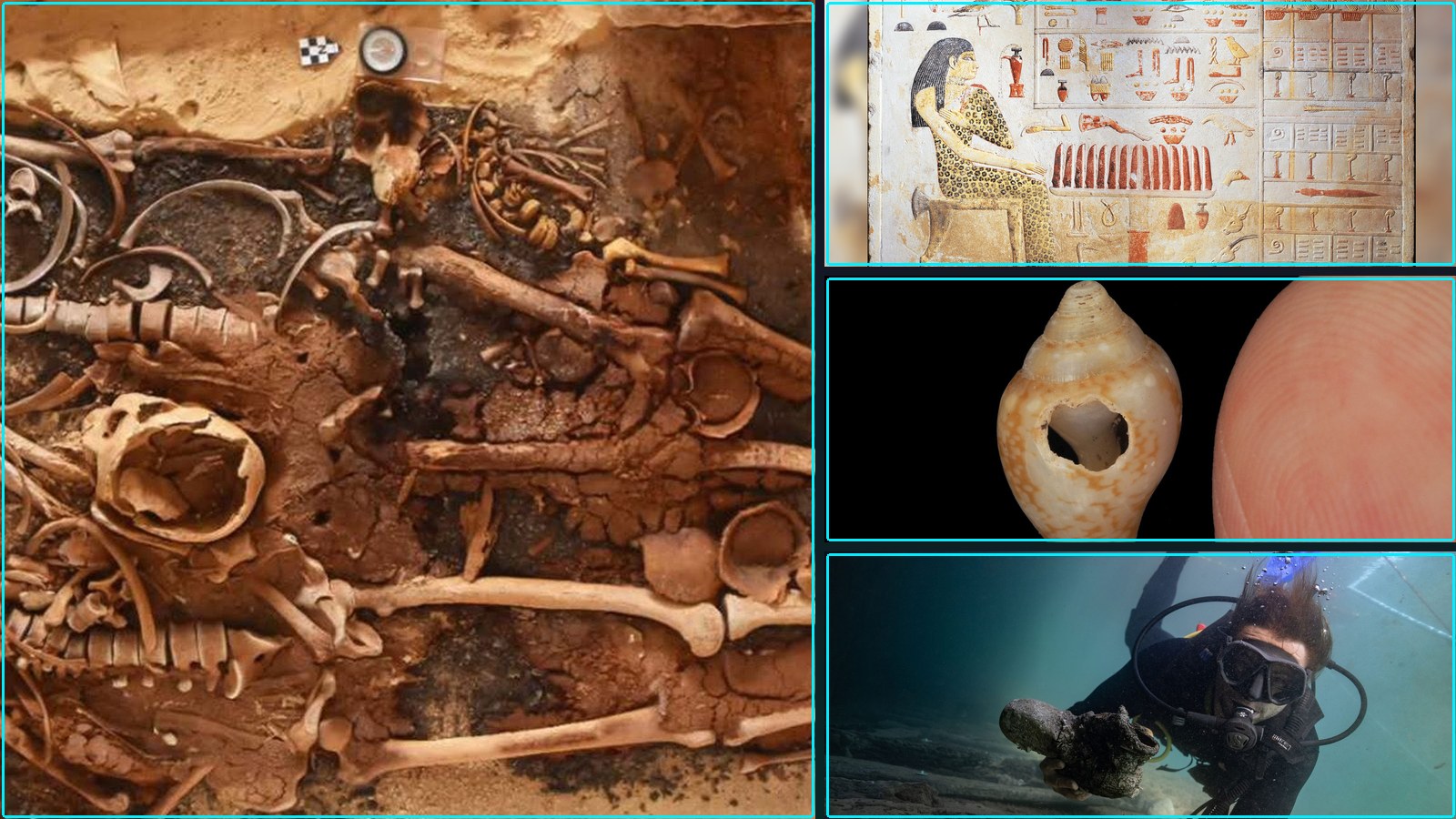
18 ancient Egyptian tombs with dozens of gold ‘tongues’ discovered along the Mediterranean coast (Livescience)
Summary: Archaeologists in Marina el-Alamein, Egypt, have uncovered 18 Ptolemaic or Roman-era tombs containing 24 gold ‘tongues’ and an offering altar with a false-door base. The gold tongues, including one shaped like the Eye of Horus, were likely placed in mummies to enable speech in the afterlife. A granite coffin with an intact lid and an incomplete statue of Aphrodite were also found, highlighting cultural blending. Scholars debate whether the altar’s design truly represents a false door or an unfinished offering symbol.
Why it matters: This find deepens understanding of how Egyptian and Graeco-Roman funerary practices merged during the Ptolemaic and Roman periods, with gold tongues as a key ritual technology for navigating the afterlife.
Context: Gold tongues have been documented at other Ptolemaic-Roman sites, but the Marina el-Alamein discovery adds a rare Eye of Horus variant and a contested altar design, suggesting evolving symbolic architecture.
"18 ancient Egyptian tombs with dozens of gold ‘tongues’ discovered along the Mediterranean coast Archaeologists have found 18 tombs at an ancient Egyptian site by the Mediterranean coast of Egypt. Archaeologists have." — LIVESCIENCE
Commentary: The gold tongues reinforce a known pattern of afterlife communication technology, but the Eye of Horus variant and the altar’s false-door motif suggest localized innovation in ritual design. The scholarly disagreement over the altar’s iconography underscores how material culture can blur lines between intentional symbolism and unfinished work. This site continues to reveal how coastal communities synthesized Egyptian and Mediterranean traditions in everyday death practices.
Date: July 12, 2026 10:05 AM ET
URL: https://www.livescience.com/archaeology/ancient-egyptians/18-ancient-egyptian-tombs-with-dozens-of-gold-tongues-discovered-along-the-mediterranean-coast
AI Sentiment Score: Negative (50%)
AI Credibility Score: 10.0/10 — High
Scores and text generated by AI analysis of the source article indicated.
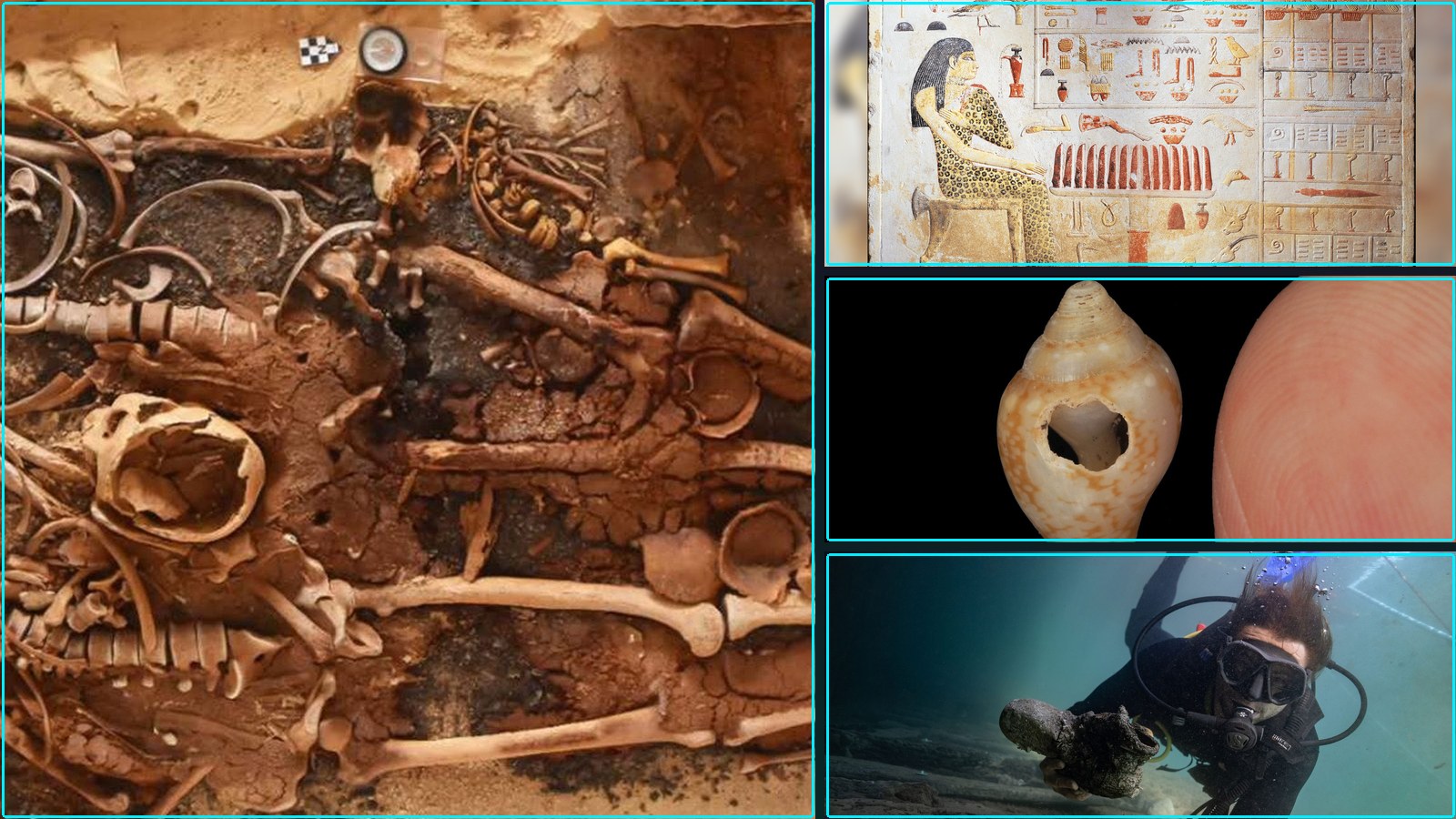
‘Some people called it horrifying’: ‘Dinner with King Tut’ author on using Egyptian mummification techniques on a modern-day human body (Livescience)
Summary: Sam Kean’s book ‘Dinner with King Tut’ explores experimental archaeology through hands-on re-creation of ancient practices, including a controversial 1990s project that mummified a donated human body using authentic Egyptian techniques. The experiment revealed that obsidian blades outperformed copper tools for incisions, and that the classic mummy appearance emerges within weeks, not millennia. Kean also mummified a fish and collected artifacts like stone tools and bark cloth, framing the work as sensory-rich time travel.
Why it matters: This challenges assumptions about ancient technology and ethics in experimental archaeology, showing that hands-on replication can yield concrete, testable knowledge about material culture and ritual practices.
Context: Experimental archaeology has gained acceptance as a method to test hypotheses about ancient techniques, but human mummification remains ethically fraught and rarely attempted.
"The obsidian tools turned out to be much better at that task, which surprised me. I wouldn’t have thought that the stone tools would have been better than the metal tools. That’s something we wouldn’t have learned had we not gone through the process." — LIVESCIENCE
Commentary: The mummification experiment’s finding that obsidian outperformed copper is a rare empirical correction to assumptions about technological progression. It underscores how experimental replication can falsify received wisdom about ancient material efficiency. The ethical debate around using donated bodies for such projects remains unresolved, but the knowledge gained—like the rapid onset of the mummy ‘look’—validates the method’s scientific utility. Kean’s broader approach, blending fiction with replication, offers a model for communicating archaeological uncertainty without sacrificing rigor.
Date: July 11, 2026 10:00 AM ET
URL: https://www.livescience.com/archaeology/some-people-called-it-horrifying-dinner-with-king-tut-author-on-using-egyptian-mummification-techniques-on-a-modern-day-human-body
AI Sentiment Score: Negative (80%)
AI Credibility Score: 10.0/10 — High
Scores and text generated by AI analysis of the source article indicated.
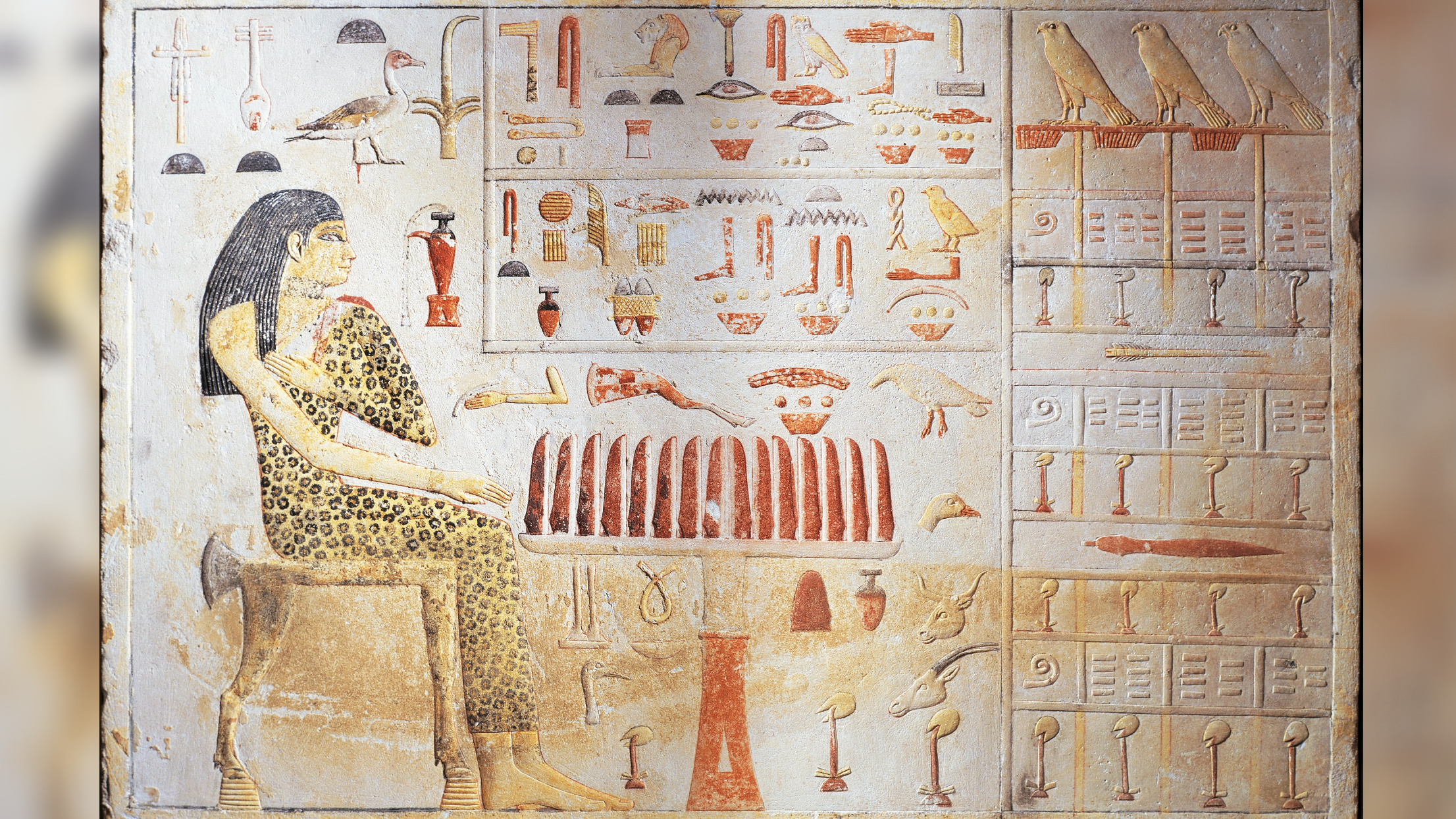
Take an Exclusive Look at Three Newly Discovered Medieval Shipwrecks in Menorca’s ‘Cove of Mysteries’ (Smithsonianmag)
Summary: Three 13th-century shipwrecks, designated Busquets I, II, and III, have been discovered in Menorca’s Cala en Busquets, a cove known for meteorological tsunamis. Carbon dating suggests they sank simultaneously in the late 1240s, likely due to a meteotsunami, preserving a rare cargo that includes both Christian reliquaries and Islamic pottery. The wrecks are the first of their period found in Menorca and offer a unique snapshot of trade between Christian kingdoms and Moorish communities on the eve of conquest. Excavations, led by the Menorca Shipwreck Project, are ongoing, with a research paper expected in spring 2027.
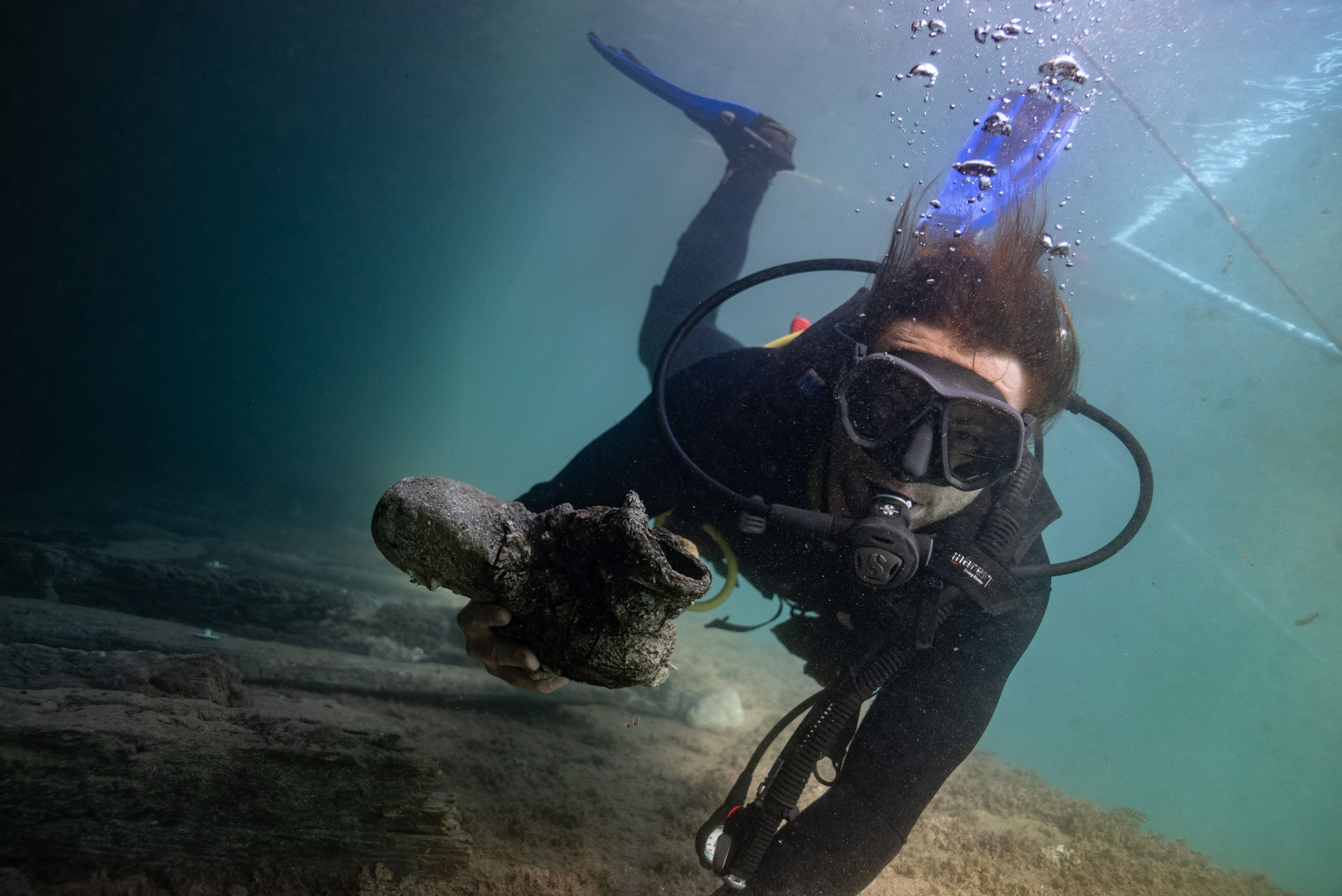
Why it matters: These wrecks provide a rare, undisturbed archaeological time capsule from a poorly documented period of Mediterranean history, directly challenging assumptions about the separation of Christian and Muslim societies in the 13th-century Balearic Islands.
Context: Medieval shipwrecks are far rarer in the Mediterranean than Roman ones, largely because the shift from amphorae to wooden barrels in the 2nd century C.E. made wrecks harder for looters to detect, but also because 19th-century harbor construction destroyed many sites. Menorca’s modern harbor was built on the opposite side of the island, leaving this cove intact.
"Take an Exclusive Look at Three Newly Discovered Medieval Shipwrecks in Menorca’s ‘Cove of Mysteries’ Meteorological tsunamis likely sank the 13th-century trading vessels, whose cargo included objects from both Christian kingdoms and." — SMITHSONIANMAG
Commentary: The simultaneous presence of a Christian encolpium and unbroken Islamic pottery in the same wreck context is the key material evidence here—it moves the debate from textual inference to physical fact. The fact that the encolpium remains sealed and is undergoing desalination means a second-order discovery (its contents) is pending, which could yield organic or textual material of high interpretive value. The project’s use of the ‘Queen Elizabeth’ excavation method in near-zero visibility conditions also represents a methodological adaptation worth watching for other shallow, sediment-heavy sites. If Busquets IV or V are found, the cove may become a type-site for meteotsunami-driven ship loss in the medieval Mediterranean.
Date: July 09, 2026 08:45 AM ET
URL: https://www.smithsonianmag.com/history/take-an-exclusive-look-at-three-newly-discovered-medieval-shipwrecks-in-menorcas-cove-of-mysteries-180989092/
AI Sentiment Score: Negative (66%)
AI Credibility Score: 10.0/10 — High
Scores and text generated by AI analysis of the source article indicated.
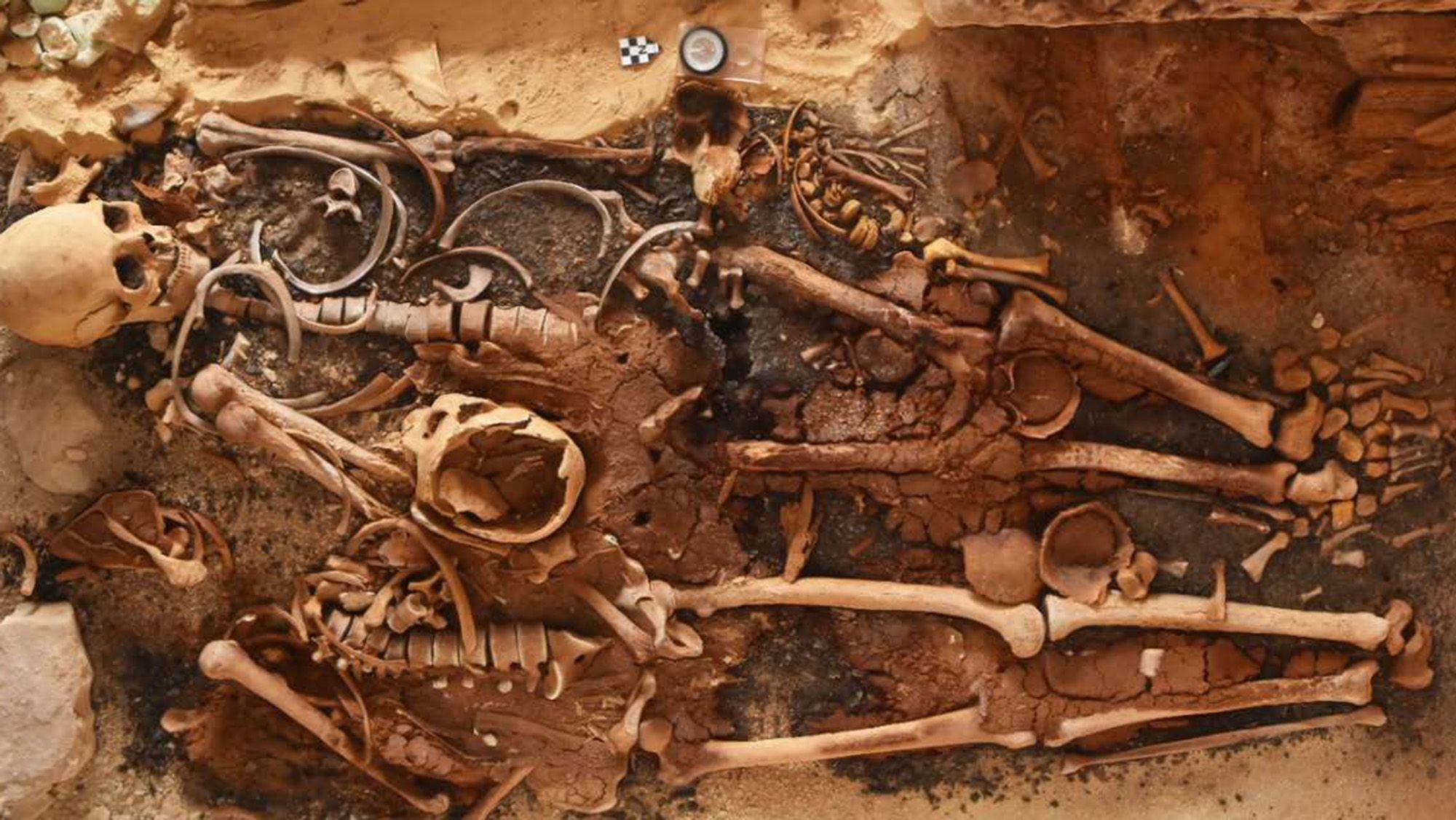
Neanderthals and modern humans may have shared culture 59,000 years ago in Turkey, study finds (Livescience)
Summary: A study of Üçağızlı II Cave in Turkey reveals that Neanderthals and Homo sapiens, who occupied the site sequentially between 77,000 and 47,000 years ago, left nearly identical archaeological signatures—same hunting strategies, same stone tool technology, and same symbolic use of pierced Columbella rustica shells. The cultural continuity across the biological turnover suggests active information sharing between the two groups, challenging models of rigid cognitive or behavioral divergence. This pattern aligns with findings from Tinshemet Cave in Israel but contrasts with European sites like Mandrin Cave, indicating regional variation in inter-species dynamics. The study, published in PNAS, reframes the Neanderthal-modern human relationship as one of sustained cultural exchange rather than simple replacement.
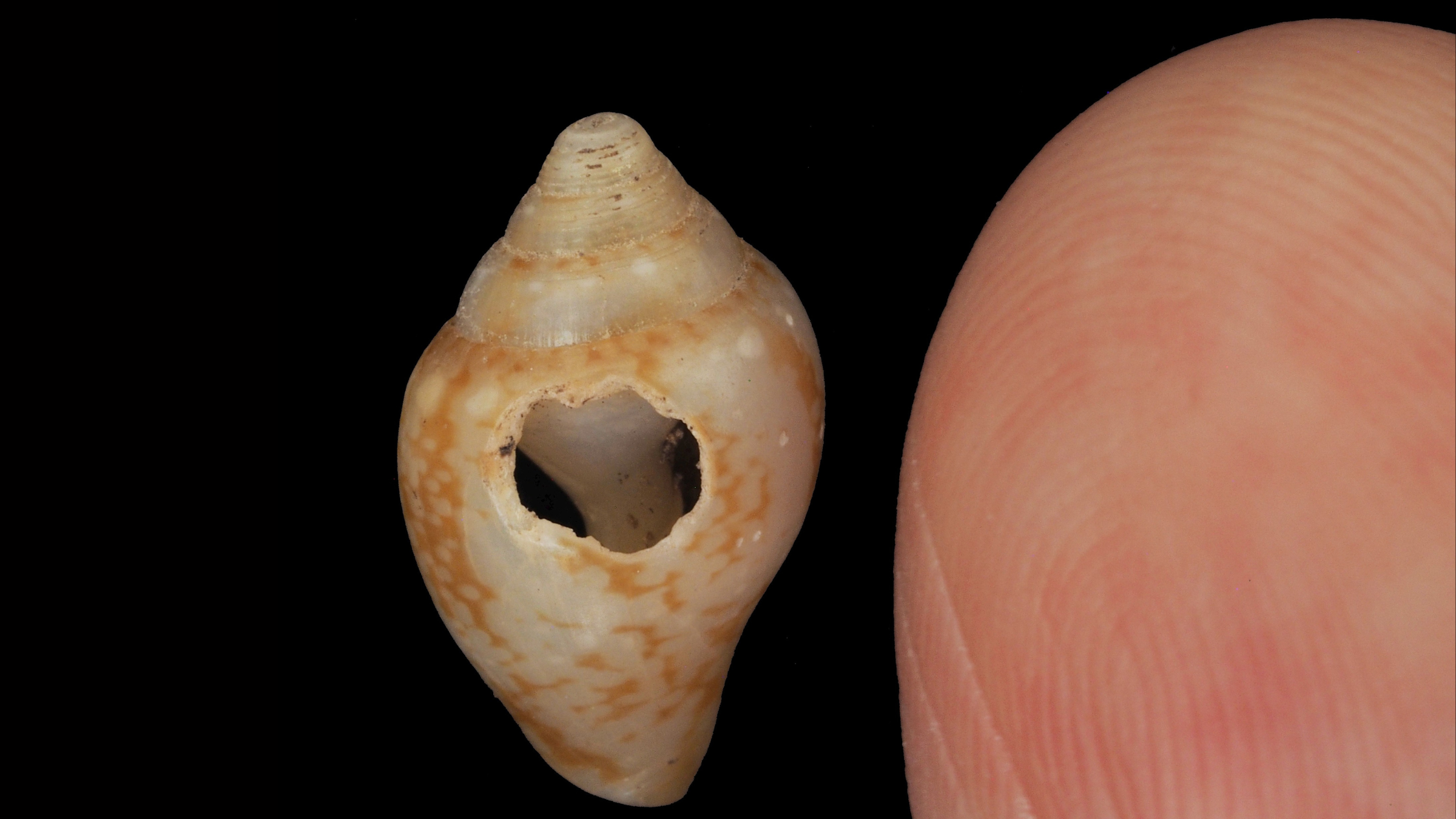
Why it matters: This evidence of shared symbolic culture between Neanderthals and modern humans in the Levantine corridor forces a reassessment of what drove Neanderthal extinction, shifting the explanatory burden from cognitive inferiority to demographic or ecological factors not yet visible in the archaeological record.
Context: The Levant served as a key biogeographic corridor between Africa and Eurasia during the Late Pleistocene, making it a critical zone for studying hominin interactions. Previous work at Tinshemet Cave (130,000–80,000 years ago) showed similar cultural overlap, but Üçağızlı II extends the pattern to a later period and a more northern site, suggesting a regional network of shared practices.
"Neanderthals and modern humans may have shared culture 59,000 years ago in Turkey, study finds Fossils, stone tools and seashells in Turkey show that Neanderthals and the Homo sapiens who moved in." — LIVESCIENCE
Commentary: The study’s strength lies in its methodological rigor—using tooth internal structure for species identification and optically stimulated luminescence for dating—but its interpretive leap to ‘cultural interaction’ requires a mechanism, such as seasonal meetings or mate exchange, that the data cannot yet confirm. The real puzzle is why cultural similarity did not prevent Neanderthal extinction; the answer may lie in subtle differences in social structure, demographic resilience, or cognitive flexibility that leave no direct trace in stone tools or shell beads. This work sharpens the question but does not resolve it, making the Levant an even more critical arena for future excavation.
Date: July 06, 2026 06:25 PM ET
URL: https://www.livescience.com/archaeology/neanderthals/modern-humans-and-neanderthals-may-have-shared-long-term-cultural-continuity
AI Sentiment Score: Negative (50%)
AI Credibility Score: 10.0/10 — High
Scores and text generated by AI analysis of the source article indicated.
Post ID: 3406bc43