Ancient World
Archaeologists discover half a million-year-old wooden structure — and it’s not built by Homo sapiens (Zmescience)
Summary: Archaeologists have discovered a wooden structure at Kalambo Falls in Zambia dated to at least 476,000 years ago, predating Homo sapiens. The structure consists of two shaped and fitted logs, likely forming a platform or walkway, and represents the earliest known evidence of wood used for construction. The find challenges assumptions about Stone Age mobility and cognitive capacity, and has elevated Kalambo Falls to UNESCO’s tentative World Heritage list. Subsequent discoveries in China and Greece suggest a widespread prehistoric ‘Wood Age’ that is largely invisible in the archaeological record.
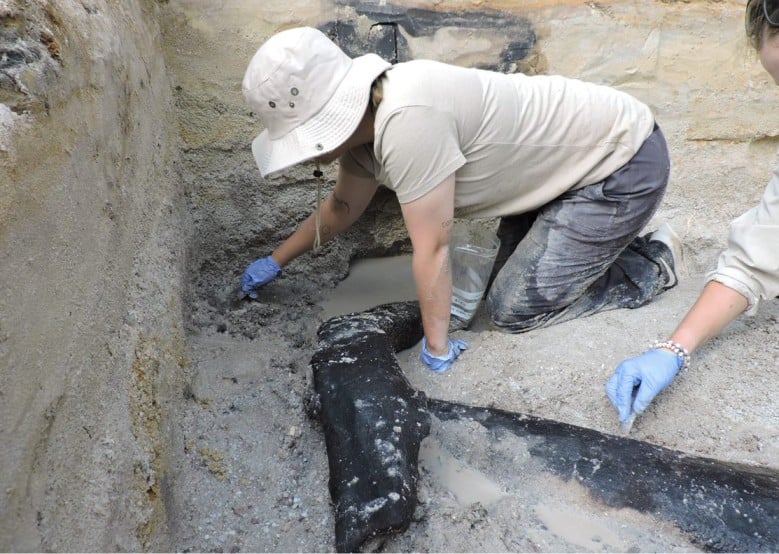
Why it matters: This discovery rewrites the timeline of human technological sophistication, showing that pre-sapiens hominins engaged in planned, large-scale construction half a million years ago, and forces a reassessment of the cognitive and social capabilities of early human ancestors.
Context: Wood rarely survives in the archaeological record, so most evidence of early human technology comes from stone tools. The Kalambo Falls site, preserved by waterlogging, provides a rare window into a ‘Wood Age’ that may have been as significant as the Stone Age but is largely lost to decay.
"“This find has changed how I think about our early ancestors. Forget the label ‘Stone Age,’ look at what these people were doing: they made something new, and large, from wood. They used their intelligence, imagination, and skills to create something they’d never seen before,” Larry Barham, one of the study authors, said in a news release." — ZMESCIENCE
Commentary: The Kalambo structure is not just an earlier date; it is a different category of behavior. Fitting logs together implies planning, tool use, and a mental template of the finished object—cognitive capacities often reserved for Homo sapiens. The subsequent discoveries at Gantangqing and Marathousa 1 suggest this was not an isolated experiment but part of a widespread, durable technological tradition. The UNESCO tentative listing is a concrete institutional consequence that will shape funding, protection, and research priorities at the site for decades.
Date: July 17, 2026 06:55 AM ET
URL: https://zmescience.com/science/archaeology/oldest-wooden-structure-not-homo-sapiens-rep
AI Sentiment Score: Positive (50%)
AI Credibility Score: 10.0/10 — High
Scores and text generated by AI analysis of the source article indicated.
China’s mysterious 4,300-year-old Shimao civilisation hid a secret about its people that ancient DNA has finally revealed (Timesofindia.Indiatimes)
Summary: A 13-year ancient DNA study of 169 individuals from the 4,300-year-old Shimao site in northern China reveals that its population descended from local Yangshao farmers, not external migrants. The genetic analysis also overturned prior assumptions about sacrificial victims: nine of ten East Gate burials were male, not female, indicating a gendered, location-specific ritual logic. Researchers reconstructed four-generation patrilineal family pedigrees, providing the first high-resolution genetic view of social organization in a prehistoric Chinese state.

Why it matters: This study provides the first direct genetic evidence for the origins and social structure of one of China’s earliest urban civilizations, settling a long-standing archaeological debate and revealing that ritual sacrifice followed deliberate, sex-based spatial rules rather than a uniform pattern.
Context: Shimao, a 4,300-year-old stone-walled city in Shaanxi Province, has long puzzled archaeologists due to its scale, social stratification, and evidence of human sacrifice, but pottery and burial goods alone could not resolve its population origins or internal organization.
"For decades, archaeologists have puzzled over one of China’s most impressive and mysterious prehistoric sites, a massive stone-walled settlement called Shimao, built in northern Shaanxi Province roughly 4,300 years ago. The site." — TIMESOFINDIA.INDIATIMES
Commentary: The finding that male sacrifices were concentrated at the East Gate while female remains were associated with elite cemeteries suggests that Shimao’s ritual violence was not indiscriminate but encoded with social and spatial meaning. This level of granularity—linking genetic kinship, burial location, and sex—sets a new standard for integrating ancient DNA with archaeological context. It also implies that early state formation in northern China involved highly structured, gendered ideologies of power and sacrifice, not merely demographic or economic forces.
Date: July 16, 2026 08:00 PM ET
URL: https://timesofindia.indiatimes.com/world/rest-of-world/hinas-mysterious-4300-year-old-shimao-civilisation-hid-a-secret-about-its-people-that-ancient-dna-has-finally-revealed/articleshow/132460636.cms
AI Sentiment Score: Negative (80%)
AI Credibility Score: 10.0/10 — High
Scores and text generated by AI analysis of the source article indicated.
Ancient DNA Reveals the Hidden Origins of China’s Mysterious Shimao Civilization (Scitechdaily)
Summary: Ancient DNA analysis of 169 human samples from the late Neolithic site of Shimao in northern China reveals that its population was primarily descended from local Yangshao-related groups, with genetic ties to southern rice-farming communities and steppe populations. The study overturns earlier assumptions about human sacrifice at the site, showing that nine out of ten skulls at the East Gate were male, while female sacrifices were associated with elite cemeteries. Researchers reconstructed patrilineal pedigrees across up to four generations, indicating a society organized around patrilineal descent and patrilocal residence. This provides the first direct genetic evidence for how power and social rank were inherited during the emergence of early East Asian states.
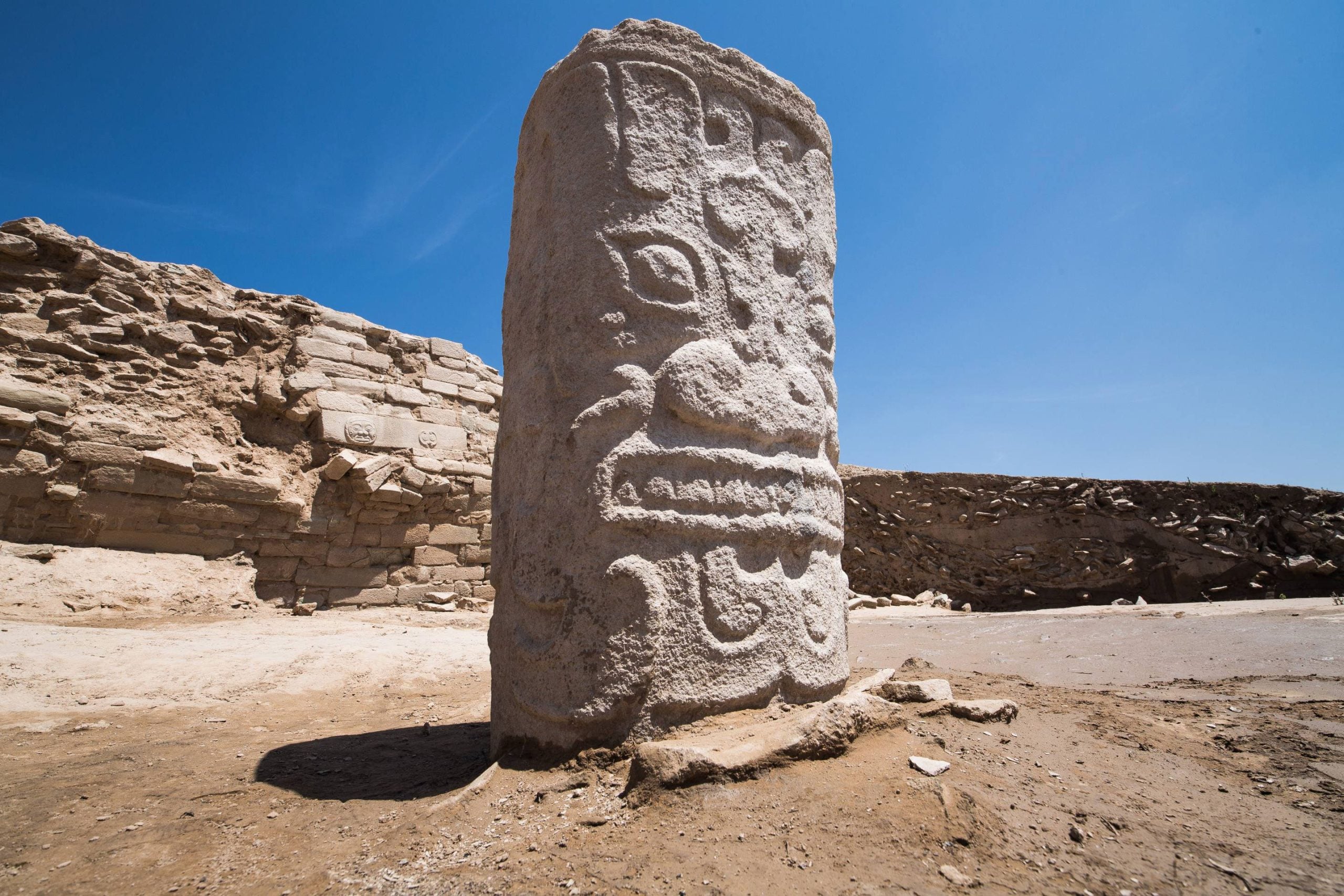
Why it matters: This study offers the first high-resolution genetic evidence for kinship, social stratification, and gendered ritual sacrifice in Neolithic China, fundamentally revising our understanding of state formation in East Asia.
Context: Shimao, a 4,000-year-old stone-walled settlement covering four square kilometers, has long puzzled archaeologists due to its scale and evidence of human sacrifice. Previous hypotheses about the identity of sacrificial victims were based on skeletal morphology, which the new genetic data now corrects.
"Ancient DNA from Shimao reveals local origins, broad prehistoric connections, a patrilineal social structure, and gender-specific patterns of human sacrifice. At Shimao, a vast stone-walled settlement in northern China, ancient DNA is." — SCITECHDAILY
Commentary: The gendered geography of sacrifice—male victims at the East Gate, female victims in elite cemeteries—suggests ritual practices were tightly integrated with spatial and social hierarchy, not merely symbolic. The patrilineal pedigrees spanning four generations indicate that Shimao’s ruling class maintained power through biological lineage, a pattern that would become central to Chinese imperial ideology. The genetic links to southern rice farmers and northern steppe groups also imply that Shimao’s authority was built on long-distance networks, not just local dominance.
Date: July 14, 2026 05:56 PM ET
URL: https://scitechdaily.com/ancient-dna-reveals-the-hidden-origins-of-chinas-mysterious-shimao-civilization
AI Sentiment Score: Negative (66%)
AI Credibility Score: 10.0/10 — High
Scores and text generated by AI analysis of the source article indicated.
Archaeologists Didn’t Expect to Find These Iron Objects at a 2,300-Year-Old Site in France (Dailygalaxy)
Summary: Excavations at a 2,300-year-old Celtic settlement in Allonnes, France, have uncovered five iron shackles alongside weapons, coins, and ritual offerings. The restraints, including a wrist shackle measuring just 6 cm, suggest the site was involved in the slave trade during the Late Iron Age. The find is exceptionally rare for the period and indicates a stratified society with dominant and subordinate groups. The settlement also functioned as a metalworking hub and religious center, with deliberately damaged objects and mutilated coins pointing to ritual practices.

Why it matters: This discovery provides rare material evidence of slavery in Celtic Europe, shifting the understanding of Iron Age social organization from purely craft and ritual to include systematic exploitation and trade in human beings.
Context: The Late Iron Age (450–50 B.C.) in Gaul is known for its metalworking and religious sites, but direct evidence of slavery is scarce. Roman accounts describe Celtic enslavement of war captives and debtors, but physical restraints from this period are almost unknown.
"The identification of restraints and weapons suggests a hierarchical social organization composed of dominant and subordinate groups — prisoners or slaves." — DAILYGALAXY
Commentary: The 6 cm wrist shackle is the most telling detail: it implies the enslavement of women or children, not just adult male captives. This refines the model of Celtic slavery from a byproduct of warfare to a more structured, possibly commercial, system integrated with the settlement’s metalworking and sanctuary economies.
Date: July 16, 2026 08:45 AM ET
URL: https://dailygalaxy.com/2026/07/unexpected-iron-objects-found-site-france
AI Sentiment Score: Negative (50%)
AI Credibility Score: 10.0/10 — High
Scores and text generated by AI analysis of the source article indicated.
Family holiday unearths ‘mind-blowing’ ancient discovery (Bbc.Co.Uk)
Summary: A family visit to Pembroke Castle in 2010 led to the discovery of Wogan Cavern, a cave beneath the castle that had escaped thorough Victorian excavation. Subsequent digs between 2021 and 2024 uncovered rare evidence of early humans and animals spanning over 120,000 years, including hippopotamus bones from 120,000 years ago. The University of Aberdeen will now lead a five-year excavation, with archaeologists saying the site could reshape understanding of Britain’s prehistory.

Why it matters: This site offers a rare intact stratigraphic record from before the last Ice Age, potentially providing DNA and sediment data that can clarify how humans and animals responded to climatic shifts in prehistoric Britain.
Context: Most British caves were emptied by Victorian antiquarians, losing contextual information. Wogan Cavern’s preservation allows modern techniques like ancient DNA analysis to recover lost data.
"’Mind-blowing’ ancient bones discovery sparked by family holiday – Published A family holiday sparked a series of "remarkable" archaeological discoveries which one expert says could change what is currently known about Britain’s." — BBC.CO.UK
Commentary: The discovery underscores how amateur observation can still redirect professional archaeology. The intact deposits promise to link human activity to specific climatic events, offering a rare calibration point for understanding prehistoric migration and adaptation in northern Europe.
Date: July 16, 2026 06:01 PM ET
URL: https://bbc.co.uk/news/articles/cp36lnng046o
AI Sentiment Score: Positive (50%)
AI Credibility Score: 10.0/10 — High
Scores and text generated by AI analysis of the source article indicated.
Hunter-gatherers introduced fish to a mountain lake 7000 years ago | New Scientist (Newscientist)
Summary: Radiocarbon dating of wooden fish traps found in Lake Tesse, Norway, reveals that hunter-gatherers introduced brown trout to the lake at least 7,000 years ago, making it the oldest documented example of human-mediated fish translocation. The traps, discovered when the lake level was lowered, were precisely dated using tree-ring chronology, showing continuous use from around 4950 BC to 2656 BC. This predates the arrival of farming in Scandinavia and demonstrates intentional environmental management to secure food resources during summer highland foraging.

Why it matters: This finding pushes back the timeline for human ecosystem engineering in northern Europe by millennia, showing that pre-agricultural societies actively managed landscapes for reliable food supplies, challenging assumptions about the sophistication of hunter-gatherer resource strategies.
Context: The Fennoscandian ice sheet covered Lake Tesse until about 8,400 years ago, leaving it fishless; natural upstream colonization was impossible due to waterfalls, making human transport the only viable explanation.
"Hunter-gatherers transported brown trout into the mountains of Norway at least 7000 years ago so they could be harvested during summer foraging trips into the highlands. That is the only possible explanation." — NEWSCIENTIST
Commentary: The precision of the tree-ring dating—nailing a trap post to a tree felled in winter 2669-2668 BC—adds unusual temporal resolution to a phenomenon often inferred from indirect evidence. That these traps were maintained over centuries suggests a sustained, intergenerational investment in alpine resource management, not a one-off experiment. The implication is that early Holocene foragers in Scandinavia were operating with a level of ecological foresight and logistical planning typically attributed to later agricultural societies.
Date: July 19, 2026 07:01 PM ET
URL: https://newscientist.com/article/2580119-hunter-gatherers-introduced-fish-to-a-mountain-lake-7000-years-ago
AI Sentiment Score: Negative (66%)
AI Credibility Score: 10.0/10 — High
Scores and text generated by AI analysis of the source article indicated.
Post ID: 7125a124