

Fashion
Fashion brands don’t just want to sell you new clothes anymore. They want the second sale, too | Fortune (Fortune)
Summary: Major fashion brands including Zara, H&M, Lululemon, Levi’s, and REI are launching branded resale platforms to capture revenue from the secondhand market, which is projected to reach $393 billion globally by 2030. By owning the resale channel, brands aim to control product presentation, maintain customer relationships post-purchase, and burnish sustainability credentials. H&M reported resale revenue of $194.4 million in 2025, up 31% year-over-year, though it still represents less than 1% of group turnover. The trend is driven by Gen Z and younger millennials, and enabled by third-party logistics and authentication providers like Trove and Reflaunt.

Why it matters: For fashion brands and retailers, resale is shifting from a sustainability side project to a core revenue stream and channel-control strategy, with implications for inventory management, customer lifetime value, and competitive positioning against third-party marketplaces.
Context: The resale market has historically been dominated by eBay, Poshmark, Depop, and The RealReal, which captured billions in sales without brand participation. Brands are now using technology partners to launch official resale channels, both online and in physical stores, to reclaim that revenue and data.
"According to ThredUp’s 2026 Resale Report, the global secondhand apparel market is projected to reach $393 billion by 2030, growing twice as fast as the broader apparel market. In the U.S., resale is expected to reach $78.8 billion by the end of the decade, after growing nearly four times as fast as overall retail clothing sales last year." — FORTUNE
Commentary: The shift to branded resale changes the operating surface for merchandising and supply chain teams: expect more SKU-level tracking of garment lifecycles, tighter integration with repair and recycling workflows, and new pricing dynamics as brands compete with their own new products. The 31% growth at H&M shows resale is becoming a meaningful revenue line, not just a CSR checkbox. Brands that delay risk losing the second sale to third-party platforms, but those that move must invest in authentication and logistics infrastructure to avoid cannibalizing full-price sales.
Date: August 06, 2026 11:23 AM ET
URL: https://fortune.com/2026/08/06/fashion-brands-resale-market
AI Sentiment Score: Negative (50%)
AI Credibility Score: 10.0/10 — High
Scores and text generated by AI analysis of the source article indicated.
Luxury Briefing: Could luxury’s next ‘it’ product be software? Brunello Cucinelli’s is already a 7-figure business (Glossy.Co)
Summary: Brunello Cucinelli’s AI platform Callimacus, which personalizes e-commerce pages in real time, has become a standalone software company generating seven-figure revenue, with Salesforce investing and co-marketing it. The platform, tested on Cucinelli’s own site, is now targeting brands, retailers, travel, publishing, and financial services. Meanwhile, Lyst data shows luxury shoppers are shifting from brand-led to product-led searches, and Ralph Lauren’s sustained elevation strategy contrasts with Capri’s ongoing turnaround.

Why it matters: For fashion and retail operators, Callimacus signals a new revenue stream for luxury houses and a potential shift in how e-commerce personalization is delivered, while the Lyst data and Ralph Lauren/Capri earnings highlight the growing importance of product-led discovery and pricing architecture over brand name alone.
Context: Luxury brands have historically treated technology as a cost center, not a product. Callimacus inverts that by packaging internal AI expertise as enterprise software, a move that could reshape vendor relationships and competitive dynamics in luxury e-commerce.
"Callimacus is not a chatbot layered onto a fixed website, but a presentation system that sits above existing commerce infrastructure, including Salesforce Commerce Cloud and Shopify. Brands can use its standard setup or add industry-specific capabilities without replacing the technology that manages their inventory, payments and checkout." — GLOSSY.CO
Commentary: The Salesforce investment and non-exclusive integrations suggest Callimacus could become a standard layer for luxury e-commerce, but the real test is whether its personalization lifts conversion enough to justify the cost. For brands, the takeaway is that the ‘conformity loop’ of identical websites is now a competitive vulnerability, and the next differentiator may be software, not product. Watch for how Cucinelli’s ‘Champions League’ positioning plays against Shopify’s own AI ambitions.
Date: August 07, 2026 12:00 AM ET
URL: https://www.glossy.co/fashion/brunello-cucinelli-software-ralph-lauren-capri-luxury/
AI Sentiment Score: Negative (80%)
AI Credibility Score: 10.0/10 — High
Scores and text generated by AI analysis of the source article indicated.
Luggage brands are gunning for a bigger share of the travel gear wardrobe (Glossy.Co)
Summary: Premium luggage brands are shifting from suitcase replacement cycles to a broader ‘travel gear wardrobe’ strategy, as Circana data shows U.S. travel-goods dollar sales fell 2% while unit sales rose 1% in the year ending April 2026, with accessories driving 85% of unit growth. Antler, July, and Béis are expanding into backpacks, packing cubes, and lifestyle items to increase purchase frequency, with Antler’s first-time customer spend share rising from 12% to 18% and repeat customers spending 50% more on handbags and rucksacks. The shift is reshaping retail formats, with flagships designed to showcase adjacent products and trade-in programs to retain customers.
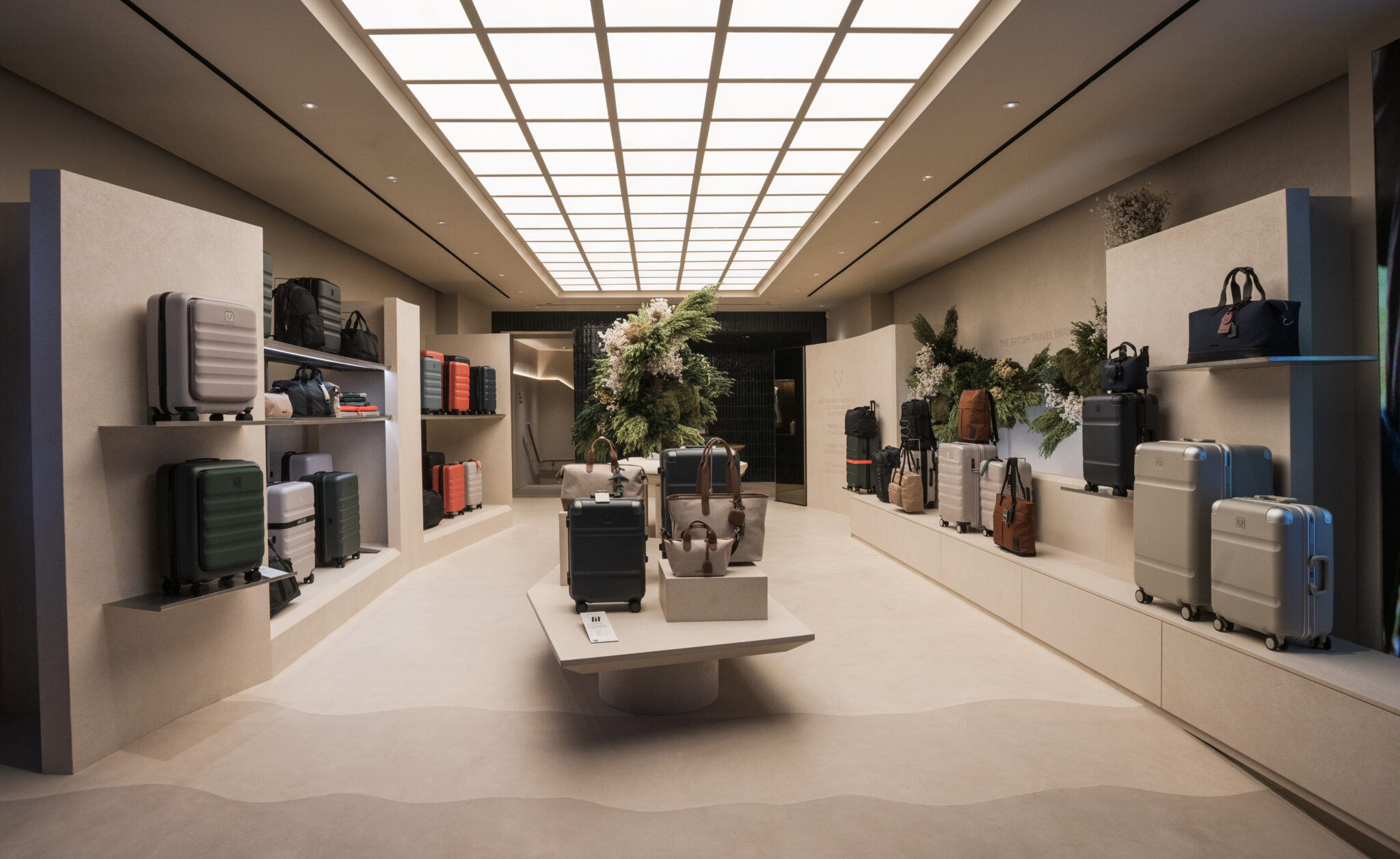
Why it matters: For luggage brands and retailers, the growth engine is no longer suitcase replacement but the frequency of accessory purchases around each trip, which changes assortment planning, store layout, and customer acquisition economics.
Context: The post-pandemic travel boom inflated suitcase sales, but durability now suppresses replacement cycles; brands are pivoting to lower-priced, trip-triggered items to maintain revenue per customer.
"Travel accessories, including organizers, packing cubes and toiletry bags, were one of the fastest-growing segments and accounted for roughly 85% of the industry’s unit growth over the past year." — GLOSSY.CO
Commentary: The data confirms a structural shift: premium luggage brands are now competing on purchase frequency, not just product quality. The challenge is that accessories carry lower price points, so brands must scale volume and cross-sell efficiency to maintain margins. Retail formats will need to prioritize foot traffic and visual adjacency, as stores outperform e-commerce on conversion and basket size. Watch for brands that can make the ‘travel wardrobe’ feel like a cohesive system rather than a random assortment.
Date: August 03, 2026 12:00 AM ET
URL: https://www.glossy.co/fashion/luggage-brands-repeat-purchases-beyond-suitcases/
AI Sentiment Score: Negative (72%)
AI Credibility Score: 10.0/10 — High
Scores and text generated by AI analysis of the source article indicated.
Post ID: d92b6613