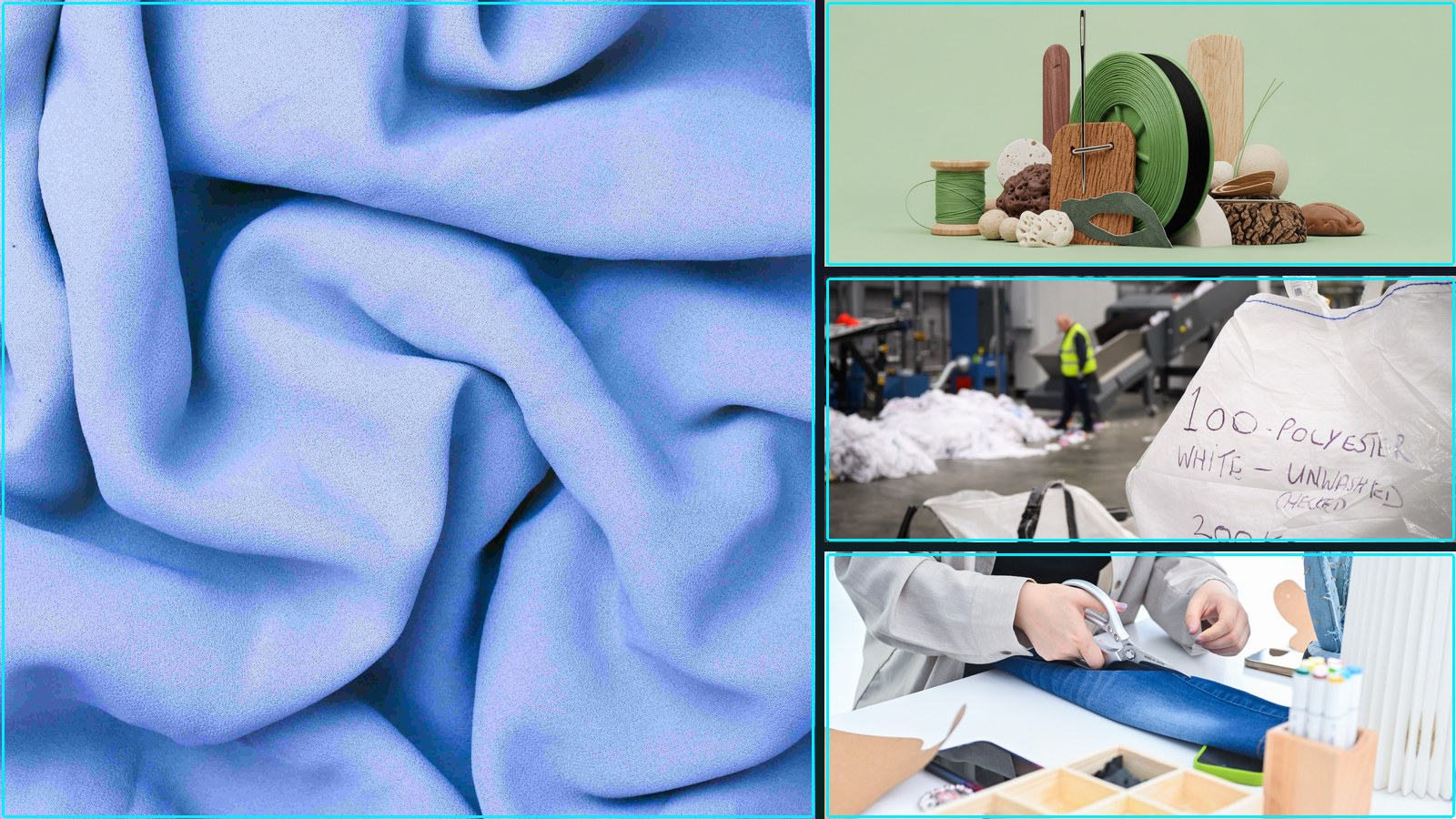
Fashion Industry Sustainability & Circular Economy
The Fashion Pact, Fashion for Good Team for Circular Fibre Collective (Wwd)
Summary: The Fashion Pact and Fashion for Good have launched the Circular Fibre Collective, a cross-industry initiative aimed at scaling textile-to-textile (T2T) recycled and next-generation fibers. It seeks to coordinate action across the value chain by aggregating demand, supporting financing and policy, and providing adoption tools. The initiative, informed by research from BCG and Fashion for Good, projects that full mobilization could scale T2T capacity to 2 million metric tons, increasing its share of global fiber production to around 8% by 2030.

Why it matters: For sourcing, sustainability, and product development teams, this signals a shift from isolated brand commitments to a coordinated, demand-aggregated procurement model, directly impacting material availability and cost structures.
Context: T2T recycling currently accounts for less than 1% of global fiber production, hindered by fragmented demand, weak infrastructure, and financing gaps.
"Estimates from Boston Consulting Group and Fashion for Good suggest that, if fully mobilized, the initiative could help scale up to 2 million metric tons of T2T and next-generation material capacity, increasing its share of global fiber production to around 8 percent by 2030." — WWD
Commentary: The CFC represents a tactical pivot from advocacy to supply-chain engineering, attempting to solve the chicken-and-egg problem of recycled material adoption by creating a guaranteed demand pool. This could pressure brands to align internal sourcing calendars with collective procurement timelines and could marginalize smaller players unable to meet the consortium’s volume or specification requirements. For recyclers and fiber producers, it reduces demand risk, potentially unlocking project finance, but also centralizes buyer power.
Date: Thu, 23 Apr 2026 16:00:00 +0000
URL: https://wwd.com/sourcing-journal/sustainability/the-fashion-pact-fashion-for-good-team-cfc-1238926147/
AI Sentiment Score: Negative (83%)
AI Credibility Score: 10.0/10 — High
Scores and text generated by AI analysis of the source article indicated.
Welcome to the golden age of thrifting (Glossy.Co)
Summary: eBay’s recent activation required listing an item for resale as entry, crystallizing a shift where listing, browsing, and buying secondhand are now integrated steps preceding new purchases. Savers reports 20.6% U.S. growth driven by a widening ‘value gap’ as new apparel prices rise, attracting both value-focused and higher-income shoppers. Creators like Jules Wettreich frame thrifting as an adventure-driven styling service, while platforms like ThredUp prioritize ‘high-quality supply’ capture. Nearly half of resale discovery now occurs off-platform, and tools like Google Lens are streamlining search, potentially eroding the unpredictability that fuels engagement.

Why it matters: For fashion brands and retailers, the shopping journey now frequently originates outside their control in thrift and resale ecosystems, forcing competition with their own archival inventory and altering product lifecycle economics.
Context: The convergence of economic pressure, creator-led styling, and platform logistics is formalizing secondhand as a primary, not alternative, fashion channel.
"For brands, the implication is straightforward: They no longer control the start of the shopping journey. Thrift and resale are increasingly setting price expectations, surfacing demand and extending product life cycles." — GLOSSY.CO
Commentary: Brands must now design for resale value and archival durability as core product attributes, while logistics and curation shift to platforms competing on supply acquisition. Stylists and creators operating across physical thrift, digital resale, and vintage networks are becoming essential intermediaries, fragmenting discovery and influencing demand before retail touchpoints.
Date: Mon, 27 Apr 2026 04:02:00 +0000
URL: https://www.glossy.co/fashion/why-its-thrift-stores-time-to-shine/
AI Sentiment Score: Negative (50%)
AI Credibility Score: 10.0/10 — High
Scores and text generated by AI analysis of the source article indicated.
Trims Move to the Forefront as Traceability and Circularity Converge (Wwd)
Summary: Trims—components like zippers, elastics, and labels—are emerging as a critical focus for circularity and traceability, having been historically overlooked despite comprising over 40% of a garment’s bill of materials. Two parallel developments are addressing this: Trimco Group’s partnership with Retraced embeds verified supply chain data directly into products via QR codes, creating a digital backbone for compliance. Meanwhile, manufacturers like Harnest and YKK are scaling physical alternatives, with Harnest launching a Responsible Trims Collection using biodegradable and recycled materials at cost parity, and YKK reporting that its recycled Natulon zippers now constitute 56% of global sales.

Why it matters: For brands and manufacturers, this shifts the compliance and sourcing calculus from fabric-centric to whole-garment, requiring integrated data systems and new vendor assessments for trims.
Context: Regulatory pressure, particularly from the EU’s Ecodesign for Sustainable Products Regulation (ESPR), is forcing a consolidation of traceability tools and a move from pilot-stage circular experiments to industrial-scale production.
"Sustainable trims have gained momentum in recent years as brands and suppliers begin to confront one of fashion’s more functional blind spots: the small components (and the data attached to them) that." — WWD
Commentary: The convergence of digital traceability platforms with scaled physical alternatives redefines the trim supply chain from a cost-center afterthought to a strategic compliance and circularity lever. This forces brands to audit and potentially re-contract with trim suppliers, while manufacturers like YKK gain pricing power as recycled components become mainstream. The operational implication is a dual-track requirement: integrating SaaS platforms like Retraced into labeling workflows, and sourcing trims that meet both performance and end-of-life criteria without inflating unit costs.
Date: Tue, 21 Apr 2026 16:24:41 +0000
URL: https://wwd.com/sourcing-journal/sustainability/trims-take-center-stage-as-harnest-ykk-push-circ-1238923334/
AI Sentiment Score: Negative (60%)
AI Credibility Score: 10.0/10 — High
Scores and text generated by AI analysis of the source article indicated.
Circular Footwear Design – News → Sustainability Directory (News.Sustainability-Directory)
Summary: Footwear brands are implementing a multi-pronged circular design strategy to address material waste and supply chain fragility. Key innovations include mono-material construction to eliminate toxic glues and simplify recycling, subscription models to retain product custody, and industry-wide collaboration to de-risk bio-based and waste-derived polymers for soles and uppers. These moves aim to secure material supply, reduce reliance on virgin petroleum inputs, and create profitable end-of-life pathways for complex products.

Why it matters: This shifts the industry’s operating model from linear sourcing and disposal to closed-loop material management, requiring new design constraints, vendor partnerships, and revenue structures.
Context: Footwear is a notoriously difficult product category to recycle due to its material complexity and bonded construction, leading to billions of units landfilled annually.
"Using focused energy to fuse fabrics eliminates toxic glues and makes finished garments significantly easier to recycle. … Footwear labels are securing traceable rubber to eliminate petroleum-based plastics and ensure verifiable forest." — NEWS.SUSTAINABILITY-DIRECTORY
Commentary: The pivot to subscription and mono-material design fundamentally alters brand economics, shifting capital expenditure from marketing-driven volume to lifecycle asset management. This forces R&D, sourcing, and finance teams to collaborate on durability, disassembly, and residual value, while creating new vendor roles in reprocessing and material verification. The collaborative de-risking of bio-polymers indicates a strategic move to collective action on supply security, reducing individual brand exposure to fossil price volatility and regulatory risk.
Date: April 23, 2026 12:00 AM ET
URL: https://news.sustainability-directory.com/news/circular-footwear-design/
AI Sentiment Score: Negative (66%)
AI Credibility Score: 10.0/10 — High
Scores and text generated by AI analysis of the source article indicated.
Circular Economy – The Fashion Pact (Thefashionpact)
Summary: The fashion industry faces an urgent materials challenge. Despite growing regulatory pressure and brand commitments, the transition to textile-to-textile (T2T) recycled and next-generation fibres remains stalled. Significant barriers continue to hinder progress at scale, including fragmented demand, insufficient financing, and a lack of well-developed recycling infrastructure and supportive policy frameworks.

Why it matters: This matters for Fashion because it gives a concrete current signal to track: The fashion industry faces an urgent materials challenge.
Context: The fashion industry faces an urgent materials challenge. Despite growing regulatory pressure and brand commitments, the transition to textile-to-textile (T2T) recycled and next-generation fibres remains stalled. Significant barriers continue to hinder progress at scale, including fragmented demand, insufficient financing, and a lack of well-developed recycling infrastructure and supportive policy frameworks.
"The fashion industry faces an urgent materials challenge. Despite growing regulatory pressure and brand commitments, the transition to textile-to-textile (T2T) recycled and next-generation fibres remains stalled. Significant barriers continue to hinder progress." — THEFASHIONPACT
Commentary: The immediate implication is operational rather than speculative: watch how this changes budgets, workflows, or risk assumptions over the next cycle.
Date: April 21, 2026 12:00 AM ET
URL: https://www.thefashionpact.org/area-of-action/circular-economy/
AI Sentiment Score: Negative (50%)
AI Credibility Score: 10.0/10 — High
Scores and text generated by AI analysis of the source article indicated.
Sustainable Fashion Trends Changing the Global Market – UseDem (Usedem)
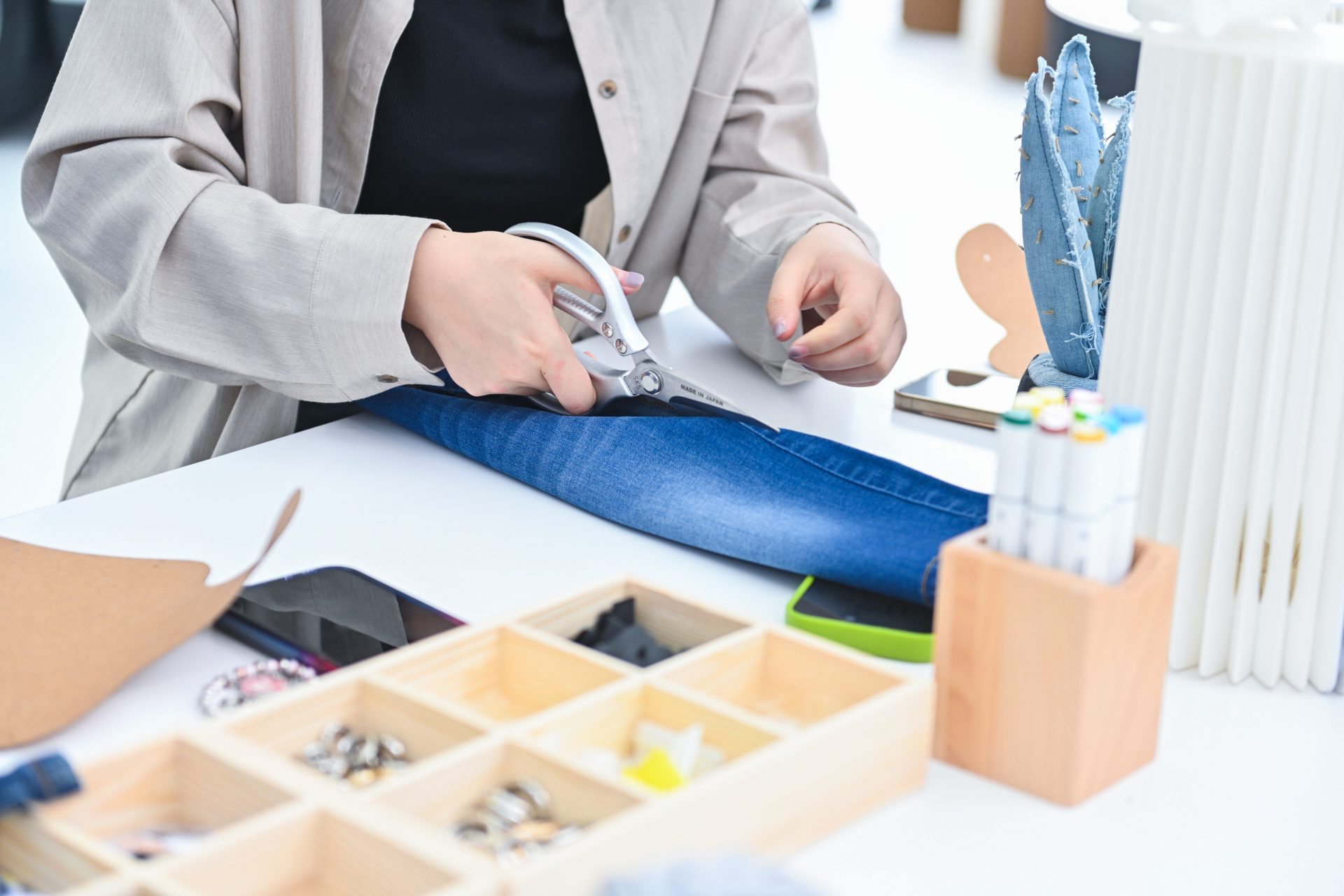
Summary: Fast, cheap clothes once ruled the scene. Yet things shift when care for the planet pushes into view. Not focused on endless output anymore, some companies begin questioning every step – how items come together, live their life, then find new purpose after.
Why it matters: This matters for Fashion because it gives a concrete current signal to track: Fast, cheap clothes once ruled the scene.
Context: Fast, cheap clothes once ruled the scene. Yet things shift when care for the planet pushes into view. Not focused on endless output anymore, some companies begin questioning every step – how items come together, live their life, then find new purpose after.
"Fast, cheap clothes once ruled the scene. Yet things shift when care for the planet pushes into view. Not focused on endless output anymore, some companies begin questioning every step – how." — USEDEM
Commentary: The immediate implication is operational rather than speculative: watch how this changes budgets, workflows, or risk assumptions over the next cycle.
Date: April 24, 2026 12:00 AM ET
URL: https://usedem.com/blogs/sustainable-fashion-global-market-upcycled-accessories/
AI Sentiment Score: Negative (50%)
AI Credibility Score: 7.0/10 — Medium
Scores and text generated by AI analysis of the source article indicated.
Manufacturers key to realising circular fashion: report – Fibre2Fashion (Fibre2Fashion)
Summary: # Manufacturers key to realising circular fashion: report … UK-based international sustainability non-profit Forum for the Future and leading fashion manufacturers Cobalt Fashion (part of the Hong Kong-based Fung Group), Ramatex Group (Malaysia) and Yee Chain International (Taiwan) recently called on brands, retailers and other stakeholders to step up efforts to include supply chain voices in the sector’s drive to transform how fashion items are designed, made, sold and used. In a report titled ‘Making the leap to circular fashion’, they highlighted that mass apparel and footwear manufacturers representing the core of today’s high-production and low-cost fast-fashion system are uniquely placed to develop and implement innovative circular solutions at scale.
Why it matters: This matters for Fashion because it gives a concrete current signal to track: # Manufacturers key to realising circular fashion: report …
Context: # Manufacturers key to realising circular fashion: report … UK-based international sustainability non-profit Forum for the Future and leading fashion manufacturers Cobalt Fashion (part of the Hong Kong-based Fung Group), Ramatex Group (Malaysia) and Yee Chain International (Taiwan) recently called on brands, retailers and other stakeholders to step up efforts to include supply chain voices in the sector’s drive to transform how fashion items are designed, made, sold and used. In a report titled ‘Making the leap to circular fashion’, they highlighted that mass apparel and footwear manufacturers representing the core of today’s high-production and low-cost fast-fashion system are uniquely placed to develop and implement innovative circular solutions at scale.
"# Manufacturers key to realising circular fashion: report … UK-based international sustainability non-profit Forum for the Future and leading fashion manufacturers Cobalt Fashion (part of the Hong Kong-based Fung Group), Ramatex Group." — FIBRE2FASHION
Commentary: The immediate implication is operational rather than speculative: watch how this changes budgets, workflows, or risk assumptions over the next cycle.
Date: April 23, 2026 12:00 AM ET
URL: https://www.fibre2fashion.com/news/fashion-news/manufacturers-key-to-realising-circular-fashion-report--269708-newsdetails.htm
AI Sentiment Score: Positive (42%)
AI Credibility Score: 10.0/10 — High
Scores and text generated by AI analysis of the source article indicated.
Refresh, Repair & Rewear: Circular Fashion in Action at SF Climate Week (Youtube)
Summary: Seeing Green stopped by “Recharge Your Closet,” a sustainable fashion pop-up by Rethink the Runway during San Francisco Climate Week to see how style seekers, repair specialists and sustainability innovators are making circular fashion more accessible, practical and personal. From mending and clothing swaps to live screenprinting and hands-on workshops, these are real-world examples of how to extend the life of what we already wear. …

Why it matters: This matters for Fashion because it gives a concrete current signal to track: Seeing Green stopped by “Recharge Your Closet,” a sustainable fashion pop-up by Rethink the Runway during San Francisco Climate Week to see how style seekers, repair specialists and sustainability innovators are making circular fashion more accessible, practical and personal.
Context: Seeing Green stopped by “Recharge Your Closet,” a sustainable fashion pop-up by Rethink the Runway during San Francisco Climate Week to see how style seekers, repair specialists and sustainability innovators are making circular fashion more accessible, practical and personal. From mending and clothing swaps to live screenprinting and hands-on workshops, these are real-world examples of how to extend the life of what we already wear. …
"Seeing Green stopped by “Recharge Your Closet,” a sustainable fashion pop-up by Rethink the Runway during San Francisco Climate Week to see how style seekers, repair specialists and sustainability innovators are making." — YOUTUBE
Commentary: The immediate implication is operational rather than speculative: watch how this changes budgets, workflows, or risk assumptions over the next cycle.
Date: April 22, 2026 12:00 AM ET
URL: https://www.youtube.com/watch?v=Bz3NtNYSHZw
AI Sentiment Score: Positive (66%)
AI Credibility Score: 10.0/10 — High
Scores and text generated by AI analysis of the source article indicated.
The Rise of Sustainable Fashion: How Brands are Redefining the Industry (Dev.What.It.Is)
Summary: These pioneers are not only reducing their ecological footprint but also creating a more equitable and responsible business model. With the average American generating 82 pounds of textile waste per year, the need for sustainable fashion has never been more pressing. Brands like Patagonia, Reformation, and Everlane are leading the charge, implementing innovative production methods, using eco-friendly materials, and promoting a culture of circularity.
Why it matters: This matters for Fashion because it gives a concrete current signal to track: These pioneers are not only reducing their ecological footprint but also creating a more equitable and responsible business model.
Context: These pioneers are not only reducing their ecological footprint but also creating a more equitable and responsible business model. With the average American generating 82 pounds of textile waste per year, the need for sustainable fashion has never been more pressing. Brands like Patagonia, Reformation, and Everlane are leading the charge, implementing innovative production methods, using eco-friendly materials, and promoting a culture of circularity.
"These pioneers are not only reducing their ecological footprint but also creating a more equitable and responsible business model. With the average American generating 82 pounds of textile waste per year, the." — DEV.WHAT.IT.IS
Commentary: The immediate implication is operational rather than speculative: watch how this changes budgets, workflows, or risk assumptions over the next cycle.
Date: April 25, 2026 12:00 AM ET
URL: https://dev.what.it.is/dev/the-rise-of-sustainable-fashion-how-brands-are-redefining-the-industry
AI Sentiment Score: Negative (50%)
AI Credibility Score: 10.0/10 — High
Scores and text generated by AI analysis of the source article indicated.
The Rise of Eco-Friendly Fashion: How Sustainability is Redefining … (Dev.What.It.Is)
Summary: • Reduced greenhouse gas emissions: By using sustainable materials and reducing waste, fashion companies can significantly reduce their carbon footprint. • Conservation of resources: Sustainable fashion prioritizes the use of renewable resources and reduces the demand for non-renewable materials. • Improved working conditions: Fair labor practices and safe working conditions are essential for ensuring the well-being of workers in the fashion industry.
Why it matters: This matters for Fashion because it gives a concrete current signal to track: • Reduced greenhouse gas emissions: By using sustainable materials and reducing waste, fashion companies can significantly reduce their carbon footprint.
Context: • Reduced greenhouse gas emissions: By using sustainable materials and reducing waste, fashion companies can significantly reduce their carbon footprint. • Conservation of resources: Sustainable fashion prioritizes the use of renewable resources and reduces the demand for non-renewable materials. • Improved working conditions: Fair labor practices and safe working conditions are essential for ensuring the well-being of workers in the fashion industry.
"• Reduced greenhouse gas emissions: By using sustainable materials and reducing waste, fashion companies can significantly reduce their carbon footprint. • Conservation of resources: Sustainable fashion prioritizes the use of renewable resources." — DEV.WHAT.IT.IS
Commentary: The immediate implication is operational rather than speculative: watch how this changes budgets, workflows, or risk assumptions over the next cycle.
Date: April 25, 2026 12:00 AM ET
URL: https://dev.what.it.is/dev/the-rise-of-ecofriendly-fashion-how-sustainability-is-redefining-the-fashion-industry
AI Sentiment Score: Negative (66%)
AI Credibility Score: 10.0/10 — High
Scores and text generated by AI analysis of the source article indicated.
Fashion Our Future x ChangeNOW: Redesigning Fashion’s Value Chain 1 | Panel (Youtube)
Summary: Fashion Our Future X ChangeNOW, an exclusive evening designed in partnership with Kering, and with the support of Céline Dassonville (Ethiwork) and Paula Miquelis (Do Futuro). An evening dedicated to tackling textile waste across the fashion value chain. Under the theme “Redesigning a Fashion Value Chain” the event will bring together designers, innovators, NGOs, research centers, and businesses to explore practical solutions, from sustainable materials and production processes to reuse, recycling, and end-of-life strategies.
Why it matters: This matters for Fashion because it gives a concrete current signal to track: Fashion Our Future X ChangeNOW, an exclusive evening designed in partnership with Kering, and with the support of Céline Dassonville (Ethiwork) and Paula Miquelis (Do Futuro).
Context: Fashion Our Future X ChangeNOW, an exclusive evening designed in partnership with Kering, and with the support of Céline Dassonville (Ethiwork) and Paula Miquelis (Do Futuro). An evening dedicated to tackling textile waste across the fashion value chain. Under the theme “Redesigning a Fashion Value Chain” the event will bring together designers, innovators, NGOs, research centers, and businesses to explore practical solutions, from sustainable materials and production processes to reuse, recycling, and end-of-life strategies.
"Fashion Our Future X ChangeNOW, an exclusive evening designed in partnership with Kering, and with the support of Céline Dassonville (Ethiwork) and Paula Miquelis (Do Futuro). An evening dedicated to tackling textile." — YOUTUBE
Commentary: The immediate implication is operational rather than speculative: watch how this changes budgets, workflows, or risk assumptions over the next cycle.
Date: April 24, 2026 12:00 AM ET
URL: https://www.youtube.com/watch?v=uTFYqQko8HQ
AI Sentiment Score: Negative (50%)
AI Credibility Score: 10.0/10 — High
Scores and text generated by AI analysis of the source article indicated.
Post ID: 9d3542eb