
Recycling and Sustainable Textile Innovation
e‑FLOWER Project Accelerates Future Growth of Green E‑ … (Tyndall.Ie)
Summary: The e-FLOWER project, an EU-funded initiative led by Tyndall National Institute, is developing a new generation of electronic textiles for health and wellness. It focuses on creating bio-based materials, modular architectures, and scalable printing processes for sensors integrated into fabrics. The goal is to produce e-textiles that are high-performance, durable, and fully recyclable, targeting applications in land, water, and space environments.
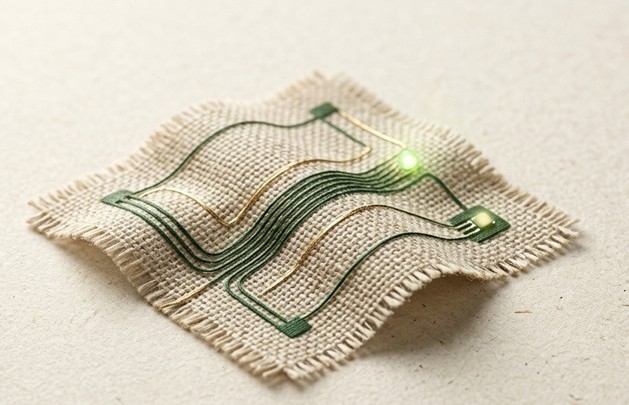
Why it matters: This signals a shift from prototype-focused e-textile research to industrial-scale manufacturing with built-in circularity, directly impacting material sourcing, production workflows, and end-of-life logistics for brands and manufacturers.
Context: Current e-textile development is hampered by trade-offs between performance, durability, and recyclability, often relying on non-recyclable adhesives and complex assemblies that hinder repair and material recovery.
"Tyndall National Institute, based at University College Cork, is proud to announce the launch of eFLOWER, a major new EU funded research initiative that will develop the next generation of sustainable, high." — TYNDALL.IE
Commentary: The project’s concrete deliverables—bio-based adhesives, modular architectures, and energy-efficient printing—are a direct attack on the core cost and waste drivers in smart apparel. If successful, it could force a reassessment of vendor tooling and quality control for brands exploring medical or performance wearables, while creating a new class of recyclable components that could reshape supply chain contracts and compliance reporting.
Date: April 22, 2026 12:00 AM ET
URL: https://www.tyndall.ie/news/e-flower-project-accelerates-future-growth-of-green-e-textiles/
AI Sentiment Score: Negative (62%)
AI Credibility Score: 10.0/10 — High
Scores and text generated by AI analysis of the source article indicated.
IFPEN | A new textile-to-textile recycling process validated on … (Ifpenergiesnouvelles)
Summary: AXENS, IFPEN, and JEPLAN have validated their Rewind® PET chemical recycling technology for textile applications using a semi-industrial demonstration unit in Japan. The process successfully converted tens of tons of European post-consumer polyester textile waste into a base monomer suitable for producing 100% recycled polyester yarn and fabric. This marks a shift from a technology proven for PET packaging to one now licensed for textile-to-textile loops.
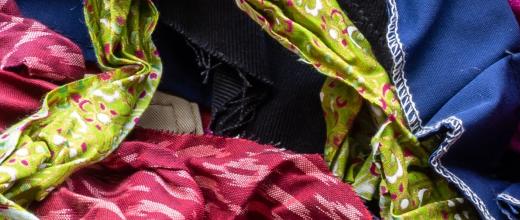
Why it matters: This validation provides a scalable, licensable chemical recycling pathway for polyester, directly impacting material sourcing, waste management costs, and product claims for sportswear, home furnishings, and luxury brands.
Context: Chemical recycling for textiles remains largely at pilot scale; credible, licensable processes that handle mixed post-consumer waste are rare and critical for meeting regulatory and brand circularity targets.
"Several tens of tons of post-consumer, polyester-rich, European textile waste, sorted and prepared in France, have been processed in the Axens, IFPEN and JEPLAN semi-industrial demonstration unit, located in Japan, to successfully produce the base monomer of a 100% recycled polyester." — IFPENERGIESNOUVELLES
Commentary: The operational consequence is a new vendor option (Axens as global licensor) for brands and recyclers seeking to establish regional polyester loops. It reduces dependency on virgin PET and bottle-grade recycled feedstock, but introduces new supply chain complexity: waste must be pre-sorted in Europe, then potentially shipped to licensed processors globally. This will affect traceability protocols and cost models for recycled polyester garments.
Date: April 21, 2026 12:00 AM ET
URL: https://www.ifpenergiesnouvelles.com/article/new-textile-textile-recycling-process-validated-industrial-scale
AI Sentiment Score: Negative (83%)
AI Credibility Score: 9.8/10 — High
Scores and text generated by AI analysis of the source article indicated.
Polyester-rich textile wastes are recycled to monomer at … (Chemengonline)
Summary: A consortium of Axens, IFPEN, and JEPLAN has successfully processed tens of tons of post-consumer, polyester-rich European textile waste in a semi-industrial demonstration unit in Japan, producing the base monomer BHET. This validates the chemical recycling technology for textiles at a significant scale, moving beyond its established use for PET packaging. The waste was sourced from French public collections and prepared by partners Nouvelles Fibres Textile and Mapea, with the resulting monomer slated for conversion into new yarns and fabrics.
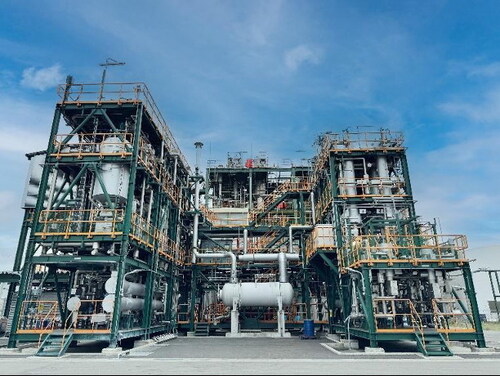
Why it matters: This demonstration establishes a viable, licensable industrial pathway for true textile-to-textile recycling of polyester, directly impacting material sourcing strategies and circularity commitments for sportswear, home furnishings, and luxury brands.
Context: Polyester recycling has largely been downcycled or limited to bottle-to-fiber processes; chemical recycling to virgin-quality monomer for textiles has been a technical and economic hurdle, with few proven industrial-scale operations for post-consumer textile feedstocks.
"Several tens of tons of post-consumer, polyester-rich, European textile wastes, sorted and prepared in France, have been processed in the Axens, IFPEN and JEPLAN semi-industrial demonstration unit, located in Japan, to successfully." — CHEMENGONLINE
Commentary: The operational consequence is the creation of a new, licensable vendor option (Axens) for brands and recyclers seeking closed-loop polyester. This shifts the supply chain constraint from pure technology R&D to the economics and logistics of establishing regional collection, sorting, and preprocessing hubs to feed such chemical recycling plants. For brands, it provides a concrete, scalable component for ESG roadmaps, but one that will demand new partnerships and potentially higher-cost raw materials in the near term.
Date: April 23, 2026 12:00 AM ET
URL: https://www.chemengonline.com/polyester-rich-textile-wastes-are-recycled-to-monomer-at-demonstration-plant/
AI Sentiment Score: Negative (50%)
AI Credibility Score: 9.4/10 — High
Scores and text generated by AI analysis of the source article indicated.
Polyester recycling loop validated at scale (Recycling-Magazine)
Summary: A semi-industrial demonstration in Japan has processed tens of tonnes of European post-consumer polyester textile waste into BHET monomer using JEPLAN’s Rewind PET technology. The project, involving French suppliers Nouvelles Fibres Textile and Mapea, validates the technical feasibility of textile-to-textile chemical recycling at a 1,000-tonne-per-year scale. The process, licensed globally by Axens, is designed for integration into existing polyester production sites, substituting fossil feedstocks with recycled intermediates.

Why it matters: This validates a scalable chemical recycling pathway for post-consumer polyester textiles, directly impacting material sourcing strategies, supply chain traceability, and production waste calculations for brands and manufacturers.
Context: The fashion industry faces intense pressure to close the loop on polyester, its most common fiber, but mechanical recycling degrades quality and is limited to pre-consumer waste. Chemical recycling promises fiber-to-fiber loops but has struggled to move beyond pilot scale for mixed, post-consumer textiles.
"Several tens of tonnes of polyester-rich textile waste sourced from European post-consumer streams were sorted and prepared in France before being treated at a semi-industrial unit in Japan. The process produced BHET,." — RECYCLING-MAGAZINE
Commentary: The operational consequence is a new, licensable vendor option (Axens) for securing chemically recycled polyester feedstock that doesn’t compete with bottle-grade PET. For brands, this begins to de-risk commitments to recycled content by providing a scalable, textile-specific supply chain, potentially altering cost models for sustainable sportswear and luxury lines. The requirement for sorted, polyester-rich waste will immediately elevate the value and operational demands on European collection and preparation firms like Nouvelles Fibres Textile.
Date: April 22, 2026 12:00 AM ET
URL: https://www.recycling-magazine.com/2026/04/22/polyester-textile-recycling-loop/
AI Sentiment Score: Negative (87%)
AI Credibility Score: 10.0/10 — High
Scores and text generated by AI analysis of the source article indicated.
Textile recycling factories … – Circular Fashion News / Apr 27 (Circularfashionnews.Substack)
Summary: The circular fashion ecosystem is consolidating through long-term supply agreements and scaled pilot plants, shifting from experimental partnerships to operational commitments. Australian activewear brand LSKD signed a 10-year offtake deal with Samsara Eco for recycled nylon 6,6, while Epoch Biodesign and JEPLAN announced new demonstration factories. Concurrently, repair and resale are becoming standard inventory management tools, with Salomon launching a repair program and rental platform Dressr adding resale. Klarna data shows a 75% growth in resale listings generated from its app over 13 months, indicating mainstream integration of resale into the purchase lifecycle.

Why it matters: For brands and suppliers, these developments signal a shift from pilot projects to binding commercial agreements and scaled infrastructure, which will dictate future material costs, supply chain planning, and inventory management strategies.
Context: Textile-to-textile recycling has struggled with commercial scale and consistent offtake agreements; ten-year partnerships like LSKD-Samsara provide the demand security needed to justify capital-intensive factory builds. Similarly, rental and repair services are evolving from niche sustainability plays into core operational levers for profitability.
"Circular Fashion News / Apr 27: Textile recycling factories & purchasing agreements, Salomon repair program Last week, activewear brand LSKD signed a 10-year partnership with Samsara Eco, Epoch Biodesign announced a UK." — CIRCULARFASHIONNEWS.SUBSTACK
Commentary: The LSKD-Samsara deal is a concrete signal that recycled material pipelines are moving from speculative R&D to firm procurement, locking in future supply and cost structures for the brand. For recyclers, such long-term agreements de-risk the massive capital expenditure required for commercial-scale plants, directly addressing the industry’s chicken-and-egg problem. This could pressure other mid-market brands to secure similar partnerships or face potential feedstock scarcity. Operationally, it mandates that LSKD’s design and sourcing teams begin aligning specifications now for a 2028 material transition.
Date: April 27, 2026 12:00 AM ET
URL: https://circularfashionnews.substack.com/p/circular-fashion-news-apr-27-textile
AI Sentiment Score: Negative (83%)
AI Credibility Score: 10.0/10 — High
Scores and text generated by AI analysis of the source article indicated.
Nature of Fashion Pilot Projects (Biomimicry)
Summary: The Nature of Fashion initiative is piloting region-specific textile waste solutions in the Netherlands, Germany, and Ghana, moving from incineration to biological and thermochemical transformation of low-value waste. Circle Economy’s Amsterdam pilot focuses on creating a regional ecosystem for recovered materials, while Berlin’s Beneficial Design Institute develops biotechnological processes for biocompatible outputs. The Ghana pilot shifts focus to ecological restoration and community stewardship.

Why it matters: This establishes a new operational tier for waste management, moving brands and manufacturers from generic recycling targets to region-specific, biotech-integrated supply chain contracts.
Context: Current textile recycling infrastructure fails on mixed, low-value ‘bottom fraction’ waste, forcing incineration or landfill.
"The project explores how unsellable textiles typically destined for incineration can be transformed into regenerative outputs through integrated biological and thermochemical processes." — BIOMIMICRY
Commentary: The pilot structure—European biotech, Ghanaian ecological—forces brands to segment waste management by geography and material composition, not a single corporate policy. This will increase traceability costs but create new vendor categories (e.g., regional bioreactors) and alter manufacturing throughput by integrating pre-sorted waste streams into production lines.
Date: April 20, 2026 12:00 AM ET
URL: https://biomimicry.org/innovation/nature-of-fashion/pilot-projects/
AI Sentiment Score: Negative (71%)
AI Credibility Score: 9.8/10 — High
Scores and text generated by AI analysis of the source article indicated.
Integrating eco-design into e-clothing development (Frontiersin)
Summary: A 2026 research paper proposes a formal definition for ‘e-clothing’ as a complete garment system integrating sensors, actuators, batteries, and circuits, distinguishing it from broader terms like ‘smart clothing’ or component-level ‘e-textiles.’ The work advocates for integrating eco-design principles into the development lifecycle of these complex electronic garments. This move aims to address the significant sustainability challenges inherent in merging electronics with textiles from the outset.

Why it matters: For practitioners, a standardized definition clarifies the scope of development work and its associated environmental liabilities, while mandating eco-design integration directly impacts R&D timelines, material sourcing, and end-of-life planning.
Context: The fashion-tech industry lacks consistent terminology, complicating supply chain communication and lifecycle assessment. Sustainability efforts have often been retrofitted, not designed in, leading to compounded waste from both textile and electronic waste streams.
"Sustain., 20 April 2026 … Volume 7 – 2026 | https://doi.org/10.3389/frsus.2026.1772804 … There are many terms in literature that are often used interchangeably to refer to textile, wearable and clothing with integrated." — FRONTIERSIN
Commentary: Formalizing ‘e-clothing’ as a system-level category forces a holistic view of durability, repairability, and disassembly, directly increasing engineering complexity and upfront cost. For brands, this means new vendor partnerships with electronics recyclers and potential shifts in warranty and service models. The operational consequence is a longer, more constrained development pipeline where material selection and circuit design are locked by environmental KPIs, not just performance.
Date: April 21, 2026 12:00 AM ET
URL: https://www.frontiersin.org/journals/sustainability/articles/10.3389/frsus.2026.1772804/full
AI Sentiment Score: Negative (83%)
AI Credibility Score: 10.0/10 — High
Scores and text generated by AI analysis of the source article indicated.
Luxury 2030: The Trends Reshaping the Fashion Supply … (Elisaindustriq)
Summary: A strategic roadmap for luxury fashion supply chains through 2030 emphasizes operational shifts from artificial scarcity to data-driven exclusivity and mandatory traceability. The EU’s Digital Product Passport, effective by 2026, will make full supply chain mapping a compliance baseline, forcing brands to document environmental and labor data from raw material to retail. Investments are pivoting toward regional hubs for nearshoring, digital twins for quality control, and advanced planning systems that integrate real-time market sentiment and influencer impact into demand forecasting.
Why it matters: This redefines the operational playbook for luxury brands, moving competitive advantage from heritage labels to verifiable, data-intensive supply chain performance and resilience.
Context: The luxury sector is under dual pressure from impending EU regulation and consumer demand for transparency, forcing a technological overhaul of traditionally opaque, multi-tier global networks.
"- Reframe scarcity models: move from artificial limitation to data-driven exclusivity management that optimises both demand and margins – Implement end-to-end traceability as EU regulatory compliance becomes mandatory by 2026 with the." — ELISAINDUSTRIQ
Commentary: The mandate shifts capital expenditure from marketing to back-end systems, with platforms like sedApta’s APS becoming critical infrastructure. This creates a new vendor landscape focused on integrating supplier collaboration, sustainability scoring, and real-time dashboards, while internal teams must now manage data governance for thousands of traceable components as a core production task.
Date: April 28, 2026 12:00 AM ET
URL: https://www.elisaindustriq.com/resources/blog/luxury-2030-the-trends-reshaping-the-fashion-supply-chain
AI Sentiment Score: Negative (60%)
AI Credibility Score: 7.0/10 — Medium
Scores and text generated by AI analysis of the source article indicated.
Post ID: e0503e88