Major Tech Company Updates: Meta, OpenAI, Anthropic
What Elon Musk and OpenAI’s High-Profile Court Case Is Actually About (Bigtechnology)
Summary: The trial between Elon Musk and OpenAI opens this week, moving beyond personality clashes to a core legal dispute over OpenAI’s structural evolution. Musk alleges breach of charitable trust and unjust enrichment, seeking remedies that could include a $134 billion payout and the removal of Sam Altman and Greg Brockman. The case will feature testimony from key industry figures and includes a countersuit from OpenAI against Musk and xAI. Its outcome could reshape corporate governance and mission alignment in high-stakes AI development.

Why it matters: The verdict could redefine the legal boundaries of nonprofit-to-profit transitions in tech, setting precedents for founder agreements and corporate control in the AI industry.
Context: This case tests the enforceability of early mission statements and founding agreements as AI companies scale, amid broader tensions between open research and commercial competition.
"This is a legal battle over whether OpenAI lawfully evolved from a nonprofit, breaching an agreement to operate as a charity that the founders — including Musk, who invested $38 million — made at its inception." — BIGTECHNOLOGY
Commentary: A ruling for Musk would impose a severe financial and structural penalty, potentially forcing a rollback of OpenAI’s commercial model and chilling similar corporate pivots. A loss, however, would solidify the legal precedent that founding charters are adaptable contracts, not immutable covenants, freeing other mission-driven entities to pursue capital-intensive scaling. The high-profile testimony will surface internal communications that could damage reputations regardless of the verdict, influencing regulatory and public perception of AI governance. Watch for whether the court’s interpretation of ‘charitable trust’ extends beyond financial returns to encompass control over technology dissemination.
Date: Mon, 27 Apr 2026 18:45:14 GMT
URL: https://www.bigtechnology.com/p/what-elon-musk-and-openais-high-profile
AI Sentiment Score: Positive (42%)
AI Credibility Score: 10.0/10 — High
Scores and text generated by AI analysis of the source article indicated.
The week that Meta employees became training data (Platformer.News)
Summary: Meta is installing software called the Model Capability Initiative (MCI) on U.S. employees’ work computers to capture mouse movements, clicks, keystrokes, and screen snapshots to train AI agents. The company frames this as benign data collection for building ‘personal superintelligence,’ but internal messages reveal employee concerns about privacy and the lack of an opt-out. This move coincides with a new round of layoffs and follows Meta’s $14.3 billion investment in Scale AI, a firm built on harvesting contractor data, signaling a strategic shift toward using internal workflows as a proprietary training dataset.

Why it matters: This represents a material escalation in workplace surveillance for AI data acquisition, directly applying the logic of data labeling and content moderation to core tech employees, with implications for labor dynamics, privacy norms, and the competitive sourcing of training data.
Context: The push coincides with industry-wide fears of a ‘data wall’ for training frontier models, driving companies to generate proprietary datasets. It follows Meta’s massive investment in Scale AI and its ‘efficiency’ layoffs, framing a future where AI agents do primary work.
"The week that Meta employees became training data Invasive monitoring and a fresh round of layoffs have workers I spoke to on edge. Is this the future of knowledge work? This is." — PLATFORMER.NEWS
Commentary: MCI operationalizes the Taylorist impulse within knowledge work, converting employee autonomy into optimized training data. The geographic carve-out for Europe underscores this as a regulatory arbitrage play. Watch for adoption patterns at other majors facing data scarcity; if MCI suggests effective, it establishes a new, invasive benchmark for white-collar data harvesting.
Date: Fri, 24 Apr 2026 00:47:42 GMT
URL: https://www.platformer.news/meta-mci-monitoring-layoffs-knowledge-work/
AI Sentiment Score: Negative (50%)
AI Credibility Score: 10.0/10 — High
Scores and text generated by AI analysis of the source article indicated.
Meta Layoffs 2026: Leaked Memo Reveals 8,000 Cut at 4 … – Kingy AI (Kingy.Ai)
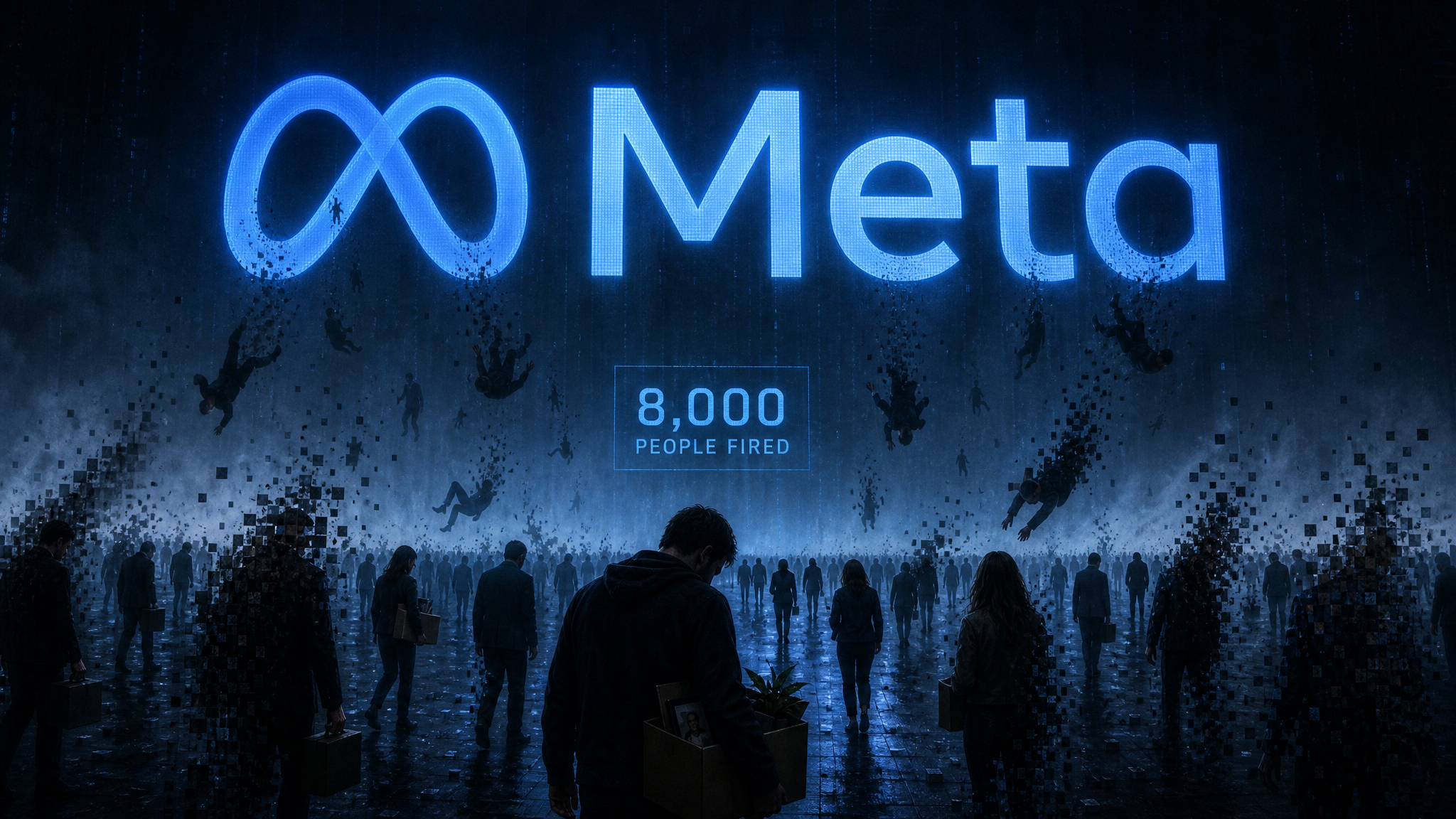
Summary: A leaked internal memo from May 2026 details Meta’s planned layoff of approximately 8,000 employees, framed as a restructuring around AI. Managerial roles are being eliminated, and surviving employees are being forcibly transferred into four new AI-focused organizations, two of which are explicitly tasked with building agents to replace human work. The reorganization coincides with projected capital expenditures of up to $145 billion for 2026, directed primarily at AI development.
Why it matters: This signals a concrete, high-stakes operational pivot for a major tech firm, moving beyond speculative AI investment into a forced internal transformation with immediate human capital and organizational consequences.
Context: This follows a multi-year pattern of escalating AI investment and workforce optimization across Big Tech, but the scale, speed, and explicit replacement mandate described here represent an intensification.
"Two of the four orgs exist explicitly to build agents that replace human work." — KINGY.AI
Commentary: The memo crystallizes a shift from AI as a productivity tool to AI as a direct workforce substitute, institutionalized within corporate structure. The simultaneous massive capex and headcount reduction suggests Meta is betting its operational scalability on agentic automation, not augmentation. Watch for whether this model triggers similar, accelerated reorgs at Google, Microsoft, and Amazon, and monitor the performance metrics of the newly formed ‘Central Analytics’ org as a leading indicator of ROI.
Date: May 19, 2026 12:00 AM ET
URL: https://kingy.ai/ai/meta-layoffs-2026-leaked-memo-reveals-8000-cut-at-4-am-wednesday/
AI Sentiment Score: Neutral (33%)
AI Credibility Score: 10.0/10 — High
Scores and text generated by AI analysis of the source article indicated.
Anthropic’s Mythos is Here. Is OpenAI’s Spud Next? (Bigtechnology)
Summary: Anthropic has launched Mythos, a new general-purpose model it deems too dangerous for public release, granting access via its Project Glasswing program to roughly 50 select partners including major tech and financial firms. OpenAI is preparing its own next-generation model, ‘Spud,’ described by President Greg Brockman as a qualitatively and quantitatively superior pre-train. This emerging pattern of restricting access to the most advanced models under safety pretexts raises questions about whether ‘most dangerous’ is a new marketing signal for ‘most powerful,’ and concentrates capability among incumbent giants. Concurrently, regulatory pressure on AI infrastructure is intensifying, with Maine passing a data center moratorium and bipartisan governors calling for grid operators to impose higher costs on data centers.

Why it matters: The strategic framing of advanced AI as ‘too dangerous to release’ could reshape market power, regulatory approaches, and the public-private divide in technology governance.
Context: This follows a pattern of escalating model scale claims paired with increasingly restricted access, set against a backdrop of growing political and regulatory scrutiny of AI’s energy, economic, and security impacts.
"Framing AI models as too dangerous to release and available only to a select group is starting to look like a new trend. When OpenAI recently hinted at a separate cybersecurity product it’s developing, company officials said it also plans to release it only to a small partner group." — BIGTECHNOLOGY
Commentary: The ‘dangerous’ framing creates a moat: it allows firms to claim technical superiority while sidestepping scaling and cost challenges of broad release, and it preemptively aligns with regulatory anxieties. The concentration of access among a closed consortium of large corporations and governments risks cementing an AI oligopoly under the guise of safety, making competitive benchmarking impossible and shifting policy leverage to those inside the walled garden. Watch for whether this access model becomes a de facto standard for frontier models, and if regulatory bodies start demanding transparency or oversight of these private consortia as a condition of their operations.
Date: Mon, 13 Apr 2026 14:41:37 GMT
URL: https://www.bigtechnology.com/p/anthropics-mythos-is-here-is-openais
AI Sentiment Score: Negative (75%)
AI Credibility Score: 10.0/10 — High
Scores and text generated by AI analysis of the source article indicated.
Exclusive-Meta lays out details of May 20 restructuring in internal … (Thestar.My)
Summary: Meta’s internal memo, reported by Reuters, details a restructuring set for May 20, involving a 10% layoff and the transfer of 7,000 employees to new AI-focused initiatives. The moves, affecting roughly 20% of the workforce, are part of a broader overhaul to accelerate AI agent development for both products and internal workflows. Specific teams receiving transferred staff include Applied AI Engineering (AAI) and the Agent Transformation Accelerator (ATA) XFN, aimed at creating autonomous AI agents to perform tasks currently done by humans.

Why it matters: This signals a decisive, high-velocity shift in Meta’s operational model, prioritizing AI agent integration over traditional human roles, with immediate consequences for labor markets and tech sector strategy.
Context: This follows Meta’s sustained, multi-year ‘Year of Efficiency’ drive and intensifies its pivot from metaverse-centric investments to an AI-first posture, mirroring industry-wide reallocations of capital and talent.
"NEW YORK, May 18 (Reuters) – Meta detailed its layoff plans for this week in a memo shared with employees on Monday, saying cuts to its workforce globally would be accompanied by." — THESTAR.MY
Commentary: The scale and specificity of the transfer—framed internally as a ‘draft’—indicates this is less a cost-cutting exercise and more a forced-march redeployment of human capital to build the systems intended to replace it. The creation of Central Analytics to measure agent productivity explicitly institutionalizes the metric of human-to-agent substitution. Watch for whether these transferred teams face a second-wave reduction once their agent prototypes reach operational maturity, completing the automation loop.
Date: May 19, 2026 12:00 AM ET
URL: https://www.thestar.com.my/tech/tech-news/2026/05/19/exclusive-meta-lays-out-plans-for-may-20-layoffs-restructuring-internal-document-says
AI Sentiment Score: Negative (60%)
AI Credibility Score: 10.0/10 — High
Scores and text generated by AI analysis of the source article indicated.
Anthropic $900 Billion Round… (Aitoolsrecap)
Summary: A California jury dismissed Elon Musk’s claims against Sam Altman and OpenAI in under two hours, ending a high-profile dispute over OpenAI’s founding mission. Meanwhile, Anthropic is reportedly raising at least $30 billion at a $900 billion-plus valuation, co-led by Sequoia Capital, Dragoneer, Greenoaks, and Altimeter Capital. OpenAI launched a native personal finance feature in ChatGPT, directly connecting to user accounts, and Cursor released a cost-competitive coding model ahead of a potential SpaceX acquisition. Google I/O is poised to announce new Gemini models, including a proactive agent and a unified multimodal pipeline.
Why it matters: The legal closure and concurrent capital moves signal a consolidation phase in frontier AI, shifting competitive dynamics from philosophical disputes to product and financial scale.
Context: The Musk-OpenAI lawsuit represented a last major challenge to the prevailing commercial model for AI labs; its rapid dismissal clears the field for intensified competition on product integration and capital allocation.
"Bloomberg reported the specific investor lineup for Anthropic’s fundraising round: Sequoia Capital, Dragoneer Investment Group, Greenoaks Capital, and Altimeter Capital are co-leading the raise of at least $30 billion at a $900 billion-plus valuation." — AITOOLSRECAP
Commentary: The Anthropic round, absent its cloud partners Amazon and Google, suggests a pivot toward financial investors seeking pure-play exposure, potentially prepping the company for a public offering or a new phase of capital-intensive infrastructure competition. OpenAI’s move into personal finance is a direct assault on incumbent fintech apps, leveraging its memory system for sticky, personalized advice that could disintermediate budgeting tools. Cursor’s performance leap at lower cost, coupled with SpaceX’s buyout option, indicates vertical integration of AI tooling into large-scale engineering operations is now a credible strategic vector. Google’s expected Gemini announcements, particularly the proactive ‘Spark’ agent, will test whether persistent, action-taking AI can move from demo to durable consumer utility.
Date: May 19, 2026 12:00 AM ET
URL: https://aitoolsrecap.com/Blog/ai-news-may-17-2026
AI Sentiment Score: Negative (80%)
AI Credibility Score: 7.0/10 — Medium
Scores and text generated by AI analysis of the source article indicated.
Exclusive-Meta lays out details of May 20 restructuring in internal … (Wsau)
Summary: Meta has detailed a restructuring set for May 20, 2026, involving a 10% immediate layoff and the transfer of 7,000 employees to new AI-focused initiatives, cumulatively affecting 20% of its workforce. The transferred staff will move to teams like Applied AI Engineering and Agent Transformation Accelerator, which are explicitly tasked with developing AI agents to autonomously perform tasks currently done by humans. This follows a previous Reuters report on deeper cuts later in the year.

Why it matters: This signals a concrete, large-scale operational pivot from a social media and metaverse company to an AI-driven enterprise, with immediate human capital consequences and long-term implications for the tech labor market and AI agent adoption.
Context: The move continues Meta’s aggressive reallocation of resources toward AI, following its 2023 ‘Year of Efficiency’ and subsequent rounds of layoffs, but now with a clearer internal framework centered on agentic automation.
"By Thomson Reuters May 18, 2026 | 2:18 PM … NEW YORK, May 18 (Reuters) – Meta detailed its layoff plans for this week in a memo shared with employees on Monday,." — WSAU
Commentary: The framing of transfers as being ‘drafted’ into initiatives like ‘Agent Transformation Accelerator’ reveals a forced-march cultural shift. The creation of ‘Central Analytics’ to measure agent productivity indicates Meta is institutionalizing metrics for human-to-automation displacement, setting a benchmark for the industry. Watch for whether these transferred roles are substantively retrained or merely re-badged ahead of potential future elimination.
Date: May 18, 2026 12:00 AM ET
URL: https://wsau.com/2026/05/18/exclusive-meta-lays-out-plans-for-may-20-restructuring-in-internal-document/
AI Sentiment Score: Neutral (50%)
AI Credibility Score: 7.0/10 — Medium
Scores and text generated by AI analysis of the source article indicated.
Meta moves 7000 workers into AI roles ahead of job cuts (Straitstimes)
Summary: Meta is reassigning 7,000 employees to AI-focused roles, specifically into new groups like Applied AI Engineering and Agent Transformation Accelerator, as part of a corporate restructuring. The move, framed internally as a ‘draft,’ precedes announced staff reductions. This reallocation is positioned under the ‘AI for Work’ initiative led by CTO Andrew Bosworth.
Why it matters: This signals a massive, forced internal pivot within a major tech firm, prioritizing AI productization over existing organizational structures, and will test the limits of workforce retraining at scale.
Context: The restructuring follows a multi-year industry-wide shift of capital and talent toward generative AI, with Meta aggressively reorienting its business model around AI agents and infrastructure.
"Meta Platforms is reassigning 7,000 workers to new jobs related to artificial intelligence, according to an internal memo, as part of a broad corporate restructuring that includes planned staff reductions later this week." — STRAITSTIMES
Commentary: The scale (7,000) and compulsory nature (‘drafted’) indicate this is less an organic shift and more a strategic mandate, risking cultural friction and skill mismatches. Watch for attrition rates in these new groups and whether the ‘AI for Work’ products gain tangible enterprise traction to justify the disruption. If successful, it pressures other large organizations to execute similar forced pivots; if not, it becomes a case study in top-down transformation overreach.
Date: May 19, 2026 12:00 AM ET
URL: https://www.straitstimes.com/business/meta-lays-out-details-of-may-20-restructuring-in-internal-document
AI Sentiment Score: Negative (60%)
AI Credibility Score: 10.0/10 — High
Scores and text generated by AI analysis of the source article indicated.
Meta CEO tells employees he does not expect more company-wide … (Thestar.My)
Summary: Meta CEO Mark Zuckerberg informed employees via internal memo that he does not anticipate further company-wide layoffs in 2026. This assurance follows a day of significant restructuring, involving a 10% global workforce reduction and the transfer of 7,000 employees to new AI workflow initiatives. The statement directly addresses internal uncertainty following the restructuring actions.

Why it matters: For observers of corporate strategy and labor markets, this signal provides a near-term stability marker for a major tech employer, while highlighting the ongoing reallocation of human capital toward AI as a core operational priority.
Context: This follows a multi-year pattern of large-scale tech industry layoffs and restructuring, often framed as ‘efficiency’ measures, with AI investment frequently cited as a concurrent strategic pivot.
"NEW YORK, May 20 (Reuters) – Meta CEO Mark Zuckerberg told employees in an internal memo on Wednesday that he does not expect more company-wide layoffs this year, according to a copy." — THESTAR.MY
Commentary: The memo attempts to draw a line under a disruptive event, but the explicit admission of past communication failures suggests internal morale is a material concern. The real signal is the scale of the shift: transferring 7,000 employees underscores that Meta’s AI build-out is moving from experimental to operational, requiring significant redeployment rather than just hiring. Watch for whether this ‘no more layoffs’ pledge holds against potential macroeconomic or competitive pressures later in the year, and monitor if similar ‘stability’ assurances emerge from other Big Tech firms following their own restructuring cycles.
Date: May 20, 2026 12:00 AM ET
URL: https://www.thestar.com.my/tech/tech-news/2026/05/20/exclusive-meta-ceo-tells-employees-he-does-not-expect-more-company-wide-layoffs-this-year-internal-memo-says
AI Sentiment Score: Negative (50%)
AI Credibility Score: 10.0/10 — High
Scores and text generated by AI analysis of the source article indicated.
Tekin Morning May 22, 2026: Meta Crisis with 8,000 … – TekinGame (Tekingame)
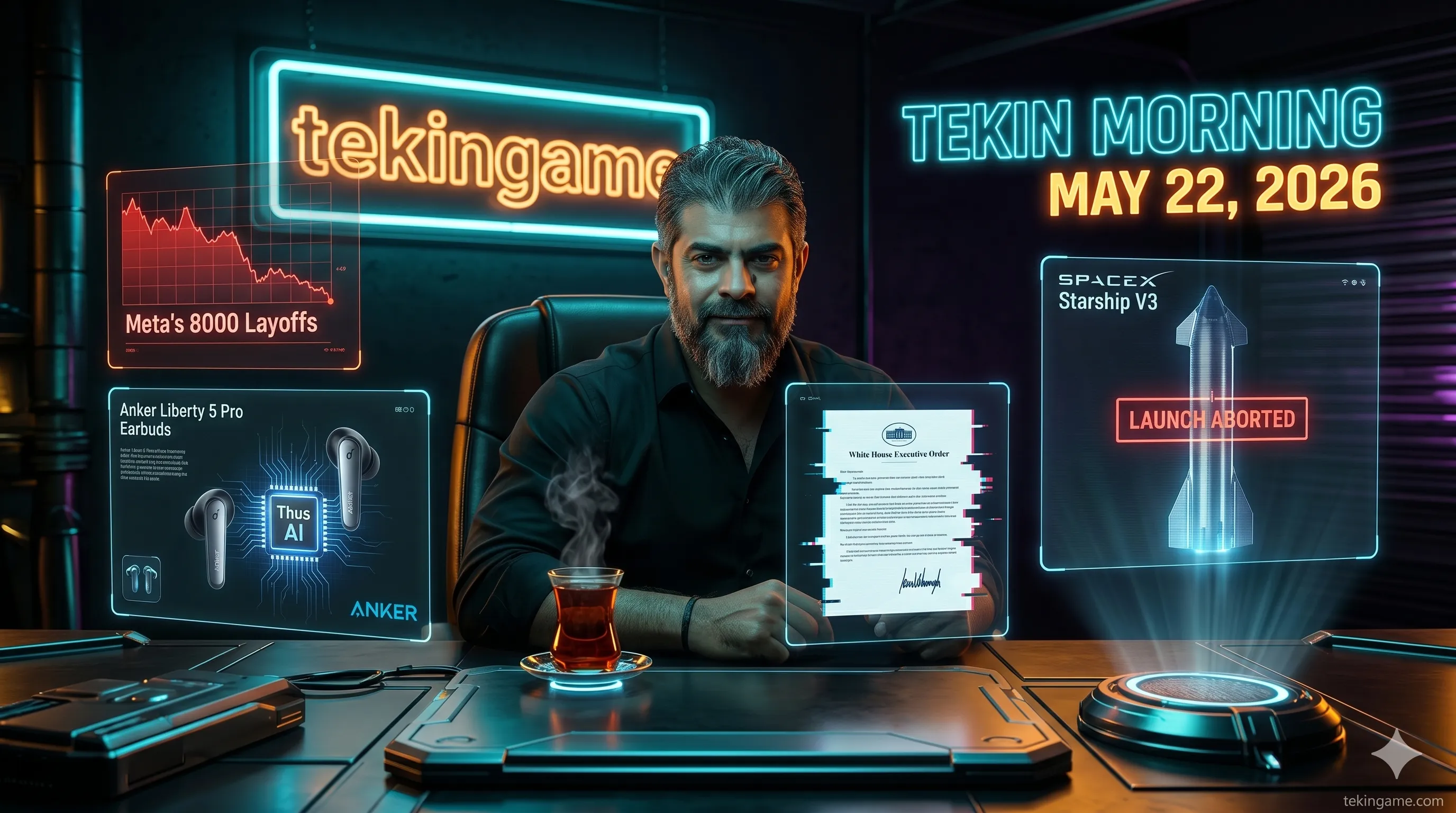
Summary: Meta announced a restructuring on May 21, 2026, involving 8,000 layoffs and the reallocation of 7,000 employees to AI teams, framing it as necessary to fund a planned $60-65 billion investment in AI infrastructure for the year. The move, described by CEO Mark Zuckerberg as a response to an uncertain competitive landscape, represents a significant reallocation of human and capital resources within the company. Concurrent signals include SpaceX scrubbing a Starship launch and regulatory actions against major tech firms.
Why it matters: This signals a high-stakes, capital-intensive pivot within a major platform company, with immediate labor market impacts and long-term implications for AI industry structure and competition.
Context: This follows a multi-year pattern of Big Tech consolidating resources around generative AI, but the scale of the reallocation and the explicit trade-off between workforce reduction and capital expenditure mark an intensification.
"Meta plans to invest $60-65 billion in AI infrastructure in 2026, primarily for Nvidia chips and data center construction." — TEKINGAME
Commentary: The scale of investment, explicitly tied to Nvidia and data centers, underscores the winner-take-all dynamics in foundational AI infrastructure. The human capital shift from general product roles to dedicated AI teams suggests Meta is moving from experimentation to scaled deployment, betting its future on becoming an AI platform. Watch for similar capital-intensive reallocations from other hyperscalers and for any softening in Nvidia’s pricing power if such commitments become widespread. The labor displacement, while presented as a strategic shift, also reflects the capital-for-labor substitution inherent in this phase of the AI buildout.
Date: May 22, 2026 12:00 AM ET
URL: https://tekingame.com/blog/tekin-morning-may-22-2026-meta-crisis-anker-ai-chip-trump-order-spacex-en
AI Sentiment Score: Neutral (33%)
AI Credibility Score: 7.0/10 — Medium
Scores and text generated by AI analysis of the source article indicated.
Elon Musk, Mark Zuckerberg derail Trump AI order (Semafor)
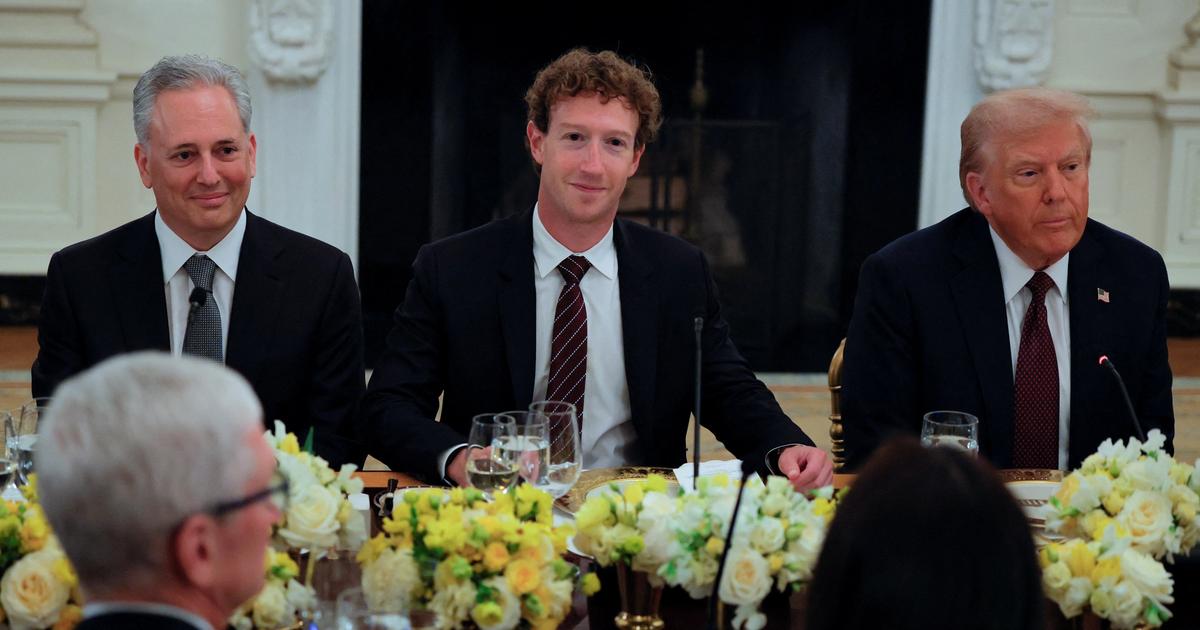
Summary: The Trump administration’s planned executive order on AI regulation has been paused following direct intervention from major tech figures, including Elon Musk, Mark Zuckerberg, and David Sacks. The order’s specifics remain undisclosed, but its suspension signals a significant victory for industry influence over federal policy formation. This move underscores the continued primacy of private sector lobbying in shaping the governance of critical emerging technologies.
Why it matters: It demonstrates the direct, behind-the-scenes power of a concentrated tech elite to stall federal regulatory action, setting a precedent for the governance of AI.
Context: This follows a long pattern of tech industry resistance to federal AI regulation, but marks a shift towards more direct, personal lobbying by the sector’s most prominent CEOs in a second Trump term.
"The Trump administration’s plans for an executive order regulating artificial intelligence were put on hold this week after some of the tech industry’s biggest players, including Elon Musk, Mark Zuckerberg, and venture capitalist David Sacks, persuaded the White House to call it off, according to people familiar with the matter." — SEMAFOR
Commentary: The derailment suggests a regulatory vacuum will persist, favoring incumbent platform-scale companies and their preferred frameworks over any coherent federal strategy. Watch for whether this leads to a fragmented, state-led regulatory landscape or empowers these same figures to later propose industry-friendly federal rules. The specific coalition—Musk, Zuckerberg, Sacks—indicates a convergence of interests between rival tech factions on the core issue of preempting stringent oversight.
Date: May 22, 2026 12:00 AM ET
URL: https://www.semafor.com/article/05/21/2026/elon-musk-mark-zuckerberg-derail-trump-ai-order
AI Sentiment Score: Negative (66%)
AI Credibility Score: 10.0/10 — High
Scores and text generated by AI analysis of the source article indicated.
2026 Layoff Memos Share Common Themes: AI, Efficiency, Speed (Businessinsider)
Summary: A Business Insider analysis of 15 corporate layoff memos from 2026 shows ‘AI’ as the most frequently cited term, appearing 46 times. The memos span companies from Block and Meta to Disney, framing workforce reductions through the lens of artificial intelligence adoption. The secondary emphasis on ‘customers’ and ‘build’ suggests a rhetorical pivot toward customer-centric efficiency and foundational restructuring.
Why it matters: The linguistic pattern in official communications signals a strategic shift where AI is becoming the primary public justification for corporate restructuring, potentially normalizing it as a routine driver of workforce changes.
Context: This follows years of speculative discourse on AI’s labor impact; the memos represent early, concrete evidence of how large firms are operationalizing and publicly rationalizing that transition.
"AI" led the way with 46 mentions, followed by "customers" and "build." — BUSINESSINSIDER
Commentary: The consolidation of ‘AI,’ ‘customers,’ and ‘build’ into a standard corporate lexicon for layoffs indicates a move to frame efficiency-driven cuts as positive, future-oriented transformation. Watch for whether this narrative gains regulatory or public acceptance, or if pushback emerges against using technological inevitability to obscure traditional cost-cutting. The next signal will be if earnings calls and investor materials adopt the same triad to describe margin improvement.
Date: May 22, 2026 12:00 AM ET
URL: https://www.businessinsider.com/ai-layoffs-memos-share-common-themes-2026-5
AI Sentiment Score: Positive (40%)
AI Credibility Score: 10.0/10 — High
Scores and text generated by AI analysis of the source article indicated.
The Information (Theinformation)
Summary: ### Internal Memo Reveals Meta’s Plan to Kickstart Its Enterprise AI BusinessssRead more Indicates a structural pivot toward monetizing enterprise AI capabilities, suggesting immediate B2B focus.

Why it matters: Indicates a structural pivot toward monetizing enterprise AI capabilities, suggesting immediate B2B focus.
Context: The emphasis on ‘kickstarting’ suggests a race against established players in the corporate AI deployment space.
[Metadata-only note] The available source data did not expose a direct source quote this cycle.
Commentary: The signal is still worth tracking, but the current extraction path did not yield enough body text for a fuller analytical read. The immediate implication is operational rather than speculative: watch how this changes budgets, workflows, or risk assumptions over the next cycle.
Date: May 21, 2026 12:00 AM ET
URL: https://www.theinformation.com
AI Sentiment Score: Neutral (50%)
AI Credibility Score: 10.0/10 — High
Scores and text generated by AI analysis of the source article indicated.
Mark Zuckerberg in internal memo to employees (Timesofindia.Indiatimes)
Summary: Meta CEO Mark Zuckerberg stated in an internal memo that he does not anticipate further company-wide layoffs for the remainder of the year. This follows a period of significant workforce reductions and restructuring within the tech giant. The statement represents a deliberate attempt to stabilize internal morale and operational planning.

Why it matters: For investors and industry observers, this signal from leadership attempts to draw a line under a volatile restructuring period, potentially marking a shift from cost-cutting to a new operational phase.
Context: Meta has executed multiple rounds of large-scale layoffs since late 2022 as part of its ‘Year of Efficiency,’ making any pause or conclusion to this cycle a significant internal and market marker.
"I want to be clear that we do not expect other company-wide layoffs this year." — TIMESOFINDIA.INDIATIMES
Commentary: The commitment is temporally bounded and carefully worded (‘company-wide’), leaving room for targeted team adjustments. Its primary function is to reduce uncertainty internally, but its credibility hinges on Meta’s ability to meet its revised financial targets without further broad cuts. Watch for any deviation in quarterly earnings or a shift in strategic investment language that could pressure this pledge.
Date: May 20, 2026 12:00 AM ET
URL: https://timesofindia.indiatimes.com/technology/tech-news/mark-zuckerberg-in-internal-memo-to-employees-not-expecting-company-wide-layoffs-this-year/articleshow/131231050.cms
AI Sentiment Score: Negative (66%)
AI Credibility Score: 10.0/10 — High
Scores and text generated by AI analysis of the source article indicated.
Mythos allegedly surfaces on Claude Code day after … (Indiatoday.In)
Summary: Users reported seeing model labels referencing ‘Mythos 1’ and ‘claude-mythos-1-preview’ on Claude Code and Claude Security platforms. This sighting occurred one day after Anthropic stated a general public release of its most powerful model, Mythos, was unlikely in the near term. The appearance suggests either a controlled, limited deployment for testing or a potential configuration error.

Why it matters: This signal tests Anthropic’s release discipline and market signaling, with implications for competitive positioning and developer trust in staged rollouts.
Context: Anthropic, like OpenAI and Google, tightly controls the release of frontier models, often using phased previews for security and capability testing before broad availability.
"Some users recently spotted Claude Mythos – Anthropic’s most powerful AI model – on Claude Code just a day after the AI startup stated that it was unlikely to release Mythos to the general public anytime soon." — INDIATODAY.IN
Commentary: If this is a deliberate, limited preview, it indicates Anthropic is stress-testing Mythos in specific, high-stakes domains like coding and security ahead of a broader launch, recalibrating its public timeline. If it’s an error, it reveals a potential vulnerability in Anthropic’s deployment controls. Watch for official confirmation or denial, and monitor whether these model endpoints persist or are removed, which will clarify Anthropic’s operational posture.
Date: May 24, 2026 12:00 AM ET
URL: https://www.indiatoday.in/technology/news/story/claude-mythos-1-briefly-spotted-on-claude-code-after-anthropic-denies-public-release-2916182-2026-05-24
AI Sentiment Score: Negative (50%)
AI Credibility Score: 10.0/10 — High
Scores and text generated by AI analysis of the source article indicated.
Anthropic’s 2026 Code with Claude – Dotzlaw Team (Dotzlaw)
Summary: Anthropic has released three key features for its Claude platform in rapid succession: Memory in Managed Agents (public beta, April 23), Dreams (research preview, April 21), and Managed Agents webhooks (public beta, May 7). The underlying technical framework is built around five primitives: rate-limit headroom, long-context architecture, retry-with-grader loops, memory consolidation, and agent event push. This represents a coordinated push to mature the operational infrastructure for persistent, stateful AI agents.

Why it matters: This signals a shift from experimental agent demos to a production-ready stack, forcing enterprise adopters and competitors to reassess roadmaps for autonomous systems.
Context: The agent ecosystem has been fragmented between research prototypes and brittle, single-session tools; Anthropic is now explicitly building the connective tissue for reliable, long-running applications.
"Five primitives: rate-limit headroom, long-context architecture, retry-with-grader loops, memory consolidation, and agent event push." — DOTZLAW
Commentary: Anthropic is commoditizing the hard parts of agentic AI—reliability, statefulness, and observability—which could pressure other foundation model providers to offer similar managed services or risk being relegated to commodity inference engines. The ‘retry-with-grader’ loop formalizes a self-correcting mechanism that could become a standard for autonomous operation, while ‘agent event push’ suggests a move toward real-time, event-driven architectures over batch processing.
Date: May 12, 2026 12:00 AM ET
URL: https://www.dotzlaw.com/insights/anthropic-2026-code-with-claude/
AI Sentiment Score: Negative (75%)
AI Credibility Score: 7.0/10 — Medium
Scores and text generated by AI analysis of the source article indicated.
Techmeme (Techmeme)
Summary: OpenAI is reorganizing its product leadership under Greg Brockman, who will now oversee a unified core product team combining ChatGPT, Codex, and the developer-facing API. This move consolidates previously distinct product lines and development efforts under a single executive. It signals a strategic shift from offering disparate tools to building a more integrated platform.

Why it matters: This consolidation directly impacts the roadmap and feature integration for millions of developers and enterprise users reliant on OpenAI’s models, and signals a more centralized, product-driven phase for the company.
Context: This follows a pattern of frequent executive and structural reorgs at OpenAI as it scales, often preceding major product launches or strategic pivots toward commercialization.
"OpenAI is once again reorganizing its executive ranks as part of its effort to unify ChatGPT and Codex into one core product experience." — TECHMEME
Commentary: Watch for tighter integration between conversational and code-generation capabilities, potentially at the expense of specialized, standalone offerings. The move suggests OpenAI is prioritizing a cohesive developer experience over distinct product silos, which could accelerate platform adoption but may also constrain niche use cases. The success of this reorg hinges on whether unified product management can deliver clearer roadmaps and more reliable APIs than the previous fragmented structure.
Date: May 16, 2026 12:00 AM ET
URL: https://www.techmeme.com/?t=7323
AI Sentiment Score: Negative (50%)
AI Credibility Score: 10.0/10 — High
Scores and text generated by AI analysis of the source article indicated.
Post ID: f167f862