Apparel and Textile Manufacturing Innovations
Precision Textiles West Coast Facility Reports Production Gains, Strong Mattress Burn Test Results (Textileworld)
Summary: Precision Textiles reports its Arizona manufacturing facility is operating at high efficiency and has validated the fire-resistant performance of its materials through recent full-scale mattress burn tests. The 60,000-square-foot plant, opened in 2021 to serve West Coast customers, has expanded its workforce from 11 to 13 and increased daily shipping volume beyond its initial two-truckload baseline. The operation focuses on producing FR and non-FR highloft solutions, including PurLoft® Organic batting, which passed demanding CFR 1633 compliance tests.

Why it matters: For manufacturers evaluating domestic supply chains, this demonstrates that regionalized production can deliver on both operational efficiency and stringent compliance testing, directly affecting cost, lead time, and risk management for brands.
Context: This is part of a broader industry shift toward regional manufacturing hubs to mitigate freight costs and supply chain volatility, with a parallel emphasis on proving compliance capabilities locally rather than relying on centralized certification.
"During a day of full-scale mattress burn testing conducted in February, multiple latex mattresses incorporating PurLoft® Organic, produced at the West Coast facility, were evaluated under CFR 1633, including several constructions with elevated fuel loads. These represent some of the more demanding test scenarios, and the results confirmed consistent performance across a range of challenging builds." — TEXTILEWORLD
Commentary: The validation of FR performance at a satellite facility is operationally significant; it reduces the compliance risk for West Coast mattress makers by localizing the proof of concept. The modest workforce expansion (11 to 13) against increased output suggests a focus on automation and process rigor over labor-intensive scaling. For competitors, this sets a benchmark where regional capacity must now be paired with demonstrable, on-site technical validation to be considered fully resilient.
Date: Fri, 15 May 2026 18:28:22 +0000
URL: https://www.textileworld.com/textile-world/2026/05/precision-textiles-west-coast-facility-reports-production-gains-strong-mattress-burn-test-results/
AI Sentiment Score: Negative (71%)
AI Credibility Score: 10.0/10 — High
Scores and text generated by AI analysis of the source article indicated.
Bally Ribbon Mills To Highlight Berry-Compliant Webbing And High-Performance Tapes At FedTex 2026 (Textileworld)
Summary: Bally Ribbon Mills (BRM) will exhibit at FedTex 2026, focusing on its Berry Amendment-compliant webbing and high-performance tapes for military applications. The products are manufactured to U.S. MIL and PIA specifications, with customization in width, weave, and color. The company emphasizes in-house engineering for application-specific solutions and small-run production.

Why it matters: For defense contractors and federal procurement officers, this signals a domestic supplier with the capacity for customized, compliant production runs, directly impacting supply chain resilience and specification adherence.
Context: The Berry Amendment mandates the U.S. Department of Defense to prioritize domestically produced textiles, food, and other goods, creating a specialized market for compliant manufacturers.
"BRM will highlight its 100% Berry Amendment-compliant woven tapes and webbing, designed to support Department of Defense contractors and federal agencies requiring domestically manufactured materials. Ideal for aircraft seat belts, fall protection and work position harnesses and equipment, tie-downs, and load-bearing systems, this webbing is manufactured to meet US MIL and PIA specifications to deliver consistent performance, durability, and traceability." — TEXTILEWORLD
Commentary: BRM’s offering operationalizes Berry compliance beyond a checkbox into a customizable, small-batch service, which reduces the procurement friction for specialized gear. The focus on in-house engineering and finishes like abrasion resistance shifts the value proposition from mere commodity supply to integrated problem-solving, potentially allowing BRM to command higher margins and lock in contracts where performance trumps cost. This model pressures larger textile distributors who may lack such agile, application-specific design capabilities.
Date: April 27, 2026 12:00 AM ET
URL: https://www.textileworld.com/textile-world/nonwovens-technical-textiles/2026/04/bally-ribbon-mills-to-highlight-berry-compliant-webbing-and-high-performance-tapes-at-fedtex-2026/
AI Sentiment Score: Negative (71%)
AI Credibility Score: 10.0/10 — High
Scores and text generated by AI analysis of the source article indicated.
Apparel brands support unspun’s automated manufacturing hu (Specialtyfabricsreview)
Summary: Unspun, an automated manufacturing technology company, has secured letters of support from major brands including Walmart and REI for its plan to build domestic apparel production hubs in the U.S. The company, in partnership with Bethel Industries, Peckham, and PDS Ltd./GSC Link, will deploy its proprietary AI-enabled 3D weaving technology, which weaves semi-finished garments directly from yarn in minutes. This process consolidates multiple cut-and-sew steps into a single automated operation, aiming to enable production closer to demand and reduce excess inventory.

Why it matters: This signals a tangible, brand-backed push to reconfigure the apparel supply chain around onshore, automated production, directly impacting sourcing strategies, inventory management, and domestic labor markets.
Context: The move aligns with broader industry pressure for supply chain resilience and speed-to-market, but past attempts to reshore apparel manufacturing have often faltered on cost and scale.
"Automated manufacturing technology company unspun announced that brands, including Walmart and REI, have signed letters of support for the company’s plan to build domestic manufacturing capacity in the U.S. In partnership with." — SPECIALTYFABRICSREVIEW
Commentary: The commitment from volume buyers like Walmart validates the economic model, shifting the conversation from feasibility to execution. For production and sourcing teams, the operational consequence is a potential pivot from seasonal bulk orders to a just-in-time, distributed hub model, which would require new vendor management and logistics protocols. The focus on ‘skilled American jobs’ suggests a different labor profile than traditional offshore sewing, likely centered on tech maintenance and system oversight, which addresses one constraint but introduces another around specialized workforce availability. Success hinges on unspun’s ability to scale its technology to meet the throughput demands of its anchor clients without compromising cost parity.
Date: April 20, 2026 12:00 AM ET
URL: https://specialtyfabricsreview.com/2026/04/20/unspun-2/
AI Sentiment Score: Negative (57%)
AI Credibility Score: 10.0/10 — High
Scores and text generated by AI analysis of the source article indicated.
Leading Brands Back unspun’s Automated U.S. Apparel … – IICTF – (Iictf.In)
Summary: unspun, a San Francisco-based startup, is advancing its AI-enabled 3D weaving technology toward commercial U.S. deployment. The system converts yarn directly into semi-finished garments in minutes, collapsing dozens of traditional cut-and-sew steps into a single automated cycle. The initiative has secured letters of support from major retailers Walmart and REI, alongside supply chain partners Bethel Industries, Peckham, and PDS Ltd / GSC Link, and is evaluating domestic production sites.

Why it matters: This signals a tangible shift toward automated, onshore apparel production, directly impacting domestic capacity, labor models, and supply chain resilience for brands and manufacturers.
Context: The push for automated, nearshored apparel manufacturing has been a long-term industry goal, often hampered by technological readiness and commercial scale. unspun’s progress, backed by retail commitments, represents a move from pilot to operational deployment.
"Automated production that converts yarn directly into a semi-finished garment in minutes — compressing dozens of discrete cut-and-sew steps into a single programmable cycle — is no longer confined to a pilot facility." — IICTF.IN
Commentary: The operational consequence is a potential redefinition of the apparel manufacturing pipeline, reducing dependency on complex global cut-and-sew networks and skilled manual labor. For domestic producers, the constraint shifts from labor availability to capital expenditure for automation and the logistical challenge of integrating these hubs with existing yarn and finishing supply lines. Retailer backing from Walmart and REI provides crucial demand signaling, but real-world viability hinges on throughput speed, unit economics versus offshore production, and the flexibility to handle diverse product mixes.
Date: April 23, 2026 12:00 AM ET
URL: https://iictf.in/unspun-automated-apparel-manufacturing-us-hubs/
AI Sentiment Score: Negative (50%)
AI Credibility Score: 10.0/10 — High
Scores and text generated by AI analysis of the source article indicated.
Movers and Shakers April 2026: Circulose and CTA to … (Fiberjournal)
Summary: The textile and nonwoven industry’s April 2026 updates reveal a multi-pronged push for circularity and domestic resilience. Key developments include Circulose scaling recycled lyocell with CTA, IND HEMP establishing a U.S.-to-Vietnam fiber pipeline, and Symtech consolidating U.S. spinning maintenance services. Concurrently, digital production expands into technical textiles via Kornit, and regulatory pressure mounts with India’s 40% r-PET mandate.

Why it matters: These moves directly affect material sourcing options, production workflows, and compliance obligations for brands and manufacturers.
Context: Industry evolution is bifurcating: scaling novel, circular feedstocks while shoring up technical service capacity and on-demand production for existing supply chains.
"Supply will be limited in 2026, with the ambition to scale capacity to meet demand during 2027. Commercial volumes in 2026 will be available only to selected brands, while those seeking access in 2027 are invited to engage in product development already now." — FIBERJOURNAL
Commentary: The Circulose-CTA deal exemplifies the pilot-to-scale bottleneck for new circular materials; brands must now engage in multi-year development cycles to secure future supply. Symtech’s acquisition signals consolidation in the niche but critical U.S. maintenance sector, potentially increasing service reliability but reducing vendor options for spinners. IND HEMP’s Vietnam pipeline is a tactical workaround for U.S. spinning limitations, leveraging Asian processing but introducing new traceability and logistics complexity for ‘Made in USA’ fiber claims.
Date: April 28, 2026 12:00 AM ET
URL: https://www.fiberjournal.com/movers-and-shakers-april-2026/
AI Sentiment Score: Neutral (33%)
AI Credibility Score: 9.4/10 — High
Scores and text generated by AI analysis of the source article indicated.
Chinese textile giant sets up major Pakistan manufacturing facility, eyes $500mn annual exports – Business & Finance – Business Recorder (Brecorder)
Summary: Chinese apparel manufacturer Challenge Fashion is establishing a major production facility in Pakistan, with a first phase completion slated for this year. The long-term plan targets $400–500 million in annual exports and up to 20,000 jobs, supported by Pakistani government assurances on tariff rationalization and regulatory easing. The delegation highlighted operational hurdles, including the need to import specialized industrial materials not produced locally.
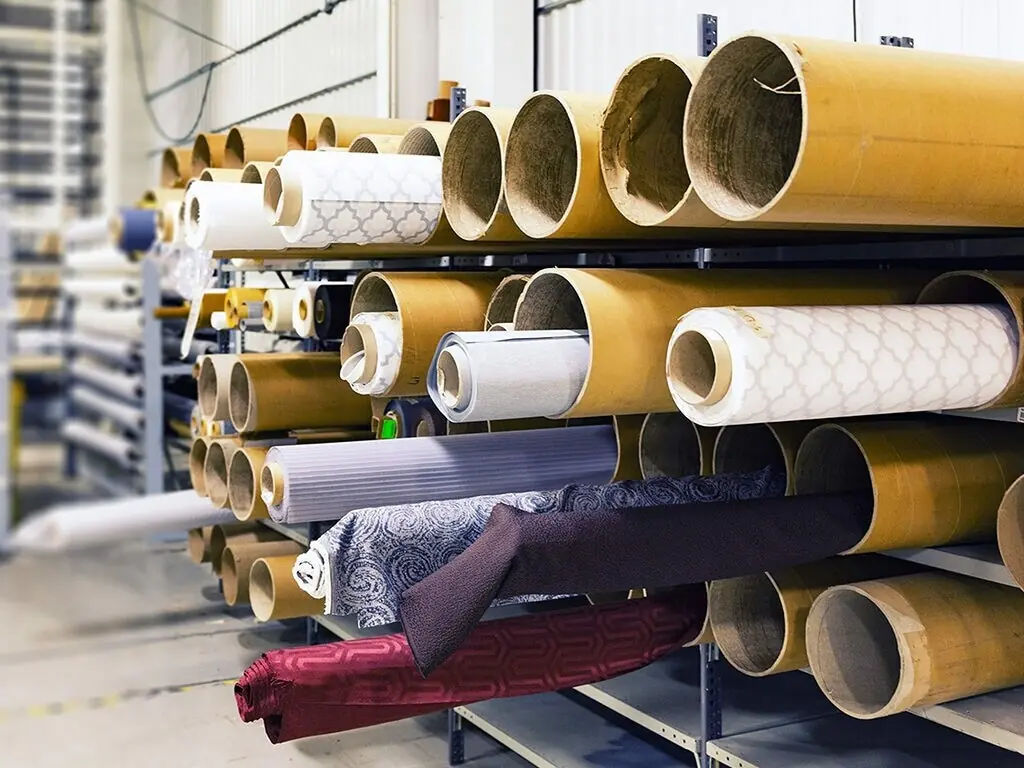
Why it matters: This signals a continued pivot of mid-to-high-volume apparel manufacturing capacity to cost-competitive, China-aligned partners, creating direct export competition and potentially altering sourcing calculus for Western brands.
Context: This follows a pattern of Chinese textile and apparel firms expanding into South Asia and Southeast Asia, leveraging local labor and trade agreements, often with state-backed financing and infrastructure support.
"He shared that the long-term expansion plan envisions one of the largest industrial operations of its kind, with the potential to create up to 20,000 employment opportunities and generate annual exports of approximately $400–500 million." — BRECORDER
Commentary: The scale underscores Pakistan’s systemic role as a manufacturing node in China-centric supply chains, not just for low-margin basics. The specific request for tariff relief on imported specialized materials reveals the persistent gap between local industrial capability and the technical requirements of export-grade production, a constraint that will shape vendor selection and compliance costs for brands sourcing from the region.
Date: 6 days ago
URL: https://brecorder.com/news/40420944/chinese-textile-giant-sets-up-major-pakistan-manufacturing-facility-eyes-500mn-annual-exports
AI Sentiment Score: Negative (57%)
AI Credibility Score: 7.0/10 — Medium
Scores and text generated by AI analysis of the source article indicated.
Post ID: 9c8962ef