
Tax Credits, Financing, and Industry Economics
Governor Newsom announces 38 new film projects – from animated … (Gov.Ca.Gov)
Summary: The California Film Commission has allocated tax credits to 38 new productions, generating an estimated $796 million in economic activity. The slate includes major studio tentpoles like ‘The Simpsons Movie 2’ and independent projects, with a notable first-time inclusion of animated features. The awards are part of a significantly expanded program, now funded at $750 million annually, and are projected to support over 5,300 cast and crew jobs and over 1,000 shooting days statewide.

Why it matters: For industry professionals, this signals a sustained and aggressive state-backed effort to retain and recapture production volume, directly impacting location scouting, below-the-line labor demand, and vendor contracts across California.
Context: California’s tax credit program has been in a multi-year escalation to compete with rival jurisdictions, recently doubling its annual allocation and expanding eligibility to include animation, a high-value segment previously more mobile.
"And since that time, the CFC has approved tax credits for 147 productions — a 53% increase compared to the same time period last year (July 2024 – April 2025).** Together, these 147 projects represent $5.5 billion in total economic activity, 21,504 cast and crew jobs, and 5,928 filming days across California." — GOV.CA.GOV
Commentary: The 53% year-over-year increase in approved projects demonstrates the program’s scaling efficacy, locking in a higher baseline of in-state production. The inclusion of animation specifically targets a high-wage, long-lead-time sector, indicating a strategic move to secure post-production and technical pipelines. For below-the-line workers and regional vendors, the 463 out-of-zone filming days represent a deliberate geographic redistribution of economic activity beyond the Los Angeles basin.
Date: April 23, 2026 12:00 AM ET
URL: https://www.gov.ca.gov/2026/04/23/governor-newsom-announces-38-new-film-projects-from-animated-features-to-big-budget-productions-and-independents-coming-to-the-golden-state/
AI Sentiment Score: Positive (57%)
AI Credibility Score: 10.0/10 — High
Scores and text generated by AI analysis of the source article indicated.
Governor Newsom announces 38 new film projects – from … (Business.Ca.Gov)
Summary: The California Film Commission has allocated tax credits to 38 new projects, including major studio tentpoles like ‘The Simpsons Movie 2’ and independent productions, under its recently expanded program. The round marks the first time animated features are eligible, with three such projects approved. The selected productions are projected to generate $796 million in economic activity and over 460 filming days outside the traditional studio zone.

Why it matters: The scale and composition of this allocation signal a strategic shift in California’s incentive program, directly impacting production budgeting, location scouting, and below-the-line labor markets.
Context: California more than doubled its annual tax credit allocation to $750 million earlier this year, explicitly expanding eligibility to include animated features and incentivizing filming outside the Los Angeles zone.
"# Governor Newsom announces 38 new film projects – from animated features to big budget productions and independents – coming to the Golden State Apr 23, 2026 | Press Release **What you." — BUSINESS.CA.GOV
Commentary: The inclusion of animated features and the emphasis on non-zone filming days reveal a program designed to recapture high-value, mobile production segments from competitor states and countries. The data shows a 53% year-over-year increase in approved projects, indicating the expanded funding is being deployed aggressively to lock in pipeline. For below-the-line crews and local vendors, this represents sustained demand, but also potential pressure on rates and capacity as the program aims to maximize in-state spending. The mix of tentpole franchises and independents suggests the program is calibrated to serve both job volume and prestige.
Date: April 23, 2026 12:00 AM ET
URL: https://business.ca.gov/governor-newsom-announces-38-new-film-projects-from-animated-features-to-big-budget-productions-and-independents-coming-to-the-golden-state/
AI Sentiment Score: Negative (57%)
AI Credibility Score: 10.0/10 — High
Scores and text generated by AI analysis of the source article indicated.
38 Film Projects Receive State Tax Credits to Preserve Local … (Mynewsla)
Summary: The California Film Commission has allocated state tax credits to 38 productions, including major studio animated features like ‘The Simpsons Movie 2’ and ‘Phineas and Ferb,’ alongside independent projects. This allocation is part of the expanded $750 million annual program, with approved productions up 53% year-over-year, representing $5.5 billion in projected in-state spending. The round notably includes a first-time influx of animated features from DreamWorks, 20th Century, and Disney Television Animation.

Why it matters: The scale and composition of this credit allocation signal a strategic shift in California’s retention playbook, directly impacting production budgeting, location scouting, and crew hiring pipelines statewide.
Context: California expanded its tax credit program from $330 million to $750 million last year to combat runaway production, specifically targeting larger-budget features and, now, high-employment animated projects.
"Since the state’s tax credit program was expanded last year in a further effort to curb runaway production, the California Film Commission has approved credits for 147 productions, up 53% from the same period a year ago. According to Newsom’s office, those productions represent $5.5 billion in total economic activity, including 21,504 cast and crew jobs." — MYNEWSLA
Commentary: The inclusion of major studio animation—a segment historically less geographically mobile due to fixed studio infrastructure—marks a defensive escalation, effectively using public funds to lock in high-value, stable employment hubs. The 53% approval surge validates the expanded program’s pull but also raises questions about long-term fiscal sustainability and whether it merely subsidizes projects that would have shot in-state regardless. For below-the-line labor and regional vendors, the mandated 460+ filming days outside the studio zone represents a tangible redistribution of work, though the permanence of this geographic shift depends on continued credit incentives.
Date: April 23, 2026 12:00 AM ET
URL: https://mynewsla.com/hollywood/2026/04/23/38-film-projects-receive-state-tax-credits-to-preserve-local-production/
AI Sentiment Score: Positive (80%)
AI Credibility Score: 10.0/10 — High
Scores and text generated by AI analysis of the source article indicated.
In a first, animated movies receive film tax credits in California (Latimes)
Summary: California’s updated film tax credit program has, for the first time, extended eligibility to animated feature films. In the latest allocation round, major studio projects including Disney’s ‘The Simpsons Movie 2’ ($21.9M credit), a DreamWorks untitled film ($24.7M), and Disney’s ‘Phineas and Ferb’ ($3.5M) were among the 38 selected productions. This shift follows a program expansion last year and signals a strategic move to capture a larger share of high-budget animation work traditionally anchored elsewhere.

Why it matters: This redefines the competitive landscape for animation production hubs, directly impacting studio budgeting, vendor selection, and crew hiring in California versus rival jurisdictions like Georgia, Canada, and the UK.
Context: California’s incentive program has historically favored live-action production to combat runaway filming. Animation, with its less location-dependent workflow, was long considered a lower priority for state subsidies.
"Animated movies and shows became eligible for California’s film and TV tax incentive after the state bolstered its program last year." — LATIMES
Commentary: The inclusion of animation is a deliberate policy escalation, targeting a high-value, stable production sector less susceptible to short-term location scouting. It pressures other jurisdictions to respond and will likely tighten the labor market for experienced animation talent in California, affecting wage and facility costs. For studios, this recalibrates the total cost analysis for tentpole animation, potentially shifting leverage in vendor and facility negotiations within the state.
Date: April 23, 2026 12:00 AM ET
URL: https://www.latimes.com/entertainment-arts/business/story/2026-04-23/in-first-animated-movies-receive-film-tax-credits-in-california
AI Sentiment Score: Negative (66%)
AI Credibility Score: 10.0/10 — High
Scores and text generated by AI analysis of the source article indicated.
Can the new tax credits bring animation back to California? – Los Angeles Times (Latimes)
Summary: California’s expanded film tax credit program has awarded its first major allocations to animated features, with DreamWorks Animation, Disney, and 20th Century Studios receiving credits totaling nearly $50 million. DreamWorks COO Randy Lake frames the credit as a ‘potential game changer’ for retaining long-term production jobs in-state, directly citing plans to hire approximately 100 California-based crew for an upcoming film instead of outsourcing the work. The move represents a strategic counter to the decades-long offshoring of animation and VFX work to jurisdictions like Canada and Ireland, driven by their lucrative incentives.

Why it matters: The credit’s structure and initial awards signal a shift in commissioning logic, where long-term, high-employment animation projects are now prioritized for state subsidy, directly impacting studio pipeline planning and vendor location decisions.
Context: Animation and VFX work has steadily migrated from California over the past 15 years, following tax incentives and lower costs abroad, while domestic studios have faced content spending retrenchment and layoffs.
"Unlike live-action, our projects are years long,” he said. “You’re talking about not just a job for six or nine months on set. It’s literally three or four years that these projects can take. It’s long-term employment." — LATIMES
Commentary: The credit’s design explicitly values multi-year employment stability over short-term location shooting, a distinct pivot from traditional film incentives. For studios, this reduces the financial advantage of outsourcing core animation production, potentially reshoring a segment of the pipeline but also locking them into California’s cost structure for the duration of development cycles. The Animation Guild’s advocacy success here demonstrates labor’s growing influence over incentive policy details, directly linking subsidies to domestic job retention.
Date: 3 weeks ago
URL: https://latimes.com/entertainment-arts/business/newsletter/2026-04-28/wide-shot-animation-tax-credits
AI Sentiment Score: Positive (50%)
AI Credibility Score: 10.0/10 — High
Scores and text generated by AI analysis of the source article indicated.
Governor Pritzker launches first-in-the-nation film production tax credit to incentivize sustainable filmmaking – The Troy Times Tribune (Timestribunenews)
Summary: Illinois Governor J.B. Pritzker has launched a first-in-the-nation tax credit add-on for film and television productions certified as environmentally sustainable. The program offers an additional 5% credit atop the state’s existing production incentive, contingent on meeting benchmarks for waste reduction, energy efficiency, and sustainable materials. The initiative is framed as a strategy to maintain Illinois’s competitive edge—following a record $703 million in production expenditures in 2025—while stimulating demand for local green vendors and infrastructure.

Why it matters: This creates a new, quantifiable cost-benefit calculus for production budgeting and location scouting, directly tying environmental compliance to a state’s financial incentive structure for the first time.
Context: State film tax credits are a primary tool for location competition, but have faced scrutiny over pure expenditure-based ROI. This move shifts the competitive axis toward operational sustainability, a growing pressure point from financiers, guilds, and talent.
"Under the expanded program, productions recognized as a “certified green production” through the Department of Commerce and Economic Opportunity’s (DCEO) Illinois Film Office will be eligible for an additional 5% tax credit – making Illinois the first state to incentivize film and television productions for meeting certain sustainability standards." — TIMESTRIBUNENEWS
Commentary: Illinois is weaponizing ESG pressure, converting a soft corporate responsibility cost into a hard, ledger-based advantage. This could force competing jurisdictions to respond with similar programs or risk losing projects where sustainability is a packaging or financing requirement. The immediate operational lift for line producers—adopting digital scripts, refill stations, battery packs—is now directly subsidized, altering vendor selection and on-set workflows. Expect a rapid bifurcation in the location market between states that follow suit and those clinging solely to baseline credit percentages.
Date: 2 weeks ago
URL: https://www.timestribunenews.com/2026/05/05/governor-pritzker-launches-first-in-the-nation-film-production-tax-credit-to-incentivize-sustainable-filmmaking/
AI Sentiment Score: Negative (62%)
AI Credibility Score: 7.0/10 — Medium
Scores and text generated by AI analysis of the source article indicated.
Michael De Luca Warns About the Danger of Hollywood Cutting Development Funds for Original Material: ‘If You Cut Too Deep Your Pipeline Dries Up’ (Variety)
Summary: Warner Bros. Pictures co-chair Michael De Luca, speaking at the Produced By conference, warned that studios’ reflexive cost-cutting in development spending is a strategic error that dries up the pipeline of viable projects. He framed development as a high-volume, low-yield necessity, citing a target of one greenlight for every five or six projects developed, a ratio that deteriorates to one in ten with sloppy management. De Luca positioned this as a recurring historical cycle where studio risk-aversion creates vacuums filled by new independent competitors like A24 and Neon. He also highlighted the operational shift represented by YouTube-bred filmmakers, whose years-long public development cycles with audiences create a fundamentally different, and often more market-calibrated, path to production.

Why it matters: De Luca’s remarks are a direct critique of current studio financial orthodoxy and a signal of internal advocacy for protecting development budgets, with concrete implications for talent deals, writer assignments, and the competitive landscape for indie financiers.
Context: This follows a multi-year period of industry-wide contraction in development spending, a focus on known IP, and the high-profile departure of key filmmakers like Christopher Nolan from studios perceived as abandoning original filmmaking.
"Studios are very quick to cut that development line item in the budget every year, because it is a shitload of money, and if you fuck up, you could write off $20 million or $30 million at the end of the year of movies that got developed that never got made." — VARIETY
Commentary: De Luca is explicitly quantifying the financial risk studios are trying to avoid, thereby revealing the tension between quarterly write-off management and long-term slate health. His historical analogies and naming of competitor studios serve as both a warning and a playbook: if majors retreat, capital will simply reorganize around new entities. His redefinition of IP as talent, not property, is a direct challenge to the prevailing greenlight logic at legacy conglomerates.
Date: Sat, 30 May 2026 23:04:58 +0000
URL: https://variety.com/2026/film/news/michael-de-luca-obsession-backrooms-warner-bros-new-line-1236763195/
AI Sentiment Score: Negative (66%)
AI Credibility Score: 10.0/10 — High
Scores and text generated by AI analysis of the source article indicated.
The Pinched Middle — When NonDē Meets Its Limits (Capitalmeetsstory.Substack)
Summary: The $10M–$15M independent film budget tier is identified as a uniquely perilous financing zone. It requires a complex, multi-layered capital stack—equity, pre-sales, tax incentives, gap financing—that demands institutional-grade assembly but lacks the safety net of studio-level support. Pre-sales traditionally serve as the critical de-risking mechanism for gap lenders by proving market demand.
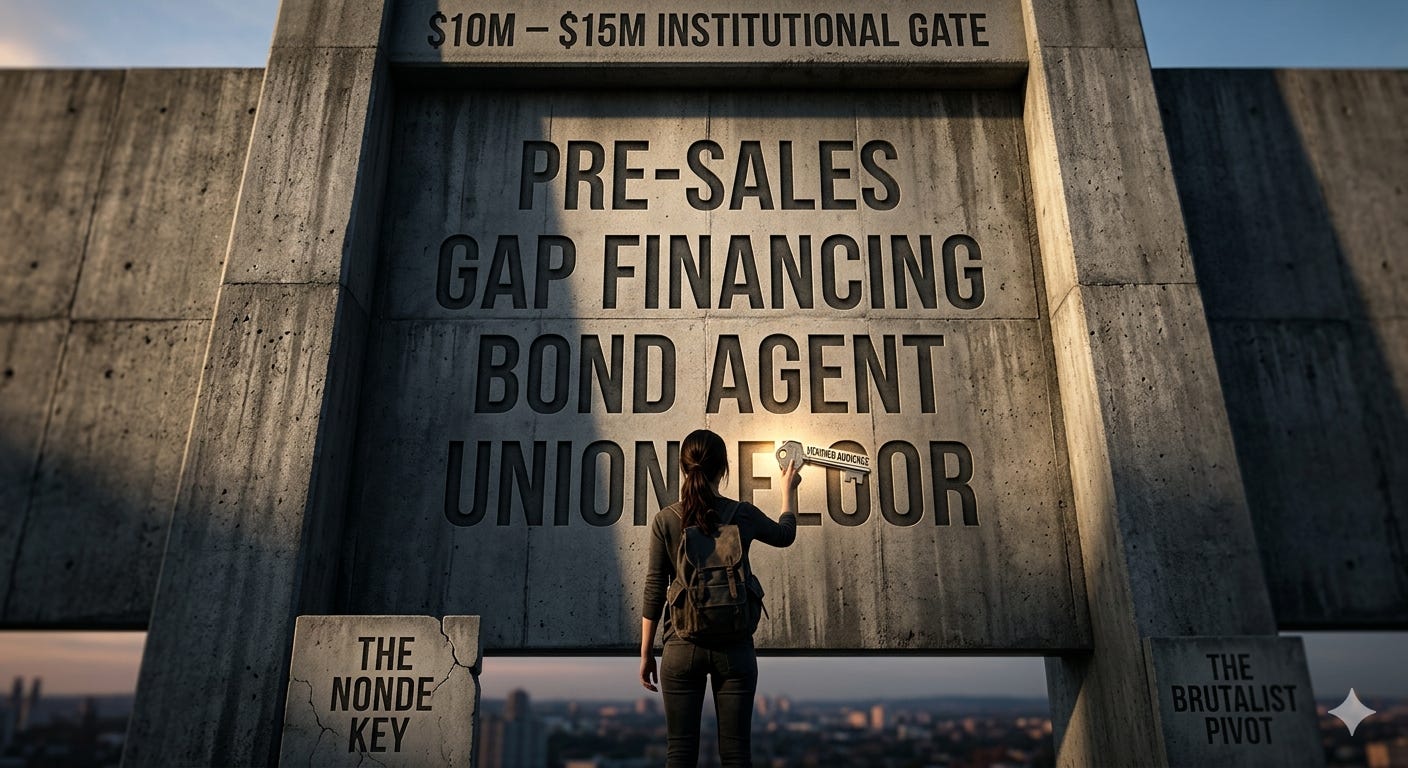
Why it matters: This analysis clarifies the specific operational and financial choke points for mid-budget independents, directly impacting producers’ packaging strategies, financiers’ risk assessments, and the viability of entire project slates.
Context: The independent film financing ecosystem has long been segmented by budget, with the middle range caught between agile micro-budgets and fully capitalized studio productions.
"The $10M–$15M range is the most treacherous terrain in independent film finance for one precise reason: it demands institutional-level infrastructure without providing institutional-level support." — CAPITALMEETSSTORY.SUBSTACK
Commentary: The piece correctly frames the mid-budget gap as a structural, not creative, failure. The emerging focus on ‘Verified Audience’ as a soft pre-sale metric signals a shift where data platforms may begin to displace traditional sales agents in de-risking projects for gap lenders, potentially altering the power dynamics of packaging.
Date: April 21, 2026 12:00 AM ET
URL: https://capitalmeetsstory.substack.com/p/the-pinched-middle-when-nonde-meets
AI Sentiment Score: Negative (50%)
AI Credibility Score: 9.7/10 — High
Scores and text generated by AI analysis of the source article indicated.
Film Financing Intelligence: How Data Is Replacing Guesswork In … (Vitrina.Ai)
Summary: Film financing intelligence platforms are systematizing the historically opaque process of assembling production capital. By aggregating and analyzing data across pre-sales, tax incentives, co-production funds, equity, and broadcaster deals, these tools map funder mandates, track deal structures, and reveal co-investment patterns. This shifts the sourcing of capital from relationship-dependent networks to data-driven pipelines, enabling producers to identify and approach viable financiers with precision and speed.
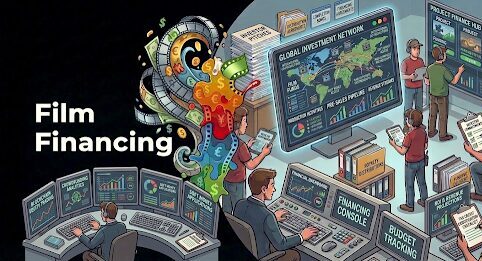
Why it matters: For producers, financiers, and sales agents, this datafication reduces deal friction and market inefficiency, but also commoditizes access and potentially reshapes leverage in packaging negotiations.
Context: The average European co-production now draws from over four distinct financing sources, illustrating the complexity that makes manual tracking untenable and creates demand for structured intelligence.
"According to the European Audiovisual Observatory, European co-productions draw from an average of 4.2 distinct financing sources per project — a figure that illustrates how complex modern financing stacks have become." — VITRINA.AI
Commentary: The operational consequence is a shift in power from brokers with exclusive networks to producers who can independently validate funder appetite. This could pressure traditional sales agents to demonstrate value beyond access, while incentivizing financiers to formalize and publicize their mandates to attract a higher volume of qualified projects. The long-term risk is a homogenization of financed content as data optimizes for historical patterns, potentially crowding out novel but data-unproven concepts.
Date: April 28, 2026 12:00 AM ET
URL: https://vitrina.ai/blog/film-financing-intelligence-data-production-funding/
AI Sentiment Score: Negative (60%)
AI Credibility Score: 10.0/10 — High
Scores and text generated by AI analysis of the source article indicated.
Film & TV Projections 2026 (Americanmovieco)
Summary: A global recalibration in film and TV production is being driven by enhanced, long-term government incentives. Key developments include Ireland’s Scéal Uplift (40% for sub-€20M films), the UK’s new Independent Film Tax Credit (39.75% for sub-£15M films), and New York’s dedicated $100M independent film credit. Major US states like California ($750M annual cap) and New York ($800M cap through 2034) are making decade-long commitments, establishing a baseline for $7-8B in annual domestic spending. Internationally, a new Council of Europe co-production treaty for TV/streaming series aims to simplify cross-border collaboration.

Why it matters: These fiscal structures directly shape packaging leverage, location decisions, and risk calculations for producers and financiers.
Context: The post-pandemic incentive landscape has been volatile; long-term commitments signal a shift from reactive, project-by-project competition to strategic, sustained investment in local production ecosystems.
"This period of recalibration is being shaped by more disciplined production strategies, a renewed focus on original storytelling, and increasingly competitive global film incentives that provide producers with both stability and long." — AMERICANMOVIECO
Commentary: The proliferation of sub-£15M/€20M independent credits creates a distinct financing tier, potentially reducing competition with studio tentpoles for incentive funds and enabling more predictable packaging. The decade-long horizons in NY, NJ, and CA allow for multi-project studio and vendor deals, locking in pipeline certainty for below-the-line labor and facilities. The new European series treaty formalizes a streaming-era co-production model, lowering barriers for indie producers but also inviting more complex international rights and revenue-sharing negotiations.
Date: April 23, 2026 12:00 AM ET
URL: https://www.americanmovieco.com/blog/film-amp-tv-projections-2026
AI Sentiment Score: Negative (80%)
AI Credibility Score: 9.6/10 — High
Scores and text generated by AI analysis of the source article indicated.
Roundup: Industry Analysis & Financing, April 28, 2026 (Freakpulse)
Summary: The Nonfiction Hot List, a new curated list and consultancy from producer Adam Neuhaus, received 640 submissions in its first round and expects 3,000-5,000, positioning itself as a top-of-funnel discovery tool for the nonfiction sector. It operates on a model of providing free feedback to rejected applicants while advocating for a fundamental shift in how nonfiction projects are developed and financed.

Why it matters: This initiative directly challenges the traditional festival and broadcaster pipeline by forcing producers to build audience and ancillary assets from inception, fundamentally altering the commissioning logic and risk assessment for nonfiction.
Context: This follows a broader industry trend where investment, particularly from firms like IPR.VC, is increasingly predicated on a project’s ability to build a sustainable ‘world’ with engaged audiences, not just deliver a finished film.
"The filmmakers who will survive, even thrive, in whatever comes next are the ones willing to build a sex toy, build a spreadsheet, build a relationship with equine therapists in every state, and stop waiting for someone to tell them their work is real." — FREAKPULSE
Commentary: Neuhaus is operationalizing the audience-as-asset thesis from within the development community, leveraging his access to raw projects to identify cross-project marketing opportunities for brands—a service traditional agencies are poorly structured to provide. This model directly attacks the scarcity-based, gatekeeper economics of festivals, proposing a more entrepreneurial and data-informed path to sustainability that redefines producer leverage and shifts value creation upstream in the financing chain.
Date: April 28, 2026 12:00 AM ET
URL: https://freakpulse.com/2026/04/28/roundup-industry-analysis-financing-april-28-2026-2026-w18-a0ff6310/
AI Sentiment Score: Negative (85%)
AI Credibility Score: 9.4/10 — High
Scores and text generated by AI analysis of the source article indicated.
Development & Production Report · Week 18 · April 30, 2026 (Filmdistribution.Substack)
Summary: The WGA ratified its new MBA, removing writers’ strike risk until 2030 and clearing the path for SAG-AFTRA negotiations. Warner Bros. Discovery shareholders approved the Paramount-Skydance acquisition but rejected executive exit packages, signaling investor discipline. The Cannes 79 lineup is set, with the market defined by ‘discipline rather than expansion,’ while UK production volume remains robust, driven by tax incentives and a major Q2 cluster of shoots.

Why it matters: Labor peace and investor scrutiny directly shape financing confidence and production scheduling, while the UK’s sustained activity signals where capital and crew capacity are concentrating.
Context: The WGA deal sets a template for SAG-AFTRA talks, impacting above-the-line costs and project greenlights. Shareholder votes on M&A reflect heightened sensitivity to governance and compensation, influencing future deal structures.
"The market environment heading into Cannes is being defined as ‘discipline rather than expansion’ — capital remains available but tightly conditional." — FILMDISTRIBUTION.SUBSTACK
Commentary: The WGA ratification provides a four-year horizon for development planning, but the conditional capital environment means packaging leverage has shifted toward proven elements and fiscal restraint. The UK’s production surge, while a boon for local vendors and crews, risks creating capacity bottlenecks and inflating below-the-line costs, particularly with studios booked through Q3. The Alcon-Parrot deal formalizes a data-driven approach to library monetization, making catalogue valuation less speculative and more tied to measurable audience demand.
Date: April 30, 2026 12:00 AM ET
URL: https://filmdistribution.substack.com/p/development-and-production-report-f64
AI Sentiment Score: Positive (40%)
AI Credibility Score: 10.0/10 — High
Scores and text generated by AI analysis of the source article indicated.
Sony’s Swear, Warner’s Wish – The Industry | Substack (Theindustry.Co)
Summary: Warner Bros. Discovery shareholders overwhelmingly approve the proposed acquisition of Paramount, a deal contingent on regulatory approval and a $24bn investment from the Middle East. Concurrently, mid-tier deal flow continues: Amazon MGM Studios closes a $30M deal for a romantic comedy, Focus Features boards a horror project with established genre producers, and Hulu and Roadside Attractions secure rights to specific genre titles. Separately, Netflix is developing a series adaptation of ‘The Nanny Diaries’ with Scarlett Johansson as executive producer.

Why it matters: The shareholder vote signals investor confidence in further consolidation, while the regulatory and financing hurdles highlight the new complexities of studio-scale M&A. The smaller deals illustrate how commissioning logic adapts to a fragmented market, favoring packaged projects with known elements.
Context: Regulatory scrutiny of major media mergers has intensified, particularly concerning foreign investment. Meanwhile, streamers and studios are aggressively acquiring packaged, star-driven projects to fill pipelines with manageable risk.
"The film is releasing today in theaters in the US. … 99% of Warner Bros. Discovery shareholders voted to greenlight its acquisition by Paramount. Of course, Paramount Skydance Warner Bros. Discovery cannot." — THEINDUSTRY.CO
Commentary: The near-unanimous shareholder vote underscores a bet on scale as a defense against market fragmentation, but the deal’s viability now hinges on a hostile regulatory environment and the political optics of its Middle Eastern financing. The parallel activity in the $20M-$30M range for packaged genre films reveals a bifurcated market: while giants consolidate, operational buyers are making tactical, de-risked acquisitions to secure predictable content.
Date: April 24, 2026 12:00 AM ET
URL: https://theindustry.co/p/sonys-swear-warners-wish
AI Sentiment Score: Neutral (33%)
AI Credibility Score: 10.0/10 — High
Scores and text generated by AI analysis of the source article indicated.
The State of Theatrical Releasing in 2026: Dead Man Walking or Phoenix Rising? (Youtube)
Summary: A 2026 analysis of theatrical distribution reveals a continued compression of exclusive windows, with Universal securing a three-week theatrical run followed by a premium pay-per-view release, including revenue-sharing for exhibitors. The discussion highlights the economic logic for distributors, where the majority of box office revenue accrues in the first few weeks, justifying shorter commitments. Concurrently, the model of studios operating their own streaming services is being questioned, with output deals to a dominant platform like Netflix presented as a more financially sound strategy for some.

Why it matters: This signals a fundamental recalibration of risk and revenue streams for studios, directly impacting deal structures with exhibitors and the long-term viability of proprietary streaming ventures.
Context: The post-pandemic windowing debate has evolved from a binary theatrical-vs.-SVOD fight to a more nuanced, multi-tiered revenue extraction model involving premium transactional VOD.
"{ts:860} with Universal for what a three-week window it typically in the past films would play I don’t know Ira you probably {ts:868} know the number it was like at least six." — YOUTUBE
Commentary: The three-week window with PPV revenue sharing represents a formalized truce between studios and exhibitors, trading exclusivity for a stake in the downstream digital revenue. This structurally embeds theaters into the digital value chain, moving beyond the adversarial ‘window vs. window’ framing. Simultaneously, the critique of in-house streaming underscores a market correction, where financing confidence is shifting toward monetizing IP through wholesale output deals rather than burning capital on direct-to-consumer infrastructure. This dual trend points to a more pragmatic, financially disciplined studio operation prioritizing margin over market-share theatrics.
Date: April 22, 2026 12:00 AM ET
URL: https://www.youtube.com/watch?v=cfRo-IpKgyY
AI Sentiment Score: Negative (60%)
AI Credibility Score: 10.0/10 — High
Scores and text generated by AI analysis of the source article indicated.
E.J. Foerster on Shopping a Script in Today’s Industry (Youtube)
Summary: Director-producer E.J. Foerster outlines the post-writing strategy for independent film projects, emphasizing that packaging now centers on attracting talent with compelling character-driven IP rather than upfront money. He details the operational necessity of a concrete business plan, a start date, and a SAG deposit to signal legitimacy to investors. The process is framed as building a ‘story of the story’—a meta-narrative around the film’s creation—to generate momentum for financing and distribution, whether through traditional routes, platforms, or crowdfunding.
Why it matters: This clarifies the current leverage points and risk thresholds for packaging and financing independent features, directly informing producers and writers on where to allocate development resources.
Context: The shift from pure budget-driven packaging to IP and character-driven talent attachment reflects a tighter financing environment and the increased power of name actors to greenlight micro-budget projects.
"##### Apr 27, 2026 (0:55:00) You’ve finished the script. Now comes the hard part—getting it made. In Episode 4 of Working Title, Mark Elias sits down with director and producer E.J. Foerster." — YOUTUBE
Commentary: Foerster’s advice codifies a market reality: for independents, the script is now the primary financial instrument, with its value derived from its ability to pre-sell actor commitment. The emphasis on a SAG deposit and start date as ‘skin in the game’ moves the financing conversation from speculative to operational, forcing a producer-level discipline earlier in the cycle. This framework elevates the writer-producer’s role in narrative-driven fundraising, making the development phase a direct test of market viability.
Date: April 27, 2026 12:00 AM ET
URL: https://www.youtube.com/watch?v=GYhPSjVgfD8
AI Sentiment Score: Negative (66%)
AI Credibility Score: 10.0/10 — High
Scores and text generated by AI analysis of the source article indicated.
Reality TV production continues to plummet in L.A. – Los Angeles Times (Latimes)
Summary: Reality TV production in Los Angeles declined sharply in Q1 2026, with shoot days falling 33.7% quarter-over-quarter and 52.5% year-over-year, according to FilmLA data. This segment’s contraction dragged down overall TV figures, despite gains in tax credit-supported features and some scripted TV categories. The data shows a bifurcated market: incentive-driven scripted work is recovering while unscripted production, a traditional volume driver for local crews and vendors, continues to collapse.

Why it matters: For producers, line producers, and below-the-line crews, the collapse of the high-volume, lower-budget reality segment directly threatens a significant portion of the freelance labor pool and vendor ecosystem in Los Angeles, independent of the health of the incentive-driven scripted market.
Context: The broader unscripted television segment in the U.S. has contracted by approximately 33% since 2022, per Luminate, indicating a structural shift beyond local or cyclical factors.
"Reality TV production continues to plummet in L.A. – Click here to listen to this article – Share via Reality television production in Los Angeles continues to face major challenges, as the." — LATIMES
Commentary: The data confirms reality TV is no longer a reliable volume filler for L.A. stages and crews, forcing a recalibration of local service business models. The growth is now entirely tied to California’s tax credit program, concentrating leverage and work among a smaller pool of qualifying, higher-budget projects. This creates a two-tier ecosystem where non-incentivized, mid-budget production—including most unscripted—is fleeing the region.
Date: 3 weeks ago
URL: https://latimes.com/entertainment-arts/business/story/2026-04-28/reality-tv-production-continues-to-plummet-in-la
AI Sentiment Score: Positive (44%)
AI Credibility Score: 10.0/10 — High
Scores and text generated by AI analysis of the source article indicated.
Post ID: 1d34c3ae