

Apparel and Textile Manufacturing Reshoring
Bally Ribbon Mills To Highlight Berry-Compliant Webbing And High-Performance Tapes At FedTex 2026 (Textileworld)
Summary: Bally Ribbon Mills will exhibit at FedTex 2026, focusing on its Berry Amendment-compliant webbing and high-performance tapes for military applications. The company emphasizes customization for width, weave, and color, alongside specialty tapes designed to improve sewing efficiency and abrasion resistance. The announcement targets DoD contractors and federal agencies requiring domestically sourced, specification-compliant materials.

Why it matters: For defense contractors and federal procurement officers, this signals a ready, customizable domestic supply for critical load-bearing and safety textiles, reducing compliance risk and potential lead times.
Context: The Berry Amendment mandates domestic sourcing for certain military textiles, creating a specialized, capacity-constrained market for compliant, high-specification materials.
"BRM will highlight its 100% Berry Amendment-compliant woven tapes and webbing, designed to support Department of Defense contractors and federal agencies requiring domestically manufactured materials." — TEXTILEWORLD
Commentary: BRM’s pitch underscores the operational reality of Berry compliance: it’s not just about origin, but about the engineering bandwidth to customize small runs to exacting MIL-specs. The emphasis on in-house engineering and finishes like abrasion resistance shows the value-add moving beyond mere commodity weaving to integrated material solutions. For program managers, this translates to a single-source for development and production, potentially simplifying qualification and supply chain audits.
Date: April 27, 2026 12:00 AM ET
URL: https://www.textileworld.com/textile-world/nonwovens-technical-textiles/2026/04/bally-ribbon-mills-to-highlight-berry-compliant-webbing-and-high-performance-tapes-at-fedtex-2026/
AI Sentiment Score: Negative (66%)
AI Credibility Score: 10.0/10 — High
Scores and text generated by AI analysis of the source article indicated.
Leading Brands Back unspun’s Automated U.S. Apparel … – IICTF – (Iictf.In)
Summary: unspun’s AI-driven 3D weaving technology, which converts yarn directly into semi-finished garments in a single automated cycle, is transitioning from pilot to commercial deployment in the U.S. with letters of support from Walmart and REI. The initiative, backed by over $50 million in venture capital and supply chain partners Bethel Industries, Peckham, and PDS Ltd / GSC Link, is currently evaluating domestic site locations. This move represents a tangible step toward compressing the traditional cut-and-sew apparel pipeline into a programmable, minutes-long process.

Why it matters: This signals a near-term shift in domestic apparel manufacturing capacity, directly impacting sourcing, production timelines, and labor models for brands and their contractors.
Context: The push for automated, onshore apparel production has been a long-term industry goal, often hampered by technological readiness and commercial scale.
"Automated production that converts yarn directly into a semi-finished garment in minutes — compressing dozens of discrete cut-and-sew steps into a single programmable cycle — is no longer confined to a pilot facility." — IICTF.IN
Commentary: The commitment from major retailers validates the operational readiness of the technology, shifting the conversation from feasibility to deployment logistics. For domestic manufacturers and brands, this introduces a new variable in capacity planning and could recalibrate cost models for specific product categories, though it could pressure traditional cut-and-sew contractors. The real test will be scaling the technology across multiple hubs while managing the integration with existing textile and finishing supply chains.
Date: April 23, 2026 12:00 AM ET
URL: https://iictf.in/unspun-automated-apparel-manufacturing-us-hubs/
AI Sentiment Score: Negative (66%)
AI Credibility Score: 10.0/10 — High
Scores and text generated by AI analysis of the source article indicated.
Apparel brands support unspun’s automated manufacturing hu (Specialtyfabricsreview)
Summary: Unspun, an automated manufacturing technology company, has secured letters of support from major brands like Walmart and REI for its plan to establish domestic apparel production hubs in the U.S. The initiative, backed by over $50 million in VC funding and partnerships with Bethel Industries, Peckham, and PDS Ltd./GSC Link, centers on deploying AI-enabled 3D weaving technology. This process weaves semi-finished garments directly from yarn in minutes, collapsing traditional cut-and-sew steps into a single automated operation.

Why it matters: This signals a tangible, capital-backed move toward onshoring apparel production, directly impacting supply chain strategy, inventory management, and labor planning for brands and manufacturers.
Context: The push for nearshoring and automated, demand-responsive manufacturing has been a persistent theme, but progress has been hampered by high costs and technical hurdles in replicating complex garment construction.
"Automated manufacturing technology company unspun announced that brands, including Walmart and REI, have signed letters of support for the company’s plan to build domestic manufacturing capacity in the U.S. In partnership with." — SPECIALTYFABRICSREVIEW
Commentary: The commitment from volume buyers like Walmart validates the economic model beyond niche sustainability; it’s a bet on speed-to-market and inventory reduction as primary drivers. The operational shift for brands will be a reorientation from seasonal bulk ordering to in-season replenishment, requiring tighter integration between design, sales data, and production. For the domestic manufacturing ecosystem, success hinges on scaling the technology reliably and developing the skilled technical workforce to operate and maintain these automated hubs, not just on the machinery itself.
Date: April 20, 2026 12:00 AM ET
URL: https://specialtyfabricsreview.com/2026/04/20/unspun-2/
AI Sentiment Score: Positive (50%)
AI Credibility Score: 10.0/10 — High
Scores and text generated by AI analysis of the source article indicated.
US Textile Sector Stable in 2025 Amid $60.9bn Output (News.Yrules)
Summary: The US textile industry’s 2025 output of $60.9bn represents a modest decline from 2024’s $63.9bn, signaling resilience amid broader economic disruption. Key stability is underpinned by sustained capital investment, with $5.5bn spent on new plants and equipment in 2024 alone, the highest single-year figure reported. This follows a multi-year trend of over $34bn invested since 2017 in advanced manufacturing.
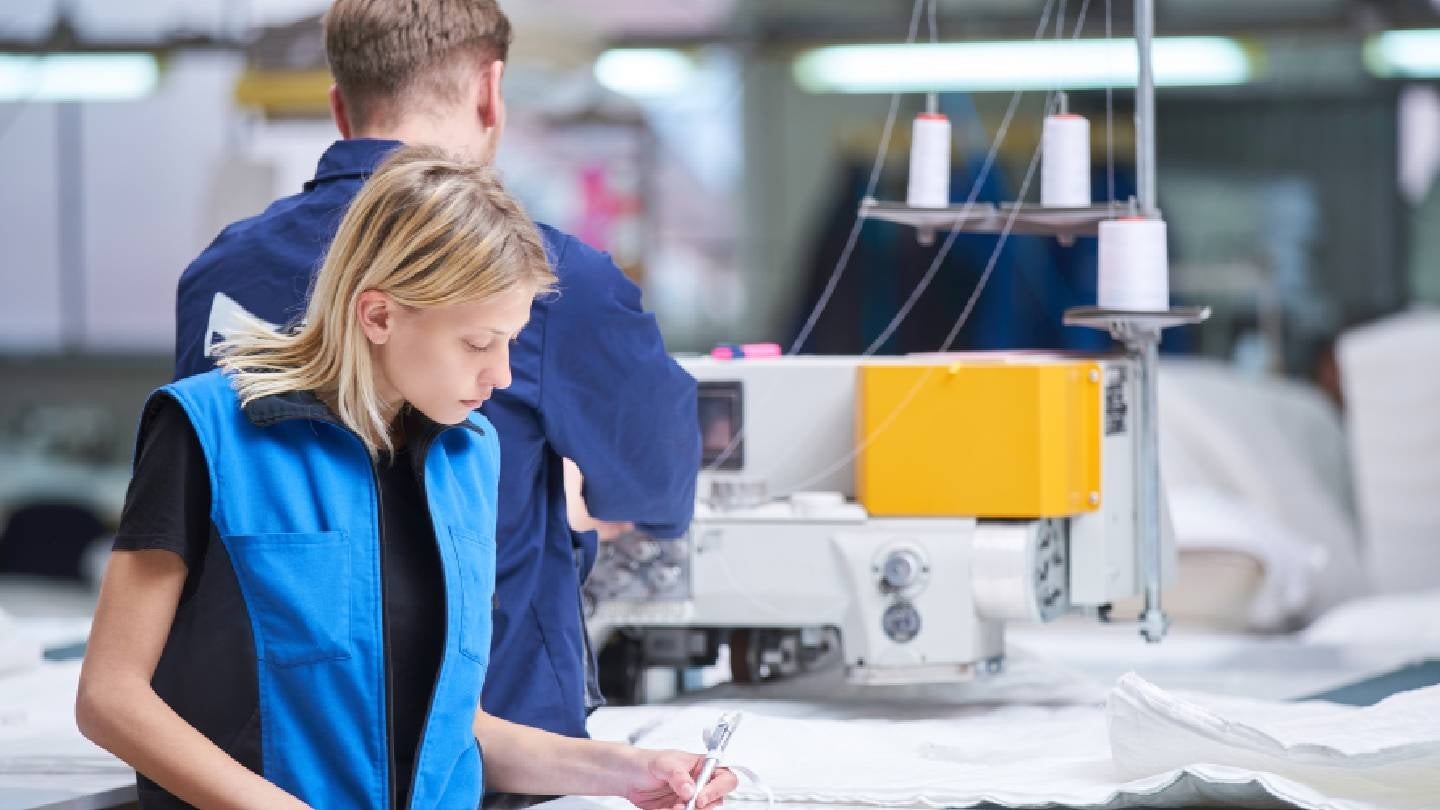
Why it matters: For domestic manufacturers and their supply chains, sustained investment levels signal continued operational capacity and a commitment to automation and nearshoring, directly impacting sourcing decisions and production resilience.
Context: The sector’s stability contrasts with volatile trade conditions, reflecting a strategic pivot toward automation and compliance with defense procurement rules and regional trade agreements like USMCA.
"The $34.3bn invested in advanced manufacturing since 2017 reflects a long-term bet on automation, traceability, and nearshoring — trends increasingly critical for compliance with defence sourcing rules and regional trade agreements." — NEWS.YRULES
Commentary: The data suggests capital is being deployed not for growth but for hardening existing capacity—automation addresses persistent labor constraints, while traceability investments are a direct response to tightening procurement rules from DoD and brands. This shifts the competitive landscape toward larger, capitalized operators who can afford these upgrades, potentially consolidating market share. For procurement officers and brand supply chain managers, this means a more reliable but potentially less diverse domestic supplier base.
Date: April 20, 2026 12:00 AM ET
URL: https://news.yrules.com/en/archives/14851
AI Sentiment Score: Negative (80%)
AI Credibility Score: 7.0/10 — Medium
Scores and text generated by AI analysis of the source article indicated.
INTRODUCING: USA MADE APPAREL (Youtube)
Summary: MKC’s Heritage Hoodie launch positions itself as a response to customer demand for domestically produced apparel, tracing a supply chain from Texas cotton fields through California processing and manufacturing to final shipment from Montana. The product narrative emphasizes a fully American pipeline from raw material to finished garment as a core selling proposition.

Why it matters: For brands and manufacturers evaluating domestic production, this case illustrates a specific, multi-state operational model and its associated logistical footprint, which informs cost, lead time, and marketing calculations.
Context: The ‘Made in USA’ apparel segment faces persistent challenges in scaling due to fragmented domestic textile infrastructure and higher labor costs, making fully integrated domestic supply chains rare and operationally significant.
"The cotton starts in Texas fields, then makes its way west to California where it’s processed, dyed, knit, patterned, cut, and sewn before it ships to us in Missoula, MT." — YOUTUBE
Commentary: This operational map reveals a geographically dispersed, multi-stage domestic supply chain, which likely increases unit cost and complexity compared to offshore consolidation but offers resilience and marketing cachet. For other brands, it benchmarks the practical reality of a ‘fully American’ claim: a cross-country logistics puzzle rather than a single-facility solution.
Date: April 24, 2026 12:00 AM ET
URL: https://www.youtube.com/watch?v=iBbHxjyqh3s
AI Sentiment Score: Negative (50%)
AI Credibility Score: 10.0/10 — High
Scores and text generated by AI analysis of the source article indicated.
INTRODUCING: USA MADE APPAREL (Youtube)
Summary: MKC has launched a Heritage Hoodie marketed as fully US-made, tracing its supply chain from Texas cotton fields through California processing and manufacturing to final assembly in Montana. The product is positioned as a direct response to customer demand for domestically produced apparel.
Why it matters: For brands and manufacturers evaluating domestic production, this case illustrates a complete, multi-state US supply chain and its associated logistical complexity and cost structure.
Context: The ‘Made in USA’ apparel segment faces persistent challenges in securing domestic raw materials, specialized labor, and integrated processing capacity, often resulting in premium pricing and limited scalability.
"The cotton starts in Texas fields, then makes its way west to California where it’s processed, dyed, knit, patterned, cut, and sewn before it ships to us in Missoula, MT." — YOUTUBE
Commentary: This end-to-end domestic pipeline is operationally notable but highlights the fragility of US textile infrastructure; the cross-country material movement between Texas, California, and Montana underscores cost and lead-time pressures that constrain broader adoption. For practitioners, it validates a viable but high-touch model dependent on a sparse network of specialized vendors.
Date: April 24, 2026 12:00 AM ET
URL: https://www.youtube.com/watch?v=iBbHxjyqh3s&vl=id
AI Sentiment Score: Negative (77%)
AI Credibility Score: 10.0/10 — High
Scores and text generated by AI analysis of the source article indicated.
Movers and Shakers April 2026: Circulose and CTA to … (Fiberjournal)
Summary: The North American textile and nonwoven sector is navigating a period of moderated production and strategic consolidation, as detailed in INDA’s 2026 Supply Report. Concurrently, the industry is accelerating material innovation and supply chain reconfiguration, evidenced by partnerships like Circulose/CTA for recycled lyocell, IND HEMP’s entry into Vietnam, and Kornit’s expansion into technical textiles. M&A activity, such as Symtech’s acquisition of McDaniel Textile Services, points to a focus on consolidating specialized technical services within the domestic market.

Why it matters: For U.S. manufacturers, these developments signal where capital is flowing, which material innovations are reaching commercial scale, and how service networks are consolidating to support domestic operations.
Context: Global trade uncertainty and sustainability mandates are pressuring brands to secure transparent, lower-carbon supply chains, driving investment in both novel materials and on-shore or near-shore technical capabilities.
"In the dynamic and global textile fiber industry with its various manufacturing processes and end-uses, news and information is breaking on a daily basis. International Fiber Journal is tracking stories relevant to." — FIBERJOURNAL
Commentary: The ‘wait-and-see’ production climate underscores that capacity investments are now heavily geared toward resilience and sustainability, not volume growth. The practical consequence is a bifurcated market: brands with capital are locking in limited-supply, next-gen materials like CIRCULOSE® lyocell for 2026, while mills and service providers consolidate to offer more integrated, domestic solutions. Kornit’s push into footwear and automotive represents a direct threat to traditional cut-and-sew and dye-sublimation contractors, shifting the unit economics of short-run technical textile production.
Date: April 28, 2026 12:00 AM ET
URL: https://www.fiberjournal.com/movers-and-shakers-april-2026/
AI Sentiment Score: Negative (62%)
AI Credibility Score: 9.4/10 — High
Scores and text generated by AI analysis of the source article indicated.
Post ID: e05fa921