

Logistics Infrastructure and Technology for Reshoring
How Tariffs Are Reshaping Warehouse Demand in 2026 | WareCRE (Warecre)
Summary: Tariffs are driving a two-phase surge in warehouse demand: immediate inventory front-loading and a structural, long-term shift toward reshoring. National industrial absorption is forecast to hit 200M SF in 2026, up from 155M SF in 2025, with manufacturing now accounting for 20% of new leasing. The pressure is most acute in the structurally undersupplied small-bay segment (under 10,000 SF), where flexible, short-term leases command a premium.
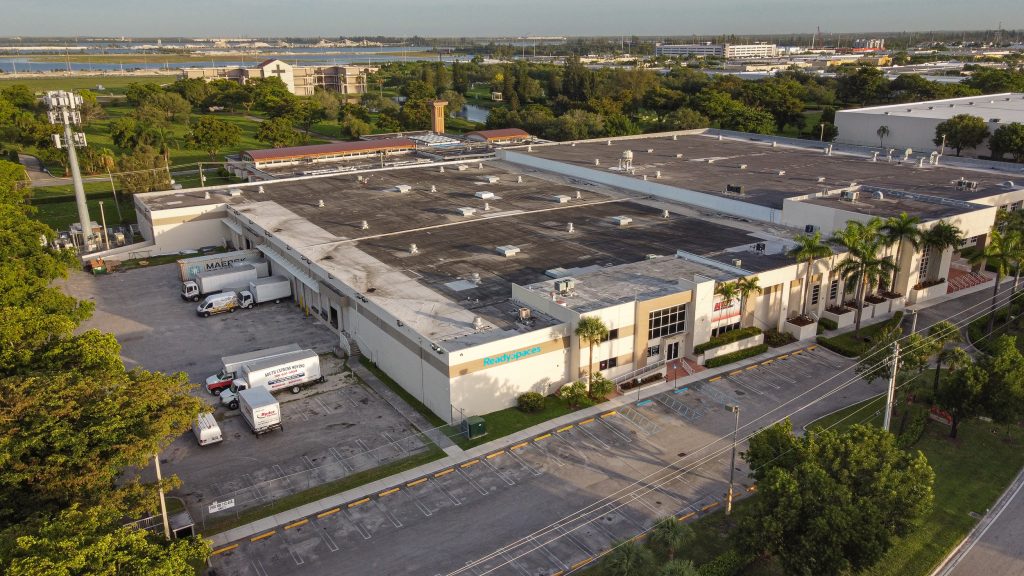
Why it matters: For importers, distributors, and warehouse operators, this means recalculating space needs, re-evaluating lease terms, and potentially shifting location strategies based on changing freight flows.
Context: This follows years of supply chain volatility and rising U.S. effective tariff rates, now at levels not seen since the 1930s, compounded by federal incentives like the CHIPS Act and IRA.
"Small-bay warehouse space (under 10,000 SF) is structurally undersupplied and absorbing the most pressure — the businesses most affected by tariffs need exactly the space that’s hardest to find." — WARECRE
Commentary: The market is bifurcating: big-box demand is driven by reshoring narratives, but the immediate operational friction is in the small-bay segment, where scarcity forces businesses into flexible, often premium-priced co-warehousing. This creates a durable advantage for operators who can offer short-term flexibility over traditional NNN leases. Location calculus must now account for shifting import gateways, favoring border markets and inland corridors over traditional port-adjacent hubs.
Date: April 28, 2026 12:00 AM ET
URL: https://warecre.com/cre-insights/industrial-101/tariffs-reshaping-warehouse-demand-2026/
AI Sentiment Score: Positive (50%)
AI Credibility Score: 7.0/10 — Medium
Scores and text generated by AI analysis of the source article indicated.
The Reshoring Freight Boom Is Here: Heavy Haul Capacity 2026 (Bookyourcargo)
Summary: The operational playbook for reshoring logistics is crystallizing around heavy haul capacity constraints. Lead times for specialized freight moves now stretch 14-30 days, demanding integration of freight planning into facility design from the site selection phase. The shift from consolidated container imports to disaggregated domestic production multiplies inbound truckloads, with heavy haul, oversized loads, and overweight drayage becoming critical path bottlenecks.

Why it matters: For manufacturers executing reshoring, failure to adopt this structured freight inventory and advance reservation model will result in project delays, cost overruns, and stranded capital.
Context: Reshoring freight demand is structurally different from import logistics, replacing single-container arrivals with hundreds of coordinated domestic moves of machinery, materials, and components.
"Stack those constraints, and the actual lead time on a heavy haul move from order to execution can run 14 to 30 days. … ### Heavy Haul Planning Playbook for Reshoring Projects." — BOOKYOURCARGO
Commentary: The 400:1 multiplier reframes reshoring as a logistics-intensive build-out, not a simple supplier substitution. This forces a reallocation of capital from just equipment procurement to comprehensive freight inventory management and carrier relationship lock-in. The playbook’s emphasis on permit mapping and site readiness verification shifts risk from the carrier to the manufacturer’s project management, making logistics a core competency for domestic operations teams.
Date: April 22, 2026 12:00 AM ET
URL: https://bookyourcargo.com/blogs/reshoring-freight-boom-heavy-haul-capacity-2026
AI Sentiment Score: Negative (75%)
AI Credibility Score: 9.3/10 — High
Scores and text generated by AI analysis of the source article indicated.
VF Put RFID Under The Model Already Running — Rack & Reason (Rack-Reason)
Summary: VF Corporation has selected Nedap to implement item-level RFID tagging across its brand portfolio, beginning with The North Face in Q2 2026 and extending to Vans and Timberland across over 1,500 stores and their supporting distribution centers. The program mandates tagging at the source, meaning finished goods will be RFID-enabled before leaving the factory floor of vendor partners.

Why it matters: For manufacturers and logistics operators, this signals a shift toward mandatory, upstream data capture that will alter vendor compliance requirements, factory line processes, and the cost structure of goods.
Context: Apparel and footwear brands have long pursued RFID for inventory accuracy, but most programs tag at distribution centers or stores, not at the point of manufacture.
"The deployment reaches distribution centres and, in Hope Waldron’s phrasing, “vendor partners at the source,” which means finished goods are being tagged before they leave the factory." — RACK-REASON
Commentary: This moves the cost and labor of tagging upstream, imposing a new operational standard on VF’s supply chain. Factories must now integrate RFID application into packing lines, which will affect unit costs and throughput. For competing brands, VF’s scale makes this a de facto industry benchmark, pressuring vendors to adopt compatible systems or risk losing business.
Date: April 24, 2026 12:00 AM ET
URL: https://rack-reason.com/en/vf-put-rfid-under-model-already-running/
AI Sentiment Score: Negative (75%)
AI Credibility Score: 10.0/10 — High
Scores and text generated by AI analysis of the source article indicated.
Metro Supply Chain Group Inc. acquires warehousing assets in the … (Cantechletter)
Summary: Metro Supply Chain Group Inc. has expanded its U.S. logistics capacity by acquiring approximately 1.5 million square feet of warehousing assets in the Southern U.S. from BR Williams. This acquisition increases its total U.S. operational footprint to 6 million square feet. The move represents a strategic investment in regional infrastructure amid ongoing supply chain reconfiguration.

Why it matters: For practitioners in domestic manufacturing and logistics, this signals a continued build-out of Southern U.S. capacity, affecting vendor selection, regional labor markets, and the cost/availability of warehousing for brands reshoring production.
Context: The Southern U.S. has become a focal point for logistics expansion, driven by lower costs, port access, and proximity to growing manufacturing clusters. Asset acquisitions by integrated 3PLs like Metro are consolidating regional control.
"The transaction adds approximately 1.5 million square feet to Metro Supply Chain’s US footprint, bringing the total US operations to 6 million square feet." — CANTECHLETTER
Commentary: This acquisition directly increases available high-volume storage in a key region, tightening the market for competing brands and independent operators. For manufacturers, it offers a scaled partner but may reduce negotiating leverage on rates. The focus on ‘select assets’ suggests a targeted, efficiency-driven expansion rather than a blanket market entry.
Date: April 23, 2026 12:00 AM ET
URL: https://www.cantechletter.com/newswires/metro-supply-chain-group-inc-acquires-warehousing-assets-in-the-southern-us-from-br-williams/
AI Sentiment Score: Negative (71%)
AI Credibility Score: 7.0/10 — Medium
Scores and text generated by AI analysis of the source article indicated.
UPS deploys RFID across US network – Logistics Manager (Logisticsmanager)
Summary: UPS has completed a nationwide deployment of RFID sensing across its US small parcel network, embedding the technology in vehicles, sorting facilities, and over 5,500 UPS Store locations. The $100 million investment enables automatic package detection throughout the shipping journey, eliminating manual scanning. This positions UPS as the first major US logistics provider to implement RFID at this scale across an integrated network.
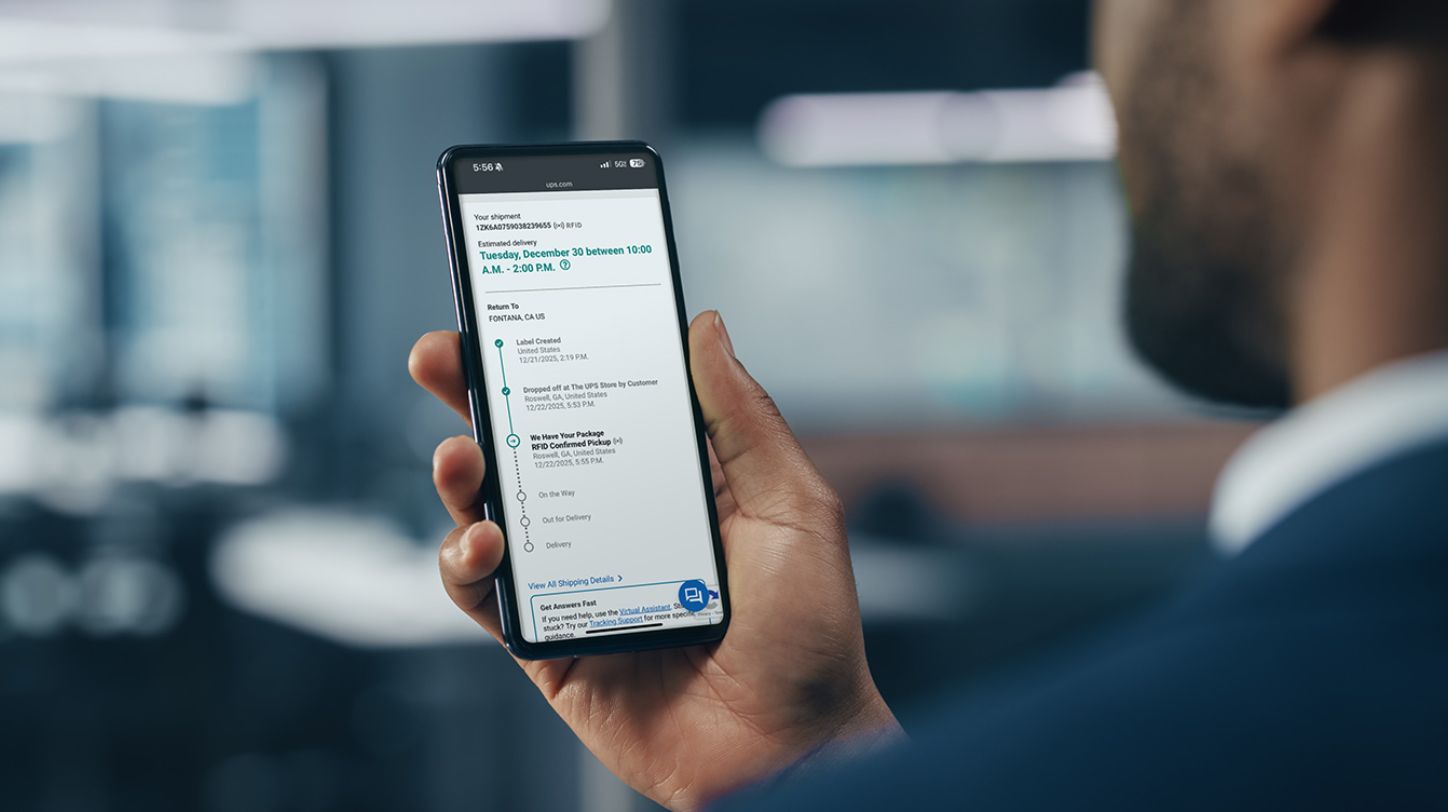
Why it matters: For manufacturers, brands, and logistics managers, this changes the data fidelity and labor requirements for domestic shipping, directly impacting inventory visibility, exception handling, and operational planning.
Context: RFID has long been a theoretical upgrade over barcodes for logistics, but deployment at this scale across a national carrier’s entire ecosystem represents a shift from pilot to operational baseline.
"With RFID embedded into labels, on our vehicles and in our loading bays, customers benefit from clear visibility during the entire shipping process – from pick up to delivery, with no manual scanning required. The result is commerce that is smarter and predictable." — LOGISTICSMANAGER
Commentary: The concrete consequence is a reallocation of labor from manual scanning to exception management and data analysis within UPS facilities and for its clients. For shippers, this means near-real-time, passive tracking becomes the expected service level, raising the bar for competitors and increasing pressure on warehouse and packaging operations to adopt compatible labeling. The $100 million sunk cost also creates a significant moat, potentially locking in volume from clients who prioritize predictable, automated tracking for their domestic supply chains.
Date: April 20, 2026 12:00 AM ET
URL: https://www.logisticsmanager.com/ups-deploys-rfid-across-us-network/
AI Sentiment Score: Negative (66%)
AI Credibility Score: 10.0/10 — High
Scores and text generated by AI analysis of the source article indicated.
Tracking Tuesday: Triple-Mode IoT & the $100M RFID Rollout (Strategictracking)
Summary: The logistics industry’s technical pivot to guaranteed continuity is complete, with Iridium’s triple-mode 9604 module eliminating connectivity blind spots and UPS’s $100M RFID network automating package audits. However, the CargoNet Q1 2026 report reveals a critical operational shift: as physical tracking reaches near-perfection, criminal risk has migrated upstream to identity fraud, with ‘Ghost Carriers’ using AI and stolen credentials to impersonate legitimate operators. This creates a new decision surface where digital identity verification, not just real-time location, becomes the essential preventative control.

Why it matters: For logistics practitioners, this redefines the threat model and the required toolkit, forcing a reassessment of gate protocols, carrier onboarding, and system integration priorities.
Context: This follows a multi-year industry push for end-to-end visibility, which has now largely solved the technical ‘where’ problem, exposing the softer, human-centric ‘who’ problem as the primary vulnerability.
"The 100% Visibility Era Welcome to this week’s Tracking Tuesday. The final week of April 2026 marks a structural pivot in the logistics industry. We are moving from “Best-Effort Tracking” to “Guaranteed." — STRATEGICTRACKING
Commentary: The Iridium 9604 and UPS RFID rollout establish a new baseline for operational visibility, making any system without automated, continuous tracking functionally obsolete. The surge in impersonation fraud, however, means this technical victory is hollow without parallel investment in identity and access management systems that integrate with platforms like CargoNet. The practical consequence is that procurement and security teams must now vet TMS and carrier management software for real-time digital signature verification capabilities, not just tracking features. The proposed ‘Zero-Trust Pallet’ concept, while speculative, correctly frames the next operational challenge: embedding identity enforcement directly into physical assets.
Date: April 28, 2026 12:00 AM ET
URL: https://www.strategictracking.com/2026/04/28/tracking-tuesday-28th-april-2026/?amp=1
AI Sentiment Score: Negative (66%)
AI Credibility Score: 7.0/10 — Medium
Scores and text generated by AI analysis of the source article indicated.
Post ID: 9fc0b89a