Upfronts, Advertising, and Measurement Trends
2026 TV upfronts recap: Hi-tech ad buying, creator fever … – LA Times (Latimes)
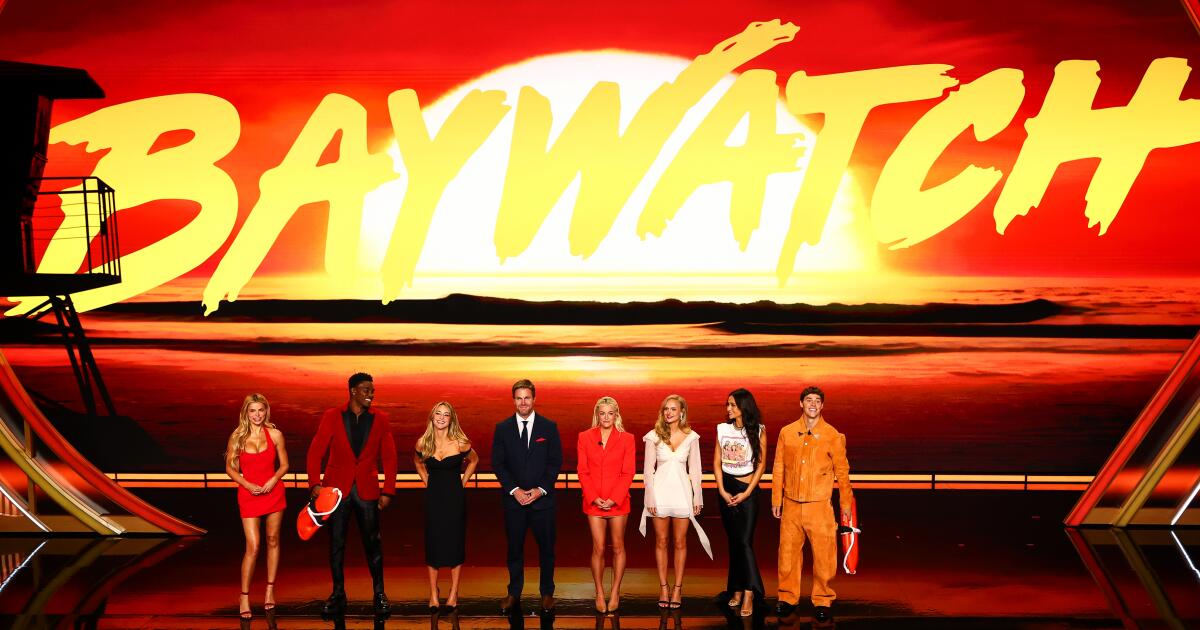
Summary: The 2026 TV upfronts saw a definitive shift from traditional programming showcases to a data-driven marketplace focused on AI-powered ad targeting and creator-led content. Platforms like YouTube, Twitch, and Tubi are now central, with advertisers treating online creators as mainstream producers to access younger audiences. While the pitch is dominated by tech—real-time dashboards, hyper-personalized ads, and performance hubs—the actual programming slate leans heavily on familiar reboots and comfort TV, highlighting a bifurcated strategy.
Why it matters: This signals the full operationalization of streaming’s ad model, where audience segmentation and creator economics now dictate content investment and media buying, reshaping the cultural and financial power centers of television.
Context: The upfronts, once a ritual for selling broadcast ad inventory based on projected ratings, have evolved into a cross-platform bazaar where streaming data, not just shows, is the primary commodity.
"2026 TV upfronts recap: Hi-tech ad buying, creator fever and ‘Baywatch’ – Click here to listen to this article – Share via – At this year’s TV upfronts, networks and streamers wooed." — LATIMES
Commentary: The industry’s embrace of granular targeting and creator integration formalizes a two-tier system: high-margin, data-rich environments for performance marketing, and lower-risk, IP-driven ‘comfort food’ to maintain mass reach. This creates inherent tension between the promise of personalization and the economics of funding broad-appeal content, potentially further fragmenting the cultural water cooler.
Date: May 16, 2026 12:00 AM ET
URL: https://www.latimes.com/entertainment-arts/business/story/2026-05-16/2026-tv-upfronts-recap-hi-tech-ad-buying-creator-fever-baywatch
AI Sentiment Score: Negative (66%)
AI Credibility Score: 10.0/10 — High
Scores and text generated by AI analysis of the source article indicated.
Measure the value of TV advertising (Nielsen)
Summary: Nielsen is positioning its National and Local television audience measurement solutions as the industry’s currency for transacting on TV advertising in a fragmented media landscape. The company claims its methodology, combining a high-quality panel with big data from 45 million households, provides person-level granularity and MRC accreditation to eliminate guesswork for buyers and sellers.

Why it matters: The battle to define the currency for TV ad trading determines where billions in marketing budgets flow and which platforms gain leverage in a converged linear and streaming market.
Context: The shift to streaming and audience fragmentation has eroded traditional TV measurement, creating a multi-sided contest among Nielsen, tech companies, and alternative providers to establish a new transactional standard.
"Our National and Local television audience measurement solutions are the industry’s source of truth for how viewers are engaging with media." — NIELSEN
Commentary: Nielsen’s aggressive claim to be the ‘source of truth’ is a defensive move against rivals like VideoAmp and iSpot.tv, and tech giants’ first-party data. Its emphasis on MRC accreditation and household scale is a direct appeal to institutional buyers seeking a stable, auditable currency, but it must suggest its panel can accurately capture digital-native viewing behaviors to maintain that status.
Date: April 30, 2026 12:00 AM ET
URL: https://www.nielsen.com/solutions/audience-measurement/us-national-and-local-tv-measurement/
AI Sentiment Score: Negative (50%)
AI Credibility Score: 10.0/10 — High
Scores and text generated by AI analysis of the source article indicated.
The Gauge (Nielsen)
Summary: Nielsen’s Gauge report for Q4 2025 provides a macroanalysis of U.S. TV viewing distribution, segmenting audience share across broadcast, cable, streaming, and other usage. The data is derived from weighted panels and includes Live+7 viewing, with methodological nuances that reclassify streaming-original content viewed via cable boxes to the streaming category. The report highlights the ‘Ad Supported Share of TV’ as a key metric for the marketplace.

Why it matters: The methodological definitions and category allocations directly determine the reported market shares that dictate billions in advertising spend and content investment, making Nielsen’s classification rules a material economic variable.
Context: Nielsen’s measurement methodology has evolved to account for the convergence of linear and streaming delivery, notably reclassifying content to reflect its origin platform rather than its distribution pipe.
"Beginning with the June 2023 interval, Nielsen began utilizing Streaming Content Ratings to identify original content distributed by platforms reported in that service to reclassify content viewed via cable set top boxes. This viewing will credit to streaming and to the streaming platform which distributed it." — NIELSEN
Commentary: This methodological pivot is less a technical footnote and more a real-time rewrite of industry scorekeeping. By crediting viewership to the content’s origin platform rather than the cable box’s pipe, Nielsen is formally eroding the ‘linear’ category to the benefit of streaming services, even when consumed through traditional infrastructure. It crystallizes the shift from distribution-based to content-based measurement, forcing advertisers and networks to recalibrate around intellectual property, not channel placement. The explicit exclusion of vMVPD apps from the ‘streaming’ category further partitions the market, creating a cleaner—and for streamers, more flattering—portrait of pure subscription video-on-demand growth.
Date: May 19, 2026 12:00 AM ET
URL: https://www.nielsen.com/data-center/the-gauge/
AI Sentiment Score: Positive (66%)
AI Credibility Score: 10.0/10 — High
Scores and text generated by AI analysis of the source article indicated.
Netflix’s ‘Formidable’ Upfront Pitch (Mediapost)
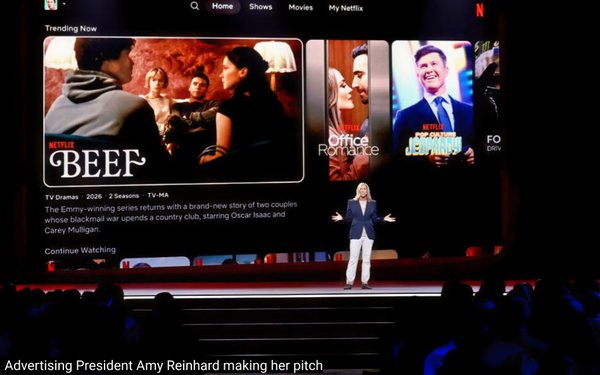
Summary: Netflix’s 2026 upfront presentation positions its ad business as a ‘formidable’ $3 billion revenue engine, reaching 250 million monthly global users. Key leverage points include an expanded NFL live sports package and AI-driven ad tools for optimization and creative matching. The pitch emphasizes unique reach, reduced ad fatigue, and superior brand-building metrics versus traditional TV.
Why it matters: It signals a mature, scaled alternative to linear TV for brand budgets, reshaping upfront negotiations and accelerating the integration of performance advertising into premium streaming.
Context: The streaming upfront season has become a critical battleground where platforms compete for TV’s legacy ad dollars by proving scale, engagement, and measurement.
"Dominant streamer Netflix says it has come of age in its association with brands as it delivers its fourth upfront presentation for advertising executives. “If the last couple of years were about." — MEDIAPOST
Commentary: Netflix is no longer a streaming experiment but a core, scaled media buy, using live sports and AI to offer what it frames as a less fatigued, more efficient audience. The $3 billion projection and NFL expansion force legacy networks and rival streamers to compete on Netflix’s terms of global reach and data integration. This shift consolidates power with a single platform that can bundle prestige originals, live events, and targeted ads, potentially flattening the traditional TV ecosystem’s pricing and influence.
Date: May 13, 2026 12:00 AM ET
URL: https://www.mediapost.com/publications/article/415072/netflixs-formidable-upfront-pitch.html?edition=142607
AI Sentiment Score: Neutral (33%)
AI Credibility Score: 10.0/10 — High
Scores and text generated by AI analysis of the source article indicated.
Future of TV Briefing: The upfront is overtaking streaming’s programmatic marketplace (Digiday)
Summary: The traditional TV upfront and the automated programmatic marketplace are converging, with upfront advertisers now driving the majority of biddable demand for major sellers like Disney and Warner Bros. Discovery. This shift is accelerating a move from programmatic guaranteed deals to private marketplaces, giving advertisers more real-time control but introducing revenue risk for sellers. Live sports and the growth of streaming CTV inventory are key enablers, while platforms are expanding demand paths and using programmatic access as a wedge for new upfront entrants.

Why it matters: This convergence reshapes the economics and power dynamics of the $20B+ upfront market, forcing media companies to trade guaranteed revenue for flexibility and advertisers to recalibrate their investment strategies around real-time performance.
Context: For years, programmatic spending was allowed to count toward upfront commitments, but primarily through fixed, automated guaranteed deals. The current shift to biddable private marketplaces represents a deeper, more volatile integration of upfront planning with digital auction mechanics.
"Lock in a year of Digiday+ for 35% less. Ends June 5. Future of TV Briefing: The upfront is overtaking streaming’s programmatic marketplace This Future of TV Briefing covers the latest in." — DIGIDAY
Commentary: The upfront is no longer just a futures market for fixed placements; it’s becoming the planning layer for a year-long, biddable campaign. This forces media companies to compete on yield optimization in real-time, not just on slate quality, and could accelerate the fragmentation of audience buying across dozens of DSPs. The strategic risk is that PMPs turn upfront commitments into options rather than obligations, potentially destabilizing the annual revenue model that has funded premium content for decades.
Date: May 20, 2026 12:00 AM ET
URL: https://digiday.com/future-of-tv/future-of-tv-briefing-the-upfront-is-overtaking-streamings-programmatic-marketplace/
AI Sentiment Score: Negative (80%)
AI Credibility Score: 10.0/10 — High
Scores and text generated by AI analysis of the source article indicated.
Title-hopping viewers test streaming ad strategies (Emarketer)
Summary: New data from IGN’s 2026 Generations In Play report shows a decisive shift in media consumption habits. Over 70% of Gen Z consumers in key Anglophone markets no longer purchase physical copies of TV, film, or music, relying entirely on streaming access. Crucially, 59% actively subscribe and unsubscribe from services to follow specific titles, not out of platform loyalty. This behavior creates high subscriber volatility, with 36% of global customers willing to cancel an existing subscription upon adding a new one.

Why it matters: This erodes the foundational ‘sticky’ subscriber model of streaming economics, forcing a fundamental recalculation of content strategy, pricing, and platform differentiation.
Context: This intensifies a pre-existing trend of subscription fatigue and platform-agnosticism, moving the industry past the initial growth phase of library aggregation.
"Article by Grace Harmon | May 15, 2026 The news: Consumers are drifting away from physical media but also lack loyalty to any one streaming service. – 70% of Gen Z." — EMARKETER
Commentary: The implication is that the ‘content arms race’ must evolve into a ‘cultural relevance treadmill.’ Exclusive releases and bundling are tactical bandaids, but the core challenge is engineering consistent, can’t-miss event programming that justifies permanent real estate on a consumer’s credit card. This pressures studios to prioritize franchise management and viral social marketing over sheer volume, potentially benefiting agile, culturally-tuned producers while marginalizing generalist platforms.
Date: May 15, 2026 12:00 AM ET
URL: https://www.emarketer.com/content/title-hopping-viewers-test-streaming-ad-strategies
AI Sentiment Score: Negative (60%)
AI Credibility Score: 10.0/10 — High
Scores and text generated by AI analysis of the source article indicated.
THE PROFESSOR’S TAKE: THE 2026 UPFRONTS WEREN’T ABOUT TELEVISION. THEY WERE ABOUT INVENTORY. (Thebusinessofentertainment.Substack)
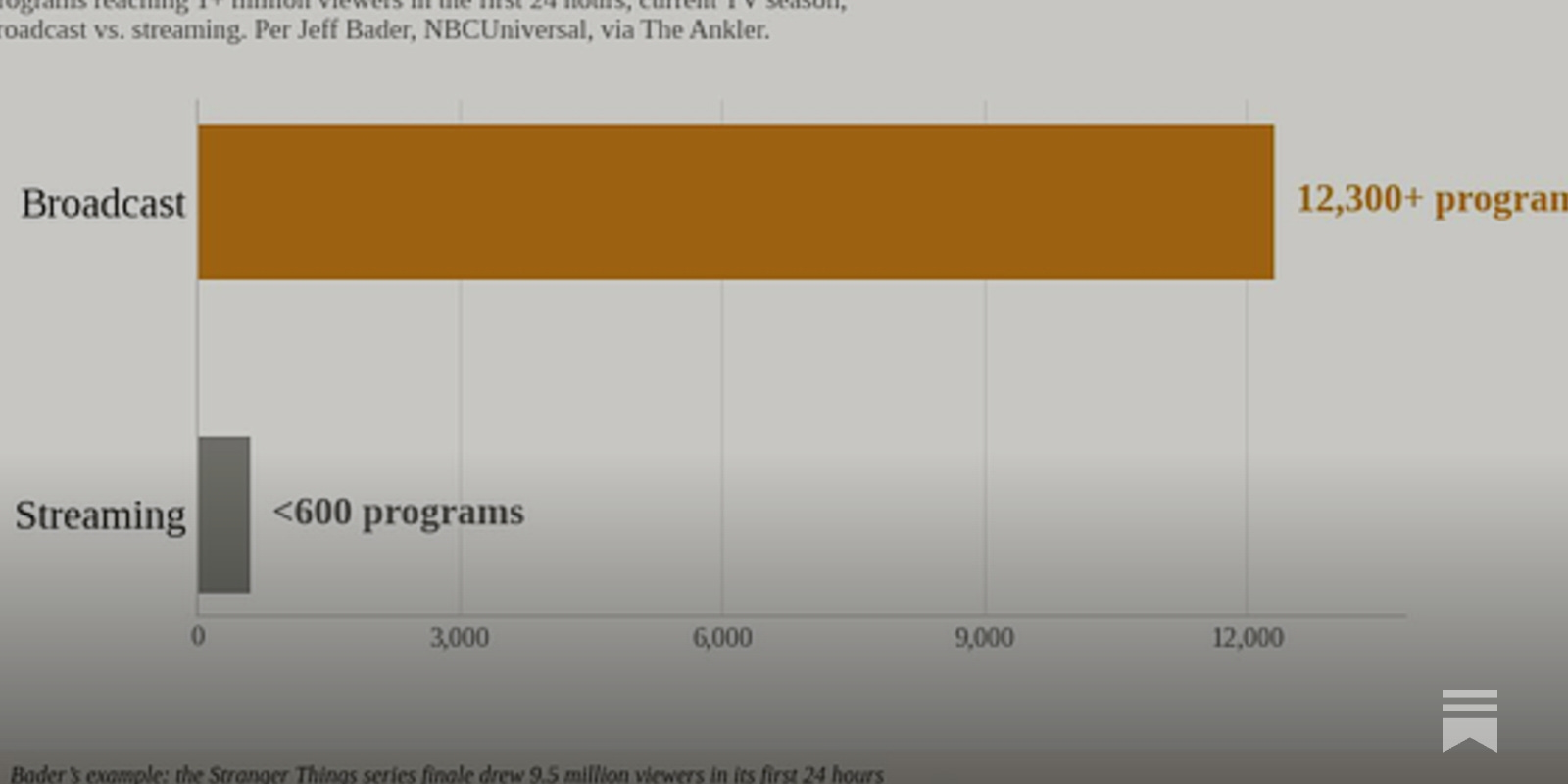
Summary: The 2026 upfronts saw an estimated $30 billion in ad commitments transacted on a fundamentally new premise: networks and platforms are no longer selling slots in a fall TV schedule but are instead selling aggregated, cross-platform audience reach. Presentations from Disney, Amazon, and YouTube minimized scripted content in favor of sports, live events, and creator-driven digital inventory, reflecting a shift in what advertisers are buying. The total advertising budget pool is largely flat, forcing sellers to defend linear TV dollars while aggressively pursuing digital CTV budgets, with scripted television failing to serve either priority effectively.
Why it matters: This redefines the core product of media companies from content to audience inventory, forcing producers, IP owners, and advertisers to recalibrate their value propositions and investment strategies.
Context: The annual upfronts have historically been where networks sell ad inventory tied to their upcoming programming slates, but the fragmentation of viewership and the rise of CTV have been eroding this model for years.
"The primetime lineup stopped being the thing the networks were selling. For several decades the pitch was simple: here is our fall schedule, buy advertising space in it. This year the pitch was different. We have the audience you need, and we will reach them everywhere they choose to be reached." — THEBUSINESSOFENTERTAINMENT.SUBSTACK
Commentary: The operational consequence is the decoupling of content creation from audience monetization; a show’s value is now its ability to feed a broader, trackable inventory pool, not its standalone ratings. This accelerates the marginalization of traditional scripted development in favor of live, social, and sports programming that can anchor both linear and digital deals. For creatives and studios, the imperative shifts from crafting a hit series to engineering scalable, atomized audience segments.
Date: May 21, 2026 12:00 AM ET
URL: https://thebusinessofentertainment.substack.com/p/the-professors-take-the-2026-upfronts
AI Sentiment Score: Positive (50%)
AI Credibility Score: 10.0/10 — High
Scores and text generated by AI analysis of the source article indicated.
Program ‘Attention’? What About Media Buyers’ ‘Attention’? (Mediapost)
Summary: The 2026 upfronts reveal a deepening misalignment between traditional network programming strategies and the practical calculus of media buyers. NBC’s increased pilot orders for scripted shows, including fall premieres like ‘Line of Fire’ and a ‘Rockford Files’ reboot, contrasts with buyers’ need to allocate budgets across a fragmented landscape of FAST channels, social video, and direct performance metrics. Network executives argue focus on fewer broadcast shows improves marketing and ad potential, but buyers are pressured to suggest investment through granular sales data, pushing budgets toward unscripted content and prohibitively expensive sports.
Why it matters: This widening gap pressures the economics of premium scripted television and accelerates the redistribution of ad dollars toward performance-based and lower-friction digital video formats.
Context: The annual upfronts have long been a ritual where networks showcase prestige content to secure advance ad commitments, but the rise of streaming, audience fragmentation, and demand for sales attribution is eroding the model’s foundation.
"TV and streaming media-buying agency executives are getting their usual whirlwind blitz of new shows via the upfront presentations. But how much do those premium, scripted entertainment shows really factor into their." — MEDIAPOST
Commentary: The upfront’s theater is becoming detached from the procurement desk, where attribution requirements favor platforms with closed-loop measurement over narrative prestige. This forces networks like NBC to treat Peacock not just as a growth platform but as a necessary lab for ad-supported streaming series that can be more directly measured, while their broadcast schedule becomes a brand-loss leader. The real shift isn’t in what’s programmed, but in what is considered a verifiable media asset.
Date: May 12, 2026 12:00 AM ET
URL: https://www.mediapost.com/publications/article/414992/
AI Sentiment Score: Positive (50%)
AI Credibility Score: 10.0/10 — High
Scores and text generated by AI analysis of the source article indicated.
Future of TV Briefing: Inside Warner Bros. Discovery’s programmatic upfront pitch (Digiday)
Summary: Warner Bros. Discovery is aggressively integrating programmatic buying into its upfront sales, with nearly half of its biddable inventory demand now coming from these annual commitments. The company is expanding programmatic access to live sports, a cornerstone of upfront spending, while managing significant technical risks. Deal structures are shifting from programmatic guaranteed toward more flexible private marketplaces, and WBD is developing its self-serve NEO platform while anticipating early agentic AI purchases in this year’s market.
Why it matters: The upfront market’s pivot toward automated, biddable deals reshapes how billions in TV ad dollars are allocated, forcing media giants to rebuild their technical infrastructure and sales relationships.
Context: The TV upfront is a legacy, relationship-driven marketplace where major advertisers commit billions months in advance; its gradual programmatization signals a structural shift in media buying power and operational risk.
"“We’re seeing programmatic guaranteed as a deal type, while it’s still very sizable, the growth is leveling off on that product type. What we’re seeing now is more and more upfront going biddable,” Steinhauser said." — DIGIDAY
Commentary: WBD’s technical vetting for live sports—requiring SLAs and failover models—reveals programmatic’s move from marginal to core infrastructure, where a DSP’s failure during a game means immediate cutoff. The shift toward biddable PMPs within upfront commitments indicates advertisers are trading some revenue certainty for flexibility, a concession legacy sellers once resisted. NEO’s struggle with agency workflow integration highlights that platform adoption is less about inventory access and more about fitting into entrenched accounting and planning systems. The mention of agentic AI buys, however nascent, suggests the next efficiency layer is already being priced into negotiations, accelerating the automation of a traditionally human-mediated process.
Date: May 13, 2026 12:00 AM ET
URL: https://digiday.com/future-of-tv/future-of-tv-briefing-inside-warner-bros-discoverys-programmatic-upfront-pitch/
AI Sentiment Score: Negative (50%)
AI Credibility Score: 10.0/10 — High
Scores and text generated by AI analysis of the source article indicated.
Nielsen: Co-viewing pilot delivers 4% increase for live TV events (Advanced-Television)
Summary: Nielsen’s pilot measurement of co-viewing—people watching the same live broadcast together in different physical locations via connected platforms—registered a significant audience lift for major events. The data, covering seven tentpole broadcasts from February 2026, shows an average increase of 4.19% in total viewers when accounting for this distributed, synchronous viewing behavior. This quantifies a long-suspected but unmeasured shift in how live television’s cultural moments are consumed.

Why it matters: This establishes a new, monetizable audience segment for live events, forcing networks, advertisers, and rights holders to recalibrate value and pricing for tentpole inventory.
Context: The industry has struggled to measure synchronous digital viewership that replicates the ‘appointment viewing’ of linear TV, leaving a gap between known behavior and reported ratings.
"The new data shows an average +4.19 per cent lift in total viewers for the following marquee live events: Super Bowl LX, Olympics Opening Ceremony, NBA All Star Game, Daytona 500, Olympics Closing Ceremony, Olympics Men’s Hockey Gold Medal Game and State of the Union Address." — ADVANCED-TELEVISION
Commentary: Nielsen is effectively creating a new currency category, moving co-viewing from an anecdotal social behavior to a billable impression. This 4% lift, applied to Super Bowl-scale audiences, represents hundreds of millions in potential ad revenue previously left on the table. It will intensify the premium for truly ‘unmissable’ live events while further marginalizing programming that cannot generate this social synchrony. Expect immediate pressure on streaming platforms to provide standardized, Nielsen-measurable co-viewing features to capture this value.
Date: May 05, 2026 12:00 AM ET
URL: https://www.advanced-television.com/2026/05/05/nielsen-co-viewing-pilot-delivers-4-increase-for-live-tv-events/
AI Sentiment Score: Neutral (33%)
AI Credibility Score: 10.0/10 — High
Scores and text generated by AI analysis of the source article indicated.
Co-Viewing Pilot Delivers a +4% Average Increase In Total … (Nielsen)
Summary: Nielsen’s pilot measurement of co-viewing—where multiple people watch a single stream—shows a significant, quantifiable lift in audience size for major live events. The data indicates an average increase of over 4% in total viewers when accounting for shared screens, a metric previously invisible to standard digital analytics. This provides the first industry-standard evidence that live, appointment-viewing content drives communal consumption even in a fragmented media landscape.

Why it matters: This data directly challenges the valuation models for live event advertising and rights, which have been based on per-stream metrics, and forces a recalibration of what constitutes a ‘viewer’ in the streaming era.
Context: The industry has long anecdotally acknowledged the ‘co-viewing’ phenomenon but lacked a standardized, scalable measurement to quantify its impact, creating a blind spot for advertisers and content sellers.
"New York – May 5, 2026 – Nielsen, a global leader in audience measurement, data and media intelligence, today announced the results of its co-viewing pilot for February’s top live televised events." — NIELSEN
Commentary: Nielsen is weaponizing a social truth to reclaim authority in measurement, arguing that its panel-based methodology captures value that pure server-side data misses. For streamers, this creates immediate pressure to justify higher CPMs for live event inventory. More subtly, it validates a continued premium on live, shared-experience programming as a hedge against purely algorithmic, solitary consumption, potentially influencing greenlight decisions at platforms like Netflix and Amazon.
Date: May 05, 2026 12:00 AM ET
URL: https://www.nielsen.com/insights/2026/nielsen-co-viewing-pilot-delivers-a-4-average-increase-in-total-viewers-for-februarys-live-televised-events/
AI Sentiment Score: Negative (50%)
AI Credibility Score: 10.0/10 — High
Scores and text generated by AI analysis of the source article indicated.
Nielsen and Triton Digital® Collaborate to Bring Greater Visibility to Podcast Audiences in Nielsen’s Media Impact Tool (Nielsen)
Summary: Nielsen and Triton Digital have integrated Triton’s Podcast Metrics Demos+ data into Nielsen’s Media Impact planning tool. This provides standardized demographic and reach data for all shows in Triton’s dataset, enabling advertisers to plan podcast campaigns with the same comparability as other media channels. Nielsen will also become the primary U.S. sales representative for Triton’s podcast measurement offerings.
Why it matters: This formalizes podcasting’s transition from a speculative, brand-awareness channel into a quantifiable, plan-buy medium, directly challenging traditional digital and broadcast budgets.
Context: The podcast industry has long sought third-party, IAB-certified measurement to secure larger, more consistent ad budgets. This deal consolidates two major measurement players, creating a de facto standard for planning.
"Triton Digital’s Podcast Metrics Demos+ Data Integration Enables Comprehensive Insights for All Podcast Shows and Networks Included in Triton’s Podcast Download Data NEW YORK – April 27, 2026 – Nielsen today announced." — NIELSEN
Commentary: The integration is less a technical breakthrough than a market-structuring move. By embedding Triton’s data in the dominant cross-media planning tool and taking over its sales, Nielsen is positioning itself as the central clearinghouse for audio currency. This will accelerate budget shifts from less measurable channels and pressure independent publishers and smaller networks to conform to this measurement standard to remain in agency plans. The long-tail podcast ecosystem now faces a stark choice: get measured by this system or risk invisibility in major media buys.
Date: April 27, 2026 12:00 AM ET
URL: https://www.nielsen.com/news-center/2026/nielsen-and-triton-digital-collaborate-to-bring-greater-visibility-to-podcast-audiences-in-nielsens-media-impact-tool/
AI Sentiment Score: Negative (50%)
AI Credibility Score: 10.0/10 — High
Scores and text generated by AI analysis of the source article indicated.
American Podcast Audience Growth, Nielsen x Triton Digital, & More (Youtube)
Summary: New S&P Global Market Intelligence data shows podcast listening among U.S. online adults grew 10 percentage points in early 2026, reaching nearly 60%. This surge is attributed to the rise of video podcast platforms. Concurrently, Nielsen has integrated Triton Digital’s podcast demographic data into its Media Impact platform, providing ad buyers a unified view. Meanwhile, a study of iHeartMedia stations reveals a collapse of locally produced radio content in mid-size markets, and the Nigerian podcast market remains opaque to international capital due to a lack of measurement.
Why it matters: The convergence of audience growth, platform consolidation, and measurement gaps is reshaping capital allocation and content strategy across global audio.
Context: The podcast industry’s maturation is marked by a push for standardized, cross-platform measurement to attract major brand budgets, even as local radio hollows out and emerging markets struggle for visibility.
"• Tom Webster of Sounds Profitable audited iHeartMedia radio stations across three mid-size U.S. markets and found that less than 4% of weekday airtime in Pittsburgh features locally produced content, while Indianapolis." — YOUTUBE
Commentary: The 10-point audience jump is less a revelation than a ratification; the real shift is the formal integration of podcast metrics into Nielsen’s planning suite, which signals the medium’s graduation to a mainstream, planable buy. This institutional validation contrasts sharply with the documented decay of local radio and the measurement void in markets like Nigeria, creating a bifurcated global audio landscape where capital flows to what it can measure.
Date: May 01, 2026 12:00 AM ET
URL: https://www.youtube.com/watch?v=MNUgy60AHNk
AI Sentiment Score: Positive (50%)
AI Credibility Score: 10.0/10 — High
Scores and text generated by AI analysis of the source article indicated.
Sports content accounts for fastest-growing portion of top global … (Nielsen)
Summary: Nielsen’s Gracenote unit reports sports programming now constitutes 5% of content on leading SVOD services, marking its rapid integration as a foundational element of the subscription video mix. Concurrently, the number of free ad-supported streaming television (FAST) channels grew 19% year-over-year, with news channels seeing the highest growth at 57%. Notably, over one-third (37%) of content on sports-focused FAST channels is live events, positioning FAST as a significant global distribution channel for live sports.
Why it matters: This dual-track growth signals a strategic shift in content acquisition and distribution, forcing platforms to recalibrate their value propositions and monetization models around live, appointment-viewing inventory.
Context: The streaming landscape is bifurcating: premium SVOD services are investing heavily in exclusive, high-cost live sports to anchor subscriptions, while the FAST ecosystem leverages live sports to drive scalable, ad-supported viewership.
"NEW YORK – May 21, 2026 – New analysis by Gracenote, the content intelligence business unit of Nielsen, shows that sports has quickly become a foundational part of the subscription video-on-demand (SVOD)." — NIELSEN
Commentary: The 5% SVOD figure, while seemingly small, represents a massive capital reallocation and a defensive moat against churn. The parallel rise of live sports on FAST channels creates a secondary, ad-driven market that fragments rights value and offers leagues direct audience reach outside traditional paywalls. This pressures legacy broadcast bundles while giving consumers a tiered access model—premium subscription for marquee events, free access for niche or international sports. The result is a more complex, but potentially more resilient, global sports media economy.
Date: May 21, 2026 12:00 AM ET
URL: https://www.nielsen.com/news-center/2026/sports-content-accounts-for-fastest-growing-portion-of-top-global-svod-catalogs/
AI Sentiment Score: Positive (50%)
AI Credibility Score: 10.0/10 — High
Scores and text generated by AI analysis of the source article indicated.
Streaming Ratings March 30-April 5, 2026 – CashWalk (Cashwalklabs.Io)
Summary: Nielsen’s streaming ratings for late March 2026 show a landscape defined by platform-specific endurance and library-driven resurrections. HBO Max’s ‘The Pitt’ maintained its dominance with over a billion minutes for an eighth consecutive week, while Netflix’s ‘Love on the Spectrum’ hit a series high. Prime Video’s ‘Invincible’ and Hulu’s ‘Something Very Bad Is Going to Happen’ posted strong gains, and the addition of the CBS sitcom ‘Mike & Molly’ to Netflix immediately propelled it onto the acquired series chart.
Why it matters: These weekly snapshots reveal the operational realities of subscriber retention, the enduring value of library content, and the shifting leverage between studios and platforms.
Context: The streaming ratings have evolved into a key metric for gauging content investment ROI and platform health, moving beyond mere buzz to measure sustained engagement and catalog utility.
"The HBO Max drama The Pitt topped Nielsen’s streaming rankings for the week of March 30-April 5, with 1.16 billion minutes viewed, marking its eighth consecutive week above a billion minutes and 11th time since its season two premiere." — CASHWALKLABS.IO
Commentary: The consistent performance of ‘The Pitt’ underscores HBO Max’s strategy of betting on high-cost, appointment-style drama to anchor its service, a model that demands deep pockets but can build formidable viewer habit. Conversely, the immediate chart entry of ‘Mike & Molly’ on Netflix demonstrates the platform’s unmatched power to monetize acquired IP, turning a dormant library asset into a top-ten performer overnight and reminding studios of the double-edged sword of licensing. The series highs for established shows like ‘Love on the Spectrum’ and ‘Invincible’ suggest that in a fragmented market, nurturing existing franchises can be as critical as launching new ones for maintaining subscriber momentum.
Date: May 01, 2026 12:00 AM ET
URL: https://cashwalklabs.io/news/streaming-ratings-march-30-april-5-2026
AI Sentiment Score: Negative (60%)
AI Credibility Score: 7.0/10 — Medium
Scores and text generated by AI analysis of the source article indicated.
Post ID: 513dd42f