

Freight and Logistics Market Updates
XPO’s Q2 tonnage trending ahead of guidance (Freightwaves)
Summary: XPO’s May tonnage update shows a 0.5% year-over-year increase, driven by a 3.3% rise in daily shipments, positioning the LTL carrier to exceed its Q2 guidance for flat tonnage. This outperformance against easing prior-year comps and a fifth consecutive month of expansion in the ISM Manufacturing PMI suggests an industrial demand inflection. The carrier’s strategic pivot toward higher-margin SMB shippers and premium services is yielding share gains and improved margin expectations.

Why it matters: XPO’s performance is a leading indicator for Southeast industrial activity and freight pricing power, signaling where regional capital and logistics capacity may concentrate.
Context: LTL tonnage typically lags ISM manufacturing data by a few months; XPO’s results and the sustained PMI expansion above 50 point to a broader, if gradual, recovery in goods movement.
"Less-than-truckload carrier XPO’s May update appears to put the company on course to outperform its prior tonnage outlook. XPO’s (NYSE: XPO) tonnage per day was 0.5% higher year over year in May,." — FREIGHTWAVES
Commentary: XPO’s tonnage beat, despite lower weight per shipment, confirms the efficacy of its SMB-focused margin strategy. The concurrent manufacturing expansion suggests this isn’t merely market share rotation but a genuine, if modest, demand recovery. For the Southeast, this implies tightened LTL capacity and potential yield pressure on shippers as carriers like XPO leverage improved pricing and operational leverage. The margin guide exceeding 300 bps sequential improvement will test whether this model sustains beyond easy comps.
Date: Wed, 03 Jun 2026 21:12:22 +0000
URL: https://www.freightwaves.com/news/xpos-q2-tonnage-trending-ahead-of-guidance
AI Sentiment Score: Positive (45%)
AI Credibility Score: 10.0/10 — High
Scores and text generated by AI analysis of the source article indicated.
Old Dominion’s May update shows an improving LTL market (Freightwaves)
Summary: Old Dominion Freight Line reported a 12.3% year-over-year increase in revenue per day for May, outpacing April’s 7.6% gain, as tonnage declines moderated to -3.8% from -6.1%. The improvement is linked to a broader industrial uptick, with the national Purchasing Managers’ Index hitting a four-year high of 54 in May. The carrier’s yield increased approximately 16% during the month, aided by fuel surcharge mechanics and heavier average shipment weights, signaling a turning market. Management’s guidance implies the first meaningful year-over-year operating ratio improvement since 2022.

Why it matters: For Southeast-focused observers, Old Dominion’s performance is a leading indicator of regional industrial health and freight capacity demand, with direct implications for logistics employment, infrastructure investment, and capital flows into the Carolinas’ transportation sector.
Context: The less-than-truckload (LTL) market has been in a prolonged downturn; Old Dominion, as a high-quality bellwether based in North Carolina, typically leads the cycle. Positive PMI data, especially in new orders, historically precedes LTL volume recovery by several months.
"Old Dominion Freight Line saw further improvement in its operating metrics during May, as the less-than-truckload industry is now seeing a demand bump from the industrial economy. The Thomasville, North Carolina-based company." — FREIGHTWAVES
Commentary: The data suggests the Southeast’s industrial corridor is pivoting from inventory drawdown to restocking, with heavier shipments indicating a shift from retail to bulk industrial freight. Old Dominion’s expected 300-350 bps sequential margin improvement, if achieved, could pressure smaller regional carriers and accelerate market share consolidation. The fuel surcharge accretion is a temporary tailwind, but the underlying yield strength and PMI inflection point to sustained pricing power for disciplined operators through the second half.
Date: Wed, 03 Jun 2026 14:34:48 +0000
URL: https://www.freightwaves.com/news/old-dominions-may-update-reflects-an-improving-ltl-market
AI Sentiment Score: Negative (50%)
AI Credibility Score: 10.0/10 — High
Scores and text generated by AI analysis of the source article indicated.
Freight distress spreads as bankruptcies, layoffs top 600 jobs (Freightwaves)
Summary: A wave of bankruptcies and layoffs swept through the U.S. transportation and logistics sector last week, with filings spanning Chapter 11 reorganizations and Chapter 7 liquidations across Illinois, Tennessee, Maryland, North Carolina, and Michigan. The distress includes carriers like Sparhawk Trucking, which may close, and coincides with facility shutdowns by HelloFresh, GEODIS, FedEx, and Americold, affecting over 600 jobs. This occurs despite a reported 43% year-over-year increase in freight tender volumes, highlighting a divergence between aggregate demand and operator-level financial viability.

Why it matters: The simultaneous bankruptcies and operational closures signal a structural shakeout in the Southeast and Midwest freight markets, where smaller operators are failing even as volumes recover, pointing to persistent cost pressures and a potential concentration of market power.
Context: Small and mid-sized trucking firms have faced tight margins for over a year, but the current filings suggest the financial squeeze is now triggering a liquidation phase, with Chapter 7 proceedings indicating no viable path to reorganization for some.
"The bankruptcies and layoffs reflect continuing financial challenges facing transportation providers despite significant improvements to the freight market." — FREIGHTWAVES
Commentary: The data implies a bifurcated market: while tender volumes are up, the benefits are accruing to larger, more efficient networks, leaving asset-light brokers and regional carriers exposed. The geographic spread of failures—from Raleigh-Durham construction hauling to Midwest long-haul—suggests the distress is not sector-specific but systemic, likely accelerating consolidation and pushing shippers toward more integrated, financially stable providers.
Date: Thu, 04 Jun 2026 12:00:00 +0000
URL: https://www.freightwaves.com/news/freight-distress-spreads-as-bankruptcies-layoffs-top-600-jobs
AI Sentiment Score: Positive (60%)
AI Credibility Score: 10.0/10 — High
Scores and text generated by AI analysis of the source article indicated.
SONAR Sitrep: Housing affordability drags down key freight sectors (Freightwaves)
Summary: Housing affordability continues to suppress freight demand across dry van, flatbed, and rail modes, despite a booming heavy-industrial sector. A sharp divergence is evident: single-family starts, which drive significant building materials freight, plunged 9.0% month-over-month in April 2026, while a surge in less material-intensive multifamily starts fails to compensate. This has created a severe split in flatbed markets and depressed rail traffic for forest products, with CSX citing housing affordability as a direct headwind.
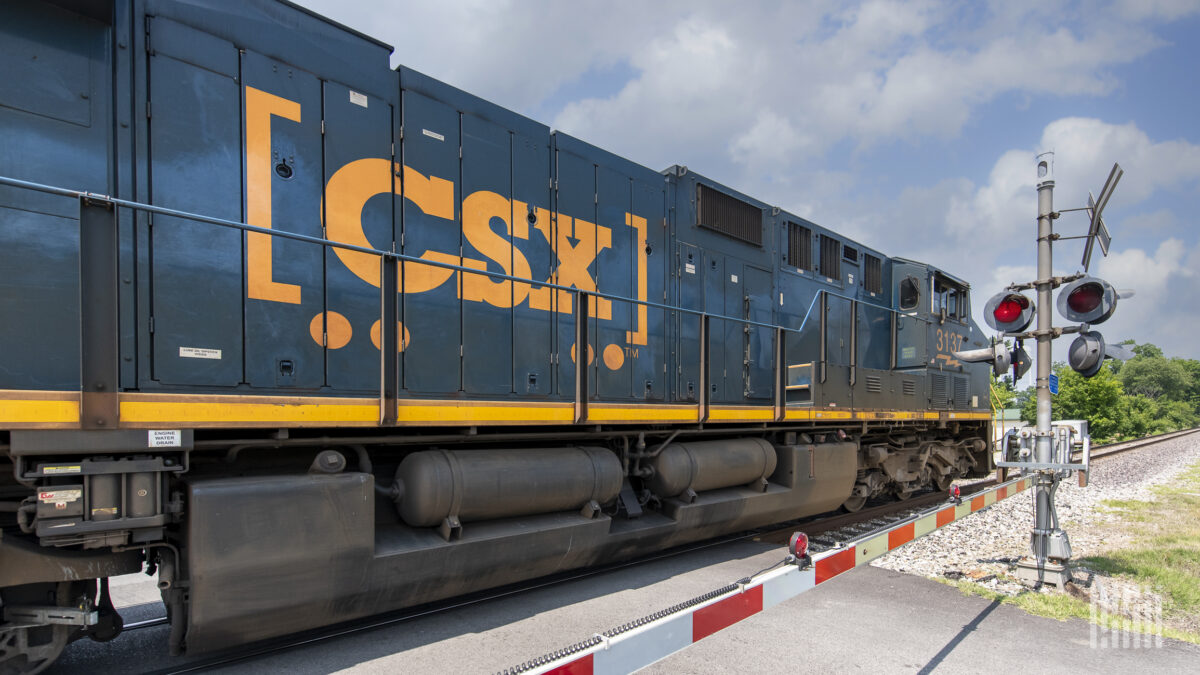
Why it matters: For logistics operators and investors, the sectoral split signals where capital and capacity must reallocate, as traditional residential freight corridors weaken while industrial and AI infrastructure demand tightens warehouse markets and drives specific trucking lanes.
Context: The freight market’s recovery has historically been tied to housing turnover and construction, making the current decoupling—where industrial strength masks broader consumer-driven softness—a structural shift requiring new forecasting models.
"The housing market continues to serve as a persistent drag on freight demand, presenting a major obstacle for transportation and logistics operators. While a booming heavy-industrial sector has shielded certain segments, the." — FREIGHTWAVES
Commentary: The data confirms a re-routing of economic activity, not a broad recovery. Carriers and railroads reliant on dispersed residential construction will face continued pressure, while operators aligned with centralized industrial, data center, and utility builds capture disproportionate gains. This divergence will accelerate consolidation in freight, as networks optimized for the old housing cycle become stranded assets.
Date: June 05, 2026 02:19 PM ET
URL: https://www.freightwaves.com/news/sonar-sitrep-housing-affordability-drags-down-key-freight-sectors
AI Sentiment Score: Negative (60%)
AI Credibility Score: 10.0/10 — High
Scores and text generated by AI analysis of the source article indicated.
Logistics Insights: Economic uncertainty creates caution on long … (Jaxdailyrecord)
Summary: Jacksonville’s industrial real estate market is experiencing a sharp correction in 2026, characterized by a dramatic slowdown in tenant demand for warehousing and distribution space. This follows years of explosive growth fueled by e-commerce and reshoring, with a significant oversupply of speculative midsize space (100,000-300,000 sq ft) delivered in 2024-2025 now sitting largely vacant. Rising interest rates and post-pandemic operational caution are leading firms to optimize existing footprints rather than expand, creating downward pressure on rents and complicating investor underwriting.

Why it matters: This signals a pivotal recalibration for a key Southeast logistics hub, with direct consequences for capital allocation, developer risk models, and the regional concentration of distribution networks.
Context: The Southeast has been a primary beneficiary of supply chain reshoring and e-commerce logistics expansion since 2020, with markets like Jacksonville attracting heavy speculative development. The current cooling period represents the first major test of the durability of that investment thesis outside the pandemic’s abnormal demand cycle.
"There was 6.5 million square feet of speculative industrial space in the 100,000- to 300,000-square-foot range delivered from 2024 through 2025, yet only 25% of that inventory is currently leased." — JAXDAILYRECORD
Commentary: The 25% lease rate for recent midsize deliveries is the operative metric; it reveals a critical misalignment between developer speculation and actual tenant absorption. This could pressure regional lenders with exposure to these projects and likely trigger a consolidation among smaller developers. The correction may temporarily weaken Jacksonville’s competitive position against peer Southeastern ports, but it also creates a window for larger, well-capitalized logistics operators to secure favorable long-term leases, potentially locking in cost advantages for the next cycle.
Date: May 26, 2026 12:00 AM ET
URL: https://www.jaxdailyrecord.com/news/2026/may/26/logistics-insights-economic-uncertainty-creates-caution-on-long-term-leases/
AI Sentiment Score: Negative (75%)
AI Credibility Score: 10.0/10 — High
Scores and text generated by AI analysis of the source article indicated.
FreightWaves Today Debuts as Spot Rates Hit a Record (Freightwaves)
Summary: FreightWaves Today’s debut broadcast coincided with a record spot rate of 383 on the SONAR National Truckload Index, signaling a decisive market turn favoring carriers. The surge is substantiated by linehaul rates, with a significant margin expansion emerging from a record $1.78 per gallon spread between retail and wholesale diesel prices. Operational leaders from Estes Express Lines and JB Hunt describe a rapidly tightening capacity environment, particularly in the Midwest and Texas, driven by structural compliance changes and unexpectedly resilient retail and manufacturing demand. Concurrently, AI-driven freight fraud is reshaping load board access, enforcing a qualified-carrier model, while port data and tariff uncertainty introduce volatility into long-term trade patterns.

Why it matters: The convergence of record rates, structural capacity constraints, and hidden margin mechanics signals a fundamental power shift in freight markets, with immediate implications for carrier profitability, shipper routing strategies, and the viability of different brokerage models.
Context: This follows a prolonged carrier downturn and coincides with the Supreme Court’s broker liability ruling and state-level CDL enforcement, which are systematically removing capacity. The fuel spread dynamic reveals how Wall Street consistently misprices carrier earnings in volatile energy markets.
"The Headline Number: Spot Rates Hit an All-Time Record Craig Fuller set the tone in the opening minutes, and the data backed it up at the close. The SONAR National Truckload Index,." — FREIGHTWAVES
Commentary: The record fuel spread acts as a stealth capital transfer from shippers to sophisticated carriers, disproportionately benefiting large, asset-based operators with cost-plus fuel contracts. This, combined with the fraud-driven shift toward qualified-carrier exchanges like Highway, systematically disadvantages small, non-telematic carriers, accelerating industry consolidation. Estes’s terminal acquisition exemplifies how private, debt-free capital can exploit dislocation, while Seroka’s tariff assessment underscores that policy uncertainty, not just rates, is now a primary operational risk for cross-border logistics.
Date: Wed, 03 Jun 2026 01:20:21 +0000
URL: https://www.freightwaves.com/news/freightwaves-today-launched-on-the-day-spot-rates-hit-an-all-time-record-here-is-everything-you-missed-on-day-one-and-why-you-will-want-to-tune-in-tomorrow
AI Sentiment Score: Negative (75%)
AI Credibility Score: 10.0/10 — High
Scores and text generated by AI analysis of the source article indicated.
Saia’s tonnage growth accelerates in May on easier comp (Freightwaves)
Summary: Saia’s May tonnage growth accelerated to 8.4% year-over-year, up from 6.9% in April, driven by a 4.5% increase in weight per shipment. This improvement comes against a softer prior-year comparison, with two-year-stacked growth slowing from 15% in March to 8% in May. The carrier’s guidance suggests sequential operating margin improvement of 400-450 basis points in Q2, potentially marking its first year-over-year margin improvement in over two years as new terminal expansions begin to turn profitable.

Why it matters: For Southeast logistics observers, Saia’s performance is a leading indicator of regional industrial health and capital allocation efficiency, signaling where freight density and manufacturing activity are concentrating.
Context: LTL carriers like Saia serve as a proxy for regional manufacturing and industrial output; weight per shipment gains typically correlate with higher-margin industrial freight and improving economic cycles.
"Saia reported a pickup in year-over-year tonnage growth in its May update issued Tuesday, though the improvement was measured against a softer prior-year result. The Johns Creek, Georgia-based less-than-truckload carrier reported May." — FREIGHTWAVES
Commentary: The acceleration in weight per shipment—averaging 8% on a two-year stack—suggests Southeast industrial activity is shifting toward denser, higher-value freight, which improves Saia’s revenue quality. This aligns with the PMI new orders subindex hitting 56.8, a leading indicator for future LTL volumes. Saia’s margin guide implies the drag from its aggressive terminal expansion is easing, which could signal a pivot from growth-at-all-costs to measured profitability, reshaping competitive dynamics in the regional LTL sector. The muted stock reaction despite improved fundamentals may reflect market skepticism about sustainability beyond easy comps.
Date: Tue, 02 Jun 2026 17:24:48 +0000
URL: https://www.freightwaves.com/news/saias-tonnage-growth-accelerates-in-may-on-easier-comp
AI Sentiment Score: Positive (42%)
AI Credibility Score: 10.0/10 — High
Scores and text generated by AI analysis of the source article indicated.
ArcBest raises Q2 outlook for LTL, asset-light units (Freightwaves)
Summary: ArcBest raised its Q2 outlook for both its asset-based LTL unit and its asset-light logistics segment, citing disciplined pricing, cost optimization, and favorable fuel dynamics. The LTL unit’s margin guidance improved by 200 basis points, implying a 90.8% adjusted operating ratio, with tonnage growth accelerating on a two-year-stacked basis. The update coincides with a fifth consecutive month of expansion in the ISM Manufacturing PMI, a leading indicator for industrial freight volumes.

Why it matters: ArcBest’s performance is a high-frequency signal of industrial recovery and pricing power in the Southeast’s manufacturing and logistics corridor, with implications for regional capital allocation and labor markets.
Context: LTL carriers like ArcBest’s ABF Freight are bellwethers for regional industrial health; their margin expansion and tonnage mix shifts often precede broader capital expenditure and hiring trends in manufacturing-heavy regions.
"ArcBest upped the second-quarter outlook for both its asset-based and asset-light units Thursday after the market closed. LTL margin guidance raised ArcBest (NASDAQ: ARCB) raised the margin forecast for its asset-based unit,." — FREIGHTWAVES
Commentary: The guidance revision underscores a tightening industrial freight market where carriers are capturing contractual rate increases (averaging 6.3% in Q1) and benefiting from a shift toward heavier truckload shipments. The acceleration in two-year-stacked tonnage growth, paired with the ISM PMI inflection, suggests the Southeast’s manufacturing complex is moving beyond stabilization into a durable recovery phase, which could pressure shipper budgets and attract logistics investment. ArcBest’s stock doubling year-to-date reflects this recalibration, but the flat yield ex-fuel indicates underlying price discipline remains fragile.
Date: June 05, 2026 10:35 AM ET
URL: https://www.freightwaves.com/news/arcbest-raises-q2-outlook-for-ltl-asset-light-units
AI Sentiment Score: Positive (57%)
AI Credibility Score: 10.0/10 — High
Scores and text generated by AI analysis of the source article indicated.
Box rates soar $1,000 in one week on peak rush (Freightwaves)
Summary: Ocean container spot rates on major east-west trades spiked by $1,000 to $1,800 per FEU in a single week following June 1 general rate increases and peak season surcharges. This sharp rise from an already elevated baseline, driven by early peak demand and tight space, compounds existing pressure from the prolonged closure of the Strait of Hormuz. The geopolitical instability was underscored by an MSC vessel being struck by projectiles in the Persian Gulf, with the IRGC claiming responsibility. Concurrently, U.S. regulators eased hours-of-service rules for fertilizer trucking to support domestic crop planting, highlighting the war’s broader supply chain disruptions.

Why it matters: For Southeast-focused observers, these rate spikes directly impact import costs for the region’s major retail distribution hubs and export competitiveness for its agricultural and manufacturing sectors, while the fertilizer trucking rule change has immediate consequences for regional agribusiness.
Context: This surge marks a departure from the moderated rate increases seen through mid-May and signals carriers’ successful implementation of peak season pricing power, despite the trans-Pacific remaining below 2024’s tariff-frontloading highs.
"But June 1 GRIs and PSS (peak season surcharges) introductions have daily rates spiking from $1,000 per FEU to $1,800 per FEU so far this week on these trades, he said, with additional significant increases announced by CMA CGM, Maersk (OTC: AMKBY) and other lines planned for mid-month, too." — FREIGHTWAVES
Commentary: The convergence of structural peak demand and acute geopolitical risk has given carriers a durable pricing lever, likely compressing Q3 margins for import-dependent Southeastern retailers and manufacturers. The regulatory pivot on fertilizer trucking is a tacit admission that the Iran conflict has created domestic agricultural supply vulnerabilities, suggesting further targeted interventions may follow if logistics strain intensifies.
Date: Tue, 02 Jun 2026 18:37:44 +0000
URL: https://www.freightwaves.com/news/box-rates-soar-1000-in-one-week-on-peak-rush
AI Sentiment Score: Positive (42%)
AI Credibility Score: 10.0/10 — High
Scores and text generated by AI analysis of the source article indicated.
The freight recession’s hangover is finally lifting on auction lots (Freightwaves)
Summary: Freight auction activity is accelerating in early 2026 as rising spot rates restore owner-operator confidence, reversing a two-year downturn. Taylor & Martin reports a direct correlation between rate chatter and increased auction attendance and purchases. The market’s responsiveness highlights persistent low barriers to entry, while the pandemic-driven shift to remote bidding has entrenched new demands for equipment provenance verification. The current window is characterized by constrained new truck production and recovering used values, offering some pandemic-era overpayers a chance to exit positions.

Why it matters: Auction lot activity is a leading indicator of small carrier and owner-operator capital allocation, signaling real-time shifts in capacity and regional freight health, with direct implications for equipment financing and secondary market liquidity.
Context: The freight sector is emerging from a prolonged recession marked by oversupply and depressed asset values, following an unprecedented pandemic boom that saw extreme equipment valuations and subsequent lender exposure.
"The freight recession left its fingerprints on carrier margins, fleet headcounts, and the rows of idle trucks lining auction lots around the country. But if the downturn’s signature was oversupply and compressed." — FREIGHTWAVES
Commentary: The speed of this rebound confirms the trucking market’s hyper-cyclical nature, where marginal rate improvements instantly mobilize sidelined capital, risking a rapid return to overcapacity. Taylor & Martin’s ‘Total Trust Protection’ pivot underscores how post-pandemic operational shifts—remote bidding—have permanently altered risk management requirements, making fraud prevention a core service. The delayed reckoning for over-leveraged carriers, where lenders ultimately absorbed losses, reveals a hidden fragility in equipment financing that may tighten credit standards for the next cycle.
Date: Mon, 01 Jun 2026 19:15:43 +0000
URL: https://www.freightwaves.com/news/the-freight-recessions-hangover-is-finally-lifting-on-auction-lots
AI Sentiment Score: Negative (63%)
AI Credibility Score: 10.0/10 — High
Scores and text generated by AI analysis of the source article indicated.
Trucking is driving double-digit growth for this rail freight category (Freightwaves)
Summary: U.S. rail freight traffic grew 7.2% year-over-year for the week ending May 30, driven by a 10% surge in intermodal volume. The intermodal gains are explicitly linked to shippers diverting freight from a turbulent trucking market, where high rejection rates, elevated spot rates, and fuel costs are pushing demand onto rails. Commodity carloads also rose 4%, with grain up 33.8% and metallic ores up 19.5%, while coal and petroleum products declined. North American combined traffic increased 4.9% for the week.

Why it matters: The shift from truck to rail signals a tightening of surface transportation capacity with direct cost and routing implications for Southeast shippers, and highlights how regulatory enforcement is reshaping carrier availability.
Context: Intermodal rail has historically been a cost- and capacity-balancing lever when trucking markets tighten, but the current driver is amplified by targeted federal actions on carrier safety and driver qualifications.
"Intermodal has benefited from shifts by shippers challenged by a soaring trucking market, where tender rejections, rates and fuel costs are reaching weekly highs. The environment for motor carriers has also improved amid a capacity squeeze, the result of multi-pronged enforcement by federal authorities which have weeded out non-English speaking drivers, shuttered sketchy trucking schools, and sidelined chameleon carriers that reemerge with new identities after accidents." — FREIGHTWAVES
Commentary: The data confirms a structural, not cyclical, reallocation of freight: regulatory purges are artificially constraining truck capacity, making rail the default beneficiary. This pressures Southeastern port and distribution infrastructure, where intermodal drayage networks will face strain, and suggests sustained rate inflation for truck-competitive lanes as the capacity correction persists.
Date: June 04, 2026 10:51 AM ET
URL: https://www.freightwaves.com/news/trucking-is-driving-double-digit-growth-for-this-rail-freight-category
AI Sentiment Score: Negative (88%)
AI Credibility Score: 10.0/10 — High
Scores and text generated by AI analysis of the source article indicated.
Peak indicator: $2,600 increase on one U.S. shipping service (Freightwaves)
Summary: CMA CGM, the world’s third-largest container carrier, has announced a $2,600 peak season surcharge per 40- and 45-foot container on shipments from the East Mediterranean to U.S. East Coast ports, effective July 1. This is one of the largest single increases reported, coinciding with a sharp rise in the Ocean Volume Index. A separate $1,000 surcharge applies from the West Mediterranean to the same U.S. destinations.

Why it matters: For Southeast-focused observers, this signals immediate cost pressure on imports entering key regional ports like Savannah, Charleston, and Norfolk, potentially shifting sourcing strategies and inventory timing for regional distributors and manufacturers.
Context: This follows a pattern of aggressive peak season pricing by carriers seeking to capitalize on recovering demand after a prolonged period of rate volatility and overcapacity, with the Mediterranean-to-USEC lane being a particular flashpoint.
"French carrier CMA CGM this week announced one of the biggest, a whopping $2,600 increase on 40- and 45-foot containers moving from the East Mediterranean to U.S. East Coast ports." — FREIGHTWAVES
Commentary: The scale of the increase, against a backdrop of rising volumes, tests the elasticity of demand for Mediterranean-sourced goods and the pricing power of major carriers. Southeast port authorities and logistics clusters should anticipate downstream effects on drayage, warehousing, and regional inflation for affected commodity streams, while shippers may accelerate nearshoring evaluations for Eastern European and Turkish production.
Date: June 04, 2026 08:59 AM ET
URL: https://www.freightwaves.com/news/peak-indicator-2600-increase-on-one-u-s-shipping-service
AI Sentiment Score: Positive (40%)
AI Credibility Score: 10.0/10 — High
Scores and text generated by AI analysis of the source article indicated.
Manufacturing’s recovery broadens as industrial demand leads the freight upcycle (Freightwaves)
Summary: The freight downturn has reversed, driven by a manufacturing-led recovery. The ISM Manufacturing PMI reached 54.0 in May, its highest since May 2022, with broad-based expansion across 16 of 18 industries. Real-time freight data, including record-high transportation prices and flatbed tender rejections above 38%, confirms the transmission of industrial demand into a tightening freight market. This upcycle is distinguished by demand from fixed investment in AI data centers, defense, and reshoring, rather than consumer spending.

Why it matters: The shift to an industrial-led freight cycle signals a more durable recovery with different geographic and sectoral winners, affecting capital allocation, carrier pricing power, and shipper contract strategies.
Context: This follows a 10-month manufacturing contraction and a freight recession defined by overcapacity and weak demand in 2023-24. The current expansion’s composition mirrors policy-driven investment in infrastructure, defense, and technology.
"The pattern indicates producers have absorbed available capacity through elevated throughput rather than idle accumulation — a demand-driven tightening rather than a supply constraint." — FREIGHTWAVES
Commentary: The concentration of strength upstream, with durable-goods orders up 7.9%, suggests the Southeast’s industrial corridors—especially those supporting metals, machinery, and electronics—will see sustained freight volume and infrastructure strain. This structurally favors asset-heavy carriers and contract logistics over spot market exposure, while regions with heavy manufacturing and port complexes for component imports will capture disproportionate economic gains.
Date: Wed, 03 Jun 2026 12:33:59 +0000
URL: https://www.freightwaves.com/news/manufacturings-recovery-broadens-as-industrial-demand-leads-the-freight-upcycle
AI Sentiment Score: Negative (50%)
AI Credibility Score: 10.0/10 — High
Scores and text generated by AI analysis of the source article indicated.
Truckload’s shrinking miles (Freightwaves)
Summary: The average length of haul for U.S. truckload freight has declined linearly from roughly 607 miles in June 2024 to just over 500 miles, a 21% drop. This structural shift, distinct from seasonal patterns, suggests shippers are adapting supply chain strategies toward shorter, more regional moves. Despite this trend theoretically freeing up truck capacity by increasing vehicle turnover, the market remains exceptionally tight, with tender rejections above 17% and spot rates surging. The dynamic is driven partly by intermodal rail regaining share on long-haul lanes and partly by disproportionate growth in freight moves under 250 miles.
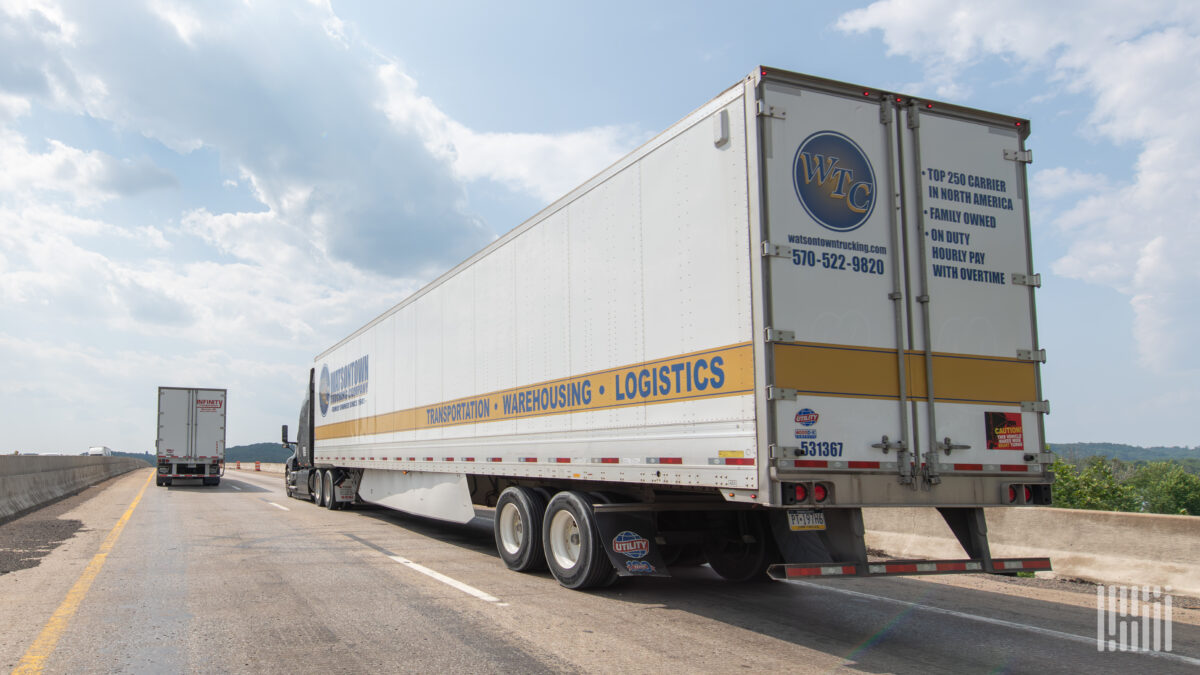
Why it matters: A sustained shift to shorter hauls reconfigures carrier networks, alters competitive dynamics with rail, and challenges the economics of long-haul trucking, with significant implications for logistics costs and regional infrastructure investment.
Context: This trend began in 2024 and has persisted despite a tightening truckload market, indicating it is not merely cyclical. It coincides with railroads recapturing freight share lost during the pandemic and a broader corporate shift toward ‘just-in-case’ inventory strategies that tolerate slower rail transit.
"Since June 2024, the average length of haul in SONAR’s tender data set has declined from approximately 607 miles to just above 500 miles — a 21% drop, with 11% of that occurring over the past year alone, making it a fairly linear trend." — FREIGHTWAVES
Commentary: The persistence of short-haul demand amid a capacity crunch signals a deeper regionalization of freight networks, likely pressuring carriers to reconfigure assets and operations away from transcontinental lanes. This structural change strengthens the hand of intermodal providers on long distances while making the Southeast and other manufacturing hubs more critical for sub-250-mile logistics. If sustained, it could pressure the profitability of asset-heavy, long-haul truckload carriers and increase the strategic value of regional rail-truck intermodal facilities.
Date: June 06, 2026 08:30 PM ET
URL: https://www.freightwaves.com/news/truckloads-shrinking-miles
AI Sentiment Score: Negative (57%)
AI Credibility Score: 10.0/10 — High
Scores and text generated by AI analysis of the source article indicated.
Energy Logistics Freight Market Update | C.H. Robinson (Chrobinson)
Summary: C.H. Robinson’s freight market update for the energy sector details a structural shift in logistics contracting, driven by Middle East conflict-induced fuel volatility and tightening U.S. trucking capacity. Shippers are moving to decouple fuel costs from fixed rates, adopting indexed surcharges, while simultaneously grappling with scarce heavy-haul capacity due to data center and battery manufacturing demand. The advisory emphasizes that rate certainty is being replaced by strategies prioritizing carrier reliability, network breadth, and longer-term capacity commitments.

Why it matters: This signals a fundamental recalibration of risk allocation in industrial logistics, where capital-intensive projects in the Southeast’s energy and tech sectors face direct cost and schedule impacts from procurement practices.
Context: The shift mirrors broader supply chain trends toward variable cost structures and resilience over pure cost minimization, but is accelerated in the capital-project-heavy energy sector by concurrent demand shocks from industrial electrification and compute infrastructure.
"A lower rate on paper is less meaningful than the rate you’ll pay if your contract freight keeps getting pushed into the spot market." — CHROBINSON
Commentary: The memo operationalizes a move from price-based to performance-based procurement. For Southeast industrial parks and gigafactories, this means logistics budgets could become less predictable but potentially more resilient, favoring large, integrated providers like C.H. Robinson over spot-market reliance. The explicit linkage of data center construction to heavy-haul scarcity reveals a new, concrete constraint on the region’s much-hyped industrial renaissance.
Date: May 29, 2026 12:00 AM ET
URL: https://www.chrobinson.com/en-gb/resources/insights-and-advisories/north-america-freight-insights/may-2026-freight-market-update/industry-insights/energy/
AI Sentiment Score: Negative (85%)
AI Credibility Score: 10.0/10 — High
Scores and text generated by AI analysis of the source article indicated.
FedEx Freight embarks on journey as standalone LTL carrier (Freightwaves)
Summary: FedEx Freight began trading as a standalone LTL carrier on the NYSE under ticker FDXF, following a spinoff from FedEx Corp. The company, now the largest pure-play LTL operator in North America, has outlined medium-term financial targets including 4-6% revenue CAGR and 10-12% adjusted operating income growth, aiming to improve operating margins from ~12% to 15%. It plans to focus on higher-margin small-to-midsize shippers and verticals like healthcare and data centers, while optimizing its network and reducing debt leverage to 2.5x within a year.

Why it matters: The spinoff creates a new, focused public entity in the capital-intensive logistics sector, with specific financial targets and operational strategies that will test pure-play LTL economics and influence competitive dynamics and capital allocation in Southeastern transportation hubs.
Context: This follows a broader corporate trend of conglomerate unbundling to unlock shareholder value and sharpen operational focus, particularly in transport and logistics where parcel and freight networks have distinct economics.
"The company forecast compound annual growth rates of 4% to 6% for revenue and 10% to 12% for adjusted operating income. The outlook implies high-20% incremental margins at the midpoints of the ranges, assuming 2026 fiscal year baselines of $8.7 billion in revenue and $1.1 billion in adjusted operating income." — FREIGHTWAVES
Commentary: The projected high-20% incremental margins are the key operational bet: they assume FedEx Freight can decouple from parcel’s bundled pricing and extract premium yields from targeted verticals while driving cost out through automation. Success would pressure asset-heavy rivals like Old Dominion and XPO on efficiency, while failure would reveal the limits of scale in a fragmented, cyclical industry. The planned shift from leased to owned terminals in key markets signals a long-term commitment to controlling strategic Southeast gateways, potentially reshaping local real estate and labor dynamics.
Date: Mon, 01 Jun 2026 14:34:44 +0000
URL: https://www.freightwaves.com/news/fedex-freight-embarks-on-journey-as-standalone-ltl
AI Sentiment Score: Negative (62%)
AI Credibility Score: 10.0/10 — High
Scores and text generated by AI analysis of the source article indicated.
Intermodal and U.S. Ports Freight Market Update (Chrobinson)
Summary: Intermodal rail is gaining competitive ground against trucking in the U.S. freight market, driven by sustained truckload demand and volatile diesel prices. While rail rates are projected to rise only modestly (low single digits for most of 2026), the widening rate gap is making intermodal a viable alternative on more lanes. Regional pricing varies, with West Coast outbound contracts trending higher ahead of peak season, while other regions see increases roughly aligned with inflation. Shippers are advised to adopt blended strategies and pilot new intermodal lanes to secure capacity and mitigate truckload cost inflation.
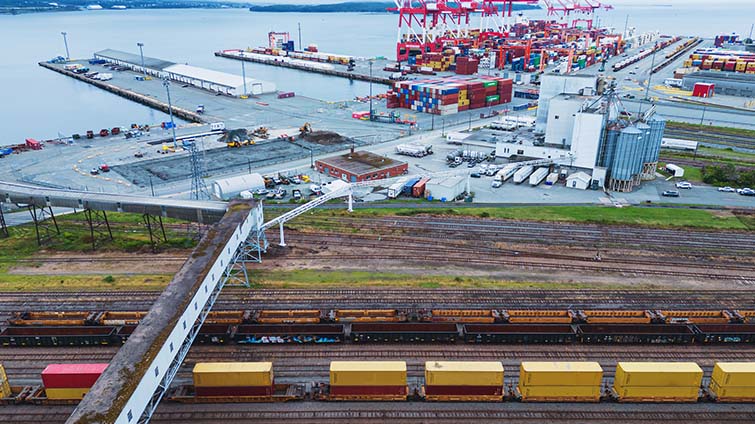
Why it matters: This shift signals a potential reallocation of freight volumes and capital expenditure, affecting carrier networks, port throughput, and regional logistics infrastructure competitiveness.
Context: The truckload market has been capacity-constrained and price-volatile for several years, making cost-sensitive shippers periodically reevaluate intermodal, though service reliability has historically been a barrier.
"Rail rate increases are projected to remain in the low single digits for most of 2026, widening the rate gap between rail and truck." — CHROBINSON
Commentary: The widening rate differential isn’t just a pricing story; it pressures logistics managers to redesign networks, potentially shifting volume to rail corridors and altering the economic gravity of inland ports and intermodal ramps, particularly in the Southeast. If sustained, this could begin to reallocate capital investment in warehousing and drayage capacity toward rail-served markets, subtly reshaping regional infrastructure advantages.
Date: May 30, 2026 12:00 AM ET
URL: https://www.chrobinson.com/en-gb/resources/insights-and-advisories/north-america-freight-insights/may-2026-freight-market-update/intermodal/
AI Sentiment Score: Negative (85%)
AI Credibility Score: 10.0/10 — High
Scores and text generated by AI analysis of the source article indicated.
Post ID: febcb9a5