
Southeast Industrial & Logistics Real Estate Trends
Industrial Real Estate is Tightening Again, and Now it Favors Last-Mile Owner-Operators (Freightwaves)
Summary: The industrial real estate market, after a post-pandemic oversupply, is tightening as demand recovers and new construction starts hit decade lows. This favors owner-operators with infill, last-mile portfolios, as tenant demand shifts toward operational infrastructure like power capacity for automation and data center support. The bulk distribution segment has also recovered sharply, moving from oversupply to undersupply in key markets like Atlanta and Texas.

Why it matters: The shift signals a structural change in industrial real estate, privileging operators with strategic, power-ready infill assets and reshaping capital and development flows toward last-mile and data center-adjacent logistics.
Context: This follows a cycle where pandemic-driven leasing frenzy led to overbuilding, then a correction. The current tightening is driven by constrained supply and new demand drivers like e-commerce speed expectations and AI/data center spillover.
"Since Q3 of last year, we’ve seen availability at the national level go down for the first time since 2021,” Wylie said. “You combine that with a national construction pipeline that’s down 35%, new starts at 10-year lows, infill development becoming much more difficult, and we like how Link’s last-mile portfolio is positioned." — FREIGHTWAVES
Commentary: The convergence of recovering demand and a frozen supply pipeline creates a landlord’s market, particularly for infill assets. This will accelerate capital concentration among established owner-operators like Link Logistics, while developers face heightened barriers. The emphasis on operational power and proximity to data centers suggests industrial real estate is becoming a critical, specialized utility for the AI and e-commerce supply chain, not just passive square footage.
Date: Thu, 28 May 2026 18:36:24 +0000
URL: https://www.freightwaves.com/news/industrial-real-estate-is-tightening-again-and-now-it-favors-last-mile-owner-operators
AI Sentiment Score: Negative (50%)
AI Credibility Score: 10.0/10 — High
Scores and text generated by AI analysis of the source article indicated.
Southeast Industrial Market Report – Q1 2026 | Cornovus Capital (Cornovuscapital)
Summary: The Southeast U.S. industrial market registered a definitive cyclical pivot in Q1 2026, with national vacancy declining from its peak, net absorption surging 52% year-over-year, and asking rents posting their first positive annual growth since 2024. The Southeast captured an outsized share of this rebound, led by Atlanta’s strongest first quarter in four years and tight markets like Nashville, while port-driven demand in Savannah and Charleston surged. The recovery is underpinned by disciplined supply, with completions falling 27% to a multi-year low, and a resurgence in big-box leasing signaling renewed long-term commitments.

Why it matters: The inflection marks a critical turning point for capital deployment, asset valuation, and refinancing strategies across the region’s industrial real estate, with clear winners and losers emerging based on submarket fundamentals and sponsor quality.
Context: This follows a multi-year supply wave and a period of occupier hesitation, particularly in EV-adjacent manufacturing, now giving way to a more pragmatic, hybrid-driven reshoring cycle.
"Q1 2026 marked the cyclical pivot the U.S. industrial sector has been waiting for since 2022. Industry-wide tracking converged on a consistent reading: vacancy peaked, completions decelerated to multi-year lows, occupier demand held durable, and asking rents posted their first positive year-over-year prints since 2024." — CORNOVUSCAPITAL
Commentary: The report signals a decisive shift from a tenant’s to a landlord’s market in select, well-positioned submarkets, particularly inland logistics hubs and port-proximate nodes with diversified demand drivers. This will accelerate capital stratification, favoring sponsors with operational discipline and assets in the I-85 North, Charlotte small-bay, and Nashville mid-bay corridors, while transitional assets in oversupplied pockets will require structured capital. The concurrent stabilization of debt markets and the looming 2026-2027 CMBS maturity wall create a narrow window for refinancing and selective acquisitions before potential cap rate compression on core product.
Date: May 14, 2026 12:00 AM ET
URL: https://cornovuscapital.com/southeast-industrial-market-report-q1-2026/
AI Sentiment Score: Negative (66%)
AI Credibility Score: 9.8/10 — High
Scores and text generated by AI analysis of the source article indicated.
Cushman & Wakefield Market Report: Peak Industrial Vacancy … (Markets.Ft)
Summary: Cushman & Wakefield’s Q1 2026 industrial market report indicates a sector moving past its cyclical peak vacancy, with national vacancy at 7.0%, down from its Q3 2025 high. Net absorption remained robust at 40 million square feet for the quarter, while new supply completions fell to their lowest level since 2017. Construction starts, however, increased annually, with notable activity in inland hubs like Memphis, Charlotte, and Columbus. The report frames this as a market stabilization, with asking rent growth strengthening to 2.1% nationally.

Why it matters: For capital allocators and corporate occupiers, the inflection from vacancy growth to compression signals a shift in negotiating leverage and underwriting assumptions for industrial assets, particularly in secondary distribution hubs.
Context: The industrial sector experienced a significant supply surge post-pandemic, leading to rising vacancy through 2025; this report suggests the absorption wave has finally begun to outpace new deliveries.
"### Cushman & Wakefield Market Report: Peak Industrial Vacancy Likely in Rearview Mirror as Demand Holds and Supply Slows NEW YORK–(BUSINESS WIRE)–Apr. 14, 2026– The U.S. industrial real estate market entered 2026." — MARKETS.FT
Commentary: The data suggests a soft landing for industrial real estate, avoiding a severe oversupply crisis. The concentration of new construction in specific inland markets like Memphis and Charlotte indicates capital is betting on continued supply chain recalibration towards cost-efficient, resilient nodes. This will likely accelerate rent growth in those targeted corridors while leaving oversupplied coastal markets to recover more slowly. The report’s focus on the 500,000-square-foot segment highlights where operational demand—driven by user purchases and large-scale leasing—will most aggressively compress vacancy.
Date: April 14, 2026 12:00 AM ET
URL: https://markets.ft.com/data/announce/detail?dockey=600-202604141412BIZWIRE_USPRX____20260414_BW548520-1
AI Sentiment Score: Positive (60%)
AI Credibility Score: 10.0/10 — High
Scores and text generated by AI analysis of the source article indicated.
SPRING 2026 | Dallas Fort Worth Commercial Real Estate (Leedallas)
Summary: The Dallas-Fort Worth industrial real estate market shows resilience in Q1 2026, with net absorption of 9.66 million square feet and a slight vacancy rate decline to 9.21%. Average asking rents rose to $9.56 per square foot, while 33.4 million square feet remained under construction. The report frames this as a transition from rapid expansion to a more balanced, sustainable growth cycle, with DFW solidifying its position as a top-tier national logistics hub.

Why it matters: For capital allocators and corporate strategists, DFW’s sustained absorption and rent growth signal where logistics capital remains sticky, even as transaction volumes cool, offering a bellwether for broader U.S. industrial real estate normalization.
Context: DFW has been a primary beneficiary of the post-pandemic logistics boom and supply chain reconfiguration, attracting massive speculative development. The current phase tests whether demand can organically absorb the historic pipeline of new supply without significant dislocation.
"The Dallas-Fort Worth (DFW) industrial real estate market entered Q1 2026 on stable footing, continuing its shift from the rapid industrial expansion seen in recent years toward a more balanced and sustainable growth cycle." — LEEDALLAS
Commentary: The data suggests a soft landing is in progress, not a downturn. The decline in investment sales volume alongside rising per-square-foot prices indicates a flight to quality and a more selective capital environment. This maturation phase could pressure secondary locations and weaker sponsors, while institutional capital consolidates around premier DFW assets. The region’s ability to maintain positive net absorption amidst significant new deliveries underscores its entrenched role in national distribution networks.
Date: April 16, 2026 12:00 AM ET
URL: https://leedallas.com/news/dallas-commercial-real-estate-industrial-market-report-spring-2026/
AI Sentiment Score: Positive (50%)
AI Credibility Score: 9.9/10 — High
Scores and text generated by AI analysis of the source article indicated.
Peak Industrial Vacancy Likely in Rearview Mirror as … (Ir.Cushmanwakefield)
Summary: Cushman & Wakefield’s Q1 2026 industrial market report indicates the U.S. vacancy rate has likely passed its cyclical peak, stabilizing at 7.0%. Net absorption remained robust at 40 million square feet for the quarter, while new supply completions fell to their lowest level since 2017. The construction pipeline, however, increased for a third consecutive quarter to 284.1 msf, with notable activity in inland hubs like Memphis, St. Louis, and Charlotte. Asking rent growth strengthened to 2.1% annually, with nearly two-thirds of markets reporting positive growth.

Why it matters: This inflection signals a return to landlord leverage in key logistics corridors, influencing capital allocation, development feasibility, and occupier costs for supply chain networks.
Context: The industrial sector has been correcting from a post-pandemic construction boom and demand normalization, with vacancy rates rising through 2025.
"With steady demand, muted completions and fewer vacant sublease blocks coming to market, national vacancy has likely moved past its cyclical peak." — IR.CUSHMANWAKEFIELD
Commentary: The report’s central claim—that peak vacancy is in the rearview—is supported by decelerating supply, but the concurrent rise in the construction pipeline suggests developers are responding to tightening fundamentals in select markets. This sets the stage for a bifurcated recovery: rent growth and investor confidence will concentrate in high-demand inland hubs, while coastal and secondary markets may lag. The shift toward user purchases in the 500,000-square-foot segment indicates occupiers are prioritizing control and resilience over pure lease flexibility.
Date: April 14, 2026 12:00 AM ET
URL: https://ir.cushmanwakefield.com/news/press-release-details/2026/Cushman--Wakefield-Market-Report-Peak-Industrial-Vacancy-Likely-in-Rearview-Mirror-as-Demand-Holds-and-Supply-Slows/default.aspx
AI Sentiment Score: Positive (77%)
AI Credibility Score: 9.9/10 — High
Scores and text generated by AI analysis of the source article indicated.
Google plans new logistics warehouse facility in Kannapolis (Charlotteobserver)
Summary: Google is leasing a 729,872-square-foot logistics warehouse in Kannapolis’s Overlook 85 Industrial Park, a seven-year-plus commitment distinct from its data center expansions elsewhere in North Carolina. This follows recent announcements of a $1 billion data center expansion in Lenoir and previous multi-hundred-million-dollar investments in the state. The company is simultaneously deploying a $2 million Energy Impact Fund in Caldwell County to mitigate community concerns over energy use from its data center operations.
Why it matters: It signals a diversification of Google’s physical footprint in the Southeast beyond hyperscale data centers, impacting regional logistics networks, industrial real estate, and the political economy of tech expansion.
Context: The Southeast U.S. is experiencing concentrated investment in data centers and supporting infrastructure, driven by AI demand, which is triggering local pushback on energy and land use.
"But the city stressed that this operation would not be for a data center, which remains a source of contention for many residents alarmed by their proliferation across the state." — CHARLOTTEOBSERVER
Commentary: Google’s explicit distinction of the Kannapolis facility as non-data-center logistics is a calibrated response to local political friction, separating growth in physical supply chain capacity from the more contentious compute infrastructure. The parallel creation of a local Energy Impact Fund is a direct, granular concession to community concerns, setting a precedent for how tech giants may operationalize ‘social license’ in specific counties. This bifurcated strategy—expanding essential backend operations while deploying targeted community funds—allows continued capital deployment while managing reputational risk at the municipal level.
Date: April 28, 2026 12:00 AM ET
URL: https://www.charlotteobserver.com/news/business/article315565048.html
AI Sentiment Score: Negative (50%)
AI Credibility Score: 10.0/10 — High
Scores and text generated by AI analysis of the source article indicated.
Big Box Industrial Market Rebounds As Demand Strengthens (Globest)
Summary: The North American big box industrial market rebounded in late 2025, with new leasing hitting 145.6 million square feet—the strongest since 2022—and net absorption nearly doubling to 85.6 million square feet. Demand was broad-based, driven by 3PLs, retailers, e-commerce, and reshoring, while a sharp 70% contraction in the construction pipeline helped push national vacancy down 108 basis points to 10%. The recovery is uneven: logistics-heavy metros like Columbus and Greenville-Spartanburg led with vacancy plunging over 800 basis points, while coastal markets like Seattle-Puget Sound continue to lag with vacancy rising to 14.8%.

Why it matters: This signals a structural shift in industrial real estate, where disciplined capital allocation and reshoring are now outweighing speculative development, creating clear winners and losers among regional hubs.
Context: The market is correcting from a post-pandemic supply glut, with the current cycle defined by a collapse in new construction and a flight to quality and scale in large-format facilities.
"The North American big box industrial market gained momentum in the second half of 2025, marking a clear shift from the softness of prior years toward a more balanced environment, according to." — GLOBEST
Commentary: The bifurcation between inland logistics corridors and coastal ports suggests capital and logistics networks are re-concentrating around cost and efficiency, not just port adjacency. Columbus’s 862-basis-point vacancy drop versus Seattle’s persistent oversupply illustrates how 3PL network optimization is reshaping geographic advantage. This could pressure institutional portfolios overexposed to secondary coastal markets while accelerating rent growth in tightening primary hubs like Atlanta and Dallas.
Date: May 01, 2026 12:00 AM ET
URL: https://www.globest.com/amp/2026/05/01/big-box-industrial-market-rebounds-as-demand-strengthens/
AI Sentiment Score: Negative (62%)
AI Credibility Score: 10.0/10 — High
Scores and text generated by AI analysis of the source article indicated.
Industrial Real Estate Vacancy Stabilizes at 7.1 Percent in 2026 (Innovativelogisticsgroup.Io)
Summary: The U.S. industrial real estate market shows a clear inflection point: vacancy rates have stabilized at 7.1% for two consecutive quarters, net absorption has rebounded to over 50 million square feet, and new construction deliveries have fallen to a nine-year low. This convergence of signals—stabilizing vacancy, rising absorption, and constrained supply—indicates a tightening freight environment is imminent, with a lag of 12 to 18 months. The market is bifurcated, with small-bay spaces under 50,000 sq ft experiencing much tighter conditions (4.8% vacancy) than big-box facilities.
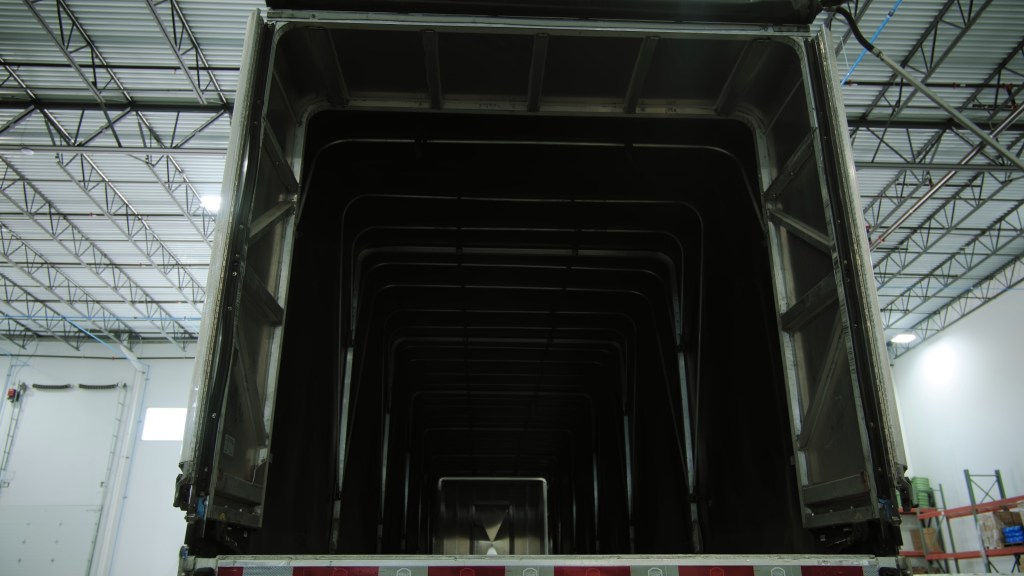
Why it matters: For logistics operators and carriers, these leading indicators provide a critical 90-180 day window to secure lanes, lock in contracts, and position capacity before freight rates firm and market leverage shifts.
Context: This follows two years of rising vacancy and slumping absorption, marking a reversal from a period of oversupply and softening demand. The data represents a classic supply-demand inflection where disciplined construction meets recovering tenant demand.
"The U.S. industrial real estate market just gave the freight industry one of the cleanest forward signals in a year. After two years of rising vacancy and slumping absorption, vacancy stabilized at." — INNOVATIVELOGISTICSGROUP.IO
Commentary: The bifurcation between small-bay and big-box vacancy rates creates a tactical map for carriers: lanes anchored in dense, small-footprint industrial submarkets will tighten first, offering early-mover advantage. The sharp drop in new construction, the lowest since 2017, suggests developers have finally aligned with demand, setting the stage for sustained rent growth and carrier pricing power by late 2026. Shippers’ procurement teams will soon be forced to compete for capacity, reversing the recent buyer’s market dynamic.
Date: April 30, 2026 12:00 AM ET
URL: https://innovativelogisticsgroup.io/small-fleet-growth/industrial-real-estate-vacancy-stabilizes-at-7-1-percent-in-2026-how-small-carriers-should-read-the-warehouse-market-signal-for-lane-strategy/
AI Sentiment Score: Negative (50%)
AI Credibility Score: 8.0/10 — High
Scores and text generated by AI analysis of the source article indicated.
HOT PROPERTIES: Commercial real estate deals across South Carolina (Scbiz)
Summary: Weekly commercial real estate transaction data across South Carolina shows sustained activity in industrial, retail, and land sectors, with notable deals in Upstate, Lowcountry, and Midlands regions. Key transactions include a 36,575-square-foot industrial facility sale in Spartanburg, a $7.5 million land sale in Irmo, and multiple lease extensions and renewals across retail and office spaces.

Why it matters: These granular transactions signal capital allocation, business expansion, and land use shifts, providing leading indicators for regional economic health and commercial real estate market dynamics in the Southeast.
Context: Commercial real estate transaction data serves as a high-frequency, ground-level proxy for business investment, supply chain positioning, and local economic momentum, often preceding broader macroeconomic reports.
"The sale of 2275 Southport Road in Spartanburg included one acre of land for $130,000. Cedar Springs Properties LLC purchased the property from Billie H. McConnel Trustee." — SCBIZ
Commentary: The volume of small-to-mid-sized industrial and retail transactions, particularly in Spartanburg and Greenville, suggests a continued decentralization of logistics and light manufacturing from primary hubs. The $7.5 million land sale in Irmo for 19.16 acres points to speculative or development pressure in the Midlands, likely tied to infrastructure or residential spillover. The prevalence of lease renewals and extensions, as seen with College Park Center LLC in Ladson, indicates tenant retention and stability in certain retail corridors despite broader sector headwinds. The data collectively reflects a market prioritizing functional, smaller-footprint industrial space and land for future development over large-scale office commitments.
Date: Fri, 29 May 2026 14:32:16 +0000
URL: https://scbiz.com/south-carolina-hot-properties-commercial-real-estate/
AI Sentiment Score: Negative (50%)
AI Credibility Score: 10.0/10 — High
Scores and text generated by AI analysis of the source article indicated.
Industrial Market Updates & Insights (Cornovuscapital)
Summary: The U.S. industrial real estate market showed a definitive cyclical recovery in Q1 2026, with national vacancy falling, net absorption surging, and new deliveries dropping to a near-decade low. The Southeast region captured a disproportionate share of this rebound, with Atlanta, Charlotte, Nashville, Savannah, and Charleston all posting strong absorption and tightening vacancy. This performance is underpinned by a concentration of reshoring megaprojects and superior logistics infrastructure.
Why it matters: The Southeast’s accelerating dominance in industrial absorption and capital deployment signals a durable geographic shift in U.S. manufacturing and logistics, with material consequences for capital allocation, labor markets, and regional economic power.
Context: This follows a multi-year period of oversupply and softening demand post-pandemic boom, making the Q1 2026 pivot a critical signal for investors and developers. The Southeast has been the primary beneficiary of reshoring and nearshoring capital flows since 2022.
"Q1 2026 marked the cyclical pivot the U.S. industrial sector has been waiting for since 2022. National vacancy moved off its cyclical peak to approximately 7.0%, net absorption registered approximately 40 million." — CORNOVUSCAPITAL
Commentary: The data confirms the Southeast is not merely participating in a recovery but structurally consolidating its position as the nation’s industrial core. The clustering of automotive and battery megaprojects creates a self-reinforcing ecosystem that will drain talent and capital from other regions, particularly the Midwest and Northeast. Port markets like Savannah and Charleston are evolving from gateways into full-fledged industrial hubs, reshaping domestic supply chains. For institutional capital, this implies a long-term overweight to Southeastern industrial assets, while developers in other regions face a higher bar for justifying new speculative construction.
Date: May 14, 2026 12:00 AM ET
URL: https://cornovuscapital.com/industrial-market-update/
AI Sentiment Score: Positive (60%)
AI Credibility Score: 7.0/10 — Medium
Scores and text generated by AI analysis of the source article indicated.
Q4 2025 Global Logistics Real Estate Outlook | Prologis Research (Youtube)
Summary: Prologis Research reports a cyclical inflection in global logistics real estate for Q4 2025, marked by strengthening demand, disciplined supply, and rent stabilization. Key data points include a 12% quarter-over-quarter increase in global net absorption, a 10-basis-point decline in U.S. vacancy, and a marginal 0.2% decline in global rents—the smallest since 2023. The update notes Europe’s return to rent growth, sustained strength in Latin America, and a 0.6% quarter-over-quarter increase in global property values driven by U.S. and Latin American gains.
Why it matters: For investors and operators in the Southeast, these global trends signal a tightening market that will intensify competition for prime logistics sites and capital, directly impacting regional development pipelines and asset valuations.
Context: This follows a prolonged period of oversupply and rent softness post-pandemic, with the sector now showing signs of a durable recovery aligned with long-term e-commerce and supply chain modernization drivers.
"Alejandra Chavellas of Prologis Research shares a global logistics real estate market update, covering the cyclical inflection underway as vacancy peaks, demand strengthens and market fundamentals turn more constructive. In this Logistics." — YOUTUBE
Commentary: The inflection from oversupply to demand-led absorption, particularly the U.S. absorption/completion crossover, suggests capital discipline is finally aligning with network expansion plans. For the Southeast, this implies a rapid absorption of existing speculative space and heightened competition for build-to-suit opportunities, likely accelerating rent growth in primary inland and port-adjacent markets ahead of the broader global curve.
Date: May 18, 2026 12:00 AM ET
URL: https://www.youtube.com/watch?v=1OxjLAPtdF8
AI Sentiment Score: Positive (40%)
AI Credibility Score: 10.0/10 — High
Scores and text generated by AI analysis of the source article indicated.
How Tariffs Are Reshaping Warehouse Demand in 2026 | WareCRE (Warecre)
Summary: Tariffs are driving a dual-channel surge in warehouse demand, with short-term inventory front-loading and long-term reshoring of manufacturing. National industrial absorption is forecast to jump from 155 million SF in 2025 to 200 million SF in 2026. This pressure is concentrated in structurally undersupplied small-bay space (under 10,000 SF), where vacancy rates are half those of big-box facilities.
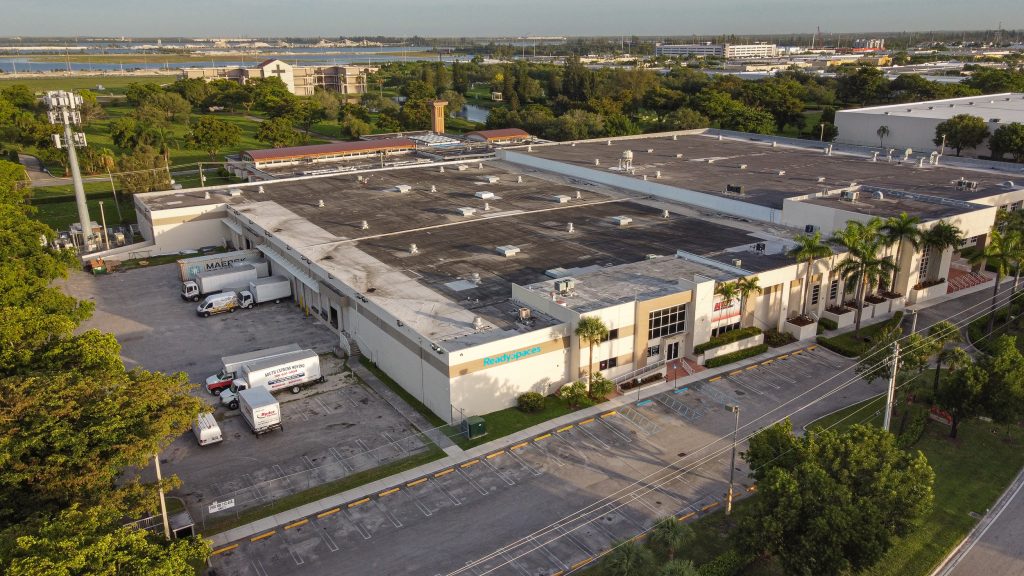
Why it matters: For regional economic observers, this signals a tangible, accelerated shift of production, inventory capital, and logistics infrastructure into the Southeast and Central U.S., with immediate consequences for local real estate markets, labor demand, and supply chain resilience.
Context: This follows a multi-year trend of supply chain reconfiguration, but tariffs are now providing a quantifiable, policy-driven accelerator, moving forecasts from gradual adjustment to step-function growth.
"- Tariffs are driving warehouse demand through two channels: short-term inventory front-loading (businesses pre-buying goods before rates increase) and long-term reshoring of manufacturing. – National industrial absorption is forecast to hit 200M." — WARECRE
Commentary: The mismatch between demand (small-bay) and supply (big-box) creates a friction point where policy intent meets physical infrastructure reality. This will likely force capital into adaptive reuse projects and push rental rates in secondary markets beyond previous projections, benefiting nimble local developers while straining smaller import-dependent businesses.
Date: April 28, 2026 12:00 AM ET
URL: https://warecre.com/cre-insights/industrial-101/tariffs-reshaping-warehouse-demand-2026/
AI Sentiment Score: Positive (50%)
AI Credibility Score: 10.0/10 — High
Scores and text generated by AI analysis of the source article indicated.
This large warehouse campus south of Atlanta won’t sit … (Ajc)
Summary: The Atlanta industrial real estate market, a post-pandemic boomtown for warehouse construction, is showing signs of normalization after a period of oversupply. Vacancy rates, which had ballooned from under 4% in 2021 to over 10% by mid-2025, have begun to recede, settling at 9.6% in March 2026. Rent growth has slowed dramatically to 2.3% year-over-year, a stark contrast to the 20%+ annual increases seen earlier in the cycle. The market is now absorbing the new space, with large leases like Sabert’s and others signaling renewed, if more measured, demand.
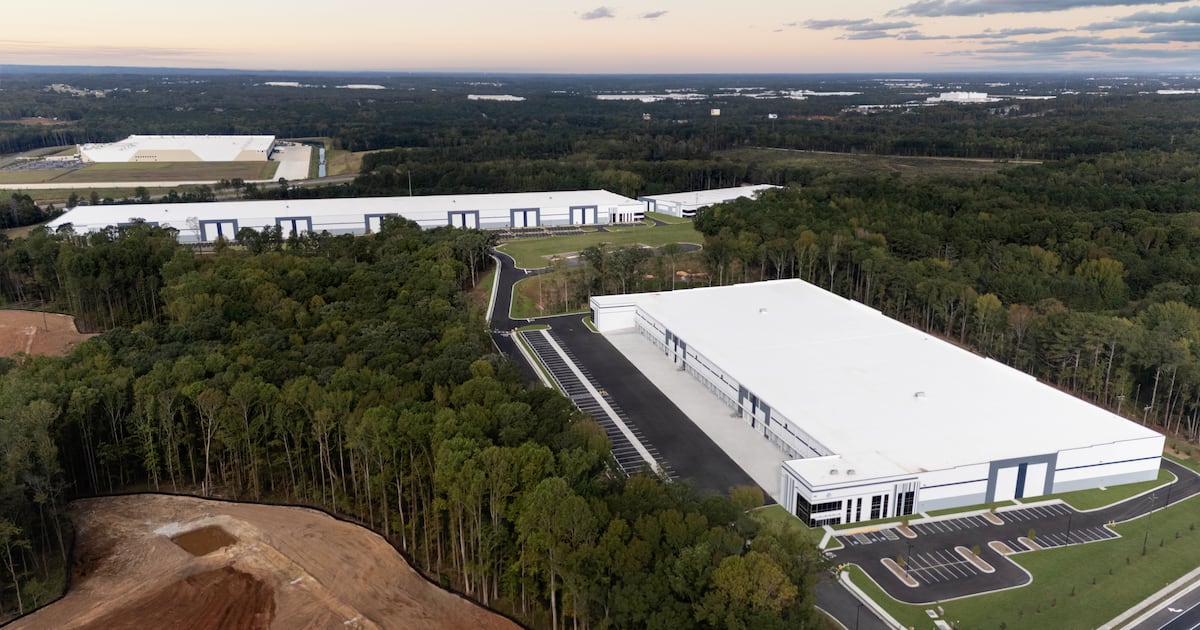
Why it matters: This indicates a maturing of the Southeast’s logistics boom, shifting the calculus for developers, investors, and corporate occupiers from speculative expansion to disciplined, demand-driven growth.
Context: The industrial sector’s trajectory has diverged sharply from the office market, where high vacancies persist with little new construction. Atlanta’s experience mirrors a broader Sunbelt dynamic of rapid build-out followed by market correction.
"Those projects had a queue of companies champing at the bit to occupy those warehouses as soon as possible. But the frenzy led to an oversupply of new space, leaving some new." — AJC
Commentary: The data suggests Atlanta’s industrial market is finding a new equilibrium, not collapsing. The deceleration in rent growth and the absorption of oversupply without a crisis demonstrates the underlying strength of the region’s logistics infrastructure and its resilience to global shocks. This recalibration will likely favor established operators with scale over speculative developers, and may begin to pull capital away from overbuilt submarkets toward more targeted, tenant-led projects.
Date: May 06, 2026 12:00 AM ET
URL: https://www.ajc.com/business/2026/05/this-large-warehouse-campus-south-of-atlanta-wont-sit-empty-much-longer/
AI Sentiment Score: Positive (62%)
AI Credibility Score: 10.0/10 — High
Scores and text generated by AI analysis of the source article indicated.
How infrastructure and cost are influencing Raleigh-Durham … (Capitalanalyticsassociates)
Summary: Raleigh-Durham’s growth continues to outpace most U.S. metros, with $3.8 billion in announced corporate investment in 2025. However, physical and human infrastructure is failing to scale with demand. A projected 60% rise in North Carolina’s electricity demand by 2040 is pushing development to outer counties, while a national construction labor shortfall of 349,000 workers in 2026 adds cost and schedule risk.

Why it matters: Infrastructure bottlenecks are beginning to redirect capital flows and site selection within a leading growth corridor, signaling a maturation phase where raw demand meets hard constraints.
Context: The Southeast has been the primary beneficiary of domestic migration and industrial reshoring, but sustained growth is now testing the capacity of regional power grids and labor pools.
"- • Growth remains strong, but power and infrastructure constraints are limiting development. – • Large-scale projects are rising, increasing complexity and labor pressure. – • Reshoring and investor demand support long-term." — CAPITALANALYTICSASSOCIATES
Commentary: The Triangle’s next growth phase will be defined by dispersion, not density, as utilities and developers trade proximity for viable sites. This shifts competitive advantage toward secondary markets with pre-permitted land and complicates the value proposition for major corporate campuses. The labor shortfall is a national problem, but its local impact will be amplified by concurrent demand from data centers, reshoring, and residential construction, likely accelerating wage inflation and project delays.
Date: April 15, 2026 12:00 AM ET
URL: https://capitalanalyticsassociates.com/how-infrastructure-and-cost-are-influencing-raleigh-durham-development/
AI Sentiment Score: Positive (50%)
AI Credibility Score: 10.0/10 — High
Scores and text generated by AI analysis of the source article indicated.
With $47M financing, company launches construction project along Swamp Rabbit Trail (Scbiz)
Summary: 13th Floor Investments, a Miami-based real estate firm, has broken ground on ‘Venture on the Trail,’ a 222-unit multifamily project in Greenville, South Carolina, financed with $47 million from CIBC. This marks the first phase of a larger 250-acre mixed-use development adjacent to the Prisma Health Swamp Rabbit Trail. The project leverages direct trail access and extensive amenities, capitalizing on Greenville’s rapid population growth and demand for lifestyle-oriented housing. It also represents the redevelopment of a remediated brownfield site, the former Union Bleachery Mill.
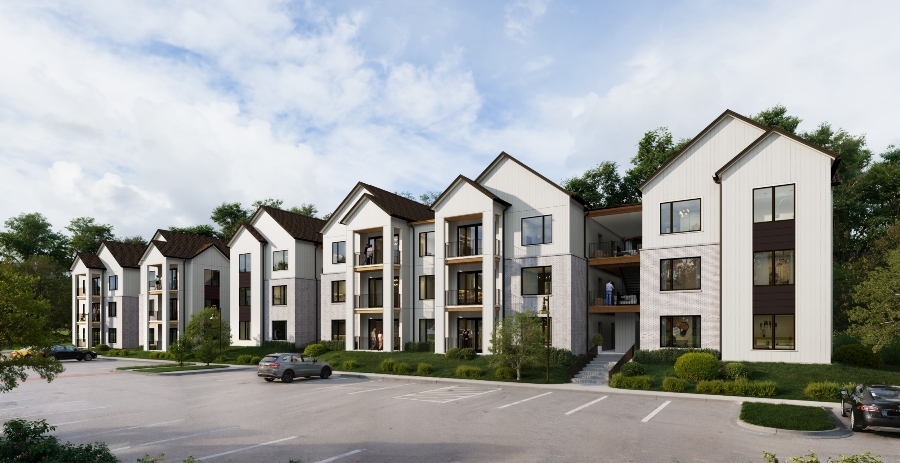
Why it matters: This transaction signals institutional capital’s deepening commitment to Southeast growth corridors anchored by lifestyle infrastructure, validating Greenville’s maturation from a regional hub to a nationally competitive market for development capital.
Context: The Swamp Rabbit Trail has evolved from a recreational asset into a core economic driver, structuring residential and commercial development patterns in Greenville County. This project exemplifies the trend of large-scale, amenity-dense infill on remediated industrial land, financed by national banks.
"“In Greenville, the Swamp Rabbit Trail has become one of the city’s most defining lifestyle drivers, with residential demand increasingly oriented around proximity to the trail,” Resnick said in the release." — SCBIZ
Commentary: The $47M CIBC financing is a bellwether: national banks are now underwriting Greenville’s growth narrative directly, not through regional intermediaries. This moves the market from speculative local development to institutional-grade asset creation. The project’s scale and trail adjacency will likely pressure rental premiums and land values along the entire corridor, accelerating the monetization of public recreational infrastructure into private real estate yields. It also demonstrates the Southeast’s continued absorption of Florida-based capital and development expertise seeking higher-yielding, less saturated markets.
Date: Tue, 19 May 2026 12:14:41 +0000
URL: https://scbiz.com/with-47m-financing-company-launches-construction-project-along-swamp-rabbit-trail/
AI Sentiment Score: Positive (60%)
AI Credibility Score: 10.0/10 — High
Scores and text generated by AI analysis of the source article indicated.
Exploring the Future of Charlotte Construction: Trends and Innovations (Abccarolinas)
Summary: Charlotte’s construction market in 2026 is a two-speed economy defined by sectoral concentration. While data centers, industrial logistics, and healthcare expansions drive robust commercial volume, traditional office, retail, and multifamily segments have softened. The ABC Construction Backlog Indicator reveals a significant divergence, with data-center contractors holding 10.6 months of backlog compared to 8.3 months for non-data-center firms. Subcontractor capacity in key trades is the primary constraint on project delivery, even as nearly $4 billion in projects are underway.

Why it matters: For developers, investors, and contractors, accurate bid strategy and capital allocation now depend on recognizing this sectoral bifurcation and its operational bottlenecks.
Context: This follows a national pattern where construction demand is increasingly driven by digital infrastructure and supply-chain logistics, while post-pandemic work patterns and financing costs reshape demand for traditional commercial real estate.
"Charlotte construction activity remains strong in aggregate but highly concentrated by sector. The market is transitioning to a more balanced phase following a peak in 2022. Executives planning bid strategy for the." — ABCCAROLINAS
Commentary: The 2.3-month backlog gap between data-center and general contractors quantifies Charlotte’s sectoral divergence, concentrating risk and reward. This could pressure capital to follow specialized trade capacity, potentially hollowing out firms focused on lagging sectors. The explicit call to engage subs during schematic design signals a permanent shift in procurement power toward electrical and mechanical contractors, reshaping project economics and timelines.
Date: April 15, 2026 12:00 AM ET
URL: https://abccarolinas.org/charlotte-construction-market-2026-executive-briefing-for-commercial-contractors/
AI Sentiment Score: Negative (80%)
AI Credibility Score: 10.0/10 — High
Scores and text generated by AI analysis of the source article indicated.
Post ID: 80c187a4