Current & Upcoming Space Missions
Expedition 73 Crew Reflects on Science, Teamwork, and Life in Orbit (Nasa.Gov)
Summary: NASA’s Johnson Space Center hosted a welcome-home ceremony for Expedition 73 crews, highlighting mission achievements including a first-time occupancy of all station docking ports, three spacewalks, and over 37,000 pounds of cargo delivered. The event emphasized the operational cadence of a mature ISS, recognizing ground team contributions with over 1,000 awards and specific bravery honors for crew members. Leadership framed the expedition as a validation of the multi-vehicle crew transportation strategy and international partnership model.
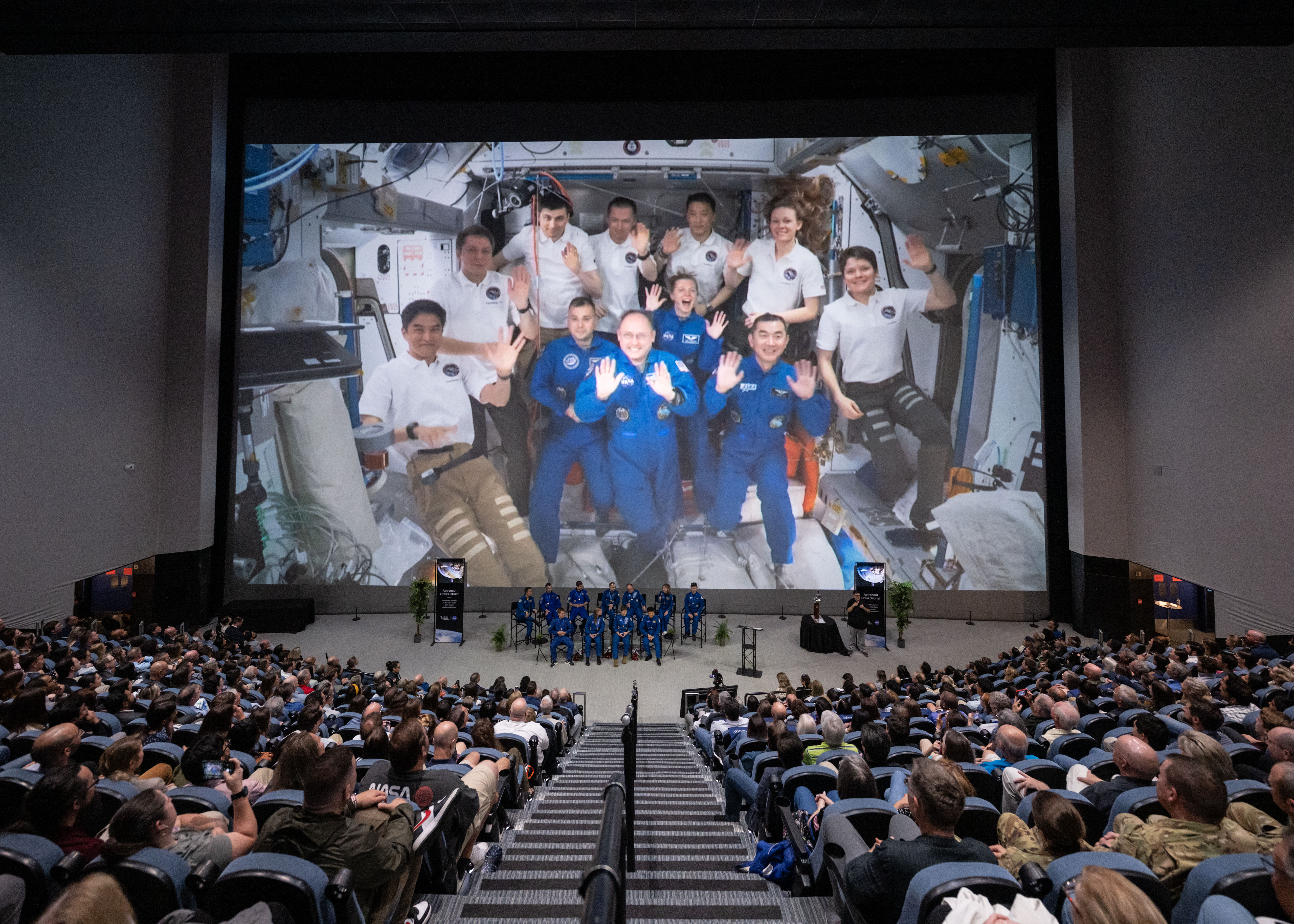
Why it matters: The ceremony codifies the transition of ISS operations into a high-throughput, commercially supported phase, providing a benchmark for future commercial space station logistics and crew rotation tempo.
Context: Expedition 73 (circa 2025-2026) represents a period of peak station utilization, occurring after the full integration of commercial crew vehicles and as NASA pivots resources toward Artemis and commercial LEO destination development.
"Together, these crews exemplified professionalism, resilience, and the spirit of international cooperation,” Wyche said. “Their work ensured the continued success of the International Space Station Program and demonstrated the strength of our multi-vehicle crew transportation strategy." — NASA.GOV
Commentary: The event functions as a public performance of institutional health, reinforcing the narrative of a reliable, multi-national operational regime just as questions about the station’s eventual decommissioning loom. The emphasis on ground team awards signals an agency managing workforce morale during a period of strategic transition. The docking port milestone is a tangible data point for planners of future, smaller commercial stations, indicating the traffic density required for a robust commercial LEO economy.
Date: June 25, 2026 05:30 PM ET
URL: https://www.nasa.gov/centers-and-facilities/johnson/expedition-73-crew-reflects-on-science-teamwork-and-life-in-orbit/
AI Sentiment Score: Positive (80%)
AI Credibility Score: 10.0/10 — High
Scores and text generated by AI analysis of the source article indicated.
China schedules Long March 10B rocket launch and recovery attempt (Spacenews)
Summary: China’s Long March 10B, a cargo variant of its new lunar-capable rocket family, is scheduled for its first orbital flight test in July with a planned attempt to recover the first stage at sea using a net capture vessel. This launch represents the inaugural orbital mission for the Long March 10 series, a critical step in China’s crewed lunar landing program. The flight follows a wet dress rehearsal in April and a successful in-flight abort test using a Long March 10A demonstrator earlier this year. The launch campaign proceeds amid a broader acceleration of China’s launch cadence, which is on pace to exceed 100 orbital attempts this year.

Why it matters: The successful debut and recovery of the Long March 10B would validate a core, reusable component of China’s state-backed architecture for crewed lunar missions before 2030.
Context: This is China’s third attempt at first-stage recovery following tests by Landspace’s Zhuque-3 and CASC’s Long March 12A in late 2025, indicating a concerted push across state and commercial entities to master reuse.
"The Long March 10B launch will be the first orbital mission for the series, and thus is a crucial early orbital flight test for the program." — SPACENEWS
Commentary: The scheduled launch and recovery attempt signals a move from ground and suborbital testing to integrated orbital validation for China’s lunar transportation system. A successful net capture would demonstrate a distinct technical approach to stage recovery compared to U.S. industry leaders, while any delays or anomalies will provide engineering signals about the maturity of the YF-100 engine upgrades and the reuse system. The parallel progress on the crew-rated Long March 10A suggests a deliberate, staged test campaign ahead of the complex, multi-launch crewed lunar mission architecture.
Date: June 25, 2026 05:59 AM ET
URL: https://spacenews.com/china-schedules-long-march-10b-rocket-launch-and-recovery-attempt/
AI Sentiment Score: Positive (55%)
AI Credibility Score: 10.0/10 — High
Scores and text generated by AI analysis of the source article indicated.
Launch Preview: Pegasus XL to launch amongst Falcon 9 and Chinese missions (Nasaspaceflight)
Summary: The global launch manifest for the week of June 23, 2026, features six orbital missions, highlighting SpaceX’s operational tempo and a notable return to flight for Northrop Grumman’s Pegasus XL air-launch system. SpaceX’s schedule includes three Starlink deployments, the Starfall reentry vehicle demo, and the SXM-11 satellite launch, all on Falcon 9 boosters. China’s CZ-7A launched a classified payload to GTO. The Pegasus XL mission, its first since 2021, will carry Katalyst’s robotic servicer to attempt a life-extension boost for NASA’s aging Swift Observatory.

Why it matters: The manifest illustrates the continued stratification of the launch market between high-cadence, reusable providers and niche systems, while highlighting emerging capabilities like in-space servicing.
Context: Pegasus XL, a legacy smallsat launcher, has flown infrequently as the market shifted to rideshare and dedicated small launch vehicles; its use here for a critical NASA servicing mission underscores its unique air-launch profile for precise orbital insertion.
"Flying on its first mission since 2021, the Lockheed L-1011 TriStar Stargazer will carry a Pegasus XL rocket to air-launch the Swift Boost Mission for NASA." — NASASPACEFLIGHT
Commentary: The Pegasus launch is a signal that NASA values its unique orbital insertion capability for this high-stakes rendezvous mission, preserving a legacy asset while the commercial servicing sector matures. SpaceX’s Starfall demo, meanwhile, represents a logical vertical integration step, creating an in-house return capability that could eventually pressure dedicated providers like Varda. The continued dominance of Falcon 9 across diverse payloads, from classified NRO missions to commercial radio satellites, cements its role as the foundational transport layer for the entire Western space economy.
Date: June 23, 2026 06:46 PM ET
URL: https://www.nasaspaceflight.com/2026/06/launch-preview-062326/
AI Sentiment Score: Negative (62%)
AI Credibility Score: 10.0/10 — High
Scores and text generated by AI analysis of the source article indicated.
Off-Duty Day for Upcoming Spacewalkers and Assistants as Cosmonauts Stay Busy (Nasa.Gov)
Summary: Four Expedition 74 astronauts are taking a three-day weekend ahead of a scheduled six-hour-and-forty-minute spacewalk on June 30 to replace a malfunctioning wrist joint on the Canadarm2 robotic arm. NASA’s Jessica Meir and Chris Williams will conduct the EVA, their second together, with Jack Hathaway and ESA’s Sophie Adenot assisting. Meanwhile, the three Roscosmos cosmonauts on station maintained a full schedule of microgravity research and systems maintenance, including AI studies, VR balance experiments, and life support checks.

Why it matters: The operational cadence—planned rest for key personnel paired with continuous science—highlights the mature, sustained tempo of ISS operations, where maintenance of critical 23-year-old infrastructure like Canadarm2 is routine yet mission-critical.
Context: This follows the standard ISS protocol of granting off-duty time to spacewalkers pre-EVA to ensure peak readiness, while other crew members maintain the station’s continuous research and operational baseline.
"Williams and Meir will spend about six hours and 40 minutes in the vacuum of space replacing a malfunctioning wrist joint on the Canadarm2 that has been in operation since it was installed on April 26, 2001." — NASA.GOV
Commentary: The repair underscores the longevity and ongoing value of ISS infrastructure, but also the persistent need for human-tended servicing. The parallel cosmonaut workstream on AI and VR efficiency tools points to the station’s evolving role as a testbed for technologies aimed at reducing future crew workload.
Date: June 26, 2026 01:26 PM ET
URL: https://www.nasa.gov/blogs/general-blog/2026/06/26/off-duty-day-for-upcoming-spacewalkers-and-assistants-as-cosmonauts-stay-busy/
AI Sentiment Score: Neutral (33%)
AI Credibility Score: 10.0/10 — High
Scores and text generated by AI analysis of the source article indicated.
Post ID: 4c4fa055