NASA Programs & Infrastructure
Bringing Signals to NASA (Nasa.Gov)
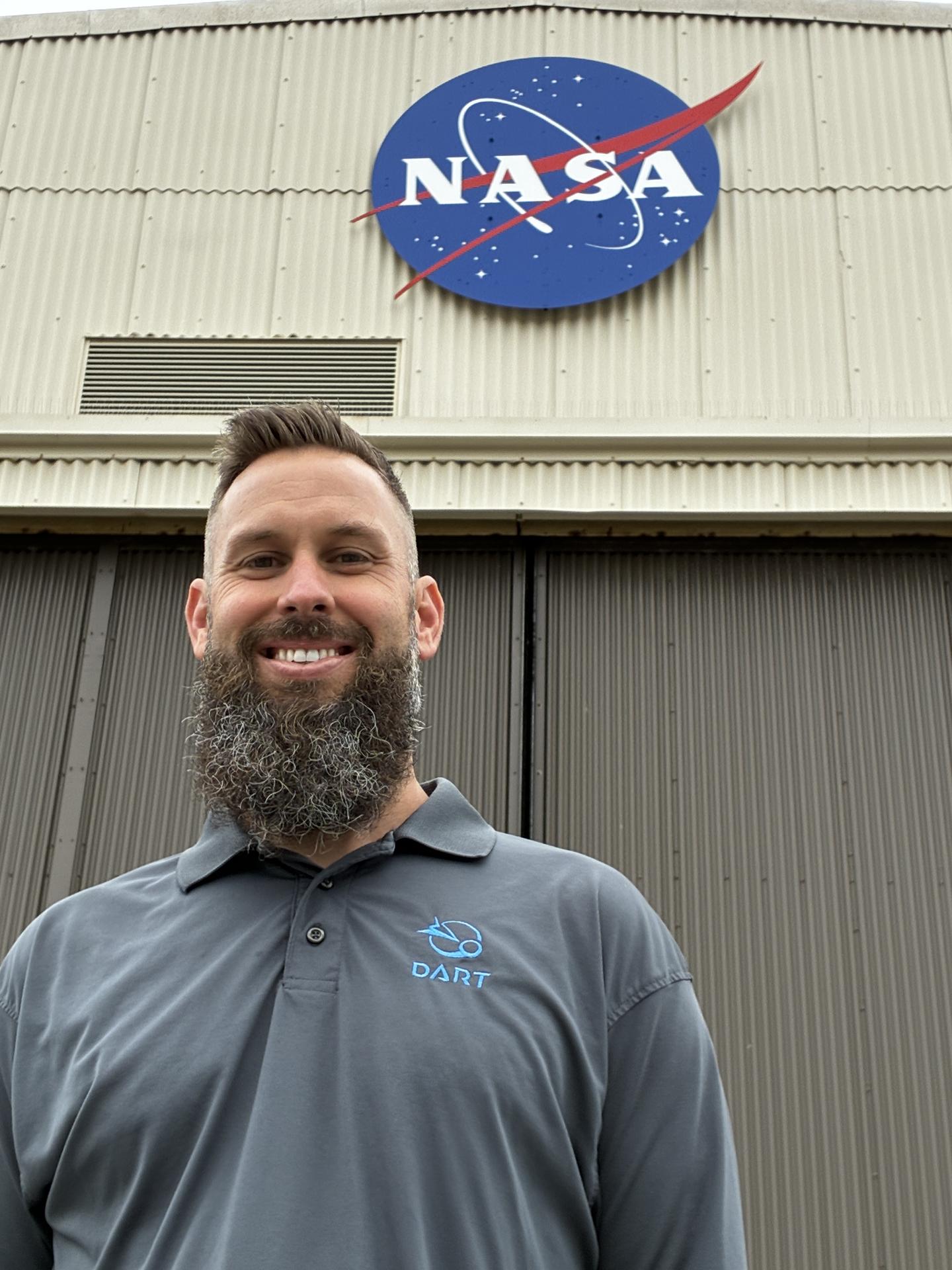
Summary: NASA’s Launch Services Program at Vandenberg Space Force Base has converted a key telemetry engineering role from contractor to civil service, formalizing institutional knowledge. Eric Fernandez, who joined as a contractor 17 years ago via the ELVIS support contract, transitioned to a NASA civil servant on June 15, 2026. His career path from appliance technician to telemetry engineer, supporting 27 NASA launches and hundreds of military and commercial missions, illustrates the agency’s reliance on deep technical experience often cultivated outside traditional aerospace pipelines. The move signals a deliberate effort to bring mission-critical operational expertise in-house as launch cadence and complexity increase.
Why it matters: The shift of core launch operations roles from contractor to civil service reflects a strategic recalibration of NASA’s institutional capabilities amid a crowded and evolving launch market.
Context: NASA has historically relied on support service contracts like ELVIS for launch operations; bringing such roles in-house indicates a reassessment of what constitutes a ‘core capability’ for mission assurance.
"Telemetry is the collection of remote measurements that let us know the rocket is healthy when it’s fueling on the pad, when it’s in flight, and when it’s placing a spacecraft into the proper orbit,” said Fernandez. “It’s our job to make sure decision makers have all the right data to make the right calls in real time. We can’t afford to give them bad data." — NASA.GOV
Commentary: The conversion of Fernandez’s role is a small but significant data point in NASA’s broader workforce strategy: retaining operators who understand the full data chain from oscilloscope to orbital insertion is a hedge against contractor churn and commercial volatility. This institutionalizes the tacit knowledge required for high-consequence decisions during countdown and flight, ensuring the agency maintains direct control over the quality of ‘ground truth’ for its missions.
Date: June 26, 2026 10:28 AM ET
URL: https://www.nasa.gov/centers-and-facilities/kennedy/bringing-signals-to-nasa/
AI Sentiment Score: Negative (50%)
AI Credibility Score: 10.0/10 — High
Scores and text generated by AI analysis of the source article indicated.
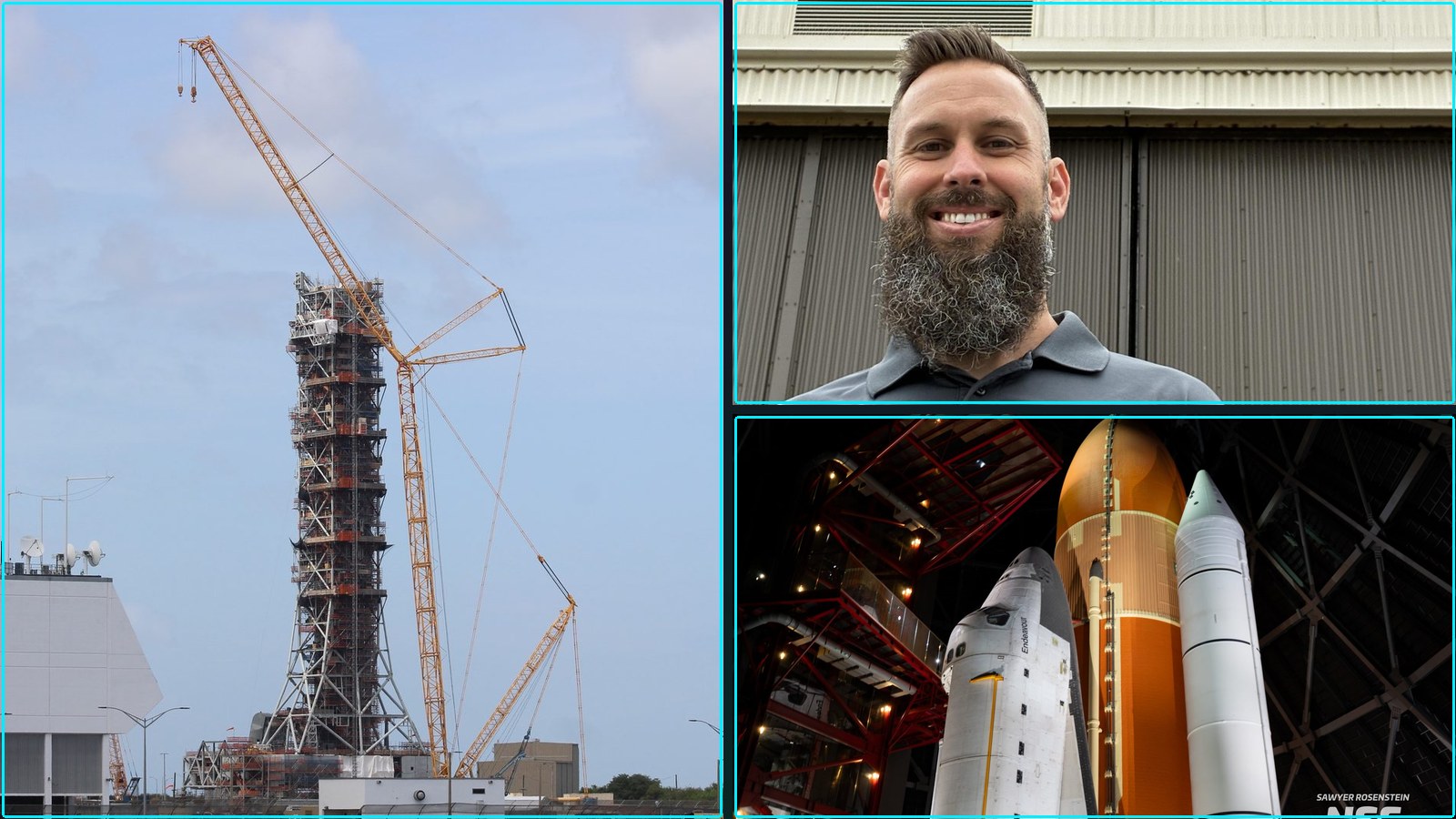
Canceled NASA exploration projects suffered billions of dollars in overruns (Spacenews)
Summary: NASA’s Office of Inspector General reports that four canceled Artemis-related projects—the Exploration Upper Stage, Universal Stage Adapter, Mobile Launcher 2, and the HALO Gateway module—saw combined contract values balloon from $2.8 billion to $5.9 billion, with projected overruns exceeding $1 billion more. Schedule delays extended up to seven years. NASA halted these efforts earlier this year as part of its ‘Ignition Day’ restructuring, which aims to prioritize discipline, affordability, and speed.

Why it matters: The scale of these overruns reveals systemic procurement and requirements management failures that directly constrain NASA’s exploration budget and timeline, forcing a public reckoning on the viability of traditional cost-plus contracting for major systems.
Context: This audit follows NASA’s strategic pivot in March 2026 to cancel the SLS Block 1B and restructure Gateway, signaling a shift away from legacy, high-cost development models toward commercial partnerships and fixed-price contracts where possible.
"WASHINGTON — Four NASA exploration projects that the agency stopped earlier this year as part of changes to its Artemis lunar exploration campaign had suffered overruns that saw their costs more than." — SPACENEWS
Commentary: The OIG’s projections, which NASA does not dispute, underscore that cancellation was a fiscal necessity, not merely a strategic choice. The conversion of HALO from fixed-price to cost-plus is a particularly telling signal of ongoing structural challenges. NASA’s stated pivot to ‘Ignition Day principles’ now carries the burden of proving it can enforce earlier requirements locking and commercial leverage where these programs demonstrably could not.
Date: June 25, 2026 07:02 AM ET
URL: https://spacenews.com/canceled-nasa-exploration-projects-suffered-billions-of-dollars-in-overruns/
AI Sentiment Score: Negative (66%)
AI Credibility Score: 10.0/10 — High
Scores and text generated by AI analysis of the source article indicated.
Space Shuttle Endeavour displayed vertically in new exhibit at California Science Center (Nasaspaceflight)
Summary: The California Science Center has completed the vertical stacking of Space Shuttle Endeavour with flight-qualified external tank ET-94 and flown solid rocket booster segments, creating the world’s only full-stack Shuttle display in launch configuration. The exhibit, set to open in November 2026, required significant engineering to adapt flight hardware for permanent public display, including seismic reinforcement for earthquakes and cosmetic treatment of the external tank. The display is the centerpiece of the new Samuel Oschin Air and Space Center.

Why it matters: This represents the final, most technically authentic museum interpretation of the Shuttle era, converting retired flight hardware into a permanent educational asset that bridges historical engineering to current Artemis program technologies.
Context: Following the Shuttle program’s retirement, NASA distributed orbiters to museums, but all others are displayed horizontally. This project, conceived in 2012, required over a decade of planning and engineering to mate flight hardware inside a purpose-built structure.
"After 25 flights, Space Shuttle Endeavour is set to complete its next mission of education. On June 25, the California Science Center unveiled the shuttle in its final display configuration, poised vertically." — NASASPACEFLIGHT
Commentary: The exhibit’s completion signals a shift from operational preservation to definitive historical commemoration, locking in a specific engineering moment (STS-118 configuration) for public pedagogy. The use of flight-qualified ET-94, which was pulled post-Columbia and later considered for Artemis, underscores how museum curation now intersects with legacy hardware’s second life. The seismic engineering—using Inconel bolts to flight spec—treats the stack not as a static artifact but as a structure requiring ongoing load management, a unique conservation challenge. This vertical presentation will likely become the canonical public reference for Shuttle scale and configuration, influencing popular understanding more than any documentary or model.
Date: June 25, 2026 10:07 AM ET
URL: https://www.nasaspaceflight.com/2026/06/endeavour-exhibit-reveal/
AI Sentiment Score: Negative (50%)
AI Credibility Score: 10.0/10 — High
Scores and text generated by AI analysis of the source article indicated.
Post ID: 5e34a403