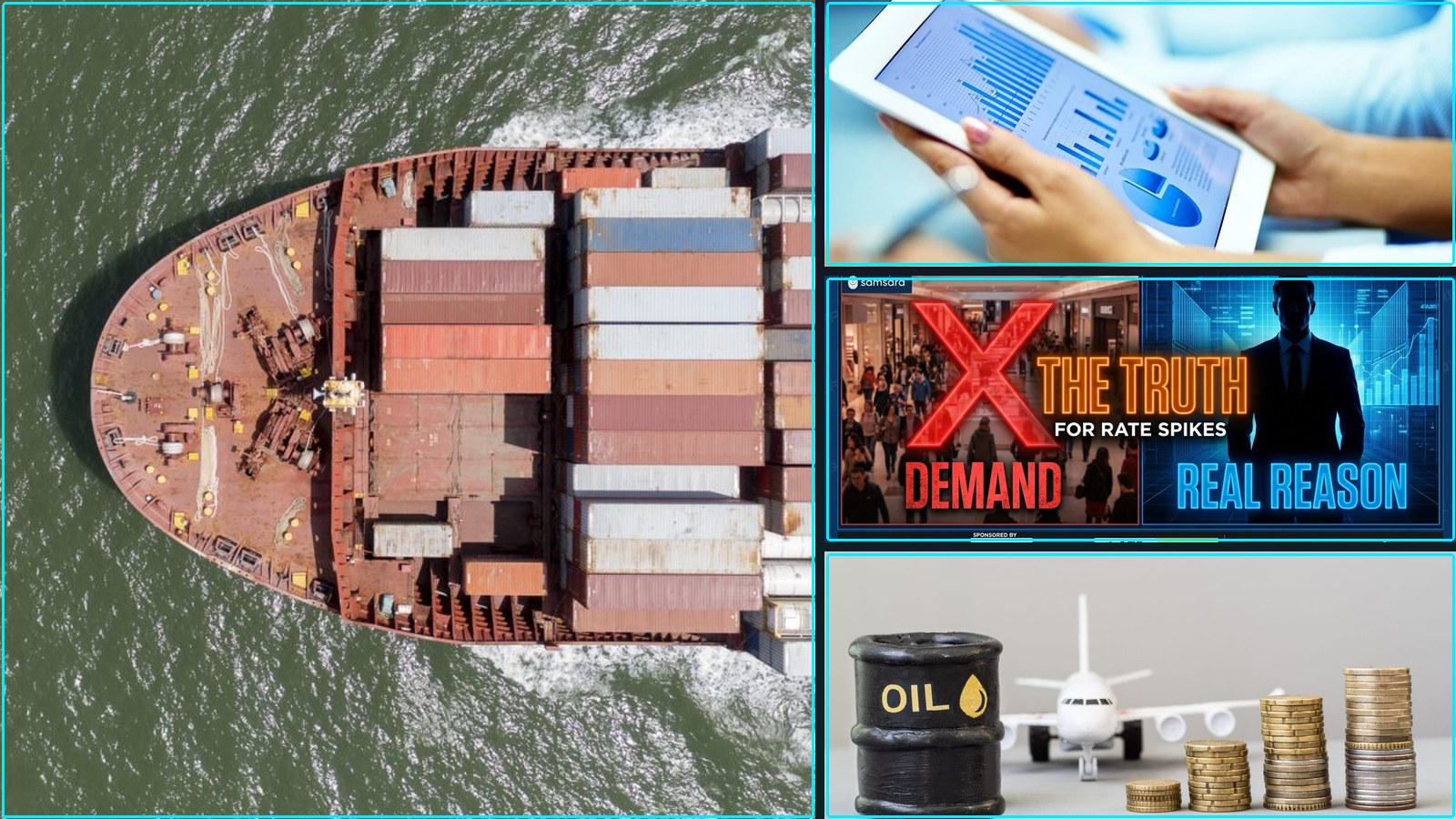
Container rates surge past pandemic peaks amid Hormuz disruption
Hormuz in the rearview as Asia-US ocean container rates soar past $7,900 (Freightwaves)
Summary: Asia-U.S. container rates have surged past $7,900 per FEU for East Coast routes, driven by early peak season demand and carrier capacity shifts rather than oil price spikes from Hormuz disruptions. Trans-Pacific West Coast prices rose 8% to $6,175, while East Coast rates hit $7,998, with both lanes up 120% and 85% respectively since mid-May. Iran’s escalating Strait of Hormuz actions have paused marine traffic and triggered UN evacuation abandonment, but crude flows are resuming. The National Retail Federation reports 32% of consumers started back-to-school shopping in June, up from 26% in 2025, signaling sustained retail demand that may unwind by July if frontloading peaks early.
Why it matters: For Southeast-focused readers tracking port and logistics infrastructure, these rate spikes and frontloading patterns directly affect capacity allocation at Savannah, Charleston, and other East Coast gateways, with implications for warehousing demand and regional distribution strategies.
Context: Container rates are being reshaped by geopolitical risk in the Strait of Hormuz and carrier network adjustments, but the current surge is primarily demand-driven from early peak season frontloading ahead of tariff deadlines and fuel surcharges.
"The container shipping market is being driven by geopolitics, rates, and network reshuffling, but freight-rate volatility and adjustments by carriers to protect schedules and pricing has supplanted Middle East disruptions as top-level." — FREIGHTWAVES
Commentary: The $1,000 premium over last year’s frontloading peak suggests importers are betting heavily on consumer spending resilience, but the early start also raises the risk of a July unwind that could strand inventory at congested Southeast ports. Carriers’ success with July rate hikes will be the real-time signal for whether this is structural demand or a pulled-forward bubble.
Date: July 02, 2026 01:14 PM ET
URL: https://www.freightwaves.com/news/hormuz-in-the-rearview-as-asia-us-ocean-container-rates-soar-past-7900
AI Sentiment Score: Positive (50%)
AI Credibility Score: 10.0/10 — High
Scores and text generated by AI analysis of the source article indicated.
Wartime economy: Maersk lifts full-year guidance on strong demand (Freightwaves)
Summary: Maersk sharply raised its 2026 guidance, now expecting EBITDA of $8–$10 billion, up from $4.5–$7 billion, driven by strong Far East demand and sustained spot rate increases. The U.S.-Iran conflict in the Persian Gulf, which began in late February, has closed the Strait of Hormuz, choked fuel supplies, and trapped vessels, creating an unexpected tailwind for ocean carriers. Shippers are also frontloading cargo to hedge against tariff uncertainty and expected price hikes from Asian manufacturers. The Federal Maritime Commission has rejected Maersk’s requests to waive the 30-day waiting period for emergency fuel surcharges.
Why it matters: For Southeast-focused readers, this signals sustained congestion and cost pressure on the region’s ports and logistics networks, as diverted cargo and higher rates reshape routing decisions and warehouse demand.
Context: The war with Iran has disrupted the world’s most critical oil chokepoint, forcing carriers to reroute and impose surcharges, while shippers accelerate imports to beat tariff deadlines—both dynamics that amplify peak season strain on U.S. gateways.
"“Continued strong demand in the container market, particularly in the Far East, and a recent sustained increase in spot market rates means that A.P. Moller–Maersk (OTC: AMKBY) upgrades its guidance for full year 2026,” the Copenhagen-based company said Monday." — FREIGHTWAVES
Commentary: The guidance revision is less about organic demand than about geopolitical disruption creating a de facto wartime economy for container shipping. Southeast ports like Savannah and Charleston will likely see further volume spikes as shippers frontload and carriers adjust networks, but the FMC’s rejection of surcharge waivers suggests regulators are pushing back on carrier profiteering. The real question is whether this rate environment persists after the conflict stabilizes or if it accelerates structural shifts toward nearshoring and inventory buffers.
Date: June 30, 2026 12:45 PM ET
URL: https://www.freightwaves.com/news/wartime-economy-maersk-lifts-full-year-guidance-on-strong-demand
AI Sentiment Score: Negative (72%)
AI Credibility Score: 10.0/10 — High
Scores and text generated by AI analysis of the source article indicated.
Container Freight Rates Surge to Highest Levels Since 2022 Pandemic Peak (Globaltrademag)
Summary: Container spot freight rates have surged to their highest levels since the 2022 pandemic peak, with Drewry’s World Container Index rising 9% week-over-week to $4,530 per 40-foot container. The rally is driven by tariff-induced cargo frontloading ahead of threatened US tariffs and ongoing disruptions near the Strait of Hormuz. Key routes like Shanghai-to-New York and Shanghai-to-Los Angeles saw double-digit increases, while Asia-North Europe rates hit $4,900 per FEU, up 70% since mid-May. Carriers are locking in gains with peak season surcharges, and Maersk has dramatically raised its full-year outlook, now expecting an underlying operating profit of $2-4 billion after previously forecasting a potential loss.

Why it matters: For Southeast-focused readers tracking regional economic indicators, these rate spikes signal immediate cost pressures on import-dependent supply chains and potential shifts in cargo routing away from West Coast ports, with implications for warehousing, distribution, and manufacturing activity across the region.
Context: The current surge mirrors the 2021-2022 pandemic-era freight crisis, but the catalyst is now tariff frontloading rather than consumer demand spikes, with the Strait of Hormuz disruptions adding a geopolitical layer that could prolong elevated rates.
"Container Freight Rates Surge to Highest Levels Since 2022 Pandemic Peak Container spot freight rates experienced another weekly surge, elevating global benchmarks to levels not seen since the 2022 pandemic-era peak, driven." — GLOBALTRADEMAG
Commentary: The demand-supply gap and port congestion are structural, not transitory, suggesting rates may stay elevated through peak season even if tariff threats recede. Southeast ports like Savannah and Charleston could see increased diversion from West Coast congestion, but their capacity constraints will limit relief. Importers who haven’t frontloaded yet face a narrowing window before tariffs and peak surcharges compound costs.
Date: July 03, 2026 10:46 AM ET
URL: https://www.globaltrademag.com/container-freight-rates-surge-to-highest-levels-since-2022-pandemic-peak/
AI Sentiment Score: Negative (50%)
AI Credibility Score: 10.0/10 — High
Scores and text generated by AI analysis of the source article indicated.
Container Shipping: Why Rates are Skyrocketing (It’s NOT Demand) (Freightwaves)
Summary: Container spot rates from China to the US West Coast have surged 239% since March, reaching over $6,100 per container, despite import volumes being down roughly 50% year-over-year. The increase is not demand-driven but reflects the concentrated market power of the top 10 ocean carriers, which control 90% of global capacity—more than OPEC’s 35% share of oil supply. These carriers, none of which are US-owned, use alliance agreements to coordinate schedules and pull capacity to maintain pricing. US shippers are simultaneously squeezed by rising container rates, warehouse rents, domestic trucking costs, and fuel surcharges, creating a multi-front cost pressure with no domestic carrier in the top tier to capture any of the rate upside.

Why it matters: For Southeast-focused readers tracking regional economic indicators, this structural pricing power in ocean shipping directly impacts the cost of imported goods flowing through ports like Savannah and Charleston, and compounds inflationary pressure on regional supply chains already strained by domestic trucking capacity crunches.
Context: The surge follows the Liberation Day tariff chaos in April, which caused a 50% collapse in Chinese imports, and occurs as the domestic trucking market faces a holiday capacity crunch with tender rejections near 17.5%.
"The top 10 ocean carriers have approximately 90% of the capacity in the global market. To put that in perspective, OPEC controlled about 35% of global oil supplies — and it’s a cartel. No doubt that it has the power to manipulate fuel and oil prices. It’s the same thing with the international ocean container business, except they have so much more power because they control 90% of it."
Commentary: The comparison to OPEC is apt but understates the problem: OPEC’s members are sovereign states with competing interests, while ocean carrier alliances operate with legal cover and unified profit motives. The absence of a US-flagged carrier in the top 10 means American importers are effectively paying a foreign-controlled tax on every container, with no domestic capacity buffer. This structural vulnerability will persist regardless of tariff policy or demand cycles, and should be a focal point for any regional economic resilience strategy.
Date: June 30, 2026 05:17 PM ET
URL: https://www.freightwaves.com/news/container-shipping-why-rates-are-skyrocketing-its-not-demand
AI Sentiment Score: Negative (63%)
AI Credibility Score: 10.0/10 — High
Scores and text generated by AI analysis of the source article indicated.
Hormuz Oil Shipments Top 10 Million Barrels Per Day as U.S. Strengthens Maritime Security (Globaltrademag)
Summary: Oil shipments through the Strait of Hormuz have rebounded to over 10 million barrels per day, driven by an interim U.S.-Iran peace agreement and expanded U.S. naval patrols. The recovery follows months of severe disruption that had slashed tanker traffic and spiked global energy prices. Despite the improvement, the route remains vulnerable: a recent Iranian drone strike on a Singapore-flagged container ship nearly collapsed the ceasefire, and negotiations over long-term free navigation remain unresolved. Shipping companies and insurers are watching closely, as any future transit fees or restrictions could set a precedent affecting other global trade routes.

Why it matters: For Southeast-focused readers, this signals a potential easing of global energy supply constraints that could lower input costs for regional manufacturing and logistics, while also highlighting persistent geopolitical risk that may affect shipping insurance premiums and route planning in adjacent waters.
Context: Before the conflict, roughly 20 million barrels per day passed through Hormuz; current flows are about half that, with another 5 million barrels reaching markets via alternative export routes, bringing regional exports close to pre-war levels.
"The recovery marks a dramatic turnaround from the height of the crisis, when hostilities and security threats slashed tanker movements and sent global energy prices soaring. While Iran had previously demonstrated its ability to disrupt one of the world’s busiest shipping lanes, U.S. officials now believe Tehran’s influence over commercial traffic has been significantly reduced." — GLOBALTRADEMAG
Commentary: The rebound is real but fragile—the 10 million bpd figure is still only half of pre-crisis throughput, and the recent drone strike shows Iran retains asymmetric leverage. The real test will be whether the U.S. can convert the temporary 60-day memorandum into a permanent free-navigation agreement without triggering a new escalation. For Southeast Asian ports and refineries that depend on Hormuz crude, the window to secure alternative supply chains is narrowing, not closing.
Date: July 04, 2026 04:20 AM ET
URL: https://www.globaltrademag.com/hormuz-oil-shipments-top-10-million-barrels-per-day-as-u-s-strengthens-maritime-security/
AI Sentiment Score: Negative (80%)
AI Credibility Score: 10.0/10 — High
Scores and text generated by AI analysis of the source article indicated.
Hormuz Reopening: What It Means for Global Shipping (Globaltrademag)
Summary: The US-Iran MoU and sanctions waivers have increased Iranian crude availability by 130–150 mb, but shipping constraints, mine hazards, and drone attack risks prevent a return to normal operations through the Strait of Hormuz. Global refinery runs remain 6 mb/d below pre-conflict levels, compounding the bottleneck. Freight rates will stay volatile, and supply chain planners should budget for extended elevated costs over months, not weeks. The gap between diplomatic progress and operational reality is the key takeaway for logistics professionals.

Why it matters: For regional economic indicators in Southeast-focused supply chains, Hormuz reopening signals potential crude flow shifts but persistent shipping friction means freight costs and transit times could remain unpredictable, affecting refinery input and downstream production planning across Asia.
Context: The Strait of Hormuz handles about 20% of global oil transit; previous conflicts and sanctions had slashed throughflows, and the MoU was expected to restore pre-crisis volumes quickly.
"The Strait of Hormuz will not return to pre-conflict norms. A realistic planning horizon is measured in months, with persistent friction from war-risk premiums, vessel reluctance, and refining constraints." — GLOBALTRADEMAG
Commentary: The article’s core insight is that regulatory waivers cannot solve physical and insurance-based barriers to vessel transit. The 35 mb of remaining stranded volumes inside the strait signals emerging tightness, not surplus. Planners who conflate headline diplomacy with operational recovery will misallocate capacity and face cost spikes from military incidents. This is a textbook case of the gap between policy signal and logistics reality.
Date: July 03, 2026 04:00 AM ET
URL: https://www.globaltrademag.com/hormuz-flows-are-rising-but-dont-call-it-normal-yet-what-the-us-iran-mou-really-means-for-global-shipping/
AI Sentiment Score: Negative (66%)
AI Credibility Score: 10.0/10 — High
Scores and text generated by AI analysis of the source article indicated.
Post ID: 526b37b6