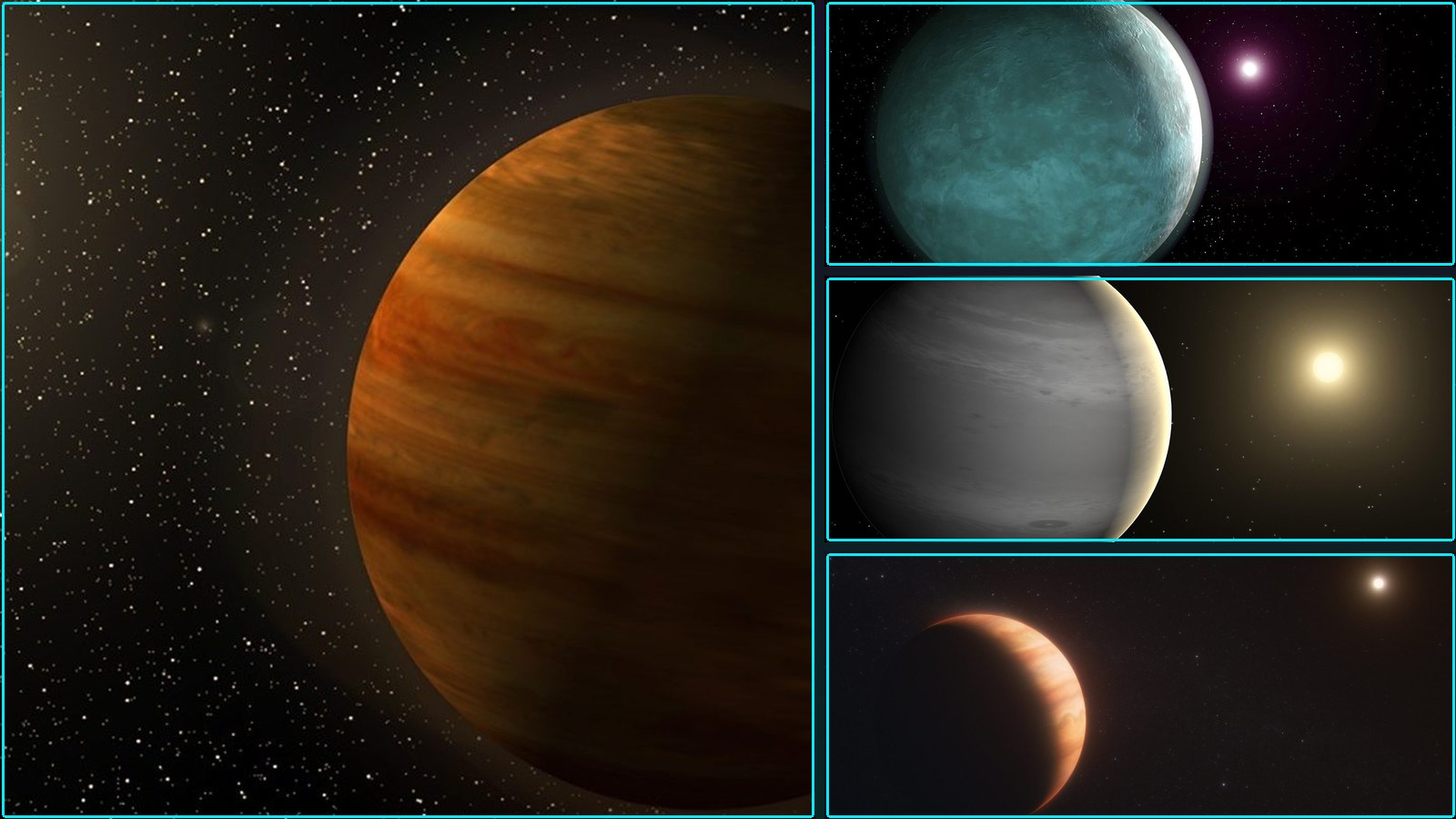
How Planets Survive Stellar Death and New Discoveries
Webb studies how a planet survived the death of its star (Esa.Int)
Summary: Using the James Webb Space Telescope, an international team observed the Jupiter-sized exoplanet WD 1856 b transiting its white dwarf host star, measuring its mass (4–11 Jupiter masses), temperature (~126°C), and atmospheric composition. The planet is significantly warmer than expected from stellar irradiation alone, indicating residual heat from a past dynamical event. By modeling the cooling history, the team determined the planet migrated inward 3–5.5 billion years after the star became a white dwarf, ruling out engulfment during the red giant phase. This is the first detection of an atmosphere on a planet transiting a dead star, offering a direct analogue for the fate of gas giants in our own Solar System after the Sun’s death.

Why it matters: This provides the first empirical constraint on how gas giants can survive and migrate after their host star’s death, directly informing models of the long-term evolution of planetary systems, including our own.
Context: WD 1856 b was discovered in 2020 by TESS and Spitzer; the new Webb observations add mass, temperature, and atmospheric data that distinguish between competing migration scenarios.
"Webb studies how a planet survived the death of its star An international team of astronomers has used the NASA/ESA/CSA James Webb Space Telescope to watch the Jupiter-sized exoplanet WD 1856 b." — ESA.INT
Commentary: The key finding is not just the atmosphere detection but the thermal history constraint: the planet’s excess heat points to migration triggered by gravitational interactions with outer stellar companions, not survival of engulfment. This shifts the theoretical landscape for post-main-sequence planetary system evolution. The methane detection also opens a new window for comparative exoplanet atmospheres around white dwarfs, which are far more accessible for transmission spectroscopy than main-sequence hosts at similar distances.
Date: July 01, 2026 11:00 AM ET
URL: https://www.esa.int/Science_Exploration/Space_Science/Webb/Webb_studies_how_a_planet_survived_the_death_of_its_star
AI Sentiment Score: Negative (75%)
AI Credibility Score: 10.0/10 — High
Scores and text generated by AI analysis of the source article indicated.
NASA’s Webb Studies How Planet Survived Death of its Star (Science.Nasa.Gov)
Summary: NASA’s James Webb Space Telescope is giving us new insight into the far-future of solar systems like our own, as the agency continues to reveal the secrets of the universe and our place in it. Billions of years ago, a Sun-like star nearing the end of its life swelled tremendously in size to become a red giant before ejecting its outer layers, leaving a hot, remnant core known as a white dwarf. As a red giant, the star should have engulfed and destroyed any nearby planets.
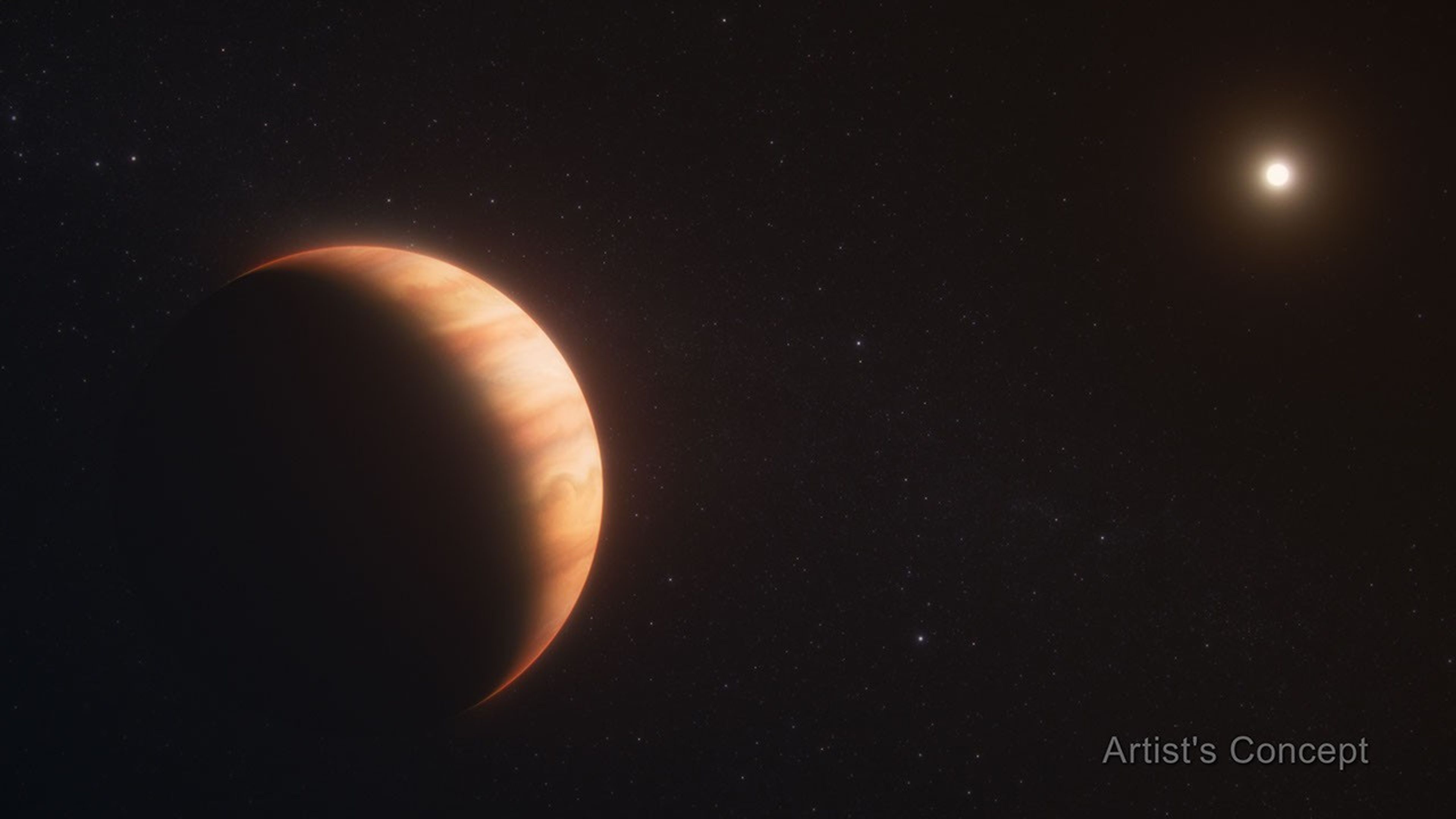
Why it matters: This matters for Space Exploration because it gives a concrete current signal to track: NASA’s James Webb Space Telescope is giving us new insight into the far-future of solar systems like our own, as the agency continues to reveal the secrets of the universe and our place in it.
Context: NASA’s James Webb Space Telescope is giving us new insight into the far-future of solar systems like our own, as the agency continues to reveal the secrets of the universe and our place in it. Billions of years ago, a Sun-like star nearing the end of its life swelled tremendously in size to become a red giant before ejecting its outer layers, leaving a hot, remnant core known as a white dwarf. As a red giant, the star should have engulfed and destroyed any nearby planets.
"NASA’s James Webb Space Telescope is giving us new insight into the far-future of solar systems like our own, as the agency continues to reveal the secrets of the universe and our." — SCIENCE.NASA.GOV
Commentary: The immediate implication is operational rather than speculative: watch how this changes budgets, workflows, or risk assumptions over the next cycle.
Date: July 01, 2026 11:00 AM ET
URL: https://science.nasa.gov/missions/webb/nasas-webb-studies-how-planet-survived-death-of-its-star/
AI Sentiment Score: Negative (80%)
AI Credibility Score: 10.0/10 — High
Scores and text generated by AI analysis of the source article indicated.
How a planet survived the death of its sunlike star (Earthsky)
Summary: New James Webb Space Telescope data reveal that the Jupiter-like exoplanet WD 1856 b survived the death of its sunlike star by migrating inward after the star became a white dwarf, rather than enduring the red giant phase in place. The planet now orbits its white dwarf star every 34 hours from just 0.02 AU away, and its atmosphere—detected for the first time on a planet transiting a dead star—contains small cloud particles and hydrocarbons, likely methane. The planet’s temperature of 260°F (126°C) is higher than the white dwarf alone can explain, indicating internal heat from gravitational interactions during its inward migration 3 to 5.5 billion years after the star’s death. The study, published in Nature on July 1, 2026, provides a forward-looking analog for the fate of gas giants in our own solar system.
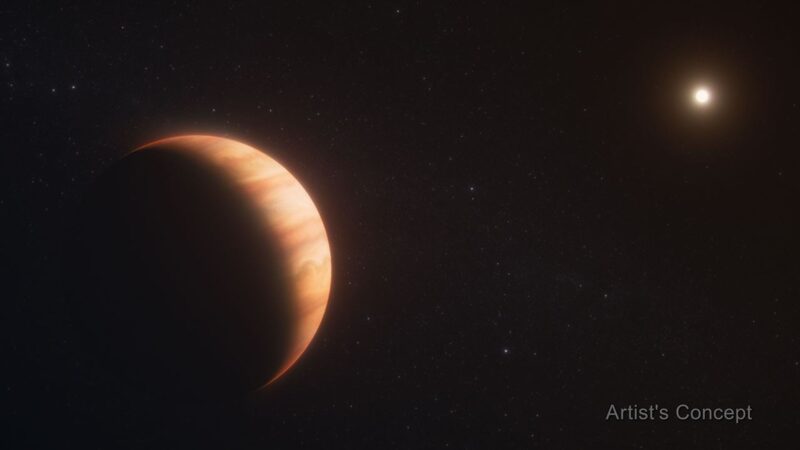
Why it matters: This is the first direct atmospheric characterization of a planet orbiting a white dwarf, offering empirical constraints on planetary system evolution after stellar death and a concrete testbed for models of late-stage planetary migration.
Context: WD 1856 b was discovered by TESS in 2020; its survival so close to a white dwarf was puzzling because the star’s red giant phase should have engulfed any planet at that orbital distance. The new Webb data resolve the paradox by showing the planet migrated inward after the red giant phase ended.
"We saw the telltale signatures of small cloud particles and hydrocarbons, most likely methane, which is the first time we have seen an atmosphere on a planet transiting a dead star." — EARTHSKY
Commentary: The detection of methane and aerosols in WD 1856 b’s atmosphere is a technical milestone for Webb’s ability to probe exoplanet atmospheres around compact stellar remnants. The migration timing—billions of years after the white dwarf formed—suggests dynamical instabilities can persist long after the main sequence ends, which has implications for the long-term evolution of planetary systems. For our solar system, this strengthens the case that Jupiter and Saturn could survive the Sun’s red giant phase and end up in close orbits around a white dwarf, though their atmospheres would be radically altered by the journey.
Date: July 05, 2026 07:58 AM ET
URL: https://earthsky.org/space/how-planet-survived-death-of-sunlike-star/
AI Sentiment Score: Negative (50%)
AI Credibility Score: 10.0/10 — High
Scores and text generated by AI analysis of the source article indicated.
NASA’s TESS Mission Finds Planetary System in New Way (Science.Nasa.Gov)
Summary: NASA’s TESS mission has, for the first time, identified a planet via gravitational microlensing, a method previously considered beyond its capabilities. The super-Jupiter, Gaia23bra b, was initially flagged by ESA’s Gaia telescope in 2023, but TESS’s denser time coverage in archived data confirmed the planet’s signature. At nearly 40,000 light-years away, this detection far exceeds TESS’s usual 150-light-year range and suggests many more microlensing planets may be hidden in its data. The discovery highlights the complementary nature of transit and microlensing methods, with implications for understanding planetary demographics across different galactic environments.
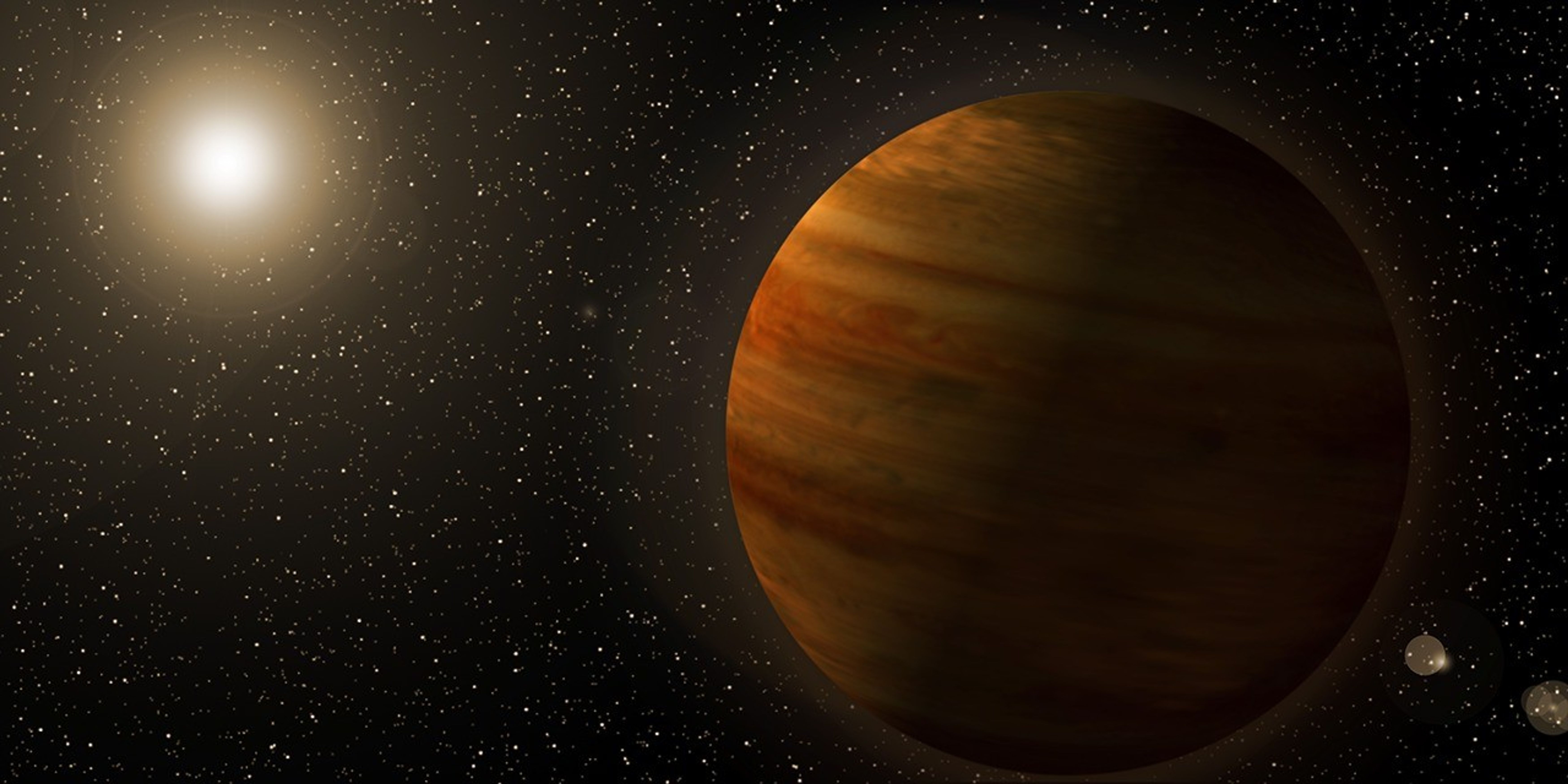
Why it matters: This detection expands TESS’s scientific utility and demonstrates that microlensing surveys can be conducted across broader regions of the galaxy, not just the crowded galactic center targeted by future missions like Roman.
Context: Microlensing has revealed less than 5% of known exoplanets but is uniquely sensitive to smaller planets at greater orbital distances, including solar system analogs. TESS was designed for transit detection of close-in planets within ~150 light-years.
"The discovery implies that there are probably other so-called microlensing planets hiding in TESS’s data that we hadn’t previously thought to look for." — SCIENCE.NASA.GOV
Commentary: The key operational signal is that TESS’s all-sky coverage and rapid cadence can now be retroactively mined for microlensing events, effectively doubling its exoplanet discovery mode without new hardware. This also provides a preview of Roman’s capabilities while extending the search for habitable-zone planets into quieter galactic neighborhoods, where radiation and gravitational disruption are lower. The 40,000 light-year detection range is a step function change in TESS’s effective survey volume, though each event is a one-time observation with limited follow-up potential.
Date: July 01, 2026 08:43 AM ET
URL: https://science.nasa.gov/missions/tess/nasas-tess-mission-finds-planetary-system-in-new-way/
AI Sentiment Score: Negative (57%)
AI Credibility Score: 10.0/10 — High
Scores and text generated by AI analysis of the source article indicated.
Nearby "Super Earth" Could Host Life After All (Universetoday)
Summary: A team led by UC Irvine has revised the mass estimate of exoplanet GJ 3378b from 5 to 2.3 Earth masses and its orbital period from 25 to 21 days, placing it within the habitable zone of its red dwarf star 25 light-years away. The lower mass reduces the likelihood of a crushing atmosphere, but the closer orbit increases radiation exposure that could strip any atmosphere. The planet was originally detected in 2024 using the Habitable-zone Planet Finder on the Hobby-Eberly Telescope. Next-generation observatories like the GMT, ELT, and HWO may enable direct biosignature searches on this and similar targets.
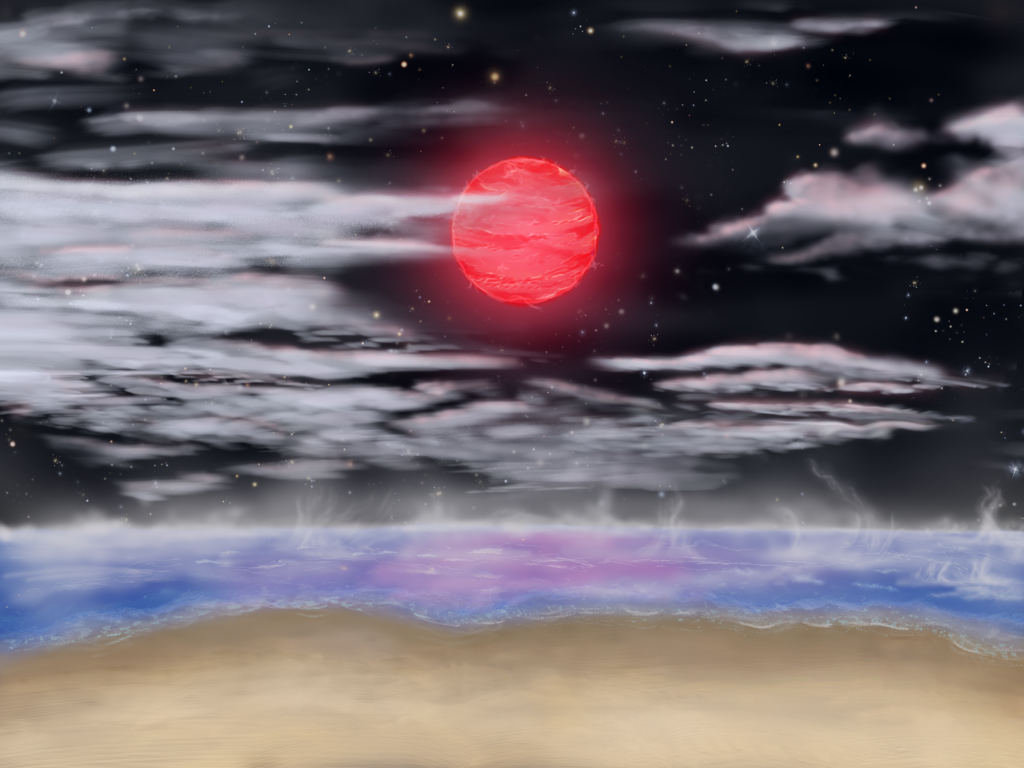
Why it matters: This revision moves a nearby Super Earth from a marginal candidate to a priority target for upcoming direct-imaging missions, tightening the list of worlds where biosignature searches are feasible within the next decade.
Context: Red dwarfs host most rocky planets in the habitable zone, but their flare activity and dimness make detection and characterization difficult; the HPF instrument was specifically designed to overcome these challenges using infrared radial velocity measurements.
"The new analysis, however, shows that it is closer to 2.3 times Earth’s mass, which increases the likelihood that the planet lacks a smothering atmosphere. The team also refined the planet’s orbital period from 25 days to 21, which places it within the star’s HZ." — UNIVERSETODAY
Commentary: The mass revision from 5 to 2.3 Earth masses is the critical signal here: it transforms GJ 3378b from a likely mini-Neptune with a thick envelope into a genuinely rocky world where surface conditions might be survivable. The trade-off between a tighter orbit and increased stellar radiation is the kind of engineering constraint that will define which targets get prioritized for HWO follow-up. This is reconnaissance, not discovery—but reconnaissance that sharpens the search space for biosignatures by one concrete candidate.
Date: July 05, 2026 04:19 PM ET
URL: https://www.universetoday.com/articles/nearby-super-earth-could-host-life-after-all
AI Sentiment Score: Negative (60%)
AI Credibility Score: 10.0/10 — High
Scores and text generated by AI analysis of the source article indicated.
TIC 150070085 b (Science.Nasa.Gov)
Summary: NASA has announced the discovery of TIC 150070085 b, a Neptune-like exoplanet with a mass of 12.8 Earths orbiting an F-type star every 10.5 days. The planet was detected via the transit method and has a radius of 0.32295532 Jupiter radii, placing it firmly in the sub-Neptune category. Its orbital radius is 0.098439381424078 AU, indicating a very close-in orbit. The discovery was made in 2026.
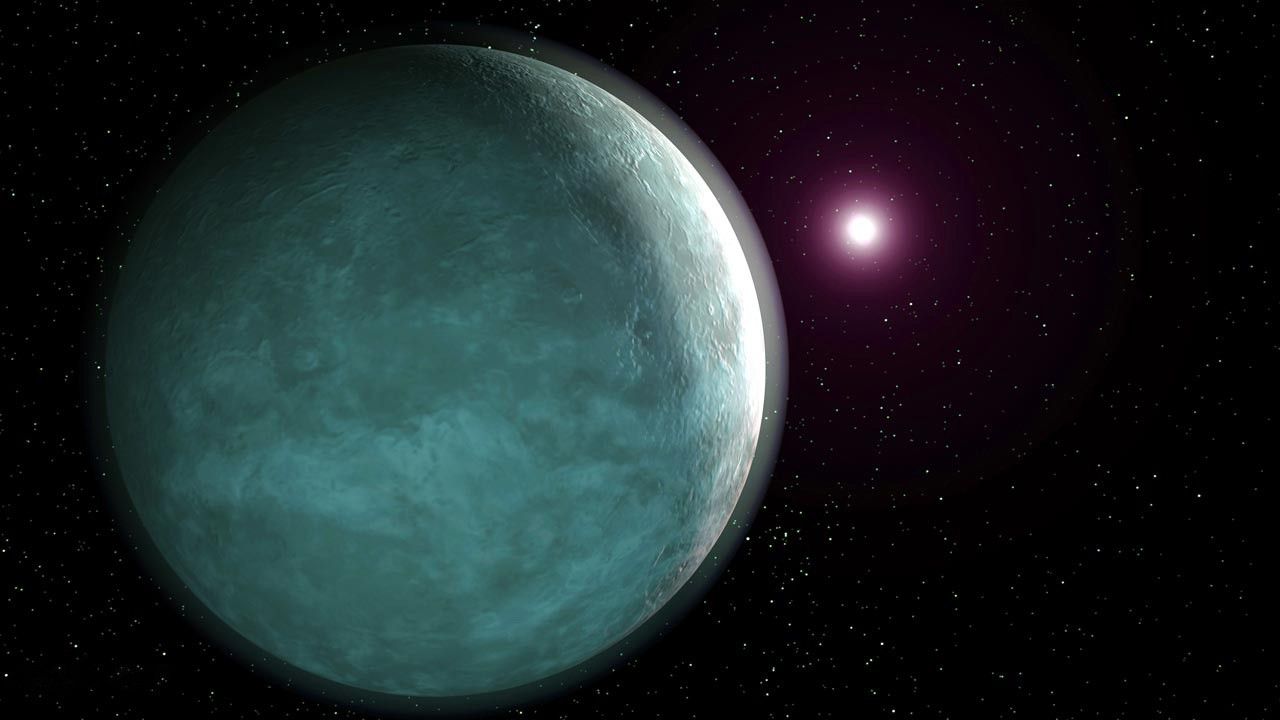
Why it matters: This discovery adds a new data point to the growing census of close-in sub-Neptunes around F-type stars, which are underrepresented in transit surveys due to stellar variability. TIC 150070085 b’s short orbital period and precise radius measurement make it a strong candidate for atmospheric follow-up with JWST, potentially revealing composition and formation history.
Context: F-type stars are hotter and more massive than the Sun, making their planets rarer in transit surveys but valuable for testing planetary formation and migration models. The planet’s 10.5-day orbit places it well inside the habitable zone of its star, but its Neptune-like composition suggests a thick atmosphere unlikely to support surface life.
"TIC 150070085 b is a Neptune-like exoplanet that orbits a F-type star. Its mass is 12.8 Earths, it takes 10.5 days to complete one orbit of its star, and is 0.098439381424078 AU from its star." — SCIENCE.NASA.GOV
Commentary: The precision of the orbital radius to 15 decimal places is a reminder that transit timing can yield exquisite orbital constraints, but the mass measurement (12.8 Earths) likely comes from radial velocity follow-up, which is not detailed here. The planet’s density (roughly 2.3 g/cm³) suggests a significant volatile envelope, consistent with formation beyond the ice line followed by inward migration. This object will be a priority for transmission spectroscopy to test whether such close-in Neptunes retain primordial hydrogen-helium atmospheres or have been stripped by stellar radiation.
Date: July 03, 2026 11:45 AM ET
URL: https://science.nasa.gov/exoplanet-catalog/tic-150070085-b/
AI Sentiment Score: Negative (53%)
AI Credibility Score: 10.0/10 — High
Scores and text generated by AI analysis of the source article indicated.
HD 126105 b (Science.Nasa.Gov)
Summary: NASA has announced the discovery of HD 126105 b, a gas giant exoplanet with a mass 1.67 times that of Jupiter, orbiting a K-type star at 1.36 AU with a period of 1.4 years. The planet was detected via the radial velocity method, and its radius is estimated at 1.2 times Jupiter’s. The discovery, made in 2026, adds a moderately eccentric (0.1) warm Jupiter to the growing census of exoplanets around K-dwarfs.
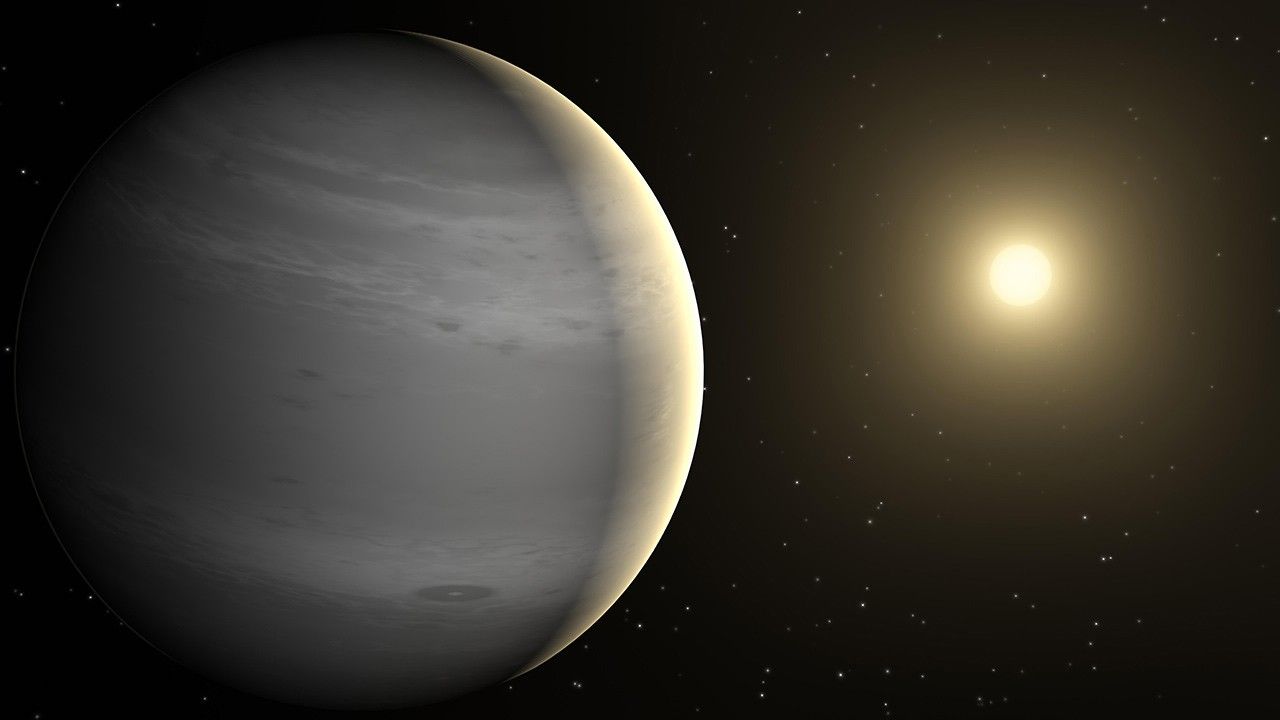
Why it matters: This detection reinforces the prevalence of gas giants at moderate orbital distances around K-type stars, informing models of planetary system architecture and the potential for habitable-zone terrestrial planets in such systems.
Context: K-type stars are considered promising targets for exoplanet habitability studies due to their stability and longevity; radial velocity surveys continue to fill in the population statistics for giant planets at intermediate separations.
"HD 126105 b is a gas giant exoplanet that orbits a K-type star. Its mass is 1.67 Jupiters, it takes 1.4 years to complete one orbit of its star, and is 1.36 AU from its star. Its discovery was announced in 2026." — SCIENCE.NASA.GOV
Commentary: The orbital eccentricity of 0.1 is modest but non-zero, suggesting a dynamically settled system without strong perturbations from other massive bodies. At 1.36 AU, this planet lies beyond the habitable zone of a K-dwarf, but its presence indicates that giant planets can form and migrate to such orbits, which has implications for the delivery of volatiles to inner rocky worlds. The radial velocity detection method, while unable to provide a radius measurement directly, yields a reliable mass estimate that helps constrain planetary interior models. This discovery adds a well-characterized data point for testing core accretion and migration theories around lower-mass stars.
Date: July 03, 2026 11:45 AM ET
URL: https://science.nasa.gov/exoplanet-catalog/hd-126105-b/
AI Sentiment Score: Negative (71%)
AI Credibility Score: 10.0/10 — High
Scores and text generated by AI analysis of the source article indicated.
HD 190360 d (Science.Nasa.Gov)
Summary: NASA has announced the discovery of HD 190360 d, a Neptune-like exoplanet orbiting a G-type star. With a mass of 11.9 Earths and an orbital period of 88.7 days, this planet was detected via the radial velocity method in 2026. Its estimated radius is 0.31 times that of Jupiter, placing it firmly in the sub-Neptune category.
Why it matters: This discovery adds a new data point to the growing population of intermediate-mass exoplanets, helping refine models of planetary formation and migration around Sun-like stars.
Context: Radial velocity detections like this one are crucial for characterizing planets that are too small or too distant for transit surveys, filling a gap in our understanding of exoplanet demographics.
"HD 190360 d is a Neptune-like exoplanet that orbits a G-type star. Its mass is 11.9 Earths, it takes 88.7 days to complete one orbit of its star, and is 0.3886 AU from its star." — SCIENCE.NASA.GOV
Commentary: The 88.7-day orbit and low eccentricity suggest a relatively placid formation history, possibly in a system with other planets. This detection underscores the continued value of radial velocity surveys in the era of TESS and JWST, as they can find planets that are invisible to transit methods. The mass estimate, derived from stellar wobble, will benefit from future astrometric confirmation to pin down the planet’s true inclination and density.
Date: July 03, 2026 11:45 AM ET
URL: https://science.nasa.gov/exoplanet-catalog/hd-190360-d/
AI Sentiment Score: Negative (66%)
AI Credibility Score: 10.0/10 — High
Scores and text generated by AI analysis of the source article indicated.
KMT-2023-BLG-0332L b (Science.Nasa.Gov)
Summary: NASA has announced the discovery of KMT-2023-BLG-0332b, a gas giant exoplanet with a mass of 22 Jupiters, detected via microlensing in 2026. It orbits an unknown-type star at a distance of 3.2 AU with a period of 7.8 years, and its estimated radius is 1.07 times that of Jupiter. This object is a high-mass gas giant, pushing the boundary between planets and brown dwarfs.
Why it matters: This discovery adds a rare, high-mass gas giant to the exoplanet census, testing models of planet formation via core accretion versus gravitational instability at the upper mass limit.
Context: Microlensing is uniquely sensitive to planets at wide orbital separations and around faint or distant stars, filling gaps left by transit and radial velocity surveys.
"KMT-2023-BLG-0332L b is a gas giant exoplanet that orbits a Unknown-type star. Its mass is 22 Jupiters, it takes 7.8 years to complete one orbit of its star, and is 3.2 AU from its star." — SCIENCE.NASA.GOV
Commentary: At 22 Jupiter masses, this object sits near the deuterium-burning threshold (~13 Jupiter masses) for brown dwarfs, making its classification as a planet debatable. The microlensing detection method provides no spectral data, so the host star’s type and the planet’s composition remain unknown. This find underscores how microlensing surveys like KMTNet are critical for probing the cold, outer regions of planetary systems inaccessible to other techniques. Future follow-up with JWST or ground-based adaptive optics could attempt direct imaging to confirm the object’s nature.
Date: July 03, 2026 11:45 AM ET
URL: https://science.nasa.gov/exoplanet-catalog/kmt-2023-blg-0332l-b/
AI Sentiment Score: Negative (62%)
AI Credibility Score: 10.0/10 — High
Scores and text generated by AI analysis of the source article indicated.
Post ID: 54c34f20