Media Production
Strada version 2: peer-to-peer remote editing improved (Redsharknews)
Summary: Strada has released version 2 of its peer-to-peer remote collaboration platform, emphasizing direct connections over cloud infrastructure. The update includes a native OS interface, granular permission controls, and support for simultaneous multi-editor workflows across different NLEs. The company now reports over 10,000 sign-ups, suggesting growing traction for its anti-cloud-tax pitch. Pricing starts at $8 per user per month for editing and transfers, with an unlimited tier for high-volume raw workflows.
Why it matters: For post-production teams, Strada v2 offers a viable alternative to cloud-based proxies and VPNs, potentially reducing latency and cloud egress costs while enabling real-time collaboration across Premiere, Resolve, and Final Cut Pro from a single remote machine.
Context: Strada’s core argument is that editors already have the necessary network, compute, and storage; the missing piece is a protocol that treats remote drives as local volumes without cloud middlemen.
"Strada has launched version 2 of its peer-to-peer remote collaboration platform, with a new look, performance upgrades, and new capabilities. Strada launched version 2 of its remote collaboration platform at a live." — REDSHARKNEWS
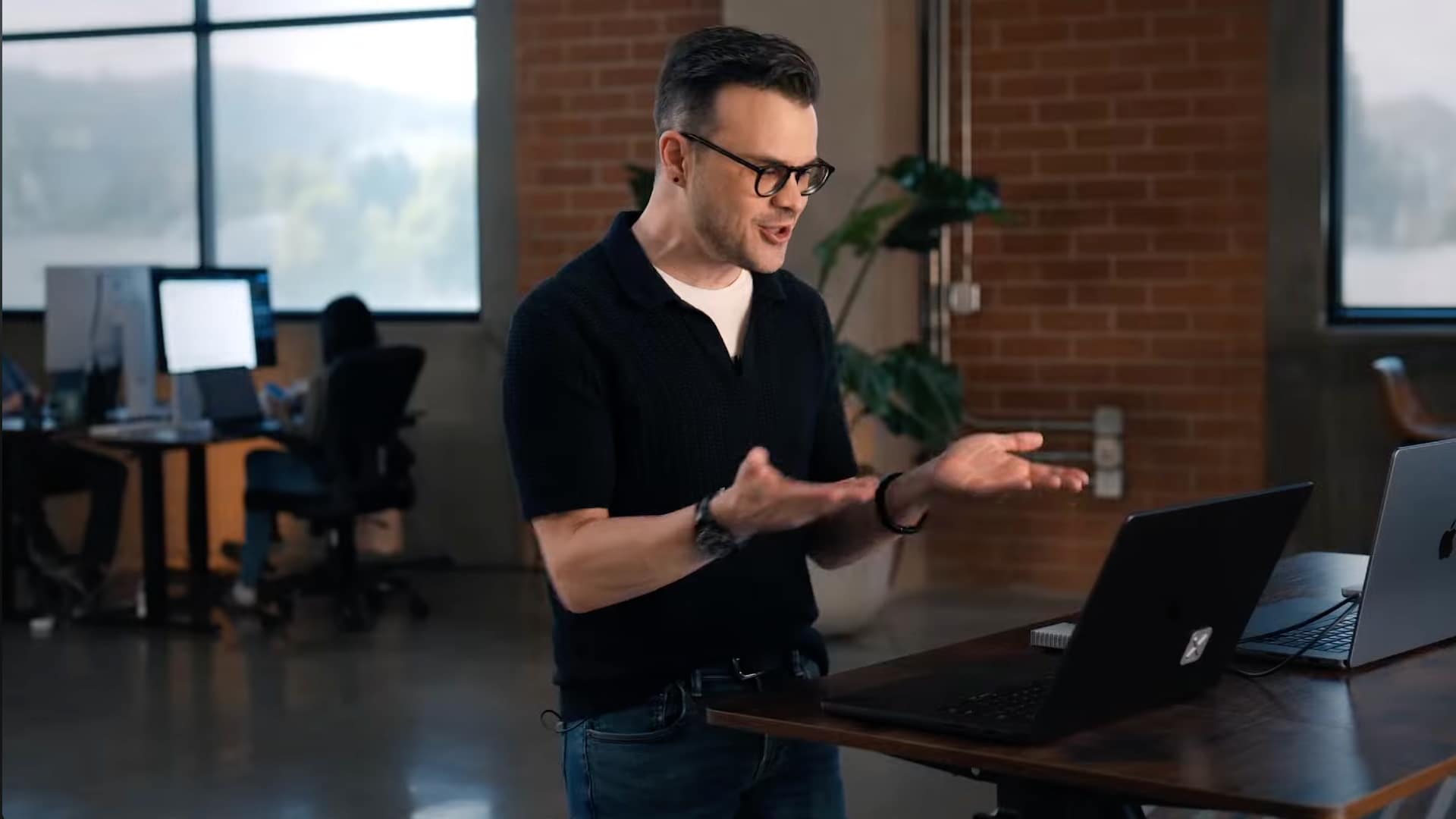
Commentary: The multi-NLE, single-machine demo is the operational headline: it directly challenges the proxy-and-sync model that dominates remote post. The permission tiers (viewer, downloader, editor, admin) are a practical improvement over VPNs and screen-sharing for production accountability. The 10,000 sign-ups suggest the pitch is resonating, but the real test will be whether enterprise post houses adopt it for daily use, not just trials. The Windows release later this month removes a key barrier for PC-heavy facilities.
Date: June 03, 2026 08:00 PM ET
URL: https://redsharknews.com/strada-version-2-remote-collaboration
AI Sentiment Score: Negative (66%)
AI Credibility Score: 10.0/10 — High
Scores and text generated by AI analysis of the source article indicated.
3D Comes to Frame.io: Why the VFX Playbook Just Became the Marketing Playbook (Blog.Frame.Io)
Summary: Frame.io has added native 3D asset review, allowing brand managers and marketing leads to view, comment on, and approve digital twins without opening 3D software. The feature automatically converts uploads to USD, generates turntable previews, and integrates 3D assets into existing video and photo review pipelines. This move mirrors the operational infrastructure VFX studios built to manage global, high-volume asset workflows, now applied to enterprise marketing and commerce content supply chains.

Why it matters: For post teams and production studios, this eliminates the friction of exporting screenshots or hosting separate review sessions for 3D assets, collapsing a previously siloed approval step into the same collaborative environment used for video and stills.
Context: Brands are building digital twins of physical products to power campaigns, AR try-on, and configurators, but approval stakeholders lack 3D software access, leading to version chaos and broken audit trails.
"When a brand manager can review a digital twin the same way they review a campaign video, the barrier to adoption drops considerably." — BLOG.FRAME.IO
Commentary: The real operational win here is not the viewer itself but the unification of review metadata—comments, version history, and approvals now live in one system across all media types. For agencies and in-house studios, this reduces the overhead of maintaining parallel review tracks for 3D and 2D assets, which has been a persistent source of rework and missed deadlines. Expect this to accelerate adoption of digital twin pipelines in mid-market brands that previously found the workflow fragmentation too costly to justify.
Date: June 02, 2026 11:00 AM ET
URL: https://blog.frame.io/2026/06/02/3d-asset-review-frameio/
AI Sentiment Score: Negative (55%)
AI Credibility Score: 10.0/10 — High
Scores and text generated by AI analysis of the source article indicated.
Cast & Crew Platform (Castandcrew)
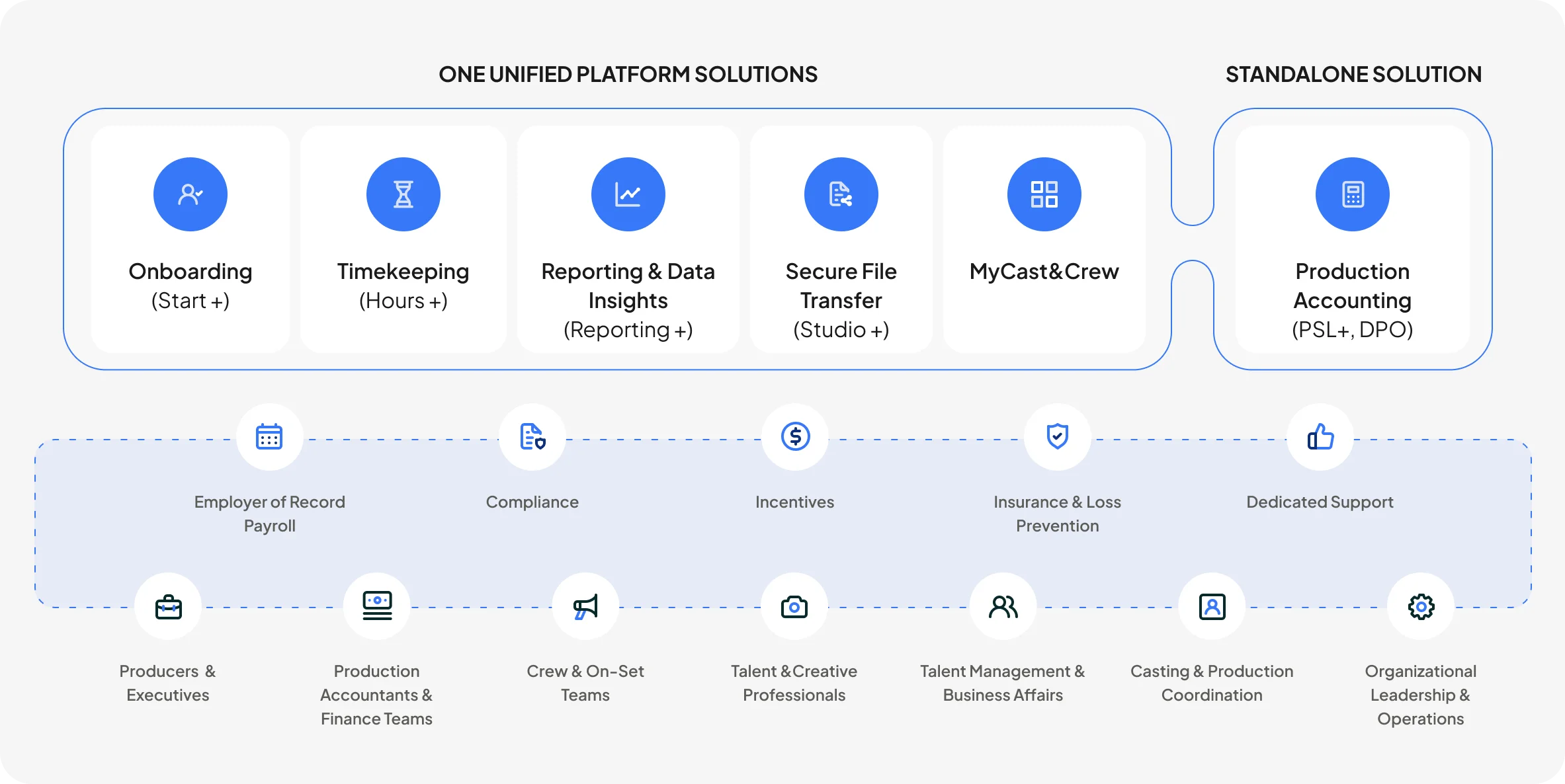
Summary: Cast & Crew is marking its 50th anniversary by positioning its unified platform as the operational backbone for production payroll, accounting, and compliance. The company emphasizes real-time dashboards and integrated workflows to reduce administrative friction across producers, accountants, and crew. This milestone serves as a reminder of the platform’s entrenched role in Hollywood’s below-the-line infrastructure, even as competitors and new entrants eye the same integration play.
Why it matters: For production accountants, payroll coordinators, and studio finance teams, Cast & Crew’s longevity signals a de facto standard that shapes how labor data flows from set to ledger. Any shift in their platform’s capabilities or pricing directly affects the speed of crew payments, audit readiness, and multi-project budget visibility.
Context: Cast & Crew has been the dominant payroll and accounting services provider for film and TV production for decades, but the rise of cloud-native competitors and pressure for real-time crew data has pushed the company to consolidate its offerings into a single ecosystem.
"The Cast & Crew platform gives leadership full visibility into payroll, accounting, and reporting in one secure system. From development through delivery, you gain real-time control, instant insights, and the expert support you need to keep every project on schedule and on budget." — CASTANDCREW
Commentary: The 50-year mark is a reminder that below-the-line infrastructure rarely gets the attention it deserves until a payment error halts a shoot. Cast & Crew’s pitch—unified data from onboarding to audit—is exactly what production accountants need to reduce manual reconciliation, but the real test is whether the platform can integrate with increasingly fragmented scheduling and budgeting tools without locking studios into a single vendor.
Date: June 03, 2026 08:00 PM ET
URL: https://castandcrew.com/cast-crew-one-platform
AI Sentiment Score: Negative (50%)
AI Credibility Score: 10.0/10 — High
Scores and text generated by AI analysis of the source article indicated.
FROM THEN TO NOW: A REAL-TIME RENAISSANCE (Vfxvoice)
Summary: Real-time filmmaking has evolved from a specialized tool for high-budget productions like The Mandalorian to a modular, portable, and increasingly invisible technology used across film, TV, live events, and commercials. Industry leaders report that the biggest gains now come from improved cross-department communication, modular LED kits that can be deployed on any set, and the ability to carry previs assets through to final pixel. Machine learning is emerging as the next layer, enabling real-time character reskinning and style exploration during casting. The technology’s goal, as one supervisor notes, is to be invisible—and it’s succeeding.

Why it matters: For production teams, the shift to modular, portable virtual production kits reduces stage downtime and scheduling bottlenecks, while the ability to reuse pitch assets through post-production cuts costs and improves creative alignment. The real-time renaissance is no longer just about The Mandalorian; it’s a practical, scalable workflow for any project.
Context: The article traces the real-time pipeline from The Mandalorian (2019) through 1899, Fallout, and House of the Dragon, showing how each production pushed the technology further. Key players include ILM, Framestore, Magnopus, PXO Clara, and Synapse Virtual Production.
"The goal of it, like visual effects or editorial, is to be invisible. There are a lot of things that have succeeded in virtual production, especially with LED volumes, that it’s discernible where you can’t tell the difference between which shot is on volume and which shot is practically done, if done well." — VFXVOICE
Commentary: The most operationally significant development is the move toward modular, deployable LED kits that can be set up and broken down quickly on any location, not just dedicated soundstages. This directly addresses the cost and scheduling friction that has kept virtual production out of reach for many mid-budget projects. The ability to carry a single 3D environment from pitch through previs to final pixel—as Synapse VP demonstrates with car commercials—represents a genuine pipeline efficiency that studios should be evaluating now. The next frontier, machine learning-driven real-time character reskinning during casting, could fundamentally change how directors and VFX supervisors collaborate on creature and character design before a single frame is shot.
Date: June 01, 2026 08:00 PM ET
URL: https://vfxvoice.com/from-then-to-now-a-real-time-renaissance
AI Sentiment Score: Positive (40%)
AI Credibility Score: 10.0/10 — High
Scores and text generated by AI analysis of the source article indicated.
Post ID: 52a77ecb