Fashion
Can Fashion Fix Its Polycrisis Problem? (Wwd)
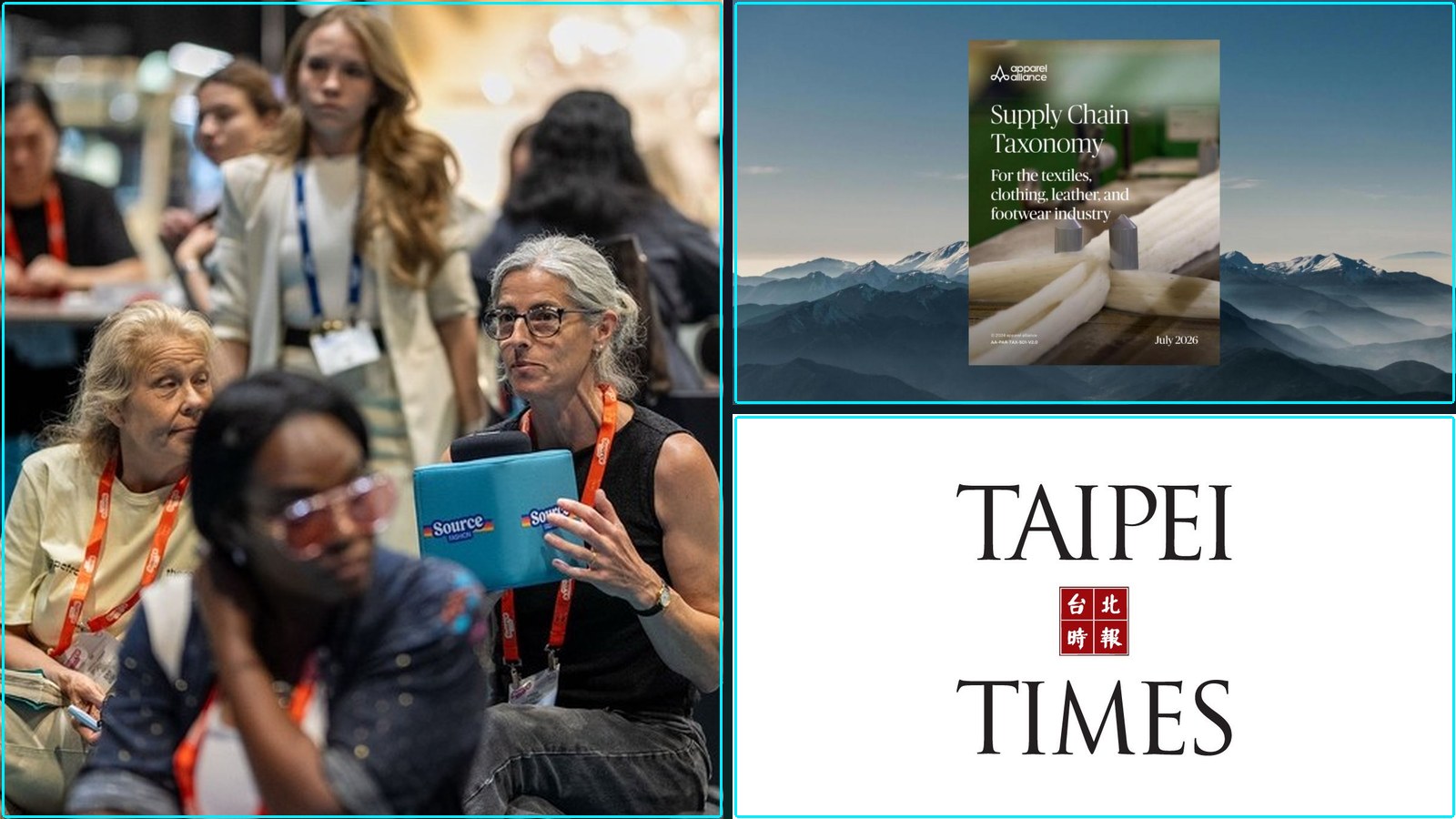
Summary: At the Source Fashion trade show, Euromonitor’s Marguerite Le Rolland and PVH’s former supply chain chief Bill McRaith argued that the fashion industry’s polycrisis—converging geopolitical, climate, and economic shocks—demands a fundamental shift from chasing lowest unit cost to building flexible, regionalized supply lattices. McRaith quantified the damage: offshoring has driven markdown rates from 10-20% to 60%, while EBITs have worsened. The proposed solution is a matrix of offshore, nearshore, and onshore production that allows for quick replenishment of core SKUs and small-batch testing of fringe items, reducing waste and air freight’s outsized carbon impact. Meanwhile, consumer behavior is polarizing toward intentional consumption, with secondhand platforms like Vinted becoming top retailers and younger buyers treating luxury goods as currency.

Why it matters: For fashion executives and supply chain operators, the core takeaway is that the old cost-minimization playbook is actively destroying margin and resilience, and the operational path forward requires rethinking inventory architecture, supplier networks, and cross-departmental planning.
Context: The industry has long relied on ‘China-plus-one’ diversification, but recent disruptions—from the Strait of Hormuz to tariff volatility—have exposed the fragility of extended, low-cost supply chains. McRaith’s ‘supply lattice’ concept directly challenges the binary of offshore vs. onshore.
"Can the fashion industry survive the polycrisis stress test? Not if it continues with business as usual, said Marguerite Le Rolland, senior global insight manager of fashion at Euromonitor International. With converging." — WWD
Commentary: McRaith’s five-cent-to-one-dollar ratio is the kind of concrete trade-off that should reshape sourcing KPIs overnight. The real operational shift here is moving from a linear, forecast-driven pipeline to a networked, demand-responsive lattice—a change that requires new vendor relationships, inventory management systems, and cross-functional incentives. Brands that fail to connect supply chain risk to merchandising decisions will continue to hemorrhage margin.
Date: July 16, 2026 08:00 PM ET
URL: https://wwd.com/sourcing-journal/trade/fashion-polycrisis-source-fashion-july-2026-1239069485
AI Sentiment Score: Negative (83%)
AI Credibility Score: 10.0/10 — High
Scores and text generated by AI analysis of the source article indicated.
Updated Supply Chain Taxonomy Advances Apparel Alignment (3Blmedia)
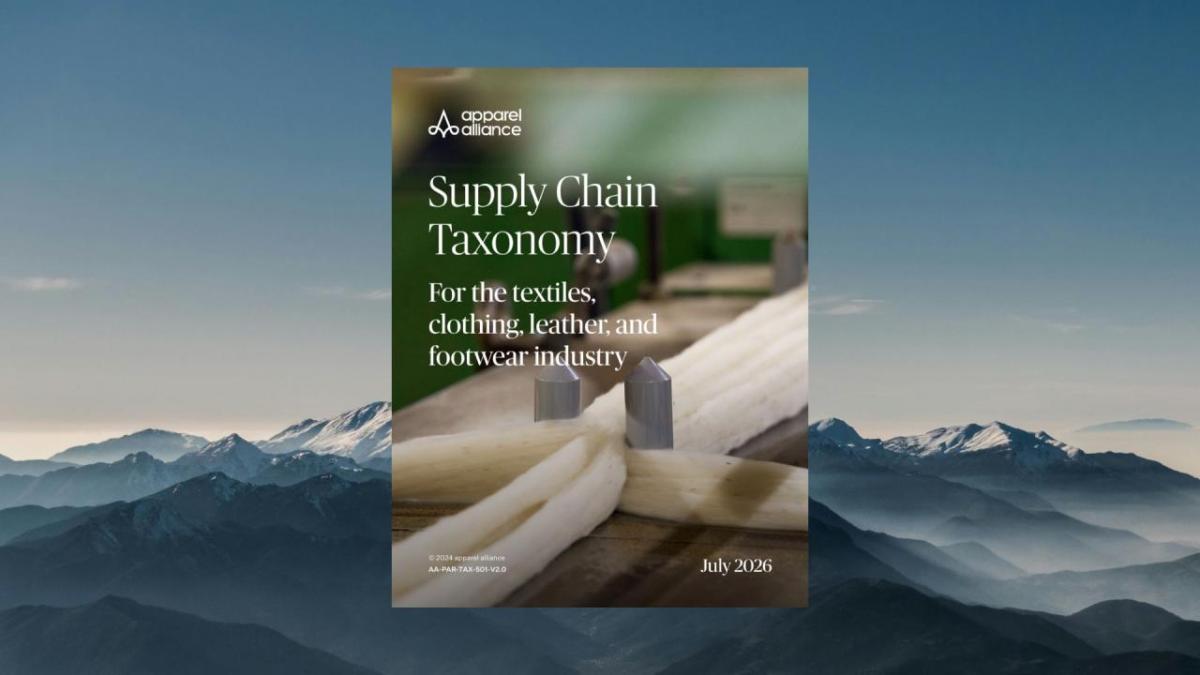
Summary: The apparel alliance—comprising Apparel Impact Institute, Cascale, Textile Exchange, and ZDHC Foundation—has released Version 2 of its Supply Chain Taxonomy, updating the harmonized framework for classifying processes across textile, clothing, leather, and footwear sectors. The revision addresses overlapping process definitions, undefined boundaries, and classification gaps that hampered data quality in the initial November 2024 release. A key operational change: wet processing is now explicitly accounted for across all tiers, not just Tier 2, which shifts how emissions inventories and hotspot analyses are built. The taxonomy is positioned as foundational infrastructure for joint sustainability initiatives, with planned annual updates to incorporate stakeholder feedback and regulatory developments.
Why it matters: For brands, suppliers, and auditors, this taxonomy changes the baseline for emissions reporting, compliance documentation, and benchmarking—anyone running a Higg Index or ZDHC program will need to map their process classifications to the new structure or risk data misalignment.
Context: The apparel alliance formed in 2020 to reduce duplicative sustainability tools; the taxonomy is their attempt to create a single process language across competing frameworks like the Higg Index, ZDHC’s Roadmap to Zero, and Textile Exchange’s material standards.
"Shared definitions are not just administrative; they help the industry make better decisions, improve data quality, and work from the same understanding of the supply chain. Clarifying that wet processing is accounted for across all tiers, not just Tier 2, gives the industry a more accurate picture of where emissions sit and where action is needed most." — 3BLMEDIA
Commentary: The wet-processing tier expansion is the most consequential change for practitioners: it forces brands to re-audit supplier process maps and likely shifts emissions reduction targets downstream. The annual update cadence means compliance teams should treat the taxonomy as a living document, not a one-time mapping exercise. Expect friction from suppliers who have already aligned internal systems to the V1 boundaries.
Date: July 14, 2026 10:00 AM ET
URL: https://3blmedia.com/news/updated-supply-chain-taxonomy-advances-apparel-alignment
AI Sentiment Score: Negative (75%)
AI Credibility Score: 10.0/10 — High
Scores and text generated by AI analysis of the source article indicated.
Shein is paying the price of not embracing its roots – Taipei Times (Taipeitimes)
Summary: Shein’s upcoming Hong Kong listing, expected to raise $2-3 billion, marks the end of a costly effort to distance itself from its Chinese origins. The fast-fashion giant’s valuation has fallen by $70 billion since 2022 as it failed to secure US or UK listings amid geopolitical tensions. Its supply chain, concentrated in Guangdong and capable of two-week turnaround from design to delivery, remains its core advantage but ties it inextricably to China. The company’s pivot to Hong Kong and founder Xu Yangtian’s public praise of suppliers signal a strategic homecoming after years of trying to position itself as a global brand.

Why it matters: For fashion brands and supply chain operators, Shein’s trajectory demonstrates that geopolitical risk now directly dictates listing viability, valuation, and market access, forcing a reassessment of how companies structure their manufacturing and corporate identities.
Context: Shein’s business model relies on a de minimis tax exemption for US imports under $800, which was suspended in 2025, and its US sales growth has slowed sharply from 62% during the pandemic to stagnation this year.
"Between 2022, when preparations for a New York debut began in earnest, and last year, when the apparel seller finally turned to Hong Kong after its London plans stalled, its private-market valuation fell by US$70 billion." — TAIPEITIMES
Commentary: The $70 billion valuation collapse is a direct cost of miscalculating both Washington’s opposition and Beijing’s insistence on keeping successful consumer champions close. For brands with China-linked supply chains, the lesson is clear: decoupling is not a branding exercise but a structural impossibility when speed and cost depend on that ecosystem. Shein’s eventual Hong Kong listing at a discount to H&M and Inditex reflects a new normal where geopolitical alignment trumps growth narrative in valuation.
Date: July 19, 2026 12:00 PM ET
URL: https://www.taipeitimes.com/News/editorials/archives/2026/07/20/2003861033
AI Sentiment Score: Negative (70%)
AI Credibility Score: 10.0/10 — High
Scores and text generated by AI analysis of the source article indicated.
Post ID: c8057f4e