
FashionTech
Policy drift leaves Pakistan’s cotton sector searching for revival (Brecorder)
Summary: Pakistan’s cotton sector is collapsing under institutional failure at the Pakistan Central Cotton Committee (PCCC), which operates with only 26% of its staff and has suspended salaries and pensions for nearly a year. Production has fallen to roughly 5.6 million bales against a textile-sector demand of 15 million, forcing imports of 7 million bales annually at a cost of $2.5 billion. A government-approved merger of the PCCC into the Pakistan Agriculture Research Council remains stalled, and no national cotton policy has been formed. The result is a value chain from farm to fashion that is losing ground to cheaper imports and climate-driven crop shifts.

Why it matters: For fashion and textile supply chains, Pakistan’s cotton collapse means continued reliance on imported raw material, price volatility, and a shrinking domestic sourcing base. Brands and mills that depend on Pakistani cotton must plan for sustained import dependency and potential quality or cost shifts.
Context: Pakistan’s cotton production has declined from historical peaks of 14-15 million bales to roughly 5.6 million, while the textile sector’s demand remains at 15 million bales. The PCCC’s operational paralysis—564 vacant posts, a decade-old leadership gap, and a frozen budget—mirrors broader governance failures in the country’s agricultural policy.
"Policy drift leaves Pakistan’s cotton sector searching for revival – Pakistan Central Cotton Committee facing host of challenges including acute shortage of staff Pakistan’s cotton industry faces a severe crisis due to." — BRECORDER
Commentary: The PCCC’s collapse is not just a bureaucratic story; it is a supply-chain risk. With the merger into PARC stalled and no cotton policy in place, the sector will continue to lose ground to imports, which last year reached $3 billion. The proposed independent cotton board under the Prime Minister has not materialized, leaving the industry without a clear institutional owner. For brands and mills, the practical takeaway is to diversify sourcing and expect continued price volatility in Pakistani cotton.
Date: August 08, 2026 04:31 AM ET
URL: https://brecorder.com/news/40433770/policy-drift-leaves-pakistans-cotton-sector-searching-for-revival
AI Sentiment Score: Negative (83%)
AI Credibility Score: 10.0/10 — High
Scores and text generated by AI analysis of the source article indicated.
3D Sampling in Fashion: How Brands Are Cutting Time and Cost Without Cutting Corners – PC Tech Magazine (Pctechmag)
Summary: 3D sampling is shifting fashion product development from physical prototypes to digital garments built in tools like CLO3D, cutting both the time and cost of sampling cycles. Brands can revise designs in hours instead of weeks, reduce courier and fabric waste, and catch fit or construction issues before production. The article highlights that savings are quantifiable, with physical samples costing $50–60 to hundreds of dollars each, multiplied across multiple revision rounds. It also notes that manufacturers must adopt digital workflows to support this shift, and that the next phase includes virtual showrooms and AI-driven style prediction.
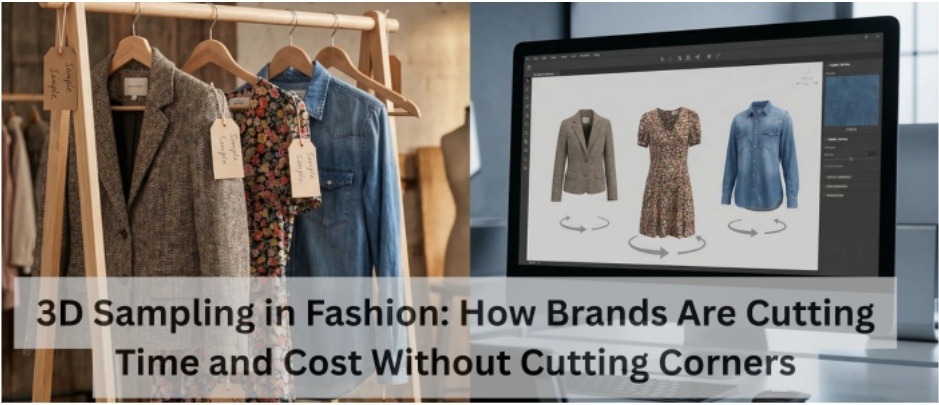
Why it matters: For fashion brands and manufacturers, the move to 3D sampling changes the development calendar, the cost structure of sampling, and the skills required from design and production teams. It also shifts the competitive advantage toward brands that can compress time-to-market and reduce waste.
Context: Traditional sampling cycles of three or four physical rounds are being replaced by digital iterations, but the transition depends on manufacturing partners that can handle digital assets. The article is a practical overview, not a deep technical analysis, and it frames the change as a cost and speed play rather than a creative one.
"The cost of a single physical sample may range between 50-60 become many hundreds of dollars based on the garment, factory, and materials. Factor that by three or four printing cycles of corrections and fees on top of that by the international courier, and the bill becomes quite fat." — PCTECHMAG
Commentary: The real operational shift is not just in design software but in the entire supply chain: brands that adopt 3D sampling will need to renegotiate how they brief manufacturers, how they approve samples, and how they handle fit validation. The cost savings are real, but they depend on the factory’s ability to interpret digital files accurately—otherwise the risk of miscommunication just moves from the sample room to the production line. The next phase, virtual showrooms and AI-driven style prediction, will further compress the calendar, but it also raises the bar for data quality and collaboration. Brands that wait for the standard to settle will find themselves at a cost and speed disadvantage.
Date: August 04, 2026 06:03 AM ET
URL: https://pctechmag.com/2026/08/3d-sampling-in-fashion-how-brands-are-cutting-time-and-cost-without-cutting-corners
AI Sentiment Score: Negative (81%)
AI Credibility Score: 10.0/10 — High
Scores and text generated by AI analysis of the source article indicated.
Post ID: 7e894ae7