

Policy, Legal & Regulatory
Other Barks & Bites for Friday, August 7: PTAB Precedential Ruling Clarifies OTDP Examination Practices; Eleventh Circuit Says Keyword Bidding Isn’t Trademark Infringement; and Buc-ee’s Expands Trademark Enforcement Campaign (Ipwatchdog)
Summary: The PTAB’s Appeals Review Panel issued a precedential ruling in Ex parte Baurin, clarifying the framework for obviousness-type double patenting (OTDP) examinations by recognizing the anti-harassment rationale and requiring actual evidence of ownership splitting and harassment. The Eleventh Circuit joined other circuits in holding that keyword bidding alone cannot constitute trademark infringement, while the Ninth Circuit reversed a summary judgment in a malpractice suit over missed deadlines and also reversed a dilution injunction against the Bad Spaniels dog toy. Buc-ee’s expanded its trademark enforcement campaign despite public criticism from John Oliver, and the Federal Circuit confirmed that eBay’s reasoning applies to preliminary injunctions.

Why it matters: These rulings reshape the boundaries of trademark and patent enforcement: keyword bidding is now safer for advertisers, OTDP examination will require more concrete evidence, and the Federal Circuit’s clarification on preliminary injunctions affects patent litigation strategy. The Buc-ee’s case highlights the reputational risks of aggressive trademark enforcement against small businesses.
Context: The PTAB’s precedential ruling addresses a long-standing tension between preventing patent harassment and allowing legitimate continuation practice. The Eleventh Circuit’s decision aligns with the Ninth Circuit and others, creating a consistent national standard that keyword bidding alone does not create consumer confusion. The Federal Circuit’s extension of eBay to preliminary injunctions removes a presumption that many patent owners relied on.
"Although the Eleventh Circuit upheld the trademark infringement ruling and injunction for Deltona, it joined the Ninth Circuit and several other regional circuit courts in holding that keyword bidding cannot cause trademark infringement by itself because the keyword doesn’t display itself in NOCO’s ads, so they are not viewed by consumers and cannot create a likelihood of confusion." — IPWATCHDOG
Commentary: The Eleventh Circuit’s ruling is a practical win for digital advertisers, but it leaves open the possibility of infringement when the keyword appears in ad text or when other factors create confusion. The PTAB’s new framework may reduce the burden on applicants but also invites more litigation over what constitutes ‘harassment.’ The Buc-ee’s expansion, despite the John Oliver backlash, signals that some companies prioritize brand protection over public perception, which could lead to more legislative scrutiny of trademark enforcement practices.
Date: August 07, 2026 02:15 PM ET
URL: https://ipwatchdog.com/2026/08/07/bites-barks-eleventh-circuit-says-keyword-bidding-isnt-trademark-infringement-and-buc-ee/
AI Sentiment Score: Negative (57%)
AI Credibility Score: 10.0/10 — High
Scores and text generated by AI analysis of the source article indicated.
Challenging Toxic Air Exemptions – and a Pattern of Executive Overreach on Regulatory Rollbacks (Justsecurity)
Summary: The Trump administration has invoked a never-before-used Clean Air Act provision, Section 112(i)(4), to exempt more than 180 industrial facilities—including coal plants, petrochemical manufacturers, and entire industries like coke ovens—from hazardous air pollution rules, without public process or technical record. The Department of Justice argues these presidential exemption proclamations are unreviewable by courts, a position that NRDC and partners are challenging through ultra vires claims in D.C. federal court. The exemptions affect nearly 4.6 million people and over 4,300 schools within two miles of facilities, with many communities facing elevated cancer risks and high environmental burdens.
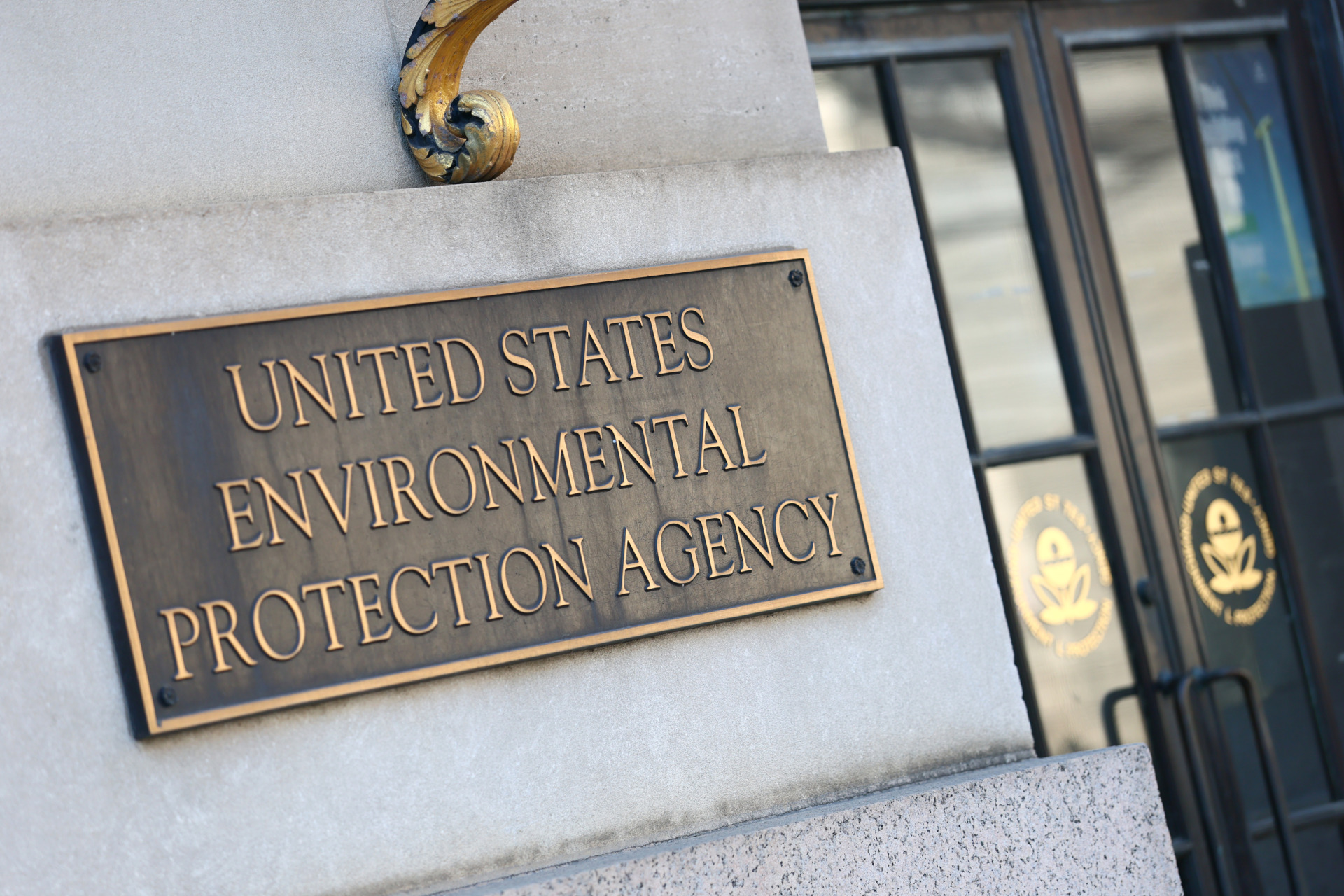
Why it matters: This case tests whether courts can enforce statutory limits on presidential power, with direct consequences for public health and the future of administrative law. If DOJ’s unreviewability argument prevails, it would set a precedent that any president can nullify environmental protections by reciting statutory magic words, gutting the rule of law.
Context: The administration has used similar pretextual statutory interpretations elsewhere, including the Alien Enemies Act and IEEPA tariffs, and courts have already struck down several ultra vires actions in 2025-2026. The Clean Air Act exemption is part of a broader pattern of executive overreach that has sparked 176 ultra vires cases tracked by Just Security.
"By DOJ’s telling, any congressional instruction about how and when the president is allowed to exercise authority is a mere paper tiger, overcome with the ipse dixit that the president’s action is lawful because he says it is so." — JUSTSECURITY
Commentary: The administration’s move converts a narrow national-security exemption into a wholesale industry waiver, effectively rewriting the Clean Air Act without Congress. The unreviewability argument is a radical departure from Marbury-era doctrine, and if accepted, would render statutory limits on the presidency advisory. The litigation outcome will signal whether courts can still police executive action in the current era, with ripple effects far beyond air quality. Expect a Supreme Court test if the D.C. Circuit rules against the administration.
Date: August 07, 2026 08:50 AM ET
URL: https://www.justsecurity.org/151435/toxic-air-exemptions-executive-overreach/
AI Sentiment Score: Negative (80%)
AI Credibility Score: 10.0/10 — High
Scores and text generated by AI analysis of the source article indicated.
China’s First AI Companion Rules Draw a New Line Between Tools and Relationships (Justsecurity)
Summary: China’s first AI companion rule took effect July 15, 2026, prompting ByteDance, Alibaba, and Tencent to shut down custom AI persona services within days. The rule targets emotional dependency itself, not just harmful content, and applies to all ages. U.S. regulation remains fragmented and reactive, focused on minors and crisis intervention, while China’s pre-launch filing and safety assessment model offers a more proactive but blunt approach. The rollout has been uneven, with smaller apps continuing to operate and enforcement details still ambiguous.

Why it matters: This marks the first national-level attempt to regulate AI companions as a distinct product category, setting a precedent that could influence global standards. U.S. policymakers face pressure to move beyond child-specific protections and treat emotional dependency as a cross-generational design risk.
Context: China’s rule follows a pattern of broad national regulation with platform-led implementation, while U.S. states like California and New York have enacted narrower laws focused on disclosure and crisis intervention. The FTC’s 6(b) inquiry into companion chatbots has yet to produce enforcement action.
"China’s rule is broader than the U.S. approach in three ways: it treats sustained emotional interaction as a distinct AI product category, it recognizes emotional dependency as a cross-generational design risk regardless of age or specific content, and it assesses that risk before deployment, such as a pre-launch review process." — JUSTSECURITY
Commentary: The Chinese rule’s blunt application—shutting down persona features across major platforms—shows the cost of proactive regulation, but it also exposes the limits: smaller apps may evade compliance, and the line between ‘companion’ and ‘general-purpose tool’ remains untested. For U.S. regulators, the lesson is not to copy China’s model but to recognize that emotional dependency is a design risk that cannot be fully addressed through disclosure and crisis hotlines alone. The next regulatory battle will be over whether general-purpose AI tools that become companions fall under the same rules.
Date: August 06, 2026 09:14 AM ET
URL: https://www.justsecurity.org/148468/china-ai-companion-rules-relationships/
AI Sentiment Score: Negative (91%)
AI Credibility Score: 10.0/10 — High
Scores and text generated by AI analysis of the source article indicated.
Risky Business: Patent Term Adjustment in the Post- Forest Era (Ipwatchdog)
Summary: The Federal Circuit’s In re Forest decision, which held that a patent issuing after its expiration date confers no rights, has prompted the USPTO to begin terminating prosecution of applications that cannot issue with enforceable term. The agency’s June 2026 Patent Alert and orders to show cause mean Patent Term Adjustment (PTA) is no longer a mere bonus but may be the only basis for keeping a late-term application alive. Practitioners must now calculate PTA before allowance, as continued prosecution can shift enforceable term into a narrow future window, sometimes creating gaps and resurrections of patent family coverage.
Why it matters: For patent prosecutors and portfolio managers, this shifts the calculus of when to abandon or maintain late-stage applications, turning PTA into a determinative factor for whether a patent exists at all—not just how long it lasts.
Context: The Federal Circuit’s April 2025 decision in In re Forest dismissed an appeal for lack of standing because the applicant could not obtain any rights from an already-expired patent. The USPTO’s June 2026 Patent Alert operationalizes that ruling by proactively identifying and terminating such applications.
"For late-term applications, PTA may be better understood as shifting patent term from the prosecution period to the post-issuance period. Rather than simply increasing the length of an already-existing patent term, PTA may supply the enforceable term necessary for patent rights to arise at all." — IPWATCHDOG
Commentary: The USPTO’s new show-cause procedure effectively weaponizes PTA as a gatekeeper, forcing applicants to justify continued prosecution with a concrete term calculation. This creates a trap for continuation strategies that rely on late-filed applications to extend family coverage—what looks like an expired family may suddenly revive, but only if the PTA math works. Expect a rise in terminal disclaimers and more aggressive PTA audits as applicants race to preserve any enforceable term. The real risk is that the USPTO’s initial calculations may ignore PTA, as seen in the Forest order, leading to premature terminations that applicants must challenge with precise PTA estimates.
Date: August 03, 2026 09:49 AM ET
URL: https://ipwatchdog.com/2026/08/03/risky-business-patent-term-adjustment-in-the-post-forest-era/
AI Sentiment Score: Negative (77%)
AI Credibility Score: 10.0/10 — High
Scores and text generated by AI analysis of the source article indicated.
Regulate, Don’t Ban, Chinese AI Models (Justsecurity)
Summary: The U.S. debate over Chinese AI models, triggered by Moonshot AI’s Kimi K3 release, has shifted from outright bans to calls for safety-based regulation. The administration’s IP theft allegations against Moonshot are technically weak, and industry opposition, including from OpenAI and Google, favors proportionate safeguards over origin-based restrictions. The emerging consensus is pre-deployment and ongoing safety testing for all frontier models, with a possible international testing body.

Why it matters: This signals a potential policy pivot from protectionist bans to a testing regime that could shape market access for all frontier AI models, with significant implications for U.S.-China tech competition and global AI governance.
Context: The article follows the release of Kimi K3, a 2.8 trillion parameter open-weight model, and the subsequent U.S. government push to restrict Chinese AI models, including proposed IEEPA actions and export controls on imports.
"Washington, D.C. policy circles are buzzing with talk of whether and how to restrict access to Chinese AI models. But the right answer is to regulate all AI models for safety through." — JUSTSECURITY
Commentary: The article’s push for neutral, capability-based testing is pragmatic, but the devil is in the details: who sets the thresholds, and how to avoid politicizing the process. The ITC route for IP disputes is a sensible alternative to national security overreach, but it may be too slow for frontier AI’s pace. The proposed international agency is a long shot, but it could be the only way to avoid a fragmented regulatory landscape.
Date: August 03, 2026 08:49 AM ET
URL: https://www.justsecurity.org/150856/regulate-dont-ban-chinese-ai-models/
AI Sentiment Score: Neutral (33%)
AI Credibility Score: 10.0/10 — High
Scores and text generated by AI analysis of the source article indicated.
Post ID: 19220d23