
Space Exploration
Moonquakes could reveal hidden water beneath the lunar surface (Sciencedaily)
Summary: A new study in Science Advances shows that seismic waves from moonquakes can detect and map buried lunar ice by measuring how frozen versus dry soil alters vibration speed and reflection. Researchers at the University of Maryland, Lawrence Berkeley National Laboratory, and the University of Hawaii validated the approach through lab experiments, thermal modeling, and simulations. The technique could support NASA’s Artemis program and China’s Chang’e-7 mission, both targeting the lunar south pole, and may help trace the origins of Earth’s oceans.
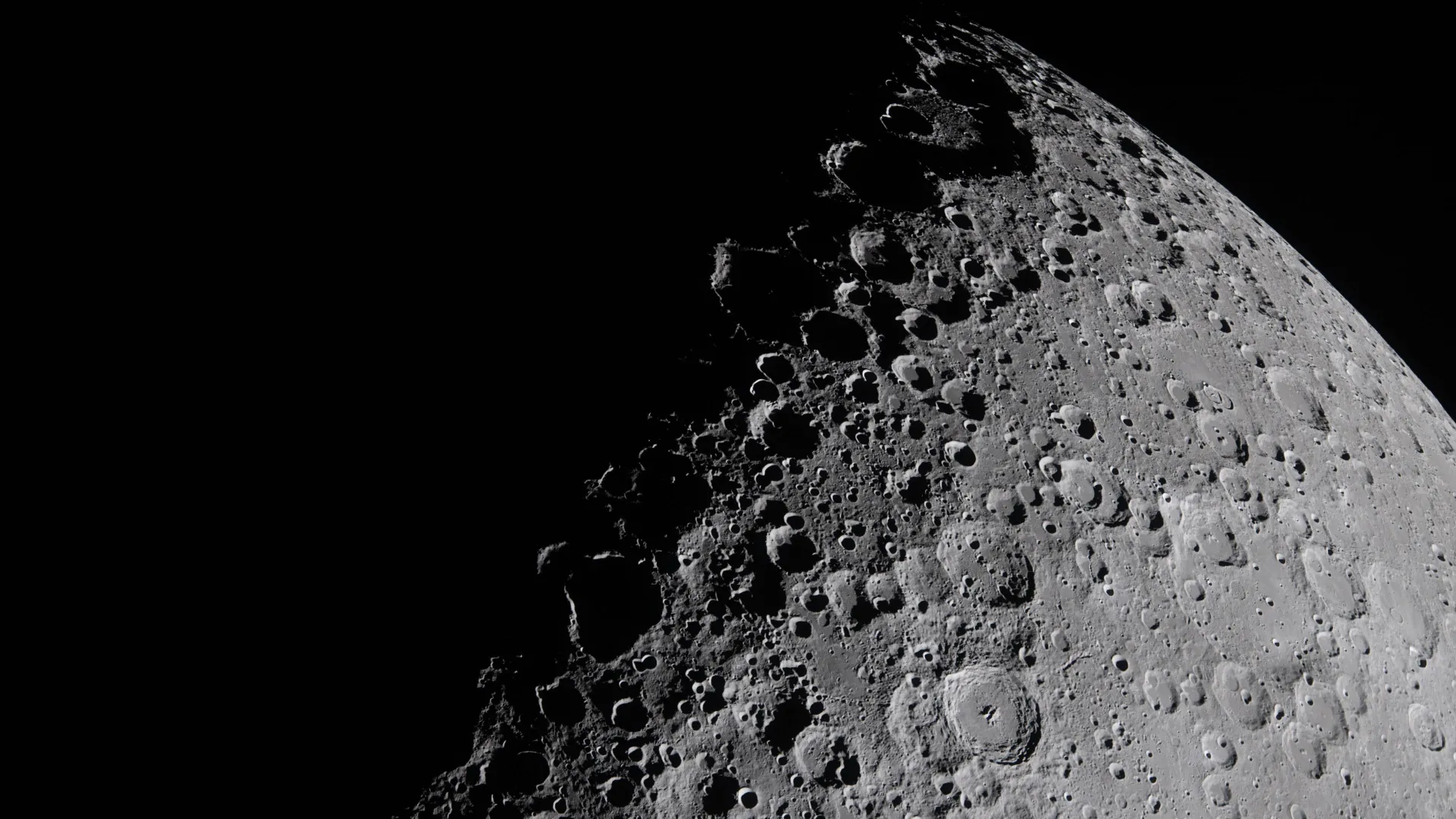
Why it matters: This provides a practical, near-term method for locating subsurface ice that orbital instruments cannot see, directly informing landing site selection and resource utilization for crewed missions in 2028 and beyond.
Context: The paper arrives as Chang’e-7 is expected to land near Shackleton Crater with a seismometer in late 2026, and as NASA’s Artemis program prepares for south polar crewed missions—making seismic ice detection a testable hypothesis within two years.
"Moonquakes could reveal hidden water beneath the lunar surface Moonquakes could help scientists find buried lunar ice and reveal where Earth’s water came from. – Date: – August 3, 2026 – Source:." — SCIENCEDAILY
Commentary: The key advance is turning a theoretical resource question into a measurable seismic signature, with a concrete validation window via Chang’e-7. If the prediction holds, it shifts lunar exploration from surface prospecting to subsurface mapping, enabling more precise site selection for outposts. The dual-use for planetary science—tracing water delivery in the early solar system—adds scientific urgency beyond engineering utility. Watch for whether the Chang’e-7 seismometer data aligns with the modeled velocity contrasts, as that will determine whether this becomes a standard reconnaissance tool.
Date: August 03, 2026 08:32 AM ET
URL: https://www.sciencedaily.com/releases/2026/08/260802223420.htm
AI Sentiment Score: Neutral (33%)
AI Credibility Score: 10.0/10 — High
Scores and text generated by AI analysis of the source article indicated.
Meteorite that smashed through a New Jersey roof reveals clues to life’s origins (Sciencedaily)
Summary: A meteorite that crashed through a New Jersey home in July 2024 has been identified as a CM1/2 carbonaceous chondrite, only the second witnessed fall of its kind. Analysis published in Science Advances reveals preserved briny fluids, organic compounds, and amino acids from its parent asteroid, offering rare evidence of how salty water chemistry may have contributed to prebiotic molecules on early Earth.
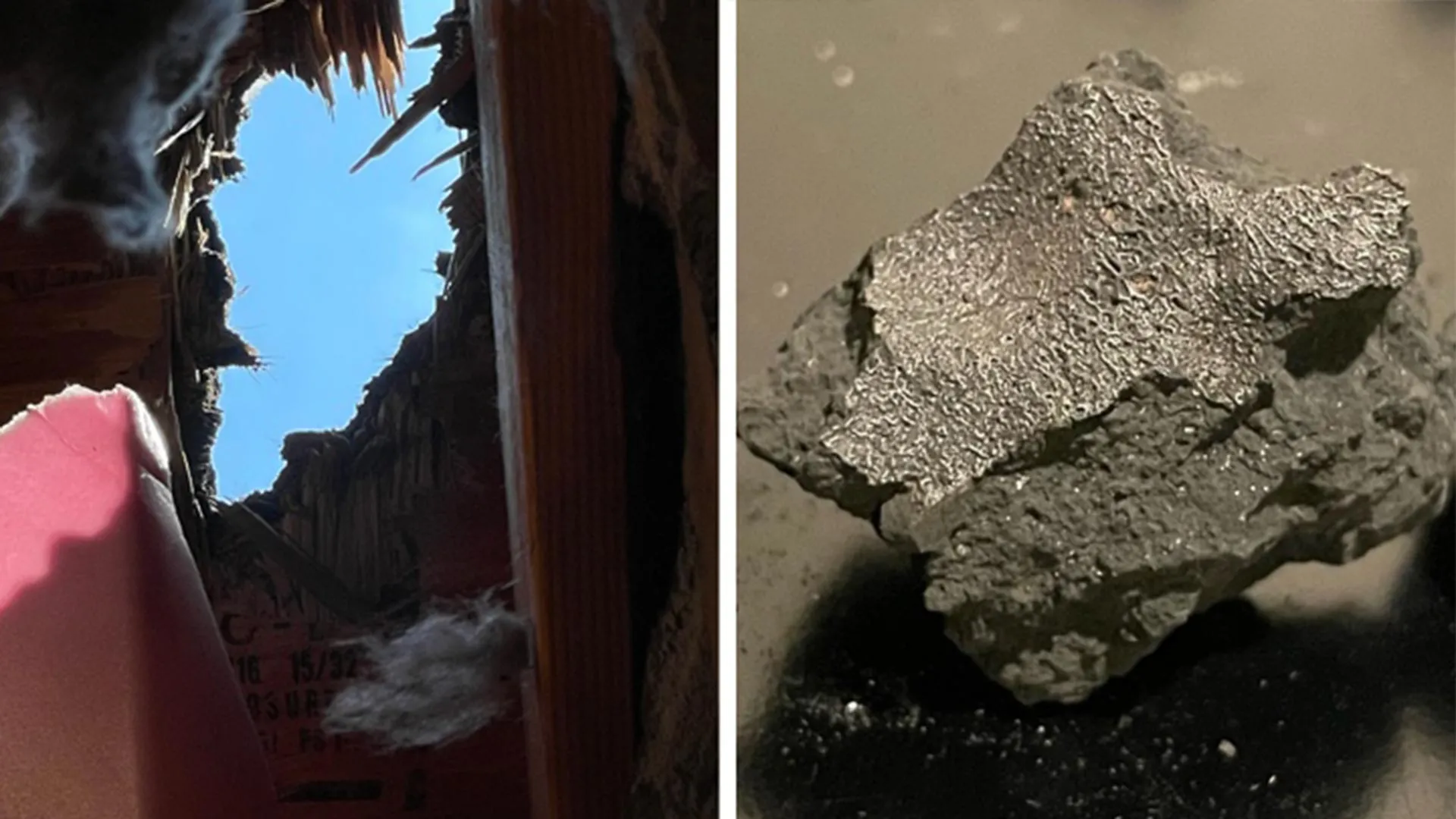
Why it matters: This is the most pristine CM1/2 meteorite ever recovered, providing a direct, uncontaminated sample of asteroid brine chemistry that can be compared with JAXA’s Ryugu and NASA’s Bennu samples, potentially refining models of how water and organics interacted on primitive bodies.
Context: The meteorite’s rapid recovery and careful handling by the homeowner preserved its volatile-rich chemistry, which is typically lost in weathered falls. Its classification bridges the CM1 and CM2 petrographic types, and its brine signatures align with recent findings from asteroid sample return missions.
"Meteorite that smashed through a New Jersey roof reveals clues to life’s origins A meteorite that crashed into a New Jersey home preserved ancient salty chemistry that could reveal how asteroids helped." — SCIENCEDAILY
Commentary: The Hillsborough meteorite’s pristine brines offer a rare ground-truth for interpreting Ryugu and Bennu samples, but the ambiguity around organometallic compound origins underscores how much remains unknown about asteroid aqueous alteration. The fact that this is only the second witnessed CM1/2 fall highlights how dependent we are on luck for such samples, making the homeowner’s quick preservation a critical scientific contribution. Future curation at the American Museum of Natural History will allow continued analysis, but the window for volatile-rich measurements is closing.
Date: August 08, 2026 10:58 AM ET
URL: https://www.sciencedaily.com/releases/2026/08/260807035145.htm
AI Sentiment Score: Negative (71%)
AI Credibility Score: 10.0/10 — High
Scores and text generated by AI analysis of the source article indicated.
Three companies building the tech to grow crops on the moon (Spacenews)
Summary: Three companies—Space Lab Technologies, Interstellar Lab, and SafetySpect—are developing technologies for growing crops on the moon under NASA contracts. Space Lab’s LEAF experiment, selected for Artemis 3, will study plant growth in lunar conditions; Interstellar Lab is building autonomous greenhouses with a lunar rose-growing pod planned for Artemis 4; SafetySpect is developing a handheld plant-stress monitor using spectroscopy and AI. These efforts are early-stage but signal a growing commercial space agriculture sector, with NASA’s SBIR program and upcoming Artemis missions providing near-term catalysts.

Why it matters: As NASA moves toward a sustained lunar presence, in-situ food production becomes a critical logistics and life-support capability. These contracts and experiments are the first concrete steps toward a market that could eventually support tens of millions in annual revenue, and they will determine whether crews can live off the land rather than rely on resupply.
Context: NASA has studied plant growth on the ISS for years, but lunar agriculture is a new frontier with unique challenges: partial gravity, radiation, and extreme thermal swings. The Artemis program’s 2028 landings are the near-term testbed, and these companies are positioning themselves to supply the hardware.
"Rockets, rovers and landers have dominated the attention of the commercial space industry as the United States focuses on sending humans back to the moon, but a handful of companies are focusing." — SPACENEWS
Commentary: The real signal here is not the hardware but the shift from research to procurement: NASA is now paying for TRL-5 systems and pilot studies, not just concept studies. The LEAF and Interstellar Lab missions are scheduled for 2028, but schedule slips are likely—watch for integration delays with Artemis landers. The plant-stress monitor is the sleeper: it has dual-use for food safety on Earth, which could give SafetySpect a commercial runway independent of space. The key risk is that these companies are betting on Artemis cadence, which has a history of slipping.
Date: August 06, 2026 08:00 AM ET
URL: https://spacenews.com/three-companies-building-the-tech-to-grow-crops-on-the-moon/
AI Sentiment Score: Positive (42%)
AI Credibility Score: 10.0/10 — High
Scores and text generated by AI analysis of the source article indicated.
Crew-13 pilot reflects on career, training, and upcoming science ahead of flight to ISS (Nasaspaceflight)
Summary: NASA has moved the Crew-13 ISS launch up from November to no earlier than September 12, 2026, compressing training but not compromising readiness. First-time pilot Luke Delaney discussed the schedule change, his path from Marine aviator to NASA astronaut, and the mission’s science focus, including Earth observation and physiological research. The crew, including commander Jessica Watkins, will fly aboard Crew Dragon Grace.

Why it matters: The schedule acceleration signals NASA’s confidence in Crew Dragon’s operational cadence and the crew’s ability to adapt, while also highlighting the agency’s continued reliance on commercial crew for ISS rotations.
Context: Crew-13 is part of NASA’s Commercial Crew Program, which has been steadily increasing flight rates. The crew includes three rookies and one veteran, reflecting a normal mix for ISS expeditions.
"“There [was] some compression in some ways, but I think there was some trade space, so we leveraged some efficiencies in training and still met all the criteria,” Delaney said to NSF." — NASASPACEFLIGHT
Commentary: The two-month schedule pull-in is a practical test of training flexibility, but it also underscores how NASA is tightening the cadence of crew rotations to maximize ISS utilization. Delaney’s background as a test pilot instructor and his focus on Earth observation and physiological research suggest a mission oriented toward applied science, not just station maintenance. The overlap between his Langley airborne science work and on-orbit data collection could yield useful cross-calibration opportunities for Earth observation sensors.
Date: August 04, 2026 04:05 PM ET
URL: https://www.nasaspaceflight.com/2026/08/crew-13-delaney-interview/
AI Sentiment Score: Negative (57%)
AI Credibility Score: 10.0/10 — High
Scores and text generated by AI analysis of the source article indicated.
The sun is covered in tiny whirlpools we’ve never seen before (Sciencedaily)
Summary: Researchers using the NSF Daniel K. Inouye Solar Telescope and advanced simulations have detected plasma vortices on the Sun’s surface as small as 20 kilometers across, previously invisible. These whirlpools, linked to Kelvin-Helmholtz instabilities, appear along granule boundaries and may twist magnetic field lines, offering a mechanism for energy buildup and nanoflare release. The vortices also mix magnetized and non-magnetized plasma, potentially explaining rapid magnetic flux transport into the solar atmosphere and the Sun’s 11-year cycle. The findings are published in Nature.

Why it matters: This discovery provides a plausible, observationally grounded mechanism for how magnetic energy is stored and released on the Sun, which is central to understanding solar activity, space weather, and the solar cycle. It also challenges existing models of magnetic flux diffusion, potentially refining predictions of solar eruptions that affect Earth’s technology.
Context: The Sun’s magnetic field drives its activity cycle, but the small-scale processes that twist field lines have been poorly understood. The Inouye Solar Telescope’s resolution, combined with simulations, has now exposed structures at the 20-kilometer scale, a regime previously inaccessible.
"The newly discovered vortices could supply part of the answer. Because the researchers find that these small whirlpools appear continuously wherever the magnetic field is sufficiently strong, the vortices could provide a persistent mechanism for twisting the Sun’s magnetic field lines." — SCIENCEDAILY
Commentary: This is a rare case where a new observational capability directly addresses a long-standing theoretical gap. The Kelvin-Helmholtz instability mechanism is well-established in fluid dynamics, so the interpretation is robust, but the link to nanoflares and the magnetic cycle remains inferential. The next step is to correlate these vortices with observed nanoflare activity, which would require coordinated observations with instruments like SDO or Parker Solar Probe. If confirmed, this could lead to better predictive models for solar eruptions, with direct implications for space weather forecasting and satellite operations.
Date: August 08, 2026 09:03 AM ET
URL: https://www.sciencedaily.com/releases/2026/08/260807035142.htm
AI Sentiment Score: Positive (40%)
AI Credibility Score: 10.0/10 — High
Scores and text generated by AI analysis of the source article indicated.
NASA’s MAVEN Illuminates New Understanding of Auroras at Mars (Universetoday)
Summary: A new study using MAVEN data, published in Nature Communications, shows that Mars’ localized auroras are driven by a miniature version of the Dungey cycle, the same magnetic reconnection process that powers Earth’s auroras. The team, led by UC Berkeley’s Shaosui Xu, combined data from MAVEN’s Magnetometer, SWEA, and STATIC instruments to map the electrical currents and plasma flows around crustal magnetic fields. This finding explains how electrons are energized to create Martian auroras and reveals that the Dungey mechanism operates on both planetary and crustal scales. The work also clarifies how space weather interacts with Mars, which is critical for future robotic and crewed missions.
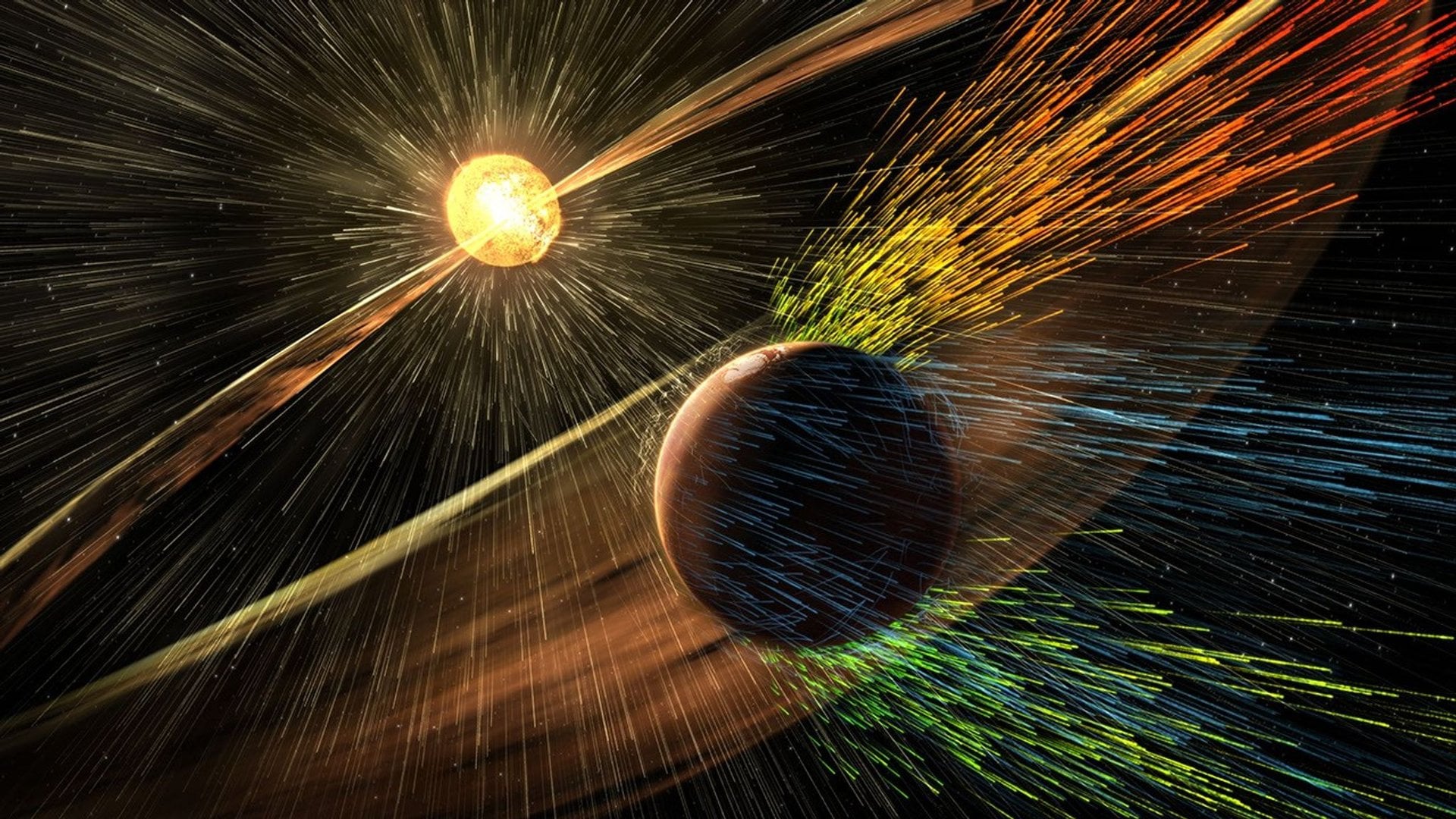
Why it matters: This finding refines the physics of Martian auroras and space weather, directly informing engineering requirements for future Mars landers and habitats, which must account for localized radiation and plasma effects.
Context: MAVEN lost contact in December 2025 and officially ended on June 3, 2026, but its data continues to yield results. The Dungey cycle, named in 1961, describes magnetic reconnection that drives Earth’s auroras; Mars lacks a global magnetic field but has crustal magnetic anomalies.
"We knew that magnetic reconnection was happening at Mars but did not expect it to be like the Dungey cycle. We really pushed the limit of STATIC to get the data we needed. It was the final piece to the puzzle in understanding these localized auroras." — UNIVERSETODAY
Commentary: The confirmation of a scaled-down Dungey cycle at Mars is a textbook example of how planetary physics scales across different magnetic environments. For mission planners, this means localized auroral events are not just visual curiosities but markers of electron acceleration that could affect surface electronics and astronaut safety. The result also strengthens the case for comparative magnetospheric studies across the solar system, potentially informing how we interpret auroral phenomena on icy moons and exoplanets.
Date: August 09, 2026 02:04 PM ET
URL: https://www.universetoday.com/articles/nasas-maven-illuminates-new-understanding-of-auroras-at-mars
AI Sentiment Score: Negative (75%)
AI Credibility Score: 10.0/10 — High
Scores and text generated by AI analysis of the source article indicated.
Post ID: d5731b47