
Hacker Community
Flipper Zero Transmits APRS With No Extra Parts – Hackaday (Hackaday)
Summary: A developer has modified the Flipper Zero’s firmware to transmit the APRS amateur radio data protocol using its built-in 435 MHz ISM-band radio, eliminating the need for external hardware. The hack repurposes the device’s FSK modulation to approximate the FM required by APRS, creating a functional, minimalist transceiver. While not fully standards-compliant, it demonstrates a significant reduction in the hardware barrier for radio experimentation.
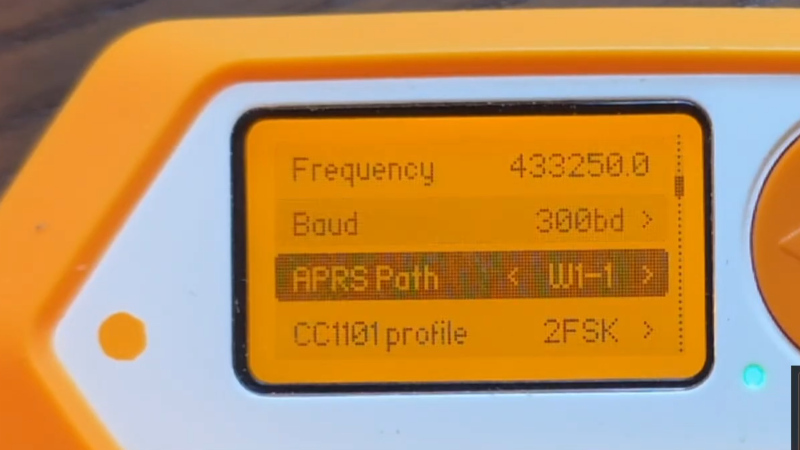
Why it matters: This represents a tangible shift in the hardware-hacking signal, lowering the entry cost and complexity for engaging with amateur radio protocols and expanding the practical utility of a popular hacker tool.
Context: The Flipper Zero has evolved from a novelty into a versatile RF platform, with its community continually finding new applications that bypass official limitations or intended use cases.
"The Flipper Zero RF hacker’s multi tool normally needs to be hooked up to an external transmitter to do APRS, but [Richard YO3GND] has made his Flipper do the job without any external parts at all." — HACKADAY
Commentary: This is a classic village/workshop signal: a community-driven firmware hack that repurposes commodity hardware for a niche, protocol-specific use. It concretely reduces the ‘bill of materials’ for APRS experimentation, pushing the Flipper further into the realm of legitimate, if edge-case, radio tools. The implied regulatory caution in the article (‘Assuming that possession of a Flipper hasn’t got you into hot water’) underscores the ongoing tension between hacker tool versatility and institutional compliance.
Date: April 21, 2026 12:00 AM ET
URL: https://hackaday.com/2026/04/21/flipper-zero-transmits-aprs-with-no-extra-parts/
AI Sentiment Score: Negative (66%)
AI Credibility Score: 9.9/10 — High
Scores and text generated by AI analysis of the source article indicated.
Jenny’s Daily Drivers: Going 32-Bit With SliTaz In 2026 (Hackaday)
Summary: A Hackaday columnist installs the minimalist SliTaz distribution on a 2005-era 32-bit Dell Latitude D610, demonstrating that the machine remains functionally usable for basic tasks in 2026. The experiment suggests the continued dedication of open-source maintainers to niche architectures but also highlights the accelerating software abandonment of 32-bit platforms. The author concludes that while technically possible, the exercise is largely pointless given the superior longevity and support of slightly newer 64-bit hardware from 2007 onward.

Why it matters: This is a concrete signal of the terminal phase for mainstream 32-bit x86 support, forcing the hacker community’s preservation efforts into increasingly esoteric and minimalist software stacks.
Context: The piece fits the ‘village/workshop signal’ archetype, documenting a hands-on, practical test of a community-built alternative (SliTaz) in response to a known but often ignored warning: the end of software support for a foundational architecture.
"Researching this piece though it’s very obvious that much of the software necessary for modern computing is slipping out of 32 bit support, so I have to question how much longer they can keep it up. Considering that this machine has about the same intrinsic monetary value as a Core2-based machine made a little over a year later which supports 64 bit code I have to concede that what I’ve just done is a fairly pointless exercise." — HACKADAY
Commentary: The column’s value lies not in reviving the 32-bit platform but in documenting the precise inflection point where preservation becomes an academic exercise rather than a practical repair strategy. It signals a shift in the ‘right to repair’ calculus: the limiting factor is no longer hardware failure but architectural obsolescence enforced by software ecosystems. This creates a new class of ‘functional e-waste’ where devices work but are stranded by the supply chain of code.
Date: Thu, 30 Apr 2026 17:00:22 +0000
URL: https://hackaday.com/2026/04/30/jennys-daily-drivers-going-32-bit-with-slitaz-in-2026/
AI Sentiment Score: Negative (50%)
AI Credibility Score: 10.0/10 — High
Scores and text generated by AI analysis of the source article indicated.
How TTY Opened Up The Phones For The Hard of Hearing (Hackaday)
Summary: The teletypewriter (TTY), developed in 1964 by deaf inventors James C. Marsters and Robert Weitbrecht, enabled textual communication over analog phone lines for the deaf and hard of hearing using acoustic couplers and a 5-bit code. It spawned relay services and established communication protocols like ‘GA’ and ‘SK’, becoming a critical accessibility tool. While largely supplanted by SMS and IP-based systems, its legacy persists in some emergency networks and as a foundational case of user-driven, pre-digital assistive technology.

Why it matters: This is a foundational case of hacker-world’s ‘hardware-hacking signal’ and ‘cypherpunk infrastructure’ archetypes, demonstrating how marginalized communities built bespoke, adversarial interoperability to access a closed network, setting a precedent for user-led accessibility innovation.
Context: The story fits a pattern of pre-internet, community-built communication systems that bypassed institutional exclusion, similar to early BBSes or packet radio; it’s a historical benchmark for evaluating modern digital-rights fights over closed platforms and repair.
"Their idea was to create a method for deaf individuals to communicate over the phone network in a textual manner. To this end, the group sourced teleprinters formerly used by the US Department of Defense, and hooked them up with acoustic couplers that would allow them to mate with the then-ubiquitous AT&T Model 500 telephone." — HACKADAY
Commentary: The TTY’s creation from surplus military hardware and its adversarial coupling to AT&T’s closed system is a direct ancestor to modern hardware hacking and right-to-repair movements. Its operational norms (‘GA’, ‘SK’) prefigured chat protocols, showing how user communities develop efficient, low-bandwidth communication cultures. The ongoing struggle to maintain TTY compatibility on digital networks underscores a recurring pattern: legacy accessibility systems are often the first casualties of ‘upgrades,’ creating security-debt and exclusion risks that modern policy must address.
Date: Thu, 30 Apr 2026 14:00:04 +0000
URL: https://hackaday.com/2026/04/30/how-tty-opened-up-the-phones-for-the-hard-of-hearing/
AI Sentiment Score: Positive (40%)
AI Credibility Score: 10.0/10 — High
Scores and text generated by AI analysis of the source article indicated.
Small Appliances Are Flunking Right to Repair, PIRG Report Finds (Ifixit)
Summary: A U.S. PIRG Education Fund report assessed 58 common small appliances—blenders, coffeemakers, vacuums—for repairability under new state right-to-repair laws. Nearly two-thirds earned an ‘F’ for material availability; only three provided a service manual. Manufacturers like KitchenAid, Braun, and Nutribullet explicitly discouraged or prohibited repair, with some advising disposal.

Why it matters: This is a core digital-rights fight expanding into consumer hardware, revealing systemic non-compliance with new laws and a deliberate ‘disposable by design’ strategy for high-wear items.
Context: This is the third annual ‘Leaders and Laggards’ report tracking manufacturer compliance since New York’s 2023 right-to-repair law. Previous reports showed poor performance in categories like dishwashers, VR headsets, and digital cameras.
"Your coffee maker may be less repairable than your phone, which is really saying something. In a new report, U.S. PIRG Education Fund looked at 58 blenders, coffeemakers, and vacuums, and nearly." — IFIXIT
Commentary: The report signals a critical phase for right-to-repair: enforcement. Manufacturers are testing legal boundaries with blatant non-compliance, treating statutes as optional. This creates a direct conflict between regulatory intent and corporate design philosophy, forcing a showdown that will define the law’s practical reach beyond electronics into everyday durable goods. The contrast with the open-source Open Funk blender suggests the barrier is will, not feasibility.
Date: Tue, 14 Apr 2026 23:48:15 +0000
URL: https://www.ifixit.com/News/116901/small-appliances-are-flunking-right-to-repair-pirg-report-finds
AI Sentiment Score: Negative (66%)
AI Credibility Score: 9.9/10 — High
Scores and text generated by AI analysis of the source article indicated.
Spring, Solder, and Side Quests (Ifixit)
Summary: iFixit’s field report from European maker events and workshops details a deliberate shift from passive tool sales to active community cultivation. The strategy includes trading tools for repair knowledge contributions, hands-on demos of the new FixHub soldering system, and meeting non-technical audiences with low-barrier activities like smartphone cleaning. The narrative captures both the organic adaptation of tools by long-term users and the persistent cultural gap where many still see repair as ‘not for them’.

Why it matters: This is a direct signal of the hackerspace-to-mainstream pipeline in action, showing how a core platform is strategically bridging the confidence gap to turn passive curiosity into active repair capability.
Context: iFixit operates at the intersection of the right-to-repair movement, maker culture, and consumer hardware; its community-building efforts are a leading indicator of broader technical literacy shifts.
"What sticks with me from the past few months of events isn’t the number of calendar days or the names of the people I’ve met (I’m terrible with names, by the way),." — IFIXIT
Commentary: The explicit gender-coded hesitation is a concrete data point on the cultural barrier repair faces beyond mere technical skill. iFixit’s response—starting with cleaning—is a tactical recognition that maintenance is the gateway drug to repair. The ‘kid drop-off’ phenomenon, while a logistical challenge, underscores the latent demand for structured, intergenerational skill transfer that the commercial market fails to provide. These field observations validate that the next phase of the right-to-repair movement is less about legal wins and more about on-the-ground confidence-building workshops.
Date: Wed, 22 Apr 2026 06:27:11 +0000
URL: https://www.ifixit.com/News/117025/spring-solder-and-side-quests
AI Sentiment Score: Negative (50%)
AI Credibility Score: 10.0/10 — High
Scores and text generated by AI analysis of the source article indicated.
NEW SideStore iOS 2026: Install IPA Files on iPhone & iPad (Youtube)
Summary: A 2026 tutorial demonstrates the installation of SideStore on iOS devices, enabling the sideloading of IPA files without a traditional jailbreak. The process involves using a developer account, a VPN, and a Windows or Mac computer to sign and install the SideStore client, which then functions as an alternative app store. This method is presented as functional on iOS 26, indicating ongoing cat-and-mouse adaptations to Apple’s security model.

Why it matters: It signals the persistence and evolution of the sideloading ecosystem, a core digital-rights fight for iOS users seeking software freedom outside Apple’s walled garden.
Context: SideStore and similar tools like AltStore represent a continuous, community-driven effort to circumvent Apple’s App Store monopoly and developer program restrictions, often leveraging enterprise or developer certificate loopholes.
"This method allows you to sideload apps on any device, even running ios 26." — YOUTUBE
Commentary: This is a tool release and a digital-rights fight signal. The mention of iOS 26 suggests the community is preparing for and testing against future Apple countermeasures, framing sideloading as a persistent technical challenge rather than a one-time hack. The reliance on VPNs and developer-mode toggles highlights the increasing operational complexity and ‘workshop’ knowledge required, moving it further from casual user territory and deeper into enthusiast/hacker maintenance.
Date: April 30, 2026 12:00 AM ET
URL: https://www.youtube.com/watch?v=ReTsjBOSTbI
AI Sentiment Score: Negative (75%)
AI Credibility Score: 10.0/10 — High
Scores and text generated by AI analysis of the source article indicated.
Digital Hopes, Real Power: From Connection to Collective Action (Eff)
Summary: A retrospective analysis of the digital rights movement in the Middle East and North Africa since the 2011 uprisings charts its evolution from a niche focus on access and expression to a mature, integrated struggle over infrastructure, sovereignty, and geopolitical power. Key organizations like SMEX, 7amleh, and the Middle East Alliance for Digital Rights (MADR) have shifted from promoting social media to confronting tech accountability failures, surveillance supply chains, and platform weaponization. The movement now prioritizes digital public goods, open source adoption, and understanding digital rights as inseparable from economic, political, and social rights, with recent events like the post-October 7th conflict sharpening focus on tech-enabled violence and digital independence.

Why it matters: This signals the maturation of a critical regional hacker-to-activist pipeline, demonstrating how foundational digital rights advocacy evolves into concrete fights over infrastructure control and geopolitical power, offering a blueprint for other global majority communities.
Context: This is a digital-rights fight archetype, specifically tracking the institutionalization and strategic pivot of a region’s hacker/civil society coalition from optimism to infrastructure-focused sovereignty.
"After the expansion of tech accountability itself and the adaptation of tech companies, we’ve noticed that it’s not taking us anywhere. Gradually we’ve come to a new phase where it feels like tech accountability is an economy by itself that is not leading to real results. So the next phase for us at least and maybe for others in global majority communities is how we can focus on digital public good, how we can push more governments, private and public institutions to adopt more open source software, to look at the ecosystem and understand the US threats happening now, et cetera." — EFF
Commentary: The explicit rejection of ‘tech accountability’ as a sufficient framework marks a decisive turn from appealing to platform governance to building independent, open-source infrastructure—a move from reformist to sovereigntist tactics. This pivot, driven by the weaponization of U.S. platforms and cloud services, directly fuels the cypherpunk infrastructure and digital public goods movements, making regional conflicts a primary engine for rethinking global technological dependence.
Date: Thu, 30 Apr 2026 07:56:37 +0000
URL: https://www.eff.org/deeplinks/2026/04/digital-hopes-real-power-connection-collective-action
AI Sentiment Score: Negative (50%)
AI Credibility Score: 10.0/10 — High
Scores and text generated by AI analysis of the source article indicated.
The Open Social Web Needs Section 230 to Survive (Eff)
Summary: The Electronic Frontier Foundation (EFF) argues that Section 230 of the Communications Decency Act is a critical legal shield for the nascent Open Social Web, including the Fediverse and Bluesky. The article posits that undermining this liability protection would disproportionately harm small, independent hosts and infrastructure providers, cementing the dominance of well-resourced incumbents like Meta and Google. The piece frames 230 as the foundational enabler of decentralized experimentation and community-led moderation, not a license for harmful content.

Why it matters: This is a core digital-rights fight for the hacker community, directly impacting the legal viability of decentralized infrastructure projects and the operational risk for anyone running an instance, PDS, or relay.
Context: Section 230 faces sustained political pressure from both sides of the aisle, often framed as a tool for platform impunity, while decentralized social ecosystems are gaining technical but not legal maturity.
"The open social web’s kryptonite though, is the liability participants can face as intermediaries. A greater potential for liability comes with more interference from powerful interests in the form of legal threats, more monetary costs, and less space for nuance in moderation. And in practice, participants may simply stop hosting to avoid those risks. The end result is only the biggest and most resourced options can survive." — EFF
Commentary: The EFF correctly identifies the asymmetric vulnerability: legal threats that are a cost of business for Big Tech are existential for indie hosts. This shifts the fight from abstract policy to concrete operational security for the federated stack. If 230 is weakened, the practical outcome is not cleaner speech but a rapid consolidation of hosting into fewer, more centralized entities, directly counter to the movement’s goals. The argument reframes 230 not as a shield for giants but as the necessary armor for a distributed alternative.
Date: Tue, 28 Apr 2026 20:59:06 +0000
URL: https://www.eff.org/deeplinks/2026/04/open-social-web-needs-section-230-survive
AI Sentiment Score: Negative (87%)
AI Credibility Score: 10.0/10 — High
Scores and text generated by AI analysis of the source article indicated.
Post ID: 8cbccdf5