Space Telescopes and ESA Mission Operations
The Nancy Grace Roman Space Telescope, NASA’s next great … (Space)
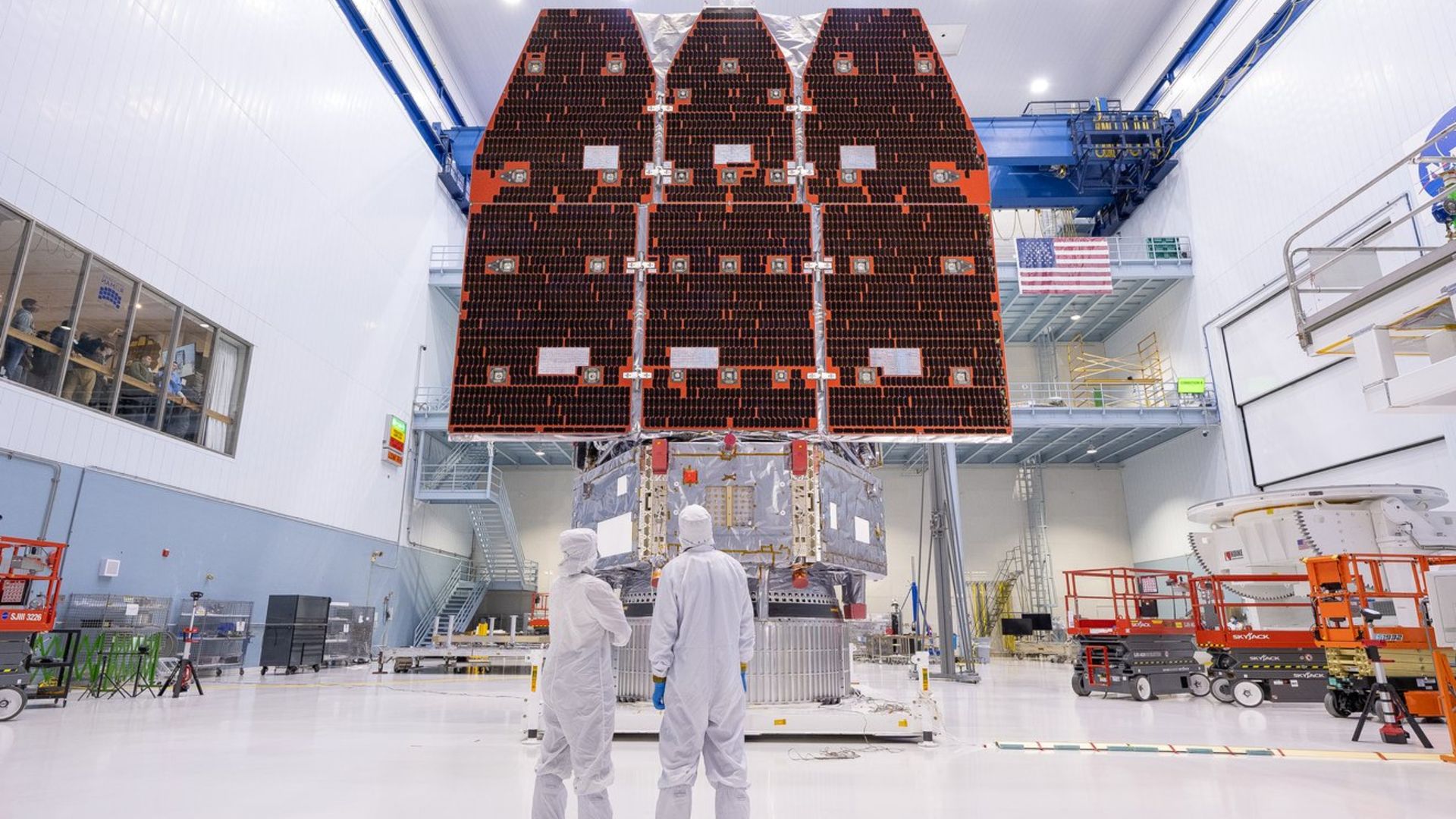
Summary: The Nancy Grace Roman Space Telescope has been assembled at NASA Goddard, marking a key milestone ahead of its planned September 2026 launch. The mission is notable for being eight months ahead of schedule and under budget. Its Wide Field Instrument is designed for rapid, large-area surveys in visible and near-infrared light, with a field of view over 100 times larger than Hubble’s, enabling it to generate 500 terabytes of data annually. A technologically advanced coronagraph will also allow for direct imaging of exoplanets at unprecedented contrast levels.
Why it matters: Roman’s operational readiness and accelerated schedule signal a rare efficiency in major astrophysics missions, while its unique survey speed and coronagraph capability could redefine the scale and pace of cosmological and exoplanet research.
Context: Roman fills a strategic gap between the deep, narrow-field infrared sensitivity of JWST and the aging ultraviolet-optical capabilities of Hubble, positioning it as a high-throughput survey engine for dark energy studies and statistical exoplanet science.
"GREENBELT, Md. — On Tuesday (April 21) here at NASA’s Goddard Space Flight Center, I watched as scientists stood proudly around a metal contraption with towering orange solar panels and a sparkling." — SPACE
Commentary: The ahead-of-schedule, under-budget delivery is a significant data point for NASA’s major project management, contrasting with the protracted development cycles of JWST and SLS. Roman’s data volume and speed could force a recalibration of ground systems, archive design, and analysis pipelines, shifting the bottleneck from observation to processing. Its coronagraph, if it meets spec, could transition direct imaging from a demonstration to a survey tool, pressuring the exoplanet community to develop targets for a new class of statistical atmospheric studies.
Date: April 21, 2026 12:00 AM ET
URL: https://www.space.com/space-exploration/the-nancy-grace-roman-space-telescope-nasas-next-great-observatory-is-finally-complete
AI Sentiment Score: Negative (70%)
AI Credibility Score: 10.0/10 — High
Scores and text generated by AI analysis of the source article indicated.
First-of-its-kind ship-to-ship call (Esa.Int)
Summary: On 7 April, the four-person Artemis II crew, currently in ground-based training for a lunar flyby mission, conducted a live audio call with the seven-person Expedition 74 crew aboard the International Space Station. This event was framed by ESA as the first ship-to-ship call between crews of deep-space and low Earth orbit missions.

Why it matters: It demonstrates operational integration and communication protocols between distinct mission architectures, a necessary precursor for concurrent lunar and orbital operations.
Context: Artemis II is scheduled for a September 2025 launch; such exercises validate ground-to-orbit communication links and crew coordination procedures ahead of the mission.
"The first‑of‑its‑kind ship‑to‑ship call between astronauts on deep‑space and low Earth orbit missions." — ESA.INT
Commentary: The framing as ‘ship-to-ship’ is a public relations construct—Artemis II’s ‘ship’ is on Earth. The substantive signal is the rehearsal of a future operational state where a crew en route to the Moon maintains contact with LEO assets, testing the administrative and technical handoff between NASA’s Exploration and Space Operations mission directorates.
Date: Mon, 13 Apr 2026 16:20:00 +0200
URL: https://www.esa.int/ESA_Multimedia/Videos/2026/04/First-of-its-kind_ship-to-ship_call
AI Sentiment Score: Negative (66%)
AI Credibility Score: 10.0/10 — High
Scores and text generated by AI analysis of the source article indicated.
SOLIS100 isolation study begins in Germany (Esa.Int)
Summary: ESA and DLR have initiated the SOLIS100 isolation study, placing six volunteers in a sealed habitat at Cologne’s :envihab facility for 100 days. The experiment, distinct from physiological microgravity analogues like bed rest, focuses on the psychological, behavioral, and team-dynamic challenges of long-duration confinement. It includes experiments from ESA and the UAE’s MBRSC, aiming to refine crew selection, support, and operational risk models for future lunar and Mars missions where real-time Earth support is limited.

Why it matters: This study directly informs the operational and human-risk frameworks for ESA’s planned deep-space exploration, where psychological resilience and crew autonomy become critical mission-limiting factors.
Context: SOLIS100 is part of a structured portfolio of ground-based analogues—including bed rest and dry immersion—that ESA uses to de-risk different aspects of spaceflight (physiological vs. psychological) before committing to costly, high-stakes missions.
"By contrast, SOLIS100 does not simulate microgravity. Instead, it investigates the human consequences of long-term isolation and confinement, including limited social interaction. The study examines impacts on mental health, team dynamics, stress regulation, sleep, cognitive performance, as well as changes in the crew and habitat microbiome." — ESA.INT
Commentary: The operational segmentation of risk domains—assigning isolation studies to psychological strain and bed rest to physiological deconditioning—signals a mature, systematic approach to exploration preparedness. Integrating international partners like MBRSC into the experiment portfolio also suggests ESA is using these analogues as diplomatic and programmatic anchors beyond pure research.
Date: Thu, 23 Apr 2026 09:00:00 +0200
URL: https://www.esa.int/Science_Exploration/Human_and_Robotic_Exploration/SOLIS100_isolation_study_begins_in_Germany
AI Sentiment Score: Negative (77%)
AI Credibility Score: 10.0/10 — High
Scores and text generated by AI analysis of the source article indicated.
Just opened: five tonnes of science and supplies (Esa.Int)
Summary: Northrop Grumman’s Cygnus NG-24 cargo spacecraft, launched on April 11, was successfully berthed to the International Space Station on April 13. The vehicle delivered approximately five metric tonnes of supplies, scientific experiments, and spare parts, including several European payloads. The capture and opening event involved a multi-agency crew, highlighting the routine yet critical nature of ISS logistics operations.

Why it matters: This delivery sustains the Station’s operational tempo and research pipeline, demonstrating the continued reliability of commercial cargo services as a core component of orbital infrastructure.
Context: Cygnus missions are part of NASA’s Commercial Resupply Services program, representing a steady-state cadence of logistics flights essential for maintaining crew and science operations on the ISS.
"ESA astronaut Sophie Adenot and NASA astronauts Jack Hathaway, Jessica Meir and Chris Williams take a moment to capture the occasion as they first open the Cygnus NG‑24 cargo spacecraft after its." — ESA.INT
Commentary: The event underscores the operational normalcy achieved in ISS resupply, where a multi-national crew treats a multi-tonne delivery as a coordinated, almost routine event. The mention of ‘several European experiments’ within the standard Northrop Grumman manifest reinforces the integrated, user-driven model of Station utilization, where scientific throughput depends on this reliable freight service. No schedule slips or anomalies reported here signal a healthy, predictable logistics chain, which is the unglamorous backbone of sustained human spaceflight.
Date: Thu, 16 Apr 2026 09:34:00 +0200
URL: https://www.esa.int/ESA_Multimedia/Images/2026/04/Just_opened_five_tonnes_of_science_and_supplies
AI Sentiment Score: Neutral (33%)
AI Credibility Score: 10.0/10 — High
Scores and text generated by AI analysis of the source article indicated.
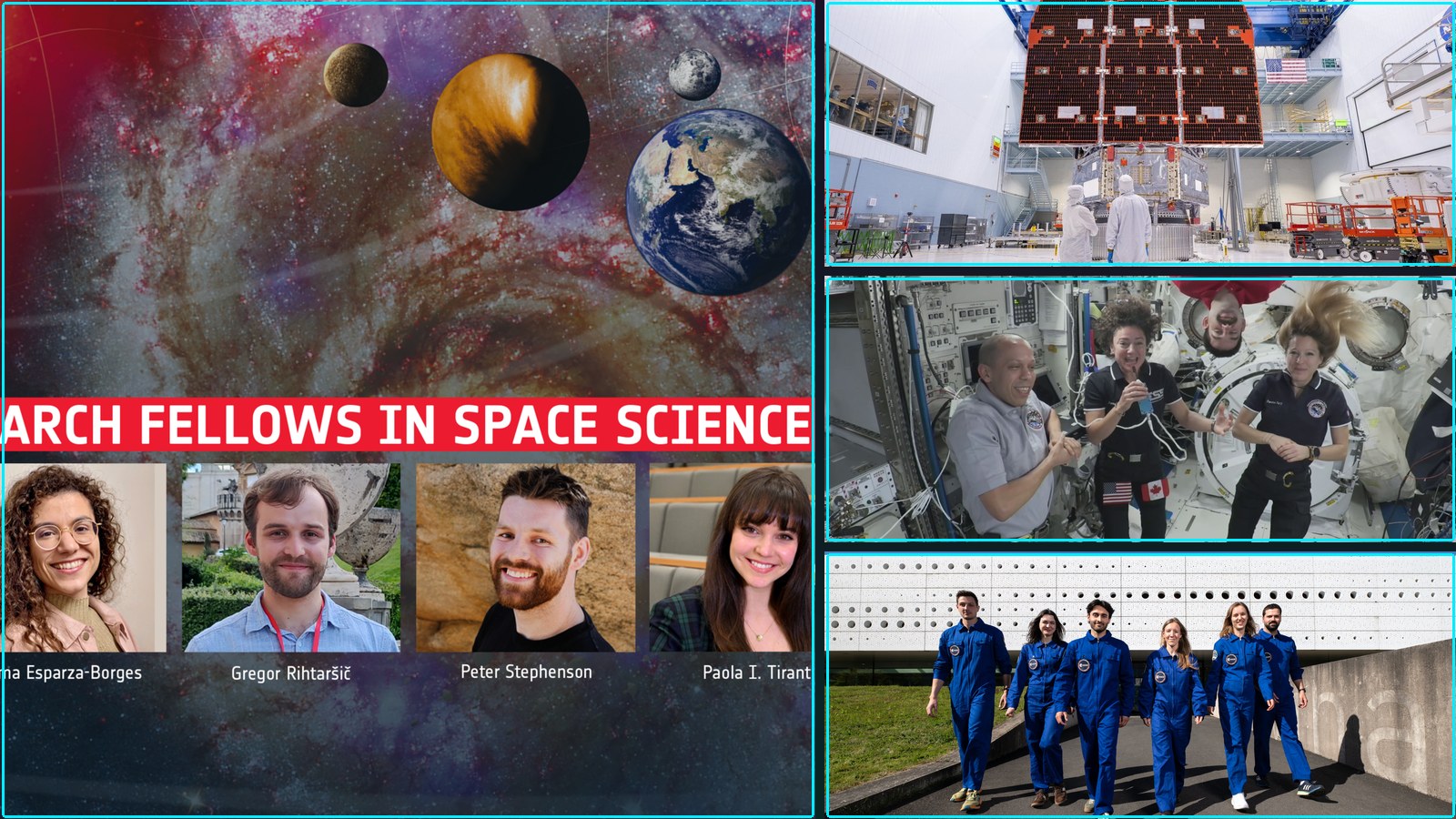
Research Fellows in space science 2026 (Esa.Int)
Summary: The European Space Agency has selected six early-career scientists for its 2026 Research Fellowships in space science. The fellows will conduct independent research for up to three years at ESA establishments or the Space Telescope Science Institute, focusing on topics including dark matter, Jupiter’s atmosphere, and exoplanet evolution.

Why it matters: ESA’s fellowship program is a critical talent pipeline for European space science, directly linking postdoctoral research to active mission data and shaping future mission concepts and scientific leadership.
Context: ESA’s Science Research Fellowships are a competitive, flagship program designed to retain and develop top European scientific talent, often feeding researchers into future mission teams and scientific consortia.
"Early career postdoctoral scientists are offered the unique opportunity to carry out advanced research related to the space science areas covered by ESA Science missions at one of three ESA establishments (ESAC, ESTEC or STScI) for a period of up to three years." — ESA.INT
Commentary: The selection signals ESA’s continued investment in fundamental science across its portfolio. The inclusion of STScI as a host underscores the operational entanglement of ESA and NASA science programs. The specific research topics—like using Jupiter’s Great Red Spot—indicate fellows will leverage unique, current mission datasets (e.g., from JUICE or Webb), making this a direct investment in extracting high-value science from existing capital.
Date: Tue, 28 Apr 2026 10:00:00 +0200
URL: https://www.esa.int/ESA_Multimedia/Images/2026/04/Research_Fellows_in_space_science_2026
AI Sentiment Score: Negative (66%)
AI Credibility Score: 10.0/10 — High
Scores and text generated by AI analysis of the source article indicated.
Post ID: 47c679c3