
AI & Digital Tools for Design, Retail & Operations
AI-Driven Apparel Image Retrieval and Feature Optimization for Smart and Sustainable Textile Manufacturing (Intechopen)
Summary: Integrated impact of image retrieval in textile industry applications. Abstract In response to mounting environmental challenges, excessive resource use, and the rapidly increasing volume of textile waste, the global textile and apparel sector is accelerating its transition toward digital transformation to achieve greater efficiency, sustainability, traceability, and intelligent manufacturing practices. Artificial intelligence (AI) has emerged as a highly transformative enabler for smart and sustainable textile systems, particularly through the use of computer vision, machine learning and deep learning technologies.

Why it matters: This matters for FashionTech because it gives a concrete current signal to track: Integrated impact of image retrieval in textile industry applications.
Context: Integrated impact of image retrieval in textile industry applications. Abstract In response to mounting environmental challenges, excessive resource use, and the rapidly increasing volume of textile waste, the global textile and apparel sector is accelerating its transition toward digital transformation to achieve greater efficiency, sustainability, traceability, and intelligent manufacturing practices. Artificial intelligence (AI) has emerged as a highly transformative enabler for smart and sustainable textile systems, particularly through the use of computer vision, machine learning and deep learning technologies.
"Integrated impact of image retrieval in textile industry applications. Abstract In response to mounting environmental challenges, excessive resource use, and the rapidly increasing volume of textile waste, the global textile and apparel." — INTECHOPEN
Commentary: The immediate implication is operational rather than speculative: watch how this changes budgets, workflows, or risk assumptions over the next cycle.
Date: May 07, 2026 12:00 AM ET
URL: https://www.intechopen.com/online-first/1245305
AI Sentiment Score: Negative (66%)
AI Credibility Score: 10.0/10 — High
Scores and text generated by AI analysis of the source article indicated.
Apparel Size Recommendation Accuracy 2026 — PatSnap Eureka (Patsnap)
Summary: A PatSnap patent landscape analysis reveals a 20-year progression in apparel size recommendation systems, from early rule-based matching to the current convergence of smartphone LiDAR scanning, iterative AI feedback loops, and brand-specific garment modeling. The field is now dominated by machine learning fit prediction patents, with India emerging as a significant secondary innovation hub post-2020. Key operational shifts include moving from static, single-pass predictions to dynamic, closed-loop systems and prioritizing consumer-grade depth sensors over manual inputs.

Why it matters: For brands and tech vendors, this directly impacts R&D roadmaps, patent strategy, and the technical architecture needed to reduce the 20-40% of online returns driven by poor fit.
Context: Fit-related returns are a persistent, costly e-commerce problem, driving two decades of R&D from graph-based affinity models to neural networks. Recent filings indicate a pivot from pure software prediction to hardware-integrated, sensor-fused systems.
"Fit-related returns account for an estimated 20–40% of all online apparel purchases." — PATSNAP
Commentary: The convergence on smartphone LiDAR (e.g., Apple’s) as a universal scanner mandates that brands’ mobile apps and web tooling support 3D point cloud ingestion, altering vendor selection and developer workflows. The identified IP white space around cross-brand size normalization creates a strategic opening for platform players like Amazon or Shopify to build a defensible, high-value translation layer, while the crowded ML prediction claim space forces new entrants into architectural niches like Bayesian inference or specific training data compositions.
Date: May 06, 2026 12:00 AM ET
URL: https://www.patsnap.com/fr/resources/blog/rd-blog/apparel-size-recommendation-accuracy-2026-patsnap-eureka/
AI Sentiment Score: Negative (57%)
AI Credibility Score: 10.0/10 — High
Scores and text generated by AI analysis of the source article indicated.
Coats Digital’s FastReactPlan transforms operations at Tunicotex (Fibre2Fashion)
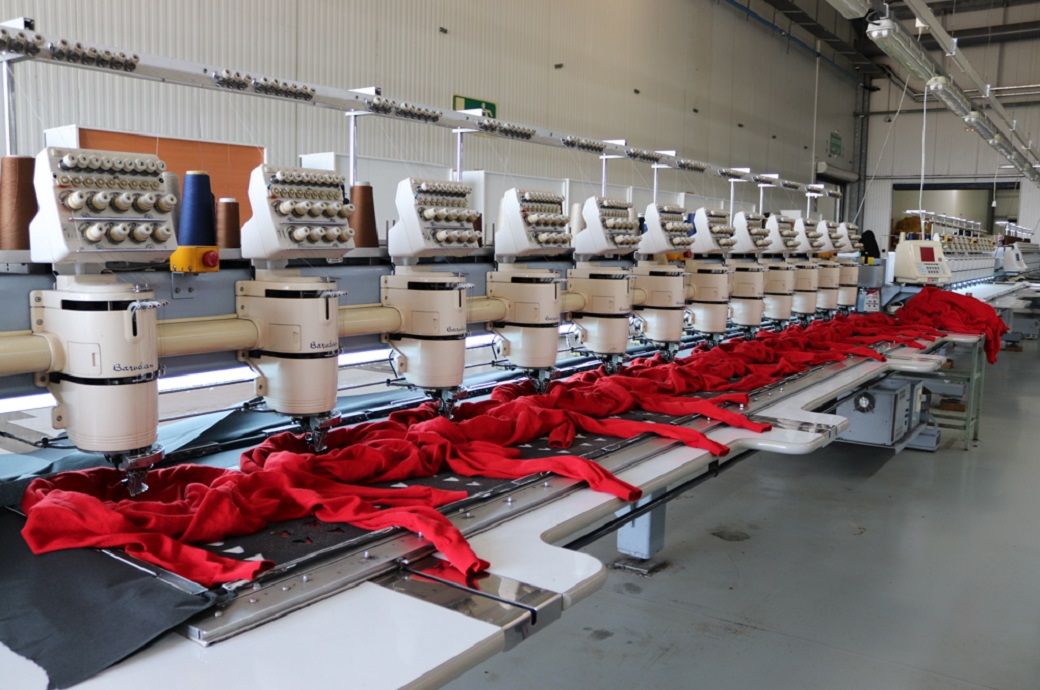
Summary: Tunisian knitwear manufacturer Tunicotex Group implemented Coats Digital’s FastReactPlan, moving from manual Excel planning to an integrated digital platform. The shift reduced weekly planning time by 25%, improved on-time delivery performance from 75% to 85%, and unlocked 40% additional production capacity between 2024 and 2025. The system provided unified real-time data across vertically integrated operations, addressing previous issues of locked capacity, unbalanced lines, and costly overtime.
Why it matters: For manufacturers supplying luxury brands, this demonstrates how digital planning tools directly impact throughput, profitability, and the ability to scale operations without proportional increases in physical infrastructure or labor.
Context: Mid-to-large contract manufacturers are under pressure to improve agility and traceability for premium brands while managing complex, multi-stage production workflows.
"The improved production visibility allowed Tunicotex to expand its overall capacity by approximately 40% between 2024 and 2025, supporting higher volumes and more diverse orders." — FIBRE2FASHION
Commentary: The 40% capacity unlock is the operational core: it signifies a software-driven increase in effective throughput, not just efficiency. This directly reduces the capital intensity of growth for contract manufacturers. The case also shows digital planning’s role in enforcing a structured continuous improvement culture (Plan-Do-Check-Act), shifting labor from firefighting to targeted optimization. For competing vendors, the benchmark is now set on delivering measurable capacity expansion, not just planning speed.
Date: Tue, 19 May 2026 06:58:03 GMT
URL: https://www.fibre2fashion.com/news/textiles-technology-news/coats-digital-s-fastreactplan-transforms-operations-at-tunicotex-307568-newsdetails.htm
AI Sentiment Score: Positive (50%)
AI Credibility Score: 10.0/10 — High
Scores and text generated by AI analysis of the source article indicated.
Coats Digital appoints Himanshu Mehrotra as MD to lead AI shift (Fibre2Fashion)
Summary: Coats Digital, a supplier of manufacturing software to the apparel industry, has appointed Himanshu Mehrotra as Managing Director. The move signals an acceleration of the company’s shift toward cloud-native and AI-powered platforms, specifically its Fashion Intelligence Platform. Mehrotra’s background in scaling supply chain software at firms like Blue Yonder and FourKites points to a focus on integrated, ROI-driven solutions for manufacturers.

Why it matters: Leadership changes at core manufacturing software vendors directly impact the tooling and operational roadmaps available to factories, influencing time-to-market, cost control, and supply chain transparency.
Context: Apparel manufacturers are under pressure to replace manual, spreadsheet-driven processes with integrated platforms to improve agility and traceability, creating a competitive market for vendors like Coats Digital, Optitex, and Lectra.
"As we look ahead, our focus is on building the industry’s most advanced Fashion Intelligence Platform powered by the latest cloud and AI technologies to deliver measurable business value and long-term competitive advantage for all our customers." — FIBRE2FASHION
Commentary: The appointment of a leader with a SaaS and supply chain platform pedigree indicates Coats Digital is pivoting from selling discrete tools (GSDCost, FastReactPlan) toward a unified, data-intensive operating system. For manufacturers, this means future contracts will likely bundle AI-driven costing, planning, and analytics, locking in workflows but potentially reducing integration overhead. The realignment pressures competing vendors to similarly consolidate their offerings or risk being sidelined as point solutions.
Date: Mon, 18 May 2026 00:03:03 GMT
URL: https://www.fibre2fashion.com/news/textiles-technology-news/coats-digital-appoints-himanshu-mehrotra-as-md-to-lead-ai-shift-308611-newsdetails.htm
AI Sentiment Score: Negative (75%)
AI Credibility Score: 10.0/10 — High
Scores and text generated by AI analysis of the source article indicated.
Simkhai is building an AI storefront for shoppers who don’t know what to search (Glossy.Co)
Summary: Simkhai is launching a separate AI-powered storefront, Simkhai.ai, built on Swap’s agentic commerce platform. The site functions as a discovery and styling tool, using a conversational interface to curate products based on occasion or mood rather than keyword search. It includes a virtual try-on feature and is designed to retain the brand’s styling ethos and customer data. The move represents a shift from integrating AI as an app feature to deploying it as a dedicated, brand-owned digital channel.

Why it matters: It signals a new operational model for direct-to-consumer brands: offloading complex discovery and styling workflows to a separate, agent-driven site while retaining data ownership and brand voice.
Context: This follows a wave of AI shopping assistants from Zalando, Mango, and Ralph Lauren, but distinguishes itself by being a standalone dot-ai domain rather than an integrated feature, suggesting a testbed for future e-commerce architecture.
"Simkhai is preparing to launch a separate AI-powered e-commerce site, designed to bring more of its in-store styling experience online. The site, Simkhai.ai, is still in development and will sit alongside Simkhai.com." — GLOSSY.CO
Commentary: The practical implication is a bifurcation of the e-commerce stack: the main site handles transactional search and browsing, while the AI site manages high-touch, intent-based discovery. This creates a new workflow for merchandising and content teams, who must now structure product data and styling narratives for conversational agents. Success metrics could shift from simple conversion rates to engagement depth, return frequency, and reduction in returns—metrics that directly affect inventory planning and customer lifetime value.
Date: Mon, 18 May 2026 04:03:00 +0000
URL: https://www.glossy.co/fashion/luxury/simkhai-is-building-an-ai-storefront-for-shoppers-who-dont-know-what-to-search/
AI Sentiment Score: Positive (40%)
AI Credibility Score: 10.0/10 — High
Scores and text generated by AI analysis of the source article indicated.
Graph Network-Based Predictive Modeling for Next-Generation … (Intechopen)
Summary: A graph network analysis of global patent data maps the innovation landscape for next-generation wearable e-textiles. It identifies key convergence pathways, including AI-enabled health monitoring fabrics, sustainable e-textiles, biocompatible sensors, and self-powered textiles. The study provides a predictive framework for R&D strategy by highlighting specific IPC code intersections and their associated applications.

Why it matters: For R&D managers and textile engineers, this offers a data-driven map to navigate a fragmented, fast-evolving field, prioritizing investment in specific material and system integrations with the highest commercial and technical convergence potential.
Context: Smart textile innovation is accelerating at the intersection of material science, electrical engineering, and AI, but the landscape is complex and patent-driven, making strategic focus difficult.
"These hubs highlight strong innovation activity and potential convergence pathways, including AI-enabled health monitoring fabrics, sustainable e-textiles, biocompatible sensors, and self-powered textiles." — INTECHOPEN
Commentary: The patent mapping directly informs vendor selection and partnership strategy, steering firms toward specific IPC code clusters like B32B/H05K/D03D for energy-harvesting fabrics. This shifts R&D from speculative exploration to targeted development of lightweight, flexible, and washable materials, directly impacting prototyping pipelines and supply chain sourcing for conductive fibers and green textile finishing.
Date: April 24, 2026 12:00 AM ET
URL: https://www.intechopen.com/online-first/1236203
AI Sentiment Score: Positive (50%)
AI Credibility Score: 10.0/10 — High
Scores and text generated by AI analysis of the source article indicated.
Fashion Draws Closer To Some Fixed Ideas About AI, Just … (Theinterline)
Summary: AWS has formalized a generative AI playbook for retail, consolidating common applications like virtual try-on and personalized search. Meanwhile, agentic checkouts are emerging, enabling purchases within AI interfaces like Gemini without visiting the retailer’s site. The most significant developments, however, are mature AI applications across the product journey—from design to shopfloor control—that are now delivering tangible ROI, as evidenced by a Microsoft-ASOS case study.

Why it matters: For fashion practitioners, this signals a shift from speculative AI pilots to integrated, ROI-driven solutions that directly impact design throughput, customer acquisition costs, and operational efficiency.
Context: Industry AI adoption is moving past hype into operational integration, with cloud providers and retailers codifying proven use cases.
"Well, Amazon Web Services (AWS) recently published a “generative AI playbook for retail,” which certainly puts a neat bow around a lot of the common ideas: virtual try-on, sizing recommendations, and personalisation." — THEINTERLINE
Commentary: The focus on ‘sensible’ deployments indicates a maturation where AI is evaluated by traditional business metrics, not novelty. This pressures vendors to demonstrate concrete improvements in time-to-market or cost reduction. Agentic checkouts represent a distribution shift, potentially disintermediating brand sites and altering customer data capture. For studios and brands, the priority now is integrating these proven tools into existing pipelines to compress design cycles and reduce sampling waste.
Date: May 01, 2026 12:00 AM ET
URL: https://www.theinterline.com/2026/05/01/fashion-draws-closer-to-some-fixed-ideas-about-ai-just-as-the-subsidies-are-running-out/
AI Sentiment Score: Negative (75%)
AI Credibility Score: 10.0/10 — High
Scores and text generated by AI analysis of the source article indicated.
Legit Check: AI Auth Scanner – App Store – Apple (Apps.Apple)
Summary: A new iOS app, Legit Check: AI Auth Scanner, offers a mobile AI tool for verifying the authenticity of sneakers, bags, and streetwear. Users photograph an item, input basic details, and receive a ‘real or fake’ assessment based on visual analysis of stitching, logos, materials, and finishing. The service explicitly disclaims being a suggest, positioning itself as a rapid, on-the-go screening tool for secondary markets.

Why it matters: This tool shifts authentication labor and risk from centralized platforms and professional authenticators to individual buyers, potentially altering trust dynamics and liability in the resale economy.
Context: The secondary fashion market relies on expert authentication, creating bottlenecks and costs for platforms like StockX and The RealReal. AI tools have been piloted for digital cataloging, but consumer-facing, real-time visual authentication represents a new operational layer.
"# Legit Check: AI Auth Scanner Real or Fake Sneaker Bag Scan Free · In-App Purchases · Designed for iPad. … Scan before you cop. Get a fast AI-powered legit check for." — APPS.APPLE
Commentary: The app commoditizes a core service function, potentially depressing fees for human authenticators while increasing transaction velocity in peer-to-peer marketplaces. Its ‘not a suggest’ disclaimer is critical; it creates a new class of evidence in disputes but offloads final liability onto the user. For brands, it’s a double-edged sword: it could dampen counterfeit sales but also formalizes a secondary market they don’t control.
Date: April 22, 2026 12:00 AM ET
URL: https://apps.apple.com/ca/app/legit-check-ai-auth-scanner/id6761913359
AI Sentiment Score: Neutral (33%)
AI Credibility Score: 10.0/10 — High
Scores and text generated by AI analysis of the source article indicated.
How Larroudé’s CEO built an AI system to improve and expedite business operations (Glossy.Co)
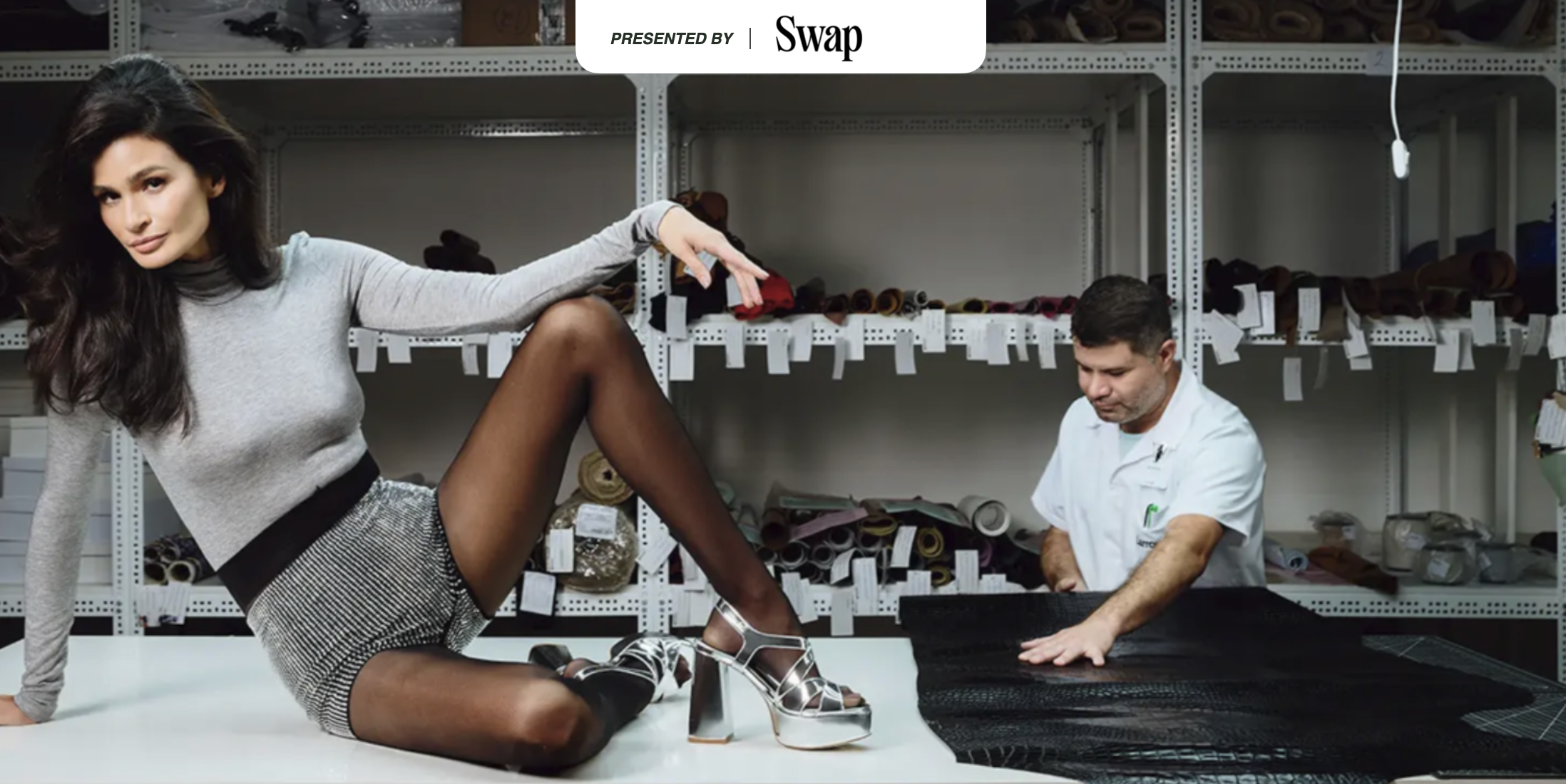
Summary: Larroudé CEO Ricardo Larroudé personally used AI coding tools to build an integrated data system connecting Shopify, factory, inventory, and marketing data, replacing a manual and fragmented process. The system, developed over eight weeks, automated data reconciliation and code fixes, leading to a conversion rate jump from 0.3% to 1.7% and reducing reliance on a 10-person programming team. It now informs inventory and production planning, aiming to shorten lead times and reduce overproduction.
Why it matters: It demonstrates a CEO-driven, low-code operational overhaul that materially reduces labor costs, accelerates decision loops, and changes hiring criteria toward ‘agentic’ workflow management, setting a precedent for mid-sized brands.
Context: Mid-sized DTC brands face complex system integration costs; AI-assisted coding lowers the barrier for non-technical founders to own their tech stack.
"At the start of the year, Larroudé’s operating systems were not connecting the way Ricardo Larroudé wanted them to. The problem was that they were not speaking to each other cleanly. The." — GLOSSY.CO
Commentary: The shift is from hiring for execution to hiring for oversight of automated systems, redefining technical roles around governance and review. This reduces time to market by collapsing planning cycles and directly linking sales data to material procurement. However, it requires upfront AI query costs and CEO-level operational fluency, creating a new competency threshold for leadership.
Date: Wed, 13 May 2026 04:04:00 +0000
URL: https://www.glossy.co/fashion/how-larroudes-ceo-built-an-ai-system-to-run-the-business-faster/
AI Sentiment Score: Negative (75%)
AI Credibility Score: 10.0/10 — High
Scores and text generated by AI analysis of the source article indicated.
ASOS: Redesigning online fashion at the speed of AI (Ukstories.Microsoft)
Summary: ASOS is deploying AI and cloud services across its entire value chain in partnership with Microsoft, aiming to shift online fashion from a transactional to an inspirational experience. Key initiatives include an AI Stylist for conversational shopping, centralized data on Azure for faster decision-making, and AI agents automating back-office and customer service functions. The company reports using AI to accelerate trend scouting and design, claiming a three-week ‘idea to shelf’ timeline, while also automating 50% of customer enquiries and 15% of code generation.

Why it matters: This signals a move toward AI-driven operational velocity and hyper-personalization as table stakes in fast-fashion e-commerce, directly impacting labor allocation, vendor lock-in, and the cost structure of design and customer service.
Context: Fast-fashion retailers are under pressure to shorten lead times and reduce returns while competing on customer experience; this represents a full-stack, Microsoft-centric approach to that challenge.
"ASOS: Redesigning online fashion at the speed of AI Fashion retailer ASOS is applying artificial intelligence and cloud services throughout its whole value chain in a frontier AI transformation partnership with Microsoft,." — UKSTORIES.MICROSOFT
Commentary: The three-week claim, if operationalized at scale, redefines fast-fashion’s speed benchmark and pressures competitors’ supply chains. Centralizing data on Azure and automating half of customer service shifts capital expenditure toward cloud vendors and reduces frontline labor needs, while the 15% code automation begins altering internal developer workflows. The partnership model with Microsoft suggests a deepening vendor dependency in exchange for accelerated capability integration.
Date: April 30, 2026 12:00 AM ET
URL: https://ukstories.microsoft.com/features/asos-redesigning-online-fashion-at-the-speed-of-ai/
AI Sentiment Score: Negative (83%)
AI Credibility Score: 9.6/10 — High
Scores and text generated by AI analysis of the source article indicated.
Arts University Bournemouth takes AI and VR fashion tech … (Edtechinnovationhub)
Summary: Arts University Bournemouth is leveraging Fashion SVP 2026 to launch a commercial pivot, positioning its Innovation Hub and new AUB Agency as direct industry partners. The move showcases deployed AI pattern engineering tools, VR design workflows, and Digital Product Passport systems, with student talent integrated into live brand briefs. This represents a shift from a traditional graduate talent pipeline to a live R&D and consultancy model.

Why it matters: For brands and vendors, this signals a new, university-led channel for accessing tested digital tooling and flexible talent, potentially altering traditional R&D and prototyping workflows.
Context: Fashion education institutions are increasingly under pressure to demonstrate direct commercial value and relevance amid industry digitization and tightening margins.
"#### Arts University Bournemouth arrives at Fashion SVP 2026 in London with AI pattern tools, VR design workflows, and a new commercial agency model that puts student talent directly inside brand briefs." — EDTECHINNOVATIONHUB
Commentary: If successful, this model could compress the time from academic R&D to commercial deployment, giving brands faster access to specialized digital tooling like AI pattern conversion. It also creates a new, low-risk talent pipeline for studios, allowing them to trial graduates within sponsored briefs before hiring. The operational risk is that universities must now manage client delivery and IP with the discipline of a consultancy, a significant cultural shift.
Date: April 28, 2026 12:00 AM ET
URL: https://www.edtechinnovationhub.com/news/arts-university-bournemouth-takes-ai-and-vr-fashion-tech-to-olympia-london-this-week
AI Sentiment Score: Negative (66%)
AI Credibility Score: 7.0/10 — Medium
Scores and text generated by AI analysis of the source article indicated.
Fast fashion inventory AI and IoT landscape 2026 (Patsnap)
Summary: A patent landscape analysis reveals a sparse but maturing field of fashion-specific supply chain automation technologies. The period from 2019-2022 saw foundational work, including Refashiond OS’s platform patent and hybrid metaheuristic models for retail replenishment. Recent filings from 2023-2025 signal a shift towards integrating inventory optimization with circular economy mandates and live commerce channels. The core finding is that the IP space for dedicated fashion supply chain orchestration platforms remains largely open.
Why it matters: For supply chain and operations executives, the underpopulated IP landscape indicates a window for strategic tooling investments and platform development before the field becomes crowded.
Context: Fast fashion’s operational model is predicated on extreme inventory velocity and demand-supply alignment, historically managed with generic enterprise software.
"With only one WO patent (Refashiond OS Inc., 2022) explicitly targeting fashion industry supply chain automation as a platform OS, the IP landscape for fashion-specific demand-supply orchestration platforms remains substantially underpopulated as of 2026." — PATSNAP
Commentary: The scarcity of dedicated patents suggests most brands are still adapting generic ERP and SCM modules, creating a vulnerability and an opportunity. Refashiond OS’s integrated approach—combining design marketplace, workflow, and NFT-based IP controls—points to a future where inventory optimization is inseparable from design-to-shelf workflow automation and sustainability traceability. The newer Chinese and Indian patents on livestream retail and unsold inventory conversion indicate the next competitive edge will come from tightly coupling prediction algorithms with emerging sales channels and circular economy compliance.
Date: May 01, 2026 12:00 AM ET
URL: https://www.patsnap.com/resources/blog/articles/fast-fashion-inventory-ai-and-iot-landscape-2026/
AI Sentiment Score: Negative (66%)
AI Credibility Score: 10.0/10 — High
Scores and text generated by AI analysis of the source article indicated.
Smart Wear and Wearables the Fusion of Fashion and … (Apparelviews)
Summary: Smart wear, defined as garments and accessories embedded with sensors and electronic circuits, is moving from niche applications into mainstream fashion and everyday apparel. The article highlights conductive yarn enabling real-time biometric monitoring and jackets with automatic climate adjustment, signaling a shift toward integrated functionality. It also notes the growing emphasis on sustainable smart textiles and the use of IoT data from embedded sensors to inform product improvements and personalized recommendations.

Why it matters: For industry practitioners, this signals a tangible shift in material sourcing, production workflows, and data strategy, directly impacting cost structures, design cycles, and customer relationship management.
Context: The convergence of fashion and technology is an established trend, but the current phase is characterized by the operational integration of IoT data into the sales and product development pipeline, alongside a push for sustainability in smart materials.
"Sensors embedded in clothing can record wearing frequency and usage conditions, enabling product improvements and personalized recommendations based on data." — APPARELVIEWS
Commentary: The operational consequence is a new feedback loop: post-purchase sensor data directly informs R&D and marketing, potentially reducing return rates through better fit/function and creating a recurring data revenue stream. However, this introduces new vendor dependencies for sensor tech, raises significant data security and privacy liabilities, and may bifurcate supply chains between conventional and ‘smart’ garment production.
Date: April 23, 2026 12:00 AM ET
URL: https://www.apparelviews.com/smart-wear-and-wearables-the-fusion-of-fashion-and-technology/
AI Sentiment Score: Positive (50%)
AI Credibility Score: 10.0/10 — High
Scores and text generated by AI analysis of the source article indicated.
AI Turns Thrift Into Profitable Fashion Marketplace (Letsdatascience)
Summary: AI systems have moved from experimental to operational in the secondhand fashion sector, solving the core logistical problem of unique inventory. Platforms now deploy computer vision and generative models for visual search, automated tagging, and cross-marketplace matching, standardizing one-off items into a scalable catalog. This has turned a high-friction, low-margin channel into a high-margin retail operation, underpinning the sector’s growth to $289 billion in 2025.

Why it matters: For practitioners in fashion retail and logistics, this shifts the operational bottleneck from inventory processing to data pipeline management, altering required skills and vendor relationships.
Context: Traditional retail relies on standardized SKUs; resale’s unique-item problem made scaling economically prohibitive until now.
"AI has converted secondhand apparel from a logistical headache into a high-margin retail channel. … Platforms solved the core technical challenge of uniqueness by applying computer vision and generative models to discovery,." — LETSDATASCIENCE
Commentary: The margin capture here is a direct function of reduced labor in cataloging and increased sell-through from improved discovery. This forces brands’ own resale operations to adopt similar tooling or cede control to third-party platforms. The next competitive edge will be in training data exclusivity and cross-platform aggregation rights, not just model accuracy.
Date: April 21, 2026 12:00 AM ET
URL: https://letsdatascience.com/news/ai-turns-thrift-into-profitable-fashion-marketplace-81e30183
AI Sentiment Score: Negative (50%)
AI Credibility Score: 10.0/10 — High
Scores and text generated by AI analysis of the source article indicated.
Photo-Based Authentication for Luxury Resale Power Sellers (Startupheist)
Summary: The luxury resale market is shifting from a discount channel to a high-stakes, high-value segment, projected to reach $78.8B in the U.S. by 2030. This growth is driven by affluent buyers purchasing items like $1,500-$4,000 handbags, where counterfeit risk is the primary friction point. Existing authentication services like Entrupy, Real Authentication, and LegitGrails are either brand-limited, post-sale focused, or not seller-native, leaving a gap for pre-listing, API-driven trust verification. The entry of mass retailers like Walmart and Amazon into pre-owned luxury via partnerships with Rebag is turning authentication from a boutique service into a necessary infrastructure layer, creating demand for a low-cost, API-first solution integrated into seller workflows.

Why it matters: For power sellers and platforms, the absence of a portable, pre-listing authentication badge directly impedes conversion and increases operational risk in a high-value market.
Context: Authentication has historically been a post-sale, platform-captive, or brand-limited service, creating friction for sellers who need to establish item legitimacy before a transaction.
"The resale market solved transactions. It hasn’t solved portable trust." — STARTUPHEIST
Commentary: The operational consequence is a new vendor category: authentication-as-a-service APIs that plug into any listing tool or marketplace, shifting trust from platform custody to seller-provided verification. This changes the power seller’s workflow, enabling confident pricing and reducing buyer hesitation pre-sale, while creating a new B2B SaaS layer for Shopify apps and consignment integrators. The market shift by Walmart and Amazon mandates this infrastructure, making it a prerequisite, not an option, for scaling luxury resale inventory.
Date: May 08, 2026 12:00 AM ET
URL: https://www.startupheist.com/photo-based-authentication-for-luxury-resale-power-sellers/
AI Sentiment Score: Positive (40%)
AI Credibility Score: 7.0/10 — Medium
Scores and text generated by AI analysis of the source article indicated.
Virtual Try-On Technology for Ecommerce 2026 (Claimlane)
Summary: Virtual try-on technology, combining AR, AI body mapping, and 3D rendering, is now a measurable tool for reducing returns and increasing conversion in e-commerce. Implementation hinges on creating 3D product assets, with AI-generated models emerging as the scalable solution for large catalogs. The operational bottleneck has shifted from the AR technology itself to the cost and throughput of 3D model creation.

Why it matters: For fashion e-commerce operators, this changes the unit economics of online sales by directly targeting return rates and conversion, while introducing a new production pipeline for 3D assets.
Context: The push for virtual try-on follows a decade of incremental AR experiments, now converging with improved AI estimation and cheaper 3D modeling to reach operational viability.
"Virtual try-on technology attacks this problem directly. Using augmented reality (AR), AI body mapping, and 3D rendering, customers can see how a product looks on them before placing an order. Glasses on." — CLAIMLANE
Commentary: This reframes the investment from R&D into a production and data problem. Brands must now budget for and manage a 3D asset pipeline, creating a new vendor category and internal role focused on digital twin creation. The recommendation for a progressive rollout based on return data turns inventory management into a data-driven triage system for tech deployment.
Date: May 04, 2026 12:00 AM ET
URL: https://www.claimlane.com/resources/blog/virtual-try-on-technology-ecommerce
AI Sentiment Score: Negative (50%)
AI Credibility Score: 7.0/10 — Medium
Scores and text generated by AI analysis of the source article indicated.
Fashion Digital Twins: How Virtual Garments Are Transforming the … (Pixofix)
Summary: Fashion digital twins are evolving from static 3D models into dynamic, data-rich assets that simulate fabric behavior, fit, and manufacturing details. Their creation involves a multi-stage pipeline requiring high-fidelity scanning, physics simulation, and rigorous cross-functional review. The operational emphasis is on establishing locked-down visual standards, retouching checklists, and systematic documentation to maintain brand consistency and asset reusability.

Why it matters: For fashion practitioners, this shifts the workflow from episodic asset creation to managing a living library of digital products, directly impacting time-to-market, sampling costs, and return rates through improved pre-production accuracy.
Context: The industry is moving beyond digital sampling for design approval toward using persistent digital twins for e-commerce, marketing, and supply chain integration, demanding new technical and collaborative workflows.
"Treat your twins like living products, not one-off files." — PIXOFIX
Commentary: This mandates a shift from project-based 3D asset creation to product lifecycle management, requiring studios to implement quarterly audits, material library refreshes, and integrated customer feedback loops. The operational consequence is the rise of dedicated digital twin management roles and the need for retouching and post-production teams to master 3D-specific QA checklists. Brands that fail to systematize this will see inconsistent digital presentation erode consumer trust in fit and material representation online.
Date: May 04, 2026 12:00 AM ET
URL: https://www.pixofix.com/blog/fashion-digital-twins-how-virtual-garments-are-transforming-the-future-of-e-commerce
AI Sentiment Score: Positive (60%)
AI Credibility Score: 10.0/10 — High
Scores and text generated by AI analysis of the source article indicated.
2026: Why Virtual Try-On is Killing the Fashion Photoshoot (Weshop.Ai)
Summary: The article argues that 2026 marks a tipping point for Virtual Try-On (VTON) technology, moving it from a novelty to a core operational tool. It cites the emergence of high-fidelity physics models, like ‘nanobanana pro’, which simulate fabric behavior and garment geometry, enabling a ‘One-Click’ API integration. This shift is positioned to radically alter marketing logistics by generating assets pre-production and to reduce return rates through accurate fit previews.

Why it matters: For industry practitioners, this represents a fundamental change in the production and marketing pipeline, directly impacting sampling costs, time-to-market, logistics, and the role of traditional photoshoots.
Context: VTON has evolved from simple GAN-based image overlays to physics-aware simulation, a progression that now intersects with sustainability and operational efficiency pressures.
"To understand why 2026 is the tipping point, we have to look at the “Uncanny Valley” of fashion AI. For years, Virtual Try-On felt like a cheap digital sticker. Today, it operates." — WESHOP.AI
Commentary: The operational consequence is a decoupling of marketing asset creation from physical production, collapsing lead times and shifting capital from logistics (shipping samples, organizing shoots) to software integration. For studios and crews, this redefines the ‘shoot’ as a data-capture and model-training event, not a final-image capture event, altering vendor relationships and skill demands.
Date: April 22, 2026 12:00 AM ET
URL: https://www.weshop.ai/blog/why-2026-is-the-year-the-professional-photoshoot-dies-thanks-to-virtual-try-on/
AI Sentiment Score: Negative (50%)
AI Credibility Score: 10.0/10 — High
Scores and text generated by AI analysis of the source article indicated.
Fit Analyzer vs Size Chart: Which Cuts Returns More? (Alhena.Ai)
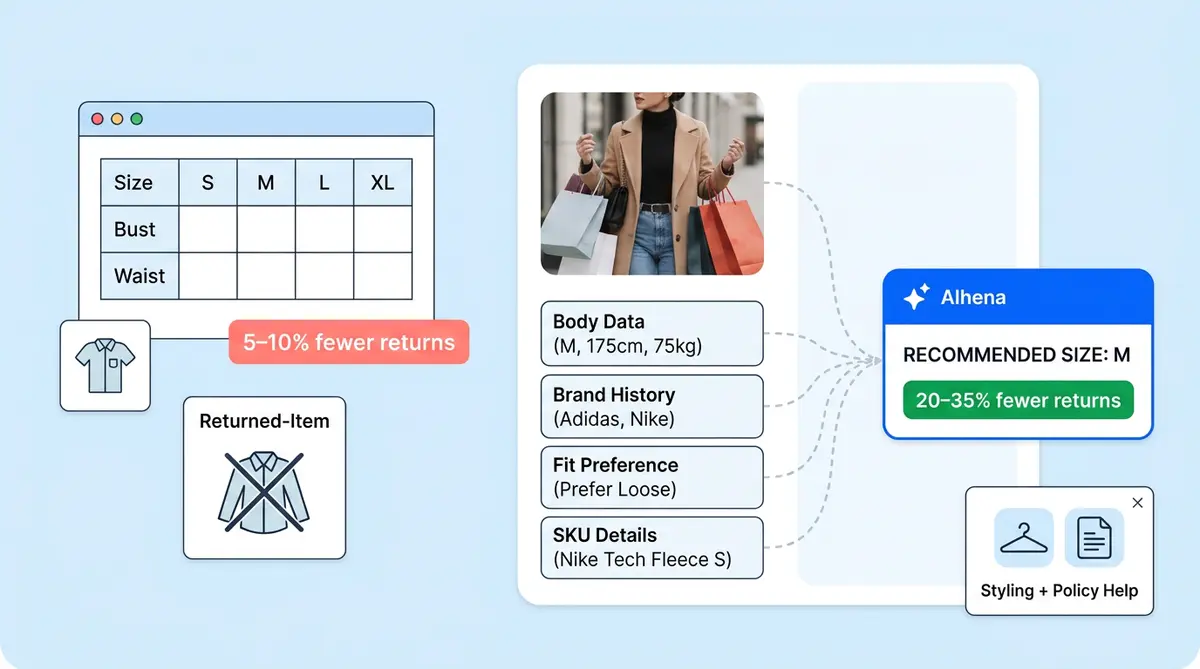
Summary: AI-powered fit analyzers are outperforming static size charts in reducing e-commerce returns, with data showing a 20-35% reduction versus 5-10% for charts. The core distinction is operational: a chart provides data for shopper interpretation, while an analyzer acts as a decision-making agent, translating cross-brand sizing and personal preferences into a single recommendation. This shift moves the sizing burden from the customer to the tool, directly targeting the ambiguity that drives most fit-related returns.
Why it matters: For fashion e-commerce operators, the choice between a size chart and a fit analyzer directly impacts logistics cost, inventory velocity, and conversion rate, making it a core workflow and profitability decision.
Context: The high rate of returns due to poor fit is a persistent, costly operational problem in online apparel, with most solutions focusing on post-purchase mitigation rather than pre-purchase decision clarity.
"A size chart is a dictionary. A fit analyzer is a translator for apparel sizing. Both give you sizing information, but only one shows what the fit will look like on the." — ALHENA.AI
Commentary: The performance gap isn’t about data access but decision automation. Fit analyzers operationalize sizing charts, reducing cognitive load and error at the point of sale. This shifts the labor of sizing from the customer (and later, the returns desk) to the vendor’s AI system, altering the cost structure of online apparel retail. The practical implication is that brands must treat sizing as an interactive service layer, not a static reference document, to materially impact their bottom line.
Date: April 24, 2026 12:00 AM ET
URL: https://alhena.ai/blog/fit-analyzer-vs-size-chart-returns/
AI Sentiment Score: Negative (71%)
AI Credibility Score: 9.7/10 — High
Scores and text generated by AI analysis of the source article indicated.
3D retail’s last barrier isn’t creation. It’s delivery. | Miris (Miris)
Summary: The economic case for 3D visualization in retail is now proven, with Shopify data showing doubled conversion rates and 40% lower returns for products with 3D or AR content. The primary barriers of creation cost and format fragmentation are collapsing due to AI-driven pipelines and industry-wide standardization around OpenUSD and glTF. The remaining critical bottleneck is delivery infrastructure, where traditional methods like WebGL and pixel streaming force unacceptable tradeoffs between speed, fidelity, scale, and cost at enterprise volumes.

Why it matters: For retailers, the operational shift is from piloting 3D as a marketing feature to deploying it as scalable infrastructure, which requires a fundamental re-evaluation of delivery architecture to preserve ROI.
Context: 3D asset creation has historically been constrained by high costs and technical silos, but recent AI and standardization efforts have moved the bottleneck downstream to the delivery layer.
"Investing in beautiful 3D assets is meaningless if you cannot get them to customers at scale. And here, retailers face an old tradeoff in new clothes." — MIRIS
Commentary: The strategic focus for retail operations shifts from content creation to logistics, mirroring the evolution of video streaming. Retailers like Lowe’s and Amazon are building backend systems that treat 3D as a core inventory type, not a novelty. This necessitates vendor evaluations centered on adaptive spatial streaming architectures, not just asset creation tools, to avoid Black Friday failures. The competitive edge will belong to those whose delivery layer scales with bandwidth, not concurrent GPU compute.
Date: May 06, 2026 12:00 AM ET
URL: https://www.miris.com/blog/3d-retails-last-barrier-isnt-creation-its-delivery
AI Sentiment Score: Neutral (33%)
AI Credibility Score: 9.4/10 — High
Scores and text generated by AI analysis of the source article indicated.
How Can 3D Fashion Software Transform Your PLM & ERP Systems? (Style3D)
Summary: Style3D’s article positions its 3D fashion software as an integration layer for existing PLM and ERP systems, embedding real-time cloth simulation and AI-driven automation directly into enterprise workflows. The core proposition is eliminating separate 3D tools to reduce physical sampling costs, accelerate design-to-production cycles, and improve collaboration through open APIs and SDKs. Implementation is framed as a technical architecture project involving API audits, SDK deployment, and pilot programs to validate cycle time improvements before scaling.

Why it matters: For technical architects and production leads, this signals a shift from evaluating standalone 3D design tools to managing a complex integration project that directly alters sampling budgets, vendor dependencies, and internal team workflows.
Context: Enterprise fashion PLM systems are historically built for 2D data, creating a fragmented toolchain where 3D visualization is a separate, often disconnected step. The push is to make 3D a native, data-generating component within core product lifecycle management.
"3D fashion software transforms PLM and ERP systems by embedding real-time cloth simulation, AI-driven automation, and open APIs directly into existing enterprise infrastructure. This eliminates fragmented workflows, reduces physical sampling significantly, and." — STYLE3D
Commentary: The practical implication is that the value is no longer in the 3D software itself, but in its ability to become an invisible, automated layer within SAP, Centric, or PTC Windchill. Success will be measured by reductions in sampling spend and cycle time compression, not visual fidelity. This creates a new vendor selection criteria: API robustness and SDK flexibility become as critical as simulation quality, locking technical teams into long-term platform dependencies masked as ‘open’ integration.
Date: April 27, 2026 12:00 AM ET
URL: https://www.style3d.com/blog/how-can-3d-fashion-software-transform-your-plm-erp-systems/
AI Sentiment Score: Neutral (33%)
AI Credibility Score: 10.0/10 — High
Scores and text generated by AI analysis of the source article indicated.
Fashion PLM Blog â Tech Packs, Costing, Production & Supply Chain | KÅbÅ (Kobolabs.Io)
Summary: A data-driven audit of AI in fashion reveals a stark gap between pilot projects and production-scale deployment, with only 15-20% of brands using generative AI in core operations. Commerce applications like recommendations, forecasting, and sizing deliver proven ROI, while design and agentic AI remain largely experimental or enterprise-only due to stringent data requirements. The market is consolidating around PLM-centric platforms, leaving mid-market brands structurally disadvantaged by fragmented tech stacks and enterprise pricing.

Why it matters: For practitioners, this defines the immediate investment map: proven tools for commerce and data infrastructure versus speculative bets on design automation, with agentic workflows locked behind a PLM prerequisite most lack.
Context: The fashion industry’s AI adoption is bifurcating into high-ROI, data-intensive operational tools and overhyped creative applications, with vendor consolidation accelerating around integrated platforms.
"Ninety percent of AI initiatives fail to scale. This is not a technology failure. It is a data failure." — KOBOLABS.IO
Commentary: The report reframes the industry’s AI challenge from a technology procurement problem to a data governance and systems integration mandate. The practical consequence is that mid-market brands must prioritize PLM adoption and data structuring over flashy AI features, as the agentic wave and compliance deadlines will be inaccessible without this foundation. Vendor consolidation, led by Style3D’s price undercutting, could force tooling decisions toward integrated platforms, making standalone point solutions a risk.
Date: May 08, 2026 12:00 AM ET
URL: https://www.kobolabs.io/research/state-of-fashion-ai
AI Sentiment Score: Negative (66%)
AI Credibility Score: 10.0/10 — High
Scores and text generated by AI analysis of the source article indicated.
Fashion PLM Blog — Tech Packs, Costing, Production & Supply Chain (Kobolabs.Io)
Summary: A market map of fashion technology segments shows three maturity tiers: mature enterprise systems (PLM, ERP, digital showrooms) with poor penetration below 250 employees; 15 ‘growing’ categories like RFID, AI demand planning, and fit tech, driven by ROI and regulation; and three ’emerging’ strategic areas (Digital Product Passport, agentic AI, manufacturing automation). Specific data points reveal enterprise ERP costs of $150K-$2M annually, RFID tag costs falling to $0.08-$0.10, and apparel accounting for 74% of RFID software spending.
Why it matters: For operational leaders, the segmentation clarifies where to allocate capital for near-term efficiency gains versus long-term strategic bets, while cost data benchmarks tooling investments against tangible outcomes like inventory accuracy and overstock reduction.
Context: The fashion tech stack is consolidating into a core of enterprise-grade systems surrounded by a proliferating set of specialized, ROI-driven point solutions, creating integration challenges and a widening gap between large and mid-sized players.
"PLM ERP E-Commerce & Digital Showrooms Growing Active Investment 3D/DPC AI Design Supply Chain Visibility RFID AI Demand Planning Sustainability/LCA Fit Tech AI Discovery Clienteling Dynamic Pricing Communication Platforms Resale/RaaS Materials Management." — KOBOLABS.IO
Commentary: The sub-250-employee gap in mature systems represents a structural market opportunity for vendors like Kobo, but also a persistent operational bottleneck for growing brands scaling their supply chain rigor. The clustering of ‘growing’ categories around ROI and regulation (e.g., RFID for inventory, DPP for compliance) signals that procurement decisions are increasingly driven by auditability and hard cost savings, not just innovation. This shifts vendor competition from feature lists to proven integration with legacy ERP and demonstrable impact on metrics like Zara’s 19% overstock reduction.
Date: April 27, 2026 12:00 AM ET
URL: https://www.kobolabs.io/research/fashion-tech-adoption
AI Sentiment Score: Negative (83%)
AI Credibility Score: 10.0/10 — High
Scores and text generated by AI analysis of the source article indicated.
Key Takeaways (Tailoringly)
Summary: The EU’s Corporate Sustainability Reporting Directive (CSRD), Deforestation Regulation (EUDR), and forthcoming Digital Product Passport (DPP) for textiles are creating a new, data-intensive compliance regime for apparel suppliers. Buyers are now demanding documented supply chain mapping, facility-level environmental metrics, and third-party social audits as a condition of business. Implementation timelines are staggered, with DPP requirements for apparel targeting 2027-2028, but the data collection and structuring must begin immediately.

Why it matters: Suppliers face a concrete operational mandate: compile verifiable facility data and supply chain maps or risk losing European contracts.
Context: This follows a multi-year trend of EU regulations shifting sustainability from voluntary reporting to mandatory, auditable supply chain due diligence.
"The CSRD is an EU law that requires large European companies to report on their sustainability impacts — including environmental, social, and governance metrics. Large EU companies started reporting under CSRD in." — TAILORINGLY
Commentary: The regulatory stack is effectively outsourcing EU compliance costs and labor to upstream suppliers, turning traceability into a vendor qualification process. This will accelerate consolidation around larger, more administratively capable suppliers and force fabric mills to either document their own inputs or be excluded from EU-facing supply chains. The SMETA audit is becoming a de facto license to operate, creating a new compliance services market for the accredited audit bodies.
Date: May 01, 2026 12:00 AM ET
URL: https://www.tailoringly.com/blog/eu-sustainability-requirements-fashion-indonesia
AI Sentiment Score: Negative (50%)
AI Credibility Score: 7.0/10 — Medium
Scores and text generated by AI analysis of the source article indicated.
How to Solve the $850B Retail Returns Problem (Gspann)
Summary: The $850B retail returns problem is being addressed through targeted automation, moving beyond virtual try-on’s narrow focus on fit. AI sizing engines and virtual try-on tools are directly attacking the 70% of fashion returns caused by size mismatches, with reported reductions of up to 40%. In the reverse logistics pipeline, computer vision is automating the costly manual inspection and dispositioning process, routing returned items to their highest-value path. This shifts the returns warehouse from a cost center to an AI-powered sorting hub.

Why it matters: For operations and finance leads, this changes the ROI calculus for tech investments, prioritizing data integrity and automated sorting over purely front-end visualization tools.
Context: Returns have been a persistent drain on margins, with manual inspection and poor sizing data creating systemic inefficiencies in the reverse supply chain.
"Returns are retail’s quiet profit killer. Virtual try-on gets the headlines, but it only fixes one reason people send things back. Here is what really drives returns, what actually reduces them, and." — GSPANN
Commentary: The shift is operational: vendors like Two Boxes are scaling to process $1B in inventory, signaling a move toward third-party, automated reverse logistics as a service. This pressures in-house logistics teams to either adopt similar systems or outsource. For brands, the priority is now integrating AI sizing data upstream to reduce return volume, while downstream, automating disposition to salvage margin.
Date: April 22, 2026 12:00 AM ET
URL: https://www.gspann.com/insights/blog/how-to-solve-the-usd850b-retail-returns-problem
AI Sentiment Score: Negative (75%)
AI Credibility Score: 10.0/10 — High
Scores and text generated by AI analysis of the source article indicated.
Post ID: e9a59dbf