
AI & Digital Tools for Fashion Retail & Design
Fashion PLM Blog â Tech Packs, Costing, Production & Supply Chain | KÅbÅ (Kobolabs.Io)
Summary: A new market analysis of AI in fashion reveals a stark gap between pilot projects and production-scale deployment, with a 90% failure rate for initiatives that don’t scale. The strongest returns are in commerce applications like recommendations and sizing, while agentic AI and design tools remain largely experimental for most. The primary barrier is data readiness, with mid-market brands structurally disadvantaged by fragmented tech stacks and enterprise pricing.

Why it matters: For practitioners, this defines the immediate investment surface, separating proven operational tools from speculative bets and highlighting data preparation as the critical, unglamorous prerequisite for any successful deployment.
Context: The fashion AI vendor landscape is consolidating rapidly, with PLM vendors acquiring AI capabilities and Chinese challengers like Style3D undercutting Western incumbents on price.
"Ninety percent of AI initiatives fail to scale. This is not a technology failure. It is a data failure." — KOBOLABS.IO
Commentary: The report reframes the AI challenge from a tooling problem to a data infrastructure and integration problem. For mid-market brands, the practical consequence is that adopting a structured PLM is now a prerequisite, not an option, to participate in future efficiency gains. The 90% failure rate indicates most current budgets are wasted on pilots that cannot connect to production systems, making data unification the highest-ROI investment a brand can make today.
Date: May 08, 2026 12:00 AM ET
URL: https://www.kobolabs.io/research/state-of-fashion-ai
AI Sentiment Score: Negative (83%)
AI Credibility Score: 10.0/10 — High
Scores and text generated by AI analysis of the source article indicated.
AI-Driven Apparel Image Retrieval and Feature Optimization for Smart and Sustainable Textile Manufacturing (Intechopen)
Summary: Integrated impact of image retrieval in textile industry applications. Abstract In response to mounting environmental challenges, excessive resource use, and the rapidly increasing volume of textile waste, the global textile and apparel sector is accelerating its transition toward digital transformation to achieve greater efficiency, sustainability, traceability, and intelligent manufacturing practices. Artificial intelligence (AI) has emerged as a highly transformative enabler for smart and sustainable textile systems, particularly through the use of computer vision, machine learning and deep learning technologies.

Why it matters: This matters for FashionTech because it gives a concrete current signal to track: Integrated impact of image retrieval in textile industry applications.
Context: Integrated impact of image retrieval in textile industry applications. Abstract In response to mounting environmental challenges, excessive resource use, and the rapidly increasing volume of textile waste, the global textile and apparel sector is accelerating its transition toward digital transformation to achieve greater efficiency, sustainability, traceability, and intelligent manufacturing practices. Artificial intelligence (AI) has emerged as a highly transformative enabler for smart and sustainable textile systems, particularly through the use of computer vision, machine learning and deep learning technologies.
"Integrated impact of image retrieval in textile industry applications. Abstract In response to mounting environmental challenges, excessive resource use, and the rapidly increasing volume of textile waste, the global textile and apparel." — INTECHOPEN
Commentary: The immediate implication is operational rather than speculative: watch how this changes budgets, workflows, or risk assumptions over the next cycle.
Date: May 07, 2026 12:00 AM ET
URL: https://www.intechopen.com/online-first/1245305
AI Sentiment Score: Negative (66%)
AI Credibility Score: 10.0/10 — High
Scores and text generated by AI analysis of the source article indicated.
Apparel Size Recommendation Accuracy 2026 — PatSnap Eureka (Patsnap)
Summary: PatSnap’s 2026 patent landscape analysis reveals a shift in apparel size recommendation systems from static charts and rule-based matching to sensor-fused AI convergence. The field is now defined by four interconnected domains: body measurement acquisition via smartphone LiDAR, ML fit prediction, AR virtual try-on, and collaborative filtering. Innovation is converging on iterative feedback loops that replace single-pass predictions, with India emerging as a significant new jurisdiction for patent filings from 2020 onward. The report identifies brand-specific size normalization as a high-value, under-protected technical problem.

Why it matters: For e-commerce operators and apparel tech developers, this signals a near-term operational shift: integrating smartphone LiDAR for body scanning is now a practical necessity to reduce the 20-40% fit-related return rate, and R&D must navigate a crowded IP landscape for ML prediction while targeting the white space in cross-brand normalization.
Context: Fit prediction has evolved from graph-based affinity models (True Fit, 2006) to neural networks trained on live sales data (Metail, Amazon, 2015-2017), with the latest phase integrating consumer hardware like iPhone LiDAR for low-friction 3D measurement.
"Apparel Size Recommendation Accuracy 2026 — PatSnap Eureka Apparel Size Recommendation System Accuracy Improvement Fit-related returns account for an estimated 20–40% of all online apparel purchases. This report maps 50+ patent and." — PATSNAP
Commentary: The move to iterative convergence loops, as seen in Naveen’s 2026 patent, transforms sizing from a one-time guess into a control-theoretic optimization process, requiring platforms to redesign user interfaces for feedback collection. The concentration of Indian filings indicates a shift in engineering talent and market focus, making India essential for global FTO analysis. For multi-brand marketplaces, developing a proprietary brand normalization module is now a clear differentiation and IP opportunity, as current systems largely fail to model garment-specific fabric behavior as a first-class variable.
Date: May 06, 2026 12:00 AM ET
URL: https://www.patsnap.com/fr/resources/blog/rd-blog/apparel-size-recommendation-accuracy-2026-patsnap-eureka/
AI Sentiment Score: Negative (66%)
AI Credibility Score: 10.0/10 — High
Scores and text generated by AI analysis of the source article indicated.
Coats Digital’s FastReactPlan transforms operations at Tunicotex (Fibre2Fashion)
Summary: Tunisian knitwear manufacturer Tunicotex Group implemented Coats Digital’s FastReactPlan, replacing manual Excel-based planning. The result was an increase in on-time delivery from 75% to 85%, a 25% reduction in planning time, and a claimed 40% increase in effective production capacity. The system integrates planning and materials data into a single visual platform for its vertically integrated operations, which serve luxury brands including Hugo Boss and Ralph Lauren.
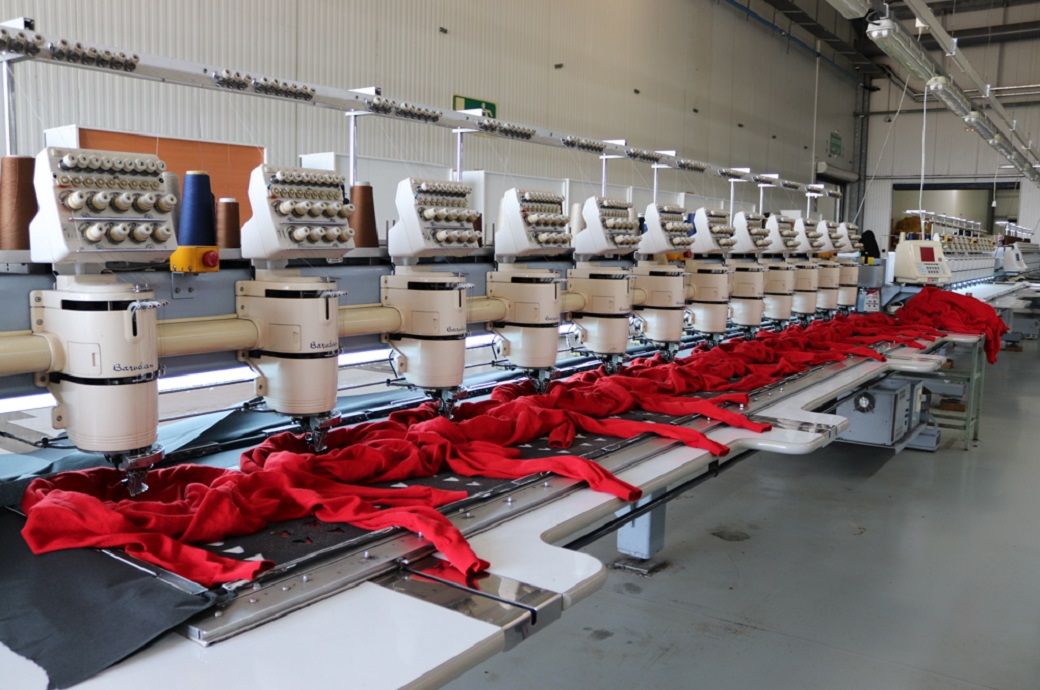
Why it matters: For manufacturers and brands, this demonstrates a concrete operational pathway to increase throughput and on-time performance without capital expansion, directly impacting order book flexibility and penalty cost reduction.
Context: The move from fragmented, spreadsheet-based planning to integrated digital systems is a persistent industry challenge, particularly for complex, vertically integrated suppliers managing multiple luxury clients.
"The improved production visibility allowed Tunicotex to expand its overall capacity by approximately 40% between 2024 and 2025, supporting higher volumes and more diverse orders." — FIBRE2FASHION
Commentary: The ‘unlocked 40% additional capacity’ is the critical metric; it suggests the prior constraint was informational and coordination-based, not purely physical. This shifts the investment case for mid-tier manufacturers from machinery to planning software, potentially altering vendor selection criteria for brands that prioritize agile, high-mix capacity. The reduction in planning time and overtime indicates a direct labor efficiency gain, changing the cost structure for complex, low-volume luxury production runs.
Date: Tue, 19 May 2026 06:58:03 GMT
URL: https://www.fibre2fashion.com/news/textiles-technology-news/coats-digital-s-fastreactplan-transforms-operations-at-tunicotex-307568-newsdetails.htm
AI Sentiment Score: Negative (69%)
AI Credibility Score: 10.0/10 — High
Scores and text generated by AI analysis of the source article indicated.
Coats Digital appoints Himanshu Mehrotra as MD to lead AI shift (Fibre2Fashion)
Summary: Coats Digital, a provider of manufacturing software to the fashion industry, has appointed Himanshu Mehrotra as Managing Director. Mehrotra, a veteran of Oracle, Blue Yonder, and FourKites, is tasked with leading the company’s shift toward an AI-powered Fashion Intelligence Platform. This leadership change signals a strategic acceleration of cloud and AI integration into Coats Digital’s established product suite, which includes tools like GSDCost for cost engineering and FastReactPlan for production scheduling.

Why it matters: This signals a vendor-level strategic pivot toward integrated, AI-driven platforms for manufacturing, which will directly impact the tooling, data workflows, and operational benchmarks for apparel producers.
Context: The appointment follows a pattern of supply-chain software veterans moving into leadership roles at legacy manufacturing tech firms, aiming to modernize core platforms for data integration and predictive analytics.
"Mehrotra is a seasoned technology leader with more than 23 years’ experience building and scaling supply chain software businesses. His background spans product leadership, P&L management, and commercial transformation across global markets,." — FIBRE2FASHION
Commentary: The hire of a supply-chain SaaS specialist indicates Coats Digital is moving beyond point solutions toward a unified data platform, aiming to lock in manufacturers by reducing reliance on spreadsheets and manual processes. This could pressure competing vendors to offer similar integrated suites and could accelerate the consolidation of factory data systems, directly affecting IT procurement and internal process engineering teams at manufacturing units.
Date: Mon, 18 May 2026 00:03:03 GMT
URL: https://www.fibre2fashion.com/news/textiles-technology-news/coats-digital-appoints-himanshu-mehrotra-as-md-to-lead-ai-shift-308611-newsdetails.htm
AI Sentiment Score: Negative (50%)
AI Credibility Score: 10.0/10 — High
Scores and text generated by AI analysis of the source article indicated.
Simkhai is building an AI storefront for shoppers who don’t know what to search (Glossy.Co)
Summary: Simkhai is launching a separate AI-powered storefront, Simkhai.ai, built on Swap’s agentic commerce platform. The site is designed to replicate in-store styling through a conversational interface and discovery feed, aiming to capture shoppers who know an occasion but not a search term. It will feature virtual try-on and retain all customer data for the brand. The move tests whether a dedicated dot-ai domain can become a primary discovery channel rather than a novelty feature.

Why it matters: This operationalizes AI styling as a separate sales channel, forcing brands to decide on domain strategy, data control, and whether to build agentic features in-house or through vendors like Swap.
Context: Brands like Ralph Lauren and Zalando have added AI assistants within existing apps; Simkhai’s separate dot-ai site represents a more aggressive bet on agentic commerce as a standalone destination.
"Simkhai is preparing to launch a separate AI-powered e-commerce site, designed to bring more of its in-store styling experience online. The site, Simkhai.ai, is still in development and will sit alongside Simkhai.com." — GLOSSY.CO
Commentary: If successful, this could shift e-commerce traffic from keyword search to conversational discovery, altering SEO budgets and merchandising workflows. The separate domain is a risky bet on brand cohesion but offers a clean slate for data capture and experience design. Success metrics will be time-in-experience and reduced returns, not just conversion lift.
Date: Mon, 18 May 2026 04:03:00 +0000
URL: https://www.glossy.co/fashion/luxury/simkhai-is-building-an-ai-storefront-for-shoppers-who-dont-know-what-to-search/
AI Sentiment Score: Negative (60%)
AI Credibility Score: 10.0/10 — High
Scores and text generated by AI analysis of the source article indicated.
Graph Network-Based Predictive Modeling for Next-Generation … (Intechopen)
Summary: A 2026 patent analysis maps the convergence pathways for next-generation wearable e-textiles, identifying four primary innovation hubs: AI-enabled health monitoring fabrics, sustainable e-textiles, biocompatible sensors, and self-powered textiles. The study provides a predictive framework for R&D strategy by analyzing the intersections of material science, electrical engineering, and biomedical domains. It specifically highlights operational opportunities in developing lightweight, washable energy-harvesting materials and recyclable conductive fibers.

Why it matters: For fashion-tech practitioners, this patent landscape defines the near-term R&D pipeline, signaling where capital, partnerships, and material sourcing will need to shift to capture value in functional apparel.
Context: Smart textile innovation is historically fragmented across disciplines, making strategic investment and supply chain development difficult to coordinate.
"These hubs highlight strong innovation activity and potential convergence pathways, including AI-enabled health monitoring fabrics, sustainable e-textiles, biocompatible sensors, and self-powered textiles." — INTECHOPEN
Commentary: The mapping from patent codes to applications (e.g., B32B/H05K/D03D for energy-harvesting fabrics) provides a tangible tooling checklist for R&D departments and material vendors. The emphasis on ‘washable’ and ‘recyclable’ properties directly addresses two major commercial adoption barriers—durability and end-of-life logistics—that have stalled previous e-textile pilots. This shifts the conversation from pure capability to manufacturable, maintainable product specs.
Date: April 24, 2026 12:00 AM ET
URL: https://www.intechopen.com/online-first/1236203
AI Sentiment Score: Neutral (33%)
AI Credibility Score: 10.0/10 — High
Scores and text generated by AI analysis of the source article indicated.
Luxury Briefing: Ralph Lauren and LuxExperience turn to AI for styling, search and high-value shoppers (Glossy.Co)
Summary: Ralph Lauren and LuxExperience are deploying AI to drive full-price sales and personalization, with Ralph Lauren integrating AI into design iteration, distribution automation, and agentic search, while LuxExperience uses predictive and generative AI for customer value targeting, content personalization, and software development. Concurrently, Louvelle, an invite-only peer-to-peer luxury rental platform, is gaining traction among stylists seeking faster access to archival and current-season pieces, circumventing traditional brand lending bottlenecks. Executive moves at Authentic Brands Group and PVH signal strategic shifts ahead of potential IPOs and leadership changes.

Why it matters: AI tooling is shifting from experimental marketing to core operations affecting design throughput, customer lifetime value modeling, and content generation, while new rental platforms are altering the sourcing pipeline for stylists and the monetization of professional closets.
Context: Luxury brands and e-commerce platforms are prioritizing AI to protect margins through full-price selling and hyper-personalization, while the rental market is evolving beyond consumer-facing apps to serve professional workflows.
"In this week’s Luxury Briefing, we dig into recent AI moves by Ralph Lauren, as well as Net-a-Porter and Mytheresa owner LuxExperience. Also, a new luxury rental source for stylists, and executive." — GLOSSY.CO
Commentary: The operational shift is from AI as a discrete project to an embedded layer across design, logistics, and CRM, which will compress iteration cycles and raise the cost of entry for competitors lacking similar data integration. For stylists, platforms like Louvelle reduce dependency on brand sample approval timelines, effectively creating a parallel, faster inventory network for high-value clients, though this may dilute brand control over where archival pieces appear.
Date: Fri, 22 May 2026 04:03:00 +0000
URL: https://www.glossy.co/fashion/luxury/luxury-briefing-ralph-lauren-and-luxexperience-turn-to-ai-for-styling-search-and-high-value-shoppers/
AI Sentiment Score: Positive (50%)
AI Credibility Score: 10.0/10 — High
Scores and text generated by AI analysis of the source article indicated.
Fashion Draws Closer To Some Fixed Ideas About AI, Just … (Theinterline)
Summary: AWS has formalized a generative AI playbook for retail, codifying common applications like virtual try-on and personalized search. Concurrently, Microsoft and ASOS released a case study demonstrating tangible ROI from mature, integrated AI solutions across the product journey, from design to shopfloor control. The narrative is shifting from speculative hype to the measured deployment of AI to achieve longstanding strategic aims.

Why it matters: For practitioners, this signals a move from experimental pilots to operational integration, requiring budget allocation for proven tools and a reassessment of vendor partnerships based on demonstrable ROI.
Context: The fashion industry’s AI adoption is maturing beyond consumer-facing gimmicks, focusing on backend efficiency and data-driven decision-making within established workflows.
"These may not be “new” ideas in the strictest sense, but they are – ironically, like Google Photos Wardrobe – applications of novel technology to achieve well-defined and longstanding strategic aims." — THEINTERLINE
Commentary: The playbook and case study represent a market consolidation where AI’s value is now framed in terms of operational KPIs—reducing digital sampling costs, improving manufacturing throughput, and leveraging customer data—rather than novelty. This forces brands to prioritize vendors offering integrated solutions over point innovations and shifts internal AI governance from R&D to line-of-business budgets focused on supply chain and design efficiency.
Date: May 01, 2026 12:00 AM ET
URL: https://www.theinterline.com/2026/05/01/fashion-draws-closer-to-some-fixed-ideas-about-ai-just-as-the-subsidies-are-running-out/
AI Sentiment Score: Negative (50%)
AI Credibility Score: 10.0/10 — High
Scores and text generated by AI analysis of the source article indicated.
Legit Check: AI Auth Scanner – App Store – Apple (Apps.Apple)
Summary: An iOS app, ‘Legit Check: AI Auth Scanner’, has launched, offering a consumer-facing AI tool for authenticating secondhand fashion items. The app uses image analysis of details like stitching, logos, and materials to provide a rapid ‘real or fake’ assessment for sneakers, bags, and streetwear. It is positioned as an aid for transactions on resale platforms and in physical consignment or vintage shops.

Why it matters: This consumer-grade tool shifts authentication power, potentially altering trust dynamics and liability in the secondary market, while creating a new data layer on product counterfeiting.
Context: The secondary fashion market relies on expert authentication; digital tools have been largely B2B or platform-integrated services.
"# Legit Check: AI Auth Scanner Real or Fake Sneaker Bag Scan Free · In-App Purchases · Designed for iPad. … Scan before you cop. Get a fast AI-powered legit check for." — APPS.APPLE
Commentary: The app commoditizes a key service, potentially pressuring professional authenticators and resale platforms to justify their fees or integrate similar tech. Its success hinges on training data quality and the legal defensibility of its ‘not a suggest’ disclaimer in disputed transactions. For brands, it represents a double-edged sword: a tool against counterfeits that also further legitimizes the secondary market they often seek to control.
Date: April 22, 2026 12:00 AM ET
URL: https://apps.apple.com/ca/app/legit-check-ai-auth-scanner/id6761913359
AI Sentiment Score: Positive (66%)
AI Credibility Score: 10.0/10 — High
Scores and text generated by AI analysis of the source article indicated.
How Larroudé’s CEO built an AI system to improve and expedite business operations (Glossy.Co)
Summary: Ricardo Larroudé, CEO of footwear brand Larroudé, used AI coding tools to personally build an integrated operating system connecting Shopify, factory data, inventory, and marketing. The system automated data reconciliation, identified site performance issues, and boosted conversion rates from 0.3% to 1.7% within 45 minutes. It replaced manual programming tasks, reduced a team of 10 programmers, and shifted hiring toward ‘agentic’ workers who oversee dynamic software. Ongoing costs are expected to stabilize at a few thousand dollars monthly, below previous programming expenses.
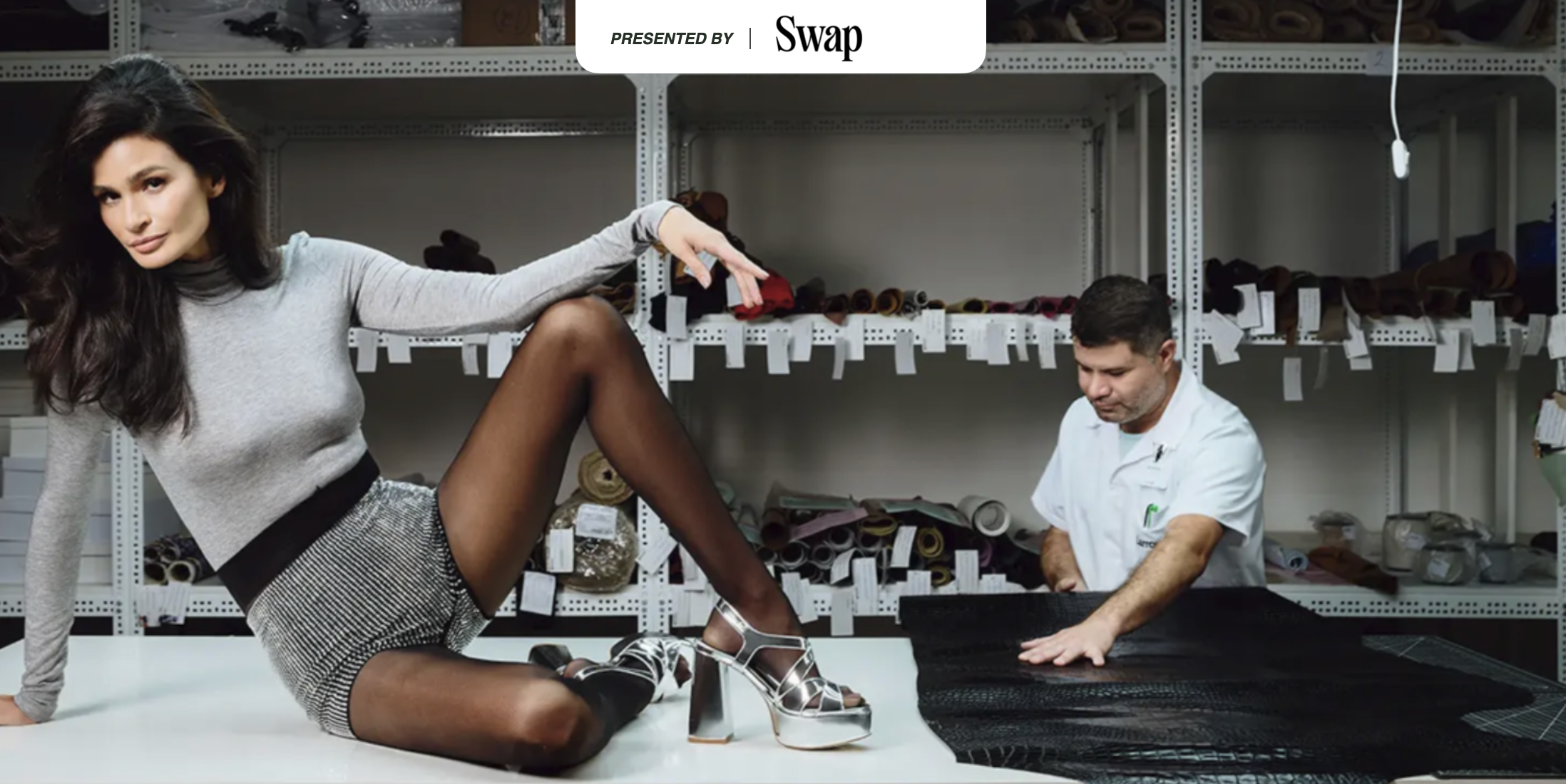
Why it matters: This demonstrates a concrete, CEO-led operational pivot where AI tooling directly alters staffing, cost structure, and production agility, setting a precedent for mid-sized brands to compress planning cycles and reduce technical headcount.
Context: Mid-market fashion brands face mounting pressure to integrate disparate data systems for real-time supply chain visibility and leaner operations, often without the budget for enterprise-scale solutions.
"At the start of the year, Larroudé’s operating systems were not connecting the way Ricardo Larroudé wanted them to. The problem was that they were not speaking to each other cleanly. The." — GLOSSY.CO
Commentary: The shift from ‘coding’ to ‘programming the company’ redefines the technical skill set required in fashion operations, prioritizing workflow orchestration over manual execution. This reduces time to market by enabling real-time inventory allocation and cuts digital sampling costs by automating data reconciliation across systems. However, it introduces new dependencies on AI query costs and cloud infrastructure, trading variable labor expense for fixed platform overhead.
Date: Wed, 13 May 2026 04:04:00 +0000
URL: https://www.glossy.co/fashion/how-larroudes-ceo-built-an-ai-system-to-run-the-business-faster/
AI Sentiment Score: Negative (80%)
AI Credibility Score: 10.0/10 — High
Scores and text generated by AI analysis of the source article indicated.
ASOS: Redesigning online fashion at the speed of AI (Ukstories.Microsoft)
Summary: ASOS is implementing a comprehensive AI and cloud transformation in partnership with Microsoft, targeting both customer experience and internal operations. The initiative includes an AI Stylist for conversational shopping, centralized data on Azure for faster trend response, and AI agents automating back-office and customer service tasks. The company claims a three-week ‘idea to shelf’ timeline, aided by 3D design and trend scouting from social media analysis.

Why it matters: This signals a shift in e-commerce operational tempo, where AI integration directly compresses design cycles, automates core workflows, and personalizes at the point of interaction, setting a new benchmark for speed and data leverage in fast fashion.
Context: Fast fashion’s competitive edge has historically relied on rapid physical supply chains; the new frontier is digital pipeline acceleration and hyper-personalization.
"ASOS: Redesigning online fashion at the speed of AI Fashion retailer ASOS is applying artificial intelligence and cloud services throughout its whole value chain in a frontier AI transformation partnership with Microsoft,." — UKSTORIES.MICROSOFT
Commentary: The three-week claim, if operationalized at scale, redefines the minimum viable cycle time for fast fashion, pushing competitors to match or explain their lag. The centralization of data in a single Azure repository is a prerequisite for this speed, eliminating internal reconciliation delays. The deployment of AI agents for 50% of customer enquiries and 15% of code generation represents a tangible shift in labor allocation, moving human effort upstream to oversight and exception handling. The partnership model with Microsoft suggests vendor lock-in and integrated tooling are becoming strategic advantages, not just IT costs.
Date: April 30, 2026 12:00 AM ET
URL: https://ukstories.microsoft.com/features/asos-redesigning-online-fashion-at-the-speed-of-ai/
AI Sentiment Score: Neutral (50%)
AI Credibility Score: 9.6/10 — High
Scores and text generated by AI analysis of the source article indicated.
Arts University Bournemouth takes AI and VR fashion tech … (Edtechinnovationhub)
Summary: Arts University Bournemouth is launching a commercial agency model at Fashion SVP 2026, aiming to function as a direct partner for brands rather than just a talent pipeline. The initiative bundles student talent with in-house AI pattern engineering, VR design workflows, and Digital Product Passport systems already in use with major brands. This represents a strategic shift for a UK arts university into the commercial tech and consultancy space.

Why it matters: This signals a new, competitive vendor category for brands seeking AI and digital design solutions, while altering the graduate employment pipeline into a direct, project-based labor channel.
Context: Universities are increasingly commercializing research and student output, but typically through separate tech transfer offices or incubators, not integrated agencies.
"#### Arts University Bournemouth arrives at Fashion SVP 2026 in London with AI pattern tools, VR design workflows, and a new commercial agency model that puts student talent directly inside brand briefs." — EDTECHINNOVATIONHUB
Commentary: If successful, this model could compress time-to-market for brands by providing integrated, low-cost R&D and prototyping teams, while pressuring traditional digital sampling vendors and freelance design studios on price and agility. The bundling of compliance tools like DPPs with creative services is a shrewd move to address legislative traceability mandates as a package, potentially locking in clients.
Date: April 28, 2026 12:00 AM ET
URL: https://www.edtechinnovationhub.com/news/arts-university-bournemouth-takes-ai-and-vr-fashion-tech-to-olympia-london-this-week
AI Sentiment Score: Negative (66%)
AI Credibility Score: 7.0/10 — Medium
Scores and text generated by AI analysis of the source article indicated.
Fast fashion inventory AI and IoT landscape 2026 (Patsnap)
Summary: A 2026 patent landscape analysis reveals that fashion-specific supply chain automation remains an underdeveloped IP category, with only one active WO patent (Refashiond OS Inc., 2022) explicitly targeting a platform OS for the industry. Recent academic and patent activity (2023-2025) shows convergence between inventory optimization, circular supply chains, and digital traceability, with new filings focusing on manufacturer-livestream-retail strategy and unsold inventory conversion. The core technical literature from 2019-2022 centered on hybrid algorithms for multi-channel replenishment of time-devaluing goods.
Why it matters: For supply chain and operations executives, this signals a nascent but high-stakes tooling race where early platform architecture decisions could lock in long-term workflow and data control advantages.
Context: Fast fashion’s operational model is defined by rapid, demand-responsive replenishment and the systemic risk of overstock, making algorithmic inventory management a core competency.
"With only one WO patent (Refashiond OS Inc., 2022) explicitly targeting fashion industry supply chain automation as a platform OS, the IP landscape for fashion-specific demand-supply orchestration platforms remains substantially underpopulated as of 2026." — PATSNAP
Commentary: The underpopulation suggests a strategic opening: the winner in building an integrated OS for design-to-shelf orchestration will capture disproportionate value by setting data standards and workflow APIs. The shift from generic algorithms (IBM’s inactive TVS patents) to fashion-specific platforms integrating blockchain, NFTs for IP, and livestream retail channels indicates the next competitive layer will be verticalized control of the entire creative and commercial pipeline, not just warehouse logistics.
Date: May 01, 2026 12:00 AM ET
URL: https://www.patsnap.com/resources/blog/articles/fast-fashion-inventory-ai-and-iot-landscape-2026/
AI Sentiment Score: Neutral (33%)
AI Credibility Score: 10.0/10 — High
Scores and text generated by AI analysis of the source article indicated.
AI Turns Thrift Into Profitable Fashion Marketplace (Letsdatascience)
Summary: AI has moved from a peripheral tool to the operational core of the secondhand fashion market, solving the fundamental problem of unique inventory. By deploying computer vision and generative models for discovery, pricing, and catalog standardization, platforms have transformed a fragmented, high-friction sector into a scalable, high-margin retail channel. The global market, valued at $289 billion in 2025, is projected to reach $393 billion, with this technical backbone enabling its growth.

Why it matters: For practitioners, this shifts the operational focus from manual curation and listing to managing AI-driven pipelines for tagging, photography, and cross-platform matching, directly impacting inventory throughput and margin.
Context: Secondhand retail has historically been constrained by the ‘uniqueness problem’—every item is a distinct SKU, making traditional catalog and search systems ineffective.
"AI has converted secondhand apparel from a logistical headache into a high-margin retail channel. … Platforms solved the core technical challenge of uniqueness by applying computer vision and generative models to discovery,." — LETSDATASCIENCE
Commentary: This marks a shift from AI as a marketing feature to a foundational utility that changes unit economics. The implication for brands and platforms is a reallocation of labor from manual cataloging to overseeing automated quality control and data pipeline integrity. It also creates a new vendor landscape for specialized vision and generative tooling, while raising the competitive floor for any marketplace operating in unique-goods categories.
Date: April 21, 2026 12:00 AM ET
URL: https://letsdatascience.com/news/ai-turns-thrift-into-profitable-fashion-marketplace-81e30183
AI Sentiment Score: Negative (50%)
AI Credibility Score: 10.0/10 — High
Scores and text generated by AI analysis of the source article indicated.
Photo-Based Authentication for Luxury Resale Power Sellers (Startupheist)
Summary: The luxury resale market is shifting from a discount channel to a high-stakes, high-value segment, with affluent buyers seeking authenticity assurance for items priced in the thousands. This creates a structural gap in the trust layer: current authentication services are either brand-limited, post-sale, or captive to specific platforms, leaving power sellers without a portable, pre-listing credential. The entry of mass retailers like Walmart and Amazon into pre-owned luxury via partnerships with Rebag is transforming authentication from a boutique service into a prerequisite infrastructure layer, demanding an API-first, seller-native solution.

Why it matters: For power sellers and platforms, the absence of a low-cost, pre-listing authentication API directly constrains inventory velocity, listing confidence, and conversion rates in a market where counterfeit risk is the primary transaction friction.
Context: The authentication landscape is fragmented, with incumbents like Entrupy (subscription, brand gaps), Real Authentication (API for volume), and LegitGrails (photo-based for individuals) failing to provide a unified, seller-integrated trust badge for pre-sale listings.
"The opening isn’t invention. It’s a different product shape: low-cost, API-first, sub-minute turnaround, seller-native, with a badge designed to lift listing conversion." — STARTUPHEIST
Commentary: The operational consequence is a new vendor category: authentication-as-a-service for seller workflows, not buyer protection. This could pressure resale platforms to integrate pre-listing APIs or cede conversion to sellers who adopt them, while creating a pipeline bottleneck where authentication speed and cost directly impact time-to-market for high-value inventory. The market’s growth is now gated by trust infrastructure, not discovery or payment tools.
Date: May 08, 2026 12:00 AM ET
URL: https://www.startupheist.com/photo-based-authentication-for-luxury-resale-power-sellers/
AI Sentiment Score: Positive (45%)
AI Credibility Score: 7.0/10 — Medium
Scores and text generated by AI analysis of the source article indicated.
Virtual Try-On Technology for Ecommerce 2026 (Claimlane)
Summary: Virtual try-on technology, combining AR, AI body mapping, and 3D rendering, is being integrated into ecommerce platforms to let customers preview products on themselves. Adoption is driven by measurable reductions in return rates and increases in conversion. The primary operational bottleneck is no longer the AR software but the creation of 3D product models for each SKU, with costs and methods varying significantly.

Why it matters: For fashion brands and ecommerce operators, this shifts the capital expenditure from software development to asset production, directly impacting time-to-market, sampling costs, and return logistics.
Context: The push for virtual try-on follows years of industry focus on reducing ecommerce return rates, which are a major cost center, particularly for apparel and accessories.
"Virtual try-on technology attacks this problem directly. Using augmented reality (AR), AI body mapping, and 3D rendering, customers can see how a product looks on them before placing an order. Glasses on." — CLAIMLANE
Commentary: The pivot from a tech-integration problem to an asset-creation pipeline redefines vendor selection and internal workflow. Studios must now budget for and manage a new 3D modeling pipeline, choosing between cost, speed, and fidelity. This creates a new market for 3D model generation services and pressures brands to digitize their entire catalog, not just hero products.
Date: May 04, 2026 12:00 AM ET
URL: https://www.claimlane.com/resources/blog/virtual-try-on-technology-ecommerce
AI Sentiment Score: Negative (75%)
AI Credibility Score: 7.0/10 — Medium
Scores and text generated by AI analysis of the source article indicated.
Fashion Digital Twins: How Virtual Garments Are Transforming the … (Pixofix)
Summary: The article outlines a structured production pipeline for creating fashion digital twins—dynamic 3D garment models that simulate fabric behavior and manufacturing details. It details a four-stage workflow from base model creation to quality review, emphasizing accuracy and cross-functional collaboration. The process is framed as an ongoing operational discipline requiring standardized visual language, documentation, and scheduled audits to maintain brand consistency and utility.

Why it matters: This formalizes a production-grade workflow for digital twins, shifting them from experimental assets to core operational tools that affect sampling costs, time to market, and cross-departmental alignment.
Context: Digital twins in fashion are evolving beyond static 3D renders into data-rich models used for design, e-commerce, and supply chain integration, requiring new technical and creative pipelines.
"A fashion digital twin is a dynamic, data-rich 3D model of a physical garment. It captures not just the design, but the fabric behavior, fit, and manufacturing details. Unlike basic 3D mockups,." — PIXOFIX
Commentary: The operationalization of digital twins introduces recurring overhead—audits, library maintenance, pipeline reviews—that brands must budget for. This shifts the cost model from one-off project expense to sustained platform investment. The emphasis on customer feedback loops for fit and color realism directly targets reducing return rates and improving conversion, making the twin a critical tool for data-driven merchandising. Success now depends on integrating 3D production into existing design and quality control workflows, requiring new roles or vendor partnerships.
Date: May 04, 2026 12:00 AM ET
URL: https://www.pixofix.com/blog/fashion-digital-twins-how-virtual-garments-are-transforming-the-future-of-e-commerce
AI Sentiment Score: Negative (50%)
AI Credibility Score: 10.0/10 — High
Scores and text generated by AI analysis of the source article indicated.
2026: Why Virtual Try-On is Killing the Fashion Photoshoot (Weshop.Ai)
Summary: The article argues that 2026 marks the tipping point for Virtual Try-On (VTON) technology, shifting from a novelty to a core operational tool. This is driven by new architectures like ‘nanobanana pro,’ which use high-fidelity physics models for realistic garment simulation via a ‘One-Click’ API. The primary impact is the transformation of marketing and production pipelines, enabling net-zero content creation and slashing logistical overhead.

Why it matters: For fashion practitioners, this changes the fundamental economics of sampling, influencer marketing, and asset production, directly affecting time to market, return rates, and carbon footprints.
Context: VTON has historically struggled with the ‘uncanny valley,’ but advances in AI physics simulation are now overcoming fidelity barriers, moving the technology from post-production to pre-production.
"To understand why 2026 is the tipping point, we have to look at the “Uncanny Valley” of fashion AI. For years, Virtual Try-On felt like a cheap digital sticker. Today, it operates." — WESHOP.AI
Commentary: The operational shift is from a photography-led, sample-heavy pipeline to a simulation-first workflow. This reduces the need for physical samples and on-location shoots, fundamentally altering the roles and vendor dependencies for studios, photographers, and logistics teams. The claim of a ‘net-zero content solution’ hinges on the technology’s ability to generate marketing assets pre-manufacture, which, if accurate, would compress lead times and inventory risk for brands.
Date: April 22, 2026 12:00 AM ET
URL: https://www.weshop.ai/blog/why-2026-is-the-year-the-professional-photoshoot-dies-thanks-to-virtual-try-on/
AI Sentiment Score: Negative (75%)
AI Credibility Score: 10.0/10 — High
Scores and text generated by AI analysis of the source article indicated.
Podcast: Will A Drive For Shared Truth Bring Fashion Back … (Theinterline)
Summary: The EU’s Ecodesign for Sustainable Products Regulation (ESPR) is driving the adoption of standardized digital product passports, which mandate durable, accessible product-level data for compliance. Companies like TextileGenesis are building traceability infrastructure on blockchain principles to meet these requirements, while consultancies such as EY are developing enterprise-grade provenance solutions. This regulatory push is forcing brands to establish data plumbing that extends beyond their direct control into complex supply chains.

Why it matters: For practitioners, this means new mandatory data workflows, vendor selection for traceability tooling, and a fundamental shift in how product information is structured and shared across the supply chain.
Context: ESPR creates a legal requirement for digital product passports, moving traceability from a voluntary sustainability initiative to a compliance-driven operational necessity.
"You have serious companies like TextileGenesis who are architecting fibre-forward traceability on top of blockchain principles, even if they don’t describe themselves as blockchain companies. A massive panel of companies right now." — THEINTERLINE
Commentary: The shift from marketing-led ‘blockchain for good’ to regulation-enforced data architecture redefines traceability as a core IT and compliance function. This will create a market for turnkey passport solutions but also imposes a new data governance burden, requiring brands to source and validate information from tiers of suppliers previously outside their operational visibility. The practical consequence is less about innovation and more about building auditable data pipelines under a hard deadline.
Date: April 21, 2026 12:00 AM ET
URL: https://www.theinterline.com/2026/04/21/podcast-will-a-drive-for-shared-truth-bring-fashion-back-around-to-blockchain/
AI Sentiment Score: Negative (50%)
AI Credibility Score: 10.0/10 — High
Scores and text generated by AI analysis of the source article indicated.
Fit Analyzer vs Size Chart: Which Cuts Returns More? (Alhena.Ai)
Summary: Alhena.Ai argues that AI-powered fit analyzers, which interpret size charts and deliver a single recommendation, outperform static size charts in reducing returns. Citing data from FitEz, the piece claims AI tools cut size-related returns by 20-35% versus 5-10% for charts, with brands like Mammut and Tatcha seeing significant conversion lifts. The system uses cross-brand mapping and live inventory checks, deploying via e-commerce platforms without requiring developer resources.
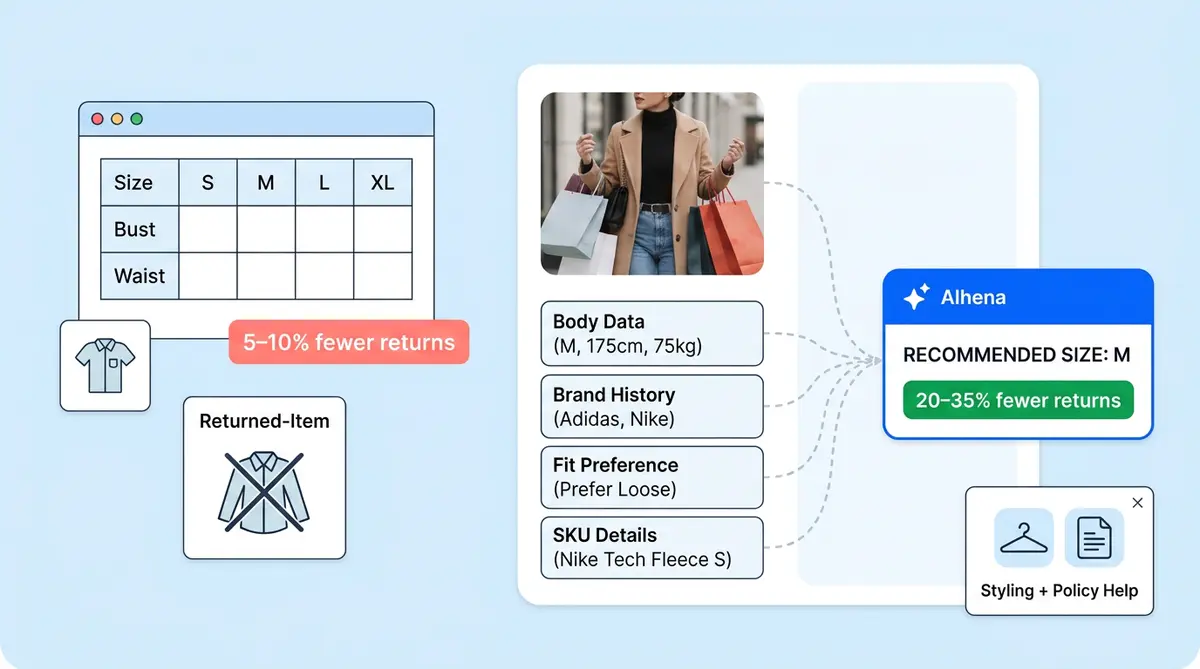
Why it matters: For fashion e-commerce operators, this directly impacts the cost center of returns and the revenue lever of conversion, altering the required tooling and customer interaction model.
Context: The high rate of returns driven by fit confusion is a persistent operational and sustainability drain, with most solutions historically focused on improving chart accuracy, not decision automation.
"A size chart is a dictionary. A fit analyzer is a translator for apparel sizing. Both give you sizing information, but only one shows what the fit will look like on the." — ALHENA.AI
Commentary: The shift from providing data to automating the decision transfers sizing risk from the customer to the vendor’s algorithm, requiring brands to trust and maintain an external interpretation of their own size charts. If the performance gap holds, it pressures merchandising and tech budgets toward integrated AI agents, potentially standardizing cross-brand sizing logic at the expense of brand-specific fit narratives. The 48-hour no-code deployment claim suggests a push to commoditize this layer of the checkout experience, making it a baseline expectation rather than a differentiator.
Date: April 24, 2026 12:00 AM ET
URL: https://alhena.ai/blog/fit-analyzer-vs-size-chart-returns/
AI Sentiment Score: Negative (62%)
AI Credibility Score: 9.7/10 — High
Scores and text generated by AI analysis of the source article indicated.
3D retail’s last barrier isn’t creation. It’s delivery. | Miris (Miris)
Summary: The economic case for 3D visualization in retail is proven, with data showing significant conversion uplifts and return reductions. The historical barriers of creation cost and format fragmentation are being dismantled by AI pipelines and industry standards like OpenUSD. The remaining critical barrier is delivery infrastructure, where traditional WebGL and pixel streaming approaches force unacceptable trade-offs between fidelity, speed, scale, and cost at enterprise volumes.

Why it matters: For operations and strategy leads, the choice of delivery architecture now determines whether 3D investments yield ROI or become a costly bottleneck.
Context: The industry is shifting from treating 3D as a marketing differentiator to treating it as baseline infrastructure, with major retailers like Lowe’s, Amazon, and Home Depot building long-term operational stacks.
"Investing in beautiful 3D assets is meaningless if you cannot get them to customers at scale. And here, retailers face an old tradeoff in new clothes." — MIRIS
Commentary: The article correctly frames the delivery problem as an architectural and economic constraint, not a creative one. The move towards adaptive spatial streaming, as exemplified by Miris, represents a necessary evolution from content delivery to conditioned data streaming, aligning cost structures with CDN models. This turns 3D from a campaign-specific expense into a scalable, utility-like layer, fundamentally changing the procurement and platform evaluation criteria for retail tech teams.
Date: May 06, 2026 12:00 AM ET
URL: https://www.miris.com/blog/3d-retails-last-barrier-isnt-creation-its-delivery
AI Sentiment Score: Negative (85%)
AI Credibility Score: 9.4/10 — High
Scores and text generated by AI analysis of the source article indicated.
Key Takeaways (Tailoringly)
Summary: EU regulations like the CSRD, EUDR, and the upcoming Digital Product Passport are creating a concrete, tiered compliance timeline for apparel suppliers. By 2026, European buyers are escalating requests for structured facility data, supply chain mapping to Tier 2, and third-party social audits. The operational burden is shifting down the supply chain, mandating that factories and vendors systematize traceability and documentation now to maintain market access.

Why it matters: For manufacturers and suppliers, this transforms compliance from a marketing exercise into a foundational operational requirement, dictating supplier relationships, data infrastructure, and audit cycles.
Context: This follows a pattern of EU regulations using market access to enforce supply chain transparency, moving from voluntary reporting to mandatory, auditable data submission.
"The CSRD is an EU law that requires large European companies to report on their sustainability impacts — including environmental, social, and governance metrics. Large EU companies started reporting under CSRD in." — TAILORINGLY
Commentary: The directive crystallizes a new minimum viable supplier profile: factories must now function as data hubs. This will accelerate vendor consolidation around firms with established ERP and audit readiness, while creating a compliance arbitrage opportunity for third-party verification services like SGS and Bureau Veritas. For brands, the cost of supplier onboarding will rise, as due diligence shifts from sampling to data validation.
Date: May 01, 2026 12:00 AM ET
URL: https://www.tailoringly.com/blog/eu-sustainability-requirements-fashion-indonesia
AI Sentiment Score: Neutral (33%)
AI Credibility Score: 7.0/10 — Medium
Scores and text generated by AI analysis of the source article indicated.
Fashion PLM Blog — Tech Packs, Costing, Production & Supply Chain (Kobolabs.Io)
Summary: A market map of fashion technology segments identifies three maturity tiers: mature (PLM, ERP, digital showrooms), growing (15 categories like 3D design and RFID), and emerging (digital passports, agentic AI). Enterprise adoption is high in mature areas but cost-prohibitive for smaller firms, while growing segments show ROI-driven uptake. The data highlights specific market sizes, adoption rates, and cost benchmarks.
Why it matters: It provides a strategic landscape for technology investment, showing where capital is flowing and which tools are moving from pilot to production, directly affecting operational planning and vendor selection.
Context: Fashion tech adoption has historically been bifurcated, with enterprise suites dominating large brands while mid-market and emerging brands lacked affordable, integrated solutions.
"PLM ERP E-Commerce & Digital Showrooms Growing Active Investment 3D/DPC AI Design Supply Chain Visibility RFID AI Demand Planning Sustainability/LCA Fit Tech AI Discovery Clienteling Dynamic Pricing Communication Platforms Resale/RaaS Materials Management." — KOBOLABS.IO
Commentary: The gap between enterprise and mid-market tools creates a durable opportunity for vendors like Kobo, but also signals that cost, not capability, remains the primary adoption barrier for sub-250 employee brands. The silent success of RFID, with tag costs now at $0.08-$0.10, indicates a shift from pilot projects to baseline infrastructure, directly impacting inventory accuracy and overstock reduction as a standard operating procedure.
Date: April 27, 2026 12:00 AM ET
URL: https://www.kobolabs.io/research/fashion-tech-adoption
AI Sentiment Score: Negative (60%)
AI Credibility Score: 10.0/10 — High
Scores and text generated by AI analysis of the source article indicated.
Post ID: c5be50f0