Arts Management, Policy & Community Engagement
Building Meaningful Cultural Exchanges Through Chinese Dance – A Case of Hong Kong Dance Company (Tandfonline)
Summary: A new academic paper examines Hong Kong’s cultural diplomacy through the lens of the Hong Kong Dance Company, arguing for ‘meaningful cultural exchanges’ grounded in reciprocity and long-term commitment over transactional, one-off events. It positions Hong Kong as a cultural bridge between China and the West, using HKDance’s decade-long collaboration with the Sydney Dance Company as a case study. The paper critiques Hong Kong’s current government-led cultural exchange efforts as lacking a clear, sustainable strategy and being overly reliant on major, state-subsidized institutions.

Why it matters: It reveals the operational tensions and strategic gaps in how a geopolitically contested city like Hong Kong projects soft power, offering a model for cultural relations that other city-states or subnational entities might emulate or avoid.
Context: This analysis emerges as Hong Kong’s cultural identity is increasingly framed within China’s national soft power strategy, while local institutions seek to maintain a distinct ‘Hong Kong character’ and international artistic partnerships.
"Meaningful exchanges also require participants to acknowledge what they do not know and be open and ready to what they can learn from each other. Exchanges that are meaningful create spaces for co-learning and co-creation between those involved. Simply put, meaningful exchange is co-produced." — TANDFONLINE
Commentary: The paper’s advocacy for ‘co-produced’ exchanges is a direct critique of top-down, spectacle-driven cultural diplomacy, implicitly questioning the efficacy of China’s broader soft power apparatus. By highlighting the success of a decentralized, decade-long dance partnership, it suggests that authentic cultural influence is built institution-to-institution, not through state-mandated ‘Hong Kong Weeks.’ The call for corporate sponsorship and inclusion of smaller arts groups points to a recognition that Hong Kong’s government-led model is financially and creatively constrained, potentially limiting the city’s unique narrative in a crowded geopolitical field.
URL: https://www.tandfonline.com/doi/full/10.1080/10632921.2025.2591270?af=R
AI Sentiment Score: Negative (50%)
AI Credibility Score: 10.0/10 — High
Scores and text generated by AI analysis of the source article indicated.
Performing Arts Attendance: What Leads Audiences to Travel Further? (Tandfonline)
Summary: A study of over 250,000 attendees across 15 U.S. performing arts organizations confirms that geographical distance significantly impacts attendance patterns, a factor previously underemphasized in favor of individual demographic analysis. The research finds that larger organizations and more popular productions consistently draw audiences from farther away, regardless of the specific arts discipline or local socioeconomic context.
Why it matters: This quantifies a strategic tension for arts institutions: the programming and scale that build national prestige may inadvertently weaken local community engagement, forcing a reassessment of audience development models.
Context: The study shifts the analytical frame from European-centric models to the American context, where suburbanization and car-centric travel create different accessibility dynamics for cultural consumption.
"We further find that organizational size and artistic programming are associated with variations in audiences’ geographical distance, with larger organizations and more popular productions attracting people from further away." — TANDFONLINE
Commentary: The findings create a measurable trade-off for arts administrators: investing in blockbuster programming and institutional growth expands catchment areas but risks alienating the immediate community, a calculus that will influence funding priorities and venue placement strategies. For regional organizations, this validates a focus on hyper-local curation and accessibility initiatives as a distinct competitive niche against national brands.
URL: https://www.tandfonline.com/doi/full/10.1080/10632921.2025.2584124?af=R
AI Sentiment Score: Negative (71%)
AI Credibility Score: 10.0/10 — High
Scores and text generated by AI analysis of the source article indicated.
The Arts-Based Community Engagement (ABCE) Model in Practice: A Demonstrated Tool for Revenue Generation and Community Support in the Arts (Tandfonline)
Summary: A participatory case study examines Out of Hand Theater’s operational shift in 2018 to exclusively produce arts programs focused on social issues in collaboration with community partners. The research finds this practice aligns with the theoretical Arts-Based Community Engagement (ABCE) model, which posits such an approach can drive financial stability. Since the shift, the Atlanta-based theater’s revenue grew from $296,000 in FY2018 to $1.76 million, moving it into a higher budget classification even as the broader arts sector contracted. The study provides empirical evidence for a model that reorients the artistic process, making community goals primary and art the tool.
Why it matters: It validates a counterintuitive path to financial resilience for nonprofit arts organizations by prioritizing community needs over traditional artistic curation, offering a potential blueprint during a sector-wide crisis.
Context: The American nonprofit theater sector faces what has been described as an implosion, with widespread closures attributed to insufficient revenue, intensifying a decades-long search for sustainable operational models.
"Abstract This article examines the alignment between Out of Hand Theater’s operations and Song’s (2019) Arts-Based Community Engagement (ABCE) model. Using a participatory case study method, the research explores how Out of." — TANDFONLINE
Commentary: The model’s success hinges on a fundamental inversion: the art is not the goal but the tool for advancing a partner organization’s social issue objectives. This redefines the theater’s value proposition from presenting art to providing a civic service, attracting funding and audiences outside the traditional 9% who attend theater. It suggests a viable, mission-aligned alternative to reliance on holiday warhorses like ‘A Christmas Carol,’ potentially recalibrating how arts organizations demonstrate indispensability to public and private funders. The case also highlights a new dependency on external, often government or foundation, partners whose shifting priorities can abruptly terminate major revenue streams, as seen with Equitable Vaccines.
URL: https://www.tandfonline.com/doi/full/10.1080/10632921.2025.2559995?af=R
AI Sentiment Score: Negative (60%)
AI Credibility Score: 10.0/10 — High
Scores and text generated by AI analysis of the source article indicated.
Public Benefit or Private Gain? A Comparative Analysis of Administrative Practices in Nonprofit Art Museums (Tandfonline)
Summary: A new empirical study of U.S. nonprofit art museums examines the relationship between administrative practices and the delivery of public benefit, a core legal mandate for the sector. The analysis, using data from the Cultural Data Profile, identifies measurable differences in revenue streams, educational programming, and institutionalization between museums with culturally specific missions and generalist institutions. The findings suggest that organizational structure and funding models are not neutral but correlate with the distribution of public goods like arts education and access.
Why it matters: It provides data-driven evidence for ongoing debates about equity, mission drift, and accountability in cultural institutions, moving the conversation beyond anecdote.
Context: This research lands amid heightened scrutiny of nonprofit museums’ tax-exempt status, demands for decolonization, and questions about whether they serve elite patrons or broader publics.
"Abstract Although the nonprofit form affords many advantages for arts organizations in the U.S., inequities persist in arts education, practice, and consumption. Framed by legal frameworks that mandate a public orientation for." — TANDFONLINE
Commentary: The study operationalizes ‘public benefit,’ a legally required but often vague nonprofit tenet, into auditable metrics. This creates a tool for boards, donors, and regulators to assess performance against mission, potentially shifting power toward community-focused institutions and away from those optimized for prestige and endowment growth. The call for better sector-wide data collection is itself a policy intervention, aiming to make these disparities permanently legible.
URL: https://www.tandfonline.com/doi/full/10.1080/10632921.2025.2559856?af=R
AI Sentiment Score: Positive (42%)
AI Credibility Score: 10.0/10 — High
Scores and text generated by AI analysis of the source article indicated.
The Value of Institutional Leadership: Recognizing Dr Rachel Shane’s Tenure as Editor-in-Chief of the Journal of Arts Management, Law and Society (Tandfonline)
Summary: The Journal of Arts Management, Law and Society has published a retrospective on Dr Rachel Shane’s tenure as Editor-in-Chief, framing her leadership as a case study in institutional stewardship. The piece implicitly positions her work as a stabilizing force within academic publishing, a field undergoing significant structural and financial pressure. It highlights the role of editorial vision in maintaining a journal’s relevance and intellectual rigor over time.
Why it matters: This signals how cultural institutions are codifying and publicly valuing internal leadership at a moment when the sustainability of academic humanities publishing is in question.
Context: Academic journals, particularly in niche fields like arts management, face existential challenges from open-access mandates, funding cuts, and shifting scholarly communication models, making sustained editorial leadership a rare and critical asset.
"Disclosure statement No potential conflict of interest was reported by the authors. Browse all journals Browse all books Browse by subject We’re here to help Find guidance on Author Services and schedule." — TANDFONLINE
Commentary: The act of publishing this retrospective is itself the milestone: it represents a journal using its platform to perform institutional memory and assert the value of continuity in a volatile landscape. For other field-specific publications, it sets a precedent for publicly honoring editorial service as a form of intellectual capital. This may encourage a revaluation of ‘invisible’ administrative labor within academia, potentially affecting how professional societies recognize contribution beyond pure research output.
URL: https://www.tandfonline.com/doi/full/10.1080/10632921.2026.2616559?af=R
AI Sentiment Score: Negative (75%)
AI Credibility Score: 10.0/10 — High
Scores and text generated by AI analysis of the source article indicated.
Palm Beach Society Magazine: A New Cultural Landmark for Palm Beach County – Community Foundation for Palm Beach and Martin Counties (Yourcommunityfoundation)
Summary: The Community Foundation for Palm Beach and Martin Counties has secured design approval for the African American Museum & Research Library (AAMRL) in West Palm Beach, set to open in 2028. The 37,000-square-foot institution, built on the site of the historic Roosevelt High School in Coleman Park, aims to preserve and present the region’s Black history. It is backed by a coalition of public entities and private donors, including Palm Beach County, the School District, Bank of America, and the Quantum Foundation.

Why it matters: This project represents a significant, donor-driven re-inscription of local history into the physical and cultural landscape of a globally recognized region, shifting its identity beyond leisure and philanthropy toward a more contested and complete historical narrative.
Context: The development aligns with a broader national trend of establishing and expanding African American museums, often driven by community foundations and public-private partnerships, to address historical silences in affluent areas.
"The Community Foundation is leading the creation of the African American Museum and Research Library — bringing to life a long-envisioned cultural institution that honors the people, places, and stories that shaped." — YOURCOMMUNITYFOUNDATION
Commentary: The AAMRL’s siting on the Roosevelt High School grounds transforms a site of community memory into a formal institution, creating a permanent counter-narrative within Palm Beach County’s established brand. Its success will depend on whether it can operate as the ‘living classroom’ envisioned by its advocates, fostering ongoing scholarship and dialogue, or becomes subsumed as a static cultural amenity. The philanthropic coalition backing it signals a recognition among local elites that the region’s global reputation requires a more substantively inclusive historical foundation.
Date: April 17, 2026
URL: https://yourcommunityfoundation.org/articles/palm-beach-society-magazine-a-new-cultural-landmark-for-palm-beach-county/
AI Sentiment Score: Positive (80%)
AI Credibility Score: 9.7/10 — High
Scores and text generated by AI analysis of the source article indicated.
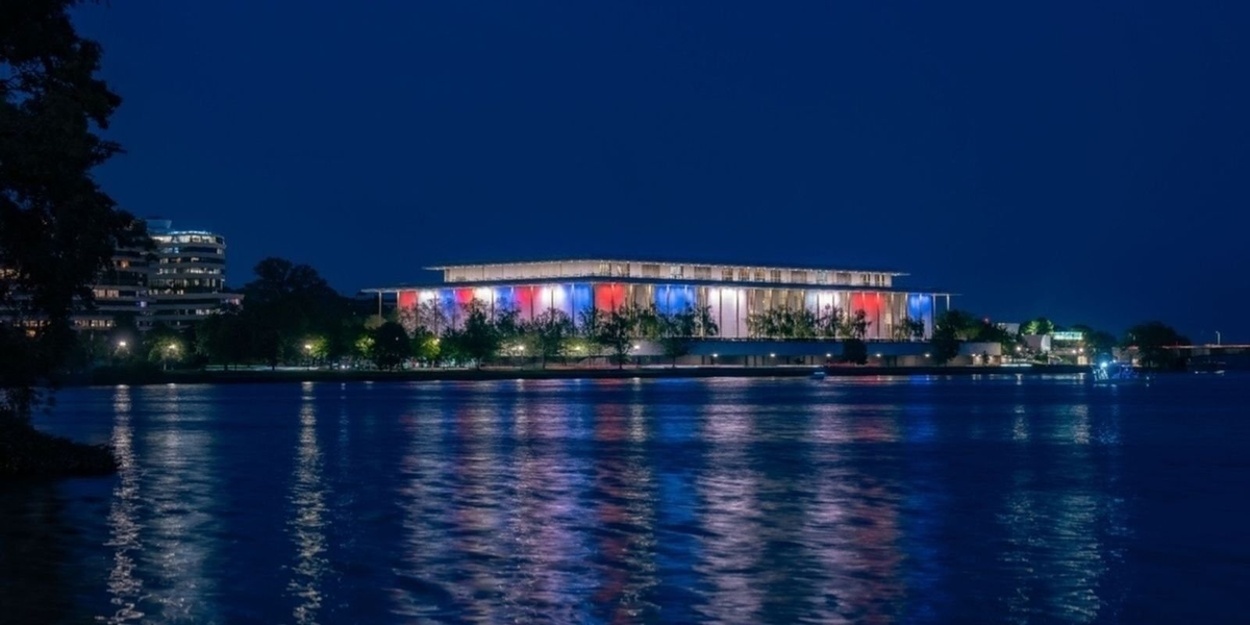
Former Kennedy Center Arts Curator Details ‘Cronyism, Incompetence, and Bizarre Moves’ Amidst Trump Takeover (Broadwayworld)
Summary: Former Kennedy Center curator Josef Palermo details the institution’s internal collapse following the Trump administration’s 2025 takeover, citing cronyism, resource starvation for artistic projects, and the commodification of cultural spaces. Key artifacts and the permanent collection were slated for removal or auction, while qualified staff were replaced by politically connected operatives unfamiliar with the arts. Palermo’s account, published in The Atlantic, frames the takeover as a ‘desecration’ and supports ongoing congressional investigations and legal challenges to the Center’s restructuring and potential renaming.
Why it matters: This episode demonstrates how political patronage can dismantle a major national cultural institution’s artistic mission and operational integrity, setting a precedent for similar takeovers.
Context: The Kennedy Center’s politicization follows a pattern of deploying loyalists into federal cultural roles, but the scale and speed of this institutional capture—including a two-year shutdown—is unprecedented.
""Trump had come in promising that ‘for the Kennedy Center, THE BEST IS YET TO COME!’ On the inside, my colleagues and I instead saw cronyism, incompetence, and a series of bizarre moves that would lead to the Kennedy Center going dark," Palermo writes." — BROADWAYWORLD
Commentary: Palermo’s testimony transforms the Kennedy Center from a case study in administrative chaos into a legal and political battlefield; its value now lies less in its collection than as evidence for Congress and courts. The proposed ‘firewall’ legislation would formalize a new principle: that flagship cultural institutions require statutory insulation from partisan control. This shifts the conflict from artistic programming to governance law, with future appointments and funding becoming proxy fights for cultural authority.
Date: April 17, 2026
URL: https://broadwayworld.com/article/Former-Kennedy-Center-Arts-Curator-Details-Cronyism-Incompetence-and-Bizarre-Moves-Amidst-Trump-Takeover-20260417
AI Sentiment Score: Negative (66%)
AI Credibility Score: 10.0/10 — High
Scores and text generated by AI analysis of the source article indicated.
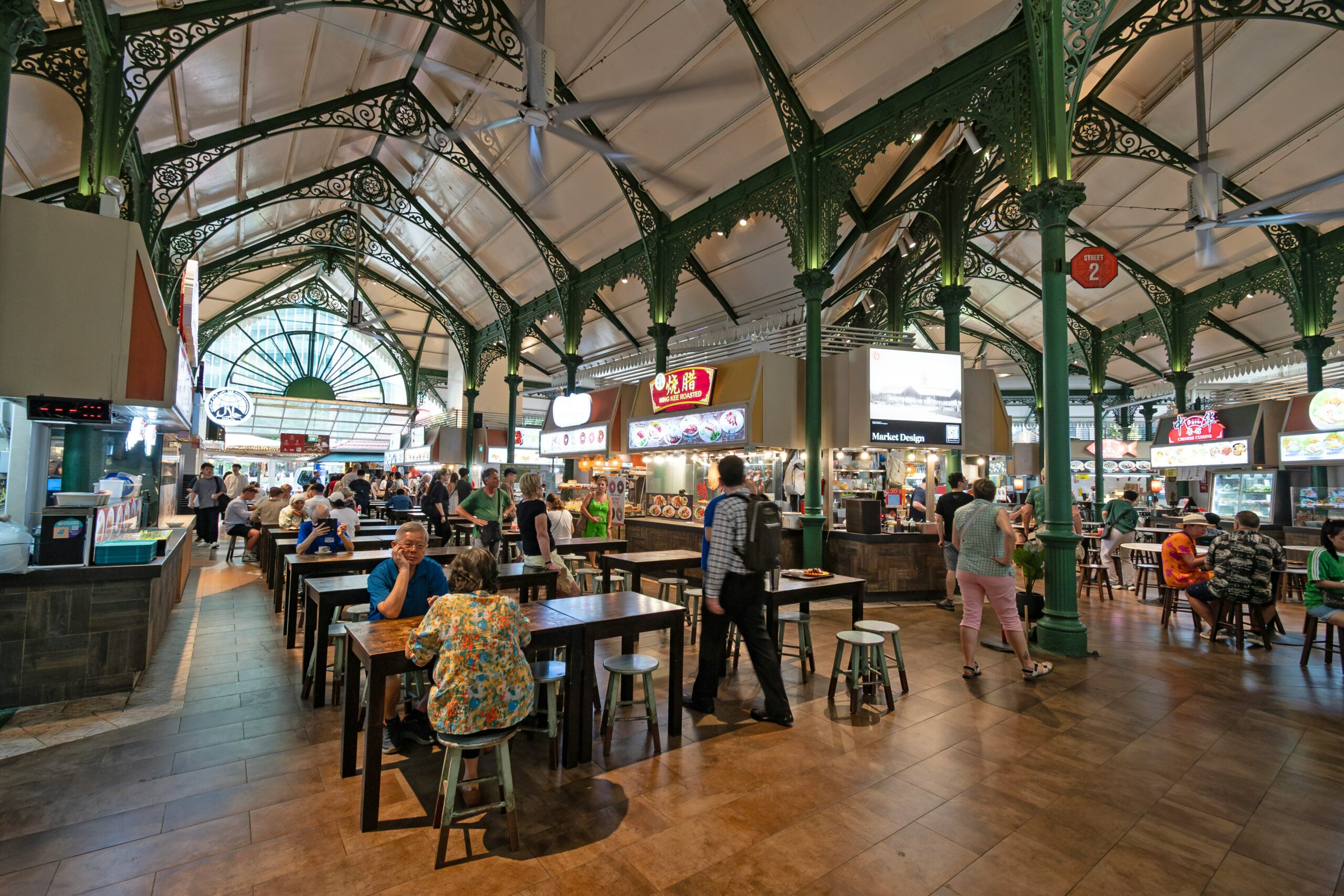
The Preservation Paradox: Singapore’s Hawker Centres as a Case Study in Cultural Food Policy – NYC Food Policy Center (Hunter College) (Nycfoodpolicy)
Summary: Singapore’s hawker centres, celebrated as UNESCO Intangible Cultural Heritage, face systemic collapse despite—and partly because of—state intervention. Field research reveals a preservation paradox: policies mandating affordability and promoting entrepreneurship undermine viability through market-rate rents, unaddressed cost inflation, and management models that homogenize offerings and squeeze margins. The median hawker age is 59, with many anticipating industry collapse within a decade, as the trade’s social function conflicts with its economic sustainability.
Why it matters: This case study exposes the inherent contradictions in state-led cultural preservation when policy goals—affordability, heritage, entrepreneurship—are pursued without a clear hierarchy, ultimately hollowing out the very culture they aim to protect.
Context: Singapore’s hawker centres originated as a state project to formalize street vending; their current crisis reflects a global tension between safeguarding intangible heritage and adapting to contemporary economic realities.
"Today, the median age of a Singaporean hawker is 59. Stall after stall is shutting down due to persistent issues such as high costs and younger generations’ lack of interest in taking over their family businesses. In today’s economy, being a hawker no longer pays like it once did." — NYCFOODPOLICY
Commentary: The Singapore case illustrates how cultural policy, when divorced from economic reality, becomes a performative gesture. The UNESCO designation risks becoming a tombstone rather than a safeguard if it isn’t paired with a coherent industrial policy that treats hawkers as vital workers, not just cultural stewards. This has direct implications for other cities attempting to formalize and preserve informal economies, from night markets to food trucks, where romanticization often outpaces support.
Date: 3 weeks ago
URL: https://www.nycfoodpolicy.org/the-preservation-paradox-singapores-hawker-centres-as-a-case-study-in-cultural-food-policy/
AI Sentiment Score: Negative (60%)
AI Credibility Score: 9.4/10 — High
Scores and text generated by AI analysis of the source article indicated.
Culture of Craft: Failure and the pedagogy of craft (Stanforddaily)
Summary: A Stanford undergraduate’s personal essay on leatherworking becomes a vehicle for examining craft as ‘the workmanship of risk,’ contrasting it with outcome-oriented, industrial, and academic systems that prioritize certainty. The author argues that the inherent possibility of failure in craft—the slip of a hand, the collapsed workbench—is pedagogically essential, normalizing frustration and building the ‘muscle of education’ through process rather than product.

Why it matters: It reframes a generational debate about the value of liberal arts and hands-on learning, positioning craft not as nostalgic hobby but as a necessary counter-practice to algorithmic, grade-optimized education.
Context: This arrives amid rising institutional anxiety over STEM-centric curricula and the ‘usefulness’ of humanities, paralleled by a consumer culture that fetishizes artisanal goods while devaluing the slow, failure-prone process behind them.
"In “Culture of Craft,” Quinn Cook ’29 documents the culture of craft, those who practice it and what we might learn from them. A few weeks ago, my roommate walked into our." — STANFORDDAILY
Commentary: The essay’s power lies in its tactical inversion: it weaponizes a personal failure to argue for a systemic pedagogical shift. By linking craft’s ‘risk’ to Gramsci’s concept of self-discovery, it implicitly critiques credential factories and platform-mediated creativity, suggesting that institutions fostering ‘certainty’ are producing competent but brittle graduates. The call to ‘lean into frustration’ targets the core vulnerability of efficiency-obsessed education and content economies.
Date: April 15, 2026
URL: https://stanforddaily.com/2026/04/14/failure-and-the-pedagogy-of-craft/
AI Sentiment Score: Negative (83%)
AI Credibility Score: 10.0/10 — High
Scores and text generated by AI analysis of the source article indicated.
FSU doctoral student earns prestigious literary arts fellowship to preserve legacy of historical communities – Florida State University News (News.Fsu.Edu)
Summary: Christell Victoria Roach, a creative writing doctoral student at Florida State University, has received a $30,000 YoungArts fellowship to develop OTOWN, an augmented-reality application that maps archival photos, poetry, and oral histories onto physical neighborhoods. The project, initially focused on Miami’s historic Overtown district, creates interactive digital museums at specific locations. Roach is developing a replicable model that has already expanded to other Florida towns, positioning community-led digital curation as a new form of historical preservation.

Why it matters: This signals a shift in how cultural memory is preserved and accessed, moving institutional authority from traditional archives to community-led, location-based digital experiences.
Context: The fellowship aligns with a broader trend in digital humanities and public history, where AR and locative media are used to challenge monolithic historical narratives and decentralize curation.
"A Florida State University graduate student has been selected for a competitive arts fellowship that will support the development of a project that maps archival photos, poetry and oral histories onto neighborhoods,." — NEWS.FSU.EDU
Commentary: The OTOWN model operationalizes a critical theory: that place-based memory, when mediated through accessible AR, can resist the erosion of community history by gentrification and institutional neglect. Its replicability threatens to bypass traditional heritage institutions, creating a parallel, crowd-sourced archive of vernacular history. The project’s expansion beyond Overtown suggests a nascent template for localized digital preservation, potentially reshaping funding flows in public arts and humanities toward more granular, techno-literary work.
Date: 3 weeks ago
URL: https://news.fsu.edu/news/arts-humanities/2026/04/29/fsu-doctoral-candidate-earns-prestigious-literary-arts-fellowship-to-preserve-legacy-of-historical-communities/
AI Sentiment Score: Negative (80%)
AI Credibility Score: 10.0/10 — High
Scores and text generated by AI analysis of the source article indicated.
Mural Arts lets Philadelphians write their own Declarations of Independence (Whyy)
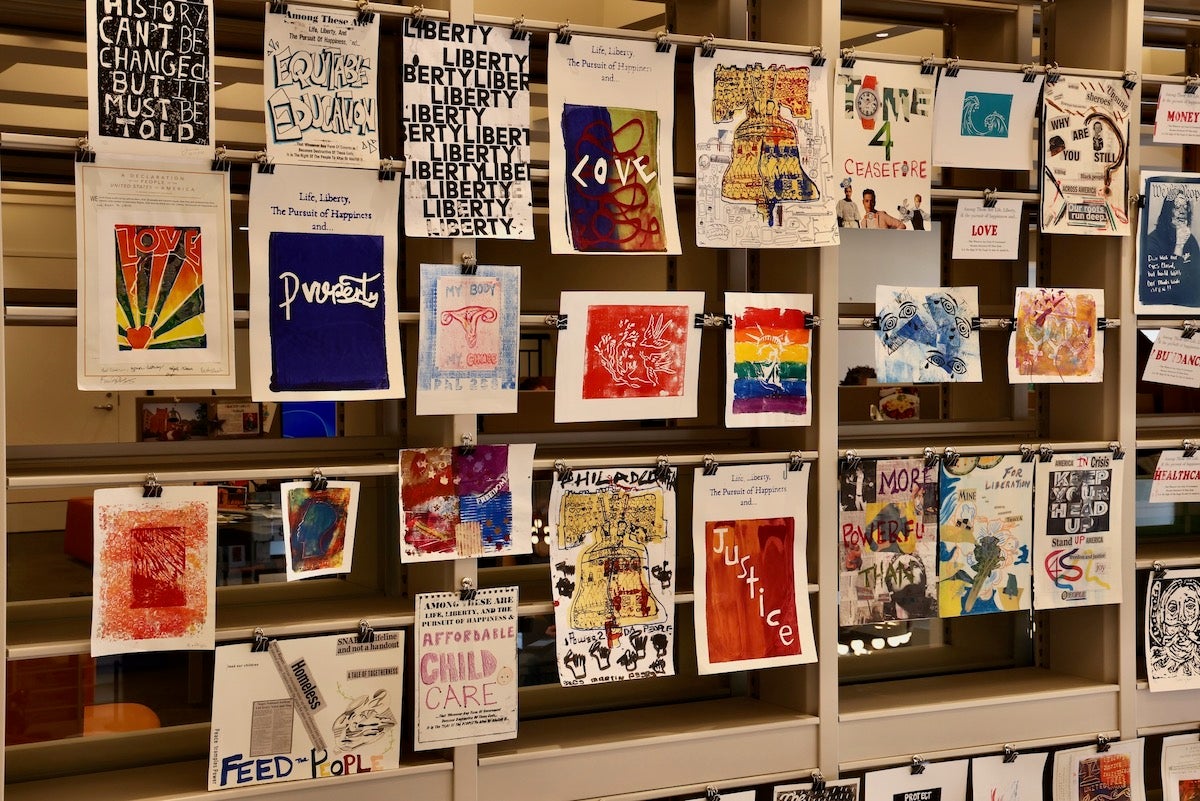
Summary: Mural Arts Philadelphia’s ‘Printmaking for the People’ project engaged over 1,000 residents in creating personal Declarations of Independence through public workshops. The resulting prints, now exhibited at the Free Library, collectively articulate modern demands for rights like housing, healthcare, and love. The project, framed as the largest civic engagement effort for the U.S. semiquincentennial, compiled these individual statements into a poster aligning with UN Sustainable Development Goals, slated for public display on transit infrastructure.
Why it matters: It demonstrates a shift in commemorative practice from passive historical reverence to active, pluralistic redefinition of foundational civic texts, with implications for public art, civic identity, and political discourse.
Context: This occurs amid a broader cultural re-evaluation of national founding documents and monuments, where institutions are pressured to reconcile historical legacy with contemporary, inclusive values.
"It doesn’t really apply anymore. We need something new,” Philadelphia artist Jeannine Baldomero said. “It was a new country when it was written and so many things have fallen out from the last 250 years. We really need to address that disparity." — WHYY
Commentary: The project operationalizes a critique of the original Declaration’s exclusivity, transforming civic commemoration into a participatory, print-based archive of contemporary grievances and aspirations. By channeling outputs into public transit ads and seeking a mural, Mural Arts is weaponizing this vernacular constitutionalism as a form of sanctioned public dissent, creating a new civic text from the aggregate. This suggests a model for other cities facing similar tensions between historical celebration and revision, where art institutions become de facto platforms for constitutional convention.
Date: April 17, 2026
URL: https://whyy.org/articles/philadelphia-mural-arts-declaration-of-independence
AI Sentiment Score: Negative (50%)
AI Credibility Score: 9.4/10 — High
Scores and text generated by AI analysis of the source article indicated.
A historian discusses Trump’s plan to build an arch to commemorate 250 years : NPR (Npr)
Summary: NPR’s Ayesha Rascoe speaks with historian Kevin Levin about President Trump’s proposed triumphal arch and how it would fit next other memorials in the nation’s capital. The proposed arch raises questions about the evolving civic symbolism and monumental architecture of the capital.

Why it matters: The proposed arch raises questions about the evolving civic symbolism and monumental architecture of the capital.
Context: Focus on the historical precedent and institutional implications of such a major, politically-charged public work.
"NPR’s Ayesha Rascoe speaks with historian Kevin Levin about President Trump’s proposed triumphal arch and how it would fit next other memorials in the nation’s capital." — NPR
Commentary: The signal is still worth tracking, but the current extraction path did not yield enough body text for a fuller analytical read. The immediate implication is operational rather than speculative: watch how this changes budgets, workflows, or risk assumptions over the next cycle.
Date: 1 week ago
URL: https://npr.org/2026/05/10/nx-s1-5795779/a-historian-discusses-trumps-plan-to-build-an-arch-to-commemorate-250-years
AI Sentiment Score: Neutral (50%)
AI Credibility Score: 10.0/10 — High
Scores and text generated by AI analysis of the source article indicated.
Post ID: fa6192b3