Artemis Moon Missions: Hardware, Updates, and Analysis
NASA’s Artemis III Moon Rocket Hardware Arrives, Artemis II Capsule Returns to Kennedy (Nasa.Gov)
Summary: NASA’s Kennedy Space Center is now the primary assembly hub for the SLS rocket’s core stage, a first for the program, as hardware for the Artemis III mission arrives. The Artemis II Orion capsule has returned for post-flight analysis, which will inform future missions, while assembly and testing of Artemis III Orion components continues on schedule.
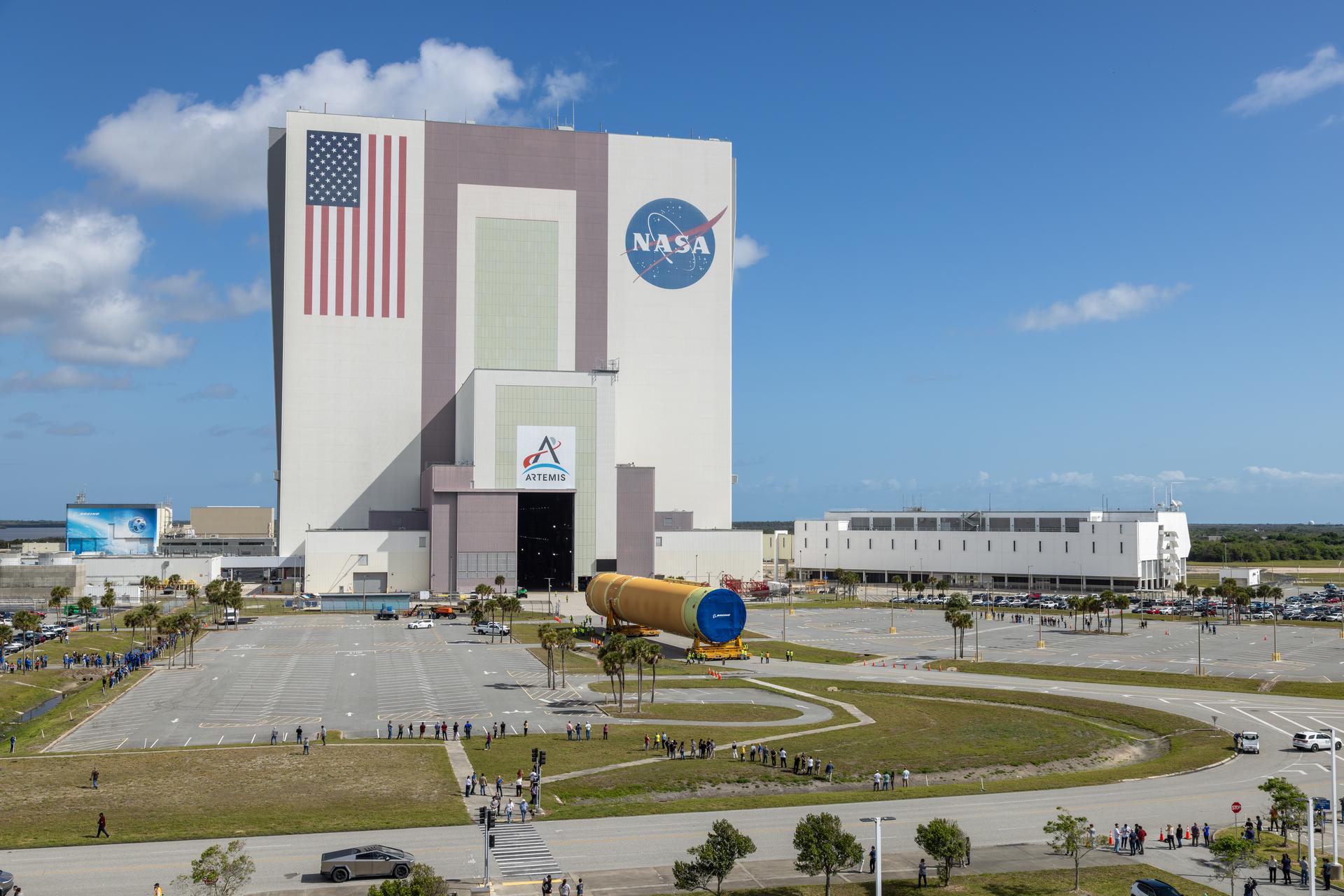
Why it matters: The shift of core stage assembly to Kennedy signals a maturation of SLS production and logistics, directly impacting the cadence and cost profile of the Artemis campaign.
Context: Artemis program milestones have historically been tied to hardware delivery and integration timelines; schedule credibility depends on visible, sequential progress at the launch site.
"This marks the first time core stage assembly operations are taking place at NASA Kennedy." — NASA.GOV
Commentary: Consolidating final assembly at the launch site reduces transportation risk and may streamline workflows, but it also makes Kennedy’s throughput capacity a new critical path. The parallel processing of Artemis II post-flight analysis with Artemis III hardware build suggests NASA is attempting to compress learning cycles, though the 2028 target for Artemis IV’s lunar landing remains contingent on unproven commercial docking systems.
Date: Tue, 28 Apr 2026 20:52:59 +0000
URL: https://www.nasa.gov/blogs/missions/2026/04/28/nasas-artemis-iii-moon-rocket-hardware-arrives-artemis-ii-capsule-returns-to-kennedy/
AI Sentiment Score: Negative (77%)
AI Credibility Score: 10.0/10 — High
Scores and text generated by AI analysis of the source article indicated.
Lunar Robots: NASA Spotlights Moon Base at 2026 FIRST Robotics Competition (Nasa.Gov)
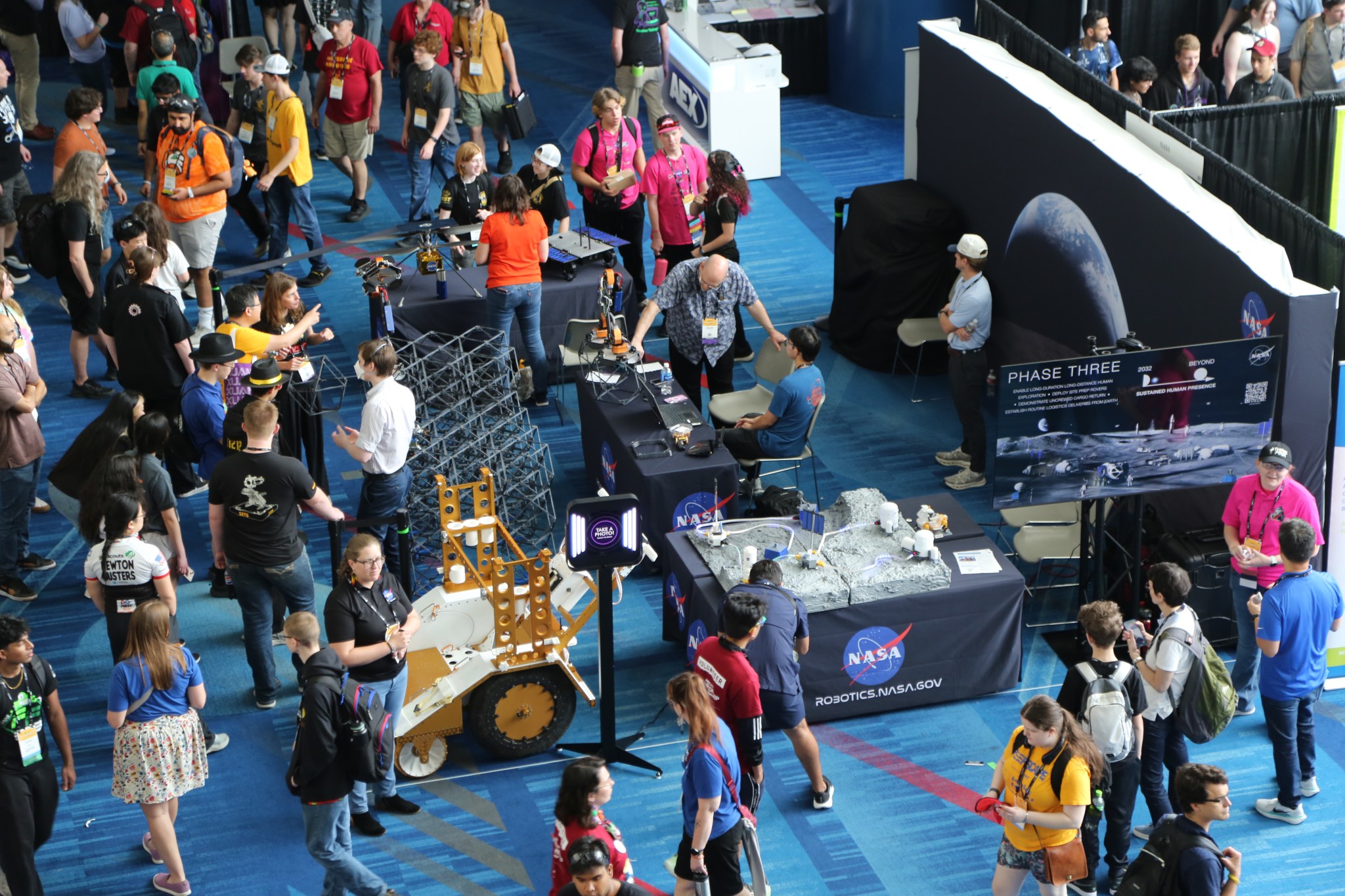
Summary: Robotics will play a critical role in NASA’s ambitious plan to establish a long-term presence on the Moon, presenting opportunities for the next generation of engineers, technologists, and innovators to contribute to a bold vision for the future. That was the agency’s message to students, partners, and industry leaders at the 2026 FIRST Robotics World Championship in Houston, where more than 1,000 student teams convened for exciting competitions and hands-on experiences. NASA connected directly with the future workforce at the event, engaging more than 51,000 students, parents, and mentors through interactive exhibits and discussions.
Why it matters: This matters for Space Exploration because it gives a concrete current signal to track: Robotics will play a critical role in NASA’s ambitious plan to establish a long-term presence on the Moon, presenting opportunities for the next generation of engineers, technologists, and innovators to contribute to a bold vision for the future.
Context: Robotics will play a critical role in NASA’s ambitious plan to establish a long-term presence on the Moon, presenting opportunities for the next generation of engineers, technologists, and innovators to contribute to a bold vision for the future. That was the agency’s message to students, partners, and industry leaders at the 2026 FIRST Robotics World Championship in Houston, where more than 1,000 student teams convened for exciting competitions and hands-on experiences. NASA connected directly with the future workforce at the event, engaging more than 51,000 students, parents, and mentors through interactive exhibits and discussions.
"Robotics will play a critical role in NASA’s ambitious plan to establish a long-term presence on the Moon, presenting opportunities for the next generation of engineers, technologists, and innovators to contribute to." — NASA.GOV
Commentary: The immediate implication is operational rather than speculative: watch how this changes budgets, workflows, or risk assumptions over the next cycle.
Date: Thu, 21 May 2026 09:00:00 +0000
URL: https://www.nasa.gov/centers-and-facilities/johnson/lunar-robots-nasa-spotlights-moon-base-at-2026-first-robotics-competition/
AI Sentiment Score: Negative (66%)
AI Credibility Score: 10.0/10 — High
Scores and text generated by AI analysis of the source article indicated.
NASA’s Mobile Launcher Arrives at Vehicle Assembly Building (Nasa.Gov)
Summary: NASA’s mobile launcher, used for the Artemis II launch earlier this month, has been transported back to the Vehicle Assembly Building at Kennedy Space Center. The structure will now undergo post-flight inspections and preparations to support the stacking and launch of the Artemis III SLS rocket and Orion spacecraft.
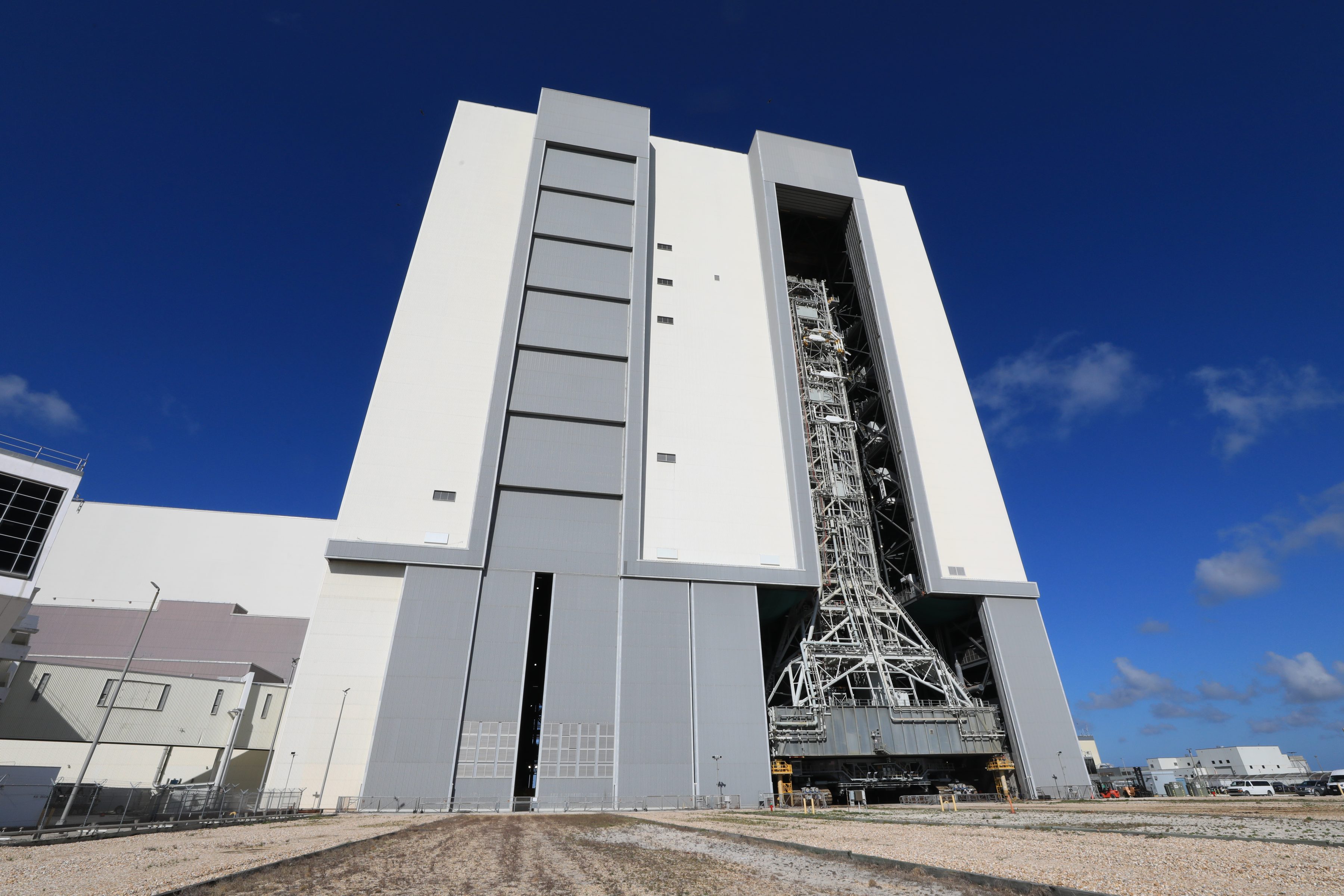
Why it matters: This marks the transition from the Artemis II test flight campaign to the operational build-up for Artemis III, a mission intended to return humans to the lunar surface.
Context: The mobile launcher is a critical piece of ground infrastructure; its movement between the VAB and the pad is a major logistical event that signals the progression of the Artemis program’s launch cadence.
"This was the mobile launcher’s last solo trek out to the launch pad ahead of integration of the SLS rocket, and it will remain inside the VAB until it is ready to return to the pad with the rocket." — NASA.GOV
Commentary: The ‘last solo trek’ phrasing underscores the shift from standalone testing to integrated vehicle processing, a tangible step toward the complex stacking sequence required for Artemis III. The scheduled post-launch inspections and repairs on the launcher itself are a routine but critical part of the flight-to-flight turnaround, revealing the program’s focus on reusability and operational sustainability of its ground systems.
Date: Fri, 17 Apr 2026 15:59:01 +0000
URL: https://www.nasa.gov/blogs/missions/2026/04/17/nasas-mobile-launcher-arrives-at-vehicle-assembly-building/
AI Sentiment Score: Negative (66%)
AI Credibility Score: 10.0/10 — High
Scores and text generated by AI analysis of the source article indicated.
Artemis III deep into processing and planning for key HLS test (Nasaspaceflight)
Summary: NASA has inserted Artemis III, a new crewed Earth-orbit mission, into the Artemis sequence ahead of the first lunar landing. It will serve as a complex operational test, integrating the Orion spacecraft with uncrewed pathfinder versions of both SpaceX’s Starship HLS and Blue Origin’s Blue Moon Mark 2 landers. The mission focuses on rendezvous, docking, crew transfer procedures, and extended life support operations in low Earth orbit to de-risk the integrated architecture before the Artemis IV lunar landing.

Why it matters: This mission represents a significant strategic pivot from a direct-to-the-Moon cadence to a deliberate, risk-reducing integration test, fundamentally altering the near-term timeline and operational confidence for the entire Artemis program.
Context: The Artemis program has faced schedule pressure and technical complexity, particularly around the integration of new, commercially-developed human landing systems with the government-owned SLS/Orion stack.
"Artemis III is one of the most complex missions NASA has ever undertaken. For the first time, NASA will coordinate a launch campaign involving multiple spacecraft and integrate new capabilities into Artemis operations." — NASASPACEFLIGHT
Commentary: The shift to an orbital integration mission is a pragmatic, if schedule-impacting, acknowledgment of the program’s true technical risk frontier: not individual vehicles, but their choreography. It provides a concrete incentive for commercial partners to maintain pace and offers NASA a controlled environment to debug multi-vendor operations—a necessary step for sustainable exploration but one that formalizes the delay of the crewed landing.
Date: Sun, 17 May 2026 17:29:54 +0000
URL: https://www.nasaspaceflight.com/2026/05/artemis-iii-processing-planning-hls/
AI Sentiment Score: Negative (57%)
AI Credibility Score: 10.0/10 — High
Scores and text generated by AI analysis of the source article indicated.
Artemis II returns from Moon & Artemis roadmap and ground prep – Space News (Apr 17, 2026) (Youtube)
Summary: Artemis II successfully completed its crewed lunar flyby and returned to Earth in April 2026, validating Orion and SLS systems for deep-space operations. NASA’s focus now shifts to Artemis III and integrated commercial lander operations, while ground infrastructure at Kennedy Space Center undergoes upgrades. Concurrently, commercial launch activity remains high with SpaceX’s Starlink expansion and ISS resupply missions, and scientific programs like the Roman Space Telescope and JWST continue to advance astrophysical understanding.

Why it matters: The Artemis II success transitions the lunar program from test flights to operational surface missions, establishing a new cadence for human deep-space exploration reliant on commercial partnerships and upgraded ground support.
Context: Artemis II follows the uncrewed Artemis I test, representing the first human flight of the SLS/Orion system and a critical step towards the Artemis III lunar landing, now dependent on parallel development of commercial landers and sustained surface operations.
"Launched April 1 from Kennedy Space Center, the Space Launch System and Orion carried Reid Wiseman, Victor Glover, Christina Koch, and Canada’s Jeremy Hansen on a ten-day deep-space test flight that exercised life support, propulsion, power, thermal control, navigation, and crew operations beyond low Earth orbit." — YOUTUBE
Commentary: The mission’s completion shifts political and budgetary risk from system validation to the more complex challenge of sustained lunar logistics. The concurrent ground infrastructure work signals NASA’s recognition that launch cadence depends as much on pad readiness as on flight hardware. The tight integration of this milestone with commercial launch tempo and ongoing science missions underscores a multi-track space strategy becoming operational reality.
Date: April 26, 2026 12:00 AM ET
URL: https://www.youtube.com/watch?v=Pa-5BnqkN_A
AI Sentiment Score: Negative (60%)
AI Credibility Score: 10.0/10 — High
Scores and text generated by AI analysis of the source article indicated.
NASA provides some details about Artemis III, but hard decisions remain (Arstechnica)
Summary: NASA has confirmed Artemis III will be a low-Earth orbit mission in 2027, a significant downscope from a lunar landing. The mission will involve a four-person Orion crew rendezvousing with lunar lander development vehicles from SpaceX and Blue Origin. This orbital test preserves a critical propulsion stage for the subsequent Artemis IV landing mission, substituting it with a non-functional mass simulator.
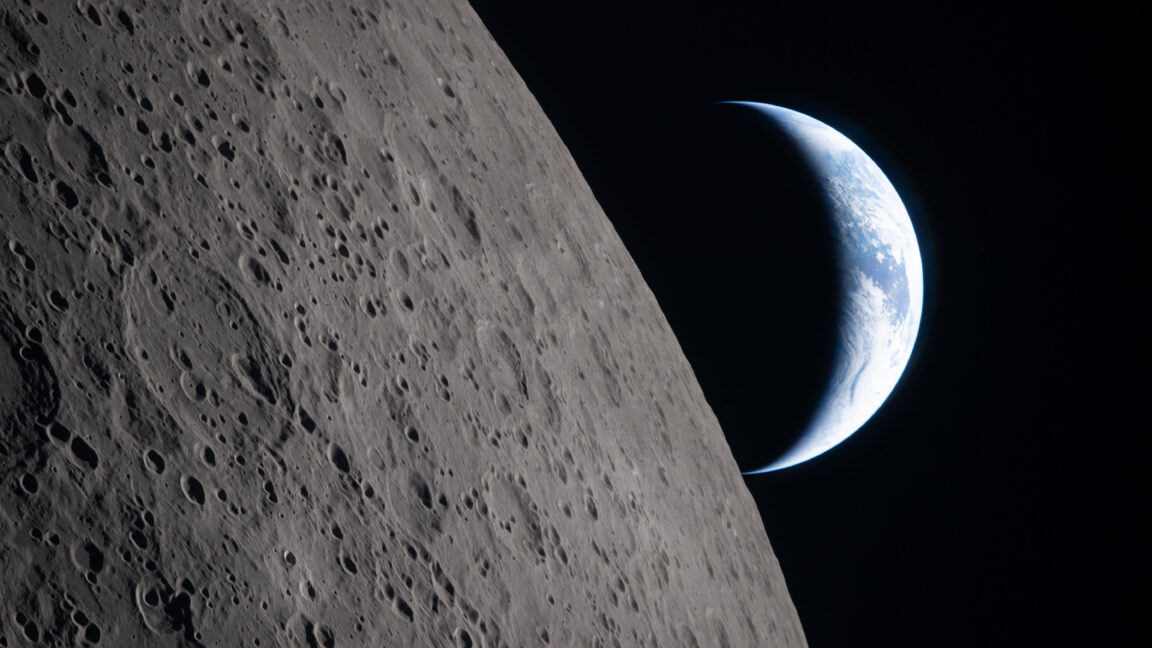
Why it matters: The decision signals a pragmatic, risk-reduction pivot in NASA’s lunar return architecture, trading a high-profile landing for integrated systems testing and schedule preservation.
Context: This follows Administrator Isaacman’s earlier directive to reshuffle Artemis plans to accelerate a landing, reflecting ongoing tension between political timelines and technical readiness.
"“For the first time, NASA will coordinate a launch campaign involving multiple spacecraft integrating new capabilities into Artemis operations,” said Jeremy Parsons, Moon to Mars acting assistant deputy administrator, in a news release." — ARSTECHNICA
Commentary: The shift formalizes a multi-vendor, distributed systems integration test as a prerequisite for crewed landings, elevating operational complexity over hardware spectacle. It strategically defers the politically sensitive landing date while protecting downstream mission assets, but leaves hard decisions on lander readiness and crew transfer protocols unresolved.
Date: Wed, 13 May 2026 18:37:29 +0000
URL: https://arstechnica.com/space/2026/05/nasa-provides-some-details-about-artemis-iii-but-hard-decisions-remain/
AI Sentiment Score: Negative (66%)
AI Credibility Score: 10.0/10 — High
Scores and text generated by AI analysis of the source article indicated.
Days after Artemis II, scientists warn of deep cuts to NASA missions (Planetary)
Summary: The White House has proposed a 46% cut to NASA’s science budget, targeting over 50 missions for cancellation or reduction. This includes operational assets like the New Horizons probe and the Perseverance rover, and would force the shutdown of major space telescopes. The proposal arrives weeks after the high-profile Artemis II crewed lunar mission, creating a stark contrast between flagship human exploration and eviscerated robotic science.
Why it matters: For readers tracking space policy and mission cadence, this represents a seismic shift in U.S. space priorities, threatening operational continuity, scientific data streams, and institutional expertise.
Context: NASA budgets often face proposed cuts that are later moderated by Congress, but the scale here—targeting already-launched, producing assets—is unusually severe and operationally disruptive.
"On April 3, 2026, the White House announced a plan to cancel over 50 space missions — including spacecraft already paid for, launched, and making discoveries — as part of a devastating." — PLANETARY
Commentary: The timing, post-Artemis, signals a potential zero-sum reallocation from science to human exploration. Terminating producing missions wastes sunk capital and severs unique data links, ceding deep-space observation leadership. If enacted, this would trigger a cascade of mission closures, contractor layoffs, and a generational setback for planetary science.
Date: April 24, 2026 12:00 AM ET
URL: https://www.planetary.org/articles/meet-the-people-behind-nasas-endangered-missions
AI Sentiment Score: Negative (75%)
AI Credibility Score: 10.0/10 — High
Scores and text generated by AI analysis of the source article indicated.
Artemis III, Gaganyaan & Global Space Boom | MERI Daily Space News Bulletin (Youtube)
Summary: NASA has rolled out the core stage for the Artemis III Space Launch System, targeting a 2027 lunar landing mission that will integrate SpaceX and Blue Origin lander systems. The Nancy Grace Roman Space Telescope is now complete, scheduled for a late 2026 launch to survey dark energy and exoplanets. Global space investment surged to $7.95 billion in Q1 2026, driven by SpaceX IPO speculation and private station development. Concurrently, China prepares the Shenzhou-23 mission for extended crew operations on Tiangong, while India’s ISRO advances its Gaganyaan program toward an uncrewed test flight.
Why it matters: The simultaneous maturation of flagship government programs and record private capital signals a structural shift from exploratory to operational spaceflight, with tangible hardware and funding now pacing the 2026-2027 timeline.
Context: Artemis III represents the critical path for NASA’s lunar return, dependent on novel commercial landers. Global investment cycles are increasingly decoupled from traditional government budget cycles, focusing on downstream infrastructure.
"##### Apr 25, 2026 (0:04:09) Janya Batra (BBA LLB Student) presents today’s MERI Daily Space News Bulletin, covering major developments shaping the future of space exploration. The update highlights NASA’s progress on." — YOUTUBE
Commentary: The Q1 2026 investment spike, doubling the previous quarter, is a leading indicator of market confidence in SpaceX’s financial crystallization and the economic viability of post-ISS commercial stations. This capital influx pressures other national programs like Gaganyaan to demonstrate similar commercial relevance or risk being perceived as purely prestige projects. The parallel progress on Artemis III hardware and Roman Telescope completion suggests NASA is successfully compartmentalizing deep-space exploration from astrophysics, despite shared budgetary pressures. However, the 2027 Artemis III date remains contingent on lander readiness, making the 2026 SpaceX IPO and Blue Origin test outcomes critical path dependencies.
Date: April 25, 2026 12:00 AM ET
URL: https://www.youtube.com/watch?v=Ei2-WCa-U2M
AI Sentiment Score: Positive (50%)
AI Credibility Score: 10.0/10 — High
Scores and text generated by AI analysis of the source article indicated.
NASA’s Post-Artemis II Mission Assessment (Newspaceeconomy.Ca)
Summary: NASA’s initial postflight review of the Artemis II mission indicates it met its core validation objectives for a crewed lunar test flight. The Orion spacecraft’s heat shield exhibited significantly reduced char loss compared to Artemis I, aligning with ground test predictions, while the SLS rocket and upgraded ground systems performed as required. The mission’s primary anomalies, including a urine vent line issue, are characterized as bounded technical findings requiring corrective action, not program-defining failures.

Why it matters: The review confirms the Artemis program’s foundational systems are performing within expected parameters, shifting the engineering focus from validation to refinement for the crewed lunar landing mission, Artemis III.
Context: Artemis I’s 2022 flight revealed unexpected, excessive char loss on Orion’s heat shield, a critical safety concern that Artemis II was specifically tasked to revalidate under crewed conditions.
"- NASA’s first Artemis II postflight review points to a mission that met its main flight goals – Orion’s heat shield showed far less char loss than Artemis I during the April." — NEWSPACEECONOMY.CA
Commentary: The report signals a transition from system-proving to anomaly-management, a crucial phase for schedule confidence. The framing of issues as ‘bounded technical findings’ suggests NASA’s engineering and public affairs are aligning to contain narrative risk, focusing stakeholders on incremental problem-solving rather than existential doubt as Artemis III hardware integration approaches.
Date: April 23, 2026 12:00 AM ET
URL: https://newspaceeconomy.ca/2026/04/23/nasas-post-artemis-ii-mission-assessment/
AI Sentiment Score: Negative (75%)
AI Credibility Score: 10.0/10 — High
Scores and text generated by AI analysis of the source article indicated.
NASA’s Moon Base No Longer Science Fiction (Autonomyglobal.Co)
Summary: NASA has pivoted its lunar strategy, formally abandoning the Gateway-first architecture in favor of a direct surface base at the south pole. The ‘Ignition’ directive accelerates the Commercial Lunar Payload Services (CLPS) program, targeting up to 30 robotic landings starting in 2027 using proven landers. The agency aims for human landings by 2028 and initial outpost elements by 2030, backed by a projected $10 billion investment horizon through 2028.
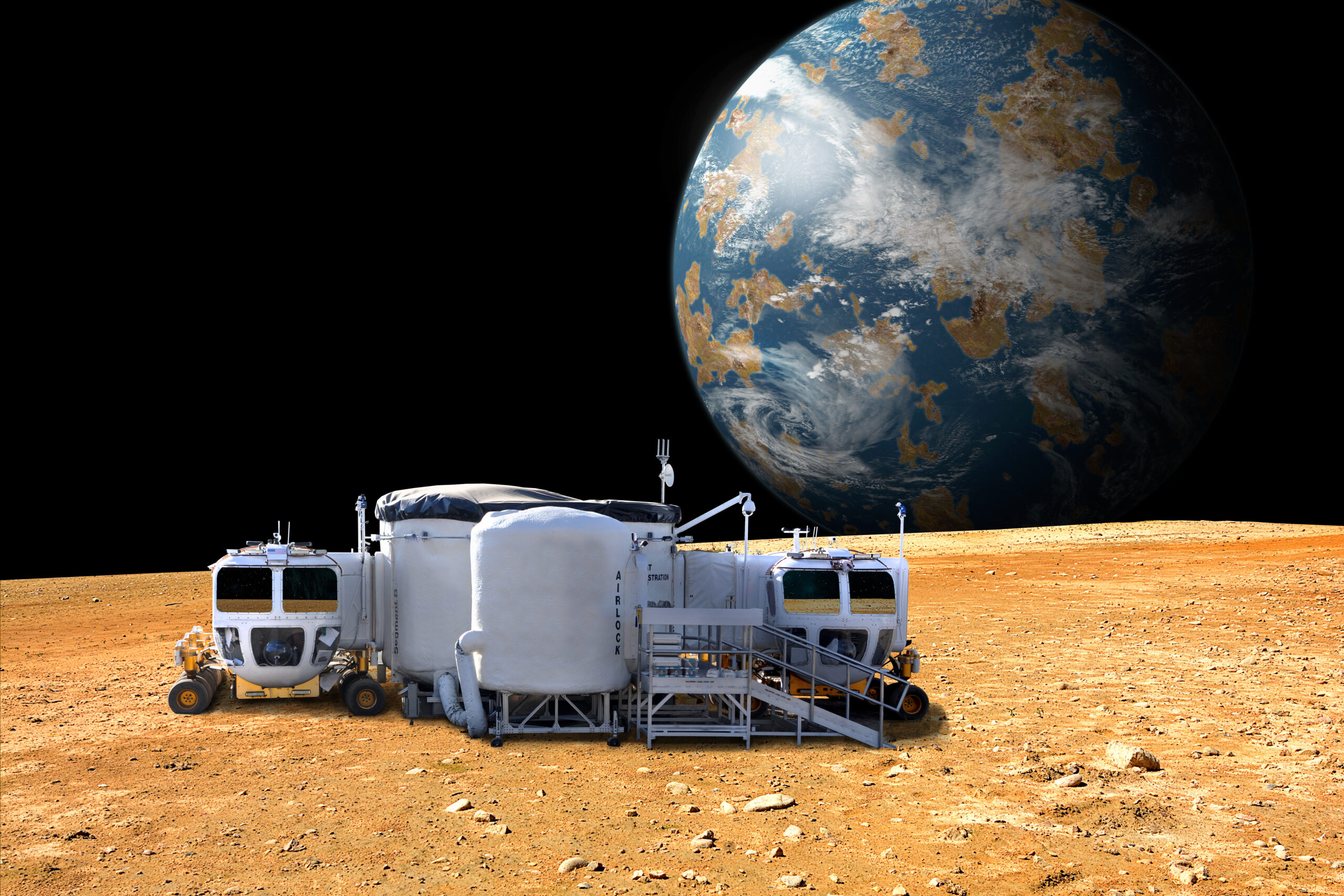
Why it matters: This represents a fundamental reallocation of political capital and funding from orbital infrastructure to surface operations, with immediate consequences for contractors, international partners, and the pace of lunar development.
Context: The pivot follows years of Gateway schedule slips and cost growth, and leverages the recent success of commercial landers like Intuitive Machines’ IM-1. It signals a preference for near-term, fixed-price surface delivery over complex, government-managed orbital construction.
"The big idea is to pivot away from Gateway in its current form and focus all available resources on building a permanent surface base at the lunar south pole." — AUTONOMYGLOBAL.CO
Commentary: The shift from Gateway to a surface-centric model is a pragmatic, if reactive, acknowledgment of political and budgetary realities. It immediately advantages CLPS providers with flight heritage and penalizes major aerospace primes invested in Gateway modules. The accelerated cadence of 30 landings by 2027 will test the industrial base’s capacity and likely consolidate the market around a few reliable providers.
Date: April 23, 2026 12:00 AM ET
URL: https://www.autonomyglobal.co/nasas-moon-base-no-longer-science-fiction-industry-has-four-weeks-to-get-ready/
AI Sentiment Score: Negative (50%)
AI Credibility Score: 10.0/10 — High
Scores and text generated by AI analysis of the source article indicated.
Lunar Communications Infrastructure Development and … (Ibhe)
Summary: A SpaceX launch will deploy Nokia Bell Labs’ lunar 4G network hardware via an Intuitive Machines lander to the Moon’s south pole in 2024. The network will support NASA Artemis rovers surveying for ice, transmitting data in near real-time. The project, funded by a $14.1M NASA Tipping Point grant and a subsequent DARPA contract, aims to establish a foundational communications layer for lunar operations.
Why it matters: This mission validates a low-cost, commercial-off-the-shelf approach to critical space infrastructure, setting a precedent for public-private partnerships and de-risking the communications backbone for a projected $1 trillion space economy.
Context: The effort is part of NASA’s strategy to enable sustained lunar presence and in-situ resource utilization (ISRU), with successful ice detection potentially reducing deep space mission costs by up to 60%.
"Bell Labs was awarded a $14.1 million grant under NASA’s Tipping Point initiative in 2020 to develop the ruggedized network hardware, and in January 2024, Nokia was selected by DARPA to develop a communications framework for the future lunar economy." — IBHE
Commentary: The sequential NASA and DARPA contracts signal a deliberate, multi-agency push to standardize lunar communications, moving from a bespoke, mission-specific model to a scalable utility. A successful deployment would provide a tangible reference architecture, accelerating commercial activity by reducing the perceived technical and financial risk of operating on the lunar surface. The terrestrial spillover for ruggedized telecom equipment is a secondary but non-trivial market signal.
Date: April 23, 2026 12:00 AM ET
URL: https://ibhe.org/first-dry/Lunar-Communications-Infrastructure-Development-and-CrossSector-Commercial-Opportunities-10-7418
AI Sentiment Score: Negative (50%)
AI Credibility Score: 10.0/10 — High
Scores and text generated by AI analysis of the source article indicated.
Artemis II returns from Moon & SpaceX Starlink launch at Vandenberg – Space News (Apr 18, 2026) (Youtube)
Summary: NASA’s Artemis II mission has completed a successful 10-day lunar flyby, returning safely and validating Orion spacecraft operations beyond Earth orbit. SpaceX continues its rapid launch cadence with a Starlink deployment from Vandenberg Space Force Base. Blue Origin is preparing the first reflight of a New Glenn first stage, a key milestone for its reusable launch system. Concurrently, astronomical events like the Lyrid meteor shower peak and comet C/2025 R3 (PanSTARRS) offer notable skywatching opportunities.
Why it matters: Artemis II’s return validates critical systems for sustained lunar exploration, while the commercial launch activities signal intensifying competition and operational maturity in reusable rocketry.
Context: Artemis II is the first crewed mission of NASA’s lunar return program, following the uncrewed Artemis I test. New Glenn’s reflight attempt follows years of development delays and is crucial for Blue Origin to compete with SpaceX’s operational reuse.
"Artemis II returns from Moon – NASA’s Artemis II mission has safely returned after a 10-day lunar flyby, setting a new distance record for human spaceflight and validating Orion operations beyond Earth orbit." — YOUTUBE
Commentary: The Artemis II success is less about the distance record and more about the operational data for Orion’s life support, navigation, and re-entry—essential for the more complex Artemis III landing. Blue Origin’s NG-3 reflight is the real inflection point to watch; a success would finally demonstrate a credible, reusable heavy-lift alternative, directly impacting launch contract dynamics for NASA and DoD payloads.
Date: April 26, 2026 12:00 AM ET
URL: https://www.youtube.com/watch?v=_SLWYHOY5O0
AI Sentiment Score: Positive (50%)
AI Credibility Score: 10.0/10 — High
Scores and text generated by AI analysis of the source article indicated.
The Race to Return to the Moon: Where Every Nation Stands in 2026 (Spaceodysseyhub)
Summary: The lunar landscape in early 2026 is defined by a multi-polar competition, with China’s Chang’e program demonstrating operational consistency through sample returns from the far side and near side, India achieving a cost-effective south polar landing, and the US Artemis III mission facing delays tied to Starship and spacesuit development. Commercial payload services are establishing a nascent delivery infrastructure, albeit with mixed reliability. The strategic focus across all major players is the lunar south pole, where confirmed water ice deposits represent a potential resource for sustained presence.

Why it matters: The shift from symbolic flags-and-footprints missions to sustained, resource-focused exploration is redefining the Moon as a strategic asset and operational testbed, with national programs and commercial contracts creating the first elements of a cislunar economy.
Context: This follows a decade of renewed lunar interest, marked by the pivot from the Constellation program to the public-private partnership model of Artemis and CLPS, and the parallel, methodical advancement of China’s Chang’e program.
"More than 50 years later, humanity is preparing to return — and this time, the competition is genuinely international. The United States, China, India, Japan, South Korea, the UAE, Russia, and a." — SPACEODYSSEYHUB
Commentary: The confirmation of water ice shifts the lunar south pole from a scientific curiosity to a strategic enclave; its exploitation is not merely a goal but a prerequisite for any credible claim of establishing permanent lunar infrastructure. The operational tempo of Chang’e, contrasted with Artemis’s schedule dependencies, suggests China may achieve a de facto resource assessment and presence capability at the pole before a US crew returns, altering the diplomatic and regulatory landscape for lunar activity.
Date: April 25, 2026 12:00 AM ET
URL: https://spaceodysseyhub.com/articles/race-to-return-to-the-moon-2026
AI Sentiment Score: Negative (50%)
AI Credibility Score: 8.4/10 — High
Scores and text generated by AI analysis of the source article indicated.
Artemis II Mission Recap 2026: Humans Return to the Moon’s Far Side (Collegesimplified.In)
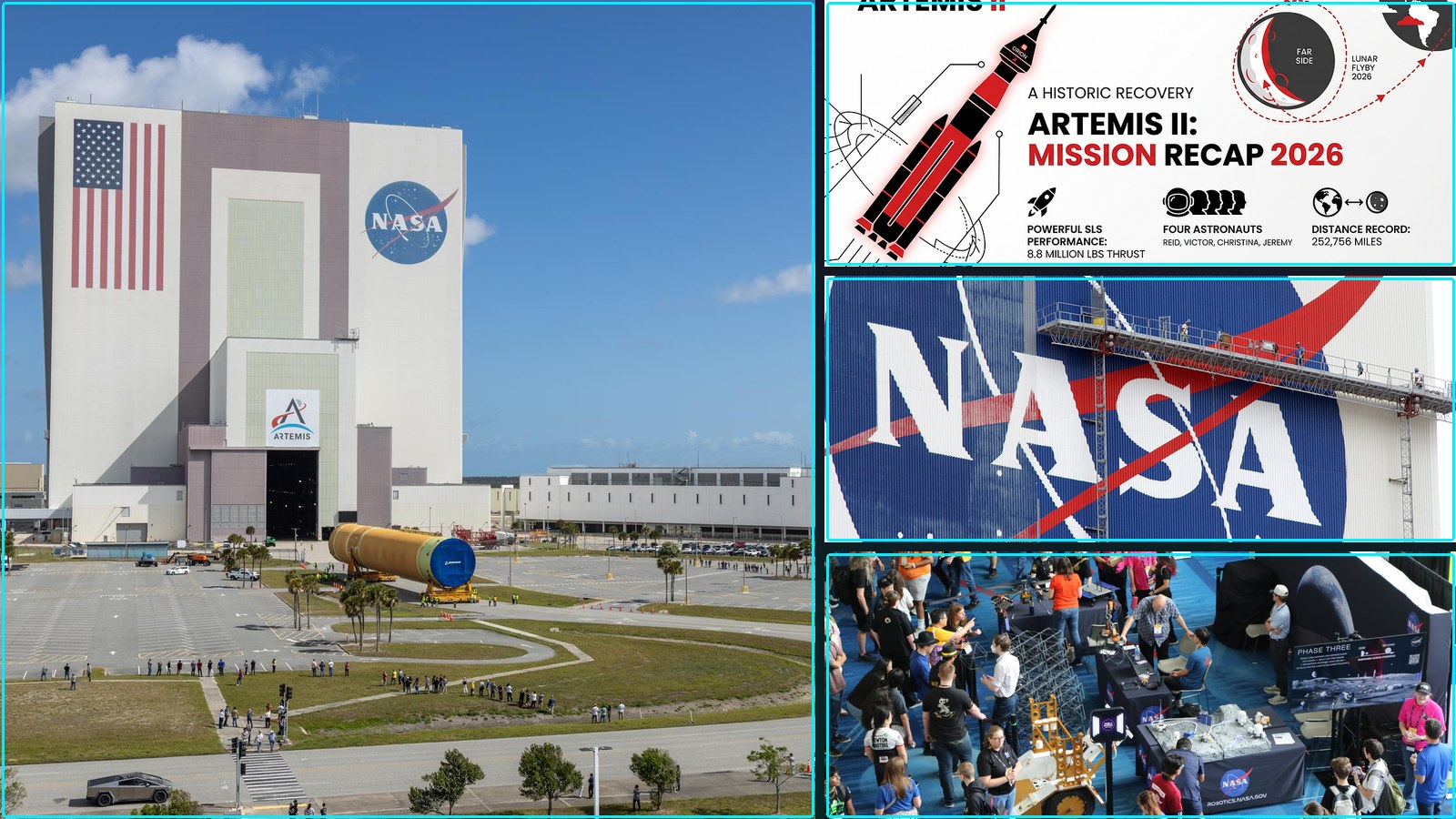
Summary: The Artemis II mission, launched on April 1, 2026, successfully completed a 10-day crewed flight test, culminating in splashdown on April 10. The Orion spacecraft, carrying a crew of four, executed a lunar free-return trajectory, reaching a record distance of 252,756 miles from Earth and providing the first human views of the lunar far side since Apollo. The mission served as a critical systems test for Orion, the Space Launch System, and ground infrastructure ahead of planned lunar landings.

Why it matters: Artemis II validates the core human-rated hardware for NASA’s lunar return architecture, moving the program from uncrewed test to operational crewed flight and setting a new benchmark for human distance from Earth.
Context: This mission follows the uncrewed Artemis I test in 2022 and is the essential precursor to Artemis III, which aims to land astronauts near the lunar south pole. The free-return trajectory was a deliberate, conservative choice to ensure crew safety during this initial shakedown cruise.
"The Artemis II Mission Recap 2026 marks a historic turning point in human space exploration. For the first time in over 50 years, since the conclusion of the Apollo era in 1972,." — COLLEGESIMPLIFIED.IN
Commentary: The successful distance record is a symbolic milestone, but the operational proof of Orion’s life support and navigation systems under deep-space conditions is the substantive achievement. The mission’s completion shifts pressure onto the delayed lunar lander and surface system development programs, which now become the critical path for Artemis III. A 2026 launch date, if achieved, would represent a significant recovery from earlier schedule projections and signal improved SLS/Orion production cadence.
Date: April 20, 2026 12:00 AM ET
URL: https://www.collegesimplified.in/post/artemis-ii-lunar-flyby-mission-recap-2026
AI Sentiment Score: Positive (54%)
AI Credibility Score: 7.0/10 — Medium
Scores and text generated by AI analysis of the source article indicated.
Artemis spacesuit development risks further delays – ISS Tracker (Isstracker.Pl)
Summary: NASA’s Office of Inspector General warns that new spacesuits for Artemis lunar missions and the International Space Station, being developed by Axiom Space under the xEVAS program, face significant delays. The report states that initial schedules were ‘overly optimistic’ and are now at least 18 months behind, with historical program delays suggesting a potential slip to 2031 for suit demonstrations. This creates critical schedule pressure for the planned Artemis III lunar landing and for operations before the ISS’s decommissioning.

Why it matters: The Artemis program’s near-term cadence and the operational lifespan of the ISS are now directly contingent on a critical path item—spacesuit readiness—that is slipping.
Context: This follows a pattern of NASA’s commercial services contracts, like Commercial Crew, where initial schedule optimism often collides with the complex realities of human-rated system development.
"If Axiom experiences design and testing delays in line with this historical average, the lunar and microgravity spacesuit demonstrations would not occur until 2031." — ISSTRACKER.PL
Commentary: The OIG’s framing shifts the debate from a specific vendor failure to a systemic issue of schedule realism in NASA’s procurement strategy. This delay doesn’t just risk Artemis III; it compresses the window for utilizing the suits on the ISS, potentially wasting the investment and limiting in-space validation before the lunar mission.
Date: April 22, 2026 12:00 AM ET
URL: https://isstracker.pl/en/news/ryzyko-dalszych-opoznien-w-rozwoju-skafandra-artemis,6TKhs5
AI Sentiment Score: Negative (75%)
AI Credibility Score: 7.0/10 — Medium
Scores and text generated by AI analysis of the source article indicated.
NASA’s Artemis Core Stage Arrives at Kennedy (Nasa.Gov)
Summary: The core stage for NASA’s Artemis III SLS rocket has arrived at Kennedy Space Center from the Michoud Assembly Facility. The 212-foot-long section, comprising the liquid hydrogen and oxygen tanks, will be transported to the Vehicle Assembly Building for final integration with the previously delivered engine section. This marks a key transition from manufacturing to launch site assembly for the mission intended to test lunar orbit rendezvous and docking.
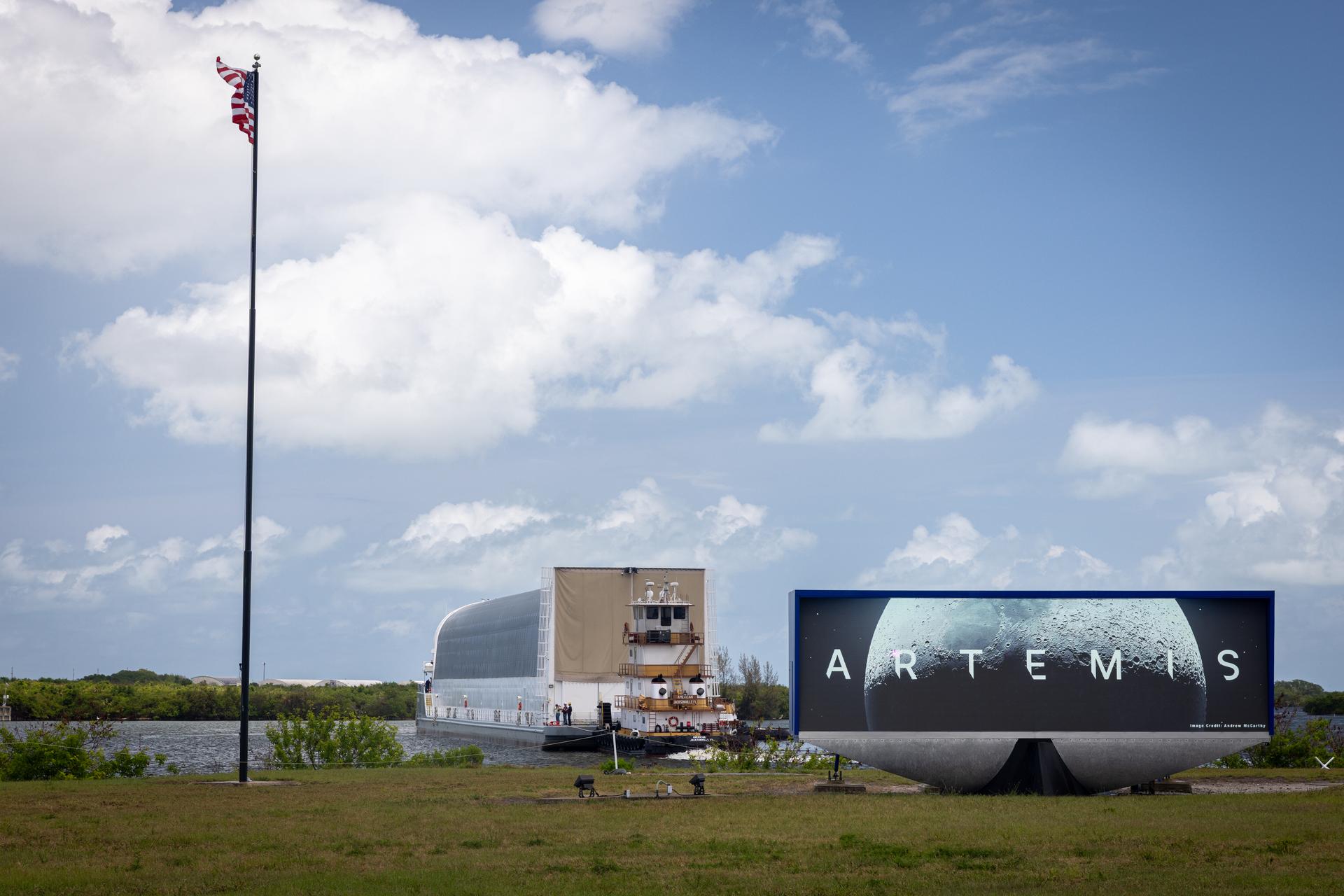
Why it matters: This physical hardware movement signals a tangible, if incremental, step toward Artemis III’s complex architecture, shifting program risk from fabrication to integration and test.
Context: Artemis III’s schedule remains fluid, dependent on parallel development of SpaceX’s Starship Human Landing System and new spacesuits; core stage delivery is a necessary but not sufficient condition for launch readiness.
"The largest rocket section for NASA’s Artemis III mission arrived at the agency’s Kennedy Space Center in Florida on April 27. The SLS (Space Launch System) core stage traveled 900 miles on the Pegasus barge from NASA’s Michoud Assembly Facility in New Orleans where the stage is manufactured, to complete assembly of the massive rocket at NASA Kennedy." — NASA.GOV
Commentary: The delivery underscores the continued reliance on legacy Shuttle-era infrastructure and logistics, from Michoud to the Pegasus barge to the VAB. While a visible milestone, the real schedule pressure now moves to vertical integration, testing, and the still-uncertain readiness of the other mission elements required for a lunar landing attempt.
Date: Mon, 27 Apr 2026 19:33:20 +0000
URL: https://www.nasa.gov/blogs/missions/2026/04/27/nasas-artemis-core-stage-arrives-at-kennedy/
AI Sentiment Score: Negative (66%)
AI Credibility Score: 10.0/10 — High
Scores and text generated by AI analysis of the source article indicated.
Artemis II Mission Milestones: An Image and Video Recap – NASA (Nasa.Gov)
Summary: Artemis II completed its crewed lunar flyby mission in April 2026, successfully returning its four-person crew to Earth after a ten-day flight. The mission set a new human distance record of 252,756 miles from Earth, surpassing Apollo 13, and demonstrated Orion’s systems with astronauts aboard.

Why it matters: The mission validates the Orion spacecraft’s crewed deep-space capabilities and operational tempo, directly enabling the planned Artemis III lunar landing.
Context: Artemis II is the critical crewed test flight preceding the return-to-the-Moon landing mission, a programmatic milestone delayed from earlier projections.
"At their farthest point, the crew traveled 252,756 miles from Earth, setting a record for the greatest distance humans have traveled in space and observing the lunar surface like never before." — NASA.GOV
Commentary: The successful completion of Artemis II shifts the programmatic risk squarely onto the development of the Human Landing System and lunar surface logistics. The distance record is a symbolic achievement, but the core engineering signal is the nominal performance of Orion’s life support and re-entry systems under actual mission profiles.
Date: April 21, 2026 12:00 AM ET
URL: https://www.nasa.gov/general/artemis-ii-mission-milestones-an-image-and-video-recap/
AI Sentiment Score: Positive (57%)
AI Credibility Score: 10.0/10 — High
Scores and text generated by AI analysis of the source article indicated.
NASA on Track for Future Missions with Initial Artemis II Assessments (Nasa.Gov)
Summary: NASA’s Artemis II mission has concluded with a successful splashdown of the Orion spacecraft, initiating the post-flight data analysis phase. The mission met its primary objectives, with Orion landing within 2.9 miles of its target and the SLS rocket performing as required. This flight was a critical crewed test of the integrated system ahead of the planned Artemis III lunar landing mission.

Why it matters: The successful data review from Artemis II validates the core hardware for NASA’s lunar program, de-risking the schedule for subsequent missions and providing concrete engineering signals for international and commercial partners.
Context: Artemis II was the first crewed flight of the Orion spacecraft and SLS rocket, a necessary demonstration before attempting a lunar landing. Program success hinges on these post-mission assessments confirming system reliability for longer-duration, more complex missions.
"Following NASA’s Artemis II mission successfully splashing down on Earth, engineers started diving into detailed analysis of data to assess how key systems and subsystems on the Orion spacecraft, SLS (Space Launch." — NASA.GOV
Commentary: The precision of the splashdown is a strong operational signal for Orion’s guidance, navigation, and control systems, which must perform flawlessly for crew safety. The focus now shifts from celebrating the flight to the granular engineering assessment; any anomalies discovered will directly impact the timeline and scope of Artemis III. This phase is where programmatic risk is actually managed, not during the launch broadcast.
Date: April 20, 2026 12:00 AM ET
URL: https://www.nasa.gov/missions/nasa-on-track-for-future-missions-with-initial-artemis-ii-assessments/
AI Sentiment Score: Positive (42%)
AI Credibility Score: 10.0/10 — High
Scores and text generated by AI analysis of the source article indicated.
I Am Artemis: Tim Goddard (Nasa.Gov)
Summary: NASA open water lead Tim Goddard details the complex, multi-agency recovery operation for Artemis II astronauts and the Orion capsule, a shift from prior uncrewed test flights. The procedure involves over 50 personnel across six small boats, four helicopters, and a Navy ship, with extensive training in the Neutral Buoyancy Laboratory and open ocean. Goddard, a former Navy diver with over a decade in this role, highlights the increased responsibility and operational pivot when recovering a crew versus just hardware.

Why it matters: The recovery phase is a critical, high-risk operational handoff where mission success transitions from spaceflight to maritime logistics, revealing the scale of integrated human systems required for crewed deep-space return.
Context: Artemis recovery operations build on procedures validated during Exploration Flight Test-1 (2014) and Artemis I (2022), but introduce the primary constraint of crew safety first, altering timelines and resource allocation.
"Listen to this audio excerpt from Tim Goddard, NASA open water lead: 0:00 / 0:00 At the end of their mission around the Moon, NASA’s Artemis II astronauts were recovered from their." — NASA.GOV
Commentary: The operational shift from hardware to crew recovery underscores that Artemis is now a human-rated program, imposing new failure modes and stress-testing the joint NASA-Navy interface. Goddard’s account signals that the post-splashdown timeline—up to nine hours for capsule retrieval—is now a defined part of the crew’s mission exposure, a non-trivial engineering and support burden for future lunar and Mars return profiles.
Date: Wed, 20 May 2026 14:57:33 +0000
URL: https://www.nasa.gov/missions/artemis/i-am-artemis/i-am-artemis-tim-goddard/
AI Sentiment Score: Negative (50%)
AI Credibility Score: 10.0/10 — High
Scores and text generated by AI analysis of the source article indicated.
NASA’s Mobile Launcher Rolls Ahead of Artemis III Preparation (Nasa.Gov)
Summary: NASA’s Mobile Launcher has begun its return to the Vehicle Assembly Building at Kennedy Space Center, marking the formal transition from Artemis II post-flight analysis to Artemis III hardware preparation. The move follows the successful uncrewed Artemis I and crewed Artemis II missions, with the launcher sustaining minimal damage due to prior hardening efforts. The upcoming work in the VAB will focus on repairs and modifications to umbilicals, elevators, and flame hole panels before stacking of the Space Launch System rocket for Artemis III begins.
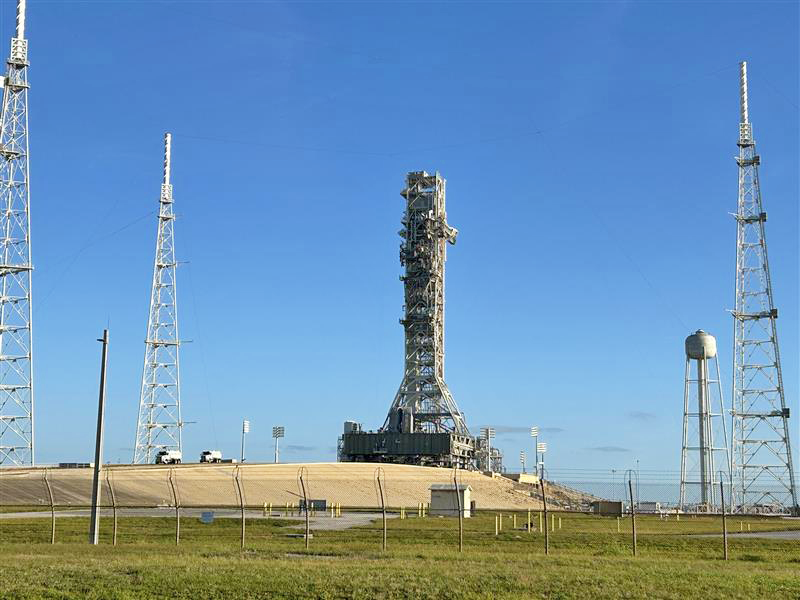
Why it matters: This operational pivot signals the start of the critical hardware integration phase for NASA’s first crewed lunar landing attempt since Apollo, with schedule fidelity and ground system resilience now under direct scrutiny.
Context: Artemis III is officially targeted for 2025, a timeline already considered aggressive by many observers; any significant delays discovered during VAB refurbishment or stacking will directly impact that schedule and the broader Artemis cadence.
"Application of lessons learned from Artemis I to harden and reinforce ground support equipment at the pad proved successful as the mobile launcher and launch pad sustained minimal damage from the 8.8 million pounds of thrust expelled at booster ignition." — NASA.GOV
Commentary: The reported ‘minimal damage’ is a quiet but significant engineering win, validating the post-Artemis I modifications and reducing the scope of required repairs. This suggests the ground infrastructure is maturing, a necessary precondition for achieving anything resembling a sustainable launch tempo. The focus now shifts to the VAB workflow, where the pace of stacking and testing will provide the next concrete signal about the realism of the 2025 launch target.
Date: Thu, 16 Apr 2026 12:33:08 +0000
URL: https://www.nasa.gov/blogs/missions/2026/04/16/nasas-mobile-launcher-rolls-ahead-of-artemis-iii-preparation/
AI Sentiment Score: Positive (42%)
AI Credibility Score: 10.0/10 — High
Scores and text generated by AI analysis of the source article indicated.
NASA to Provide Update on Moon Base Strategy, Missions (Nasa.Gov)
Summary: NASA will hold a press conference on May 26 to provide an update on its Moon Base strategy, featuring Administrator Jared Isaacman and senior program leadership. The update will focus on program progress, new industry partners, and mission plans for establishing a sustained human presence at the lunar South Pole. This follows the agency’s stated progression from the Artemis missions toward a long-term lunar infrastructure initiative.
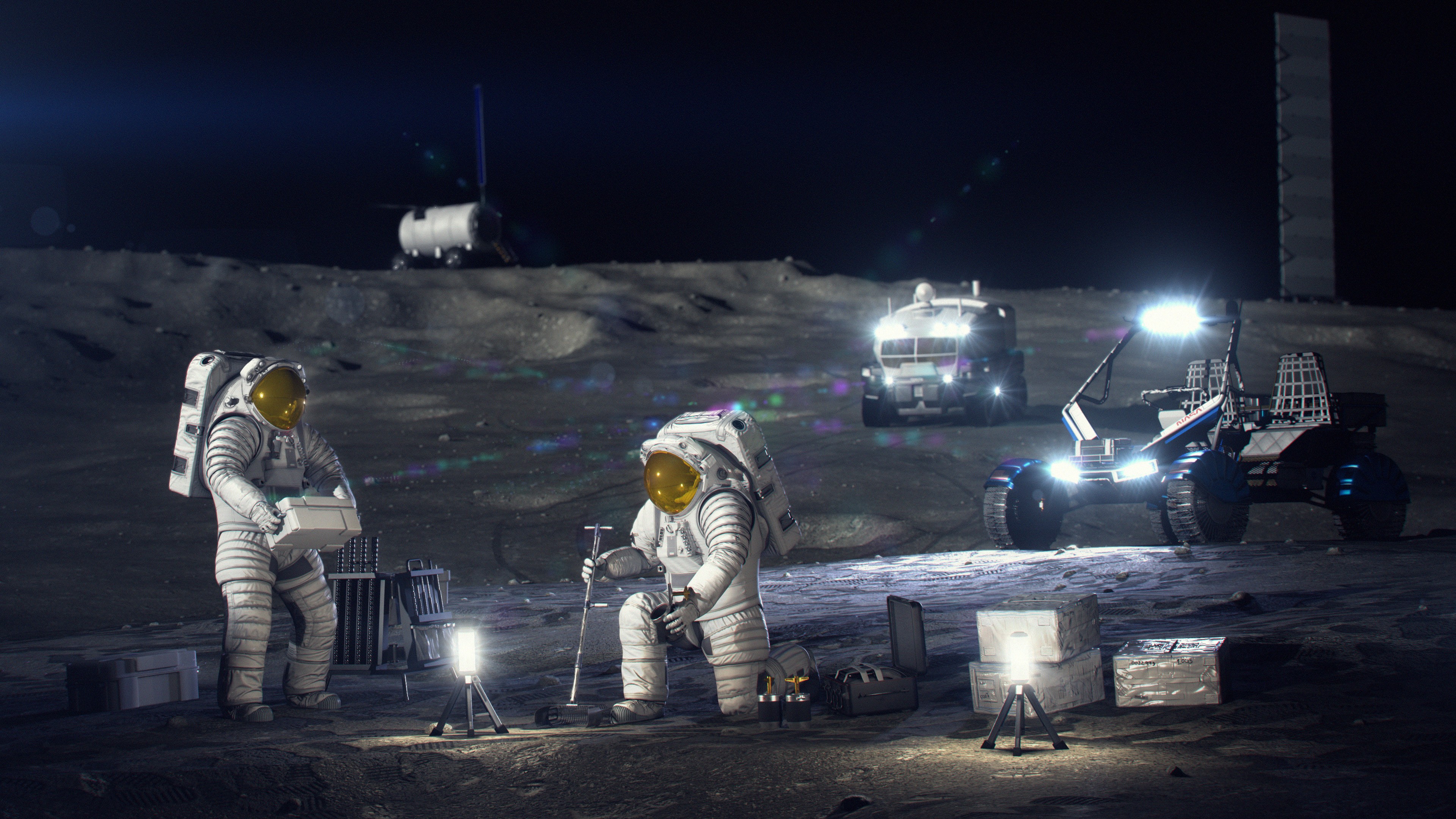
Why it matters: For serious observers, this signals a critical transition from mission planning to operational and partnership execution, with direct implications for contractor selection, budget allocation, and the technical roadmap for a permanent lunar outpost.
Context: NASA’s Moon Base concept is the planned successor to the initial Artemis crewed landings, intended to transition from flags-and-footprints missions to sustained operations. Updates typically precede budget cycles and signal shifts in technical priorities or partnership structures.
"NASA is advancing development of Moon Base, a long-term lunar exploration and infrastructure initiative designed to enable sustained human presence and expanded scientific and commercial activity at the lunar South Pole." — NASA.GOV
Commentary: The inclusion of ‘new industry partners’ and ‘expanded…commercial activity’ suggests a deliberate pivot toward a more distributed, commercially-driven operational model, potentially beyond the traditional prime contractors. The choice of the South Pole as the explicit anchor point confirms the agency’s commitment to that resource-rich, permanently shadowed region, locking in a generation of supporting infrastructure and science objectives.
Date: Wed, 20 May 2026 17:13:56 +0000
URL: https://www.nasa.gov/news-release/nasa-to-provide-update-on-moon-base-strategy-missions/
AI Sentiment Score: Neutral (50%)
AI Credibility Score: 10.0/10 — High
Scores and text generated by AI analysis of the source article indicated.
Rovers and Drones laying the foundations for NASA Moon Base (Nasaspaceflight)
Summary: NASA has formalized its Moon Base initiative by rebranding three existing Commercial Lunar Payload Services flights as foundational missions, targeting launches no earlier than late 2026. It has also awarded contracts to Astrolab and Lunar Outpost for scaled-down Lunar Terrain Vehicles, with delivery planned for Artemis IV in 2028. The agency is supplementing surface reconnaissance with JPL-developed MoonFall drones, to be delivered by Firefly Aerospace in 2028. These moves consolidate disparate hardware and schedule threads into a declared, if still aspirational, surface operations architecture.

Why it matters: This signals a shift from discrete technology demonstrations to an integrated, sustained lunar surface campaign, with concrete hardware contracts and mission designations that lock in commercial providers and establish a tangible timeline.
Context: The Artemis program has faced schedule slips and budget scrutiny, making tangible progress on surface infrastructure critical for political and stakeholder support. The CLPS program has had mixed results, with Intuitive Machines achieving soft landings but tipping over, and Astrobotic’s Peregrine failing.
"NASA has outlined the initial missions under its Moon Base initiative, rebranding existing Commercial Lunar Payload Services (CLPS) flights, while also awarding contracts for the first crewed Lunar Terrain Vehicles (LTVs) intended to support surface operations as early as 2028." — NASASPACEFLIGHT
Commentary: The rebranding of CLPS flights is a low-cost bureaucratic maneuver to create programmatic momentum, but the LTV awards and drone contracts represent real capital allocation. Scaling down the rover designs to one metric tonne is a pragmatic admission of current lander payload constraints, primarily dictated by Blue Origin’s Blue Moon MK1. The 2028 target for the first crewed LTV delivery, aligned with the newly planned Artemis IV date, sets a hard, public benchmark against which further Artemis delays will be measured.
Date: Wed, 27 May 2026 20:02:28 +0000
URL: https://www.nasaspaceflight.com/2026/05/rovers-drones-nasa-moon-base/
AI Sentiment Score: Negative (57%)
AI Credibility Score: 10.0/10 — High
Scores and text generated by AI analysis of the source article indicated.
NASA on track for future missions with initial Artemis II assessments (Phys)
Summary: NASA’s Artemis II mission, the first crewed flight of the Orion spacecraft atop the SLS rocket, concluded with splashdown on April 10, 2026, after a 694,481-mile circumlunar journey. Post-flight engineering assessments are now underway to evaluate spacecraft, launch vehicle, and ground systems performance. These assessments are framed as critical for validating systems ahead of the planned Artemis III lunar landing mission in 2027 and subsequent surface operations starting in 2028.

Why it matters: The post-flight analysis phase determines whether observed performance aligns with models, directly impacting the schedule and risk posture for the next, more complex Artemis missions.
Context: Artemis II represents the first full-stack, crewed test of the SLS/Orion system, a necessary but high-stakes step before attempting a lunar landing. Schedule confidence for Artemis III hinges on this data review revealing no major anomalies requiring redesign.
"Using data from the first crewed mission under the Artemis program, NASA continues preparing the hardware and teams to launch and fly the Artemis III mission in 2027 ahead of subsequent missions to the moon’s surface beginning in 2028." — PHYS
Commentary: The agency’s public framing emphasizes continuity and schedule adherence, but the real signal will be in the engineering review’s findings. Any significant thermal, propulsion, or life-support discrepancies discovered now could force delays, recalibrating expectations for the 2027 and 2028 timelines. The operational tempo from assessment to hardware readiness for Artemis III will be the next concrete metric of program health.
Date: April 21, 2026 12:00 AM ET
URL: https://phys.org/news/2026-04-nasa-track-future-missions-artemis.html
AI Sentiment Score: Negative (54%)
AI Credibility Score: 10.0/10 — High
Scores and text generated by AI analysis of the source article indicated.
What’s Happening in Space Policy April 19-25, 2026 (Spacepolicyonline)
Summary: The House Science, Space, and Technology Committee will hold a hearing on NASA’s FY2027 budget request with Administrator Jared Isaacson as the sole witness. The President’s Budget Request proposes a $5.6 billion cut to NASA’s base budget, a 23% overall reduction, with deep cuts to science, technology, aeronautics, and space operations, while increasing the Moon-to-Mars exploration budget by 9.5%. This follows a similar, bipartisanly rejected request for FY2026.
Why it matters: The proposed budget reallocation signals a major shift in national space priorities, directly threatening ongoing science missions and technology development while concentrating resources on human exploration.
Context: This hearing occurs in the wake of the successful Artemis II mission, but the budget proposal represents a recurring political conflict over NASA’s portfolio balance, with Congress having previously rejected similar cuts.
"Here is SpacePolicyOnline.com’s list of space policy events for the week of April 19-25, 2026 and any insight we can offer about them. The House and Senate are in session this week." — SPACEPOLICYONLINE
Commentary: The hearing will test the durability of congressional support for a balanced NASA portfolio against executive branch pressure. The stark cuts to science and technology, if enacted, would force mission cancellations and cede leadership in key research areas, making the Moon-to-Mars program an isolated, high-risk endeavor without a supporting technological ecosystem.
Date: April 20, 2026 12:00 AM ET
URL: https://spacepolicyonline.com/news/whats-happening-in-space-policy-april-19-25-2026/
AI Sentiment Score: Negative (62%)
AI Credibility Score: 10.0/10 — High
Scores and text generated by AI analysis of the source article indicated.
NASA’s Space Launch System Rocket – NASA (Nasa.Gov)
Summary: Combining power and capability, NASA’s SLS (Space Launch System) rocket is part of NASA’s backbone for deep space exploration and Artemis. SLS is the only rocket that can send Orion, astronauts, and cargo directly to the Moon in a single launch.
Why it matters: SLS remains the designated vehicle for crewed lunar transit, underpinning Artemis architecture.
Context: Focus on operational readiness timelines and payload integration constraints for deep space missions.
"Combining power and capability, NASA’s SLS (Space Launch System) rocket is part of NASA’s backbone for deep space exploration and Artemis. SLS is the only rocket that can send Orion, astronauts, and." — NASA.GOV
Commentary: The signal is still worth tracking, but the current extraction path did not yield enough body text for a fuller analytical read. The immediate implication is operational rather than speculative: watch how this changes budgets, workflows, or risk assumptions over the next cycle.
Date: April 16, 2026
URL: https://www.nasa.gov/gallery/nasas-space-launch-system-rocket/
AI Sentiment Score: Neutral (50%)
AI Credibility Score: 10.0/10 — High
Scores and text generated by AI analysis of the source article indicated.
Post ID: 4839a5a2