
Hacker Community
Hackaday Links: July 12, 2026 (Hackaday)
Summary: The FTC reached a settlement with John Deere requiring the company to make diagnostic and repair software available to owners and independent shops, with a clause barring retaliation against self-repairing farmers. The FCC approved a prototype launch for Reflect Orbital’s controversial ‘sunlight as a service’ satellite reflector, which critics warn could appear four times brighter than the full moon. The wreck of Shackleton’s final ship, Quest, was imaged for the first time by the Royal Canadian Geographical Society and Woods Hole. FreeCAD added a ‘Banana for Scale’ tool for size reference, and Linux 7.2-rc3 includes driver updates for the Sega Dreamcast.
Why it matters: The Deere settlement marks a concrete regulatory win for the right-to-repair movement, setting a precedent that could pressure other manufacturers to open their repair ecosystems.
Context: John Deere has long been a symbol of repair restrictions in agriculture, with previous lawsuits resulting only in monetary settlements rather than operational changes.
"Although we’d rather bring you news of clever modifications and repairs down on the farm, more often than not, the name “John Deere” has appeared on the pages of Hackaday because of." — HACKADAY
Commentary: This is a right-to-repair fight signal: the FTC’s settlement goes beyond fines to mandate software access and anti-retaliation terms, directly addressing the core choke point that farmers and independent shops have faced. The clause against retaliation is telling—it confirms that Deere’s previous behavior included punitive measures against self-repair, which the settlement now explicitly prohibits. Expect this to become a template for future FTC actions against other locked-down hardware ecosystems, from tractors to medical devices.
Date: July 12, 2026 07:00 PM ET
URL: https://hackaday.com/2026/07/12/hackaday-links-july-12-2026/
AI Sentiment Score: Negative (60%)
AI Credibility Score: 10.0/10 — High
Scores and text generated by AI analysis of the source article indicated.
Four Years After Dobbs, Anti-Abortion Lawmakers Keep Coming For Online Speech (Techdirt)
Summary: Four years after Dobbs, anti-abortion officials are systematically targeting online speech through cease-and-desist letters, censorship mandates, and weaponized consumer protection laws. These efforts focus not just on providers but on purely informational websites like Plan C and Mayday Health, which only share educational resources. State attorneys general in Alabama, Arkansas, North Dakota, and South Dakota have demanded takedowns, sued over links, and pressured internet intermediaries to remove entire sites. The pattern represents a live experiment in using legal pressure to suppress disfavored viewpoints online, with implications far beyond reproductive rights.

Why it matters: This is a direct assault on the infrastructure of online information sharing, using state power to chill speech through legal threats rather than court victories, and it sets a precedent for suppressing any controversial viewpoint.
Context: Since Dobbs, EFF has tracked a steady escalation of state-level legal attacks on abortion-related websites, including attempts to force domain registrars and web hosts to drop clients, and the use of RICO and consumer protection laws to target factual health information.
"Four Years After Dobbs, Anti-Abortion Lawmakers Keep Coming For Online Speech from the taking-away-rights-is-an-ongoing-process dept Last week marks four years since Dobbs v. Jackson Women’s Health Organization overturned Roe v. Wade’s constitutional." — TECHDIRT
Commentary: This is a classic ignored-warning signal: the legal machinery being tested here—cease-and-desist letters, intermediary pressure, consumer-protection weaponization—is a playbook that can be reused against any disfavored speech, from encryption tools to whistleblower sites. The hacker community should recognize this as a cypherpunk infrastructure fight: the same domain registrars and hosts being leaned on today will be leaned on tomorrow for other content. The fact that these efforts have mostly failed so far is cold comfort; the chilling effect on small operators is already real.
Date: July 07, 2026 06:30 PM ET
URL: https://www.techdirt.com/2026/07/07/four-years-after-dobbs-anti-abortion-lawmakers-keep-coming-for-online-speech/
AI Sentiment Score: Negative (83%)
AI Credibility Score: 10.0/10 — High
Scores and text generated by AI analysis of the source article indicated.
Mexico Passed Speech Laws To Protect The Powerless. The Powerful Used Them To Silence Critics. (Techdirt)
Summary: Mexico’s gender-based political violence law, intended to protect marginalized voices, is being weaponized by powerful politicians to silence critics. A satirical radio skit led to fines, forced apologies, and placement on a national registry for journalists, while an anti-corruption activist was sanctioned for calling El Chapo’s lawyer a ‘narco lawyer.’ The chilling effect is already visible: a crime reporter has stopped chasing cartel stories after being arrested for ‘terrorism’ based on his reporting. This pattern confirms the long-standing warning that speech-suppressing laws are always eventually used by the powerful against their critics.
Why it matters: For the hacker community, this is a textbook case of law-as-infrastructure being captured by incumbents, mirroring how DMCA, CFAA, and anti-terrorism statutes have been used against researchers and journalists. It’s a live demonstration that well-intentioned speech restrictions become tools for the powerful, not shields for the powerless.
Context: The law was sold as protection against gender-based political violence, but its broad language allows any politician to claim harm from satire or criticism. The case involves Radio Teocelo, a community station, and has ballooned to target about 70 people who criticized the initial ruling.
"O’ That one. For awhile there I couldnt tell the difference. Mexico Passed Speech Laws To Protect The Powerless. The Powerful Used Them To Silence Critics. from the speech-laws-always-get-weaponized dept For over." — TECHDIRT
Commentary: This is a digital-rights fight archetype: a law with noble branding becomes a censor’s cudgel. The registry of gender-violence offenders is particularly insidious—it creates a permanent, state-maintained blacklist that follows journalists across employers and jurisdictions. The chilling effect on crime reporting in cartel territory is the concrete cost, and the expansion to 70 critics shows how these cases metastasize. The Weimar Germany parallel is not hyperbole; it’s the historical record of how hate speech laws were used against Nazis, then inherited by them.
Date: July 08, 2026 02:19 PM ET
URL: https://www.techdirt.com/2026/07/08/mexico-passed-speech-laws-to-protect-the-powerless-the-powerful-used-them-to-silence-critics/
AI Sentiment Score: Negative (66%)
AI Credibility Score: 10.0/10 — High
Scores and text generated by AI analysis of the source article indicated.
Corruption Showdown: Verizon, SpaceX Square Off Over Cell Phone Unlocking (Techdirt)
Summary: SpaceX has filed with the FCC to support a 180-day phone unlocking rule, positioning itself against Verizon, which had successfully lobbied the Trump FCC to kill a stronger 60-day rule earlier this year. The filing aligns SpaceX with smaller providers and three Republican senators, but the proposed 180-day window is weaker than the Biden-era proposal and likely unenforceable under current FCC leadership. The move appears driven by SpaceX’s need to ease its cellular market expansion via partnerships or a potential T-Mobile acquisition, not by consumer advocacy. The sudden Republican interest in unlocking is a byproduct of SpaceX lobbying, not a genuine policy shift.
Why it matters: This is a classic regulatory capture pivot: a giant (SpaceX) uses its political capital to reshape a consumer protection rule to serve its own market entry, while the rule itself gets weaker and enforcement remains illusory.
Context: The Trump FCC destroyed 60-day unlocking rules in early 2025 at Verizon’s request, citing unsubstantiated fraud concerns. SpaceX now needs unlocked phones to grow Starlink’s cellular partnerships and possibly acquire T-Mobile.
"But mobile locking weakens all the pressure to reduce prices and improve service—and that’s by design. Reasonable waiting periods for phone unlocking to guard against fraud are fine—no one opposes that. But unlocking should otherwise be automatic once devices are paid off, and customers shouldn’t be forced to pay fees or jump through hoops to take their phones—their own property—to a competitor that could be saving them up to $1,000 annually." — TECHDIRT
Commentary: This is a surveillance-resistance tool fight dressed as a telecom turf war. The 180-day proposal is worse than the 60-day rule that was killed, but it’s the only game in town because Verizon’s capture is complete. Watch for SpaceX to use this as leverage to acquire T-Mobile, then quietly abandon enforcement. The real signal: when a cypherpunk-adjacent infrastructure player (Starlink) suddenly champions unlocking, it’s about market access, not rights.
Date: July 07, 2026 08:29 AM ET
URL: https://www.techdirt.com/2026/07/07/corruption-showdown-verizon-spacex-square-off-over-cell-phone-unlocking/
AI Sentiment Score: Negative (83%)
AI Credibility Score: 10.0/10 — High
Scores and text generated by AI analysis of the source article indicated.
AI Surveillance and Social Progress (Schneier)
Summary: Bruce Schneier and Jon Penney argue that AI-powered surveillance systems, combining facial recognition, digital tracking, and automated enforcement, will create unprecedented chilling effects on dissent and social progress. They cite China’s deployment of 600 million cameras and the U.S. Department of Homeland Security’s expanding use of AI surveillance against immigrants and protesters. The authors warn that such systems, by automating fear and conformity, will suppress the countercultural experimentation necessary for societal shifts like the normalization of same-sex relationships or marijuana legalization. They call for policy interventions including facial recognition bans, privacy protections, and structural reforms to prevent this future.

Why it matters: For the hacker community, this is a concrete threat to the digital-rights and privacy-resistance fights: the fusion of AI with mass surveillance automates the chilling effect at scale, directly targeting the experimentation and dissent that drive both social progress and hacker culture.
Context: Schneier and Penney’s analysis extends the long-standing surveillance critique from the Snowden era into the AI era, framing the shift from human-centric monitoring (FBI COINTELPRO, Stasi) to automated, always-on systems that require no human analyst to trigger consequences.
"In this atmosphere of fear and conformity, risky ideas, social activism and self-reinvention—especially by disfavored groups and targeted populations—are also chilled. This will have long-term effects on social progress." — SCHNEIER
Commentary: This is an ignored-warning signal: the piece frames AI surveillance as a systemic threat to the very conditions that allow hacker culture—experimentation, counterculture, and civil disobedience—to flourish. The concrete hook is the DHS expansion, which directly targets the same populations (journalists, protesters, dissidents) that DEF CON villages and digital-rights orgs defend. The policy prescriptions (facial recognition bans, data protections) are the same ones the EFF and ACLU have been litigating, but the chilling-effects framing adds a new urgency: it’s not just about privacy, but about preserving the social space for innovation and dissent.
Date: July 10, 2026 07:02 AM ET
URL: https://www.schneier.com/blog/archives/2026/07/ai-surveillance-and-social-progress.html
AI Sentiment Score: Negative (72%)
AI Credibility Score: 10.0/10 — High
Scores and text generated by AI analysis of the source article indicated.
I reach every service on my home server from anywhere without opening a single port (Xda-Developers)
Summary: A home lab operator documents a complete migration from port forwarding to a self-hosted mesh VPN (NetBird) on a cheap VPS, enabling remote access to SSH, Samba, and Immich without any open ports at home. The setup uses a routing peer to expose LAN-only containers and a built-in reverse proxy for web apps with Let’s Encrypt certificates. The author acknowledges the operational overhead of self-hosting the control plane but argues the relocated attack surface is qualitatively safer than forwarded SMB ports. This is a practical field report on a cypherpunk infrastructure pattern that solves CGNAT and reduces exposure.
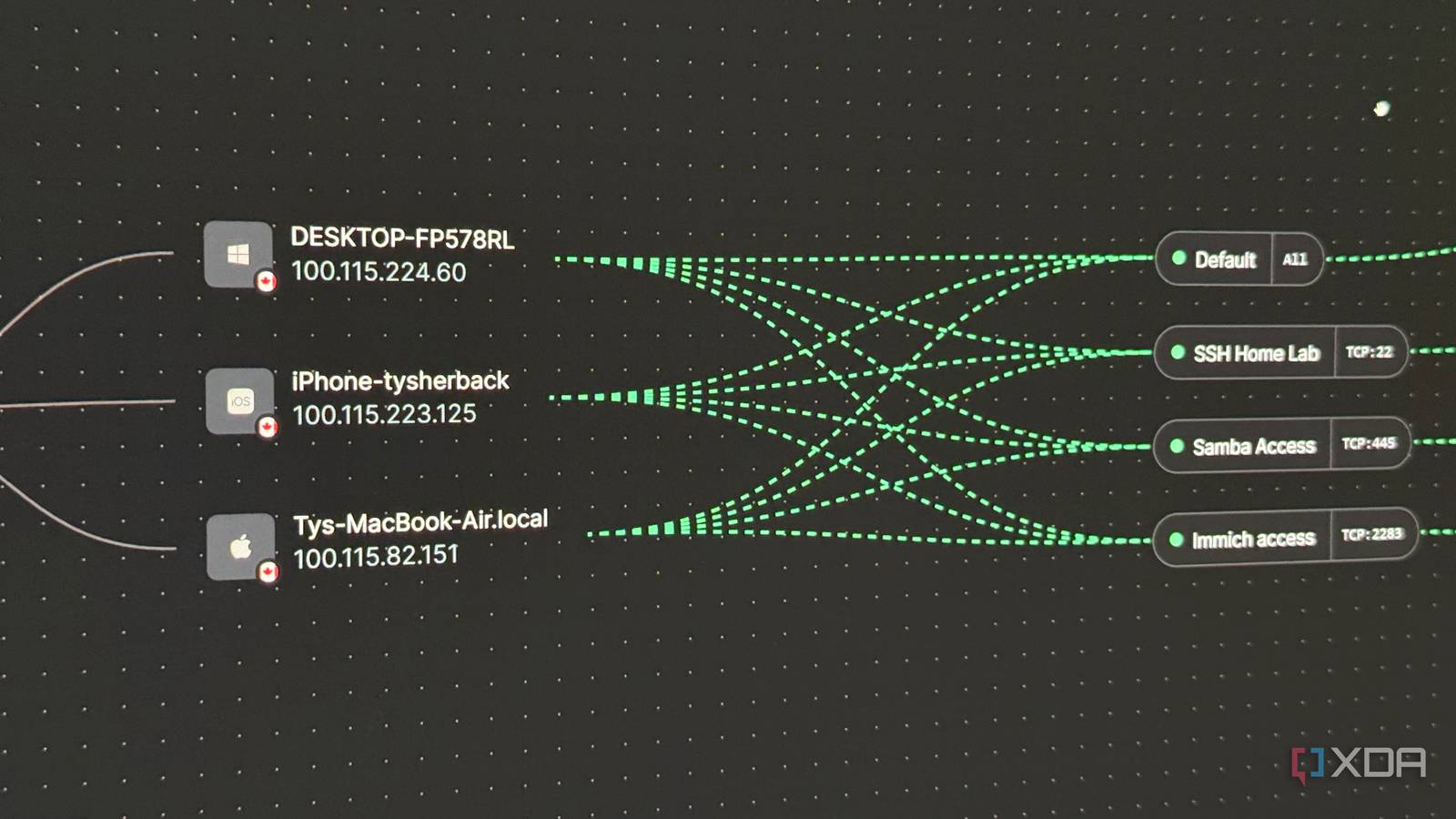
Why it matters: This is a concrete, reproducible blueprint for the ‘zero-trust mesh’ approach that has been theory for years, now hitting the hackerspace-to-mainstream pipeline with a tool that handles SSH, LAN subnet routing, and public-facing reverse proxy from a single overlay.
Context: CGNAT adoption by ISPs has broken the traditional port-forwarding + DDNS workflow for home server operators, pushing the community toward mesh VPNs like Tailscale, NetBird, and ZeroTier. The key differentiator here is self-hosting the control plane to avoid vendor lock-in and data-plane routing.
"I recently went on a trip to my in-law’s cottage, and during that time, I still wanted access to my home lab stack. My Proxmox host and the LXCs inside, including a." — XDA-DEVELOPERS
Commentary: The author’s choice to self-host the control plane on a VPS rather than use a turnkey cloud mesh is the signal worth watching: it trades operational convenience for full ownership of the coordination path, a trade that aligns with the cypherpunk infrastructure archetype. The real innovation is the routing peer pattern, which lets a single host advertise an entire LAN subnet into the mesh without modifying each container or IoT device. This is a direct answer to the ‘printer problem’ that has historically made VPNs impractical for home labs.
Date: July 12, 2026 08:00 AM ET
URL: https://xda-developers.com/i-reach-every-service-on-my-home-server-from-anywhere-without-opening-a-single-port
AI Sentiment Score: Positive (50%)
AI Credibility Score: 10.0/10 — High
Scores and text generated by AI analysis of the source article indicated.
Post ID: e409c183