
Ancient World
Sacrificed Inca children died very differently than we thought, study finds (Livescience)
Summary: A new study of three Inca Capacocha mummies from Chile reveals that the children were not killed by hypothermia or strangulation, as long believed, but that at least one died from blunt force trauma to the head. Isotope analysis of hair shows the children traveled hundreds to thousands of miles in their final months, suggesting the ritual was a prolonged pilgrimage rather than a single sacrificial act. The findings challenge prior forensic conclusions and reframe Capacocha as a state-driven process of sacred landscape creation, though some experts caution that the isotopic evidence and centralized narrative may be overinterpreted.
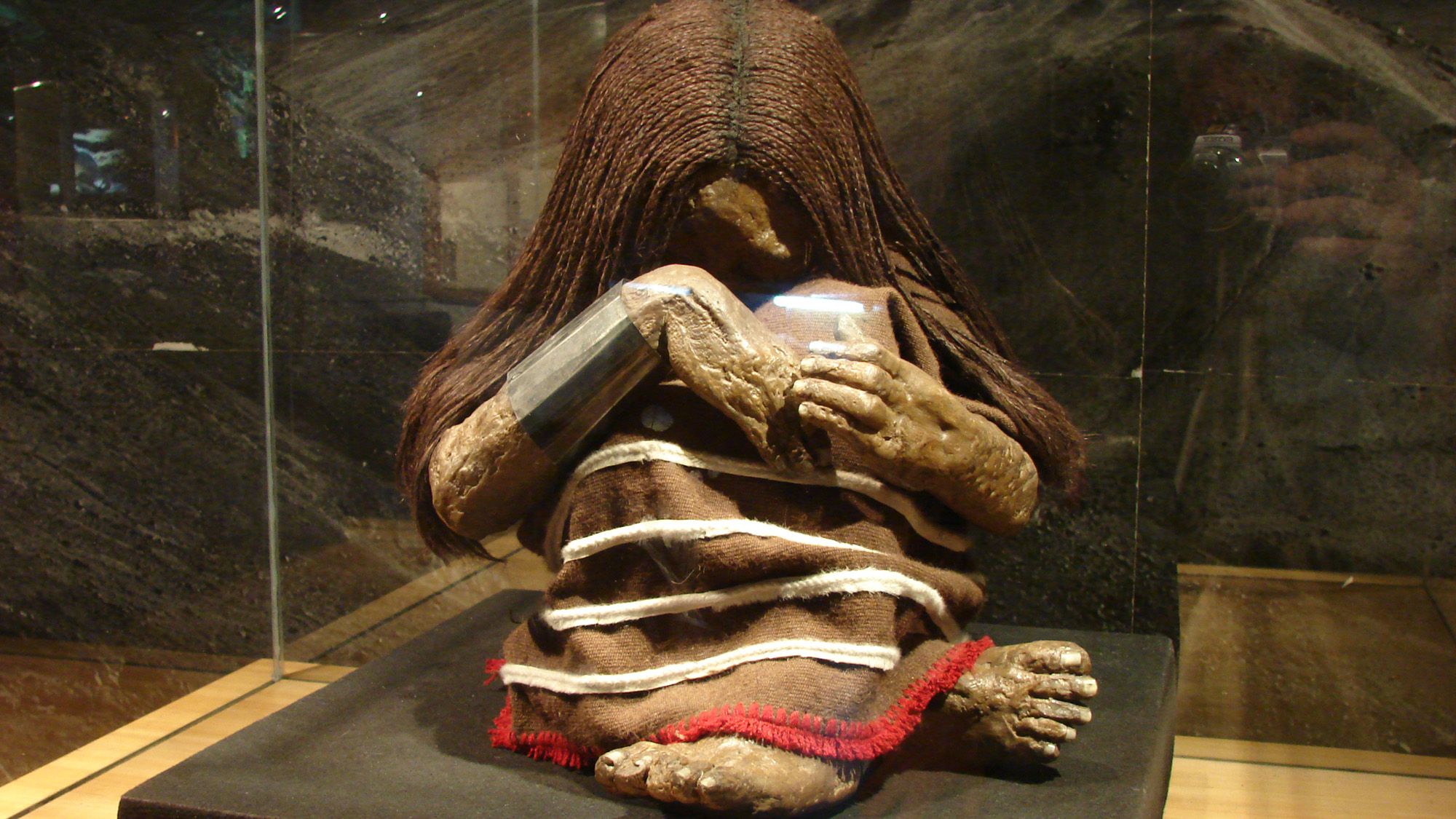
Why it matters: This study overturns long-standing forensic assumptions about Inca sacrifice and provides rare direct evidence of the scale and duration of Capacocha rituals, reshaping our understanding of Inca statecraft and religious practice.
Context: Capacocha mummies have been studied since the 1950s, but modern non-invasive techniques like CT scanning and isotope analysis are only now being applied, revealing that earlier conclusions about cause of death were often speculative.
"Sacrificed Inca children died very differently than we thought, study finds A new look at three children who died in the Inca human sacrifice ceremony known as Capacocha reveals their last few." — LIVESCIENCE
Commentary: The study’s methodological shift—revisiting old finds with new tools—demonstrates that even well-documented archaeological contexts can yield transformative data. However, the pushback from specialists like Socha and Mignone highlights a growing tension between ambitious interpretive frameworks and the limits of isotopic and forensic evidence. The debate over whether Cuzco was the sole origin point of these pilgrimages is not just academic; it affects how we model Inca imperial integration and the agency of provincial communities. Expect further isotopic and genetic studies to test these claims, as the field moves toward more nuanced, multi-scalar narratives of ritual and power.
Date: July 22, 2026 01:05 PM ET
URL: https://www.livescience.com/archaeology/americas/sacrificed-inca-children-died-very-differently-than-we-thought-study-finds
AI Sentiment Score: Negative (88%)
AI Credibility Score: 10.0/10 — High
Scores and text generated by AI analysis of the source article indicated.
Archaeologists Discovered 3,300-Year-Old Tombs Filled With Gems From the Ancient World (Popularmechanics)
Summary: A 2023 excavation at the Bronze Age port city of Hala Sultan Tekke in Cyprus has yielded over 500 complete artifacts from two chamber tombs, including gold diadems, ivory, and gemstones imported from as far as Afghanistan, India, and the Baltic. A 2026 study in the Oxford Journal of Archaeology reveals that these goods, likely from royal burials, demonstrate a distinct Cypriot craftsmanship blending Minoan, Mycenaean, Egyptian, and Near Eastern influences. The findings underscore the city’s role as a major copper-trading hub and a nexus of intercultural exchange in the eastern Mediterranean from 1500 to 1300 B.C.E.

Why it matters: This discovery provides concrete evidence of the scale and direction of Bronze Age trade networks, showing that elite identities were forged through long-distance exchange and hybrid artistic styles, not just local production. It challenges assumptions about peripheral island cultures, positioning Cyprus as a central node in a connected Mediterranean world.
Context: Hala Sultan Tekke has been excavated since 2010, but the 2023 find is the richest yet, with about half of the artifacts imported. The study’s analysis of diadems and mouthpieces from eight tombs reveals wear patterns indicating these items were used in life, not just for burial, offering rare insight into Bronze Age elite display and mortuary practice.
"The results indicate local Cypriot production that integrates Minoan, Mycenaean, Egyptian, and near Eastern influences while maintaining a distinct regional style,” wrote Peter Fischer, professor, expedition leader and study author. “These findings offer new insights into craftsmanship, intercultural exchange, and mortuary practices in the eastern Mediterranean during a period marked by intense connectivity and cultural interaction." — POPULARMECHANICS
Commentary: The hybrid style of the diadems—worn in life, not just in death—suggests that Bronze Age elites used portable objects to signal status and affiliation across cultural boundaries, a pattern that echoes modern globalized luxury markets. The presence of Baltic amber and Afghan lapis lazuli in a Cypriot tomb indicates that copper was not merely a commodity but a currency of connectivity, enabling a port city to become a cultural broker. This find should prompt a re-evaluation of how we map influence in the ancient world, moving beyond core-periphery models to recognize nodes like Hala Sultan Tekke as active agents in shaping aesthetic and political identities.
Date: July 23, 2026 08:00 AM ET
URL: https://www.popularmechanics.com/science/archaeology/a71960117/ancient-cyprus-tombs/
AI Sentiment Score: Negative (85%)
AI Credibility Score: 10.0/10 — High
Scores and text generated by AI analysis of the source article indicated.
Post ID: 87ed7145