
Alzheimer’s Disease and Frontal Temporal Dementia
Alzheimer’s Blood Test Now Works Almost as Well at Your Doctor’s Office as at a Specialist Clinic (Medicaldaily)
Summary: A real-world study presented at AAIC 2026 in London found that the PrecivityAD2 blood test, measuring p-tau217 and amyloid beta ratios, enabled primary care physicians to diagnose Alzheimer’s with 93% accuracy, nearly matching specialists’ 94%. The test raised primary care diagnostic accuracy from 62-65% to 88-93%, and a companion JAMA study linked elevated p-tau217 to future cognitive decline up to a decade before symptoms. This could expand access to diagnosis for millions of Americans who lack nearby specialty care, though insurance coverage and U.S. translation remain open questions.

Why it matters: For the Alzheimer’s and FTD community, this shifts the bottleneck from diagnostic accuracy to reimbursement and clinical workflow: if family physicians can order a blood test with specialist-level accuracy, the real constraint becomes whether Medicare and commercial insurers will cover it, and whether guidelines will be updated to make it standard practice.
Context: Historically, confirming Alzheimer’s required amyloid PET or lumbar puncture, which are inaccessible in most primary care settings. The PrecivityAD2 test is already commercially available in the U.S., but coverage is variable, and the study’s Swedish setting raises questions about translation to U.S. primary care.
"A negative result helped primary care physicians confidently rule out Alzheimer’s and look for other causes of the symptoms." — MEDICALDAILY
Commentary: The ruling-out capability is the underappreciated win: it redirects patients to treatable conditions like vascular dementia or thyroid disease, reducing unnecessary specialist referrals. But the 30% diagnostic change rate means clinicians must be trained to interpret intermediate results, and the lack of Medicare coverage could create a two-tier system where only affluent patients get early diagnosis. The predictive study’s 78% risk increase for high p-tau217 is compelling, but it does not suggest that early intervention changes outcomes, so clinicians should avoid overpromising. Watch for guideline updates from the Alzheimer’s Association and specialty societies, which will likely accelerate coverage decisions.
Date: July 24, 2026 09:00 AM ET
URL: https://medicaldaily.com/alzheimers-blood-test-primary-care-accuracy-aaic-2026-476326
AI Sentiment Score: Negative (71%)
AI Credibility Score: 10.0/10 — High
Scores and text generated by AI analysis of the source article indicated.
Lab-grown mini brains may predict which Alzheimer’s treatments will work (Sciencedaily)
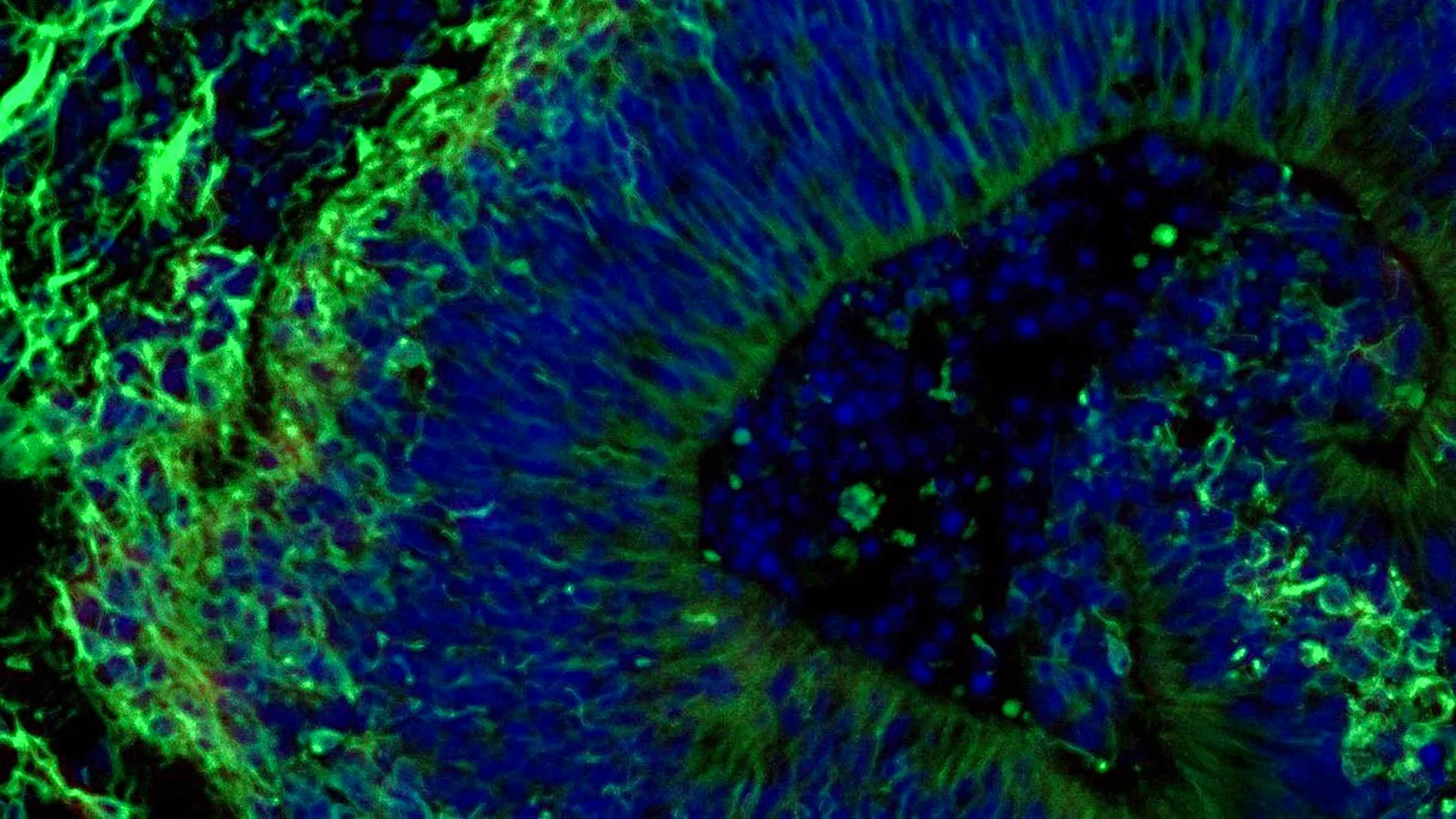
Summary: Johns Hopkins researchers grew hindbrain organoids from Alzheimer’s patients’ reprogrammed blood cells and found that these miniature models reproduce disease-specific molecular changes and respond variably to the SSRI escitalopram oxalate. The organoids also release extracellular vesicles carrying proteins that could serve as biomarkers for staging the disease and predicting drug response. This large-scale, patient-derived approach suggests a path toward personalized treatment selection for neuropsychiatric symptoms in Alzheimer’s, though it remains an early-stage research tool.
Why it matters: This study offers a concrete mechanism for stratifying Alzheimer’s patients by molecular subtype, potentially moving beyond the one-size-fits-all prescribing of SSRIs for neuropsychiatric symptoms—a major unmet need given the near-universal prevalence of these symptoms and the wide variability in drug response.
Context: Alzheimer’s affects over 7 million Americans, and while disease-modifying therapies remain elusive, managing neuropsychiatric symptoms like agitation and depression is a clinical priority. Organoid models have been used in other neurological conditions, but this is among the largest patient-derived organoid studies in Alzheimer’s, and the focus on hindbrain serotonin neurons is a novel angle.
"Lab-grown mini brains may predict which Alzheimer’s treatments will work – Date: – July 22, 2026 – Source: – Johns Hopkins Medicine – Summary: – Miniature brain models grown from patientsâ cells." — SCIENCEDAILY
Commentary: The key advance is the scale and the use of extracellular vesicles as a potential liquid biopsy—a non-invasive way to stage disease and predict drug response. But the leap from organoid to clinic is long; the study is early-stage, and the vesicle biomarkers need validation in living patients. The real near-term value may be in drug development, where organoids could screen compounds against diverse genetic backgrounds before human trials.
Date: July 22, 2026 08:34 AM ET
URL: https://www.sciencedaily.com/releases/2026/07/260721000844.htm
AI Sentiment Score: Negative (77%)
AI Credibility Score: 10.0/10 — High
Scores and text generated by AI analysis of the source article indicated.
Scientists boost a single brain factor—it shields against Alzheimer’s (Newsweek)
Summary: A study in Science Advances from Sanford Burnham Prebys shows that boosting the brain protein SORLA in mice reduces tau accumulation, brain atrophy, and synaptic loss, while deleting it worsens tauopathy. The findings suggest SORLA acts on both amyloid and tau pathways, and the team is exploring repurposing plexin-B receptor drugs to mimic its protective effects. Lead author Huijie Huang cautions that SORLA is a large transmembrane receptor and its low expression in mouse microglia versus high in human microglia complicates translation.

Why it matters: This shifts the Alzheimer’s drug development conversation from clearing toxic proteins toward strengthening endogenous protective mechanisms, potentially opening a new therapeutic axis that could be more durable than current amyloid- or tau-targeting approaches.
Context: SORL1 has been a known GWAS hit for Alzheimer’s, but its role was previously tied to amyloid-beta processing. This study is the first to show a direct tau-suppressive effect, linking the two major pathological pathways and suggesting a broader disease-modifying role.
"What surprised us most was that overexpression of this Alzheimer’s disease GWAS gene, SORL1, suppressed tau pathology in mice. The gene had previously been reported to reduce Aβ pathology, so we initially expected its effects to be largely limited to the amyloid pathway. Its strong protective effect on tau suggests that it may regulate a broader disease mechanism linking both amyloid and tau pathology." — NEWSWEEK
Commentary: The plexin-B repurposing angle is the most actionable near-term lead, but the SORLA expression discrepancy between mouse and human microglia is a red flag for translational speed. The HER2 oncogenic risk is a quiet but critical caveat—boosting SORLA systemically could trade neurodegeneration for cancer risk. Watch for the planned human-neuron-in-mouse experiments; they will determine whether this is a real target or a mouse-specific artifact.
Date: July 20, 2026 11:53 AM ET
URL: https://newsweek.com/scientists-boost-a-single-brain-factor-it-shields-against-alzheimers-12218277
AI Sentiment Score: Negative (85%)
AI Credibility Score: 10.0/10 — High
Scores and text generated by AI analysis of the source article indicated.
What REALLY causes motor neurone disease? (Dailymail)
Summary: New research into motor neurone disease (MND) suggests that roughly half of a person’s risk comes from lifestyle and environmental factors, not just genetics. Key potential triggers include frequent strenuous exercise, smoking, pesticide exposure, mercury-rich fish, and vitamin D deficiency, though none are proven causal. Elite athletes like rugby stars and cross-country skiers show elevated risk, but only at extreme performance levels. Experts caution that these factors likely act on genetically susceptible individuals, and rigorous science is still needed to confirm any causal links.

Why it matters: For readers tracking neurodegenerative disease research, this shifts the risk model from purely genetic to a gene-environment interaction, with practical implications for lifestyle advice, occupational safety, and future prevention strategies.
Context: MND affects about 5,000 adults in the UK, with rising incidence and no cure. The gene-environment interaction model is gaining traction, but evidence remains associative, not causal.
"What REALLY causes motor neurone disease? The terrifying condition paralyses victims before killing them. Now bombshell research suggests that doing one type of exercise, a missing vitamin and these common chemicals could." — DAILYMAIL
Commentary: The strongest new signal is the dose-response relationship in elite athletes—fourfold risk in top-tier skiers but lower-than-average risk in mid-pack finishers—suggesting a threshold effect rather than a linear one. This complicates any simple ‘exercise is bad’ narrative and points to a genetic susceptibility that intense exertion may unmask. The pesticide evidence is stacking up, but the lack of causal proof means clinicians should avoid alarmist advice. The real value here is the shift toward prevention research, not just treatment, which could eventually enable targeted lifestyle interventions for high-risk individuals.
Date: July 24, 2026 08:00 PM ET
URL: https://dailymail.com/health/article-16002445/what-REALLY-causes-motor-neurone-disease.html
AI Sentiment Score: Negative (76%)
AI Credibility Score: 10.0/10 — High
Scores and text generated by AI analysis of the source article indicated.
Post ID: 18921230