
Space Exploration
SpaceX eyes tower catch for next Starship after auspicious end to 13th flight (Arstechnica)
Summary: SpaceX’s 13th Starship test flight ended with an intact, buoyant splashdown in the Indian Ocean, giving engineers their first unobstructed look at the heat shield’s condition after reentry. The company is now likely to attempt a tower catch of the ship on the next flight, pending data review. The mission also marked the first in-space test of Starlink V3 satellites and a successful Raptor restart, both critical for orbital operations.
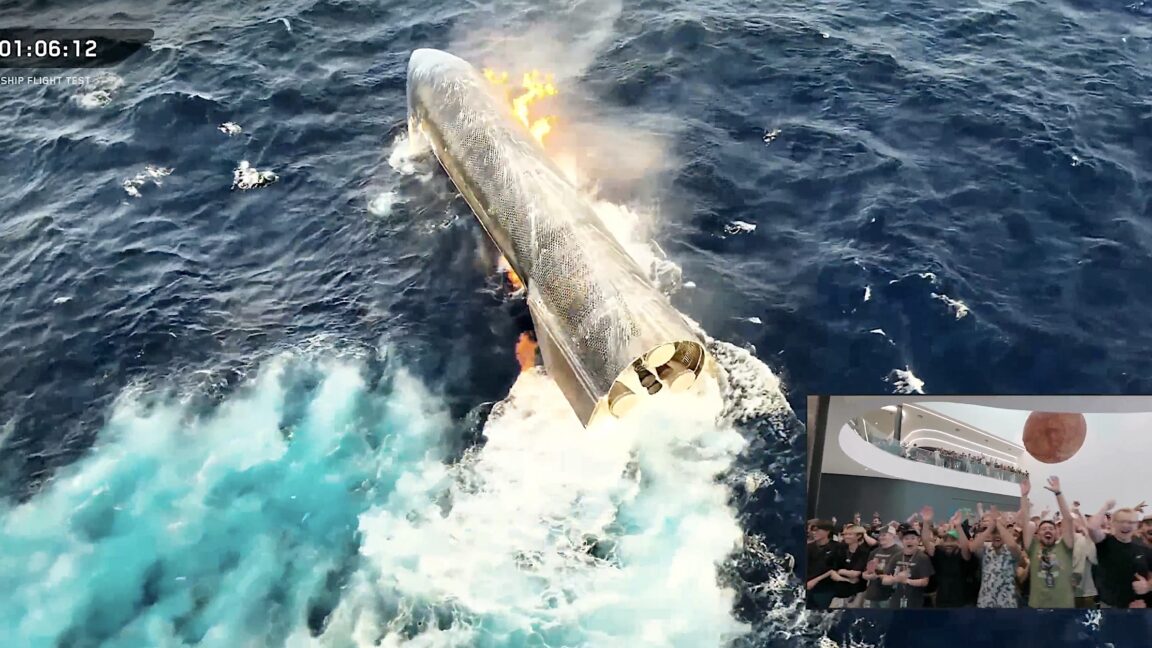
Why it matters: This flight moves Starship closer to operational orbital missions, which would enable Starlink V3 deployment and NASA’s lunar refueling demonstrations, shifting the commercial and exploration landscape.
Context: Previous Starship splashdowns ended in fire, so the intact recovery provides unprecedented heat shield data. The tower catch has already been proven with the Super Heavy booster, but the ship returns at higher speeds, making this a new engineering challenge.
"This is the first time we’ve put an intact Starship in the water,” said Dan Huot, a SpaceX communications manager providing commentary on the company’s live webcast. “This is a dream scenario for the team that’s trying to get this heat shield data." — ARSTECHNICA
Commentary: The intact splashdown is a quiet but significant milestone: it validates the heat shield’s resilience under higher dynamic pressure, a prerequisite for rapid reuse. The next flight’s tower catch attempt will be the real test of the ship’s landing capability, and its success or failure could set the timeline for orbital refueling and Starlink V3 deployment. The booster’s continued landing issues with the V3 design remain a bottleneck, but the iterative approach suggests a fix is likely within a few flights.
Date: July 25, 2026 01:47 PM ET
URL: https://arstechnica.com/space/2026/07/spacex-eyes-tower-catch-for-next-starship-after-auspicious-end-to-13th-flight/
AI Sentiment Score: Positive (54%)
AI Credibility Score: 10.0/10 — High
Scores and text generated by AI analysis of the source article indicated.
Kilometre-scale Jovian moon characterized for a potential JUICE flyby – Nature Astronomy (Nature)
Summary: New multi-instrument observations of Jupiter’s irregular moon Kallichore, combining Hubble astrometry, a ground-based stellar occultation campaign, and 10.4-m GTC data, have cut its orbital uncertainty by up to ~80% and characterized its shape and surface. The moon is an elongated body with a minimum semi-axis ratio of 1.53, an area-equivalent diameter of about 3.8 km, and a very dark surface with a geometric albedo of 3.7%. These constraints make a JUICE flyby of Kallichore feasible once the spacecraft reaches Jupiter in 2031, potentially offering the first close look at a kilometre-scale irregular satellite.

Why it matters: This is the first time a kilometre-scale irregular Jovian moon has been characterized well enough to plan a spacecraft flyby, turning a previously unreachable class of primordial planetesimals into a potential JUICE target. It demonstrates a practical pathway for extending the scientific return of a flagship mission without new hardware.
Context: Irregular satellites like Kallichore are thought to be captured planetesimals from the early Solar System, but their small size and proximity to Jupiter make them extremely hard to study from Earth. JUICE’s trajectory and instrument suite (including JANUS) were designed for the Galilean moons, but a minor moon flyby has been studied as a feasible add-on.
"Abstract Jupiter’s irregular satellites are thought to be relics of early Solar System planetesimals. However, their small sizes, large distances from Earth and close angular proximity to Jupiter, make them difficult to." — NATURE
Commentary: The 80% orbital uncertainty reduction is the operational enabler—without it, a flyby would be a blind shot. The elongated shape and low albedo are consistent with a captured planetesimal, but the lack of companions is notable given that many irregulars are binaries. The success of the occultation campaign, coordinated via the Occultation Portal and involving amateur observers, shows that pro-am networks are becoming essential for pre-encounter reconnaissance. If JUICE executes this flyby, it will be the first time a spacecraft has imaged a kilometre-scale irregular satellite, potentially revealing surface properties that ground-based data cannot resolve.
Date: July 23, 2026 08:00 PM ET
URL: https://nature.com/articles/s41550-026-02929-z
AI Sentiment Score: Negative (75%)
AI Credibility Score: 10.0/10 — High
Scores and text generated by AI analysis of the source article indicated.
Wildfire Burns Through NASA Deep Space Network Station in Spain: Six Antennas at Risk (Techtimes)
Summary: A wildfire swept through NASA’s Madrid Deep Space Communications Complex on July 24-25, 2026, forcing evacuation of all 90 personnel and leaving the fate of six antennas—including the 70-meter DSS-63—unknown. NASA has shifted communications to Goldstone and Canberra, but the network was already oversubscribed by up to 40% at peak times, and Goldstone’s largest antenna has been offline since a 2025 accident. The loss of Madrid effectively reduces the three-node Deep Space Network to two nodes, creating coverage gaps and forcing triage of mission contacts. Voyager 1, which requires all six Madrid antennas arrayed together, faces reduced contact frequency and data quality until the site is restored.
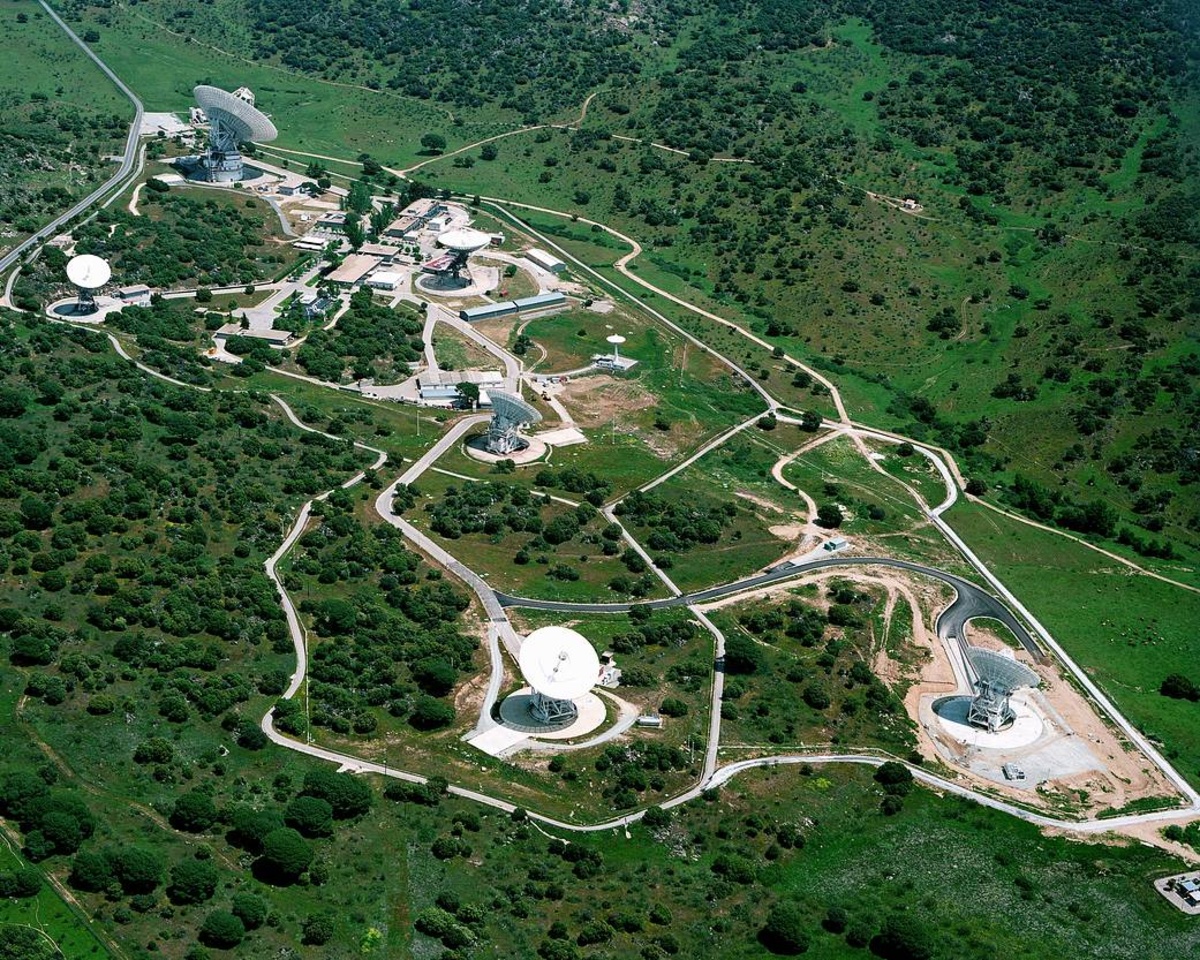
Why it matters: This is the first time a DSN station has been taken offline by a climate-driven disaster, exposing the fragility of a three-node architecture that has no redundancy. With demand already exceeding supply and one 70-meter antenna down, the network’s capacity crisis has shifted from a scheduling problem to a potential loss of contact with humanity’s most distant spacecraft.
Context: The DSN has operated as a three-node system since 1963, with each station positioned 120 degrees apart to ensure continuous coverage. A 2023 NASA Inspector General audit found the network oversubscribed by up to 40% at peak times, and the Aperture Enhancement Project meant to address this is behind schedule and over budget.
"The practical result is this: of the three 70-meter antennas in the DSN — the network’s highest-capability antennas for emergency contact and faint-signal reception — one (Goldstone’s DSS-14) is already broken and awaiting expensive repairs, one (Canberra’s DSS-43) is carrying the full Goldstone override, and one (Madrid’s DSS-63) may or may not have survived a wildfire." — TECHTIMES
Commentary: The wildfire is not an isolated incident but a systemic signal: infrastructure sited in 1964 was never designed for a climate regime that now produces 100% more wildfires in Spain year-over-year. NASA’s contingency planning for Roman and other high-bandwidth missions must now treat station loss as a credible scenario, not a hypothetical. The network’s resilience is no longer a matter of engineering redundancy but of climate adaptation—and the DSN has no slack to absorb either.
Date: July 25, 2026 08:29 AM ET
URL: https://www.techtimes.com/articles/321564/20260725/wildfire-burns-through-nasa-deep-space-network-station-spain-six-antennas-risk.htm
AI Sentiment Score: Negative (69%)
AI Credibility Score: 10.0/10 — High
Scores and text generated by AI analysis of the source article indicated.
SpaceX’s Starship megarocket makes the ‘softest splashdown’ ever after launching next-gen Starlink satellites in Flight 13 test (video) (Space)
Summary: SpaceX’s Starship Flight 13 achieved its softest upper-stage splashdown to date, with the Ship floating intact in the Indian Ocean after deploying 20 next-generation Starlink V3 satellites on a suborbital trajectory. The Super Heavy booster, however, landed harder than planned after only five of 13 landing-burn engines ignited. The mission also marked a successful Raptor engine relight in space, a key capability for future orbital operations. This was the second flight of the V3 design, following the May Flight 12 booster crash.
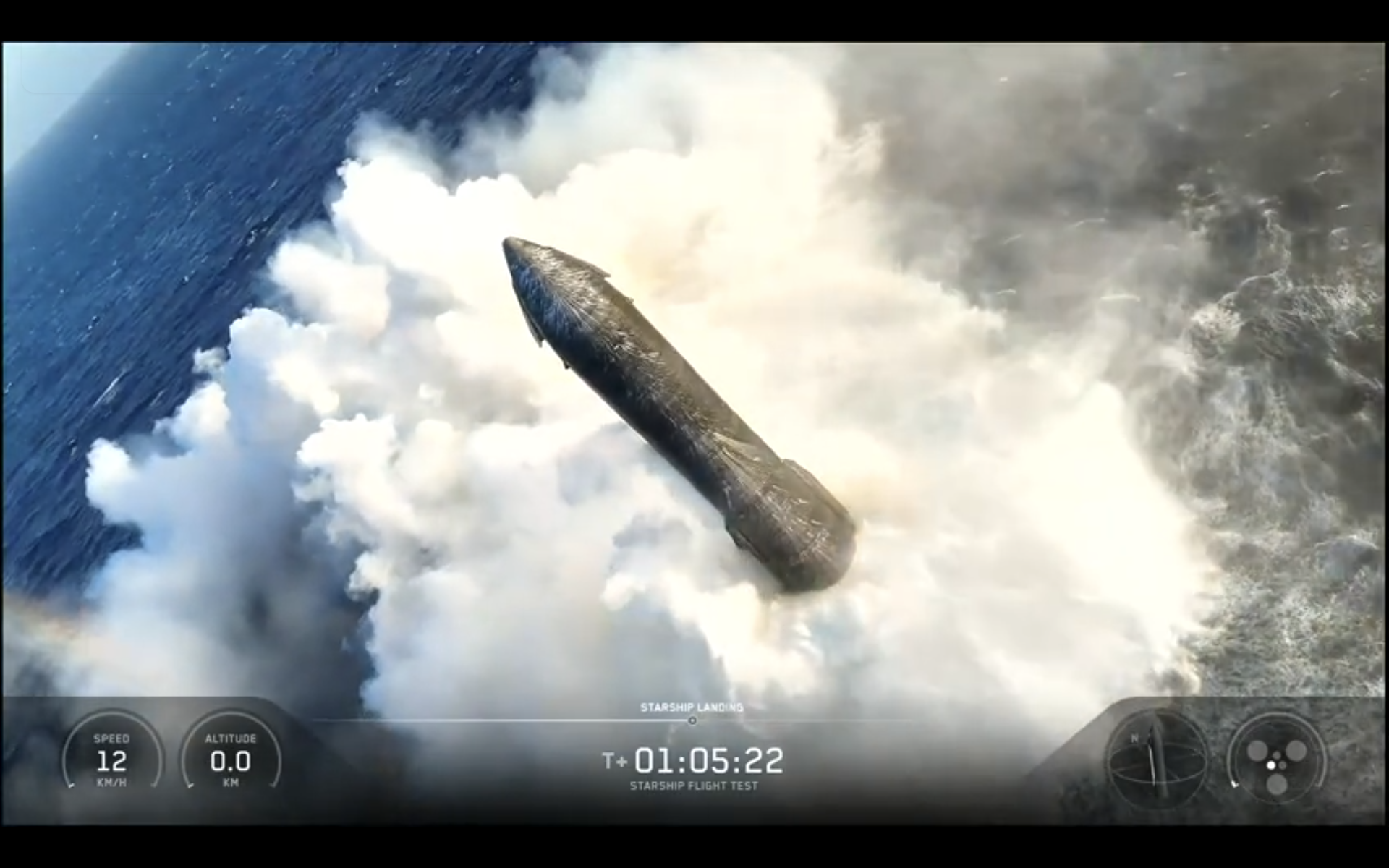
Why it matters: The intact splashdown provides critical heat shield and systems data that SpaceX needs to progress toward full reusability and orbital missions, which are prerequisites for NASA’s Artemis IV lunar landing in 2028.
Context: Starship has flown 13 times over three years without completing a full Earth orbit. SpaceX must now demonstrate orbital flight, in-space refueling, and a crewed lander version within two years to meet NASA’s timeline.
"This is just the first time we’ve put a Starship into the water," SpaceX’s Dan Huot said during live commentary. He called it SpaceX’s "softest splashdown" ever. "This is a dream scenario for this team that’s trying to get this heat shield data." — SPACE
Commentary: The soft splashdown is a meaningful engineering milestone, but the booster’s underperforming landing burn shows the V3 design still has reliability gaps. The successful engine relight is arguably the more significant step toward orbital capability, yet the path to a 2028 lunar landing remains crowded with unproven systems. Watch for whether SpaceX can translate this heat shield data into a recoverable ship before the next test, or if the schedule slips further.
Date: July 24, 2026 09:40 PM ET
URL: https://www.space.com/space-exploration/launches-spacecraft/spacexs-starship-megarocket-makes-the-softest-splashdown-ever-after-launching-next-gen-starlink-satellites-in-flight-13-test-video
AI Sentiment Score: Positive (60%)
AI Credibility Score: 10.0/10 — High
Scores and text generated by AI analysis of the source article indicated.
SpaceX sees more success with 13th test launch of Starship (Orlandosentinel)
Summary: SpaceX’s 13th Starship test flight on July 24, 2026, achieved a first: the upper stage survived splashdown intact in the Indian Ocean, floating upright long enough for recovery drones and onboard cameras to capture heat shield and engine data. The Super Heavy booster, however, still landed harder than planned in the Gulf, though with better control than Flight 12. The mission also deployed 20 V3 Starlink satellites, all of which made contact with the constellation before reentering, and performed an in-flight Raptor relight. The flight followed a one-day weather delay and a July 16 abort that led to replacing six booster engines, with hardware and software fixes addressing the previous flight’s booster flip failure.

Why it matters: An intact Starship splashdown is a major step toward reusable upper-stage recovery, and the successful Starlink deployment validates the V3 satellite design that Falcon 9 cannot carry—both are critical for SpaceX’s path to operational missions from Florida and the Artemis III lunar lander timeline.
Context: Flight 12, the first Version 3 launch, ended with an uncontrolled booster crash and an FAA grounding that was lifted earlier this month. SpaceX is targeting first Florida launches by end of 2026, with three towers under construction and a $1.8 billion Gigabay investment.
"This is the first time we’ve put an intact Starship in the water,” he said. “This is a dream scenario for the team that’s trying to get this heat shield data. Normally, you’re working with a slightly charred Starship in the water, and now we have one intact." — ORLANDOSENTINEL
Commentary: The intact splashdown is a quiet milestone: it means the vehicle’s attitude control and structural integrity held through reentry, giving engineers pristine heat shield tiles to study rather than charred debris. The Starlink V3 deployment, even with a 20-minute lifespan, validates the satellite’s basic comms and laser link, de-risking the path to operational launches. The booster’s still-hard landing shows the flip maneuver remains the weak point, but the FAA grounding and subsequent fixes suggest a regulatory pattern of ‘fly, fail, fix’ that may accelerate as flight cadence increases. With NASA’s Artemis III docking test slated for mid-2027, every successful flight narrows the gap between Starship’s test regime and its lunar lander obligations.
Date: July 24, 2026 01:53 PM ET
URL: https://orlandosentinel.com/2026/07/24/after-tropical-delay-spacex-starship-set-for-13th-test-flight-tonight
AI Sentiment Score: Negative (70%)
AI Credibility Score: 10.0/10 — High
Scores and text generated by AI analysis of the source article indicated.
Post ID: 55e0e40c