
Travel Advisories, Visas & Industry Disruptions
This Stunning Island Nation Is Launching a New Golden Visa for 100 Millionaires (Cntraveler)
Summary: Mauritius is launching a new, highly selective golden visa program targeting 100 millionaires annually. Applicants must invest at least $1 million within the first year in designated high-value sectors like fintech, AI, and biotechnology, gaining a renewable two-year visa with dedicated concierge services. The government promises a five-day processing window and has instituted a risk-based due diligence framework to address money-laundering concerns, while also attempting to insulate the local housing market by restricting real estate investment options for visa holders.

Why it matters: This represents a strategic shift in the global competition for high-net-worth individuals, moving beyond passive real estate investment to active capital allocation in specific growth sectors, with implications for talent migration, capital flows, and the governance of such programs.
Context: Golden visa programs globally are under pressure due to EU scrutiny over security risks and local affordability crises, leading some nations to scale back or terminate their offerings.
"“The aim is to maximize the economic benefits to Mauritius through long-term stay of golden visa holders and subsequently encourage them to relocate their funds and channel investments to different sectors of our economy,” Ramgoolam said." — CNTRAVELER
Commentary: Mauritius is executing a classic arbitrage: leveraging its stable, multilingual environment and rapid processing to attract capital that is facing longer waits or heightened scrutiny in European programs. By mandating investment in specific high-growth industries, the EDB is attempting to engineer a more durable economic benefit than simple property inflation, though the 100-person cap suggests a pilot-phase caution. The real test will be whether the promised due diligence framework can withstand the compliance pressures that have scuttled similar schemes elsewhere, and if the sectoral targeting can actually seed new industrial clusters rather than just moving portfolio capital.
Date: Wed, 13 May 2026 16:43:17 +0000
URL: https://www.cntraveler.com/story/this-stunning-island-nation-is-launching-a-golden-visa-for-millionaires
AI Sentiment Score: Positive (45%)
AI Credibility Score: 10.0/10 — High
Scores and text generated by AI analysis of the source article indicated.
Paraguay’s New Golden Visa Is a $150,000 Fast Track to Permanent Residency (Cntraveler)
Summary: Paraguay’s Migration Department and Ministry of Industry and Commerce have launched the Paraguay Investor Pass, a residency-by-investment program requiring a $150,000 investment in tourism projects or $200,000 in stocks or real estate. The visa grants permanent residency, a reduced dividend tax rate of 8%, and bypasses temporary residency requirements. This move aligns with a significant tourism uptick—a 53% increase in international arrivals in Q1 2025—and aims to channel foreign capital into the local economy. The program positions Paraguay as a comparatively affordable entry point into South American residency markets.

Why it matters: It signals a strategic shift by a historically overlooked nation to leverage global mobility demand for direct economic development, potentially altering capital flows and residency patterns within the region.
Context: Paraguay joins a crowded field of nations offering investment-for-residency pathways, but its pricing is notably lower than peers like New Zealand (NZD $1M) or Greece (€250,000), targeting a different tier of investor.
"Paraguay, one of the least-visited countries in South America, is in the midst of a tourism revival—landing its capital Asunción as one of Condé Nast Traveler’s best places to go in 2026." — CNTRAVELER
Commentary: The program is less about tourism revival and more a fiscal instrument: it monetizes residency to fund specific sectors while creating a new class of tax-advantaged, anchored foreign capital. Its success will depend on Paraguay’s ability to enforce investment integrity and manage the political optics of selling permanent status, a trade-off other nations have struggled with.
Date: Wed, 29 Apr 2026 18:32:30 +0000
URL: https://www.cntraveler.com/story/paraguays-new-golden-visa-is-a-dollar150000-fast-track-to-permanent-residency
AI Sentiment Score: Neutral (33%)
AI Credibility Score: 10.0/10 — High
Scores and text generated by AI analysis of the source article indicated.
15 Things to Know Before Booking a Trip to the Maldives (Cntraveler)
Summary: A Conde Nast Traveler guide outlines practical and regulatory considerations for travelers to the Maldives, moving beyond the standard luxury pitch. It details new entry and consumption rules, the logistical and financial intricacies of resort transfers, and the operational fine print on packages and amenities. The piece also notes the increasing importance of sustainability credentials and child-friendly policies in resort selection.

Why it matters: For high-net-worth travelers and the luxury hospitality sector, these operational details directly impact cost, experience, and compliance, while the sustainability and policy shifts reflect broader geopolitical and environmental pressures on exclusive destinations.
Context: The Maldives’ tourism model, reliant on high-end, isolated resorts, faces pressure from climate change and evolving social policies, making logistical planning and ethical consumption increasingly central to the visitor proposition.
"The Maldives has introduced a generational smoking ban that applies to both residents and visitors: anyone born on or after January 1, 2007 cannot legally buy or use tobacco in the country. While older travelers can still smoke in designated areas (mostly within resorts), local islands tend to enforce stricter rules. Vaping, meanwhile, is banned outright, and devices will be confiscated at the airport and may even attract fines." — CNTRAVELER
Commentary: The generational smoking ban and outright vape prohibition signal a tightening of sovereign control over visitor behavior, extending beyond resort boundaries. This creates a new compliance layer for travelers and resorts, potentially segmenting the market further between those seeking a fully regulated escape and those prioritizing personal liberty. The emphasis on proof for honeymoon perks reflects a broader industry shift toward verification and the monetization of life events, turning trust into a transactional checkpoint.
Date: Tue, 28 Apr 2026 11:00:00 +0000
URL: https://www.cntraveler.com/story/15-things-to-know-before-booking-a-trip-to-the-maldives
AI Sentiment Score: Negative (55%)
AI Credibility Score: 10.0/10 — High
Scores and text generated by AI analysis of the source article indicated.
What Travelers Should Know About the Hantavirus, According to Medical Experts (Cntraveler)
Summary: The MV Hondius expedition cruise ship has been fully evacuated following an outbreak of the Andes strain of hantavirus, a rare rodent-borne pathogen capable of limited human-to-human transmission. At least three individuals have died, with 11 total cases reported among passengers and crew. Eighteen American passengers were repatriated via a specially equipped charter flight to biocontainment quarantine units in Nebraska and Georgia. International health authorities, while managing the quarantine of exposed individuals over a 42-day incubation window, assess the overall public health risk as low.

Why it matters: The incident tests the international protocol for managing a rare, high-consequence pathogen in a mobile, confined environment, with implications for expedition travel, biocontainment logistics, and public health coordination.
Context: This follows a pattern of high-profile disease outbreaks on cruise ships challenging global health responses, but involves a pathogen with different transmission dynamics than common respiratory viruses.
"The species of hantavirus involved in this case is the Andes virus,” Dr. Tedros Adhanom Ghebreyesus, general director of WHO, said in a press conference on May 7. This strain is “found in Latin America and is the only species known to be capable of limited transmission between humans." — CNTRAVELER
Commentary: The operational response—specialized airlift, designated national quarantine units—reveals a matured, if costly, infrastructure for high-stakes pathogen containment developed post-COVID. For the expedition cruise sector, particularly itineraries accessing remote ecosystems, this underscores a persistent zoonotic risk calculus that extends beyond typical sanitation protocols. The WHO’s ‘low risk’ assessment hinges on the virus’s requirement for close contact, but the event will likely pressure operators to enhance pre-boarding health screenings for niche adventure travel. The seamless multinational coordination, while effective, also sets a precedent that could strain resources if similar low-probability, high-consequence events become more frequent.
Date: Tue, 12 May 2026 16:06:44 +0000
URL: https://www.cntraveler.com/story/what-travelers-should-know-about-the-hantavirus-according-to-medical-experts-3
AI Sentiment Score: Negative (57%)
AI Credibility Score: 10.0/10 — High
Scores and text generated by AI analysis of the source article indicated.
US drops bond requirement for FIFA World Cup ticket holders (Dw)
Summary: The US State Department announced a waiver of visa bond requirements for FIFA World Cup ticket holders from five qualifying nations subject to the Trump administration’s expanded bond scheme. The waiver applies only to fans who purchased tickets and registered through FIFA PASS by April 15, 2026. It does not lift existing visa bans for fans from Senegal, Ivory Coast, Haiti, or Iran, nor does it address broader concerns about Immigration and Customs Enforcement (ICE) operations during the tournament.

Why it matters: The policy carve-out reveals the operational friction between hosting a global mega-event and maintaining restrictive immigration enforcement, setting a precedent for conditional, event-driven visa relaxations.
Context: Since 2025, the US has required visitors from a growing list of countries to pay substantial bonds for tourist visas, part of a broader immigration crackdown under the Trump administration.
"FIFA World Cup: US drops bond requirement for ticket holders May 14, 2026The United States has announced exemptions from visa bond payment requirements for FIFA World Cup ticket holders whose teams have." — DW
Commentary: This is a tactical concession, not a strategic shift, designed to mitigate logistical and reputational risks for a tournament where three-quarters of matches are in the US. The selective waiver creates a two-tiered system for fans from the same banned countries, privileging those with financial means and foresight to navigate the FIFA PASS system. It underscores how global event hosting now requires explicit negotiations with domestic enforcement regimes, with advocacy groups like Human Rights Watch pushing for formal ‘ICE Truce’ agreements. The DHS’s contradictory assurance—that legal visitors ‘have nothing to worry about’ despite documented raids on individuals with legal status—highlights the persistent gap between official statements and operational reality for travelers.
URL: https://www.dw.com/en/us-drops-bond-requirement-for-fifa-world-cup-ticket-holders/a-77155757?maca=en-rss-en-all-1573-rdf
AI Sentiment Score: Positive (66%)
AI Credibility Score: 10.0/10 — High
Scores and text generated by AI analysis of the source article indicated.
FAA Operations Plan Advisory 037 warns of rolling delays … (Visahq)
Summary: The FAA issued a system-wide advisory warning of cascading delays across major U.S. hubs on Monday, April 28, 2026, due to a confluence of weather events, runway construction, and a SpaceX launch. Unlike disruptions driven by staffing, these are operational constraints, forcing airlines to issue waivers and travel managers to reroute itineraries. The advisory underscores a broader capacity squeeze that will persist into the summer peak, with international and visa-dependent travelers facing particular complexity.

Why it matters: This advisory signals a shift from predictable staffing-driven delays to a more volatile, multi-factorial strain on U.S. aviation infrastructure, requiring new risk-mitigation strategies for corporate mobility and supply chain timing.
Context: U.S. aviation has faced chronic congestion and controller shortages, but this advisory highlights how compounding operational factors—weather, construction, and commercial space launches—can create system-wide fragility even when staffing is stable.
"Unlike recent disruption days driven by controller staffing, Monday’s constraints are almost entirely operational and weather-related." — VISAHQ
Commentary: The FAA advisory reveals a system operating at the edge of its tolerance; the addition of commercial space launches as a routine disruptor effectively nationalizes a local closure’s impact. For corporate travel, this mandates a shift from reactive waiver-chasing to proactive itinerary engineering, while logistics planners must now treat FAA advisories as a leading indicator for broader supply chain latency.
Date: April 28, 2026 12:00 AM ET
URL: https://www.visahq.com/news/2026-04-27/us/faa-operations-plan-advisory-037-warns-of-rolling-delays-across-major-us-hubs-on-april-27/
AI Sentiment Score: Negative (83%)
AI Credibility Score: 10.0/10 — High
Scores and text generated by AI analysis of the source article indicated.
Bolivia Travel Advisory – U.S. Department of State (Travel.State.Gov)
Summary: The U.S. State Department has reissued a Level 2 ‘Exercise Increased Caution’ advisory for Bolivia, specifically warning against all travel to the Chapare region due to violent crime. The advisory highlights persistent risks of civil unrest, including demonstrations, strikes, and roadblocks that can disrupt transportation and supply chains nationwide.

Why it matters: For professionals and travelers with interests in the region, this signals sustained operational instability affecting logistics, security, and contingency planning, requiring updated risk assessments.
Context: This advisory follows Bolivia’s pattern of political volatility and regional insecurity, particularly in coca-producing areas like the Chapare, which have long been flashpoints for conflict and limited state control.
"### Worldwide Caution: The Department of State advises Americans worldwide, and especially in the Middle East, to exercise increased caution. ### Americans in the Middle East : For consular information or assistance,." — TRAVEL.STATE.GOV
Commentary: The advisory’s reissue underscores a baseline of chronic instability rather than an acute crisis, framing Bolivia as a country where mobility and commercial continuity are perpetually contingent. The explicit ‘Do Not Travel’ designation for Chapare formalizes a de facto no-go zone for U.S. interests, effectively ceding the region for operational purposes. This shifts the burden of risk entirely onto private actors and complicates due diligence for any entity with exposure there.
Date: April 28, 2026 12:00 AM ET
URL: https://travel.state.gov/content/travel/en/traveladvisories/traveladvisories/bolivia-travel-advisory.html
AI Sentiment Score: Negative (87%)
AI Credibility Score: 10.0/10 — High
Scores and text generated by AI analysis of the source article indicated.
EU Entry-Exit System Leaves 100+ Passengers Stranded – ETIAS.com (Etias)
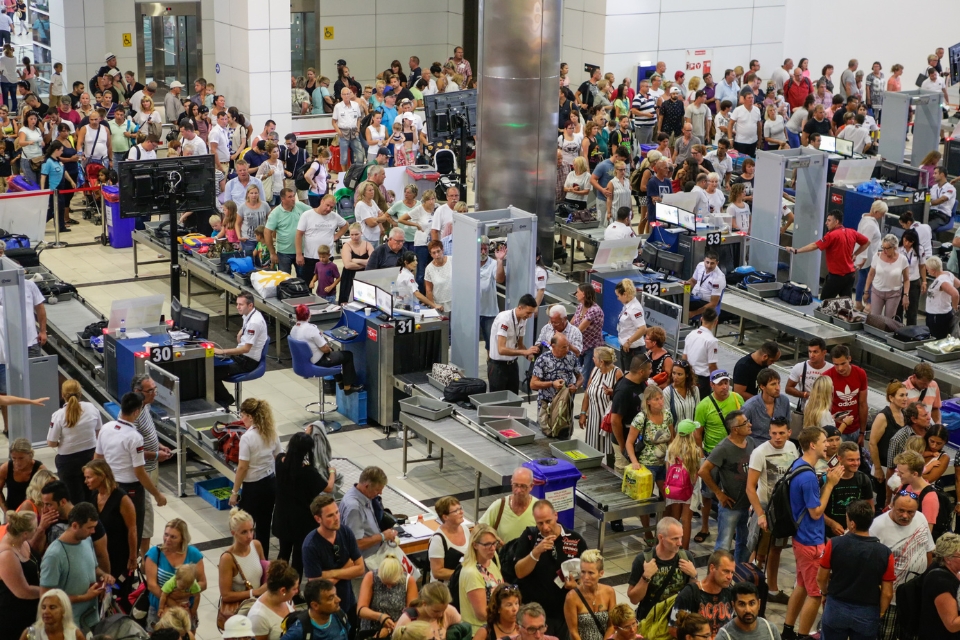
Summary: The EU’s Entry/Exit System (EES) went fully operational on April 10, 2026, triggering immediate and severe border control delays at Schengen airports. Within days, hundreds of passengers missed flights, with one EasyJet flight from Milan to Manchester departing with only 34 of its 156 booked passengers. Industry bodies ACI EUROPE and Airlines for Europe report widespread two-to-three-hour queues, forcing travelers to spend thousands on alternative arrangements. They warn the chaos threatens Europe’s reputation as an accessible destination and call for operational suspensions where wait times become excessive.
Why it matters: This is a systemic stress test for European travel infrastructure, with immediate financial and logistical consequences for travelers and operators, and long-term implications for regional mobility and economic competitiveness.
Context: The EES, a long-planned automated IT system for registering non-EU travelers, represents a major upgrade to border management whose teething problems were widely forecast by the aviation sector.
"The European Union’s new Entry/Exit System went fully live on April 10, 2026, and within hours, airports across the Schengen area were in crisis. Passengers faced waits of up to three hours." — ETIAS
Commentary: The operational failure reveals a critical disconnect between policy implementation and ground-level throughput, forcing airlines to absorb costs and manage customer relations for a border function outside their control. The industry’s call for suspension powers underscores a loss of confidence in authorities’ ability to scale the system for peak season, risking a cascading impact on tourism and business travel flows just as the sector seeks stability.
Date: April 21, 2026 12:00 AM ET
URL: https://etias.com/articles/eu-entry-exit-system-leaves-100-passengers-stranded
AI Sentiment Score: Negative (57%)
AI Credibility Score: 10.0/10 — High
Scores and text generated by AI analysis of the source article indicated.
Europ Assistance Holiday Barometer 2026: Geopolitical Risk Is Shaping … (Europ-Assistance)
Summary: The Europ Assistance Holiday Barometer 2026 reveals a resilient global appetite for travel, with 77% of Europeans planning a summer trip despite a slight dip. However, destination calculus is being fundamentally reshaped by geopolitical risk, with safety now the top selection criterion in North Asia (37%), India (37%), and North America (32%). This is manifesting in a sharp regional reallocation, with Asia, the Middle East, and North America seeing significant declines as preferred destinations among European travelers. Concurrently, AI adoption in travel planning is accelerating but creating a two-speed world, with Asia, India, and the Middle East far ahead of other regions.

Why it matters: It signals a structural shift in global mobility patterns, where security assessments are now a primary economic driver for tourism boards, airlines, and hospitality, potentially decoupling traditional demand from supply.
Context: This follows years of rising traveler sensitivity to safety, but the 2026 data shows it becoming the dominant factor in key markets, overtaking cost or experience. The regional divergence in AI adoption further entrenches existing digital divides in consumer behavior.
"Safety has now become the leading destination-choice criterion in North Asia, where it reaches 37%, as well as in India (37%) and North America (32%)." — EUROP-ASSISTANCE
Commentary: The report crystallizes a move from risk as a peripheral concern to a central market signal, likely triggering investment reallocations in tourism infrastructure toward perceived ‘safe’ zones and increased insurance product sophistication. The two-speed AI landscape suggests competitive advantages will accrue to destinations and platforms that can seamlessly integrate security intelligence into planning tools for risk-averse, yet still enthusiastic, travelers.
Date: April 28, 2026 12:00 AM ET
URL: https://www.europ-assistance.com/europ-assistance-holiday-barometer-2026-geopolitical-risk-is-shaping-travelers-trade-offs-without-dampening-the-desire-to-travel/
AI Sentiment Score: Negative (83%)
AI Credibility Score: 7.0/10 — Medium
Scores and text generated by AI analysis of the source article indicated.
Climate risk reshapes travel trends, Booking.com data shows (Ota-News)
Summary: Booking.com’s 2026 report, based on a survey of 32,500 travelers, reveals climate risk is now a mainstream driver of travel decisions. Nearly three-quarters of travelers factor extreme weather into destination and timing choices, with 31% having altered plans in the past year due to such events. This is translating into a measurable structural shift: travelers are moving away from peak summer months and hot destinations, favoring cooler locales and shoulder seasons.

Why it matters: This quantifies a demand reallocation that could pressure traditional tourism hubs and create new winners, forcing the entire travel industry to adapt its operational and marketing strategies.
Context: The data confirms anecdotal and insurance-sector warnings about climate volatility impacting high-value discretionary spending, moving the conversation from theoretical risk to active consumer behavior.
"Nearly one in three (31%) has canceled or changed travel plans in the past 12 months because of extreme weather or natural disasters such as high temperatures, storms, wildfires, or floods." — OTA-NEWS
Commentary: The 31% cancellation rate represents a direct, material demand shock. This isn’t just sentiment; it’s a re-routing of capital flows. Destinations like Slovenia, Norway, and Finland are the early beneficiaries of this reallocation, while operators in traditional summer hotspots face a dual threat of compressed peak seasons and reputational damage from weather-driven negative reviews. The industry’s adaptation—cited by 40% of partners—is now a competitive necessity, not a sustainability virtue.
Date: April 20, 2026 12:00 AM ET
URL: https://www.ota-news.com/booking/climate-risk-is-reshaping-when-and-where-people-travel-bookingcom-data-shows
AI Sentiment Score: Negative (62%)
AI Credibility Score: 7.0/10 — Medium
Scores and text generated by AI analysis of the source article indicated.
World Cup ‘prices will drop’ but too late for traveling fans (Dw)
Summary: FIFA’s 2026 World Cup ticketing strategy, built on dynamic pricing and a proprietary secondary market, is faltering. With a month to go, most matches are not sold out, hotel bookings are below forecasts, and secondary market prices are often lower than FIFA’s primary listings. The tournament is increasingly reliant on North American fans who can wait for price drops, while international travelers are deterred by high costs and logistical hurdles.

Why it matters: This exposes the operational and reputational risks for global institutions when aggressive monetization strategies collide with market reality and consumer protection.
Context: This follows a broader trend of event organizers adopting dynamic pricing and in-house secondary markets to capture resale revenue, often straining fan goodwill.
"I think prices will drop," he added. "That’s my gut feeling. I think FIFA is struggling." — DW
Commentary: FIFA’s attempt to vertically integrate the ticket market is failing its own stress test, revealing a misalignment between its pricing model and actual demand. The Ontario legislation and European complaint signal growing regulatory pushback against opaque, extractive ticketing. For 2030, FIFA will face a different cultural and regulatory landscape in Europe and North Africa, likely forcing a retreat from its most aggressive tactics.
URL: https://www.dw.com/en/world-cup-prices-will-drop-but-too-late-for-traveling-fans/a-77064560?maca=en-rss-en-all-1573-rdf
AI Sentiment Score: Negative (75%)
AI Credibility Score: 10.0/10 — High
Scores and text generated by AI analysis of the source article indicated.
World Cup 2026: Fans with disabilities ‘excluded’ (Dw)
Summary: FIFA’s ticketing and accessibility policies for the 2026 World Cup are actively excluding fans with disabilities, marking a regression from previous tournaments. The system has eliminated a dedicated ticket ballot, charges full price for companion tickets and accessible parking, and offers no low-cost ticket categories for disabled fans. Advocacy groups and affected supporters report that this creates prohibitive financial barriers and logistical uncertainty, contradicting FIFA’s stated commitments to inclusion.

Why it matters: This represents a systemic failure in event governance and accessibility standards, setting a damaging precedent for mega-events and undermining the social contract of inclusive spectator sports.
Context: The 2026 World Cup is a first-of-its-kind tri-host tournament across North America, where baseline accessibility infrastructure is generally more advanced than in past host regions like Qatar.
"Charging for a companion ticket, which FIFA have included in their policies, effectively doubles the cost," he told DW. "Accessible parking will also not be discounted. All of this will challenge fans with disabilities, and time is running out to change." — DW
Commentary: FIFA’s approach commodifies necessity, treating accommodations as premium upgrades rather than core infrastructure. This operational choice will likely trigger legal challenges under national disability rights frameworks in the host countries and permanently damage the organization’s credibility on human rights. The financial model suggests tournament organizers are optimizing for revenue extraction over participation, a shift that may recalibrate expectations for all future FIFA events.
URL: https://www.dw.com/en/world-cup-2026-fans-with-disabilities-excluded/a-76796915?maca=en-rss-en-all-1573-rdf
AI Sentiment Score: Negative (75%)
AI Credibility Score: 10.0/10 — High
Scores and text generated by AI analysis of the source article indicated.
Post ID: b1f12046