Brand Campaigns, Launches, and Retail Strategies
Burberry adopts a Coach-style playbook built on scarf bars, swimwear and activewear (Glossy.Co)
Summary: Burberry’s full-year earnings reveal a retail strategy shift towards dedicated in-store ‘category destinations’ like scarf bars and polo galleries, aiming to improve sales productivity by making heritage codes more shoppable. The company is also expanding into new categories like swimwear and activewear through collaborations to widen its brand expression. Concurrently, Dior’s use of BeReal for its Cruise show highlights luxury’s search for more authentic, less algorithm-dependent engagement channels.

Why it matters: For luxury brands and retail operators, this signals a move away from purely brand-led storytelling towards a more transactional, category-focused retail model that prioritizes conversion and units per transaction.
Context: This follows a broader industry trend where heritage brands, like Coach before, attempt to modernize by making core products more accessible and understandable, often under leadership with prior turnaround experience.
"Burberry is taking the categories customers already understand — trench coats, scarves, polos and cashmere — and turning them into dedicated shopping moments, including scarf bars, polo galleries and, next, trench and cashmere destinations." — GLOSSY.CO
Commentary: Burberry’s operational pivot mirrors Coach’s playbook but faces the critical test of adding ‘spice’ to avoid commoditizing its heritage. The expansion into swimwear and activewear, coupled with segmented merchandising, represents a calculated bet on wardrobing to drive repeat purchases, yet risks diluting brand equity if not carefully managed. Dior’s BeReal experiment, meanwhile, underscores a tactical retreat from algorithmic feeds, seeking controlled environments where luxury’s scarcity principle can be preserved.
Date: Fri, 15 May 2026 04:02:00 +0000
URL: https://www.glossy.co/fashion/luxury/burberry-adopts-a-coach-style-playbook-built-on-scarf-bars-swimwear-and-activewear/
AI Sentiment Score: Negative (80%)
AI Credibility Score: 10.0/10 — High
Scores and text generated by AI analysis of the source article indicated.
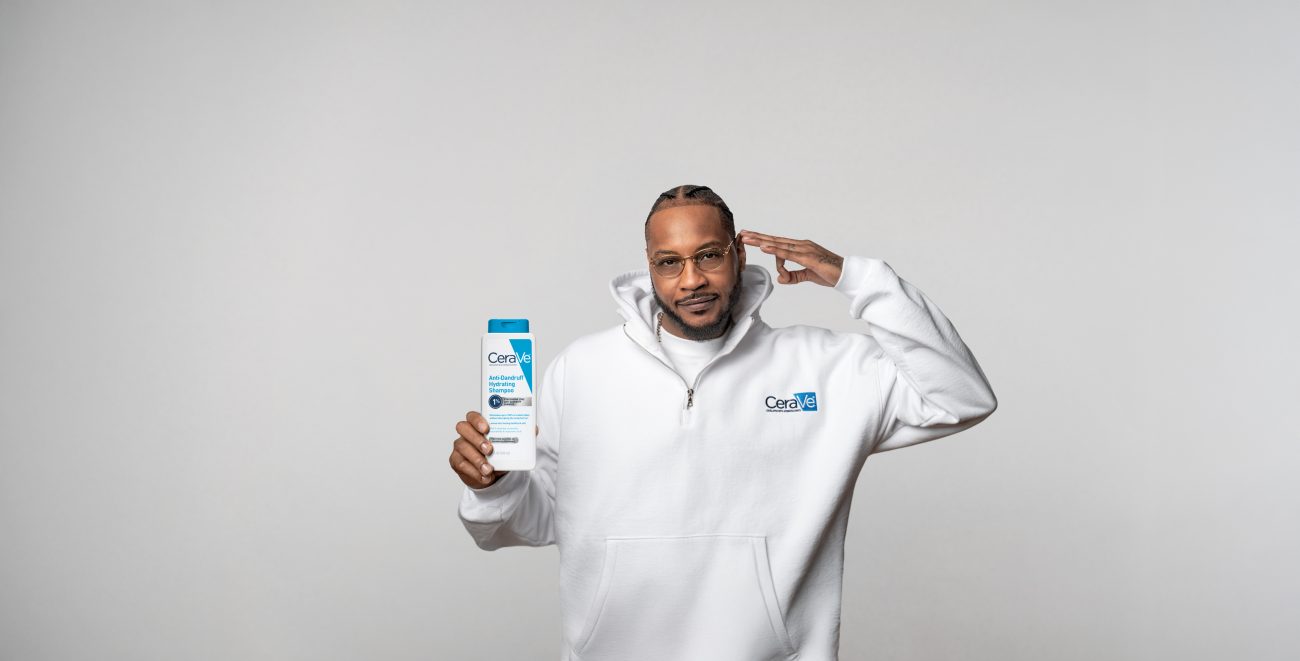
Exclusive: CeraVe taps Carmelo Anthony as ‘head coach’ of its new dandruff campaign (Glossy.Co)
Summary: CeraVe, now the official skin- and hair-care partner of the NBA, launches its first hair-care campaign under that deal, targeting dandruff with retired NBA star Carmelo Anthony as ‘Head Coach.’ The campaign leverages Anthony’s cultural legend (‘Hoodie Melo’) and signature gestures, executed through a fragmented, multi-platform content strategy by Ogilvy PR and WPP Onefluence. It includes pre-launch teasers via influencer accounts and coordinated seeding to creators and consumers.
Why it matters: It demonstrates how mass-market CPG brands are executing precision audience targeting through sports partnerships and multi-platform narrative campaigns, shifting marketing budgets toward fragmented, algorithm-aware content.
Context: This follows CeraVe’s established playbook of using athlete endorsements and dermatologist authority to educate on stigmatized conditions, now formalized via its NBA partnership to access a young, diverse demographic.
"In October, CeraVe announced that it would become the official skin- and hair-care partner of the NBA. Now, the brand is launching its first hair-care campaign pegged to that announcement. In February." — GLOSSY.CO
Commentary: The operational shift here is from monolithic campaign launches to sustained, distributed content seeding tailored for algorithmic feeds, demanding more agile production and tighter coordination with influencer networks. For practitioners, it reinforces that audience fragmentation requires modular creative assets and a calendar of staggered releases, not just a hero spot.
Date: Wed, 13 May 2026 09:45:00 +0000
URL: https://www.glossy.co/beauty/exclusive-cerave-taps-carmelo-anthony-as-head-coach-of-its-new-dandruff-campaign/
AI Sentiment Score: Negative (50%)
AI Credibility Score: 10.0/10 — High
Scores and text generated by AI analysis of the source article indicated.
Satisfy and Adidas Christen Partnership With Three Mismatched Super Shoes Coming Soon (Wwd)
Summary: Satisfy and Adidas have launched their partnership with three mismatched colorways of the Adizero Adios Pro 4 super shoe, priced at $300. The collaboration leverages Adidas’s performance road shoe platform and Satisfy’s trail-running aesthetic and community credibility. The release follows Satisfy’s first solo footwear venture last year and signals a multi-chapter partnership.

Why it matters: This signals a strategic expansion for niche running brands into mainstream performance categories, altering vendor relationships and product pipelines.
Context: Niche, community-focused running brands like Satisfy are increasingly partnering with major sportswear conglomerates to access technical platforms and broader distribution, while the majors seek authentic cultural cachet.
"This collaboration is not simply about combining logos — it exists at the intersection of authentic performance and cultural relevance. Both brands remain true to their identities while creating something that pushes each perspective further."
Commentary: The deal operationalizes a resource exchange: Adidas provides a proven, cost-effective super shoe manufacturing pipeline and road-running legitimacy, while Satisfy delivers a cultivated community and a ‘grungy aesthetic’ that Adidas can monetize without diluting its own mass-market branding. For practitioners, it demonstrates how niche brands can scale through platform licensing rather than capital-intensive R&D, but must carefully manage brand integrity when their visual language becomes a module for a larger partner’s product line.
Date: Mon, 18 May 2026 15:00:00 +0000
URL: https://wwd.com/footwear-news/sneaker-news/satisfy-adidas-adios-pro-4-release-date-1238957021/
AI Sentiment Score: Negative (50%)
AI Credibility Score: 10.0/10 — High
Scores and text generated by AI analysis of the source article indicated.
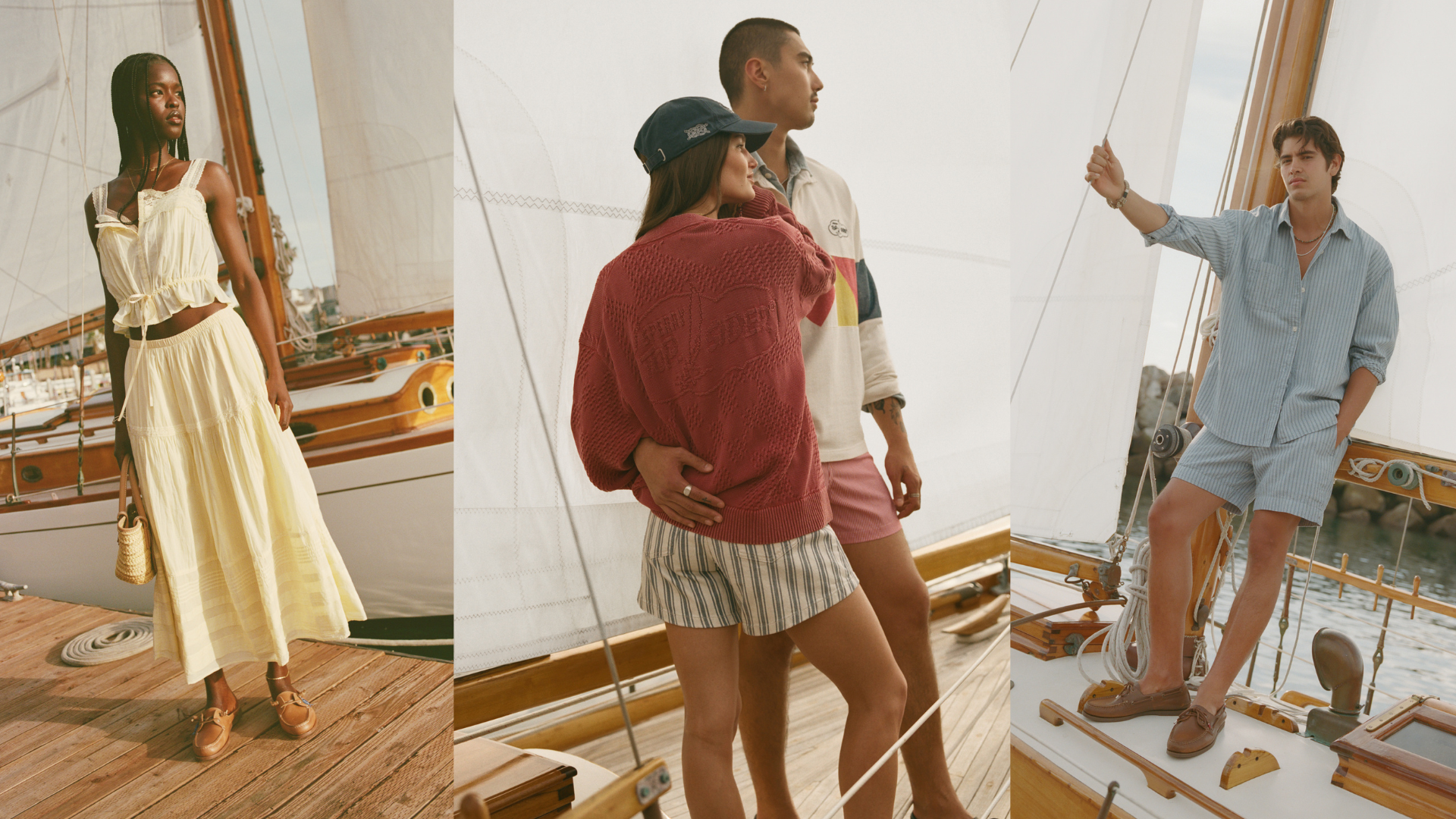
1 month in, Abercrombie’s test with Sperry proves the potential of A&F footwear (Glossy.Co)
Summary: Abercrombie & Fitch’s one-month-old Sperry footwear collaboration has exceeded internal benchmarks, driving higher conversion and cross-category shopping. The digitally-led launch, part of a ‘read and react’ inventory model, serves as a test for integrating footwear into its assortment. The success follows Sperry’s earlier sell-out collaboration with Aritzia, indicating a broader boat shoe revival. For Abercrombie, the partnership is a low-commitment model to gauge demand before potential expansion.
Why it matters: It demonstrates a low-risk, data-driven pathway for apparel brands to enter adjacent categories, validating a collaboration-first strategy over building internal capabilities from scratch.
Context: Apparel brands are increasingly using limited collaborations to explore new categories, manage inventory tightly, and leverage partner credibility without major capital investment.
"One month after Abercrombie & Fitch launched its Sperry collaboration, the retailer is confident that footwear can become a bigger part of its growth strategy. The collection, released April 9, reunited Abercrombie." — GLOSSY.CO
Commentary: The operational significance is the validation of Abercrombie’s ‘read and react’ model for category expansion: a digitally-led, limited launch provides real-time demand data and cross-category lift without bloating inventory. For Sperry, it’s a template to extend its revival beyond Aritzia into lifestyle looks with another channel-savvy partner. The move signals that for established apparel brands, footwear entry is now a matter of partnership logistics and inventory discipline, not manufacturing capability.
Date: Mon, 11 May 2026 04:02:00 +0000
URL: https://www.glossy.co/fashion/abercrombie-sperry-collaboration-footwear-strategy/
AI Sentiment Score: Negative (66%)
AI Credibility Score: 10.0/10 — High
Scores and text generated by AI analysis of the source article indicated.
No. 1 in women’s swimwear for 10 years, Target is refining its approach to the category (Glossy.Co)
Summary: Target is leveraging its decade-long dominance in women’s swimwear to execute a broader merchandising strategy, treating the category as a summer outfitting business rather than a seasonal basic. It combines owned brands (Wild Fable, Shade & Shore), influencer collaborations, and partnerships like the Target-exclusive line with Solid & Striped to drive traffic and cross-category sales. The retailer is using its proprietary Gen AI tool, Target Trend Brain, to accelerate trend identification and product development, aiming to stay ahead in a market now fragmented by DTC and social-first brands.

Why it matters: This demonstrates how a mass retailer operationalizes category leadership to stabilize discretionary sales, using swimwear as a traffic driver and a testbed for faster, data-informed merchandising.
Context: Target’s apparel and home sales have lagged, making swim a critical lever for reasserting merchandising authority in a competitive landscape reshaped by Victoria’s Secret’s exit and re-entry and the rise of DTC brands.
"Target is using swimwear to sell more than swimsuits. The retailer is positioning the category as part of a full summer wardrobe that includes bikinis, one-pieces and cover-ups, as well as Havaianas sandals, accessories and sun-care products." — GLOSSY.CO
Commentary: Target’s swim strategy is a case study in vertical integration and adjacency selling: it turns a single-purchase category into a basket-filler, directly countering the DTC model. The use of Trend Brain signals a shift from seasonal buying to continuous, signal-driven development, which pressures vendors and collaborators to match its pace. For brands like Solid & Striped, such partnerships offer scale but demand concession on brand codes and margin.
Date: Thu, 21 May 2026 04:04:00 +0000
URL: https://www.glossy.co/fashion/no-1-in-womens-swimwear-for-10-years-target-is-refining-its-approach-to-the-category/
AI Sentiment Score: Negative (50%)
AI Credibility Score: 10.0/10 — High
Scores and text generated by AI analysis of the source article indicated.
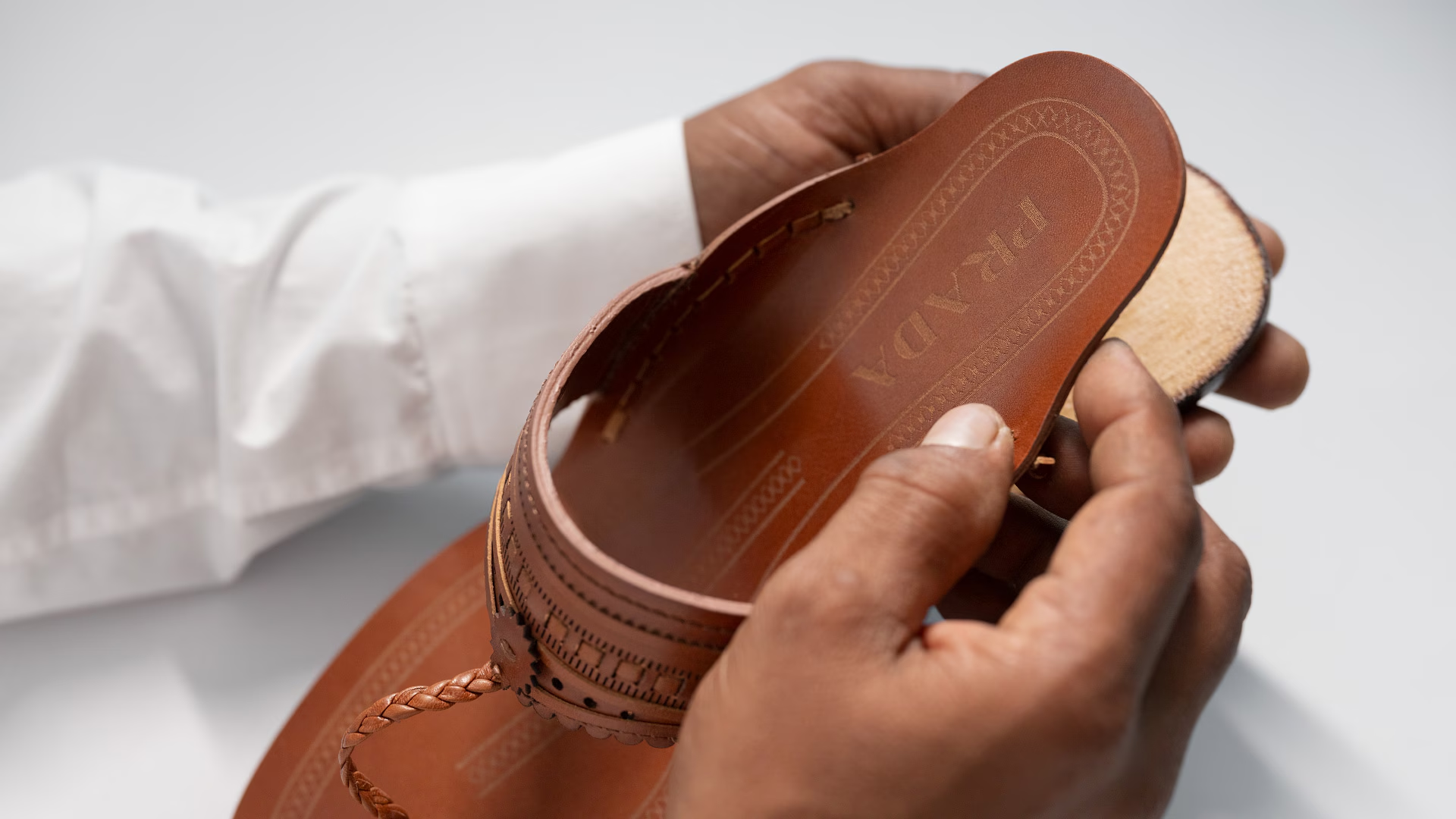
A tale of 2 sandals: Prada’s and Chanel’s footwear buzz reflects the brands’ businesses, for worse and for better (Glossy.Co)
Summary: Prada Group’s Q1 earnings reveal a deceleration in retail sales growth, with Prada brand retail up only 0.4% and Miu Miu at 2.4%, as the company contends with renewed criticism over its Kolhapuri sandal launch and a price disparity with traditional artisans. Concurrently, Chanel’s debut at the top of the Lyst Index underscores a competitive shift where clear creative resets are gaining momentum. The broader industry context includes the launch of VYKO Group, an Irish luxury holding company targeting export growth, and Altina’s AI-powered hearing eyewear, which emphasizes discreet design over overt tech aesthetics.
Why it matters: For luxury operators, the divergence between Prada’s operational stresses and Chanel’s brand heat illustrates how cultural credibility and product narrative directly impact commercial momentum in a tightening market.
Context: Luxury brand valuations increasingly hinge on perceived cultural authenticity and the ability to generate viral, brand-coded items, while also demonstrating disciplined full-price retail growth and supply chain ethics.
"Prada retail sales rose 0.4%, while Miu Miu grew 2.4%, compared to 60% last year. Versace, now part of the group, contributed more than €100 million, or about $114 million, in retail sales and €143 million, or about $163 million, in net revenue in the quarter." — GLOSSY.CO
Commentary: Prada’s reliance on Versace for growth and Miu Miu’s normalization exposes a core brand weakness just as scrutiny over craft appropriation intensifies; this creates a dual pressure on product strategy and sourcing narrative that competitors like Chanel, unburdened by such controversies, can exploit. The launch of entities like VYKO Group signals a growing institutional interest in consolidating national luxury exports, while Altina’s focus on normalizing smart eyewear design reflects a maturation in wearable tech, prioritizing integration over novelty.
Date: Fri, 01 May 2026 04:02:00 +0000
URL: https://www.glossy.co/fashion/luxury/a-story-of-2-luxury-sandals-pradas-and-chanels-footwear-buzz-reflects-the-brands-businesses-for-worse-and-for-better/
AI Sentiment Score: Negative (57%)
AI Credibility Score: 10.0/10 — High
Scores and text generated by AI analysis of the source article indicated.
Carter’s brings on Build-A-Bear vet as CEO (Retaildive)
Summary: Carter’s has appointed Sharon Price John, former CEO of Build-A-Bear Workshop, as its new CEO and president, effective June 15. This follows the abrupt departure of former Vans executive Douglas Palladini after just one year, with CFO Richard Westenberger serving as interim CEO. The change occurs as Carter’s navigates a turnaround plan involving corporate layoffs, store closures, and pressures from tariffs and an activist investor. The board cited John’s record of revitalizing Build-A-Bear through brand expansion, IP leverage, and e-commerce growth as key to driving Carter’s forward.
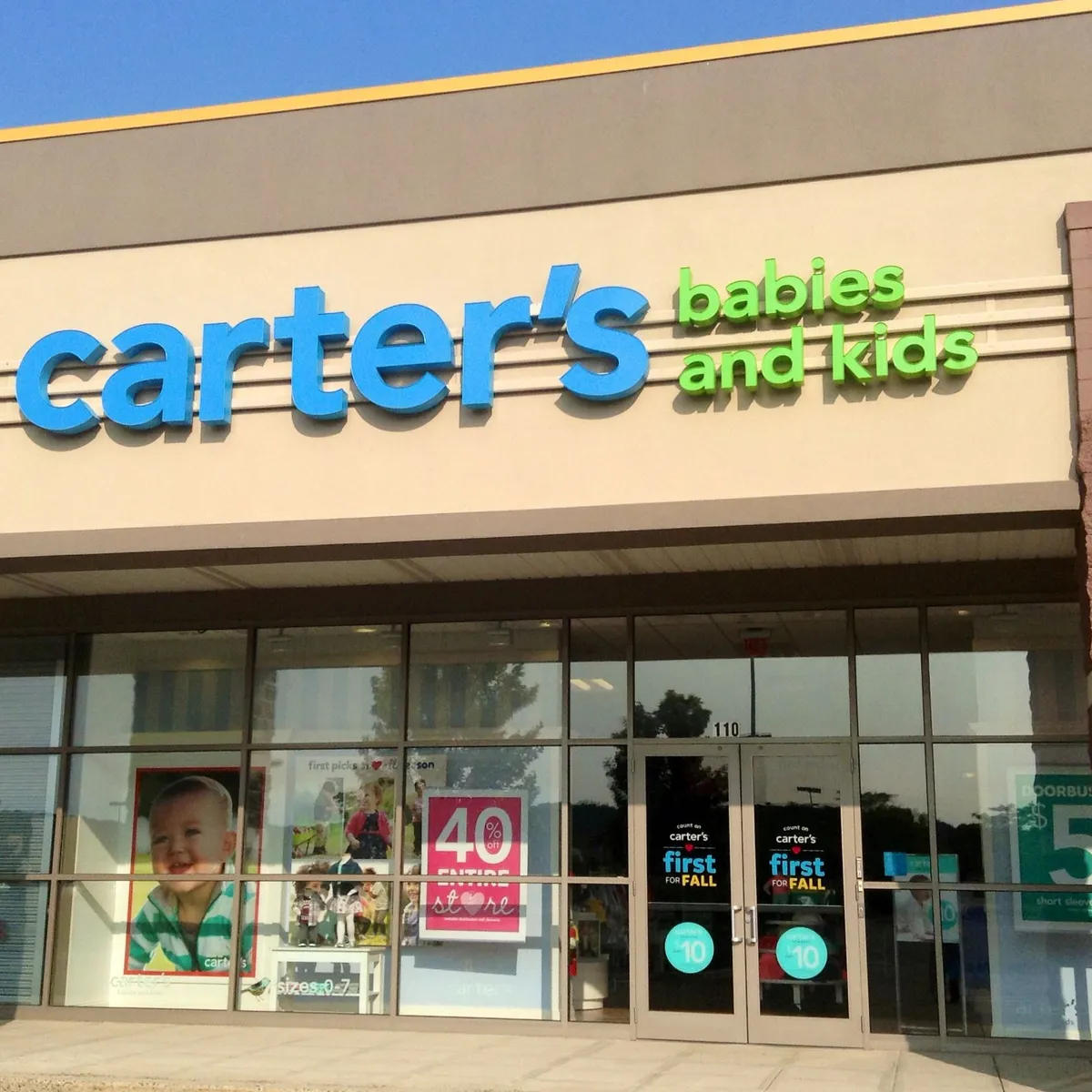
Why it matters: For apparel operations, a CEO with a background in experiential retail and brand revitalization signals a strategic pivot toward leveraging core IP and omnichannel engagement, directly impacting product development, marketing, and store fleet decisions.
Context: Carter’s is mid-turnover, having recently implemented a poison pill, cut 15% of corporate staff, and accelerated store closure plans, all while managing tariff-related cost pressures and leadership instability.
"Dive Brief: – Kids apparel retailer Carter’s named Sharon Price John as the company’s chief executive officer and president, effective June 15, according to a Friday press release. She will also serve." — RETAILDIVE
Commentary: The hire prioritizes brand monetization and experiential strategy over pure apparel merchandising, suggesting Carter’s could shift from a defensive cost-cutting posture to aggressive IP exploitation and collector-focused initiatives. This realigns vendor relationships, marketing spend, and store formats toward higher-margin, engagement-driven revenue, potentially stabilizing the pipeline but requiring new operational competencies from the existing team.
Date: Fri, 01 May 2026 11:38:00 -0400
URL: https://www.retaildive.com/news/carters-build-a-bear-vet-ceo/819050/
AI Sentiment Score: Negative (60%)
AI Credibility Score: 10.0/10 — High
Scores and text generated by AI analysis of the source article indicated.
Isaac Mizrahi Seen Returning to Target: Sources (Wwd)
Summary: Target CEO Michael Fiddelke’s stated strategy to revive the retailer hinges on reclaiming ‘merchandising authority’ through style and design. Sources indicate Isaac Mizrahi, whose early-2000s collaboration defined Target’s fashion-forward ‘cheap chic’ era, is poised for a major return. This move signals a deliberate, if nostalgic, attempt to operationalize Fiddelke’s plan for ‘more change to what we sell and how we sell it than you’ve seen in a decade.’ The reunion, if finalized, would be orchestrated through brand management firm WHP Global, which now controls the Mizrahi label.

Why it matters: For fashion practitioners, this signals a shift in mass-market product strategy and vendor opportunities, reviving a proven model of designer collaboration as a core operational lever for traffic and margin.
Context: Target’s recent sales decline (1.7% to $104.8B) has prompted a strategic pivot under new leadership, explicitly prioritizing design to differentiate from competitors. Mizrahi’s original Target deal (2002-2009) established the playbook for high-low designer collaborations in mass retail.
"Michael Fiddelke stepped up as Target Corp.’s new chief executive officer in February promising to bring back the discounter’s style and design savvy. And it looks like he’s going to do it." — WWD
Commentary: The Mizrahi gambit is a tactical reversion to a known quantity, reducing execution risk for Fiddelke’s untested vision. For WHP Global, it monetizes a legacy brand asset through a scaled retail pipeline rather than runway prestige. The operational implication is a renewed focus on capsule collections and marketing campaigns that blend entertainment and commerce, demanding flexibility from both the designer’s studio and Target’s buying teams. It pressures other mass retailers to revisit their own collaboration playbooks or risk ceding the ‘cheap chic’ narrative.
Date: Mon, 18 May 2026 21:42:39 +0000
URL: https://wwd.com/business-news/retail/isaac-mizrahi-target-return-news-1238972177/
AI Sentiment Score: Negative (75%)
AI Credibility Score: 10.0/10 — High
Scores and text generated by AI analysis of the source article indicated.
9 Commons Launches With Indiana Fever Collection (Wwd)
Summary: 9 Commons, a new brand founded by former Gucci executive Maria McClay, has launched its first collection exclusively for the Indiana Fever WNBA team. The line, designed by Kat Hoelck, merges sport and style with premium materials like long-staple cotton and is priced from $24 to $175. The brand pledges to reinvest 9% of annual net proceeds to expand sports access for under-resourced girls and is negotiating rights with other professional teams and colleges.

Why it matters: It signals a new, premium-tier vendor entering the women’s sports licensing pipeline, which could shift product economics and brand partnerships.
Context: The women’s sports apparel market is expanding beyond traditional athletic wear into higher-margin, fashion-forward merchandise, attracting executives from luxury fashion.
"It may seem like a big jump from Gucci to the hardwood court, but that’s the path Maria McClay took when she founded 9 Commons last year. The one-time general manager of." — WWD
Commentary: McClay’s Gucci pedigree and focus on a single vertical (women’s sports) creates a new competitive pressure on incumbent licensees and team merchandising departments. The 9% reinvestment model sets a precedent that may become a contractual expectation for future team deals, affecting margin structures. For rights holders, this represents a high-value, low-volume licensing option versus mass-market partners.
Date: Mon, 18 May 2026 20:21:07 +0000
URL: https://wwd.com/fashion-news/fashion-scoops/9-commons-indiana-fever-maria-mcclay-1238971135/
AI Sentiment Score: Negative (50%)
AI Credibility Score: 10.0/10 — High
Scores and text generated by AI analysis of the source article indicated.
Adidas’ Hottest Running Shoe Adds the Famous Japanese ‘Great Wave’ Print (Wwd)
Summary: Adidas is applying Hokusai’s ‘The Great Wave Off Kanagawa’ print to its top-selling Evo SL Woven running shoe, launching initially in Japan via Atmos. The Evo SL platform has sold nearly 10 million pairs globally since March 2025. This follows a pattern of footwear brands, including Dr. Martens, Vans, and Norda, licensing the iconic artwork for product collaborations.

Why it matters: For industry practitioners, this signals how major brands leverage established cultural IP to extend the lifecycle and commercial appeal of a proven performance product, offering a template for low-risk, high-recognition merchandising.
Context: The Evo SL is Adidas’s workhorse performance trainer; its ‘Woven’ variant is considered an iterative upgrade (‘1.5’). Using a famous public-domain artwork allows for rapid, low-royalty design application compared to commissioning original art or securing contemporary IP.
"In a recent earnings report, Adidas announced that the Evo SL was about to hit 10 million pairs sold after getting its global launch in March 2025." — WWD
Commentary: This move is a textbook margin-protection play: applying a universally recognized graphic to a proven, high-volume SKU (Evo SL Woven) requires minimal R&D and marketing spend while potentially unlocking a new premium segment. The Japan-first, proxy-service distribution creates artificial scarcity, testing demand for a wider global release. For sourcing and production, it demonstrates how brands can iterate on a stable manufacturing platform (foam, geometry) with superficial upper changes to generate fresh consumer interest without retooling core assembly lines.
Date: Mon, 18 May 2026 19:58:33 +0000
URL: https://wwd.com/footwear-news/sneaker-news/adidas-evo-sl-great-wave-kanagawa-release-date-kh8448-1238956257/
AI Sentiment Score: Negative (57%)
AI Credibility Score: 10.0/10 — High
Scores and text generated by AI analysis of the source article indicated.
The Gucciness of Gucci Takes Over New York (Wwd)
Summary: Demna staged Gucci’s cruise show in Times Square, framing it as a pragmatic culmination of his study of ‘Gucciness’ and a strategic alignment with Kering’s brand renaissance plan. The collection introduces ‘Gucci Core,’ a new category of wardrobe staples designed to fill a perceived product gap and anchor the brand’s mid-price proposition. This move directly operationalizes CEO Luca de Meo’s mandate for clarity, coherence, and commercial essentials, targeting a broad consumer spectrum from bourgeois to streetwear.

Why it matters: This signals a concrete shift in Gucci’s product development and merchandising strategy, prioritizing core wardrobe items over seasonal fantasy, which will impact design, sourcing, and inventory planning.
Context: Major European houses are aggressively courting the American market with destination shows, while internally focusing on margin protection through price rebalancing and category expansion.
"NEW YORK — Gucci‘s artistic director Demna loves a challenge, and on Saturday night, his ambition came to life in New York’s most bustling location: Times Square. “Times Square, that was a." — WWD
Commentary: The explicit shift from designer to merchandiser, coupled with the 90% staples target, imposes a new discipline on the creative pipeline. It forces a supply chain built for higher-volume core items and challenges the atelier to imbue ‘lightness’ and ‘FOMO’ into basics. This operationalizes de Meo’s financial targets into a tangible design brief, making the creative director directly accountable for commercial portfolio gaps.
Date: Sun, 17 May 2026 16:28:34 +0000
URL: https://wwd.com/fashion-news/fashion-features/gucci-demna-new-york-cruise-interview-1238957468/
AI Sentiment Score: Neutral (33%)
AI Credibility Score: 10.0/10 — High
Scores and text generated by AI analysis of the source article indicated.
Nike’s Futuristic New Basketball Sneaker Is Getting a Limited-Edition Oregon Ducks Release (Wwd)
Summary: Nike’s latest limited-edition release, the DOAF x Nike G.T. Future ‘Metallic Nova,’ is a 300-unit run exclusive to Flight Club New York. The shoe, developed with the University of Oregon’s NIL collective, channels late-90s futuristic design and uses a performance setup of Zoom Strobel and Cushlon 3.0 foam. All proceeds benefit Oregon student athletes.

Why it matters: This release exemplifies the operational shift toward ultra-limited, venue-locked drops that prioritize secondary-market positioning and NIL fundraising over traditional wholesale distribution.
Context: Nike continues to leverage its G.T. performance line and archival design cues for high-hype, low-volume releases that serve as marketing events and direct-funding mechanisms for collegiate NIL collectives.
"Only 300 pairs of the shoes were produced worldwide and there will be only one place to get them next weekend: Flight Club New York." — WWD
Commentary: The 300-unit cap and single-retailer lock transforms this from a product launch into a controlled scarcity event, designed to spike resale value and generate PR buzz that far outweighs unit sales. For practitioners, it signals Nike’s deepening reliance on third-party platforms like Flight Club for authentication and hype generation, while NIL collectives become a sanctioned channel for brand-funded athlete compensation outside traditional endorsement deals.
Date: Sat, 02 May 2026 18:13:02 +0000
URL: https://wwd.com/footwear-news/sneaker-news/doaf-nike-gt-future-release-date-1238938022/
AI Sentiment Score: Negative (57%)
AI Credibility Score: 10.0/10 — High
Scores and text generated by AI analysis of the source article indicated.
Issey Miyake Opens Largest China Store in Shanghai (Wwd)
Summary: Issey Miyake has opened its largest store in China, a 4,100-square-foot flagship at Shanghai’s new Westbund Central development. The space, designed by longtime collaborator Tokujin Yoshioka, consolidates six of the brand’s lines under one roof for the first time in the market, including the debut of its eyewear collection. The store’s location within a mixed-use luxury project in Shanghai’s designated AI hub signals a strategic real estate play.

Why it matters: For fashion practitioners, this move illustrates a specific retail expansion strategy in China: consolidating brand portfolios into large-format flagships within new, high-profile mixed-use developments to maximize brand presence and operational efficiency.
Context: The brand’s China operations have been managed by a local partner, Ningbo Hengcheng Everbeauty Commerce Co., Ltd., since 2012, and this opening expands its footprint to 22 stores nationally. The Westbund Central project itself is an $8 billion development positioning itself as part of Shanghai’s financial and AI hub.
"Issey Miyake has opened its largest retail project at Westbund Central, the newly inaugurated mixed-use luxury development in Shanghai. Nestled between the Chinese multibrand retailer SND and the South Korean fashion brand." — WWD
Commentary: This opening represents a shift from boutique distribution to a consolidated brand-hub model in China, likely driven by the local partner’s need to streamline logistics and marketing spend across multiple sub-labels. The choice of Westbund Central, a development banking on its ‘AI hub’ adjacency, suggests a bet on capturing a high-income, tech-adjacent demographic rather than traditional luxury corridors. For other brands, it underscores the continued importance of large-format, experiential retail in China, even as digital channels dominate, but now tied to new mixed-use zones rather than established shopping streets.
Date: Mon, 18 May 2026 13:44:41 +0000
URL: https://wwd.com/business-news/retail/issey-miyake-shanghai-flagship-westbund-1238961375/
AI Sentiment Score: Positive (66%)
AI Credibility Score: 10.0/10 — High
Scores and text generated by AI analysis of the source article indicated.
Madewell plans to open 3 stores, starting this week (Retaildive)
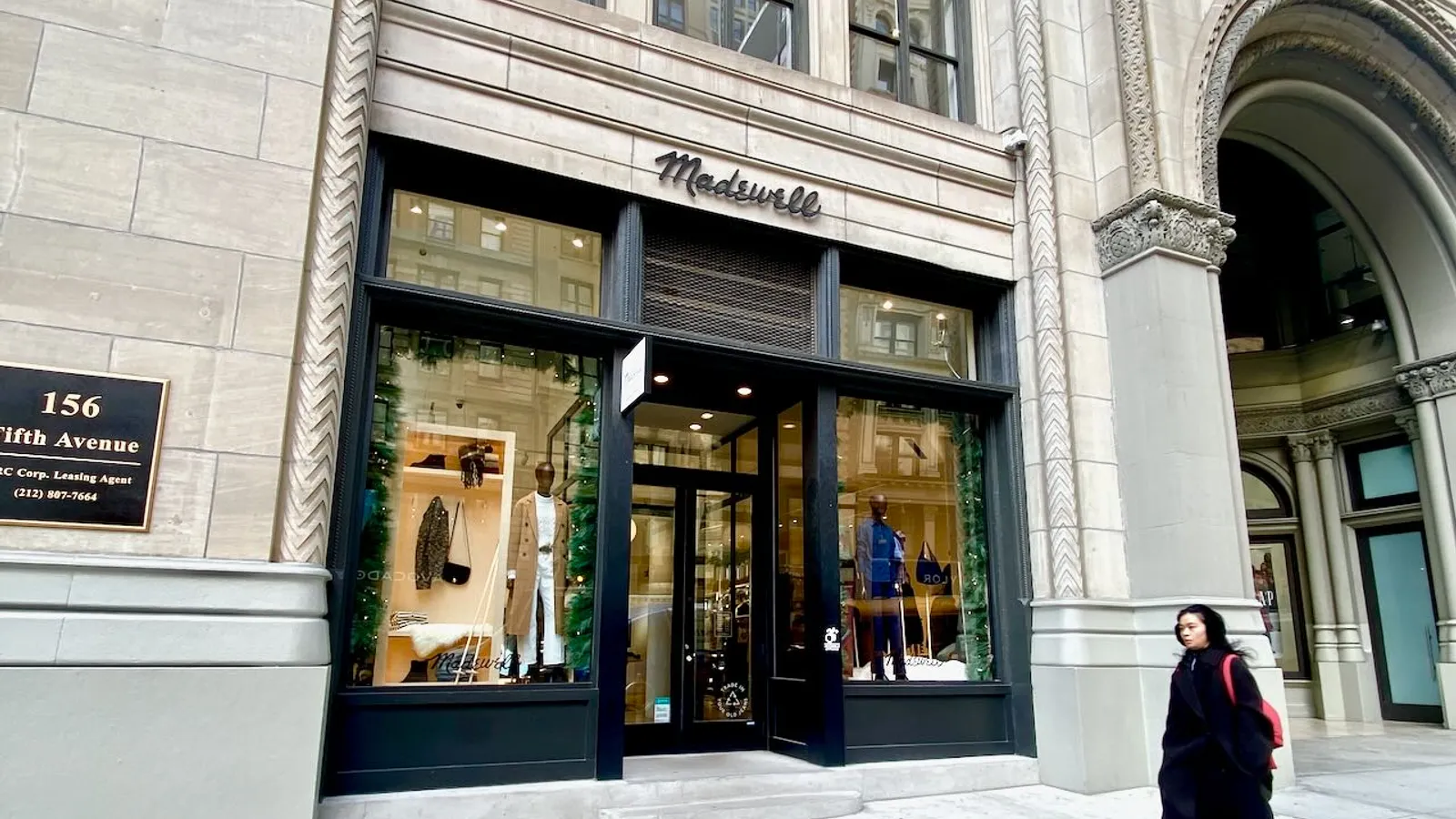
Summary: Madewell, a J. Crew Group brand, is opening three new stores in May and June, including a Sag Harbor location and two dual-concept stores for men’s and women’s apparel. This marks a modest but notable expansion for a brand whose physical footprint has stagnated since its parent company’s bankruptcy and the abandonment of its IPO plans. The move contrasts sharply with the scale of competitors like Gap Inc. and underscores a cautious, targeted retail strategy.
Why it matters: For retail operators and brand strategists, this signals a shift from aggressive expansion to measured, concept-driven growth, with implications for real estate strategy, inventory planning, and brand positioning.
Context: Madewell’s growth stalled after J. Crew Group’s 2020 bankruptcy; its store count (~150) remains comparable to J. Crew’s and is dwarfed by factory outlets and rival banners, reflecting a constrained capital environment.
"Madewell, owned by J. Crew Group, is expanding its footprint with three new stores opening in May and June, in New York, Connecticut and Oregon." — RETAILDIVE
Commentary: This expansion is less about scaling and more about testing dual-concept viability and premium co-branding adjacency, as seen with Goop. For vendors and mall operators, it indicates Madewell is prioritizing high-ASP, low-volume locations over mass footprint, which recalibrates wholesale and leasing expectations. The operational focus shifts from supporting an IPO narrative to optimizing per-store productivity within a leaner corporate structure.
Date: Mon, 18 May 2026 12:21:00 -0400
URL: https://www.retaildive.com/news/madewell-three-store-openings-sag-harbor-new-york-connecticut-oregon/820470/
AI Sentiment Score: Negative (50%)
AI Credibility Score: 10.0/10 — High
Scores and text generated by AI analysis of the source article indicated.
Sephora Strategies: With its launch at Sephora US, Fugazzi wants to bring luxury fragrance to the masses (Glossy.Co)
Summary: Fugazzi, a niche fragrance brand, has entered over 100 Sephora US stores with a strategy of ‘playful luxury’ and a price-adjusted Eau de Parfum line starting at $120. Founder Bram Niessink cites Supreme’s community-driven, drop-model ethos while leveraging Sephora’s scale for mass discovery. The brand maintains exclusivity via flagship-only scents and a higher-priced Extrait line for independent retailers, balancing broad accessibility with niche credibility. Its Sephora-exclusive ‘Cloudh Nine’ and a forthcoming $35 mini-size target the retailer’s demand for affordable, trend-responsive options.

Why it matters: This signals how niche fragrance brands are recalibrating product tiers and distribution to capture mainstream retail scale without fully surrendering their exclusive positioning, reshaping the competitive landscape for both indie brands and Sephora’s own fragrance merchandising.
Context: Sephora has been expanding its fragrance assortment beyond designer mainstays to include niche brands, creating a new battleground where price architecture and exclusive SKUs determine shelf placement and consumer perception.
"When describing his fragrance brand Fugazzi, Bram Niessink points to a somewhat unexpected comparison: Supreme, the streetwear brand that defined much of 2010s fashion and made a white box logo T-shirt into." — GLOSSY.CO
Commentary: Fugazzi’s move operationalizes a dual-market strategy: a lower-concentration, lower-priced EDP line for Sephora’s volume channel, and a pricier Extrait line for indie stockists. This bifurcation allows the brand to service Sephora’s need for accessible price points while preserving margin and aura in specialty retail. The creation of retailer-exclusive scents like Cloudh Nine and flagship-exclusive drops further segments the audience, mimicking streetwear’s scarcity tactics within a mass beauty context. For Sephora, this reflects a deliberate shift in fragrance merchandising—prioritizing founder-driven, trend-responsive niche brands over traditional prestige, which is now perceived as underperforming.
Date: Mon, 18 May 2026 04:02:00 +0000
URL: https://www.glossy.co/beauty/sephora-strategies-with-its-launch-at-sephora-us-fugazzi-wants-to-bring-luxury-fragrance-to-the-masses/
AI Sentiment Score: Negative (83%)
AI Credibility Score: 10.0/10 — High
Scores and text generated by AI analysis of the source article indicated.
Why beauty brands are courting readers, gardeners and art-world insiders (Glossy.Co)
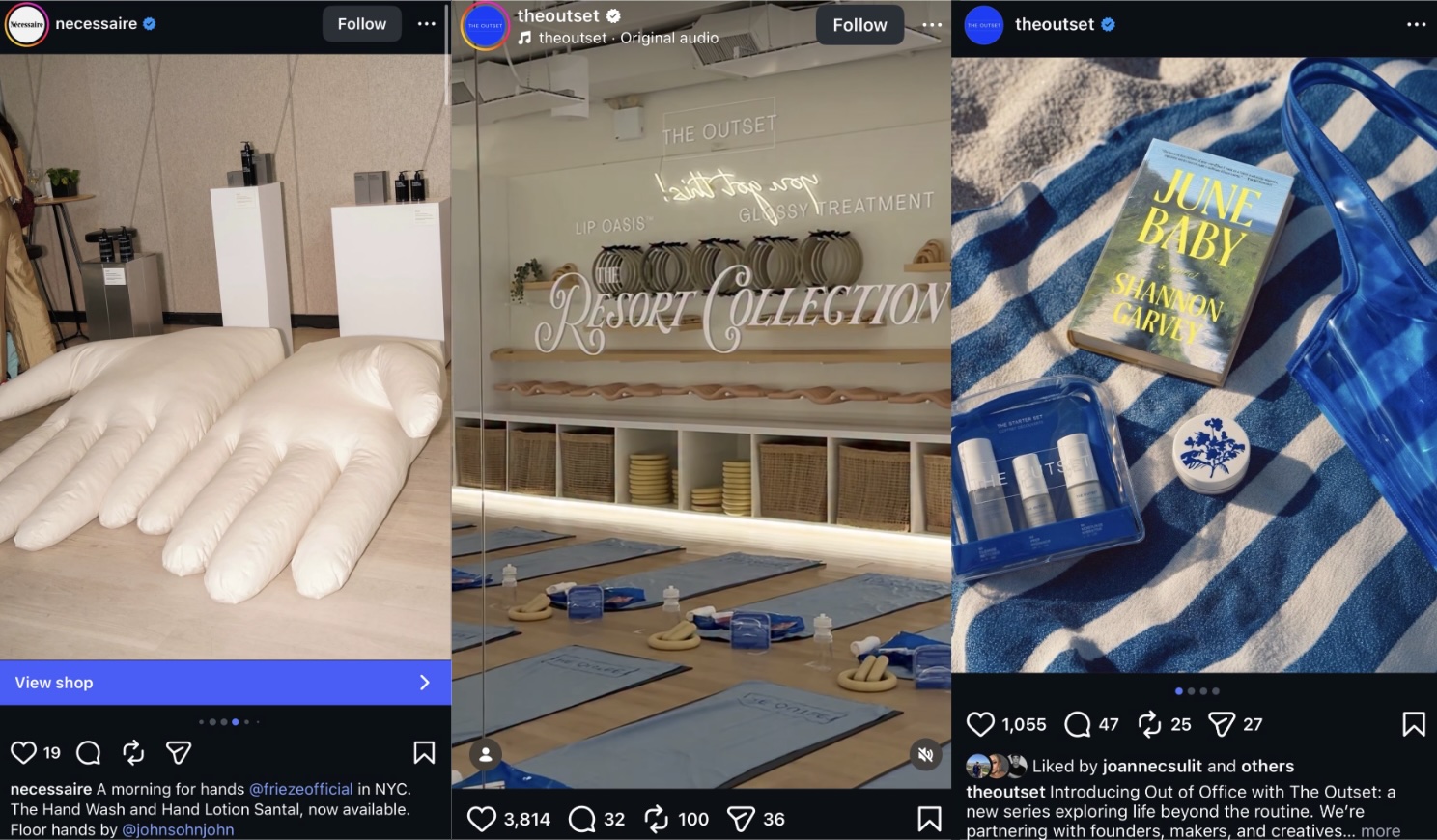
Summary: Beauty brands are shifting from traditional marketing to community-driven activations that embed products into lifestyle contexts. The Outset is launching a floral workshop and a summer book club partnership with Random House, using community feedback to select events and a debut novel that aligns with its millennial demographic. Nécessaire sponsored the VIP breakfast at Frieze New York, commissioning hand-shaped art to launch a sink-side duo, targeting art-world tastemakers. These moves illustrate a tactical pivot from product-centric advertising to curated, experience-based community building.
Why it matters: For practitioners, this signals a move from broad-audience ad buys to labor-intensive, partnership-driven activations that require new vendor relationships, rights negotiations, and community management skills.
Context: The saturation of DTC beauty has made customer acquisition via performance marketing untenably expensive, forcing brands to seek owned channels and cultural credibility through association.
"Beauty brands already know they need to do more than just sell products to stand out in an increasingly saturated market. Today, winning brands must build communities, create cultural relevance and show." — GLOSSY.CO
Commentary: This is a vendor shift: marketing budgets now flow to florists, publishers, and art fairs instead of solely to Meta and Google. It demands teams skilled in partnership logistics and rights clearances, not just ad copy. The risk is diffused brand focus; the reward is deeper retention among communities that distrust direct advertising.
Date: Fri, 15 May 2026 04:04:00 +0000
URL: https://www.glossy.co/beauty/why-beauty-brands-are-courting-readers-gardeners-and-art-world-insiders/
AI Sentiment Score: Negative (50%)
AI Credibility Score: 10.0/10 — High
Scores and text generated by AI analysis of the source article indicated.
How Wrangler used Spotify and out-of-home advertising to show up at Stagecoach (Glossy.Co)
Summary: Wrangler executed a multi-channel activation around the Stagecoach music festival, focusing on peripheral moments rather than just on-site presence. The strategy included out-of-home ads along travel routes, airport signage, sponsorship of a nearby rodeo, and targeted Spotify playlist ads featuring brand ambassadors. The parent company Kontoor Brands reported strong revenue growth, with Wrangler’s Western category and women’s lines seeing particular gains, justifying increased marketing investment. The activation was managed in-house and explicitly tied to CRM growth through data capture at events.

Why it matters: It demonstrates a shift from on-site festival sponsorship to a 360-degree, data-driven marketing playbook that treats the entire attendee journey as a conversion funnel, with direct implications for marketing budgets, in-house team capabilities, and vendor strategies.
Context: Brands are moving beyond simple festival sponsorship logos to integrated, multi-touchpoint campaigns that capture consumer attention before, during, and after events, often linking physical activations directly to digital CRM systems.
"Music festivals have increasingly become a testing ground for brand activations. There are a plethora of ways for brands to show up at these popular events, and much competition on-site. For the." — GLOSSY.CO
Commentary: Wrangler’s approach signals a maturation of festival marketing from brand awareness to a measurable customer acquisition channel, leveraging in-house media buying for agility and tying physical touchpoints directly to email capture. The focus on Spotify’s ad-supported tier and high-conversion playlists offers a replicable template for targeting niche audiences at scale, while the emphasis on Western category growth justifies doubling down on culturally resonant, rather than merely trendy, events.
Date: Tue, 28 Apr 2026 04:02:00 +0000
URL: https://www.glossy.co/fashion/how-wrangler-used-spotify-and-out-of-home-advertising-to-show-up-at-stagecoach/
AI Sentiment Score: Positive (50%)
AI Credibility Score: 10.0/10 — High
Scores and text generated by AI analysis of the source article indicated.
Beauty Briefing: What to know about Sephora’s and Ulta’s AI partnerships (Glossy.Co)
Summary: Sephora and Ulta are embedding their commerce functions into ChatGPT and Google Gemini, respectively, to intercept the over 1 billion weekly beauty searches now occurring on AI platforms. This is a defensive move against Amazon, whose AI shopping assistant Rufus is already driving significant basket growth. The immediate goal is less about perfecting conversion and more about securing data and engagement in a funnel that is still being built. Concurrently, Zara is contesting Estée Lauder’s trademark lawsuit over the use of Jo Malone’s name, a dispute that underscores the enduring value of founder identity in fragrance licensing.
Why it matters: For beauty retailers and brands, this signals a shift in customer acquisition costs and data ownership as AI platforms become primary discovery channels, forcing new partnership and integration strategies.
Context: AI chatbots are becoming the new search bar for product discovery, particularly for Gen Z, while Amazon’s entrenched algorithmic advantage pressures other retailers to form external AI alliances to compete.
"According to NielsenIQ data, consumers conduct over 1 billion beauty-related searches per week on ChatGPT. An April 2026 report from Tinuiti states that more than a third of beauty shoppers — and over half of Gen Z — are using AI to research or purchase products." — GLOSSY.CO
Commentary: The race to integrate with AI platforms is a data play first; retailers are buying optionality on a future checkout funnel while securing valuable intent data today. For Sephora and Ulta, the operational consequence is the creation of dedicated teams to manage these API-driven partnerships and the analytics to measure engagement, not just sales. The parallel Zara/Jo Malone litigation serves as a reminder that while distribution channels evolve, the legal and brand equity stakes in fragrance remain rigid and high-value.
Date: Tue, 12 May 2026 04:02:00 +0000
URL: https://www.glossy.co/beauty/beauty-briefing-what-to-know-about-sephoras-and-ultas-ai-partnerships/
AI Sentiment Score: Positive (60%)
AI Credibility Score: 10.0/10 — High
Scores and text generated by AI analysis of the source article indicated.
Simkhai is building an AI storefront for shoppers who don’t know what to search (Glossy.Co)
Summary: Simkhai is launching a separate AI-powered storefront, Simkhai.ai, built on Swap’s agentic commerce platform. It aims to translate the brand’s in-store styling experience online, using a conversational interface for discovery based on occasion or mood rather than keyword search. The dot-ai site will operate alongside the main e-commerce site, featuring a curated feed and virtual try-on. The brand retains ownership of customer data and relationship, with Swap providing the infrastructure.

Why it matters: It signals a shift from AI as an embedded feature to a dedicated, brand-controlled channel, testing whether a separate conversational interface can capture high-intent but low-specificity shopping moments.
Context: Multiple brands have integrated AI shopping assistants, but Simkhai’s approach as a standalone dot-ai site, built on a third-party agentic platform (Swap), represents a new operational model for direct-to-consumer luxury.
"The goal is to solve a familiar online shopping problem: Customers often know the occasion, mood or styling need they are shopping for before they know what to type into a search bar." — GLOSSY.CO
Commentary: This moves the labor of search from the customer to the brand’s AI, potentially increasing conversion for non-specific intent but requiring significant investment in agent training and integration. The separate site model creates a new digital touchpoint but risks fragmenting traffic unless it demonstrably captures a distinct shopping mode. For practitioners, it introduces a new vendor relationship (Swap) and data pipeline, while demanding brand-specific tuning of the AI to avoid a generic assistant feel.
Date: Mon, 18 May 2026 04:03:00 +0000
URL: https://www.glossy.co/fashion/luxury/simkhai-is-building-an-ai-storefront-for-shoppers-who-dont-know-what-to-search/
AI Sentiment Score: Positive (50%)
AI Credibility Score: 10.0/10 — High
Scores and text generated by AI analysis of the source article indicated.
How Larroudé’s CEO built an AI system to improve and expedite business operations (Glossy.Co)
Summary: Larroudé CEO Ricardo Larroudé personally used AI coding tools to build an integrated operational system, connecting Shopify, factory, and inventory data. The system automated data reconciliation and code cleanup, boosting website conversion from 0.3% to 1.7% and reducing manual programming staff. It now informs inventory and production planning, aiming to shorten lead times and reduce overproduction.
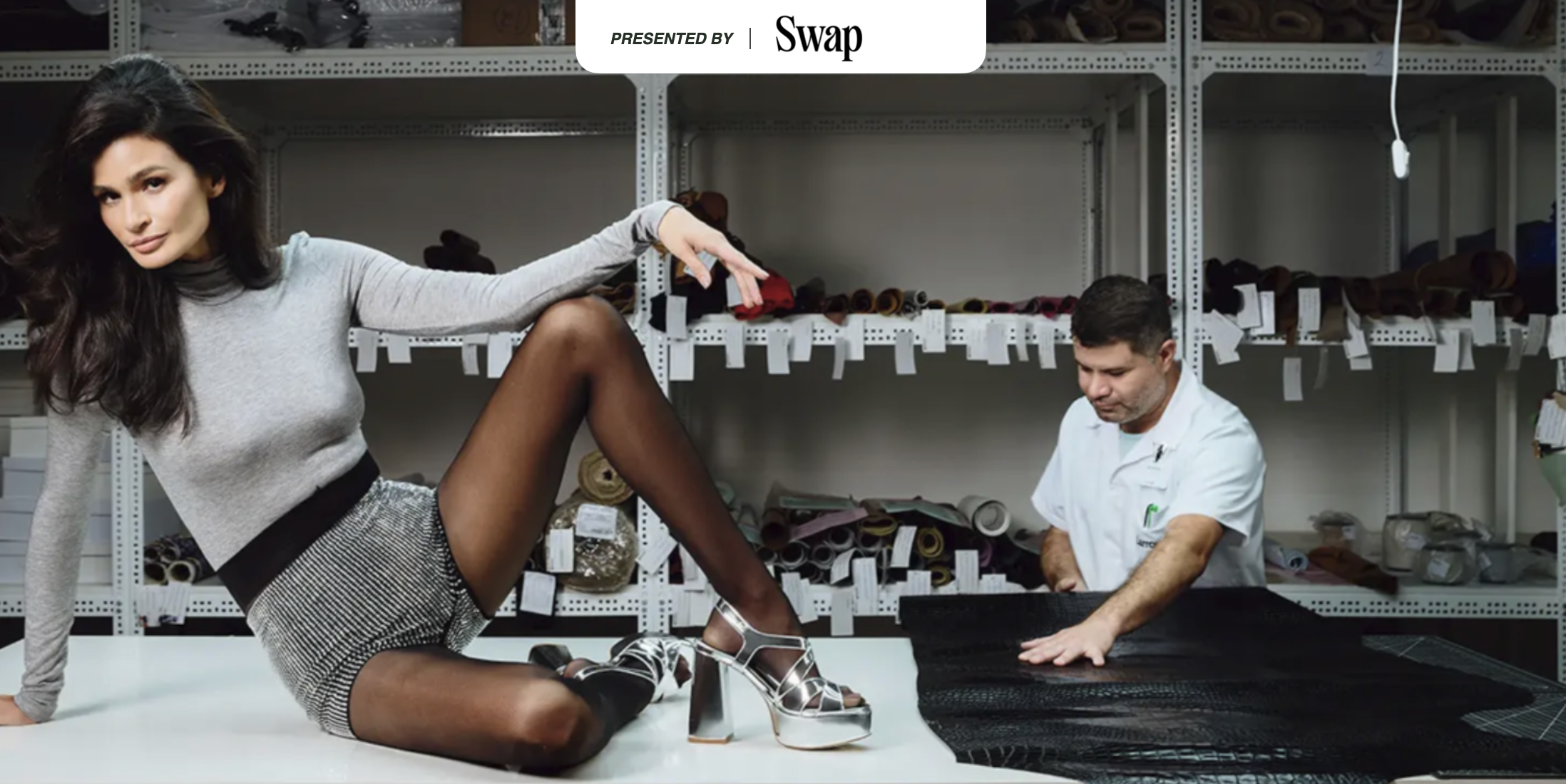
Why it matters: It demonstrates a CEO-driven, low-code approach to supply chain and e-commerce integration that reduces labor costs and redefines technical hiring criteria.
Context: Mid-sized fashion brands face complex data silos between e-commerce, manufacturing, and planning systems, typically requiring expensive developer teams to manage.
"At the start of the year, Larroudé’s operating systems were not connecting the way Ricardo Larroudé wanted them to. The problem was that they were not speaking to each other cleanly. The." — GLOSSY.CO
Commentary: The move shifts technical hiring from pure coding skills to system governance and agentic workflow oversight. It establishes a new cost benchmark: upfront AI query fees replacing recurring programmer salaries. For the supply chain, the real-time material visibility could compress production cycles, favoring agile replenishment over batch planning.
Date: Wed, 13 May 2026 04:04:00 +0000
URL: https://www.glossy.co/fashion/how-larroudes-ceo-built-an-ai-system-to-run-the-business-faster/
AI Sentiment Score: Negative (66%)
AI Credibility Score: 10.0/10 — High
Scores and text generated by AI analysis of the source article indicated.
Where Nike’s marketing comeback is stumbling — and where it can still win (Retaildive)
Summary: Nike’s ‘Win Now’ turnaround is faltering, with flat revenue and marketing missteps like the Boston Marathon ad undermining its performance-athlete focus. Internal churn from layoffs and leadership changes is diluting brand coherence, while rivals like On and Hoka gain ground through community-driven tactics and lifestyle collaborations. Nike shows strength in women’s sports marketing and North American sales, but faces deflating growth in China and a fragmented media landscape that diminishes its legacy mass-marketing playbook.

Why it matters: For brand managers and marketers, Nike’s struggles illustrate the operational difficulty of aligning product innovation, corporate culture, and consumer sentiment in a decentralized media environment.
Context: Nike’s post-pandemic strategy has prioritized reclaiming elite athletes and performance credibility, but execution has been inconsistent amid leadership turnover and shifting consumer values.
"The “now” part of Nike’s high-stakes Win Now turarnound plan is starting to feel like a “later” to some industry watchers nearly two years in. The legendary sportswear giant is beset by." — RETAILDIVE
Commentary: Nike’s operational challenge is a misalignment between a centralized, legacy marketing apparatus and a demand for decentralized, authentic community engagement. The Boston Marathon ad and Super Bowl absence are symptoms of a pipeline where cultural sensitivity and agile narrative-building are not integrated into rapid campaign execution. For practitioners, this signals that brand safety and message coherence now require deeper, continuous community immersion, not just top-down athlete endorsements.
Date: Mon, 18 May 2026 10:45:00 -0400
URL: https://www.retaildive.com/news/where-nikes-marketing-comeback-is-stumbling-and-where-it-can-still-win/820115/
AI Sentiment Score: Negative (50%)
AI Credibility Score: 10.0/10 — High
Scores and text generated by AI analysis of the source article indicated.
Quick Commerce 2.0: Slower, safer, and more profitable for fashion … (Dfupublications)
Summary: The quick commerce sector is pivoting from a pure speed model to a ‘profitable precision’ approach, with fashion and apparel emerging as a strategically lucrative category. This shift is driven by regulatory pressure on unsafe delivery timelines and the superior unit economics of fashion items compared to fast-moving consumer goods. Platforms are now designing logistics to serve ‘social emergency’ demand, where high-margin fashion orders justify slower, more careful handling.

Why it matters: For fashion brands and logistics operators, this signals a recalibration of supply chain priorities from velocity to margin capture, altering inventory, packaging, and return-handling workflows.
Context: Quick commerce initially focused on ultra-fast delivery of low-margin essentials; expansion into high-margin, high-return categories like fashion represents a fundamental business model evolution.
"While groceries build frequency, fashion builds profits." — DFUPUBLICATIONS
Commentary: The operational consequence is a bifurcation in logistics: a high-frequency, low-margin lane for FMCG, and a lower-frequency, high-touch lane for fashion where handling costs are justified by gross margins of 35-50%. This demands new vendor agreements, packaging standards, and reverse logistics planning from brands, moving fashion from a laggard to a profit-center in the on-demand pipeline.
Date: April 28, 2026 12:00 AM ET
URL: https://www.dfupublications.com/index.php/news/apparel/quick-commerce-2-0-slower-safer-and-more-profitable-for-fashion-retail
AI Sentiment Score: Positive (71%)
AI Credibility Score: 10.0/10 — High
Scores and text generated by AI analysis of the source article indicated.
Shuffle Board: Solbari Builds Wholesale, TrueCommerce Eyes Growth (Wwd)
Summary: Puma appoints Mark Langer, former Douglas CFO and Hugo Boss CEO, as its new CFO and management board member, replacing Markus Neubrand. Lululemon adds Unilever’s former chief growth officer, Esi Eggleston Bracey, to its board, continuing a refresh of independent directors. Carter’s undergoes a sudden CEO transition, with Sharon Price John replacing Douglas Palladini after just over a year, while interim duties fall to CFO Richard Westenberger. Elsewhere, Solbari hires a head of sales to build a wholesale network, The Lycra Company creates a VP of product sustainability role, and TrueCommerce names a new chief revenue officer.

Why it matters: Executive appointments signal strategic pivots in finance, growth, and sustainability that could reshape brand operations and partner ecosystems.
Context: CFO and board roles at major sportswear and luxury firms are increasingly filled by executives with cross-category experience, while sustainability leadership becomes a dedicated C-suite function in textiles.
"Davis will lead Solbari’s wholesale strategy, building a national network of sales representatives, securing retail partnerships and establishing a seasonal wholesale cadence." — WWD
Commentary: Puma’s hire of Langer, a luxury veteran, suggests a sharper focus on margin discipline and investor relations amid competitive pressure. Carter’s abrupt CEO change after a short tenure indicates possible strategic misalignment or performance pressures, placing operational burden on the CFO. The creation of a VP of product sustainability at Lycra formalizes compliance and innovation reporting lines, affecting how fabric suppliers engage with brand ESG mandates.
Date: Fri, 01 May 2026 22:20:51 +0000
URL: https://wwd.com/sourcing-journal/industry-news/shuffle-board-executive-moves-solbari-1238937545/
AI Sentiment Score: Negative (50%)
AI Credibility Score: 10.0/10 — High
Scores and text generated by AI analysis of the source article indicated.
Seasonal Inventory Planning: Strategy for Fashion Retailers (Easyreplenish)
Summary: Seasonal inventory planning is a structured discipline for fashion retailers, moving from trend forecasting and line planning through pre-season demand forecasting to a merchandise buying calendar and post-season review. The process aims to align product launches, depth of buy, and markdown timing with volatile, trend-sensitive demand.

Why it matters: For practitioners, this formalizes the operational cadence that determines capital allocation, margin protection, and brand relevance in a market where missteps in timing or assortment depth directly impact liquidity and competitive positioning.
Context: The article codifies a standard retail playbook, but its relevance lies in the increasing pressure from shortened trend cycles and the need to integrate real-time social signals into a traditionally calendar-driven process.
"A well-executed seasonal plan defines when to launch new collections, how deep to buy, what to restock mid-season, and when to initiate markdowns or clearance." — EASYREPLENISH
Commentary: The framework is orthodox, but the operational tension is between the rigidity of a pre-set buying calendar and the fluidity of modern demand signals. Brands that treat the post-season review as a genuine feedback loop, rather than a post-mortem, gain a competitive edge by adjusting not just forecasts but their entire planning rhythm.
Date: April 20, 2026 12:00 AM ET
URL: https://www.easyreplenish.com/blog/seasonal-inventory-planning
AI Sentiment Score: Negative (66%)
AI Credibility Score: 10.0/10 — High
Scores and text generated by AI analysis of the source article indicated.
‘Delivering the Dream,’ a Deep Dive Into Fashion’s Vision and Execution (Wwd)
Summary: A new book by industry veterans Erica Corbellini and Tomaso Galli, ‘Delivering the Dream,’ positions itself as a practical manual on fashion business execution, eschewing generic formulas. It compiles insights from figures like Donatella Versace and Anthony Vaccarello, emphasizing the discipline required to align creative vision with operational delivery. The authors stress context-specific strategy and the role of marketing as a two-way dialogue, not just brand messaging. The book emerges as a counterpoint to prescriptive business toolkits, advocating for a bespoke approach grounded in cultural understanding.

Why it matters: For practitioners, it codifies a high-level, execution-focused philosophy that challenges standardized playbooks, directly impacting how brand strategy and creative-commercial alignment are managed.
Context: This arrives amid ongoing tension between data-driven merchandising and visionary design, and a broader industry conversation about the role of marketing in an era of narrative control.
"I am allergic to formulas, to toolkits, to whatever works for one company and then becomes the fashion. Firstly, you must understand the context, what kind of company you are in and then you have to devise your own strategy for where you want to go with the resources that are available and the people in the company." — WWD
Commentary: The book’s anti-formula stance reinforces a shift toward bespoke brand operations, elevating the role of internal ‘chief consistency officers’ who bridge creative and management. This implicitly critiques the portability of strategies from other consumer goods sectors into fashion, demanding a deeper cultural fluency from executives. It validates a labor-intensive, context-driven management style that resoutsourcing and off-the-shelf solutions.
Date: Mon, 18 May 2026 17:34:19 +0000
URL: https://wwd.com/eye/people/delivering-the-dream-book-fashion-marketing-communication-1238970951/
AI Sentiment Score: Neutral (33%)
AI Credibility Score: 10.0/10 — High
Scores and text generated by AI analysis of the source article indicated.
Post ID: 9f0c90d8